Journal of Peking University (Health Sciences) ›› 2026, Vol. 58 ›› Issue (4): 808-817. doi: 10.19723/j.issn.1671-167X.2026.04.018

Previous Articles     Next Articles

Comparison of preoperative nutritional scoring systems for predicting survival in upper tract urothelial carcinoma

Zejing GUO1, Changhai SUN1,2, Shicong LAI1, Hanlin GAO1, Yiqing DU1,*(), Tao XU1   

  1. 1. Department of Urology, Peking University People's Hospital, Beijing 100044, China
    2. Department of Urology, Peking University People's Hospital Qingdao Hospital, Qingdao University Affiliated Women and Children's Hospital, Qingdao 266034, Shandong, China
  • Received:2026-02-27 Online:2026-08-18 Published:2026-05-27
  • Contact: Yiqing DU
  • Supported by:
    the Noncommunicable Chronic Diseases-National Science and Technology Major Project(2024ZD0525700); the National Natural Science Foundation of China(82471866); the National Natural Science Foundation of China(82472912); the Beijing Natural Science Foundation(L252190)

RICH HTML


Abstract:

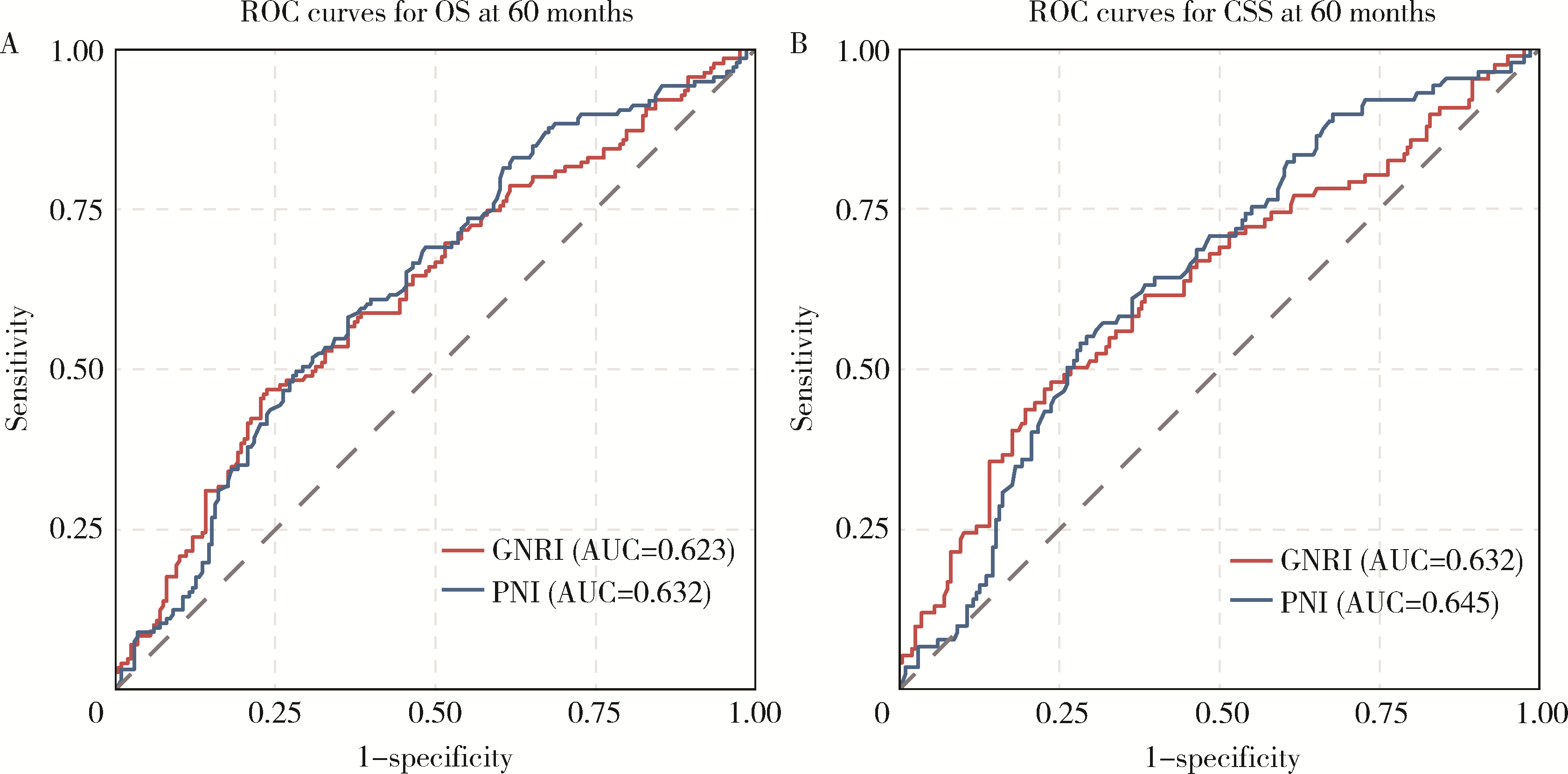
Objective: To investigate the association between preoperative nutritional indicators and survival outcomes in patients with upper tract urothelial carcinoma (UTUC) undergoing radical nephroureterectomy (RNU), and to compare the predictive performance of different nutritional scoring systems. Methods: A retrospective analysis was conducted on UTUC patients who underwent RNU. Nutritional scores [geriatric nutritional risk index (GNRI), prognostic nutritional index (PNI), controlling nutritional status (CONUT), triglycerides-total cholesterol-body weight index (TCBI)] were calculated. Variables with P < 0.10 in univariable Cox regression were entered into multivariable analysis using backward stepwise selection based on the Akaike Information Criterion (AIC) to identify independent predictors and construct a nomogram. Kaplan-Meier curves with log-rank tests and time-dependent ROC curves were applied for survival analysis. A two-sided P < 0.05 was considered statistically significant. Results: A total of 481 UTUC patients were included. Multivariable analysis identified pathological T3/T4 stage, N1/N2 stage, high World Health Organization/International Society of Urological Pathology (WHO/ISUP) grade, estimated glomerular filtration rate (eGFR), blood transfusion, ureteral management, GNRI, and PNI as independent predictors of overall survival (OS) (P < 0.05). Independent predictors of cancer-specific survival (CSS) included pathological T2-T4 stage, N1/N2 stage, laparoscopic surgical approach, blood transfusion, GNRI, and PNI (P < 0.05). The nomogram constructed based on these independent predictors demonstrated good calibration. Patients with GNRI < 98 or PNI < 52 had significantly shorter OS and CSS (Log-rank P < 0.05). At the end of 60 months, the area under the curve (AUC) values of GNRI and PNI for predicting OS were 0.623 and 0.632, respectively, and for predicting CSS were 0.632 and 0.645, respectively. Time-dependent ROC analysis showed that both indicators had stable predictive performance for CSS, while their predictive ability for OS showed a mild increasing trend over the follow-up time. Conclusion: Preoperative GNRI and PNI are independently associated with OS and CSS in patients with UTUC after RNU, demonstrating stable predictive performance across different follow-up periods.

Key words: Upper tract urothelial carcinoma, Preoperative nutrition, Overall survival, Cancer-specific survival

CLC Number: 

  • R737.1

Table 1

Clinical characteristics of patients with UTUC"

Indicator Total (n=481)
Age/years 66.55±9.78
Gender
  Male 248 (51.6)
  Female 233 (48.4)
Smoking 73 (15.2)
Previous bladder cancer 30 (6.2)
Concomitant bladder cancer 41 (8.5)
T
  Ta/T1 119 (24.7)
  T2 121 (25.2)
  T3/T4 241 (50.1)
N
  Nx/N0 464 (96.5)
  N1/N2 17 (3.5)
Location
  Ureter 192 (39.9)
  Renal pelvis 227 (47.2)
  Ureter + Renal pelvis 62 (12.9)
Multifocality 112 (23.3)
WHO/ISUP grade
  Low grade 86 (17.9)
  High grade 395 (82.1)
eGFR/[mL/(min·1.73 m2)] 64.44±25.42
Surgical approach
  Open 39 (8.1)
  Laparoscopic 442 (91.9)
Surgical access
  Transabdominal 80 (16.6)
  Retroperitoneal 401 (83.4)
Distal ureter management
  Total laparoscopic 129 (26.8)
  Bladder opening 321 (66.7)
  Endoscopic-assisted 31 (6.4)
Lymph node dissection 88 (18.3)
Intravesical instillation 31 (6.4)
Blood transfusion 96 (20.0)

Table 2

Univariate and multivariate Cox analysis of factors influencing OS after UTUC surgery"

Variable Univariate analysis Multivariate analysis
HR 95%CI P HR 95%CI P
Age/years 1.027 1.010-1.044 0.002 1.008 0.990-1.026 0.401
Gendera
  Male Reference
  Female 0.863 0.636-1.172 0.346
Smoking index (cigarettes·years) 1.000 0.999-1.000 0.334
Previous bladder cancera 1.779 1.045-3.026 0.034 1.396 0.806-2.420 0.234
Concomitant bladder cancera 1.552 0.951-2.533 0.079 1.180 0.712-1.958 0.520
Ta
  Ta/T1 Reference
  T2 2.250 1.235-4.102 0.008 1.681 0.908-3.112 0.098
  T3/T4 4.906 2.907-8.278 < 0.001 3.716 2.166-6.374 < 0.001
Na
  Nx/N0 Reference
  N1/N2 3.298 1.783-6.098 < 0.001 2.003 1.071-3.748 0.030
Locationa
  Renal pelvis Reference
  Ureter 1.022 0.734-1.422 0.899
  Ureter + renal pelvis 0.999 0.615-1.622 0.997
Multiple vs. singlea 0.967 0.669-1.396 0.857
WHO/ISUP gradea
  Low grade Reference
  High grade 2.399 1.467-3.923 < 0.001 1.827 1.095-3.046 0.021
eGFR/[mL/(min·1.73 m2)] 0.985 0.978-0.991 < 0.001 0.993 0.986-1.000 0.038
Surgical approacha
  Open Reference
  Laparoscopic 0.571 0.363-0.898 0.015 0.687 0.431-1.096 0.115
Surgical accessa
  Transabdominal Reference
  Retroperitoneal 0.932 0.608-1.429 0.748
Distal ureter managementa
  Total laparoscopic Reference
  Bladder opening 0.479 0.348-0.660 < 0.001 0.574 0.412-0.798 < 0.001
  Endoscopic-assisted 0.431 0.214-0.867 0.018 0.465 0.228-0.950 0.036
Lymph node dissectiona 0.983 0.640-1.509 0.937
Intravesical instillationa 0.992 0.538-1.831 0.980
Blood transfusiona 2.117 1.521-2.948 < 0.001 1.807 1.275-2.562 < 0.001
GNRI 0.969 0.953-0.985 < 0.001 0.979 0.963-0.996 0.017
PNI 0.946 0.921-0.972 < 0.001 0.969 0.941-0.997 0.032
CONUT 1.145 1.028-1.274 0.014 1.045 0.932-1.171 0.453
TCBI 1.000 0.999-1.001 0.899

Table 3

Univariate and multivariate Cox analysis of factors influencing CSS after UTUC surgery"

Variable Univariate analysis Multivariate analysis
HR 95%CI P HR 95%CI P
Age/years 1.009 0.989-1.030 0.376
Gendera
  Male Reference
  Female 0.806 0.541-1.200 0.288
Smoking index (cigarettes×years) 0.999 0.998-1.000 0.081 0.999 0.998-1.000 0.104
Previous bladder cancera 1.132 0.495-2.585 0.769
Concomitant bladder cancera 1.730 0.945-3.166 0.075 1.294 0.690-2.426 0.422
Ta
  Ta/T1 Reference
  T2 6.232 1.826-21.266 0.003 4.159 1.194-14.484 0.025
  T3/T4 16.667 5.259-52.828 < 0.001 11.988 3.708-38.759 < 0.001
Na
  Nx/N0 Reference
  N1/N2 4.867 2.523-9.386 < 0.001 2.986 1.530-5.826 0.001
Locationa
  Renal pelvis Reference
  Ureter 1.184 0.770-1.822 0.441
  Ureter+renal pelvis 1.142 0.613-2.128 0.676
Multiple vs. singlea 1.137 0.722-1.791 0.580
WHO/ISUP gradea
  Low grade Reference
  High grade 3.554 1.644-7.682 0.001 1.838 0.831-4.063 0.133
eGFR/[mL/(min·1.73 m2)] 0.988 0.980-0.996 0.005 0.999 0.989-1.009 0.837
Surgical approacha
  Open Reference
  Laparoscopic 0.475 0.269-0.839 0.010 0.515 0.287-0.925 0.026
Surgical accessa
  Transabdominal Reference
  Retroperitoneal 0.637 0.392-1.034 0.068 0.901 0.529-1.534 0.700
Distal ureter managementa
  Total laparoscopic Reference
  Bladder opening 0.509 0.334-0.777 0.002 0.646 0.416-1.005 0.053
  Endoscopic-assisted 0.672 0.299-1.510 0.335 0.789 0.341-1.824 0.579
Lymph node dissectiona 1.323 0.807-2.168 0.267
Intravesical instillationa 0.913 0.400-2.087 0.829
Blood transfusiona 2.024 1.309-3.131 0.002 1.835 1.169-2.880 0.008
GNRI 0.966 0.946-0.987 0.002 0.971 0.950-0.991 0.005
PNI 0.946 0.913-0.980 0.002 0.959 0.924-0.995 0.025
CONUT 1.165 1.017-1.335 0.027 1.122 0.974-1.292 0.110
TCBI 1.000 0.998-1.001 0.511

Figure 1

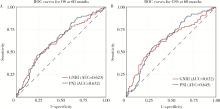
ROC curves of GNRI and PNI in predicting OS (A) and CSS (B) survival at 60 months GNRI, geriatric nutritional risk index; PNI, prognostic nutritional index; OS, overall survival; CSS, cancer-specific survival; ROC, receiver operating characteristic; AUC, area under the curve."

Figure 2

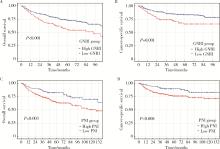
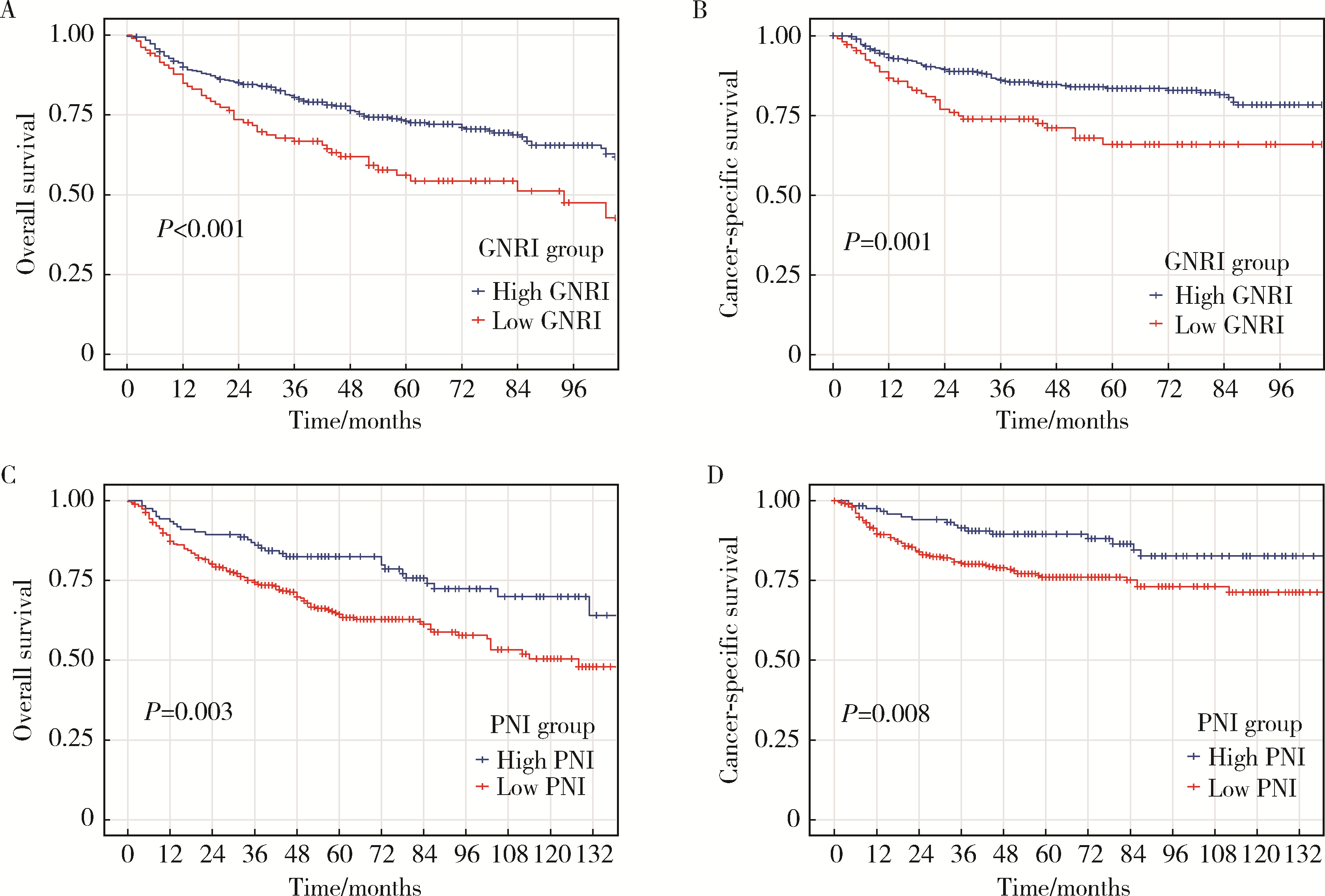
Kaplan-Meier survival curves for GNRI (A, B) and PNI (C, D) dichotomization, truncated when risk set size < 10 GNRI, geriatric nutritional risk index; PNI, prognostic nutritional index."

Figure 3

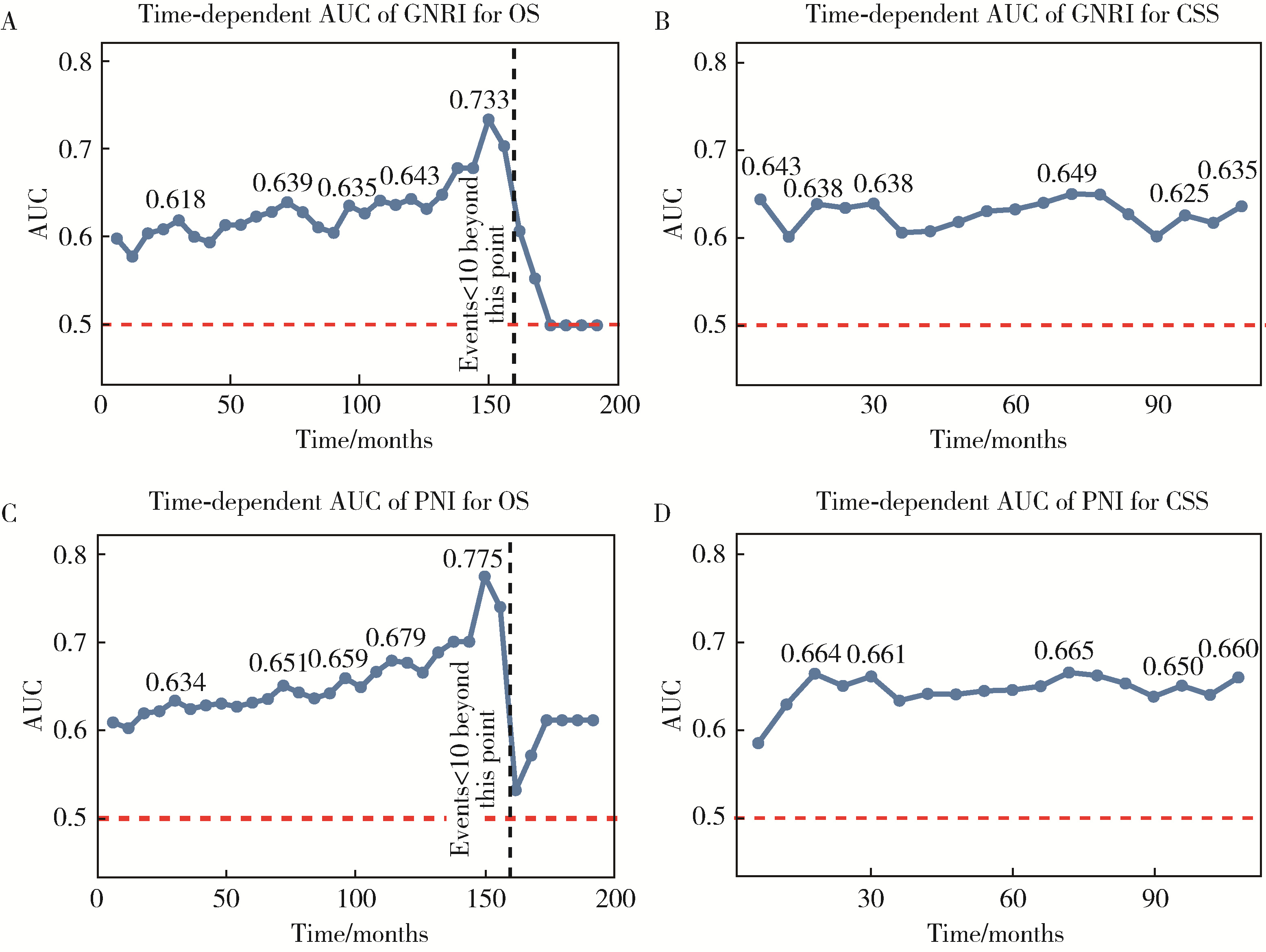
Time-dependent AUC curves for GNRI (A, C) and PNI (B, D) predicting survival, with stage peak AUC values marked GNRI, geriatric nutritional risk index; PNI, prognostic nutritional index; OS, overall survival; CSS, cancer-specific survival; AUC, area under the curve."

Figure 4

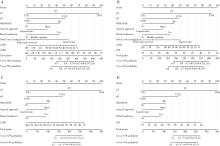
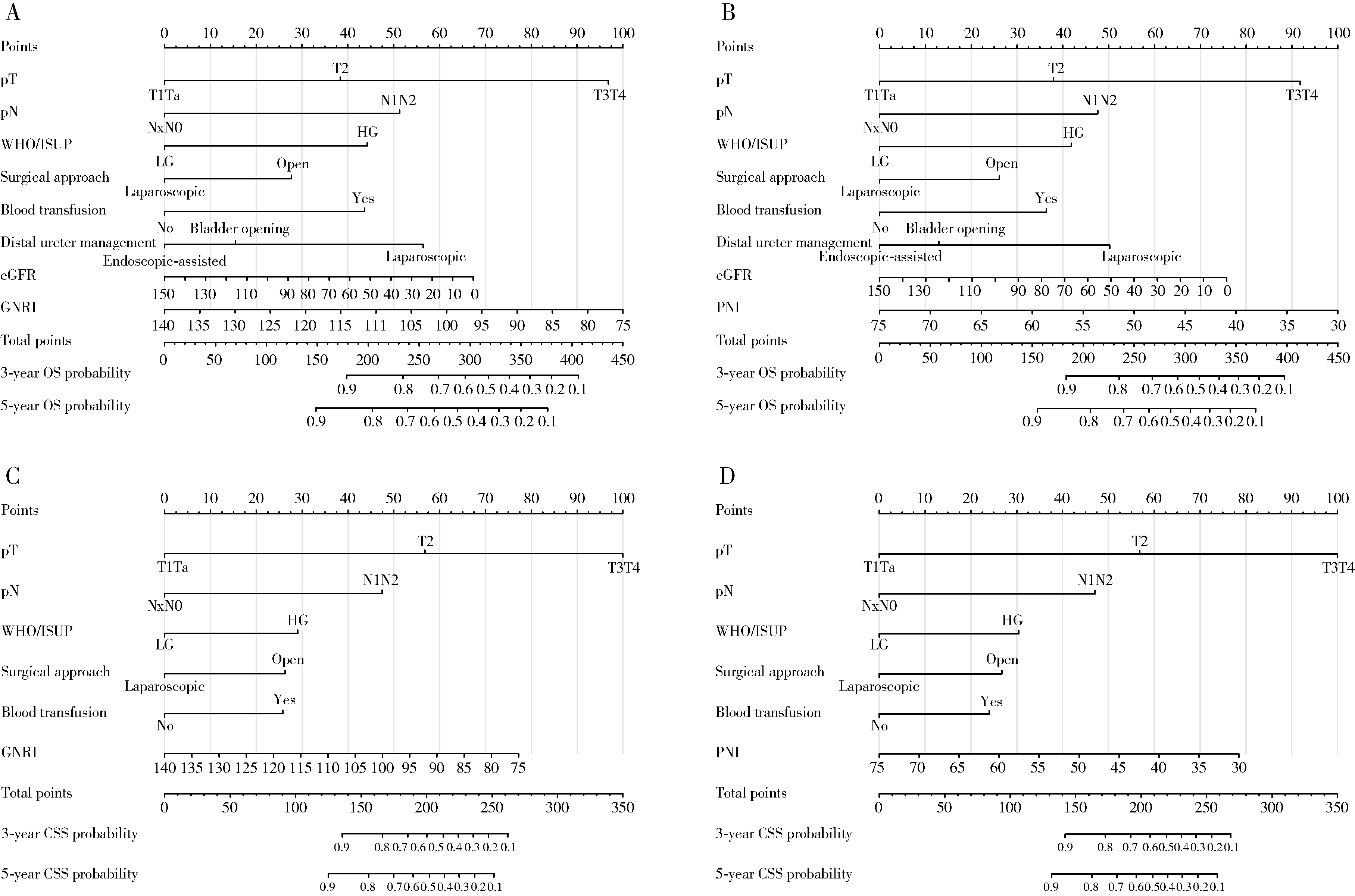
Nomograms for GNRI predicting OS (A), PNI predicting OS (B), GNRI predicting CSS (C) and PNI predicting CSS (D) GNRI, geriatric nutritional risk index; PNI, prognostic nutritional index; OS, overall survival; CSS, cancer-specific survival; pT, pathological tumor stage; pN, pathological node stage; WHO/ISUP, World Health Organization/International Society of Urological Pathology; eGFR, estimated glomerular filtration rate; LG, low grade; HG, high grade."

1
Ma Z , Yi Y , Qiu Z . Recent trends in incidence, mortality, survival, and treatment of upper tract urothelial carcinoma[J]. Fr J Urol, 2024, 34 (2): 102573.

doi: 10.1016/j.fjurol.2024.102573
2
Peyronnet B , Seisen T , Dominguez-Escrig JL , et al. Oncological outcomes of laparoscopic nephroureterectomy versus open radical nephroureterectomy for upper tract urothelial carcinoma: An European association of urology guidelines systematic review[J]. Eur Urol Focus, 2019, 5 (2): 205- 223.

doi: 10.1016/j.euf.2017.10.003
3
Teoh JY , Ng CF , Eto M , et al. Radical nephroureterectomy for UTUC conferred survival benefits irrespective of age and comorbidities[J]. World J Urol, 2022, 40 (11): 2657- 2665.

doi: 10.1007/s00345-022-04152-7
4
Zheng L , Ye J , Wu Q , et al. Geriatric Nutritional Risk Index as a prognostic marker for predicting survival outcomes in patients with UTUC after radical nephroureterectomy[J]. Sci Rep, 2025, 15, 8836.

doi: 10.1038/s41598-025-93557-6
5
Zheng Y , Yu D , Yu Z , et al. Association of preoperative systemic Immune-inflammation index and prognostic nutritional index with survival in patients with upper tract urothelial carcinoma[J]. J Cancer, 2020, 11 (19): 5665- 5677.

doi: 10.7150/jca.44915
6
Yu Z , Xiong Z , Ma J , et al. Prognostic and clinicopathological significance of systemic immune-inflammation index in upper tract urothelial carcinoma: A meta-analysis of 3 911 patients[J]. Front Oncol, 2024, 14, 1342996.

doi: 10.3389/fonc.2024.1342996
7
Marra A , Bondesan A , Caroli D , et al. Complete blood count (CBC)-derived inflammation indexes are useful in predicting metabolic syndrome in adults with severe obesity[J]. J Clin Med, 2024, 13 (5): 1353.

doi: 10.3390/jcm13051353
8
Huang YC , Chen SW , Chiang YS . Prognostic role of geriatric nutritional risk index (GNRI) and controlling nutritional status (CONUT) on outcomes in patients with head and neck cancer: A systematic review and meta-analysis[J]. BMC Cancer, 2025, 25 (1): 242.

doi: 10.1186/s12885-025-13565-7
9
Pinato DJ , North BV , Sharma R . A novel, externally validated inflammation-based prognostic algorithm in hepatocellular carcinoma: The prognostic nutritional index (PNI)[J]. Br J Cancer, 2012, 106 (8): 1439- 1445.

doi: 10.1038/bjc.2012.92
10
尹健, 赵华才, 薛苗新, 等. 术前预后营养指数在上尿路上皮癌根治性手术患者中的临床应用价值[J]. 临床医学研究与实践, 2024, 9 (16): 59- 63.
11
Xue W , Tan P , Xu H , et al. Impact of the preoperative prognostic nutritional index on survival outcomes in upper tract urothelial carcinomas[J]. Cancer Med, 2019, 8 (6): 2971- 2978.

doi: 10.1002/cam4.2161
12
Kuroda D , Sawayama H , Kurashige J , et al. Controlling Nutritional Status (CONUT) score is a prognostic marker for gastric cancer patients after curative resection[J]. Gastric Cancer, 2018, 21 (2): 204- 212.

doi: 10.1007/s10120-017-0744-3
13
Tokunaga R , Sakamoto Y , Nakagawa S , et al. CONUT: A novel independent predictive score for colorectal cancer patients undergoing potentially curative resection[J]. Int J Colorectal Dis, 2017, 32 (1): 99- 106.

doi: 10.1007/s00384-016-2668-5
14
Sun L , Yang Y , Yan R , et al. Higher Controlling Nutritional Status (CONUT) score indicates increased risk of sarcopenia in elderly hospitalized patients: A single institution study in China[J]. Front Nutr, 2025, 12, 1669225.

doi: 10.3389/fnut.2025.1669225
15
Xu Y , Yan Z , Li K , et al. Association between nutrition-related indicators with the risk of chronic obstructive pulmonary disease and all-cause mortality in the elderly population: Evidence from NHANES[J]. Front Nutr, 2024, 11, 1380791.

doi: 10.3389/fnut.2024.1380791
16
Qiu X , Wu Q , Zhang Y , et al. Geriatric nutritional risk index and mortality from all-cause, cancer, and non-cancer in US cancer survivors: NHANES 2001-2018[J]. Front Oncol, 2024, 14, 1399957.

doi: 10.3389/fonc.2024.1399957
17
Yamamoto S , Hashimoto Y , Takahashi F , et al. Association between muscle quality and GNRI in patients with type 2 diabetes[J]. Nutrients, 2026, 18 (2): 275.

doi: 10.3390/nu18020275
18
Zhou H , Lv D , Cui F , et al. Prognostic value of the geriatric nutritional risk index in patients with non-metastatic clear cell renal cell carcinoma: A propensity score matching analysis[J]. Nutr J, 2024, 23 (1): 114.

doi: 10.1186/s12937-024-01010-7
19
Minami S , Miyoshi N , Fujino S , et al. The geriatric nutritional risk index as a prognosis predictor in patients with rectal cancer receiving neoadjuvant chemotherapy[J]. Anticancer Res, 2022, 42 (7): 3759- 3766.

doi: 10.21873/anticanres.15866
20
McMillan DC . The systemic inflammation-based glasgow prognostic score: A decade of experience in patients with cancer[J]. Cancer Treat Rev, 2013, 39 (5): 534- 540.

doi: 10.1016/j.ctrv.2012.08.003
21
Argilés JM , Busquets S , Stemmler B , et al. Cancer cachexia: Understanding the molecular basis[J]. Nat Rev Cancer, 2014, 14 (11): 754- 762.

doi: 10.1038/nrc3829
22
Almasaudi AS , Dolan RD , Edwards CA , et al. Hypoalbuminemia reflects nutritional risk, body composition and systemic inflammation and is independently associated with survival in patients with colorectal cancer[J]. Cancers, 2020, 12 (7): 1986.

doi: 10.3390/cancers12071986
23
Al-Shaiba R , McMillan DC , Angerson WJ , et al. The relationship between hypoalbuminaemia, tumour volume and the systemic inflammatory response in patients with colorectal liver metastases[J]. Br J Cancer, 2004, 91 (2): 205- 207.

doi: 10.1038/sj.bjc.6601886
24
Mantovani A , Allavena P , Sica A , et al. Cancer-related inflammation[J]. Nature, 2008, 454 (7203): 436- 444.

doi: 10.1038/nature07205
25
Nagai T , Naiki T , Sugiyama Y , et al. A narrative review of peripheral blood parameters for urothelial carcinoma treated with systemic antitumor drugs[J]. Transl Androl Urol, 2023, 12 (5): 790- 801.

doi: 10.21037/tau-22-805
26
O'Brian D , Prunty M , Hill A , et al. The role of C-reactive protein in kidney, bladder, and prostate cancers[J]. Front Immunol, 2021, 12, 721989.

doi: 10.3389/fimmu.2021.721989
27
Peng L , Du C , Meng C , et al. Controlling nutritional status score before receiving treatment as a prognostic indicator for patients with urothelial cancer: An exploration evaluation methods[J]. Front Oncol, 2021, 11, 702908.

doi: 10.3389/fonc.2021.702908
28
Matsumoto T , Itoh S , Yoshizumi T , et al. C-reactive protein: Albumin ratio in patients with resectable intrahepatic cholangiocarcinoma[J]. BJS Open, 2020, 4 (6): 1146- 1152.

doi: 10.1002/bjs5.50348
29
Rouprêt M , Babjuk M , Burger M , et al. European association of urology guidelines on upper urinary tract urothelial carcinoma: 2020 update[J]. Eur Urol, 2021, 79 (1): 62- 79.

doi: 10.1016/j.eururo.2020.05.042
30
Stenvinkel P , Heimbürger O , Paultre F , et al. Strong association between malnutrition, inflammation, and atherosclerosis in chronic renal failure[J]. Kidney Int, 1999, 55 (5): 1899- 1911.

doi: 10.1046/j.1523-1755.1999.00422.x
31
Kalantar-Zadeh K , Ikizler TA , Block G , et al. Malnutrition-inflammation complex syndrome in dialysis patients: Causes and consequences[J]. Am J Kidney Dis, 2003, 42 (5): 864- 881.

doi: 10.1016/j.ajkd.2003.07.016
[1] Junqi SU,Xiaoying WANG,Zhiqiang SUN. Establishment and verification of a prognostic nomogram for survival of tongue squamous cell carcinoma patients who underwent cervical dissection [J]. Journal of Peking University (Health Sciences), 2024, 56(1): 120-130.
[2] Mei-ni ZUO,Yi-qing DU,Lu-ping YU,Xiang DAI,Tao XU. Correlation between metabolic syndrome and prognosis of patients with clear cell renal cell carcinoma [J]. Journal of Peking University (Health Sciences), 2022, 54(4): 636-643.
[3] Zhi-hua LI,Chun-ru XU,Yin LIU,Hua GUAN,Meng ZHANG,Xin-yan CHE,Qi TANG,Yan-bo HUANG,Xue-song LI,Li-qun HOU. Correlation between daily fluid intake behavioral habits and pathological characteristics of upper tract urothelial carcinoma [J]. Journal of Peking University (Health Sciences), 2022, 54(4): 621-627.
[4] Xiang DAI,Fei WANG,Yi-qing DU,Yu-xuan SONG,Tao XU. Correlation between adipokine and clinicopathological features and prognosis in upper tract urothelial carcinoma [J]. Journal of Peking University (Health Sciences), 2022, 54(4): 605-614.
[5] Bao GUAN,Mai WENG,Hang FAN,Ding PENG,Dong FANG,Geng-yan XIONG,Xue-song LI,Li-qun ZHOU. Evaluating the impact of preoperative anemia on the prognosis of upper tract urothelial carcinoma following radical nephroureterectomy: A single-center retrospective study of 686 patients [J]. Journal of Peking University(Health Sciences), 2019, 51(6): 1056-1061.
[6] Run-zhuo MA,Hai-zhui XIA,Min LU,Zhi-ying ZHANG,Qi-ming ZHANG,Jian LU,Guo-liang WANG,Lu-lin MA. Impact of diagnostic ureteroscopy and biopsy on radical nephroureterectomy of upper tract urothelial carcinoma [J]. Journal of Peking University(Health Sciences), 2019, 51(4): 665-672.
[7] GUAN Bao, CAO Zhen-peng, PENG Ding, LI Yi-fan, ZHAN Yong-hao, LIU Li-bo, HE Shi-ming, XIONG Geng-yan, LI Xue-song, ZHOU Li-qun. Prognostic factors of patients with T2N0M0 upper tract urothelial carcinoma: a single-center retrospective study of 235 patients [J]. Journal of Peking University(Health Sciences), 2017, 49(4): 603-607.
Viewed
Full text


Abstract

Cited

  Shared   
  Discussed   
No Suggested Reading articles found!