
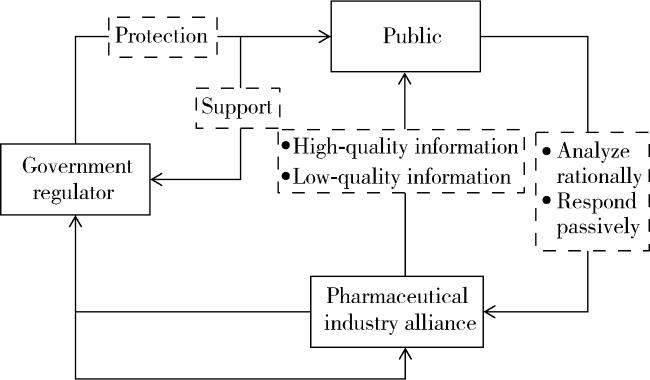
本研究旨在构建政府-公众-医药产业联盟三方演化博弈模型(图 1),将医药产业联盟作为独立博弈主体,揭示其利润驱动策略对信息传播的扭曲效应;通过复制动态方程解析三方策略博弈的鞍点效应,识别监管政策生效的临界条件;量化奖惩机制对系统均衡状态的敏感性,弥补传统研究忽视产业资本角色的理论不足。模型为破解“信息监管-商业利益-公共健康”三元悖论提供了新的分析框架。
1 资料与方法
1.1 研究框架
基于演化博弈理论,构建政府、公众与医药产业联盟的三方演化博弈模型,明确三方策略空间(α,β,γ)及支付函数。
1.1.1 三方策略空间及核心参数
表1 医药产业联盟、公众、政府监管部门三方主题策略空间Table 1 Three-way thematic strategy space for pharmaceutical industry alliances, the public, and government regulators |
| Game subjects | Tactical symbol | Strategy description | Probability |
| Pharmaceutical industry alliance | A1/A2 | Publish high quality/low quality information | α/(1-α) |
| The public | B1/B2 | Analyze rationally/respond passively | β/(1-β) |
| Government regulators | C1/C2 | Enforce regulation/no regulation | γ/(1-γ) |
表2 核心参数定义Table 2 Core parameter definitions |
| Parameter symbol | Full name of parameter | Economic implications | Theoretical foundation |
| α | Selection probability of high quality information | Degree to which industry alliances assess reputational value | Kreps reputation game model |
| β | Rational analysis selection probability | Crowd perception of willingness to invest resources | Dual systems cognitive theory |
| γ | Probability of regulatory implementation | Government risk prevention and control efforts | Polycentric governance theory |
| Iyy | Benefits of industry information release | Direct economic benefits from information dissemination | Fombrun’s reputational competition model |
| Cyy | High-bquality information argumentation cost | Input costs of professional verification, data collection, etc. | Kreps signaling costs |
| Cyy1 | Argumentation cost of low quality information | Cost of false information cover-up (Cyy1 < Cyy) | Adverse selection theory |
| Iqz | Benefits of information acquisition by the public | Value of health improvement due to correct information | Health behavior theory |
| Nqz | Negative utility for the public | Economic loss of health due to misinformation | Risk perception model |
| Cqz | Cost of information identification | Cognitive resource consumption such as time and energy | Cognitive load theory |
| Izf | Gains in government governance | Political gains from public health order maintenance | Public choice theory |
| Nzf | Government credibility loss | Cost of crisis of confidence due to regulatory failure | Institutional legitimacy theory |
| Czf | Regulatory enforcement costs | Regulatory resource inputs such as manpower and technology | Regulatory cost curve theory |
| Czf1 | Expost intervention costs | Additional administrative costs of crisis response | Contingency management theory |
| Fyy | Penalties for industry violations | Financial penalties for low-quality information | Becker deterrence theory |
| Ryy | Industry reputation loss | Long-term revenue loss due to scandal exposure | Reputational capital theory |
| Pyy | Industry compliance incentives | Policy incentives for the release of high-quality information | Positive reinforcement theory |
1.1.2 模型假设
1.1.2.1 假设一(有限理性动态博弈)
1.1.2.2 假设二(动态博弈时序)
医药产业联盟优先选择信息质量水平,政府监管部门观测到信息质量信号后制定监管策略,公众根据前两者行为结果更新认知并采取响应。
1.1.3 三方支付函数
医药产业联盟收益函数:
公众效用函数:
政府监管部门目标函数:
1.2 模型构建
基于以上假设,医药产业联盟、公众、政府监管部门的博弈矩阵见表 3。
表3 医药产业联盟、公众、政府监管部门的博弈矩阵Table 3 The game matrix of the pharmaceutical industry alliance, the masses, and government regulators |
| Public | Government regulator | |||
| Regulated (γ) | Unregulated (1-γ) | |||
| Pharmaceutical industry alliance | High-quality information (α) | Rational analysis (β) | Iyy-Cyy+Pyy, Iqz-Cqz,Izf-Czf-Pyy | Iyy-Cyy,Iqz-Cqz,Izf-Czf1 |
| Passive response (1-β) | Iyy-Cyy+Pyy,0,Izf-Czf-Pyy | Iyy-Cyy,0,Izf-Czf1 | ||
| Low-quality information (1-α) | Rational analysis (β) | -Cyy1-Fyy-Ryy,-Nqz-Cqz,-Nzf-Czf | -Cyy1,-Nqz-Cqz,-Nzf-Czf1-Fzf | |
| Passive response (1-β) | -Cyy1-Fyy-Ryy,-Nqz,-Nzf-Czf-Fzf | -Cyy1,-Nqz,-Nzf-Czf1-Fzf | ||
2 结果与讨论
2.1 医药产业联盟的策略稳定性分析
医药产业联盟发布高或低质量信息的期望收益(E11、E12):
医药产业联盟策略选择的复制动态方程:
α的一阶导数:
根据微分方程稳定性定理,需要满足F(α)=0且d(F(α))/dα<0,才能使医药产业联盟处于稳定状态,因此,医药产业联盟的纯策略和混合策略的均衡解为0,1,(Cyy-Cyy 1-Iyy)/(Fyy+Pyy+Ryy)。
研究表明,在突发公共卫生事件的健康信息传播过程中,公众的认知与行为显著影响医药产业联盟的策略选择。若医药产业联盟发布低质量信息,其不仅难以实现预期收益,还可能因声誉损失承担额外风险;反之,当公众能够基于科学依据对健康信息进行理性评估(而非盲目跟风引发非理性行为)时,医药产业联盟将更倾向于发布高质量信息以优化自身策略。这一动态表明,公众科学素养的提升可推动医药产业联盟的策略向高质量信息发布方向演化。为实现策略稳定性,需通过完善信息质量监督制度与公众理性决策能力构建双轨并行机制,形成长效治理基础。
然而,在突发公共卫生事件中,信息不对称与认知局限常导致公众难以理性判断,进而滋生恐慌情绪[13]。对此,政府监管部门应构建多维干预机制:其一,建立信息质量评估体系,强化对健康相关内容的动态监管;其二,通过公众健康教育提升信息鉴别能力,并鼓励理性个体参与科学引导与谣言澄清;其三,针对危机期间的信息传播乱象,完善惩戒机制以明确医药产业联盟的社会责任,遏制其通过低质量信息不当牟利的行为。
综上,政府通过严格执行奖惩措施可有效抑制医药产业联盟的投机行为,而公众主动采纳权威建议则有助于维持基本理性判断能力[14]。这种“政府监管-公众参与-产业自律”的协同治理模式,不仅能促进医药产业健康发展,还可提升社会整体科学素养,最终实现公共卫生风险最小化与社会效益最大化。
2.2 公众的策略稳定性分析
公众对发布的健康相关信息采取理性分析或被动响应的期望收益(E21、E22):
公众策略选择的复制动态方程:
β的一阶导数:
根据微分方程稳定性定理,需要满足F(β)=0且d(F(β))/dβ<0,才能使公众策略处于稳定状态。因此,公众的纯策略和混合策略的均衡解为Cqz/Iqz,0,1。
研究表明,在突发公共卫生事件的医药健康信息动态博弈中,医药产业与公众行为存在显著互动关系,即若医药产业提高高质量信息的发布频率,公众倾向于直接信任其内容。这一策略选择源于高质量信息减少了公众的信息甄别需求,从而降低其辨别成本(如时间与认知资源投入);反之,若低质量信息占比上升,公众信任度随之下降,其策略将转向理性辨别,以规避信息误导带来的潜在风险。
进一步分析发现,公众应对突发公共卫生事件的行为选择与其对事件严重性的认知程度密切相关[15]。因此,针对不实信息传播与非理性行为,公众需保持必要理性,审慎评估潜在收益与损失(如健康风险、经济损失等),避免因盲目跟风或情绪化决策加剧社会资源浪费或个人利益受损。这种基于成本-收益分析的决策模式,不仅有助于优化医药信息传播环境,还能提升公众在危机中的应对能力。
2.3 政府监管部门策略稳定性分析
政府监管部门采取监管或不监管的期望收益(E31、E32):
政府监管部门策略选择的复制动态方程:
γ的一阶导数:
根据微分方程稳定性定理,需要满足F(γ)=0且d(F(γ))/dγ<0,才能使政府监管部门处于稳定状态。因此,政府监管部门的纯策略和混合策略的均衡解为(-Czf+Czf1+Fzf×β)/(Fzf×β+Pyy),(-Czf+Czf 1-Pyy×α)/(Fzf×(α-1)),0,1。
研究表明,公众对医药卫生信息的理性辨别能力直接影响政府监管部门在突发公共卫生事件中的策略选择。
高公众理性水平情境:当公众具备较强的信息鉴别能力时,其能够有效区分信息的科学性与可靠性,从而降低低质量信息引发的社会风险。在此情境下,政府可通过适度放松监管(如减少事后审查频次、简化审批流程),以降低行政成本并提升效率。
低公众理性水平情境:若公众倾向于被动接受媒体信息且缺乏主动甄别行为,政府需强化监管力度(如增加信息真实性核查、建立快速响应机制),以避免误导性信息扩散导致的社会损失。
进一步研究发现,低质量健康信息的传播风险与政府监管强度呈显著正相关。针对高风险信息(如可能引发公共卫生危机或大规模社会恐慌的内容),政府监管部门应优先采取严格的事前干预策略[16],具体包括构建基于大数据与人工智能的预测模型,识别潜在的高风险信息传播路径;建立多部门协同验证机制,对关键信息的科学性与社会影响进行预评估;在信息传播初期实施定向管控(如限流、标注警示信息),阻断其扩散链条。这种“早预防、早治理”的监管模式,通过将资源前置于风险爆发前的关键节点,既能优化监管资源配置效率,又能提升突发公共卫生事件的整体应对效能。
2.4 策略组合稳定性分析
由F(α)=0,F(β)=0,F(γ)=0得到三方的三个均衡点,最后得到27个均衡点。三方演化博弈系统的Jacobian矩阵为:
基于Lyapunov稳定性法则,均衡点的稳定性可通过Jacobian矩阵特征值的实部符号进行判定,即所有特征值为负时均衡点呈现渐进稳定性;存在一个特征值为正,则该均衡点为不稳定点;除为零的情况外,其余特征值均为负时,处于临界稳定状态,但其稳定性无法仅通过特征值的符号确定。各均衡点的稳定性结果见表 4。
表4 三方演化博弈均衡点特征值表Table 4 Table of eigenvalues of equilibrium points of the three-way evolutionary game |
| Balance point | Jacobian matrix eigenvalues |
| λ1,λ2,λ3 | |
| E1 (0,0,0) | -Cyy+Cyy1+Iyy,-Cqz,-Czf+Czf1 |
| E2 (1,0,0) | Cyy-Cyy1-Iyy,-Cqz+Iqz-Czf+Czf1-Pyy |
| E3 (0,1,0) | -Cyy+Cyy1+Iyy,Cqz,-Czf+Czf1+Fzf |
| E4 (0,0,1) | -Cyy+Cyy1+Fyy+Iyy+Pyy+Ryy,-Cqz,Czf-Czf1 |
| E5 (1,1,0) | Cyy-Cyy1-Iyy,Cqz-Iqz,-Czf+Czf1-Pyy |
| E6 (1,0,1) | Cyy-Cyy1-Fyy-Iyy-Pyy-Ryy,-Cqz+Iqz,Czf-Czf1+Pyy |
| E7 (0,1,1) | -Cyy+Cyy1+Fyy+Iyy+Pyy+Ryy,Cqz,Czf-Czf1-Fzf |
| E8 (1,1,1) | Cyy-Cyy1-Fyy-Iyy-Pyy-Ryy,Cqz-Iqz,Czf-Czf1+Pyy |
如表 3所示,当政府对医药产业联盟的惩罚与奖励总额(Fyy+Pyy)低于其通过发布低质量健康信息获得的投机收益(Iyy),且公众普遍缺乏理性分析能力时,三方博弈系统可能在以下两个局部稳定点间切换:(1)低质量信息均衡:联盟发布低质量信息、公众盲信、政府严格监管;(2)高质量信息均衡:联盟发布高质量信息、公众理性分析、政府宽松监管。
在低质量信息均衡状态下,监管措施因执行效率不足难以约束联盟行为,导致低质量信息加速流入市场,严重威胁公众健康。为规避这一风险,监管部门需满足Fyy+Pyy >Iyy,即罚款与奖励总额需显著高于联盟的投机收益,从而通过经济杠杆引导其转向高质量策略。此外,需通过健康教育降低公众的理性分析成本(Cqz),提升其信息鉴别能力。
值得注意的是,政府监管成本(Czf)、问责惩处力度(Nzf)以及公众理性分析成本(Cqz)的变化,仅影响系统收敛速度,而无法改变上述演化稳定结果的本质。
进一步优化路径包括:(1)奖惩机制精细化:在维持高额罚款(Fyy)的基础上,提高高质量信息发布的奖励(Pyy),如税收优惠或政策扶持;(2)公众理性水平提升:通过科普宣传简化信息鉴别流程(降低Cqz),或引入第三方权威机构提供辅助决策工具;(3)混合策略规避:建立动态奖惩阈值,确保Fyy+Pyy始终覆盖联盟投机动机(Iyy)的波动范围。
上述措施可通过“高约束-高激励-低执行成本”的协同机制,在保障健康信息质量的同时,推动医药产业可持续发展。
2.5 仿真分析
考虑现实情况对模型进行赋值,验证医药产业联盟、公众和政府三方博弈演化稳定性分析的有效性,使用MATLAB 2016a进行数值模拟,赋值依据见表 5。
表5 核心参数赋值依据Table 5 Basis for assigning values to core parameters |
| Parameter symbol | Assign a value | Theoretical foundation |
| Iyy=150 | Reference value | Extrapolated with reference to the average marketing ROI of the pharmaceutical industry in 2021 |
| Cyy-Cyy1 | 85/105 | Third-party certification (Cyy) required for high-quality information, format review only for low-quality information(Cyy1=Cyy×0.3) |
| Fyy=20/25 | Degree of punishment | Standardized to the minimum fine under article 118 of the drug administration Act |
| Pyy=35 | Reward value | Average value of government funding for science and technology projects |
| Nqz=30 | Loss value | Equivalent QALY loss (0.05 quality-adjusted life year per misinformation) |
ROI, return on investment; QALY, guality-adjusted lift year. |
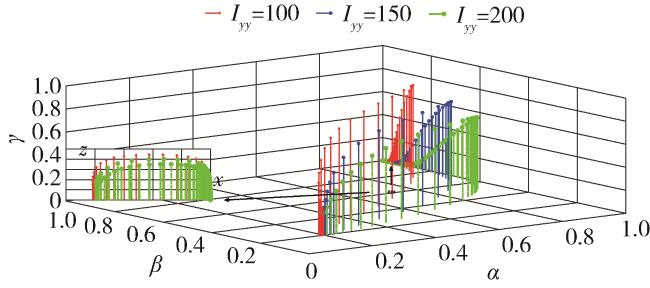
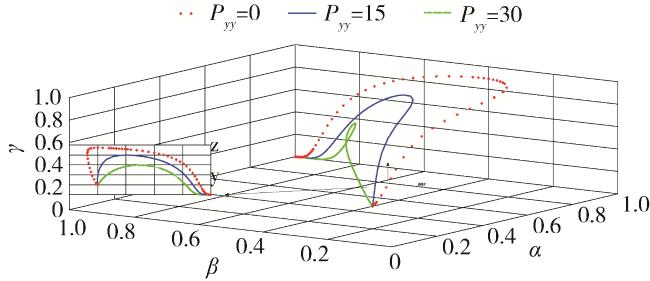
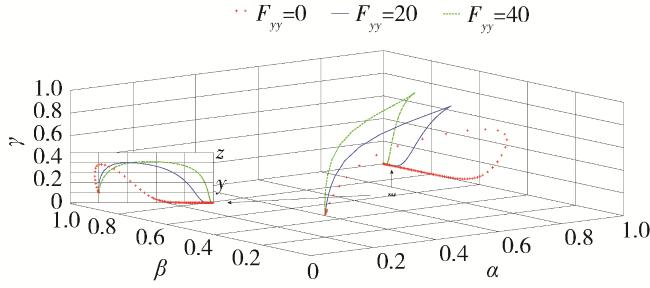
首先,第一组仿真数值:Iyy=150,Cyy-Cyy1 =85,Cqz=10,Iqz=15,Czf=15,Czf1 =25,Fyy=20,Fzf=40,Pyy=35,Ryy=40,Nqz=30,Nzf=45,在第一组仿真数据的基础上,分析Iyy、Pyy、Fyy、Fzf(医药产业收益,政府对医药产业奖励,政府对医药产业处罚,上级部门对政府不作为处罚)对演化博弈的影响。
医药产业联盟收入的提升能够催生优质健康信息发布的速度,而随着Iyy的提升,政府监管部门监管概率的降低,优质健康信息发布概率将会提高(图 2)。
在演化过程中,Pyy的增加会使得政府监管率下降,政府要合理制定奖惩机制,以奖励形式对医药产业高质量信息进行鼓励(图 3)。
医药产业发表高质量信息演化稳定于1之前,Fyy增加则政府监管部门的监管上升,当医药产业高质量信息演化稳定于1后,政府监管下降(图 4)。
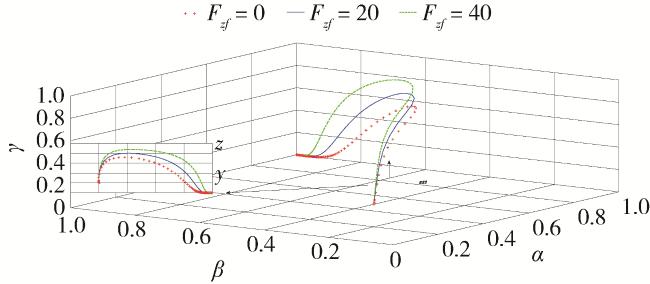
为保障监管可持续性,需构建“激励-约束”并行的制度框架:(1)强化行政处罚机制:上级部门通过动态设定Fzf阈值(如与低质量信息的社会危害程度挂钩),对监管不力行为实施问责;(2)优化奖惩协同效应:在维持奖励力度(Pyy)的同时[18],要求监管部门定期公开监管效能评估报告,接受公众监督;(3)完善闭环反馈:将医药产业信息质量(α)与监管成本(Czf)纳入绩效考核,形成“产业自律-政府监管-公众反馈”的联动机制。
此模式下,行政处罚制度(Fzf)通过倒逼监管部门履职尽责,可减少其对奖励机制的路径依赖;而“奖惩并行”策略(Pyy+Fzf)既能稳定高质量信息供给(维持α=1),又可防范监管惰性,最终实现医药信息传播体系的动态均衡。
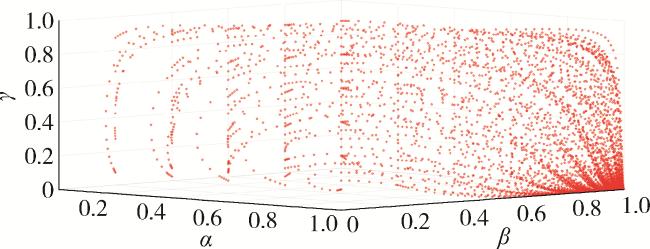
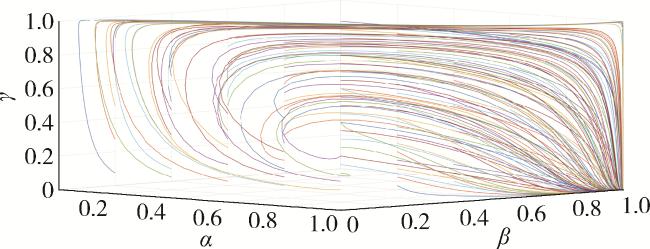


基于此,监管当局需从源头治理与动态调整两方面完善监督机制:(1)建立涵盖经济激励(Pyy)与社会责任的多维度评价体系,约束医药产业联盟的信息发布行为,例如,将信息质量(α)纳入企业信用评级,对低质量信息(α=0)实施收益扣减[19];(2)根据仿真结果中双均衡的存在性,设计弹性监管策略。当系统趋近α=1均衡时,政府可逐步降低监管强度,当系统向α=0均衡偏移,则立即启动惩戒机制,并通过公众教育降低理性分析成本。
2.6 结语与启示
本研究聚焦突发公共卫生事件背景下医药产业联盟、公众与政府监管部门的三方演化博弈过程,旨在构建高质量健康信息的保障机制。通过解析医药产业联盟的自律机制、公众理性参与及政府动态监管的协同关系,研究发现在危机情境下,政府监管强度与低质量健康信息的社会危害呈正相关。当低质量信息导致的社会损失超过监管成本时,政府倾向于提高监管概率,从而显著抑制医药产业联盟的投机行为。为优化监管效率,本研究提出以下策略:基于信息风险等级(如传播范围、健康危害程度)划分监管优先级,对高风险信息实施即时审核与定向管控;引入人工智能技术(如自然语言处理、舆情追踪算法),降低人工审核成本,提升虚假信息识别效率;对低质量信息发布方征收动态罚款;建立黑名单公示制度,对多次违规企业吊销其资质;开通举报渠道并奖励有效线索,降低政府监督成本。需指出的是,本研究基于理性经济人假设构建博弈模型,但突发公共事件中决策主体可能受情绪因素(如恐慌、从众心理)干扰,导致策略偏离理论均衡。
综上所述,通过理论推导与仿真验证的一致性,本研究揭示了三方博弈中“高质量信息-低监管成本”与“低质量信息-高社会风险”的路径依赖关系。同时,为健康信息传播体系的优化指明方向,即要强化监管机制的可调节性,提升公众理性认知能力,规范产业行为边界,三者协同可实现传播效率与风险防控的平衡。未来研究将引入情绪效用函数(如前景理论框架),通过多期重复博弈分析情绪波动对三方策略演化的影响,进一步揭示“理性-感性”混合决策模式下监管机制的适应性调整路径。