Journal of Peking University (Health Sciences) ›› 2025, Vol. 57 ›› Issue (2): 360-368. doi: 10.19723/j.issn.1671-167X.2025.02.022

Previous Articles     Next Articles

Personalized mandibular reconstruction assisted by three-dimensional retrieval model based on fully connected neural network and a database of mandibles

Shiyu QIU1, Yang LIAN2, Yifan KANG1, Lei ZHANG1, Yiwang CAI2, Xiaofeng SHAN1,*(), Zhigang CAI1,*()   

  1. 1. Department of Oral and Maxillofacial Surgery, Peking University School and Hospital of Stomatology & National Center for Stomatology & National Clinical Research Center for Oral Diseases & National Engineering Research Center of Oral Biomaterials and Digital Medical Devices & Beijing Key Laboratory of Digital Stomatology, Beijing 100081, China
    2. Byte-king Technology, Beijing 102629, China
  • Received:2021-10-20 Online:2025-04-18 Published:2025-04-12
  • Contact: Xiaofeng SHAN, Zhigang CAI E-mail:kqsxf@263.net;c2013xs@163.com
  • Supported by:
    the National Key Research and Development Program of China(2016YFC1102902);the Capital Health Development Research Project(CFH2020-2-4102)

RICH HTML


Abstract:

Objective: To propose a new protocol for personalized mandibular reconstruction assisted by three-dimensional (3D) retrieval model based on fully connected neural network (FCNN) and a database of mandibles, and to verify clinical feasibility of the protocol. Methods: A database of mandibles of 300 normal northern Chinese Han people was established. On the basis of cephalometry, the mandible landmarks with good stability were further screened. Mandibular landmarks were selected and geometric features of the mandible were extracted. A 3D retrieval algorithm was developed, which could retrieve the mandible most similar to a given mandible from the database. A FCNN was built to train the algorithm to improve accuracy of the 3D retrieval model. Using Geomagic Control 2014 software, matching accuracy of the 3D retrieval model was based on aforementioned mandible database and algorithm. From December 2019 to March 2021, a total of 5 patients underwent personalized mandibular reconstruction assisted by a 3D retrieval model based on mandible database and FCNN in the Department of Oral and Maxillofacial Surgery, Peking University School and Hospital of Stomatology. The most similar mandible was retrieved from mandible database through 3D retrieval algorithm. It was used to restore the premorbid morphology of defect area and guide mandibular reconstruction. For the 5 patients, mandible was reconstructed with iliac flap. Virtual surgical plan was transformed using individual surgical guides. Results: Through screening, mandibular landmarks with high reproducibility and stability were identified and composed of mandibular landmarker protocols. After training, the average deviation between most similar mandible retrieved from the 300-case mandible database through 3D retrieval model based on FCNN and given mandible was (1.77±0.44) mm. And the root-mean-square deviation between the most similar mandible retrieved from the database and given mandible was (2.58±0.86) mm. The mandibular reconstruction surgery was successful in all the 5 patients. Their facial symmetry and occlusion were restored. All the patients were satisfied with postoperative appearance. The mean deviation between postoperative mandible and preoperative design was (0.98±0.17) mm. The area with a deviation ≤1 mm accounted for 61.34%±14. 13%, ≤2 mm accounted for 83.82%±7.35%, and ≤3 mm accounted for 93.94%± 2.87%. Conclusion: The personalized mandibular reconstruction assisted by 3D retrieval model based on the 300-case mandible database and FCNN is feasible clinically.

Key words: Database of mandibles, Fully connected neural network, Three-dimensional retrieval, Mandibular reconstruction

CLC Number: 

  • R782.1

Table 1

Mandible landmark points"

Name Abbreviation Definition
Lower incisor point LIP Midpoint of mesio-incisal angle of bilateral lower first incisors
Lower first molar point LFP(L/R) Mesio-buccal cusp of lower first molar
Lower canine point LCP(L/R) Tip of lower canine
Infradentale In Most anterior point of inferior alveolar process on MSP
Supramental Sup Midpoint of In and Pogonion
Pogonion Po Most anterior point of mentum on MSP
Menton Me Lowest point of mentum on MSP
Gnathion Gn Midpoint of Po and Me
Post point of menton PPM Most posterior point of mentum on MSP
Condylar anterior point CAP(L/R) Most anterior point of condyle
Condylar posterior point CPP(L/R) Most posterior point of condyle
Condylar lateral point CLP(L/R) Most lateral point of condyle
Condylar medial point CMP(L/R) Most medial point of condyle
Condylar top point CTP(L/R) Top point of condyle
Coracoid process CP(L/R) Tip of coracoid process
Lowest point of sigmoid notch LPSN(L/R) Lowest point of sigmoid notch
Corresponding point of LPSN LPSNC(L/R) The same horizontal point of LPSN on the posterior edge of ramus
Gonion Go(L/R) Gonion point
Antegonial notch point AN Antegonial notch point
Lowest point of anterior edge of ramus LAR(L/R) Intersection of anterior edge of ramus and mandibular body
Corresponding point of LAR LARC(L/R) The same horizontal point of LAR on the posterior edge of ramus
Seven equal points of lower edge of mandible SLM(1-6) Seven equal points of mandibular lower edge
Superior prosthion SP Most anterior point of upper alveolar process on MSP
Subspinale Sub Midpoint of SP and anterior nasal spine
Upper incisor point UIP(L/R) Midpoint of mesio-incisal angle of bilateral upper first incisors
Upper canine point UCP(L/R) Tip of upper canine
Upper first molar point UFMP(L/R) Mesio-buccal cusp of upper first molar
TMJ eminence lowerest point ELP(L/R) Lowest point of TMJ eminence
TMJ fossa top point FTP(L/R) Top point of TMJ fossa

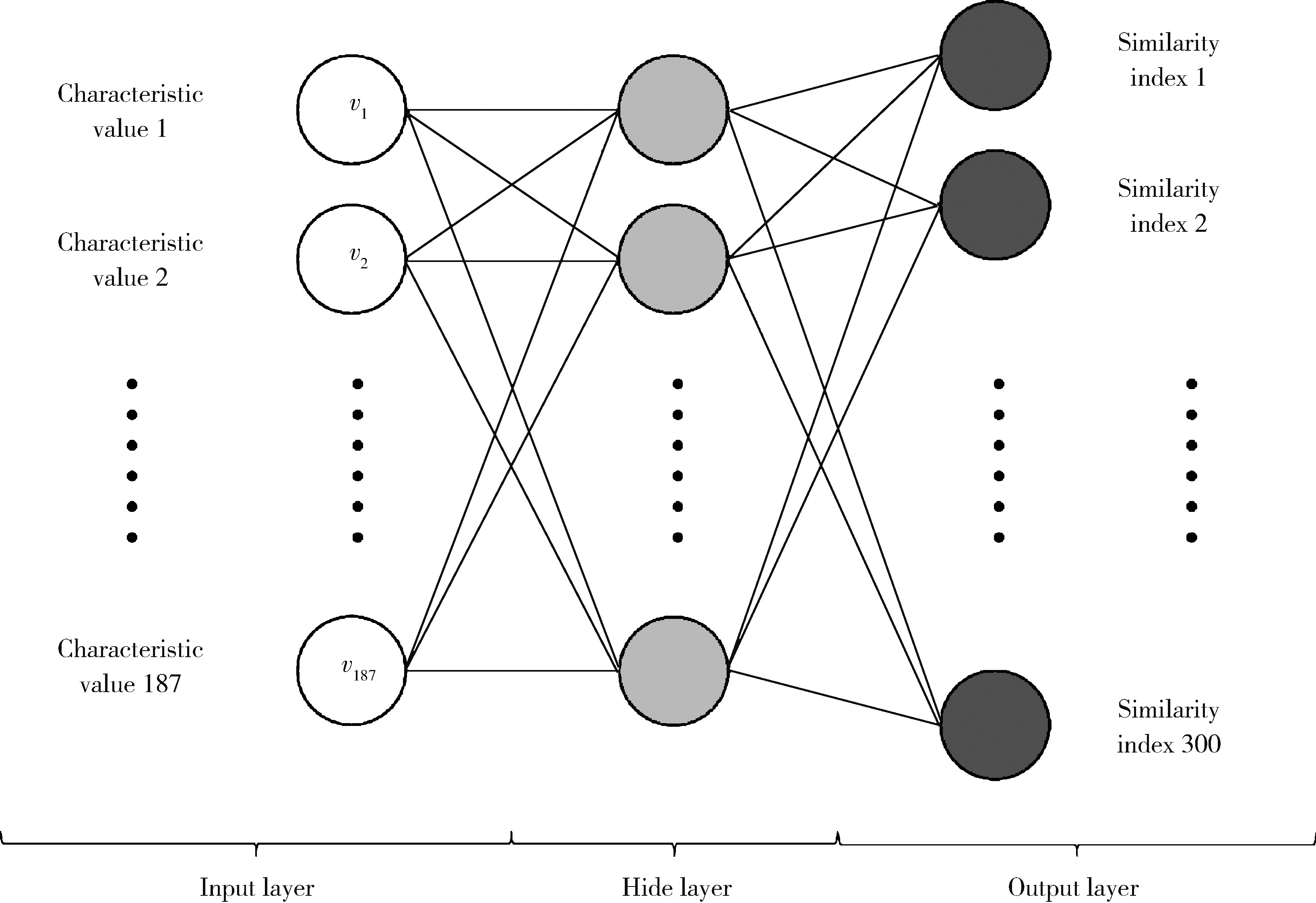
Figure 1

Structure of most similar mandible retrieval model with fully connected neural network"

Figure 2

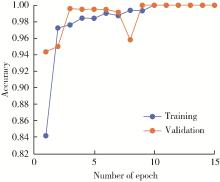
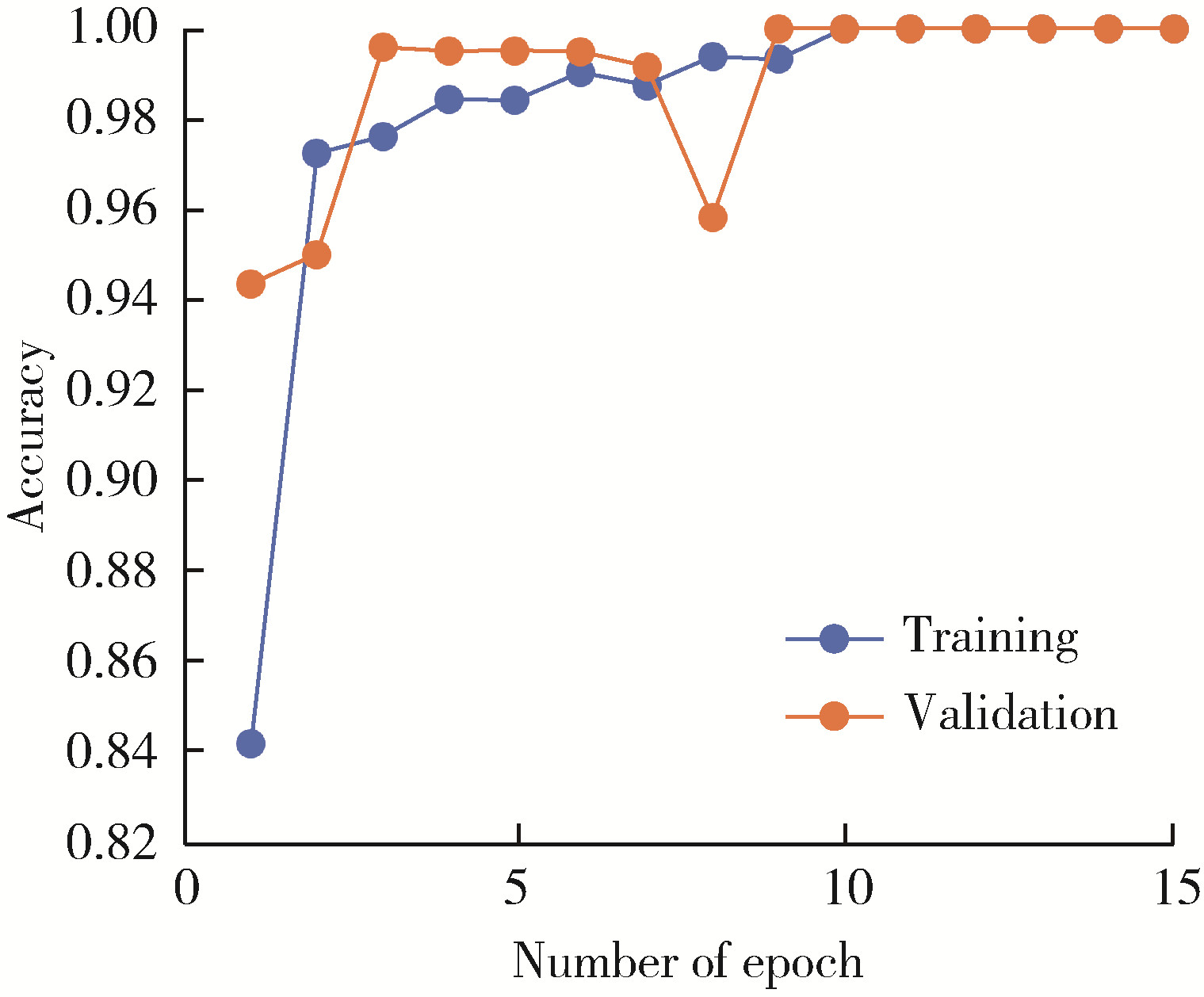
The results of training and validation accuracy of fully connected neural network"

Table 2

Five patients' information"

Case No. Gender Age Diagnosis Defect type (according to Jewer classification) Defect area (using FDI system for teeth)
1 Female 46 Fibromyxoma LC 37-41
2 Female 55 Ameloblastoma LCL 33-47
3 Male 25 Ossifying fibroma LC 31-right mandibular angle
4 Male 43 Mandibular defect secondary to resection for ameloblastoma 6 months ago LCL 35-43
5 Male 27 Mandibular defect secondary to resection for keratocyst 2 years ago L 47-right mandibular angle

Figure 3

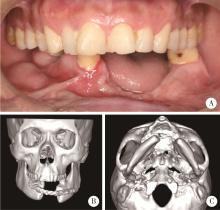
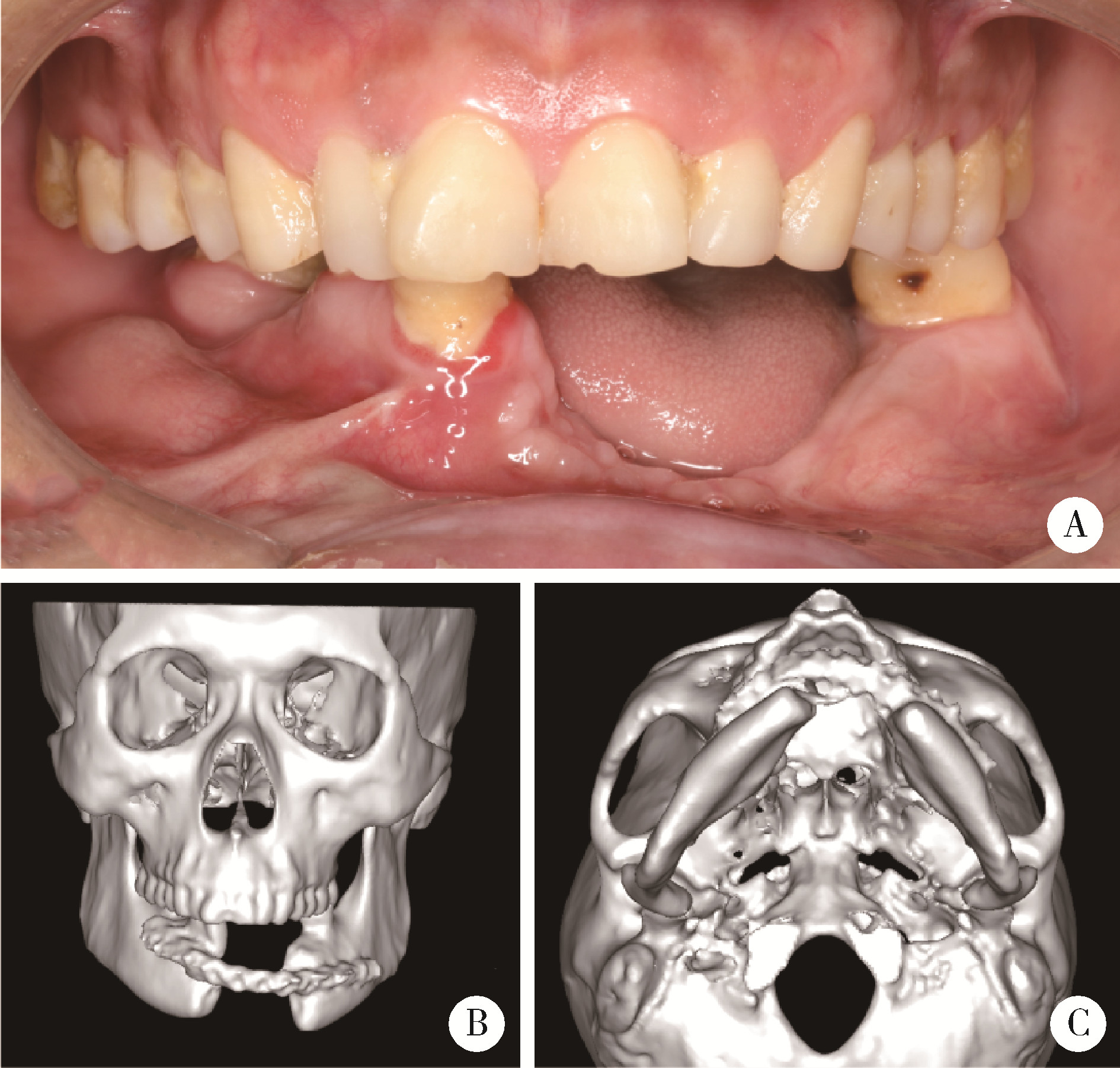
Images of case No.4 A, preoperative inraoral image; B, front view of preoperative maxillo-facial CT; C, bottom view of preoperative maxillofacial CT."

Figure 4

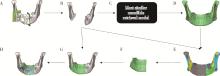
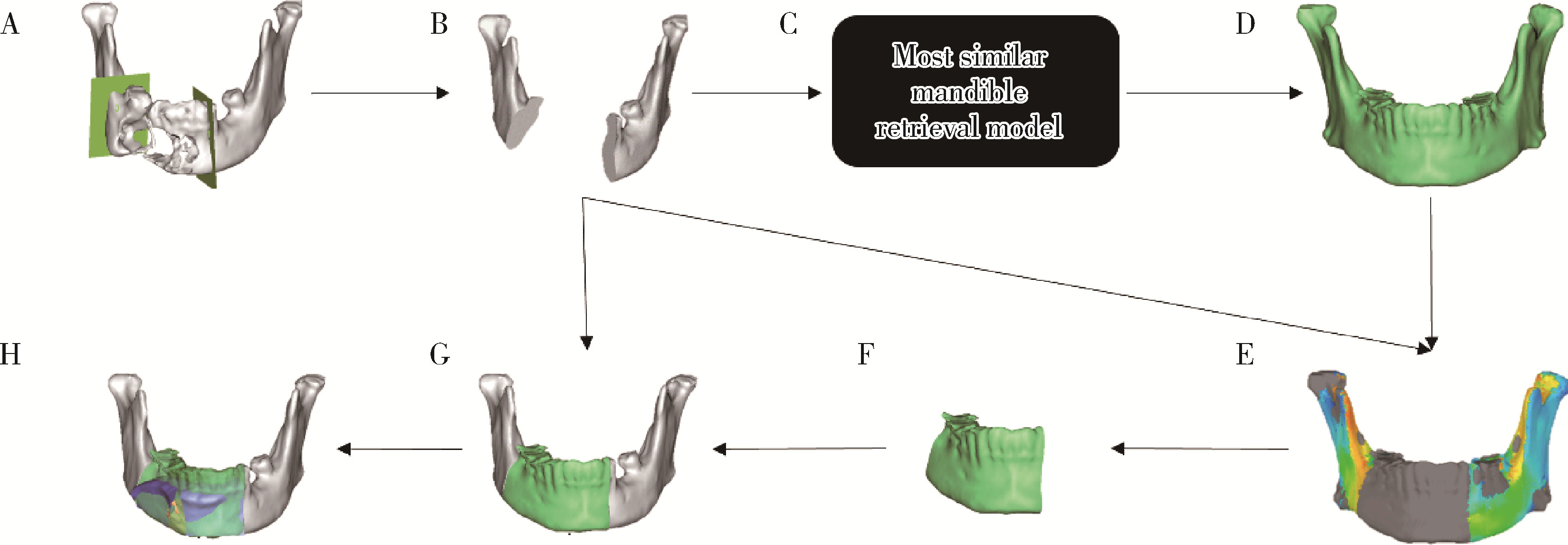
Workflow detailing most similar mandible three-dimensional retrieval model usage A, virtual osteotomy; B, defective mandible model; C, most similar mandible retrieval model; D, most similar mandible; E, align defective mandible model and most similar mandible; F, use the osteotomy surface in A to perform osteotomy on most similar mandible and obtain defect area replacement; G, use the defect area replacement restoring the morphology of the defective mandible model in B; H, design mandibular reconstruction plan under the guidance of the fusion mandible in G."

Figure 5

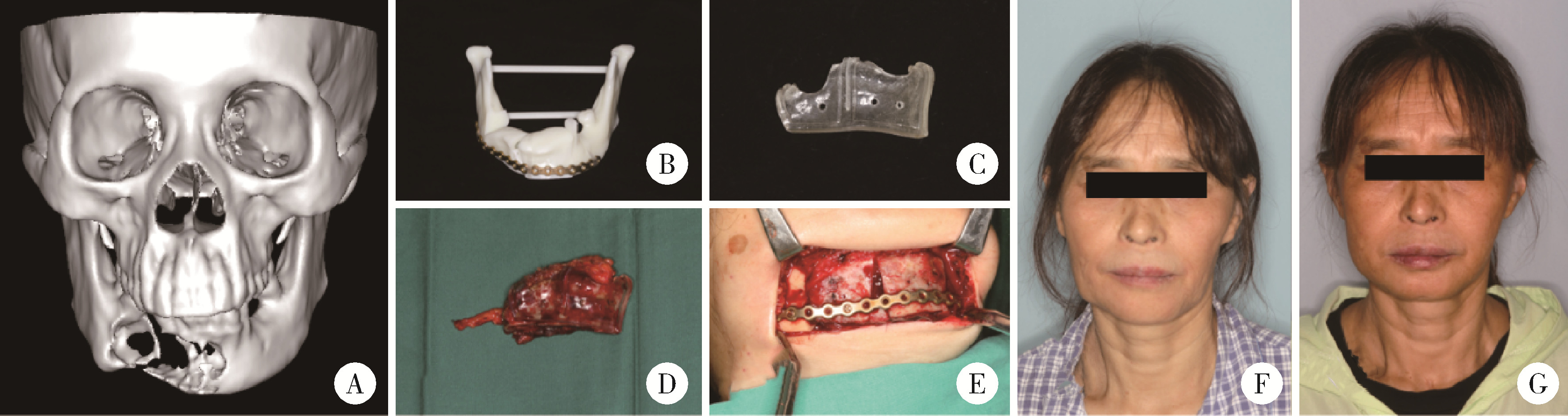
Mandibular reconstruction flowchart A, preoperative maxillofacial CT; B, 3D printed model and pre-curved titanium plate on it; C, 3D printed iliac osteotomy guide; D, iliac flap preparation under the guidance of individual surgery guide; E, iliac flap fixed in place; F, preoperative appearance; G, postoperative appearance 1 year after surgery. 3D, three-dimensional."

Figure 6

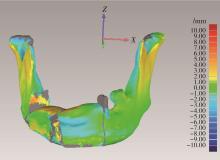
Postoperative chromatographic analysis"

Table 3

New mandible landmark points"

Name Abbreviation Definition
Lower incisor point LIP Midpoint of mesio-incisal angle of bilateral lower first incisors
Lower first molar point LFP(L/R) Mesio-buccal cusp of lower first molar
Lower canine point LCP(L/R) Tip of lower canine
Infradentale In Most anterior point of inferior alveolar process on MSP
Supramental Sup Midpoint of In and Pogonion
Pogonion Po Most anterior point of mentum on MSP
Menton Me Lowest point of mentum on MSP
Gnathion Gn Midpoint of Po and Me
Post point of menton PPM Most posterior point of mentum on MSP
Condylar anterior point CAP(L/R) Most anterior point of condyle
Condylar posterior point CPP(L/R) Most posterior point of condyle
Condylar lateral point CLP(L/R) Most lateral point of condyle
Condylar medial point CMP(L/R) Most medial point of condyle
Condylar top point CTP(L/R) Top point of condyle
Coracoid process CP(L/R) Tip of coracoid process
Lowest point of sigmoid notch LPSN(L/R) Lowest point of sigmoid notch
Gonion Go(L/R) Gonion point
Lowest point of anterior edge of ramus LAR(L/R) Intersection of anterior edge of ramus and mandibular body
Seven equal points of lower edge of mandible SLM(1-6) Seven equal points of mandibular lower edge
Superior prosthion SP Most anterior point of upper alveolar process on MSP
Subspinale Sub Midpoint of SP and anterior nasal spine
Upper incisor point UIP(L/R) Midpoint of mesio-incisal angle of bilateral upper first incisors
Upper canine point UCP(L/R) Tip of upper canine
Upper first molar point UFMP(L/R) Mesio-buccal cusp of upper first molar
TMJ eminence lowerest point ELP(L/R) Lowest point of TMJ eminence
TMJ fossa top point FTP(L/R) Top point of TMJ fossa

Figure 7

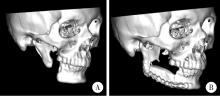
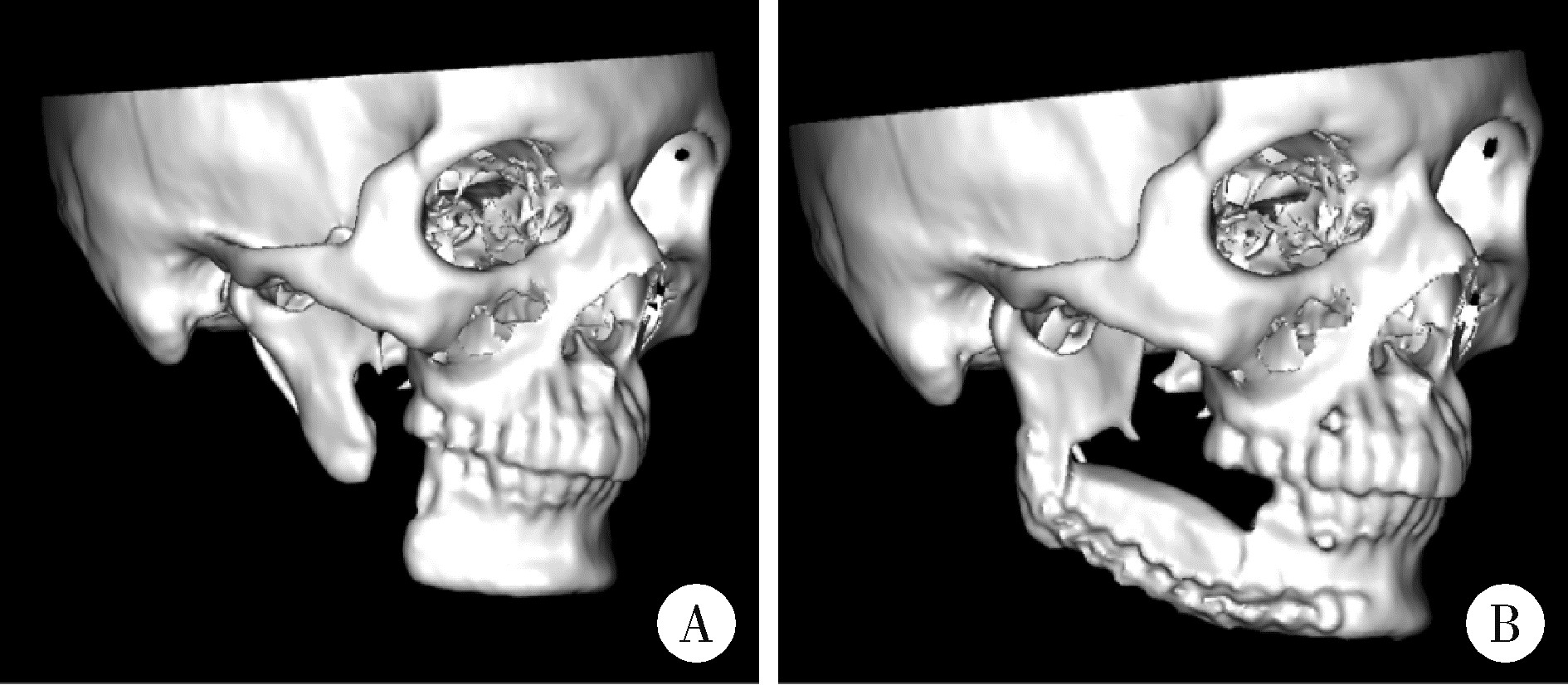
Images of case No.5 A, preoperative maxillofacial CT; B, maxillofacial CT 1 week after surgery."

Table 4

Postoperative three-dimensional chromatographic analysis"

Case No. Avarege deviation /mm Devitation≤1 mm /% Devitation≤2 mm /% Devitation≤3 mm /%
1 0.72 75.44 90.85 97.31
2 1.19 42.33 71.52 89.36
3 1.02 62.48 85.73 94.33
4 0.95 73.97 87.21 94.09
5 1.01 52.50 83.79 94.59
1 Kakarala K , Shnayder Y , Tsue TT , et al. Mandibular reconstruction[J]. Oral Oncol, 2018, 77, 111- 117.
doi: 10.1016/j.oraloncology.2017.12.020
2 Hanasono MM , Skoracki RJ . Computer-assisted design and rapid prototype modeling in microvascular mandible reconstruction[J]. Laryngoscope, 2013, 123 (3): 597- 604.
doi: 10.1002/lary.23717
3 Zhang L , Liu Z , Li B , et al. Evaluation of computer-assisted mandibular reconstruction with vascularized fibular flap compared to conventional surgery[J]. Oral Surg Oral Med Oral Pathol Oral Radiol, 2016, 121 (2): 139- 148.
doi: 10.1016/j.oooo.2015.10.005
4 Ren W , Gao L , Li S , et al. Virtual planning and 3D printing modeling for mandibular reconstruction with fibula free flap[J]. Med Oral Patol Oral Cir Bucal, 2018, 98 (33): 2666- 2670.
5 Moiduddin K , Al-Ahmari A , Nasr ES , et al. A comparison study on the design of mirror and anatomy reconstruction technique in maxillofacial region[J]. Tech Health Care, 2016, 24 (3): 377- 389.
doi: 10.3233/THC-161136
6 陈全, 蔡志刚, 彭歆, 等. 下颌骨大范围缺损修复重建设计可变形模型的建立[J]. 中华口腔医学杂志, 2014, 49 (7): 414- 419.
doi: 10.3760/cma.j.issn.1002-0098.2014.07.008
7 Wang E , Tran KL , D'heygere E , et al. Predicting the premorbid shape of a diseased mandible[J]. Laryngoscope, 2021, 131 (3): E781- E786.
8 周子疌, 朱向阳, 韩婧, 等. 基于机器学习的颌骨特征点还原法辅助跨中线颌骨缺损重建[J]. 中国口腔颌面外科杂志, 2020, 18 (4): 323- 327.
9 Yao BC , He Y , Jie BM , et al. Reconstruction of bilateral post-traumatic midfacial defects assisted by three-dimensional craniomaxillofacial data in normal chinese people: A preliminary study[J]. J Oral Maxillofac Surg, 2019, 77 (11): 2302. e1- 2302. e13.
doi: 10.1016/j.joms.2019.04.030
10 傅民魁, 林久祥, 周彦恒, 等. 口腔正畸学[M]. 2版 北京: 北京大学医学出版社, 2014: 63- 78.
11 Shnayder Y , Lin D , Desai SC , et al. Reconstruction of the lateral mandibular defect: A review and treatment algorithm[J]. JAMA Facial Plast Surg, 2015, 17 (5): 367- 373.
doi: 10.1001/jamafacial.2015.0825
12 Cannon TY , Strub GM , Yawn RJ , et al. Oromandibular reconstruction[J]. Clin Anat, 2011, 25 (1): 108- 119.
13 Mazzola F , Smithers F , Cheng K , et al. Time and cost-analysis of virtual surgical planning for head and neck reconstruction: A matched pair analysis[J]. Oral Oncol, 2020, 100, 104491.
doi: 10.1016/j.oraloncology.2019.104491
14 Tarsitano A , Mazzoni S , Cipriani R , et al. The CAD/CAM technique for mandibular reconstruction: An 18 patients oncological case-series[J]. J Craniomaxillofac Surg, 2014, 42 (7): 1460- 1464.
doi: 10.1016/j.jcms.2014.04.011
15 Chang EI , Boukovalas S , Liu J , et al. Reconstruction of posterior mandibulectomy defects in the modern era of virtual planning and three-dimensional modeling[J]. Plast Reconstr Surg, 2019, 144 (3): 453- 462.
doi: 10.1097/PRS.0000000000005954
16 蔡志刚. 数字化外科技术在下颌骨缺损修复重建中的应用[J]. 中华口腔医学杂志, 2012, 47 (8): 474- 478.
17 Yu HB , Shen GF , Wang XD , et al. The indication and application of computer-assisted navigation in oral and maxillofacial surgery: Shanghai' s experience based on 104 cases[J]. J Craniomaxillofac Surg, 2013, 41 (8): 770- 774.
doi: 10.1016/j.jcms.2013.01.016
18 Davies JC , Chan HH , Jozaghi Y , et al. Analysis of simulated mandibular reconstruction using a segmental mirroring technique[J]. J Craniomaxillofac Surg, 2019, 47 (3): 468- 472.
doi: 10.1016/j.jcms.2018.12.016
[1] Yifan KANG, Yanjun GE, Xiaoming LV, Shang XIE, Xiaofeng SHAN, Zhigang CAI. One-stage mandibular reconstruction combining iliac flap with immediate implant-based denture [J]. Journal of Peking University (Health Sciences), 2025, 57(1): 78-84.
[2] Congwei WANG,Min GAO,Yao YU,Wenbo ZHANG,Xin PENG. Clinical analysis of denture rehabilitation after mandibular fibula free-flap reconstruction [J]. Journal of Peking University (Health Sciences), 2024, 56(1): 66-73.
Viewed
Full text


Abstract

Cited

  Shared   
  Discussed   
No Suggested Reading articles found!