Journal of Peking University (Health Sciences) ›› 2026, Vol. 58 ›› Issue (2): 332-336. doi: 10.19723/j.issn.1671-167X.2026.02.017

Previous Articles     Next Articles

False positives in female testosterone testing and the diagnostic value of mass spectrometry

Man WU1,2, Yingying LUO1,3, Linong JI1,3,*()   

  1. 1. Department of Endocrinology and Metabolism, Peking University People's Hospital, Beijing 100044, China
    2. Department of Endocrinology, The Third Hospital of Xiamen, Xiamen 361100, Fujian, China
    3. Peking University Diabetes Center, Beijing 100044, China
  • Received:2024-11-28 Online:2026-04-18 Published:2025-12-29
  • Contact: Linong JI
  • Supported by:
    the 2024 National Clinical Key Specialty Construction Program of China

RICH HTML


Abstract:

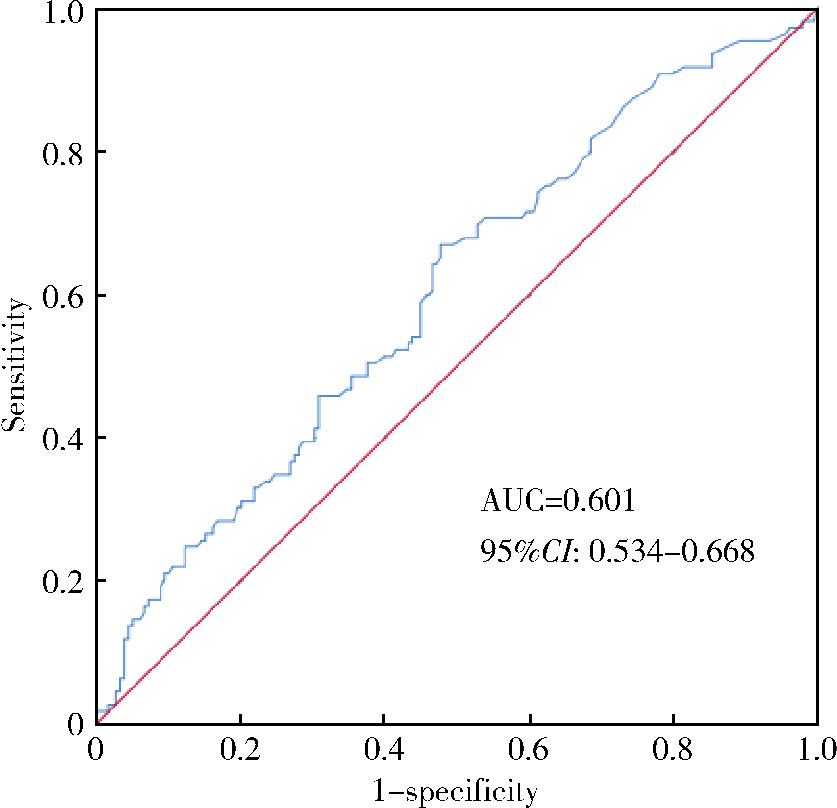
Objective: To investigate the proportion of pseudo-elevated testosterone levels detected by chemiluminescent immunoassay (CLIA) in female patients and to evaluate the application value of liquid chromatography-tandem mass spectrometry (LC-MS/MS) in improving the accuracy of testosterone detection in this population. Methods: A retrospective analysis was conducted on data collected from female patients who presented at Peking University People' s Hospital from January 1, 2020 to May 1, 2024. These patients were initially identified with elevated testosterone levels through CLIA and subsequently underwent additional blood sampling for confirmatory testing using LC-MS/MS. Based on LC-MS/MS results, the patients were categorized into the pseudo-elevated group and the true-elevated group. Dif-ferences in the testosterone levels between the two groups were compared, the false-positive rate of CLIA was calcula-ted, and further evaluations conducted in the pseudo-elevated group were analyzed. Results: A total of 287 female patients with elevated testosterone levels detected by CLIA were included in the study. According to the LC-MS/MS results, 178 cases (62.0%) were classified into the pseudo-elevated group, while 109 cases (38.0%) were classified into the true-elevated group. The mean testosterone levels measured by CLIA were (3.63±1.60) nmol/L in the pseudo-elevated group and (4.13±2.20) nmol/L in the true-elevated group, showing a statistically significant difference (P < 0.05). The false-positive rate of CLIA in detecting testosterone levels in women was 62.0%, and the area under the receiver operating characteristic (ROC) curve (AUC) for CLIA was 0.601 (95%CI: 0.534-0.668) indicating low diagnostic accuracy. Among the pseudo-elevated group, 40.45% of patients underwent multiple CLIA retests, and some patients were subjected to unnecessary clinical evaluations, including imaging and hormonal testing, which significantly increased patient burden. Conclusion: This study highlights the high false-positive rate of CLIA in detecting testosterone levels in female patients, which can result in misdiagnosis, repeated testing, and unnecessary clinical evaluations, thereby increasing patient burden and resulting in inefficient use of medical resources.LC-MS/MS significantly enhances the accuracy of testosterone detection in women and is strongly recommended as the confirmatory test for female patients with elevated testosterone levels initially detected by CLIA.

Key words: Hyperandrogenism, Testosterone, Chemiluminescent immunoassay, Liquid chromatography-tandem mass spectrometry, False positive

CLC Number: 

  • R588

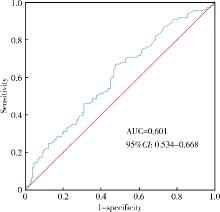
Figure 1

ROC curve for measuring female testosterone levels using CLIA CLIA, chemiluminescent immunoassay; ROC, receiver operating characteristic; AUC, area under the curve."

Table 1

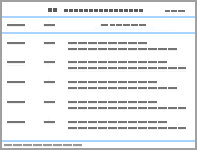
Additional evaluations in testosterone level pseudo-elevated group (n=178)"

Evaluation items Cases, n (%) Results or special conditions
Testosterone retesting (CLIA) 72 (40.45) Up to 9 retests
Diagnosed with PCOS 61 (34.27) 28 cases (45.90%) with polycystic ovaries on ultrasound, 33 cases (54.10%) without
BG 149 (83.71) 128 normal cases (85.91%), 21 cases (14.09%) diagnosed with diabetes or elevated blood sugar
Insulin 121 (67.98) 115 normal cases (95.04%), 3 elevated cases (2.48%), 3 decreased cases (2.48%)
Cortisol 178 (100.00) 18 elevated cases (10.11%), retests normal; 42 decreased cases (23.60%), retests normal
ACTH 63 (35.39) 7 elevated cases (11.11%), retests normal
IGF-1 19 (10.67) 3 elevated cases (15.79%), 2 retests normal
GH 10 (5.62) 9 normal cases (90.00%), 1 elevated (10.00%)
Thyroid function 142 (79.78) 22 cases (15.79%) with abnormal thyroid function
Gynecological ultrasound 132 (74.16) 28 cases (21.21%) with polycystic changes, 30 cases (22.73%) with uterine fibroids
Adrenal ultrasound 18 (10.11) No significant abnormalities in all cases (100.00%)
Adrenal CT 18 (10.11) 10 cases (55.56%) with no significant abnormalities, 8 cases (44.44%) with adrenal nodules or thickening
Thyroid ultrasound 30 (16.85) 19 cases (63.33%) with thyroid nodules, 9 cases (30.00%) with diffuse changes, 6 cases (20.00%) with heterogeneous echogenicity, 4 cases (13.33%) with no abnormalities
1
Joham AE , Norman RJ , Stener-Victorin E , et al. Polycystic ovary syndrome[J]. Lancet Diabetes Endocrinol, 2022, 10 (9): 668- 680.

doi: 10.1016/S2213-8587(22)00163-2
2
Sasako T , Ilboudo Y , Liang KYH , et al. The influence of trinucleotide repeats in the androgen receptor gene on androgen-related traits and diseases[J]. J Clin Endocrinol Metab, 2024, 109 (12): 3234- 3244.

doi: 10.1210/clinem/dgae302
3
Carmina E , Koyama T , Chang L , et al. Does ethnicity influence the prevalence of adrenal hyperandrogenism and insulin resistance in polycystic ovary syndrome?[J]. Am J Obstet Gynecol, 1992, 167 (6): 1807- 1812.

doi: 10.1016/0002-9378(92)91779-A
4
Handelsman DJ . Mass spectrometry, immunoassay and valid steroid measurements in reproductive medicine and science[J]. Hum Reprod, 2017, 32 (6): 1147- 1150.

doi: 10.1093/humrep/dex078
5
Gambineri A , Pelusi C . Sex hormones, obesity and type 2 diabetes: Is there a link?[J]. Endocr Connect, 2019, 8 (1): R1- R9.

doi: 10.1530/EC-18-0450
6
Zeng X , Xie YJ , Liu YT , et al. Polycystic ovarian syndrome: Correlation between hyperandrogenism, insulin resistance and obesity[J]. Clin Chim Acta, 2020, 502, 214- 221.

doi: 10.1016/j.cca.2019.11.003
7
Sanchez-Garrido MA , Tena-Sempere M . Metabolic dysfunction in polycystic ovary syndrome: Pathogenic role of androgen excess and potential therapeutic strategies[J]. Mol Metab, 2020, 35, 100937.

doi: 10.1016/j.molmet.2020.01.001
8
Huang-Doran I , Kinzer AB , Jimenez-Linan M , et al. Ovarian hyperandrogenism and response to gonadotropin-releasing hormone analogues in primary severe insulin resistance[J]. J Clin Endocrinol Metab, 2021, 106 (8): 2367- 2383.

doi: 10.1210/clinem/dgab275
9
Rojas J , Chávez M , Olivar L , et al. Polycystic ovary syndrome, insulin resistance, and obesity: Navigating the pathophysiologic labyrinth[J]. Int J Reprod Med, 2014, 2014, 719050.
10
Azziz R , Carmina E , Dewailly D , et al. The Androgen Excess and PCOS Society criteria for the polycystic ovary syndrome: The complete task force report[J]. Fertil Steril, 2009, 91 (2): 456- 488.

doi: 10.1016/j.fertnstert.2008.06.035
11
Cheng I , Norian JM , Jacobson JD . Falsely elevated testosterone due to heterophile antibodies[J]. Obstet Gynecol, 2012, 120 (2 Pt 2): 455- 458.
12
Martínez-Escribano A , Maroto-García J , Ruiz-Galdón M , et al. Measurement of serum testosterone in nondiabetic young obese men: Comparison of direct immunoassay to liquid chromatography-tandem mass spectrometry[J]. Biomolecules, 2020, 10 (12): 1697.

doi: 10.3390/biom10121697
13
Rosner W , Auchus RJ , Azziz R , et al. Position statement: Utility, limitations, and pitfalls in measuring testosterone: An Endocrine Society position statement[J]. J Clin Endocrinol Metab, 2007, 92 (2): 405- 413.

doi: 10.1210/jc.2006-1864
14
Demers LM . Androgen deficiency in women; role of accurate testosterone measurements[J]. Maturitas, 2010, 67 (1): 39- 45.

doi: 10.1016/j.maturitas.2010.04.019
15
Huhtaniemi IT , Tajar A , Lee DM , et al. Comparison of serum testosterone and estradiol measurements in 3174 European men using platform immunoassay and mass spectrometry; relevance for the diagnostics in aging men[J]. Eur J Endocrinol, 2012, 166 (6): 983- 991.

doi: 10.1530/EJE-11-1051
16
Moal V , Mathieu E , Reynier P , et al. Low serum testosterone assayed by liquid chromatography-tandem mass spectrometry. Comparison with five immunoassay techniques[J]. Clin Chim Acta, 2007, 386 (1/2): 12- 19.
17
Naamneh Elzenaty R , du Toit T , Flück CE . Basics of androgen synthesis and action[J]. Best Pract Res Clin Endocrinol Metab, 2022, 36 (4): 101665.

doi: 10.1016/j.beem.2022.101665
18
Rodriguez Paris V , Bertoldo MJ . The mechanism of androgen actions in PCOS etiology[J]. Med Sci, 2019, 7 (9): 89.
19
Abdelazim IA , Alanwar A , AbuFaza M , et al. Elevated and diagnostic androgens of polycystic ovary syndrome[J]. Prz Menopauzalny, 2020, 19 (1): 1- 5.
20
Tosi F , Fiers T , Kaufman JM , et al. Implications of androgen assay accuracy in the phenotyping of women with polycystic ovary syndrome[J]. J Clin Endocrinol Metab, 2016, 101 (2): 610- 618.

doi: 10.1210/jc.2015-2807
21
McCartney CR , Burt Solorzano CM , Patrie JT , et al. Estimating testosterone concentrations in adolescent girls: Comparison of two direct immunoassays to liquid chromatography-tandem mass spectrometry[J]. Steroids, 2018, 140, 62- 69.

doi: 10.1016/j.steroids.2018.09.001
22
尹逸丛, 卢琳, 朱惠娟, 等. 女性睾酮水平假性升高病例的临床特点和检验验证[J]. 生殖医学杂志, 2021, 30 (7): 852- 857.
23
中华医学会妇产科学分会内分泌学组及指南专家组. 多囊卵巢综合征中国诊疗指南[J]. 中华妇产科杂志, 2018, 53 (1): 2- 6.
24
Teede HJ , Tay CT , Laven JJE , et al. Recommendations from the 2023 international evidence-based guideline for the assessment and management of polycystic ovary syndrome[J]. J Clin Endocrinol Metab, 2023, 108 (10): 2447- 2469.

doi: 10.1210/clinem/dgad463
25
曹正, 阮祥燕, 翟燕红, 等. 多囊卵巢综合征雄激素质谱检测专家共识[J]. 检验医学, 2023, 38 (3): 203- 208.
26
Kanakis GA , Tsametis CP , Goulis DG . Measuring testosterone in women and men[J]. Maturitas, 2019, 125, 41- 44.

doi: 10.1016/j.maturitas.2019.04.203
[1] HUA Ke-han, YANG Lei, ZHANG Xiao-wei, BAI Wen-jun, LI Qing, XU Tao. Complete androgen insensitivity syndrome associated with vesical fistula: a case report and literature review [J]. Journal of Peking University(Health Sciences), 2017, 49(4): 724-729.
Viewed
Full text


Abstract

Cited

  Shared   
  Discussed   
No Suggested Reading articles found!