
1 资料与方法
1.1 研究设计与分析思路
本研究采用政策文本分析与定性访谈相结合的研究设计。政策文本分析用于识别老年助餐服务政策的制度演进、工具配置及治理导向;定性访谈用于揭示政策在基层落地中的运行方式、约束条件和实践偏差;最后,将政策文本中识别出的工具配置特征与定性访谈中形成的实践主题进行对应比较,分析政策设计与现实执行之间的一致性与差距。
1.2 政策文本分析
1.2.1 政策文本资料来源与筛选
政策文本资料主要来源于“北大法宝”智能服务平台、中国政府网、民政部网站、山东省民政厅网站及山东省16地市政府网站,检索关键词包括“老年助餐”“老年食堂”“助老食堂”“长者食堂”“养老”等。初检获得政策文本1 050份,随后按照以下标准进行筛选:(1)文件内容与老年助餐服务直接相关;(2)对于修订、替代或废止文件,仅保留现行有效版本;(3)剔除会议纪要、新闻宣传稿、重复转载文本及与助餐无关的养老文件。经两轮筛选后,最终纳入2013—2024年中央及山东省相关政策文件59份。
1.2.2 政策工具分类与编码
本文借鉴Rothwell等[18]提出的政策工具分类框架,并结合健康政策文本分析研究的常见做法,将政策工具划分为供给型、需求型和环境型三类。其中,供给型工具是指政府直接增加资源投入或提升服务供给能力的措施,主要包括财政支持、设施建设、人才培育、技术或信息平台建设等;需求型工具是指通过激励消费、购买服务、引导社会参与等方式激活需求、带动供给的措施,主要包括政府购买、服务外包、消费补贴、连锁化运营支持、社会捐赠动员等;环境型工具是指通过规划、标准、监管、协同和考核等制度安排塑造外部治理环境的措施,主要包括目标规划、行业标准、准入与安全监管、绩效评估和部门协同机制等。分析单元为政策文本中具有完整含义的条款或语句。研究团队在正式编码前共同研读政策文本并形成编码手册,两名研究者据此独立完成一级分类与二级条目的归类。对存在分歧的条款,先由编码者协商,仍不能一致时提交项目组资深成员讨论后确定,以提高编码的稳定性和解释的一致性。
1.3 定性访谈
1.3.1 定性访谈对象与资料收集
定性访谈实地调研分两轮开展。第一轮定性访谈实地调研于2023年8至10月,分别在山东省三大经济圈的A市(胶东经济圈)、B市(省会经济圈)和C市(鲁南经济圈)开展,并在每个城市选择一个市辖城区和一个农村地区; 第二轮于2026年1月,在山东省D市(省会经济圈)补充选取1个城市地区和1个农村地区。两轮调研合计覆盖8个地区。定性访谈对象来自上述8个地区从事老年助餐服务的供给方工作人员,包括政府部门、养老产业以及基层组织。纳入标准:(1)具备老年助餐服务管理或实际操作经验;(2)自愿参与研究并签署知情同意书。排除标准:(1)拒绝录音;(2)无法完整参与访谈过程。样本量的确定基于信息饱和原则,即当后续访谈未再产生新主题或信息时,停止访谈。最终确定访谈对象17名(编号为P1~P17),其中包括政府部门、养老产业、基层组织的一线工作人员。本研究采用半结构化访谈法,访谈员接受了统一培训,访谈内容主要涵盖了老年助餐服务的开展现状、具体运营模式、政策支持状况及面临的困境。本研究已通过北京大学生物医学伦理委员会批准(审批号:IRB00001052-23019、IRB00001052-25127),现场实施均遵循伦理委员会程序,且在访谈前明确告知访谈目的并取得书面知情同意。
1.3.2 访谈资料分析方法
采用主题分析法对定性访谈资料进行分析,分析过程使用NVivo 12 Plus软件,依次完成资料熟悉、初始编码、主题归类与整理等步骤。为确保分析的科学性与一致性,编码过程采用研究者三角校正法,由两位研究者分别编码,针对分歧先协商讨论,必要时提交项目组资深成员复核审议,确保最终编码结果的科学性与一致性。
1.4 两类资料的整合
在整合分析阶段,本文将政策文本中识别出的工具配置特征与定性访谈中形成的实践主题进行对应比较,一方面考察政策中强调的支持措施在基层是否真正形成服务能力,另一方面分析现实困境主要对应哪些工具配置短板或执行障碍,以进一步解释老年助餐服务何以在制度上被高度重视,却在实施中仍面临可持续性不足的问题。
2 结果
2.1 政策演进
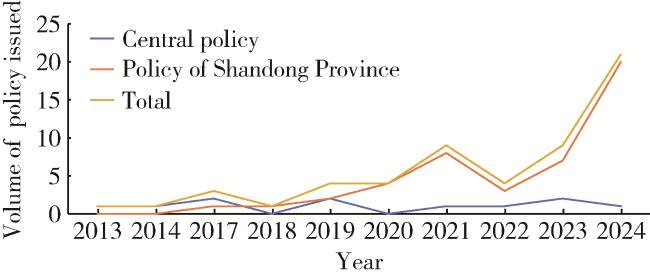
如图 1所示,2013—2024年山东省老年助餐政策发文数量总体呈波动上升趋势,尤其是2021年以后增长明显。从时间演进看,山东省老年助餐政策大体可分为三个阶段: 第一阶段为萌芽期(2021年前),老年助餐尚未形成相对独立的政策议题,多依附于养老服务综合性文件中,政策供给呈碎片化特征;第二阶段为上升期(2021—2022年),随着《“十四五”国家老龄事业发展和养老服务体系规划》及山东省《“十四五”养老服务体系规划》将助餐服务纳入重点任务,地方政策供给明显提速[19-20];第三阶段为深化期(2023—2024年),中央《积极发展老年助餐服务行动方案》与山东省实施意见相继出台,政策进入规范化、体系化推进阶段。
2.2 政策内容
本研究基于经典政策工具理论框架[21-23],并结合政策过程与政策工具分析视角,从政府干预模式的维度解析老年助餐服务体系的构建逻辑。如图 2所示,早期气泡更多分布于三维空间边缘,主要集中在环境型或供给型方向,说明政策起步阶段更多依赖制度倡导、标准制定、设施建设和财政支持等方式推进助餐服务。随着时间推移,尤其是近年的大气泡更多向三维交汇区域聚集,表明政策工具组合逐渐由单一模式转向供给保障、需求激励和制度规范并用的综合治理模式。这说明山东省老年助餐政策正在从体系建设的起步逻辑,转向重协同、促持续的发展逻辑。从政策层级分布看,中央和省级政策更多集中于环境型和供给型中高值区域,反映出高层级政策主要承担制度设计、发展规划、标准规范和资源引导等功能,强调助餐服务体系的总体布局与基本制度供给。相比之下,市、区级政策更多分布于需求型与供给型交汇区域,体现出地方政府更关注补贴发放、助餐网络布局、服务对象识别、配送方式和运营模式等可操作性问题,即更侧重将上位政策转化为具体实施方案。由此可见,不同治理层级之间形成了“上位政策定方向,基层政策抓落实”的工具分工格局。
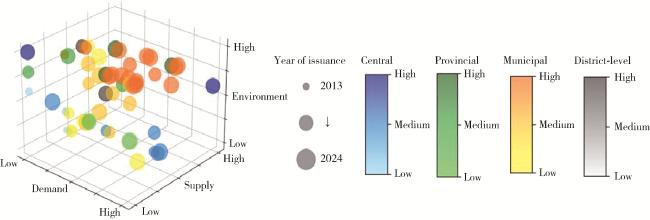


需求型工具整体分布相对分散,且在早期政策中占比不高,表明老年助餐政策在一段时期内更重视供给端建设,对市场化机制和需求侧激励不足。近年来,需求型工具开始逐渐增强,主要表现为政府购买服务、社会力量参与、差异化补贴以及“个人出一点,企业让一点,政府补一点,集体添一点,社会捐一点”等多元筹资机制的推广,同时鼓励开展中央厨房,连锁化运营和统一配送等模式。
环境型工具在政策空间中也表现出较高集中度,特别是中央和省级政策,主要包括质量监管、示范创建和考核评价等内容。这类工具并不直接增加助餐供给,却为行业规范发展和持续运行提供制度保障。例如,山东省要求助餐设施全面落实智慧消防、智慧燃气和“明厨亮灶”等标准化监管措施,并通过星级评定和财政奖励提升服务质量[25]。由此可见,环境型工具在老年助餐政策中发挥着“稳秩序,提质量,强监管”的关键作用。
总体来说,山东省老年助餐政策内容特征以供给型工具夯实服务基础,以环境型工具规范行业发展,以需求型工具逐步补齐短板;政策演进路径则呈现出从早期依赖资源投入和制度倡导,逐步转向多工具协同治理的趋势。这一特征说明,当前老年助餐政策体系已初步摆脱单一供餐的思路,开始更加关注可持续运营、服务质量提升和需求侧激活,但需求型工具相对薄弱仍是影响政策落地效果的重要制约因素。
2.3 城乡老年助餐服务实践的定性访谈
通过分析访谈资料,共归纳出5个核心主题,即服务供给模式、服务供给人员、运营困境、未来发展方向和健康助餐。表 1展示了这些主题及其示例性引文。
表1 老年助餐服务实践主题分析结果Table 1 Results of thematic analysis of meal assistance service practices |
| Theme | Category | Codes examples |
| Service provision models | Leveraging existing enterprises to provide meal services for the older adults | “The government subsidizes 1-2 yuan per meal, and older adults receive a discounted price.” (P9) |
| Private enterprise + Government subsidy | “Part is covered by the government and part by us.” (P5) | |
| Mutual-help meals | “We run a mutual-help model, and older villagers help one another.” (P8) | |
| Nursing home | “The happiness home mainly provides meals and lodging.” (P8) | |
| Service providers | Village cadres | “The village committee is responsible for management.”(P8) |
| Enterprise managers | “We selected a core group of young staff for long-term development.” (P5) | |
| Volunteer | “The Nursing home has two public welfare positions for cleaning, meals and daily maintenance.” (P8) | |
| Mutual help | “Older villagers come together to make dumplings and eat together at noon.” (P8) | |
| Operational difficulties | Financial sustainability pressure | “The village has no money, and long-term operation is difficult.” (P8) |
| Staff taking multiple roles | “Village cadres take on many management tasks, but there are no professional workers.” (P9) | |
| Insufficient public welfare posts | “There are not enough public welfare positions.” (P8) | |
| Limited workforce | “Graduates come for a while but cannot be retained locally.” (P5) | |
| Scale limits | “Serving more older adults makes management difficult.” (P8) | |
| Future directions | Upgrading canteen facilities | “We plan to add a small extension outside the happiness home.” (P8) |
| Diversifying revenue sources | “We hope to use photovoltaic rental income to subsidize operation.” (P8) | |
| Meal delivery and healthier menus | “We need a long-term home-based care mechanism, not only temporary preferential treatment.” (P9) | |
| Adding meal delivery and optimizing menus | “Meal delivery may be added in the future, and menus should become more health-oriented” (P5/P9) | |
| Health-oriented meal assistance | Personalized menu | “We ask what older adults like to eat… If something is not sui-table, or they cannot chew it, we can adjust it at any time.” (P15) |
| Disease-adapted meals | “For older adults with high blood sugar, we provide coarse-grain buns. For those with hypertension… we try not to give them fatty meat. Meals are prepared with less oil and less salt.” (P15) | |
| Meal delivery and basic health support for vulnerable groups | “For those aged 85 and above, meals are delivered… free of charge.”(P16) |
All quotations in the table are taken from interview data of meal assistance service providers for the older adult. P1-P17 in parentheses are the codes of the respondents from the providers. |
访谈显示,山东省城乡老年助餐服务已形成差异化的供给路径。城市地区主要依托现有企业或养老机构设施,在政府补贴支持下,通过市场化运营方式开展助餐服务;农村地区则更多依托幸福院、村集体资源和公益岗位,形成以基层组织主导的互助型助餐模式。两类模式在一定程度上回应了老年人的基本就餐需求,但在资金保障、运营能力和可持续性等方面均面临明显约束。
在城市地区,老年助餐服务主要采取政府补贴+市场运营模式。政府通常对助餐点建设给予1万至5万元启动补贴,并对老年人实行差异化就餐补贴,如“70岁以上老人每餐补贴1元,80岁以上补贴2元,但设定了最低消费门槛为4元”(P9,省会经济圈,养老服务科负责人)。部分私立养老机构则在院内服务基础上向周边社区延伸助餐功能,形成嵌入式社区助老食堂。以鲁南经济圈某私立养老机构为例,该食堂日均供餐约100份,“服务对象不仅涵盖院内老人,也包括周边社区居民,有效满足了社区老年人的实际就餐需求”(P5,鲁南经济圈,私营养老机构负责人);其运营资金主要来自政府补贴和机构自筹,餐费实行差异化定价,每餐4~7元不等,部分高龄和特殊群体可免费就餐。该模式较好地利用了现有资源,也提高了社区助餐的可及性,但现实中仍面临“老年人餐补流量小,带不动厨房”(P9)等问题,表现为低收费与实际成本之间存在明显缺口,场地、人力和资金约束使其难以进一步扩展,长期运营的可持续性仍较弱。
在农村地区,老年助餐服务主要以幸福院为依托,由村集体主导,并通过“星级评定+定额补贴”获得财政支持。“按照服务能力与基础设施条件划分等级,幸福院每年可获得4至6万元不等的运营补助”(P9)。部分村庄利用废弃小学、活动中心等闲置场所改建养老服务点,形成集助餐、住宿和日常照料于一体的互助型模式。以鲁南经济圈某农村样点为例,当地利用闲置小学旧址改建养老场所,可容纳约26张床位,供餐规模约30人,“运营资金主要来自村级集体收入及政府初期补贴,由村委会负责日常管理,配备2名公益性岗位工作人员,月薪约1 500元/人”(P8,鲁南经济圈,副镇长)。服务收费较低,每位老人每月约300元,包含三餐、住宿及部分活动;部分低龄老人通过包饺子、备餐等方式参与提供服务,“他们中午过来包饺子,既是吃饭,也是活动”(P8)。这一模式在整合村内资源、增强老人互动方面具有一定优势,但也面临日常就餐需求有限、难以形成规模效益、专业服务人员不足、村干部兼职管理压力较大等问题;同时,资金来源稳定性不足、互助模式持续性不确定以及“以劳换餐”可能带来的道德压力,也影响了其长期运行。
此外,部分点位已开始在基础供餐之外探索“健康助餐”功能。访谈显示,一些地区的助老食堂会根据老年人的口味偏好、咀嚼能力及个体需求动态调整菜谱,并对慢性病老人进行一定的经验性饮食适配。例如,“对血糖偏高老人提供杂粮类主食,对高血压老人注意避免肥肉并控制油盐”(P15,省会经济圈,老年食堂负责人)。与此同时,部分助老食堂已意识到掌握老年人慢性病信息对科学配餐的重要性,但目前相关信息主要仍依赖前期询问和日常接触识别,尚未形成与基层医疗信息系统相衔接的机制。另有访谈提到,幸福食堂除供餐外,还会“不定期开展义演、健康知识讲座”(P17,省会经济圈,民政局养老服务负责人)等活动;部分农村地区也已对高龄老人提供送餐服务(P16,省会经济圈,村支书)。这表明老年助餐服务正在由单纯供餐向兼顾营养支持、健康促进和社会参与促进的复合功能延伸。然而,这类做法目前仍以零散、经验性探索为主,尚未形成制度化、规范化的健康助餐模式。
3 讨论
3.1 政策工具配置与执行落差
本研究从健康老龄化视角出发,结合政策文本分析与定性访谈,对山东省老年助餐服务的政策逻辑与实践困境进行了探讨。研究发现,山东省老年助餐政策已经形成较为清晰的制度框架,但在执行层面仍存在显著的“政策重视—基层承压”落差,其原因可能在于政策工具配置总体呈现“供给型、环境型偏强,需求型偏弱”的结构。供给型和环境型工具有助于推动助餐设施布局、标准制定和监管机制建立,但如果需求型工具不足,就难以有效解决老年人参与不足、企业动力不强和服务利用不稳定等问题,这与既往研究关于老年助餐服务可持续运营的研究判断基本一致[10]。
此外,现有政策虽然强调多元主体协同,但在实际运行中,政府、企业、社区和家庭之间仍缺乏稳定的利益联结机制。对企业而言,公益目标与盈利逻辑之间存在内在张力;对基层社区和村集体而言,行政任务叠加、人员不足和经费有限使其难以承担长期运营责任;对老年人而言,价格敏感、传统节俭观念以及对服务质量的观望,都会影响其持续参与。这说明老年助餐服务并非单纯的设施建设问题,而是需要通过激励相容和协同治理来维持的复合型公共服务。
3.2 健康老龄化视角下的老年助餐服务高质量发展政策启示
3.2.1 完善财政补贴机制,拓宽资金来源渠道
对高龄、失能、独居、低收入等重点老年群体,可根据困难程度和健康风险实施差异化补贴;对具备一定支付能力的老年人,则可通过普惠价格、套餐优惠和消费券等方式稳定需求,提升政策精准性与财政资金效率。此外,可以探索建立多渠道、多元化资金筹措机制,如设立社区养老专项基金,吸纳社会公益组织、企业捐赠和居民参与,构建更具稳定性与可持续性的资金支持体系。
3.2.2 优化服务供给与参与机制,促进老年人社会联系和主动参与
政府可加强与专业养老企业、社区组织及公益机构的合作,鼓励形成社区助餐服务联合体,可结合社区食堂、幸福院等场所,适度嵌入健康宣教、邻里交流、文娱活动等内容,提升老年人的参与感和获得感,推动老年群体从单一的服务对象角色转向主动参与者的身份。在尊重其意愿与能力的基础上,鼓励基层老年协会、低龄健康老人、农村留守妇女、家庭成员及社区志愿者等多种力量积极参与助餐服务的组织与实施过程。通过建立志愿服务积分制度、以劳换餐等激励机制,增强老年群体的参与积极性,培育社区互助共治的养老服务氛围。
3.2.3 推动助餐服务与健康管理融合,提升服务的专业化和健康促进功能
应将老年助餐从单纯供餐延伸为营养支持服务,推动菜单营养评估和标准化设计,结合老年人常见慢性病特点开发低盐、低脂、低糖、软食等适配餐食。鼓励助餐点与基层医疗卫生机构、家庭医生团队、养老服务组织建立协作机制,将助餐服务与健康教育、慢性病随访、营养指导和定期健康监测相衔接。对行动不便、高龄独居或失能老年人,可探索送餐服务与健康巡访联动机制,使助餐服务成为社区健康支持网络的重要入口。
3.2.4 强化基层治理和质量监管,建立以健康结果为导向的评价体系
应进一步完善助餐服务标准规范,将食品安全、营养结构、服务流程、人员配置、送餐管理等内容纳入统一监管框架,并加强对基层助餐点的经费、人员和培训支持,提升街道、村(社区)在统筹协调和服务落实中的能力。与此同时,可探索建立兼顾服务供给和健康成效的评价体系,不仅关注覆盖人数、供餐次数和运营状况,也关注老年人的营养改善、满意度、慢性病适配、功能维持和社会参与等指标,推动助餐服务由注重覆盖范围和供给数量,进一步转向注重服务质量、健康支持功能和综合实施效果。
3.3 研究的局限性
本研究仍存在一定的局限。首先,政策文本分析主要基于公开发布文件,未能完全覆盖基层操作性文件和非公开资料。其次,本研究的定性访谈对象以供给方为主,对老年人的需求体验和支付意愿关注不足。最后,本文以山东省为案例,研究结论的外推仍需结合其他地区实际情况审慎判断。未来可进一步扩大样本地区和访谈对象范围,并结合服务利用和健康结局指标开展深入研究。
综上所述,山东省老年助餐政策已由早期分散探索逐步走向体系化建设,初步形成了以供给型和环境型工具为主、需求型工具相对不足的制度框架。基层实践中,城市和农村虽形成了不同的供给路径,但普遍面临资金保障不足、运营压力较大和可持续性偏弱等共同约束。因而,老年助餐服务不应仅停留于基本就餐保障,而应在此基础上进一步拓展其健康促进功能,推动其由单一的供餐保障项目转向兼顾营养改善、慢性病管理、日常功能维持、社会参与促进以及社区照护协同的综合性制度安排。作为居家社区养老服务体系的重要环节,老年助餐服务也是衔接营养支持、健康管理与社区照护的重要入口,未来应更好地发挥其在促进健康老龄化中的基础作用。