Journal of Peking University (Health Sciences) ›› 2026, Vol. 58 ›› Issue (4): 865-871. doi: 10.19723/j.issn.1671-167X.2026.04.026

Previous Articles     Next Articles

Long-term survival achieved with benmelstobart plus anlotinib in a patient with advanced clear cell renal cell carcinoma: A case report

Huichun TIAN1, Jiaran ZHANG2, Juan LI1,*()   

  1. 1. Department of Genitourinary Oncology, Peking University Cancer Hospital & Institute; Key Laboratory of Carcinogenesis and Translational Research (Ministry of Education), Beijing 100142, China
    2. Department of Medical Oncology and Radiation Sickness, Peking University Third Hospital, Beijing 100191, China
  • Received:2026-02-28 Online:2026-08-18 Published:2026-05-19
  • Contact: Juan LI
  • Supported by:
    the CAPTRA-STAR Research Foundation(KY202502055)

RICH HTML


Abstract:

Clear cell renal cell carcinoma (ccRCC) is the most common histological subtype of renal cell carcinoma. Patients classified as intermediate- or poor-risk according to the International Metastatic Renal Cell Carcinoma Database Consortium (IMDC), particularly those with multiple organ metastases, generally have an unfavorable prognosis. Here, we report a case of advanced ccRCC in an IMDC poor-risk patient who achieved an unexpectedly prolonged survival with combination therapy followed by maintenance immunotherapy. A 65-year-old male developed multiple metastases involving the lungs, liver, and bone shortly after undergoing radical nephrectomy for right-sided renal cancer. Laboratory findings revealed anemia, neutrophilia, and thrombocytosis, and the IMDC score was 5, indicating poor-risk disease. The patient received first-line treatment with the programmed death-ligand 1 (PD-L1) inhibitor benmelstobart in combination with the multi-target tyrosine kinase inhibitors (TKIs) anlotinib. After 6 weeks of therapy, radiological evaluation demonstrated a partial response (PR), with an overall tumor reduction of approximately 48%. Subsequent imaging assessments confirmed a durable PR, accompanied by significant improvement in clinical symptoms and performance status. During treatment, the patient developed progressive proteinuria, with a maximum 24-hour urinary protein level of 5.18 g. Despite stepwise dose reduction of anlotinib, proteinuria recurred, necessitating discontinuation of the TKIs. Following cessation of anlotinib, the patient continued benmelstobart monotherapy as maintenance therapy and maintained sustained deep remission. After approximately 3 years of treatment, serum creatinine levels gradually increased, reaching a peak of 228 μmol/L. Considering the possibility of treatment-related renal toxicity and the durable disease control achieved, immunotherapy was subsequently discontinued. No further antitumor treatment was administered. The patient eventually experienced disease progression and died in September 2024, with an overall survival of 44 months. This case suggests that the combination of benmelstobart and anlotinib can induce rapid and durable antitumor responses in patients with IMDC poor-risk advanced ccRCC. Notably, in patients who respond well to combination therapy, discontinuation of TKIs due to intolerable adverse events followed by maintenance immunotherapy may still provide long-term disease control. This sustained benefit may be associated with tumor microenvironment remodeling and the establishment of immunological memory induced by anti-angiogenic therapy. Furthermore, this case highlights the importance of vigilant monitoring of renal toxicity and individualized treatment adjustment during combined targeted therapy and immunotherapy.

Key words: Clear cell renal cell carcinoma, Immunotherapy, Targeted therapy

CLC Number: 

  • R737.11

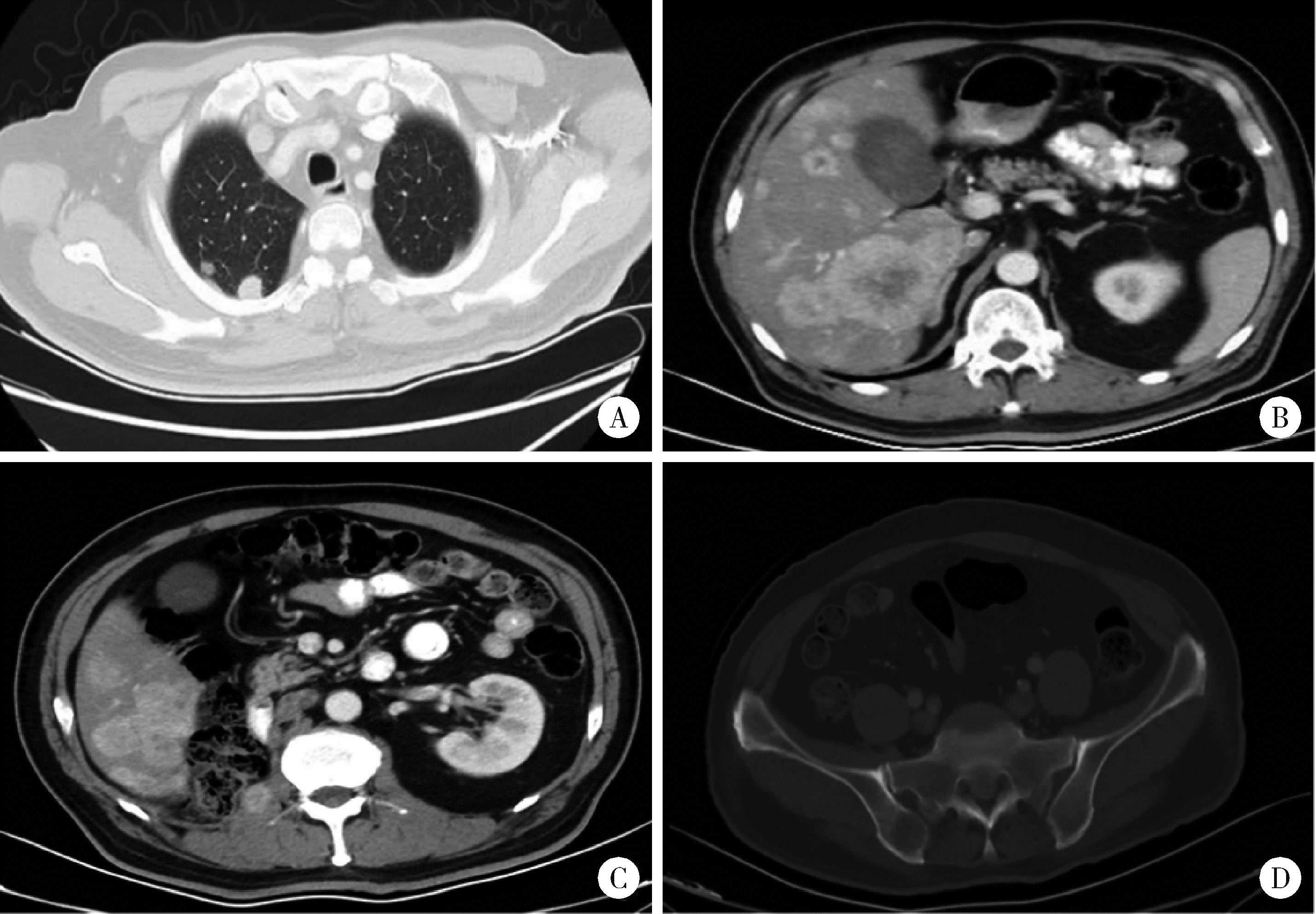
Figure 1

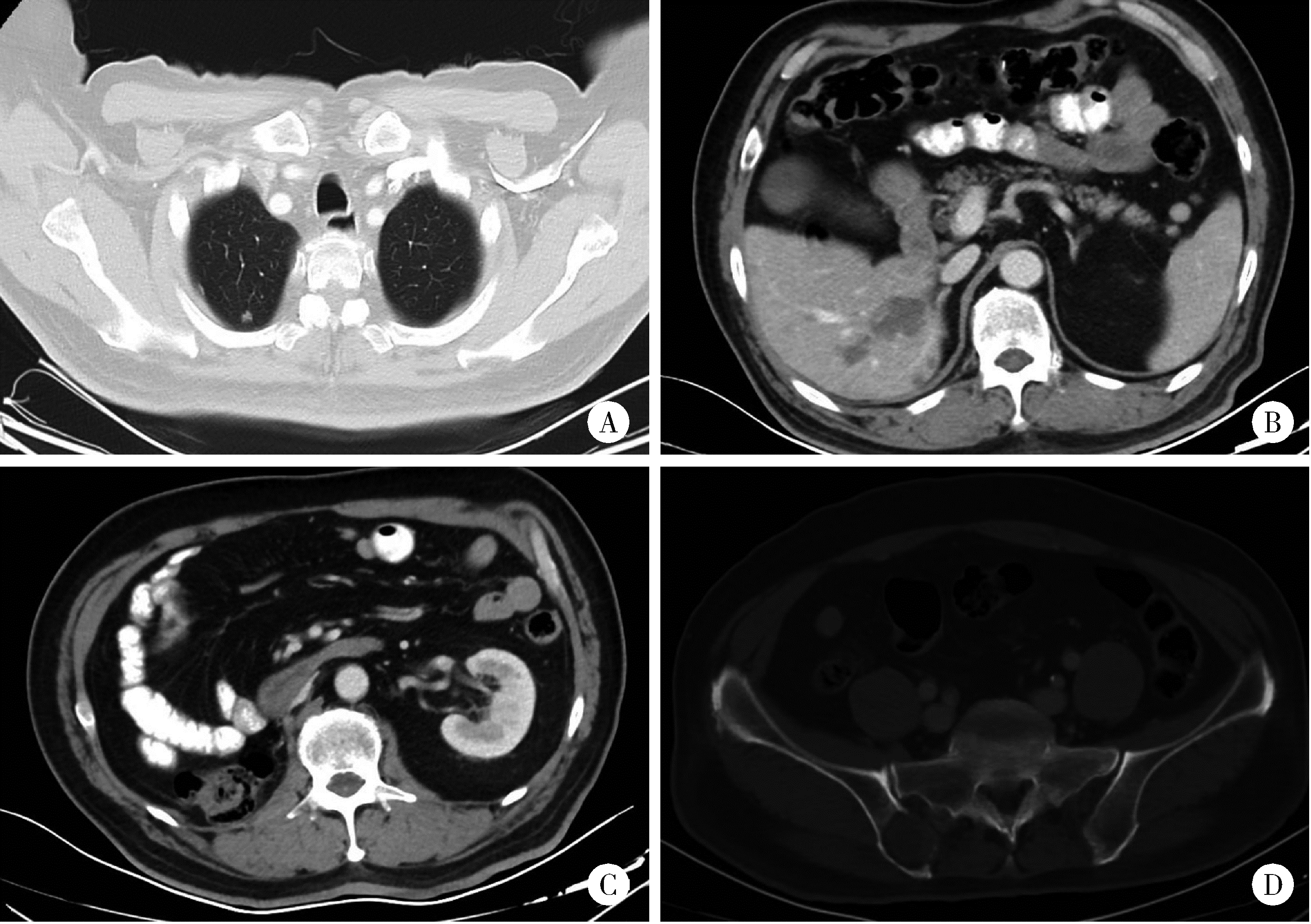
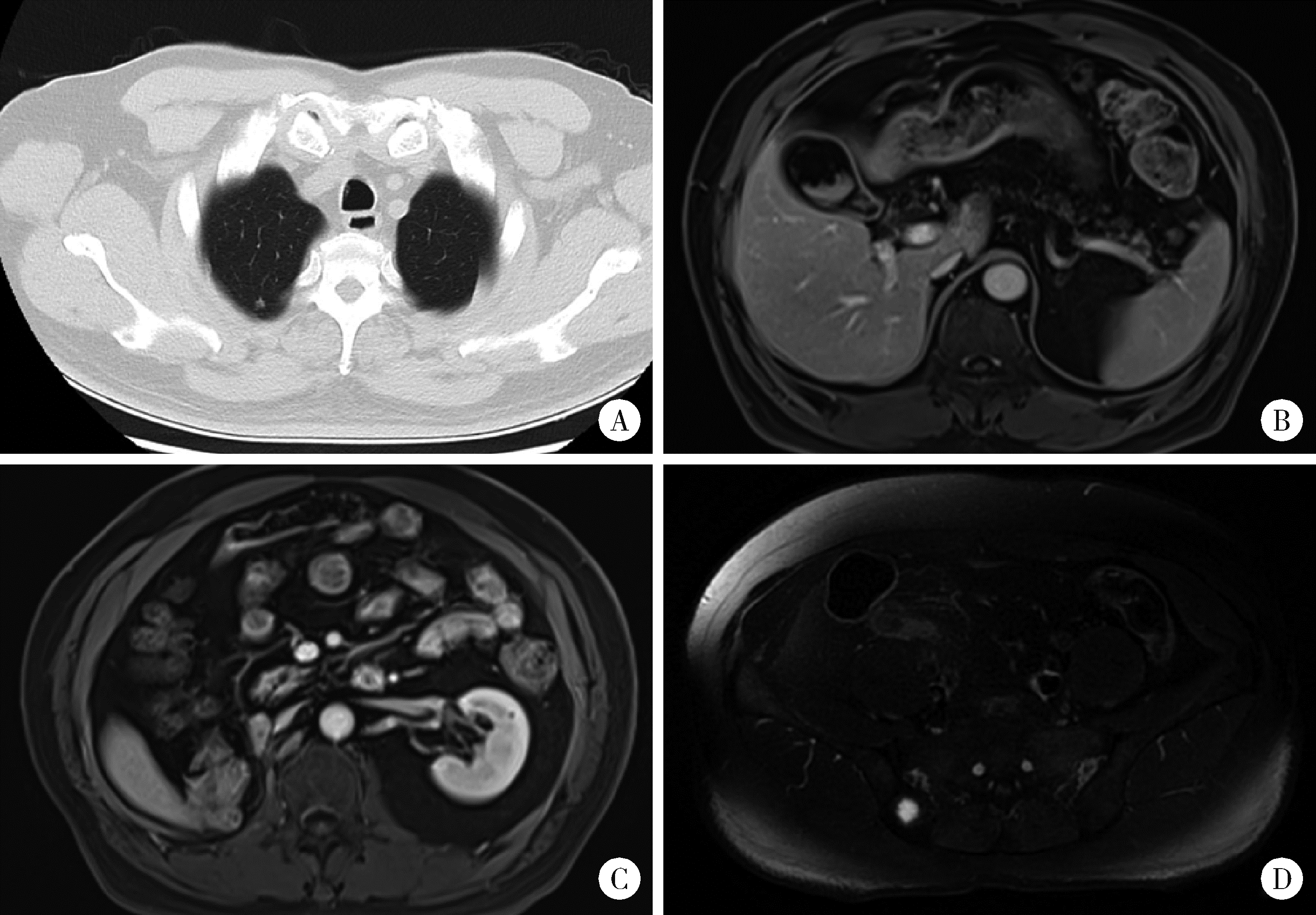
Baseline chest and abdominopelvic CT before treatment A, multiple bilateral pulmonary metastases (largest 14 mm×13 mm); B, multiple hepatic lesions with enhancement, partially confluent (largest 64 mm×56 mm); C, right psoas metastasis (21 mm×13 mm); D, osteolytic lesion in the right iliac bone, consistent with metastasis."

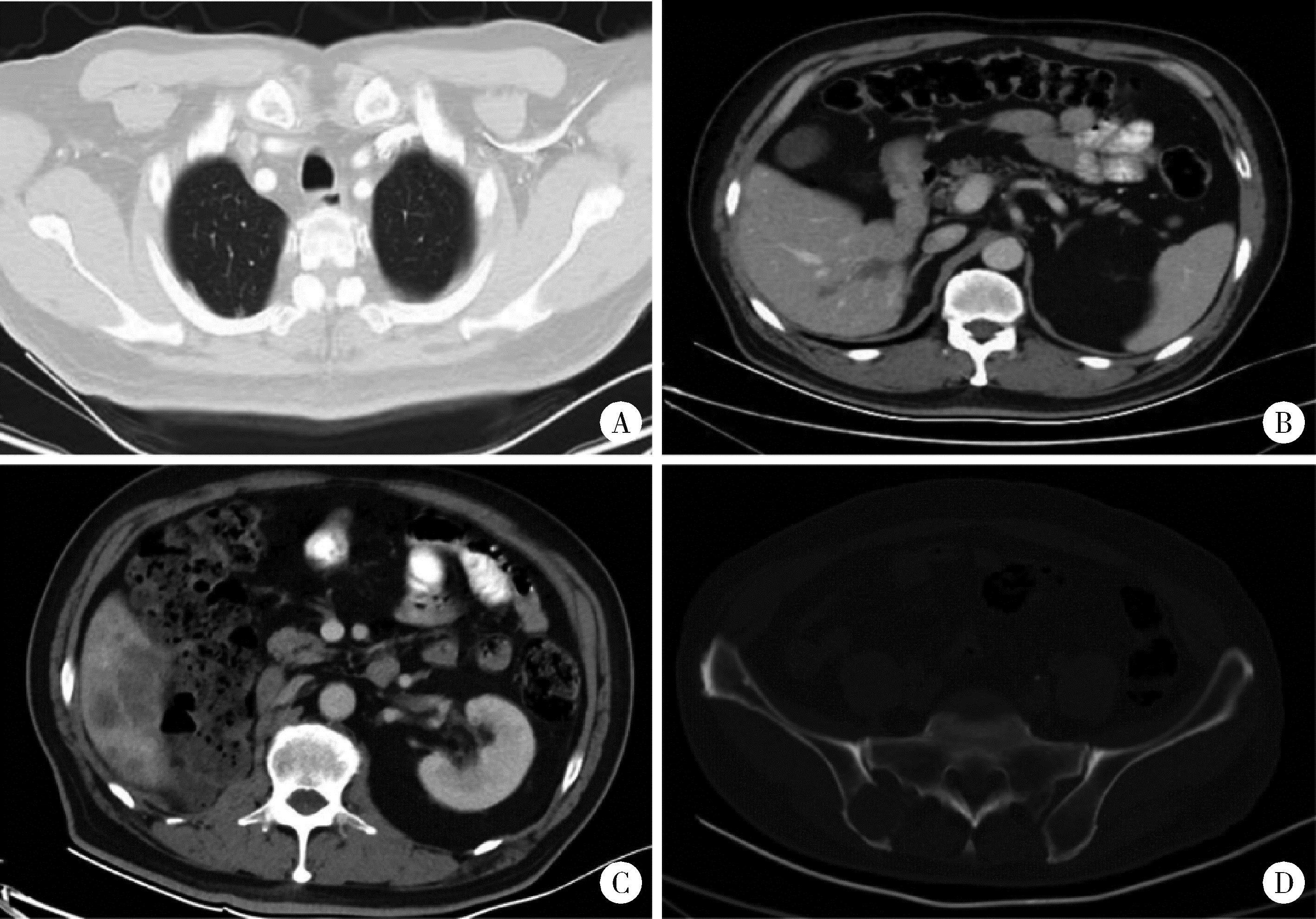
Figure 2

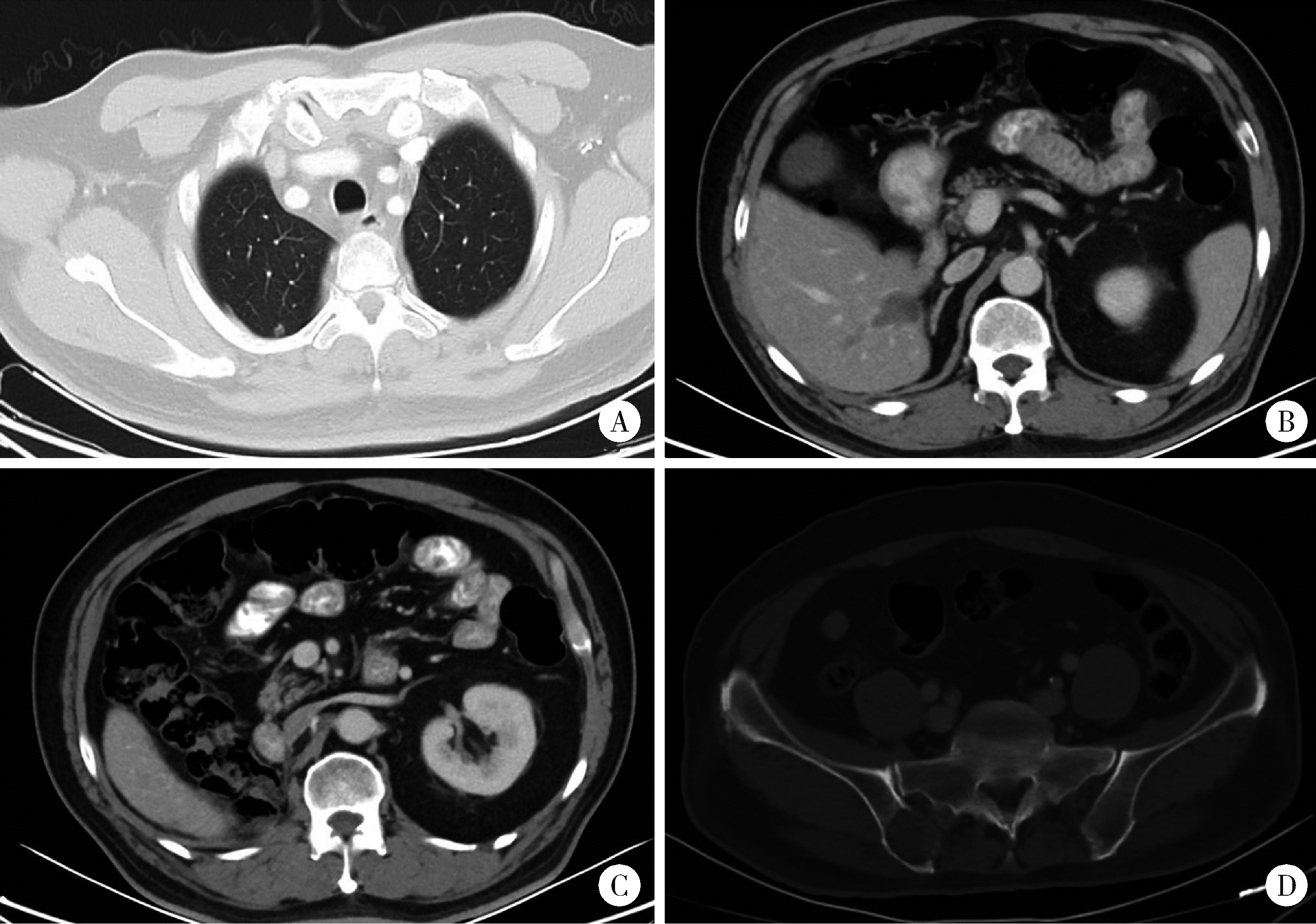
Chest and abdominopelvic CT at 6 weeks after treatment A, bilateral pulmonary metastases decreased in size (largest 11 mm ×9 mm); B, hepatic lesions reduced in size with decreased enhancement (largest 58 mm×54 mm); C, right psoas metastasis decreased (16 mm×8 mm); D, osteolytic lesion in the right iliac bone increased in size."

Figure 3

Chest and abdominopelvic CT at 12 weeks after treatment A, bilateral pulmonary metastases further decreased (largest 6 mm×5 mm); B, hepatic lesions further reduced with decreased enhancement (largest 33 mm×23 mm); C, right psoas-adjacent lesion measuring 11 mm×6 mm; D, osteolytic lesion in the right iliac bone remained stable."

Figure 4

Chest and abdominopelvic CT at 24 weeks after treatment A, bilateral pulmonary metastases remained stable, with the largest 6 mm×5 mm; B, hepatic lesions partly stable, with the largest 33 mm×23 mm, with some lesions further decreased from 18 mm×14 mm to 16 mm×9 mm; C, right psoas-adjacent lesion remained stable; D, osteolytic lesion in the right iliac bone remained stable."

Figure 5

Chest CT and abdominopelvic MRI at last follow-up in October 2023, the patient maintained PR A, bilateral pulmonary metastases remained stable, with the largest lesion measuring 6 mm × 5 mm; B, hepatic lesions remained stable, with the largest lesion measuring 33 mm × 23 mm; C, right psoas-adjacent lesion remained stable; D, osteolytic lesion in the right iliac bone remained stable. PR, partial response."

1
Larcher A , Campi R , Bex A , et al. Epidemiology of renal cancer: Incidence, mortality, survival, genetic predisposition, and risk factors[J]. Eur Urol, 2025, 88 (4): 341- 358.

doi: 10.1016/j.eururo.2025.06.005
2
Rose TL , Kim WY . Renal cell carcinoma: A review[J]. JAMA, 2024, 332 (12): 1001.

doi: 10.1001/jama.2024.12848
3
Barragan-Carrillo R , Saad E , Saliby RM , et al. First and second-line treatments in metastatic renal cell carcinoma[J]. Eur Urol, 2025, 87 (2): 143- 154.

doi: 10.1016/j.eururo.2024.10.019
4
Rini BI , Plimack ER , Stus V , et al. Pembrolizumab plus axitinib versus sunitinib for advanced clear cell renal cell carcinoma: 5-year survival and biomarker analyses of the phase 3 KEYNOTE-426 trial[J]. Nat Med, 2025, 31 (10): 3475- 3484.

doi: 10.1038/s41591-025-03867-5
5
Motzer RJ , Escudier B , Burotto M , et al. Final analysis of nivolumab plus cabozantinib for advanced renal cell carcinoma from the randomized phase Ⅲ CheckMate 9ER trial[J]. Ann Oncol, 2026, 37 (1): 33- 43.

doi: 10.1016/j.annonc.2025.09.006
6
Motzer R , Alekseev B , Rha SY , et al. Lenvatinib plus pembro-lizumab or everolimus for advanced renal cell carcinoma[J]. N Engl J Med, 2021, 384 (14): 1289- 1300.

doi: 10.1056/NEJMoa2035716
7
Yan XQ , Ye MJ , Zou Q , et al. Toripalimab plus axitinib versus sunitinib as first-line treatment for advanced renal cell carcinoma: RENOTORCH, a randomized, open-label, phase Ⅲ study[J]. Ann Oncol, 2024, 35 (2): 190- 199.

doi: 10.1016/j.annonc.2023.09.3108
8
Zhou A , Shen P , Li J , et al. First-line benmelstobart plus anlotinib versus sunitinib in advanced renal cell carcinoma (ETER100): A multicentre, randomised, open-label, phase 3 trial[J]. Lancet Oncol, 2025, 26 (9): 1145- 1157.

doi: 10.1016/S1470-2045(25)00343-2
9
Apte RS , Chen DS , Ferrara N . VEGF in signaling and disease: Beyond discovery and development[J]. Cell, 2019, 176 (6): 1248- 1264.

doi: 10.1016/j.cell.2019.01.021
10
Tang H , Wang Y , Chlewicki LK , et al. Facilitating T cell infiltration in tumor microenvironment overcomes resistance to PD-L1 blockade[J]. Cancer Cell, 2016, 30 (3): 500.

doi: 10.1016/j.ccell.2016.08.011
11
Wallin JJ , Bendell JC , Funke R , et al. Atezolizumab in combination with bevacizumab enhances antigen-specific T-cell migration in metastatic renal cell carcinoma[J]. Nat Commun, 2016, 7, 12624.

doi: 10.1038/ncomms12624
12
Dirkx AEM , Egbrink MGAO , Castermans K , et al. Anti-angiogenesis therapy can overcome endothelial cell anergy and promote leukocyte-endothelium interactions and infiltration in tumors[J]. FASEB J, 2006, 20 (6): 621- 630.

doi: 10.1096/fj.05-4493com
13
Burgers FH , van der Mijn JCK , Seijkens TTP , et al. Immunological features of clear-cell renal-cell carcinoma and resistance to immune checkpoint inhibitors[J]. Nat Rev Nephrol, 2025, 21 (10): 687- 701.

doi: 10.1038/s41581-025-00983-w
14
Yi M , Jiao D , Qin S , et al. Synergistic effect of immune checkpoint blockade and anti-angiogenesis in cancer treatment[J]. Mol Cancer, 2019, 18 (1): 60.

doi: 10.1186/s12943-019-0974-6
15
Motzer RJ , Powles T , Atkins MB , et al. Final overall survival and molecular analysis in IMmotion151, a phase 3 trial comparing atezolizumab plus bevacizumab vs sunitinib in patients with previously untreated metastatic renal cell carcinoma[J]. JAMA Oncol, 2022, 8 (2): 275.

doi: 10.1001/jamaoncol.2021.5981
16
Choueiri TK , Penkov K , Uemura H , et al. Avelumab + axitinib versus sunitinib as first-line treatment for patients with advanced renal cell carcinoma: Final analysis of the phase Ⅲ JAVELIN Renal 101 trial[J]. Ann Oncol, 2025, 36 (4): 387- 392.

doi: 10.1016/j.annonc.2024.12.008
17
Pal SK , Albiges L , Tomczak P , et al. Atezolizumab plus cabozantinib versus cabozantinib monotherapy for patients with renal cell carcinoma after progression with previous immune checkpoint inhibitor treatment (CONTACT-03): A multicentre, randomised, open-label, phase 3 trial[J]. Lancet, 2023, 402 (10397): 185- 195.

doi: 10.1016/S0140-6736(23)00922-4
18
Tian R , Liang J , Li R , et al. Acute kidney injury induced by immune checkpoint inhibitors[J]. Kidney Dis, 2022, 8 (3): 190- 201.

doi: 10.1159/000520798
19
Sorah JD , Rose TL , Radhakrishna R , et al. Incidence and prediction of immune checkpoint inhibitor-related nephrotoxicity[J]. J Immunother, 2021, 44 (3): 127- 131.

doi: 10.1097/CJI.0000000000000338
20
中华医学会泌尿外科学分会肾癌研究协作组, 马鑫, 张旭. 肾癌免疫治疗中国专家共识[J]. 微创泌尿外科杂志, 2025, 14 (2): 73- 83.
21
Iacovelli R , Ciccarese C , Buti S , et al. Avelumab plus inter-mittent axitinib in previously untreated patients with metastatic renal cell carcinoma[J]. Eur Urol, The tide-a phase 2 study 2024, 86 (5): 411- 419.

doi: 10.1016/j.eururo.2024.02.014
[1] Zichen PAN, Kai CHEN, Yukun HOU, Bohan YANG, Jixin ZHANG, Yongsu MA, Xiaodong TIAN, Yinmo YANG. Research progress in clinical pathology and molecular mechanisms of pancreatic adenosquamous carcinoma [J]. Journal of Peking University (Health Sciences), 2026, 58(2): 431-435.
[2] Haoming YIN, Zijie WANG, Fan SHU, Zhanyi ZHANG, Hui LIANG, Shudong ZHANG. Expression and significance of the FABP6 long transcript in clear cell renal cell carcinoma [J]. Journal of Peking University (Health Sciences), 2026, 58(2): 393-398.
[3] Hao FU, Luyan SHEN, Bingyang HUANG, Shaohua MA. Clinical strategies for perioperative management of esophageal squamous cell carcinoma in the immunotherapy era [J]. Journal of Peking University (Health Sciences), 2026, 58(2): 266-271.
[4] Zhemin LI, Jiafu JI, Guoxin LI, Ziyu LI, Zhaode BU, Xiangyu GAO, Di DONG, Lei TANG, Xiaofang XING, Shuqin JIA, Ting GUO, Lianhai ZHANG, Fei SHAN, Xin JI, Anqiang WANG. Development and dissemination of precision medicine approaches in gastric cancer management [J]. Journal of Peking University (Health Sciences), 2025, 57(5): 864-867.
[5] Xuejun LIANG, Fengxia ZHANG, Ting JIN, Jingjing ZHU. Biological activity and antitumor effect of long-acting recombinant human interleukin-2 drug [J]. Journal of Peking University (Health Sciences), 2025, 57(2): 253-261.
[6] Jiajun LIU, Guokang LIU, Yuhu ZHU. Immune-related severe pneumonia: A case report [J]. Journal of Peking University (Health Sciences), 2024, 56(5): 932-937.
[7] Yun-chong LIU,Zong-long WU,Li-yuan GE,Tan DU,Ya-qian WU,Yi-meng SONG,Cheng LIU,Lu-lin MA. Mechanism of nuclear protein 1 in the resistance to axitinib in clear cell renal cell carcinoma [J]. Journal of Peking University (Health Sciences), 2023, 55(5): 781-792.
[8] Mei-ni ZUO,Yi-qing DU,Lu-ping YU,Xiang DAI,Tao XU. Correlation between metabolic syndrome and prognosis of patients with clear cell renal cell carcinoma [J]. Journal of Peking University (Health Sciences), 2022, 54(4): 636-643.
[9] Tian-yu CAI,Zhen-peng ZHU,Chun-ru XU,Xing JI,Tong-de LV,Zhen-ke GUO,Jian LIN. Expression and significance of fibroblast growth factor receptor 2 in clear cell renal cell carcinoma [J]. Journal of Peking University (Health Sciences), 2022, 54(4): 628-635.
[10] Zhu YOU,Li-li XU,Xue-fen LI,Jian-yun ZHANG,Jing DU,Li-sha SUN. BRAF gene mutations in ameloblastic fibromas [J]. Journal of Peking University(Health Sciences), 2019, 51(1): 4-5.
[11] LIU Jing-wei, LU Xu, YANG Zhao-min, DENG Li-juan, YANG Lin. Immune effects of specific CTLs response induced by dendritic cells pulsed with NY-ESO-1 peptide [J]. Journal of Peking University(Health Sciences), 2017, 49(5): 840-846.
[12] YE Hai-yun, XU Qing-quan, HUANG Xiao-bo, MA Kai, WANG Xiao-feng. Tuberculous prostatic abscess following intravesical bacillus Calmette-Guérin immunotherapy: a case report [J]. Journal of Peking University(Health Sciences), 2015, 47(6): 1039-1041.
[13] XIAO Zong-Yu, CHEN Xiao-Juan, YANG Yi, XU Ru-Xiang. Experimental study of dendritic cells transfected with cancer stem like cells RNA against 9L brain tumors [J]. Journal of Peking University(Health Sciences), 2015, 47(4): 661-666.
Viewed
Full text


Abstract

Cited

  Shared   
  Discussed   
No Suggested Reading articles found!