Journal of Peking University (Health Sciences) ›› 2022, Vol. 54 ›› Issue (5): 907-919. doi: 10.19723/j.issn.1671-167X.2022.05.018

Previous Articles     Next Articles

Bioactive compounds of Jingfang Granules against SARS-CoV-2 virus proteases 3CLpro and PLpro

Zhan-peng SHANG,Yang YI,Rong YU,Jing-jing FAN,Yu-xi HUANG,Xue QIAO,Min YE*()   

  1. State Key Laboratory of Natural and Biomimetic Drugs, Peking University-Yunnan Baiyao International Medical Research Center, School of Pharmaceutical Sciences, Peking University, Beijing 100191, China
  • Received:2022-05-15 Online:2022-10-18 Published:2022-10-14
  • Contact: Min YE E-mail:yemin@bjmu.edu.cn
  • Supported by:
    the National Natural Science Foundation of China(81725023);the National Natural Science Foundation of China(82122073);the National Natural Science Foundation of China(82003614)

RICH HTML


Abstract:

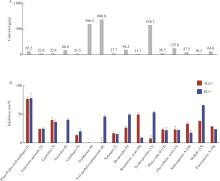
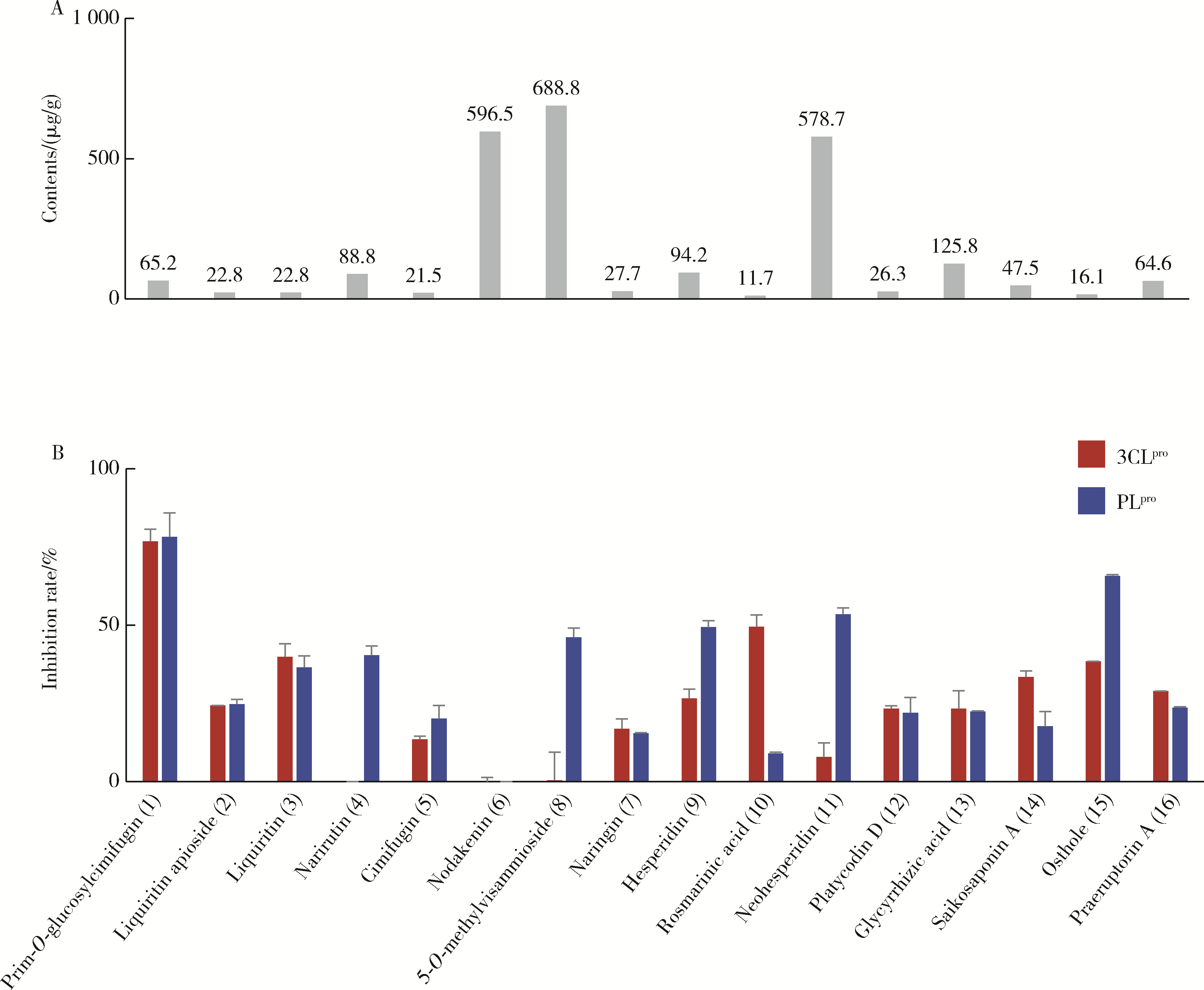
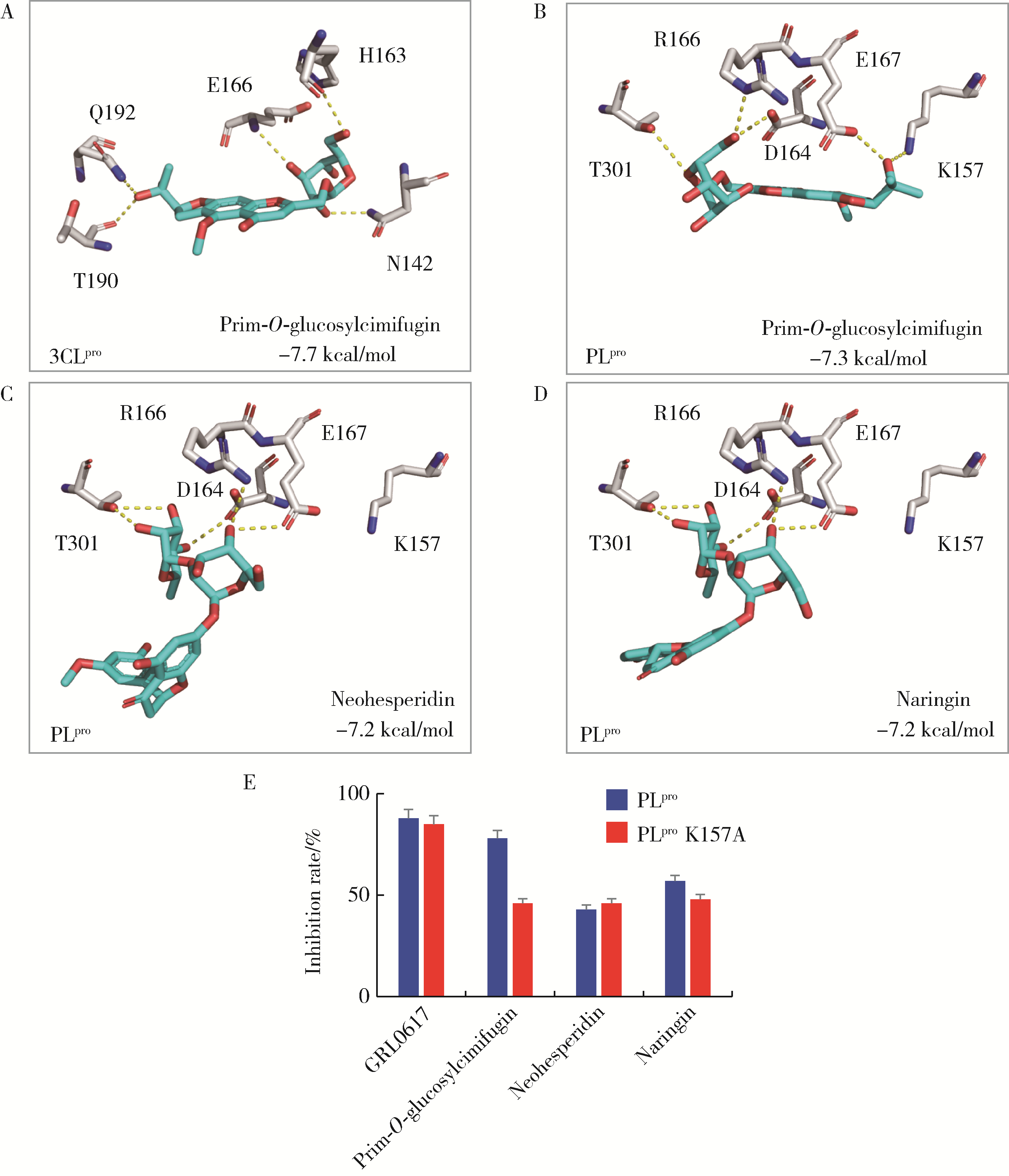
Objective: Jingfang Granules have been recommended for the prevention and treatment of corona virus disease 2019 (COVID-19). Through chemical analysis and bioactivity evaluation, this study aims to elucidate the potential effective components of Jingfang Granules. Methods: The inhibitory acti-vities of Jingfang Granules extract against 3-chymotrypsin-like protease (3CLpro), papain like protease (PLpro), spike protein receptor-binding domain (S-RBD) and human cyclooxygenase-2 (COX-2) were evaluated using enzyme assay. The antitussive effects were evaluated using the classical ammonia-induced cough model. The chemical constituents of Jingfang Granules were qualitatively and quantitatively analyzed by liquid chromatography-mass spectrometry (LC/MS). The 3CLpro and PLpro inhibitory activities of the major compounds were determined by enzyme assay, molecular docking, and site-directed mutagenesis. Results: Jingfang Granules exhibited 3CLpro and PLpro inhibitory activities, as well as COX-2 inhibitory and antitussive activities. By investigating the MS/MS behaviors of reference standards, a total of fifty-six compounds were characterized in Jingfang Granules. Sixteen of them were unambiguously identified by comparing with reference standards. The contents of the 16 major compounds were also determined, and their total contents were 2 498.8 μg/g. Naringin, nodakenin and neohesperidin were three dominating compounds in Jingfang Granules, and their contents were 688.8, 596.4 and 578.7 μg/g, respectively. In addition, neohesperidin and naringin exhibited PLpro inhibitory activities, and the inhibition rates at 8 μmol/L were 53.5% and 46.1%, respectively. Prim-O-glucosylcimifugin showed significant inhibitory activities against 3CLpro and PLpro, and the inhibitory rates at 8 μmol/L were 76.8% and 78.2%, respectively. Molecular docking indicated that hydrogen bonds could be formed between prim-O-glucosylcimifugin and amino acid residues H163, E166, Q192, T190 of 3CLpro (binding energy, -7.7 kcal/mol) and K157, D164, R166, E167, T301 of PLpro(-7.3 kcal/mol), respectively. Site-directed mutagenesis indicated amino acid residue K157 was a key active site for the interaction between prim-O-glucosylcimifugin and PLpro. Conclusion: Prim-O-glucosylcimifugin, neohesperidin, and naringin as the major compounds from Jingfang Granules could inhibit severe acute respiratory syndrome coronavirus 2 (SARS-CoV-2) virus proteases 3CLpro and PLpro. The results are valuable for rational clinical use of Jingfang Granules.

Key words: Jingfang Granules, Effective components, Severe acute respiratory syndrome coronavirus 2, 3-chymotrypsin-like protease, Papain like protease

CLC Number: 

  • R932

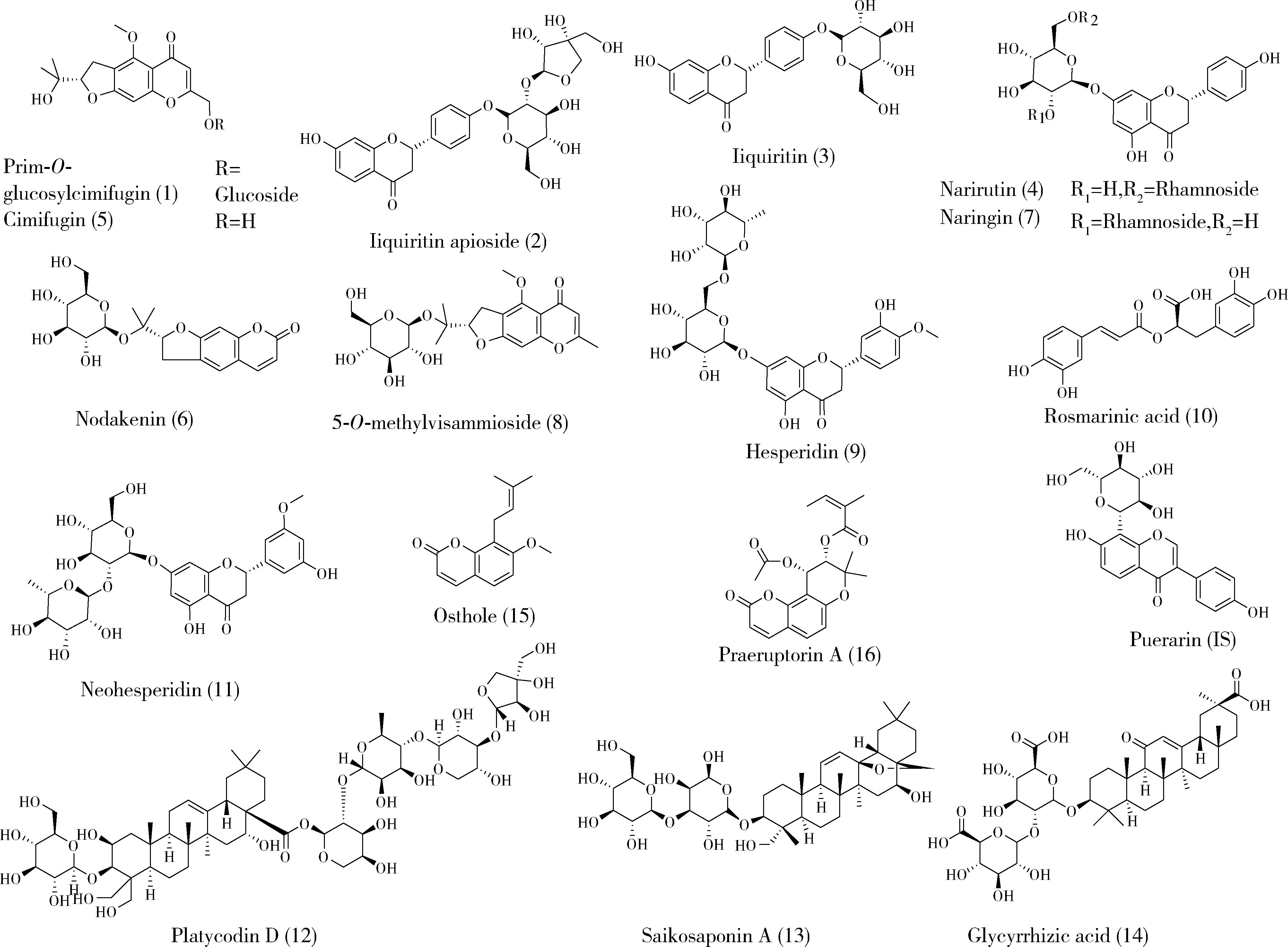
Figure 1

Structures of reference standards IS, internal standard."

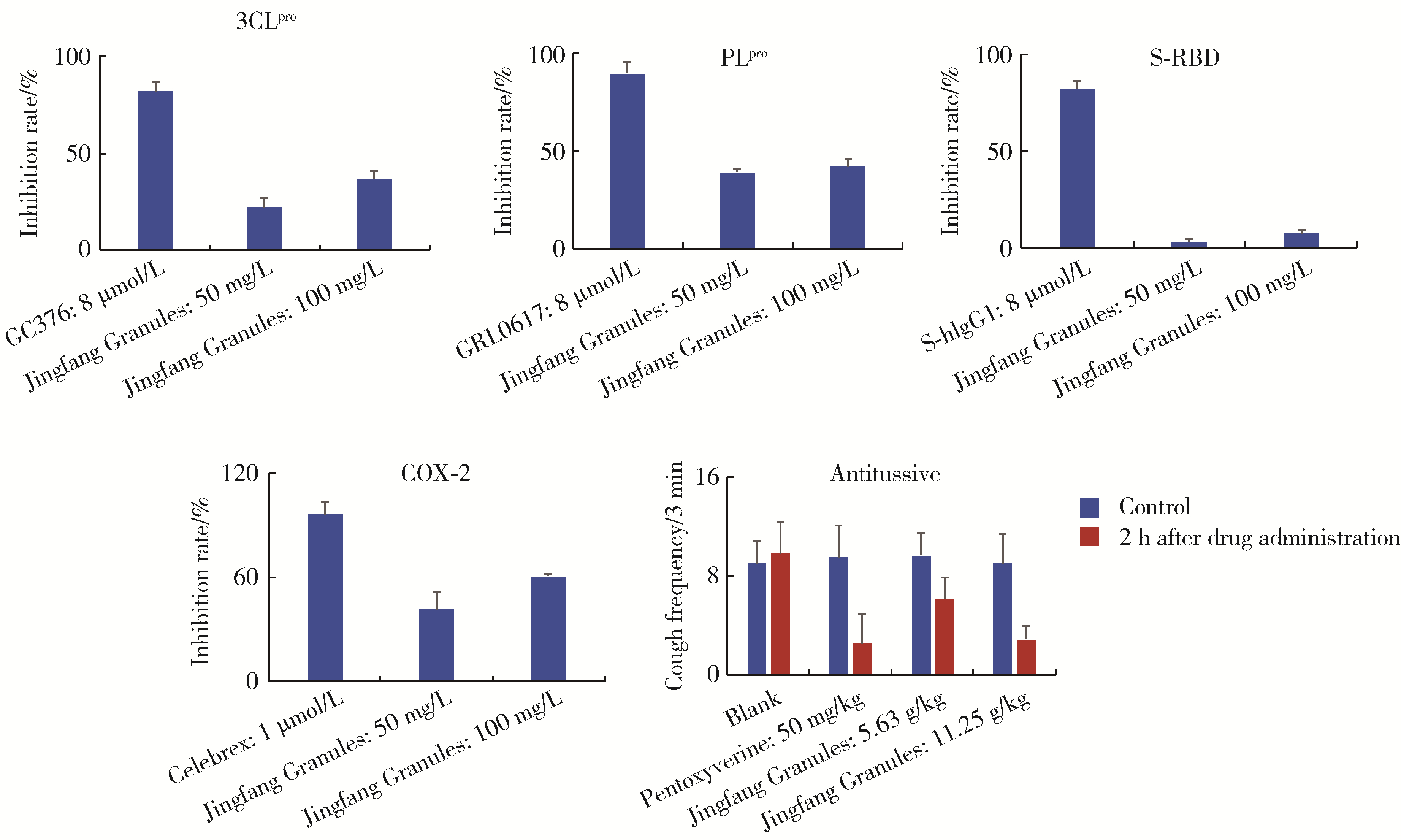
Figure 2

3CLpro, PLpro, S-RBD and COX-2 inhibitory activities and antitussive effects of Jingfang Granules 3CLpro, 3-chymotrypsin-like protease; PLpro, papain like protease; S-RBD, spike protein receptor-binding domain; COX-2, cyclooxygenase-2."

Table 1

Structural characterization of compounds in Jingfang Granules by LC/MS"

No. tR/min Precursor ion Formula Ion mode MS/MS Identification Type Source Reference
P1 1.51 353.087 4 C16H18O9 - 191.055 8, 179.034 7 Cryptochlorogenic acid Phenolic acid JingJie [22]
P2 1.78 353.087 4 C16H18O9 - 191.055 7 Neochlorogenic acid Phenolic acid JingJie [22]
P3 2.02 563.140 2 C26H28O14 - 383.076 7, 353.066 3 Schaftoside Flavonoid GanCao [23]
P4 2.10 515.118 7 C25H24O12 - 191.055 8, 179.034 7 Isochlorogenic acid A Phenolic acid JingJie [22]
P5 2.47 179.034 7 C9H8O4 - 135.044 9 Caffeic acid Phenolic acid JingJie [22]
P6 2.49 469.169 8 C22H28O11 + 307.117 0, 261.111 8 Prim-O-glucosylcimifugin isomer Chromone ShengMa [24]
P7(1) 2.58 469.169 6 C22H28O11 + 307.117 0, 261.111 9 Prim-O-glucosylcimifugin Chromone ShengMa [24]
P8 2.74 577.155 8 C27H30O14 - 383.076 9, 353.066 2 Violanthin Flavonoid GanCao [23]
P9(2) 3.43 549.160 8 C26H30O13 - 255.065 9, 135.008 5 Liquiritin apioside Flavonoid GanCao [23]
P10 3.55 595.166 1 C27H32O15 - 459.113 9, 287.055 6, 151.003 4 Neoeriocitrin Flavonoid GanCao [25]
P11(3) 3.81 417.118 6 C21H22O9 - 255.065 9, 135.008 5, 119.049 9 Liquiritin Flavonoid GanCao [23]
P12 3.93 447.092 5 C21H20O11 - 285.040 0 Luteolin-7-glucoside Flavonoid JingJie [25]
P13 4.44 515.118 9 C25H24O12 - 191.055 8, 179.034 7, 173.045 2 Isochlorogenic acid B Phenolic acid JingJie [22]
P14(4) 4.74 579.169 8 C27H32O14 - 271.060 9, 151.003 4 Narirutin Flavonoid ZhiKe [25]
P15(5) 4.78 307.115 6 C16H18O6 + 289.106 5, 289.106 5, 235.059 7 Cimifugin Chromone ShengMa [24]
P16 4.78 409.147 1 C20H24O9 + 187.038 7, 159.043 7 Nodakenin Coumarin FangFeng [26]
P17 4.78 229.084 6 C14H12O3 + 187.038 7, 159.043 7 Angenomalin Coumarin QiangHuo [27]
P18(6) 4.79 407.133 2 C20H23O9 - 227.070 9 Nodakenin Coumarin QianHu [26]
P19 4.82 577.155 5 C27H30O14 - 269.045 2 Rhoifolin/isomer Flavonoid ZhiKe [25]
P20(7) 5.17 579.169 6 C27H32O14 - 459.114 9, 271.060 8, 151.003 4 Naringin Flavonoid ZhiKe [25]
P21(8) 5.29 451.159 5 C22H28O10 - 271.097 2 5-O-methylvisammioside Chromone FangFeng [24]
P22 5.30 453.173 3 C22H28O10 + 291.122 0, 273.111 5, 231.064 7 4′-O-β-D-glucosyl-5-O-methylvisamminol Chromone FangFeng [24]
P23 5.46 515.118 7 C25H24O12 - 191.055 8, 179.034 7, 173.045 1 Isochlorogenic acid C Phenolic acid JingJie [22]
P24(9) 5.55 609.180 3 C28H34O15 - 301.071 2, 151.003 3 Hesperidin Flavonoid ZhiKe [25]
P25(10) 5.72 359.076 9 C18H16O8 - 179.034 7, 161.024 1 Rosmarinic acid Phenolic acid JingJie [22]
P26(11) 5.87 609.180 1 C28H34O15 - 301.071 3, 151.003 2 Neohesperidin Flavonoid ZhiKe [25]
P27 6.11 549.160 9 C26H30O13 - 255.065 9, 135.008 5 Isoliquiritin apioside Flavonoid GanCao [23]
P28 6.20 463.124 1 C22H24O11 - 301.071 2 Hyperin Flavonoid JingJie [25]
P29 6.54 417.118 7 C21H22O9 - 255.065 9, 135.008 6, 119.049 9 Isoliquiritin Flavonoid GanCao [23]
P30 7.47 255.065 9 C15H12O4 - 135.008 5, 119.049 9 Liquiritigenin Flavonoid GanCao [23]
P31 7.65 1237.548 4 C57H90O29 - 695.364 2, 519.332 2 Platycodin J Saponin JieGeng [28]
P32 7.71 1091.526 6 C52H84O24 - 681.384 7, 457.331 8 Deapioplatycodin D Saponin JieGeng [28]
P33 7.76 291.121 0 C16H18O5 + 273.111 4, 243.064 5, 219.064 8 5-O-methylvisamminol Coumarin FangFeng [24]
P34 7.77 285.040 0 C15H10O6 - 151.003 3, 133.029 0 Luteolin Flavonoid JingJie [25]
P35 7.80 1369.624 8 C63H102O32 - 827.443 2, 503.337 3, 469.155 4 Polygalacin D2 Saponin JieGeng [28]
P36(12) 7.83 1223.568 2 C57H92O28 - 681.384 7, 469.155 4 Platycodin D Saponin JieGeng [28]
P37 7.89 1105.506 3 C52H82O25 - 895.426 8, 485.290 1 Platyconic acid C Saponin JieGeng [28]
P38 8.39 1265.579 4 C59H94O29 - 681.384 7, 469.155 7 Platycodin A Saponin JieGeng [28]
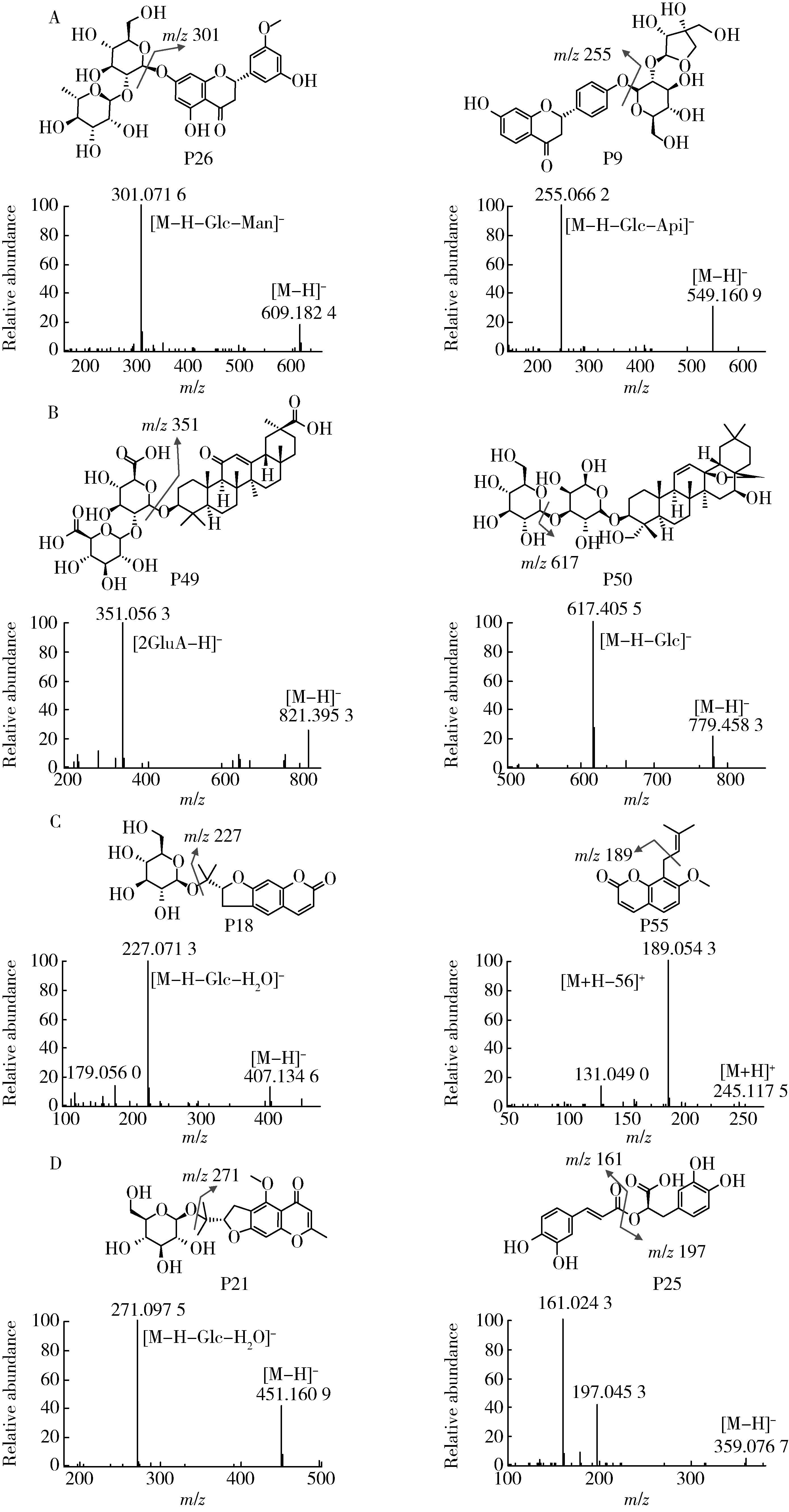
P39 8.45 895.396 4 C44H64O19 - 351.056 4, 193.035 1 Uralsaponin F Saponin GanCao [23]
P40 8.66 983.449 7 C48H72O21 - 821.396 2, 351.056 6 Licorice-saponin A3 Saponin GanCao [23]
P41 9.03 271.060 9 C15H12O5 - 151.003 4, 119.050 0 Naringenin Flavonoid ZhiKe [25]
P42 9.18 879.402 5 C44H64O18 - 351.056 2, 193.034 9 22β-acetoxyl-glycyrrhizin Saponin GanCao [23]
P43 9.36 837.390 9 C42H62O17 - 351.056 4, 193.035 0 Licorice-saponin G2 Saponin GanCao [23]
P44 9.63 301.071 5 C16H14O6 - 286.048 0, 164.011 3, 151.003 4 Hesperetin Flavonoid JingJie [25]
P45 9.92 377.160 0 C20H24O7 + 277.106 6, 205.049 3 Angelol A Coumarin DuHuo [27]
P46 10.24 837.390 4 C42H62O17 - 351.056 6, 193.035 0 Uralsaponin N Saponin GanCao [23]
P47 10.29 255.065 9 C15H12O4 - 135.008 6, 119.050 0 Isoliquiritigenin Flavonoid GanCao [23]
P48 10.36 377.157 6 C20H24O7 + 277.106 4, 205.049 1 Angelol B Coumarin DuHuo [27]
P49(13) 10.88 821.393 3 C42H62O16 - 351.056 4, 193.034 9 Glycyrrhizic acid Saponin GanCao [23]
P50(14) 11.89 779.457 2 C42H68O13 - 617.404 7, 423.328 9 Saikosaponin A Saponin ChaiHu [29]
P51 12.11 823.411 4 C42H64O16 - 351.056 4, 193.034 9 Licorice-saponin J2 Saponin GanCao [23]
P52 12.29 779.457 4 C42H68O13 - 617.404 9, 471.347 1 Saikosaponin B2 Saponin ChaiHu [29]
P53 12.38 779.457 5 C42H68O13 - 617.404 8, 455.315 9 Saikosaponin A /isomer Saponin ChaiHu [29]
P54 12.53 807.416 8 C42H64O15 - 351.056 3, 193.034 9 Licorice-saponin B2 Saponin GanCao [23]
P55(15) 14.10 245.116 3 C15H16O3 + 189.054 3, 131.049 0 Osthole Coumarin QiangHuo [27]
P56(16) 14.55 327.121 0 C19H18O5 + 227.069 7, 83.049 6 Praeruptorin A Coumarin QianHu [26]

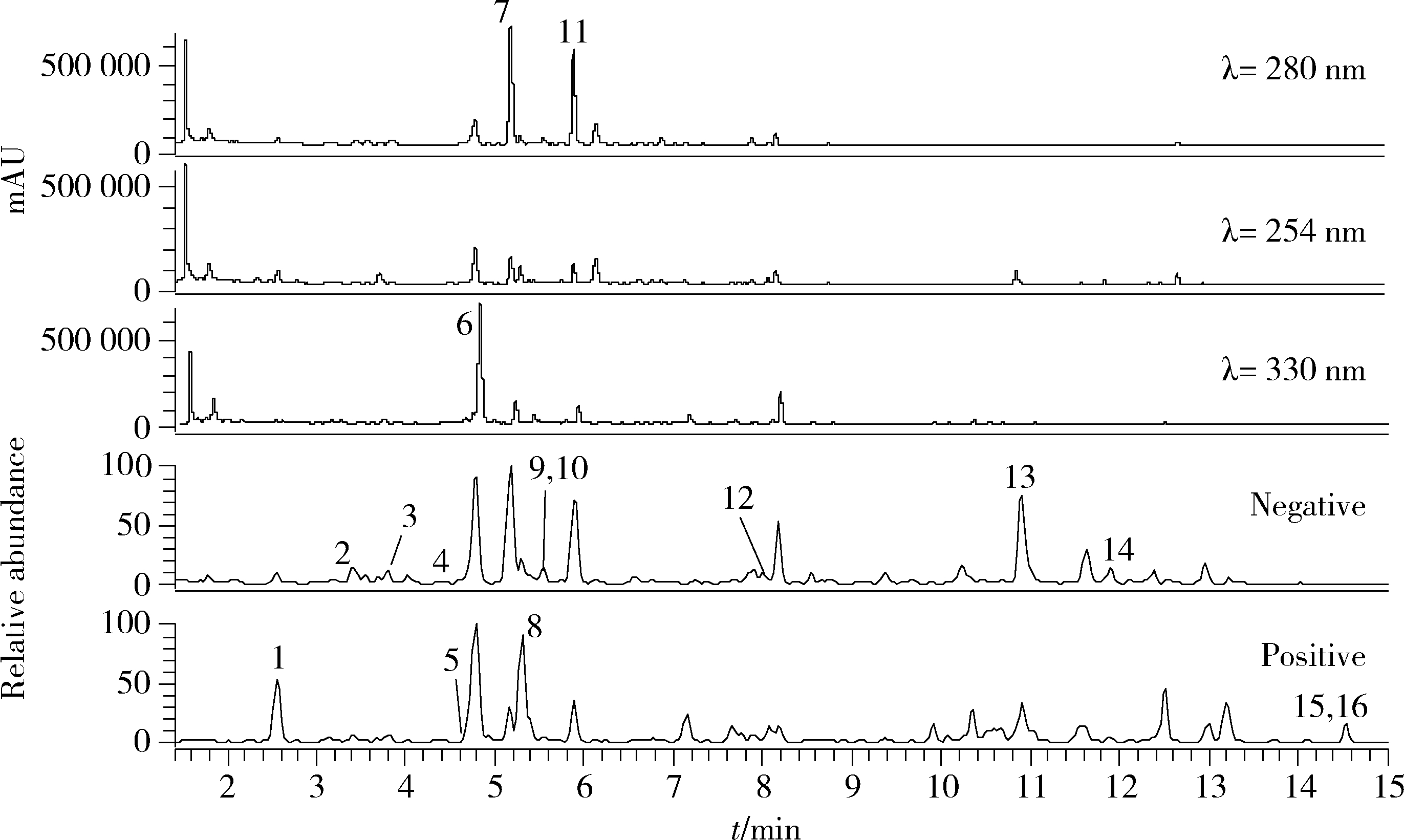
Figure 3

LC/UV and LC/MS profiles of Jingfang Granules Negative, negative ion mode; Positive, positive ion mode. LC/UV, liquid chromatography-ultraviolet; LC/MS, liquid chromatography-mass spectrometry."

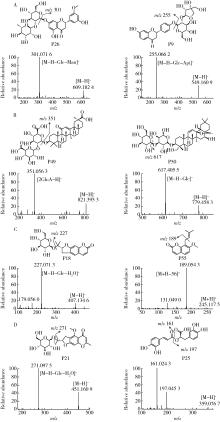
Figure 4

MS/MS spectra of representative compounds in Jingfang Granules A, flavonoids; B, saponins; C, coumarins; D, other compounds. MS, mass spectrometry."

Figure 5

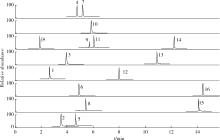
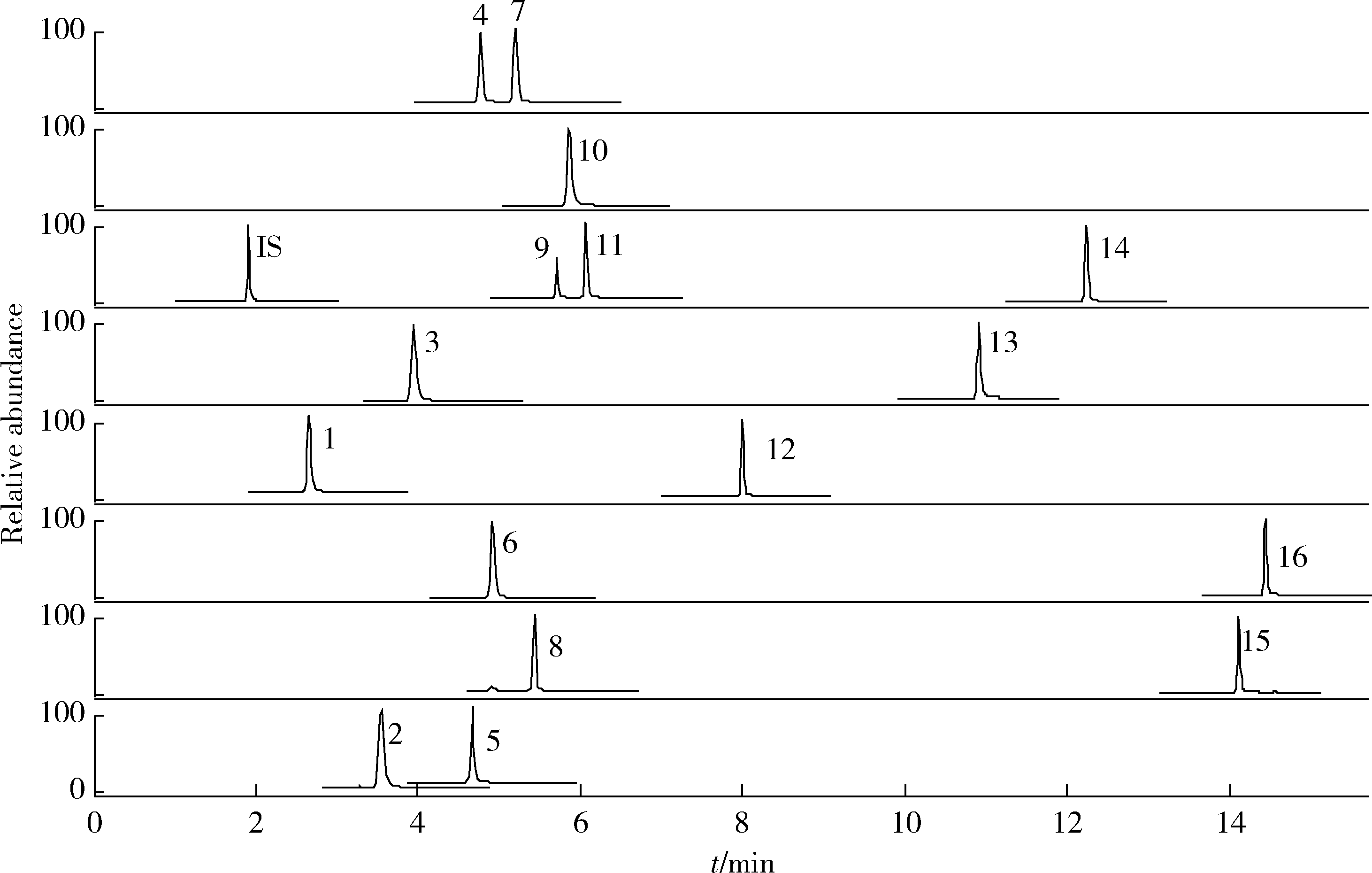
LC/PRM-MS chromatograms for quantitative analysis of 16 compounds in Jingfang Granules IS, internal standard (puerarin); red numbers, detected in the positive ion mode; black numbers, detected in the negative ion mode. LC/PRM-MS, liquid chromatography/parallel reaction monitor-mass spectrometry."

Table 2

Parameters for the quantitative analysis of 16 compounds in Jingfang Granules"

No. Compound Ion mode Collision energy/% Precursor ion Product ion Calibration equation r2 Range/(μg /L)
IS Puerarin - 35 415.103 7 295.061 0
1 Prim-O-glucosylcimifugin + 40 469.171 1 307.117 7 y=0.000 687+0.005 71x-2.370 37e-7x2 0.998 1 19.5-5 000.0
2 Liquiritin apioside - 35 549.161 9 255.066 6 y=0.021 41+0.002 33x-3.857 63e-9x2 0.993 8 78.1-5 000.0
3 Liquiritin - 20 417.119 6 255.066 6 y=0.039 28+0.004 03x-4.373 89e-8x2 0.995 1 78.1-5 000.0
4 Narirutin - 20 579.172 9 271.061 2 y=0.003 57+0.002 08x 0.997 0 19.5-5 000.0
5 Cimifugin + 60 307.117 9 235.060 2 y=0.010 25+0.010 77x -2.186 92e-6x2 0.998 9 19.5-1 250.0
6 Nodakenin - 20 453.141 1 227.071 6 y=0.001 55+0.000 38x-6.293 65e-9x2 0.999 4 39.0-10 000.0
7 Naringin - 35 579.172 9 271.061 2 y=0.014 32+0.001 39x-2.927 19e-8x2 0.997 7 39.0-10 000.0
8 5-O-methylvisammioside - 20 451.159 5 271.098 0 y=0.000 24+0.000 11x -5.315 51e-9x2 0.997 2 39.0-2 500.0
9 Hesperidin - 20 609.183 2 301.072 0 y=0.002 58+0.002 51x-1.413 47e-7x2 0.999 0 19.5-2 500.0
10 Rosmarinic acid - 20 359.077 4 161.024 5 y=0.001 05+0.001 80x +3.992 36e-9x2 0.999 1 19.5-5 000.0
11 Neohesperidin - 35 609.183 2 301.072 0 y=0.028 16+0.002 63x-9.288 72e-8x2 0.998 9 78.1-10 000.0
12 Platycodin D - 30 1 223.570 9 681.386 2 y=-0.000 21+0.001 140x 0.980 1 19.5-5 000.0
13 Glycyrrhizic acid - 50 821.397 7 351.057 5 y=0.245 84+0.001 14x-2.767 58e-8x2 0.999 1 19.5-2 500.0
14 Saikosaponin A - 35 779.458 4 617.406 3 y=-0.000 35+0.000 48x -8.079 04e-8x2 0.998 5 9.8-1 250.0
15 Osthole + 30 245.117 5 189.054 7 y=0.039 98+0.015 82x-9.182 13e-7x2 0.994 9 19.5-5 000.0
16 Praeruptorin A - 20 327.122 7 203.034 0 y=1.993 35+0.029 20x+4.227 01e-6x2 0.990 4 19.5-1 250.0

Table 3

Method validation for the quantitation of 16 compounds"

No. Repeatability /% Stability/% Precision Recovery
Intraday/% Interday/% Detection/ng Spiked/ng Recovery/% RSD/%
1 4.5 11.2 9.7 10.7 213.0 200.0 106.6 7.9
2 9.2 7.1 4.1 1.8 52.0 50.0 104.1 4.5
3 6.5 4.0 2.9 2.6 56.0 50.0 113.0 4.5
4 8.4 7.8 5.3 3.0 230.0 200.0 115.1 3.6
5 5.4 6.8 2.9 13.6 60.0 50.0 120.2 9.4
6 5.9 4.7 3.6 2.8 880.0 1 000.0 88.0 3.1
7 7.6 7.5 5.7 2.4 879.0 1 000.0 87.9 4.3
8 9.7 3.5 6.7 0.7 62.0 50.0 123.0 4.3
9 7.9 4.9 6.2 1.7 204.0 200.0 101.8 7.0
10 4.1 3.8 2.7 4.9 56.0 50.0 111.1 3.0
11 8.3 4.0 3.8 2.2 1 024.0 1 000.0 102.4 4.8
12 13.2 15.6 15.2 3.0 47.0 50.0 93.8 13.7
13 14.4 9.0 4.6 8.3 229.0 200.0 114.5 4.2
14 4.8 8.9 3.8 5.1 116.0 100.0 114.5 5.2
15 5.1 10.2 6.0 10.6 60.0 50.0 119.7 8.2
16 7.3 12.4 6.5 15.5 101.0 100.0 101.1 7.1

Figure 6

Contents of 16 major compounds in Jingfang Granules, and their 3CLpro and PLpro inhibitory activities A, contents of 16 major compounds; B, 3CLpro and PLpro inhibition rates of 16 major compounds at 8 μmol/L in Jingfang Granules."

Figure 7

Molecular docking of prim-O-glucosylcimifugin with 3CLpro, molecular docking of prim-O-glucosylcimifugin, neohesperidin and naringin with PLpro, and their inhibitory activities with PLproK157A mutant A, molecular docking of prim-O-glucosylcimifugin with 3CLpro; B, molecular docking of prim-O-glucosylcimifugin with PLpro; C, molecular docking of neohesperidin with PLpro; D, molecular docking of naringin with PLpro; E, inhibitory activities of prim-O-glucosylcimifugin, neohesperidin, and narin-gin with PLpro and PLpro K157A mutant at 8 μmol/L."

1 Huang C , Wang Y , Li X , et al. Clinical features of patients infected with 2019 novel coronavirus in Wuhan, China[J]. Lancet, 2020, 395 (10223): 497- 506.
doi: 10.1016/S0140-6736(20)30183-5
2 World Health Organization. WHO coronavirus (COVID-19) dashboard[EB/OL]. (2022-04-29)[2022-05-01]. https://covid19.who.int. 2021.
3 Merck. Merck and ridgeback's molnupiravir, an oral COVID-19 antiviral medicine, receives first authorization in the world[EB/OL]. (2021-11-04)[2022-04-15]. https://www.merck.com/news/merck-and-ridgebacks-molnupiravir-an-oral-covid-19-antiviral-medicine-receives-first-authorization-in-the-world. 2021.
4 Pfizer. Pfizer to provide U.S. government with 10 million treatment courses of investigational oral antiviral candidate to help combat COVID-19[EB/OL]. (2021-11-18)[2022-04-18]. https://www.pfizer.com/news/press-release/press-release-detail/pfizer-provide-us-government-10-million-treatment-courses.html. 2021.
5 Dai W , Zhang B , Jiang X , et al. Structure-based design of antiviral drug candidates targeting the SARS-CoV-2 main protease[J]. Science, 2020, 368 (6497): 1331- 1335.
doi: 10.1126/science.abb4489
6 Fu Z , Huang B , Tang J , et al. The complex structure of GRL0617 and SARS-CoV-2 PLpro reveals a hot spot for antiviral drug discovery[J]. Nat Commun, 2021, 12 (1): 488.
doi: 10.1038/s41467-020-20718-8
7 付新, 刘阳, 王雪梅, 等. 麻杏石甘汤的研究进展[J]. 中医药信息, 2017, 34 (2): 126- 128.
doi: 10.3969/j.issn.1002-2406.2017.02.037
8 赵琰, 胡杰, 张贵民, 等. 荆防败毒散的源流与应用[J]. 环球中医药, 2020, 13 (11): 1996- 2002.
doi: 10.3969/j.issn.1674-1749.2020.11.042
9 冯芹, 张贵民. 荆防败毒散治疗急性呼吸道感染的临床应用以及作用机制的探讨[J]. 中药与临床, 2020, 11 (3): 28- 32.
10 邹胜. 荆防败毒散治疗急性病毒性上呼吸道感染[J]. 山西中医, 2010, 26 (3): 11- 12.
11 殷健操, 周荣, 黄仁礼. 从"热入血室"论治新型冠状病毒肺炎产妇1例[J]. 光明中医, 2020, 35 (16): 2560- 2562.
doi: 10.3969/j.issn.1003-8914.2020.16.047
12 张奎, 陈红英, 马瑜. 荆防败毒散药效学研究[J]. 河南中医, 2009, 29 (6): 601- 602.
13 Song Y , Jing W , Yan R , et al. Research progress of the studies on the roots of Peucedanum praeruptorum dunn (Peucedani Radix)[J]. Pak J Pharm Sci, 2015, 28 (1): 71- 81.
14 Xi J , Xiang S , Zhang H , et al. Clinical observation of arbidol combined with diammonium glycyrrhizinate in the treatment of COVID-19[J]. Chin J Hosp Phar, 2020, 40 (12): 1287- 1290.
15 Shi R , Xu JW , Xiao ZT , et al. Naringin and naringenin relax rat tracheal smooth by regulating BKCa activation[J]. J Med Food, 2019, 22 (9): 963- 970.
doi: 10.1089/jmf.2018.4364
16 刘雯, 李峰, 孙春亮, 等. HPLC同时测定荆防颗粒中6种成分[J]. 中国实验方剂学杂志, 2016, 22 (17): 55- 58.
17 冯雪, 高玉乔, 范琼瑛, 等. 采用LC-ESI/MS方法同时测定荆防败毒口服液中4个有效成分含量[J]. 药物分析杂志, 2017, 37 (8): 1489- 1496.
18 梁红宝, 姜宇, 袁晓梅, 等. 基于GC-MS和UPLC-Q-Exactive MS技术的荆防颗粒化学成分研究[J]. 中草药, 2022, 53 (6): 1697- 1708.
19 Yi Y , Li J , Lai X , et al. Natural triterpenoids from licorice potently inhibit SARS-CoV-2 infection[J]. J Adv Res, 2022, 36, 201- 210.
doi: 10.1016/j.jare.2021.11.012
20 Shang Z , Xu L , Kuang Y , et al. Simultaneous determination of 35 constituents and elucidation of effective constituents in a multi-herb Chinese medicine formula Xiaoer-Feire-Kechuan[J]. J Pharm Anal, 2021, 11 (6): 717- 725.
doi: 10.1016/j.jpha.2021.01.003
21 Kuang Y , Li B , Fan J , et al. Antitussive and expectorant activities of licorice and its major compounds[J]. Bioorg Med Chem, 2018, 26 (1): 278- 284.
doi: 10.1016/j.bmc.2017.11.046
22 Shang ZP , Xu LL , Xiao Y , et al. A global profiling strategy using comprehensive two-dimensional liquid chromatography coupled with dual-mass spectrometry platforms: Chemical analysis of a multi-herb Chinese medicine formula as a case study[J]. J Chromatogr A, 2021, 1642, 462021.
doi: 10.1016/j.chroma.2021.462021
23 Song W , Qiao X , Chen K , et al. Biosynthesis-based quantitative analysis of 151 secondary metabolites of licorice to differentiate medicinal Glycyrrhiza species and their hybrids[J]. Anal Chem, 2017, 89 (5): 3146- 3153.
doi: 10.1021/acs.analchem.6b04919
24 Wang S , Qian Y , Sun M , et al. Holistic quality evaluation of Saposhnikoviae Radix (Saposhnikovia divaricata) by reversed-phase ultra-high performance liquid chromatography and hydrophi-lic interaction chromatography coupled with ion mobility quadrupole time-of-flight mass spectrometry-based untargeted metabolomics[J]. Arab J Chem, 2020, 13 (12): 8835- 8847.
doi: 10.1016/j.arabjc.2020.10.013
25 Bai Y , Zheng Y , Pang W , et al. Identification and comparison of constituents of Aurantii Fructus and Aurantii Fructus Immaturus by UFLC-DAD-Triple TOF-MS/MS[J]. Molecules, 2018, 23 (4): 1- 15.
26 Chu S , Chen L , Xie H , et al. Comparative analysis and chemical profiling of different forms of Peucedani Radix[J]. J Pharmaceut Biomed Anal, 2020, 189, 113410.
doi: 10.1016/j.jpba.2020.113410
27 Wan M , Zhang Y , Yang Y , et al. Analysis of the chemical composition of Angelicae Pubescentis Radix by ultra-performance liquid chromatography and quadrupole time-of-flight tandem mass spectrometry[J]. J Chin Pharm Sci, 2019, 28 (3): 145- 159.
doi: 10.5246/JCPS.2019.03.014
28 Huang W , Zhou H , Yuan M , et al. Comprehensive characterization of the chemical constituents in Platycodon grandiflorum by an integrated liquid chromatography-mass spectrometry strategy[J]. J Chromatogr A, 2021, 1654, 462477.
doi: 10.1016/j.chroma.2021.462477
29 郭敏娜, 刘素香, 赵艳敏, 等. 基于HPLC-Q-TOF-MS技术的柴胡化学成分分析[J]. 中草药, 2016, 12 (47): 2044- 2052.
30 郑单单, 魏文峰, 霍金海, 等. 基于UPLC-Q-TOF-MS技术的芪风固表颗粒血清药物化学研究[J]. 中草药, 2021, 52 (3): 643- 652.
31 魏飞亭, 程昊, 乔日发, 等. UPLC-Q-TOF/MS鉴定大鼠灌服枳壳提取物后的入血成分及其代谢产物[J]. 中国实验方剂学杂志, 2020, 26 (21): 161- 172.
[1] 德敏 周,海伟 李,苏龙 肖. [J]. Journal of Peking University (Health Sciences), 2022, 54(5): 832-836.
Viewed
Full text


Abstract

Cited

  Shared   
  Discussed   
No Suggested Reading articles found!