Journal of Peking University (Health Sciences) ›› 2023, Vol. 55 ›› Issue (2): 370-374. doi: 10.19723/j.issn.1671-167X.2023.02.026

Previous Articles     Next Articles

Uterine POLE mutant endometrioid carcinoma combined with human papilloma virus-associated cervical adenocarcinoma: A case report and literature review

Fang CAO1,2,Ming ZHONG3,Cong-rong LIU2,*()   

  1. 1. Department of Pathology, Hunan Cancer Hospital, Changsha 410000, China
    2. Department of Pathology, Peking University School of Basic Medical Sciences/Peking University Third Hospital, Beijing 100191, China
    3. Tai'an Center Hospital, Tai'an 271000, Shandong, China
  • Received:2022-10-17 Online:2023-04-18 Published:2023-04-12
  • Contact: Cong-rong LIU E-mail:congrong_liu@163.com

RICH HTML


Abstract:

Independent primary uterine and cervical adenocarcinoma are rare and difficult to identify their origins, which makes treatment decision difficult. A 46-year-old female with endometrioid carcinoma and adenocarcinoma, human papilloma virus (HPV)-associated of the uterine cervix was reported. The patient presented with increased menstrual flow, contact bleeding and watery leucorrhea for more than one year, and the imaging findings showed abnormal uterine morphology, irregular margins, and multiple abnormal signals in uterine cavity and myometrium, which suggested multiple leiomyomas of the uterus. The signal intensity in the right muscle layer was markedly enhanced, suggesting a smooth muscle tumor of uncertain malignant potential. A large number of cystic hypointensity was seen in the cervix, and multiple cysts were considered. The initial preoperative diagnosis was multiple leiomyoma of the uterus, and a hysterectomy operation was planned. During the operation, the uterus was sent for frozen sections. There was a mass in the endometrium of the fundus, with a soft grayish-red cut surface and a clear border with the myometrium, and there was a grayish-white nodule in the cervix with a hard grayish-white cut surface. The two masses were well demarcated from each other, and the distance between them was 30 mm. The result of the frozen sections indicated the malignant tumor of the endometrium, and the extended hysterectomy+pelvic lymphadenectomy+partial resection of the greater omentum was performed. After the operation, the paraffin sections were sent to the Department of Pathology of the Peking University Third Hospital for histochemistry, POLE gene sequencing and HPV RNAscope tests, and the final diagnosis was a synchronous endometrioid carcinoma (POLE-mutant according to the WHO classification) and an adenocarcinoma, HPV-associated of the uterine cervix. Now the patient had been treated with 2 cycles of chemotherapy and her condition was fine. Through the analysis of the histological, immunohistochemical and molecular detection results of this case, the importance of applying HPV RNAscope and TCGA molecular typing in the diagnosis of cervical adenocarcinomas and endometrial carcinomas was emphasized. At the same time, gynecologists should not blindly rely on intraoperative frozen sections, and should pay attention to preoperative pathological examination, and make appropriate operation methods according to the results in order to prevent passivity in the surgery.

Key words: Endometrioid carcinoma, Uterine cervical neoplasms, Multiple primary neoplasms, Papillomavirus infections, Mucinous adenocarcinoma, Tumor biomarkers

CLC Number: 

  • R737.33

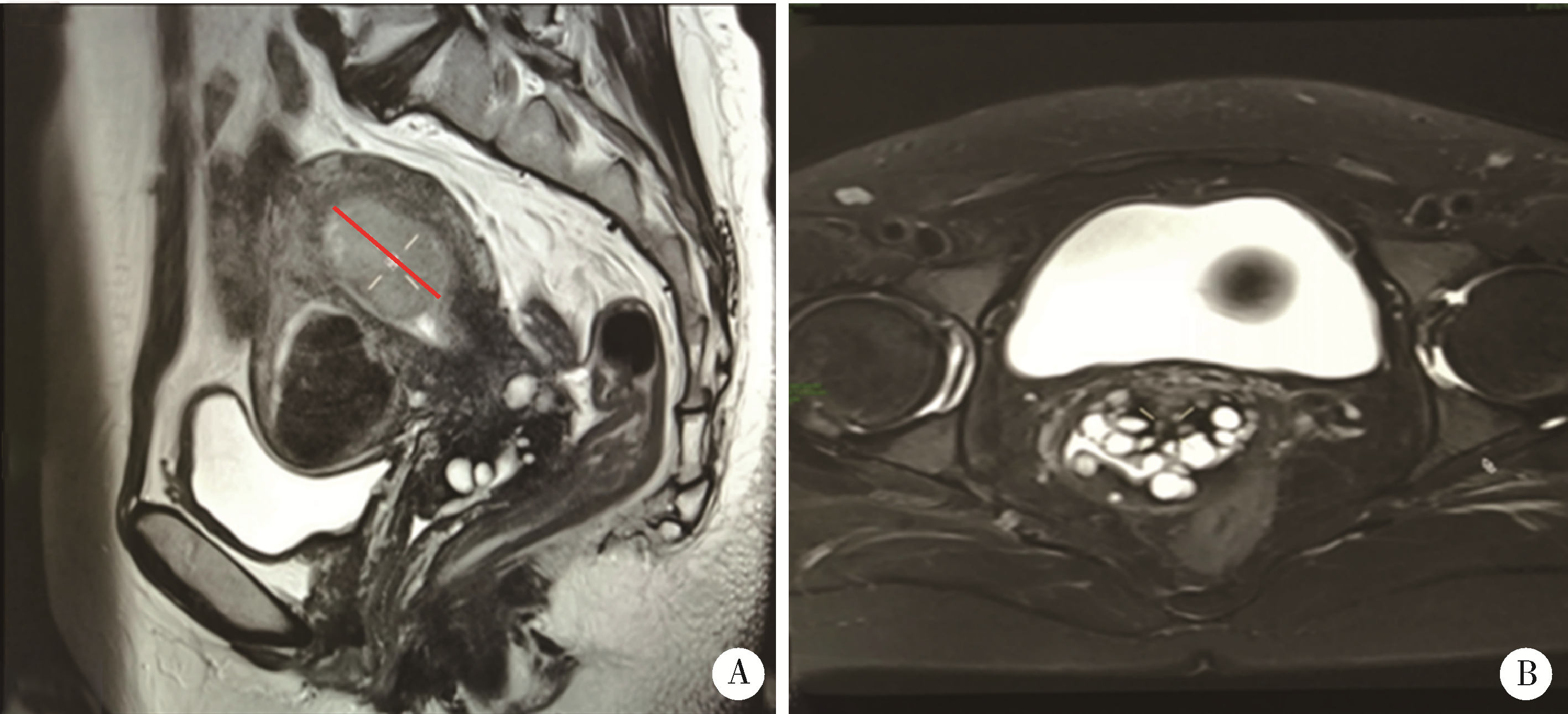
Figure 1

Results of pelvic MRI A, the mass of uterine (red line) with an area of 45 mm×27 mm; B, multiple cysts of the cervix, no clear mass."

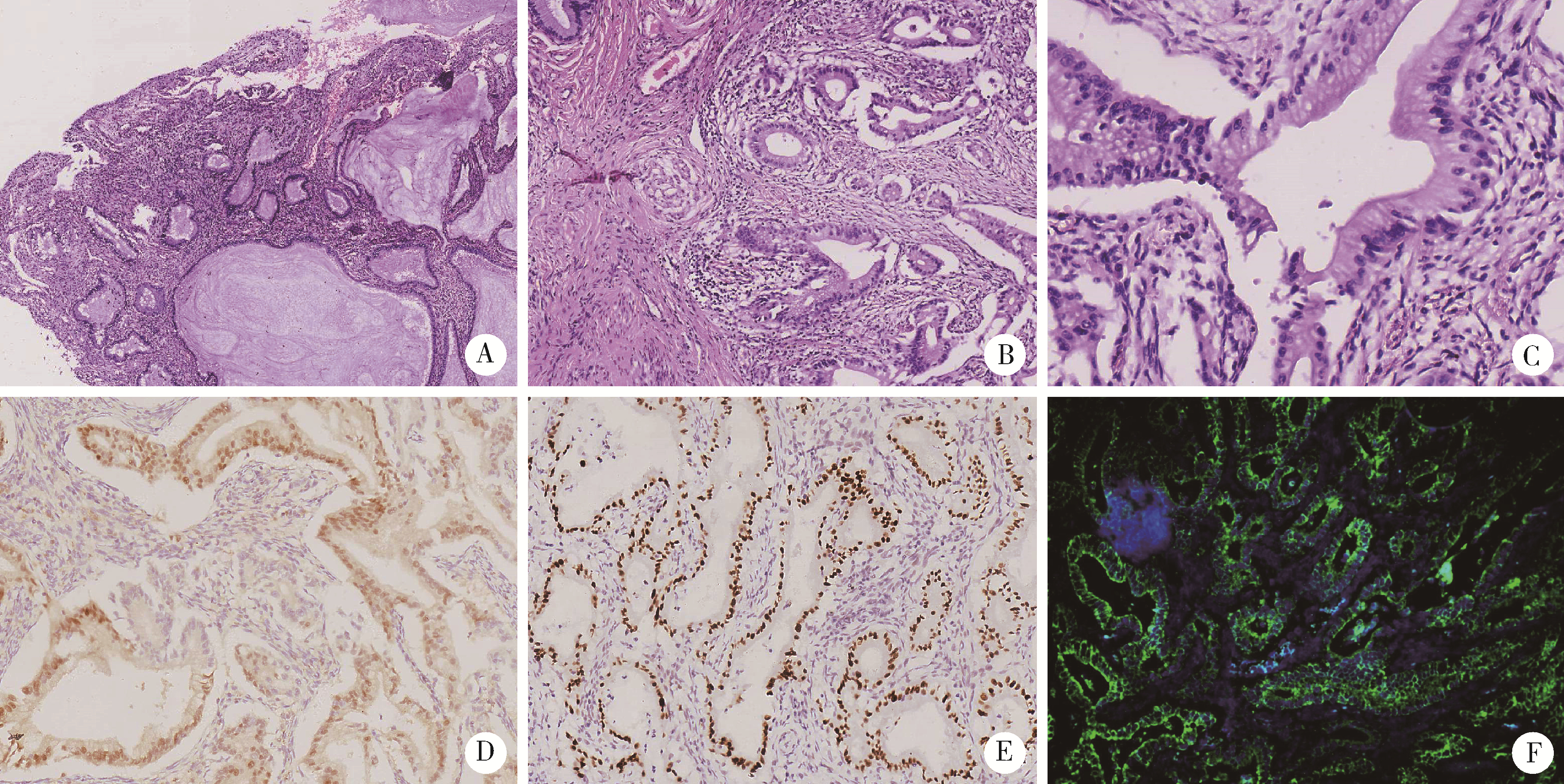
Figure 2

Histopathological and related examination results of cervical mass A, hyperplasia of cervical glands (HE ×50); B, invasive adenocarcinoma, mucinous type (HE ×100); C, invasive adenocarcinoma, mucinous type (HE ×400); D, the tumor cells are PAX-8 positive (IHC ×200); E, p53 shows subclonal missense mutant (IHC ×200); F, the tumor cells are HPV RNAscope positive (FISH ×400). HE, hematoxylin-eosin; IHC, immunohistochemistry; FISH, fluorescence in situ hybridization; PAX, paired box; HPV, human papilloma virus."

Figure 3

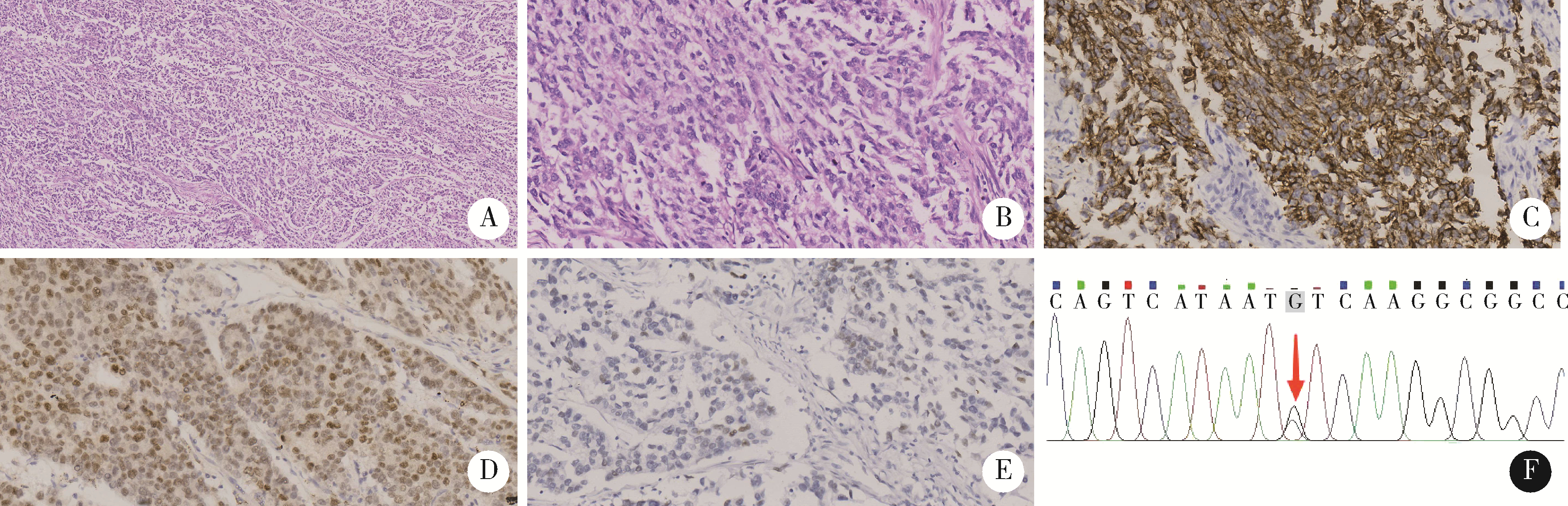
Histopathological and related examination results of the mass of uterine A, the tumor cells were diffusely distributed (HE ×100); B, high power of the tumor cells (HE ×400); C, the tumor cells are CK8/18 positive (IHC ×400); D, the tumor cells are PAX-8 positive (IHC ×400); E, the tumor cells show wild staining for p53 (IHC ×400); F, next-generation sequencing of the tumor cells revealed a mutation in the POLE gene: exon13:c.1270C>G(p.L424V) (red arrow). HE, hematoxylin-eosin; IHC, immunohistochemistry; CK, cytokeratin; PAX, paired box."

Table 1

Differentiation of HPV-associated cervical adenocarcinoma and non-HPV-associated cervical adenocarcinoma (gastric-type)"

Items HPVA-CA NHPVA-CA
Definition A malignant neoplasm of the cervical glandular epithelium resulting from infection with high-risk HPV An invasive adenocarcinoma showing gastric differentiation, unrelated to HPV infection
ICD-O 3 3
Pathogenesis High-risk HPV (usually type 16 or 18) infection It is not associated with HPV infection and may be caused by atypical lobular hyperplasia of cervical glands
Histopathology According to the growth patterns, the adenocarcinomas were divided into Silva A, B, C types, histological subtypes were divided into common and mucinous types, and each subtype had different numbers of “floating” mitoses and apoptotic bodies Well-differentiated adenocarcinoma to very poorly-differentiated adenocarcinoma can be seen, cytoplasm contains neutral mucins, HE staining showed clear or eosinophilic cytoplasm and distinct cell borders, but mitoses and apoptosis are rare; Other histologic feature includes usual type or endometrioid-like glands with goblet cells
Immunohistochemistry ER/PR-, CK7+, PAX-8+ (about 75% [8]), p53 wild type, p16 diffuse+ ER/PR-, CK7+, PAX-8+, p53 wild type or abnormal, p16 negative or patchy+
Molecular pathology High-risk HPV in situ hybridization (DNA or mRNA) + Negative for HPV infection, STK11 and TP53 are frequently altered
Staging FIGO and UICC FIGO and TNM
Prognosis The 5-year overall survival rate is 77%, and the stage is the most important prognostic factor Highly invasion, 5-year overall survival rate is only 36.5% [5], and prognosis is not associated with differentiation
1 谢加琼, 莫婷, 任黔川. 宫颈癌肉瘤合并卵巢癌和子宫内膜癌1例[J]. 实用妇产科杂志, 2016, 32 (8): 637- 638.
2 Nakra T, Biswas R, Pandey R, et al. Synchronous endometrioid carcinoma of the endometrium and small cell neuroendocrine carcinoma of the cervix: A rare combination[J]. BMJ Case Rep, 2018, 2018: bcr2018227155.
3 Park ST , Song MJ , Lee CW , et al. Synchronous clear cell adenocarcinoma of the cervix and endometrioid carcinoma of the endometrium[J]. Eur J Gynaecol Oncol, 2011, 32 (5): 573- 575.
4 Stewart CJR , Crum CP , McCluggage WG , et al. Guidelines to aid in the distinction of endometrial and endocervical carcinomas, and the distinction of independent primary carcinomas of the endome-trium and adnexa from metastatic spread between these and other sites[J]. Int J Gynecol Pathol, 2019, 38 (Iss 1 Suppl 1): S75- S92.
5 Jung H , Bae GE , Kim HM , et al. Clinicopathological and mole-cular differences between gastric-type mucinous carcinoma and usual-type endocervical adenocarcinoma of the uterine cervix[J]. Cancer Genomics Proteomics, 2020, 17 (5): 627- 641.
doi: 10.21873/cgp.20219
6 Wang F , Flanagan J , Su N , et al. RNAscope: A novel in situ RNA analysis platform for formalin-fixed, paraffin-embedded tissues[J]. J Mol Diagn, 2012, 14 (1): 22- 29.
doi: 10.1016/j.jmoldx.2011.08.002
7 Nuovo GJ , Plaia TW , Belinsky SA , et al. In situ detection of the hypermethylation-induced inactivation of the p16 gene as an early event in oncogenesis[J]. Proc Natl Acad Sci USA, 1999, 96 (22): 12754- 12759.
doi: 10.1073/pnas.96.22.12754
8 WHO Classification of Tumours Editorial . Female genital tumours: WHO classification of tumours[M]. 5th ed Geneva: World Health Organization,, 2020.
9 Crosbie EJ , Einstein MH , Franceschi S , et al. Human papillomavirus and cervical cancer[J]. Lancet, 2013, 382 (9895): 889- 899.
doi: 10.1016/S0140-6736(13)60022-7
10 程傲霜, 李晶, 林仲秋. 《2020 ESGO-ESTRO-ESP子宫内膜癌患者管理指南》解读[J]. 中国实用妇科与产科杂志, 2021, 37 (3): 336- 341.
[1] Qi SHEN,Yi-xiao LIU,Qun HE. Mucinous tubular and spindle cell carcinoma of kidney: Clinicopathology and prognosis [J]. Journal of Peking University (Health Sciences), 2023, 55(2): 276-282.
[2] HU Jun, ZHENG Pei-zi, ZHU Li-rong. Comparison of clinical pathological characteristics in ovarian preserving patients with stage ⅠB1 cervical adenocarcinoma and squamous cell carcinoma [J]. Journal of Peking University(Health Sciences), 2016, 48(5): 783-787.
[3] MA Ke, YANG Yi-he, YANG Xi, FENG Zhao-Yi, LIU Tong-yu, WEN Hong-wu, LIAO Qin-ping. Efficacy of postoperative simple chemotherapy and concurrent chemoradiotherapy in FIGO stage ⅠB2-ⅡB cervical cancer [J]. Journal of Peking University(Health Sciences), 2013, 45(6): 910-915.
Viewed
Full text


Abstract

Cited

  Shared   
  Discussed   
No Suggested Reading articles found!