Journal of Peking University (Health Sciences) ›› 2025, Vol. 57 ›› Issue (3): 514-521. doi: 10.19723/j.issn.1671-167X.2025.03.015

Previous Articles     Next Articles

Three-party game and simulation analysis of health-related information quality regulation in public health emergencies

Yu WANG1, Rui YUAN1, Shupeng LI1, Chun CHANG1,2,*()   

  1. 1. Department of Social Medicine and Health Education, School of Public Health, Peking University, Beijing 100191, China
    2. Center for Healthy Aging, Peking University, Health Science Center, Beijing 100191, China
  • Received:2025-02-09 Online:2025-06-18 Published:2025-06-13
  • Contact: Chun CHANG
  • Supported by:
    Capital's Funds for Health Improvement and Research(2024-1G-2013)

RICH HTML


Abstract:

Objective: To construct a tripartite game model involving the government, the public, and the pharmaceutical industry alliance during public health emergencies, revealing the dynamic mechanisms of health-related information quality regulation and exploring effective strategies to optimize the information dissemination environment through reward-punishment mechanisms. Methods: Based on evolutionary game theory, a tripartite evolutionary game model was established, integrating strategy spaces, payoff functions, and parameter definitions for each stakeholder. The pharmaceutical industry alliance ' s strategies included publishing high- or low-quality information (α), the public ' s strategies encompassed rational analysis or passive response (β), and the government's strategies involved regulatory enforcement or inaction (γ). Key parameters, such as economic benefits (Iyy), regulatory costs (Czf), penalties (Fyy), and incentives (Pyy), were quantified to reflect real-world scenarios. Replicator dynamic equations and Jacobian matrices were derived to analyze the stability of equilibrium points, while MATLAB 2016a simulations were conducted to validate the model under varying initial conditions (e.g., Iyy=100, 150, 200; Pyy=0, 20, 35; Fyy=0, 10, 20). Sensitivity analyses examined the impact of critical parameters on system evolution, by 50 iterative simulations to observe convergence patterns. Results: The study revealed three key findings: (1) Public rational discernment (β) significantly influenced the pharmaceutical industry ' s strategy. Simulations demonstrated that increasing Iqz(benefits of information acquisition) reduced Cqz (cognitive costs), elevating β from 0.4 to 0.8 and driving α (high-quality information probability) to stabilize at 1. (2) Government regulatory intensity (γ) correlated positively with the social hazards of low-quality information. When Fyy+ Pyy>Iyy, speculative behaviors decreased, achieving equilibrium at α=1. (3) Dual stable equilibria emerged: a high-quality equilibrium (α=1, β=1, γ=0) with lower regulatory costs and a low-quality equilibrium (α=0, β=0, γ=1) associated with higher social risks. Phase diagrams illustrated path dependency, where initial α < 0.5 led to the low-quality equilibrium unless dynamic penalties (Fyy>20) and incentives (Pyy>30) were enforced. Conclusion: A "carrot-stick" collaborative governance framework is proposed, emphasizing categorized regulation, AI-enabled auditing, and dynamic penalty systems. Future research should integrate emotional utility functions to address irrational decision-making impacts, thereby enhancing the adaptability of health information regulatory systems.

Key words: Health-related information, Quality supervision, Three-party evolution game

CLC Number: 

  • R197.1

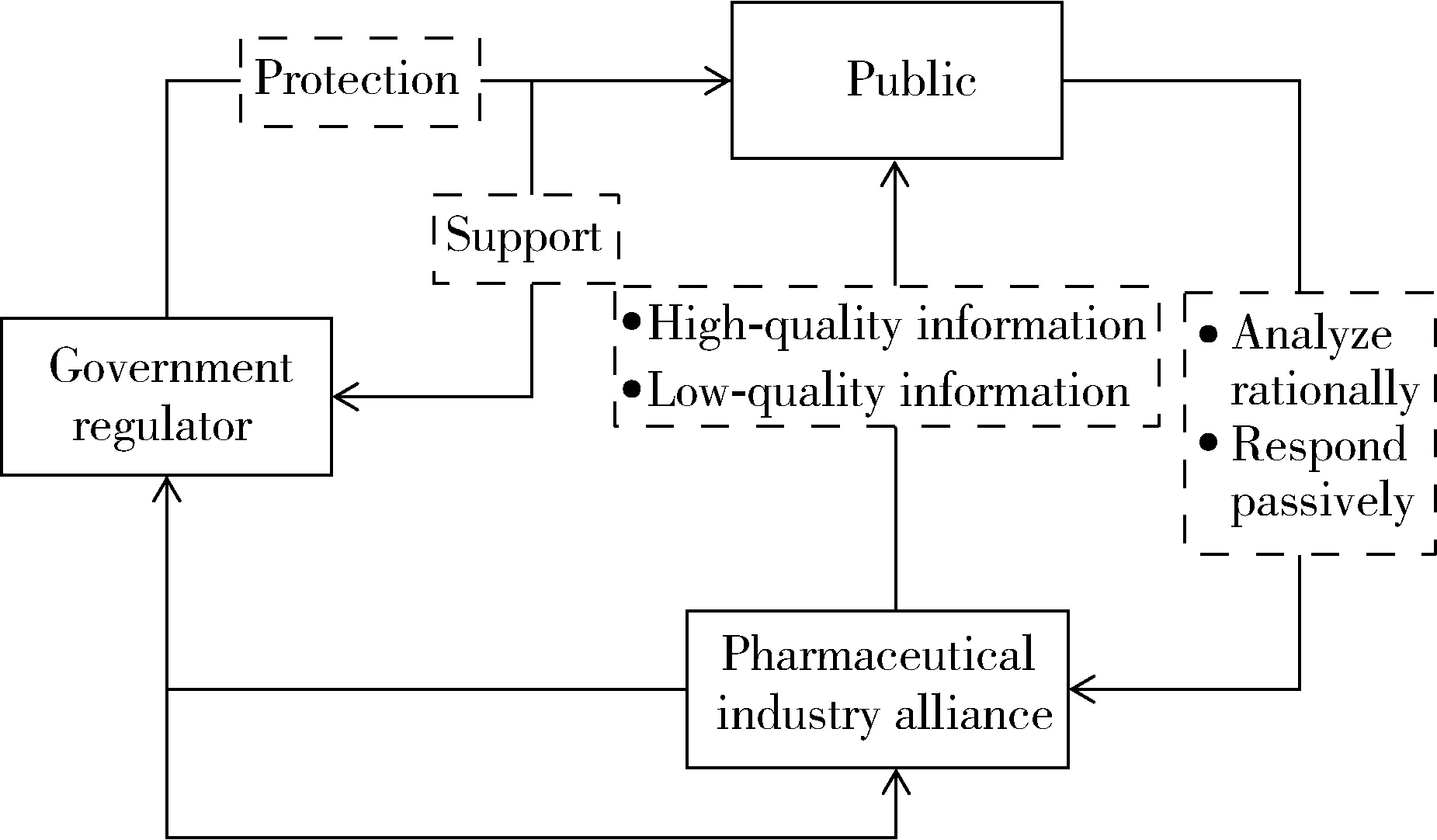
Figure 1

Logical relationship diagram of the three-party subject game model"

Table 1

Three-way thematic strategy space for pharmaceutical industry alliances, the public, and government regulators"

Game subjects Tactical symbol Strategy description Probability
Pharmaceutical industry alliance A1/A2 Publish high quality/low quality information α/(1-α)
The public B1/B2 Analyze rationally/respond passively β/(1-β)
Government regulators C1/C2 Enforce regulation/no regulation γ/(1-γ)

Table 2

Core parameter definitions"

Parameter symbol Full name of parameter Economic implications Theoretical foundation
α Selection probability of high quality information Degree to which industry alliances assess reputational value Kreps reputation game model
β Rational analysis selection probability Crowd perception of willingness to invest resources Dual systems cognitive theory
γ Probability of regulatory implementation Government risk prevention and control efforts Polycentric governance theory
Iyy Benefits of industry information release Direct economic benefits from information dissemination Fombrun’s reputational competition model
Cyy High-bquality information argumentation cost Input costs of professional verification, data collection, etc. Kreps signaling costs
Cyy1 Argumentation cost of low quality information Cost of false information cover-up (Cyy1 < Cyy) Adverse selection theory
Iqz Benefits of information acquisition by the public Value of health improvement due to correct information Health behavior theory
Nqz Negative utility for the public Economic loss of health due to misinformation Risk perception model
Cqz Cost of information identification Cognitive resource consumption such as time and energy Cognitive load theory
Izf Gains in government governance Political gains from public health order maintenance Public choice theory
Nzf Government credibility loss Cost of crisis of confidence due to regulatory failure Institutional legitimacy theory
Czf Regulatory enforcement costs Regulatory resource inputs such as manpower and technology Regulatory cost curve theory
Czf1 Expost intervention costs Additional administrative costs of crisis response Contingency management theory
Fyy Penalties for industry violations Financial penalties for low-quality information Becker deterrence theory
Ryy Industry reputation loss Long-term revenue loss due to scandal exposure Reputational capital theory
Pyy Industry compliance incentives Policy incentives for the release of high-quality information Positive reinforcement theory

Table 3

The game matrix of the pharmaceutical industry alliance, the masses, and government regulators"

Public Government regulator
Regulated (γ) Unregulated (1-γ)
Pharmaceutical industry alliance High-quality information (α) Rational analysis (β) Iyy-Cyy+PyyIqz-CqzIzf-Czf-Pyy Iyy-CyyIqz-CqzIzf-Czf1
Passive response (1-β) Iyy-Cyy+Pyy,0,Izf-Czf-Pyy Iyy-Cyy,0,Izf-Czf1
Low-quality information (1-α) Rational analysis (β) -Cyy1-Fyy-Ryy,-Nqz-Cqz,-Nzf-Czf -Cyy1,-Nqz-Cqz,-Nzf-Czf1-Fzf
Passive response (1-β) -Cyy1-Fyy-Ryy,-Nqz,-Nzf-Czf-Fzf -Cyy1,-Nqz,-Nzf-Czf1-Fzf

Table 4

Table of eigenvalues of equilibrium points of the three-way evolutionary game"

Balance point Jacobian matrix eigenvalues
λ1λ2λ3
E1 (0,0,0) -Cyy+Cyy1+Iyy,-Cqz,-Czf+Czf1
E2 (1,0,0) Cyy-Cyy1-Iyy,-Cqz+Iqz-Czf+Czf1-Pyy
E3 (0,1,0) -Cyy+Cyy1+IyyCqz,-Czf+Czf1+Fzf
E4 (0,0,1) -Cyy+Cyy1+Fyy+Iyy+Pyy+Ryy,-CqzCzf-Czf1
E5 (1,1,0) Cyy-Cyy1-IyyCqz-Iqz,-Czf+Czf1-Pyy
E6 (1,0,1) Cyy-Cyy1-Fyy-Iyy-Pyy-Ryy,-Cqz+IqzCzf-Czf1+Pyy
E7 (0,1,1) -Cyy+Cyy1+Fyy+Iyy+Pyy+RyyCqzCzf-Czf1-Fzf
E8 (1,1,1) Cyy-Cyy1-Fyy-Iyy-Pyy-RyyCqz-IqzCzf-Czf1+Pyy

Table 5

Basis for assigning values to core parameters"

Parameter symbol Assign a value Theoretical foundation
Iyy=150 Reference value Extrapolated with reference to the average marketing ROI of the pharmaceutical industry in 2021
Cyy-Cyy1 85/105 Third-party certification (Cyy) required for high-quality information, format review only for low-quality information(Cyy1=Cyy×0.3)
Fyy=20/25 Degree of punishment Standardized to the minimum fine under article 118 of the drug administration Act
Pyy=35 Reward value Average value of government funding for science and technology projects
Nqz=30 Loss value Equivalent QALY loss (0.05 quality-adjusted life year per misinformation)

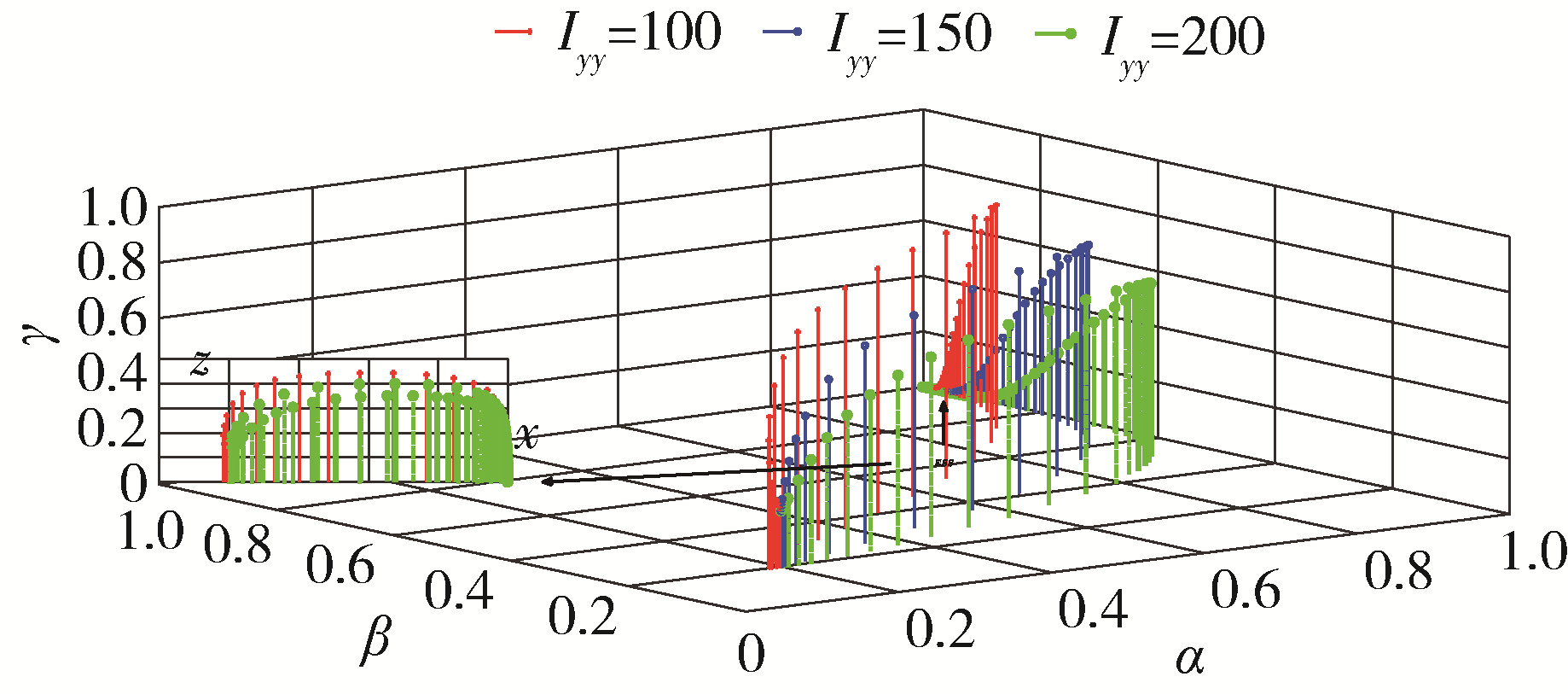
Figure 2

Impact of pharmaceutical industry earnings"

Figure 3

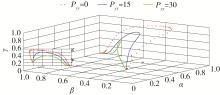
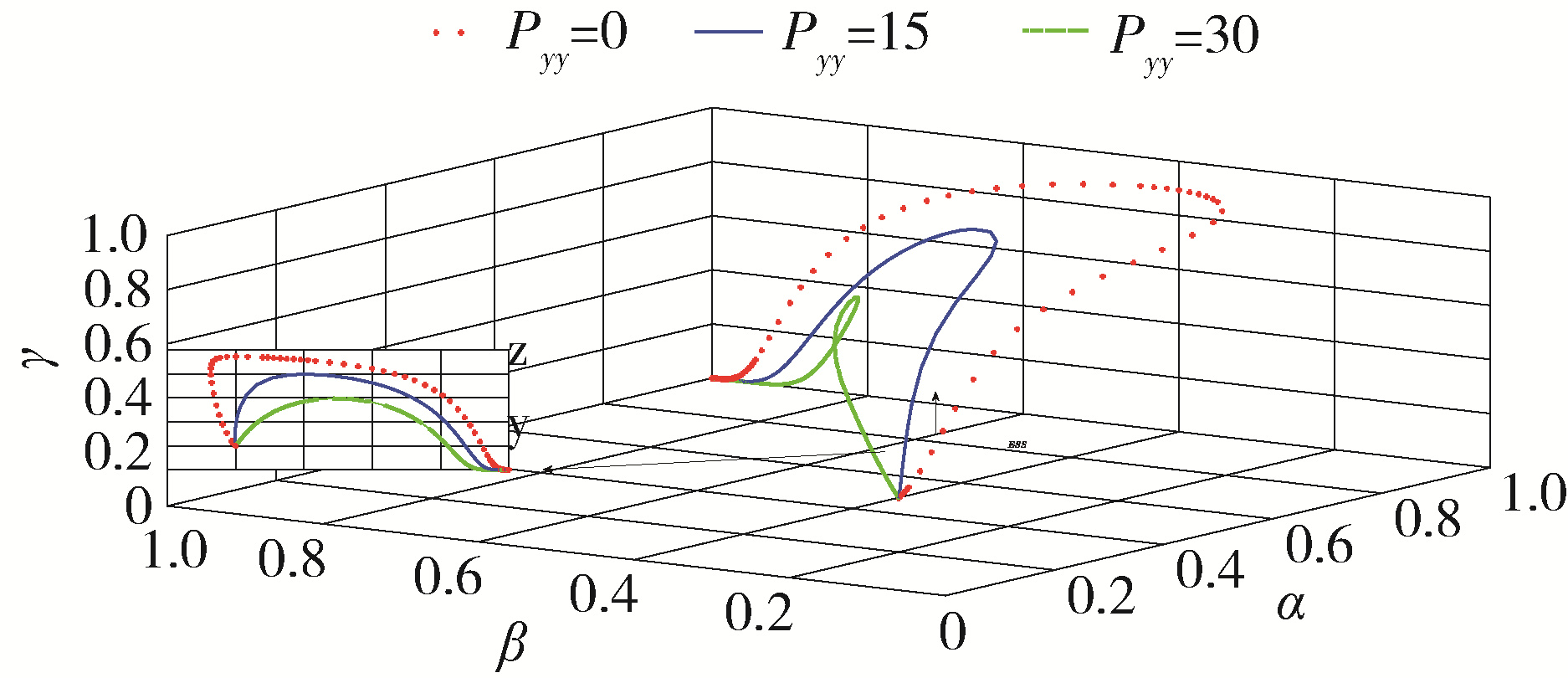
Impact of government incentives for the pharmaceutical industry"

Figure 4

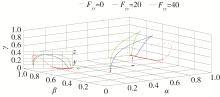
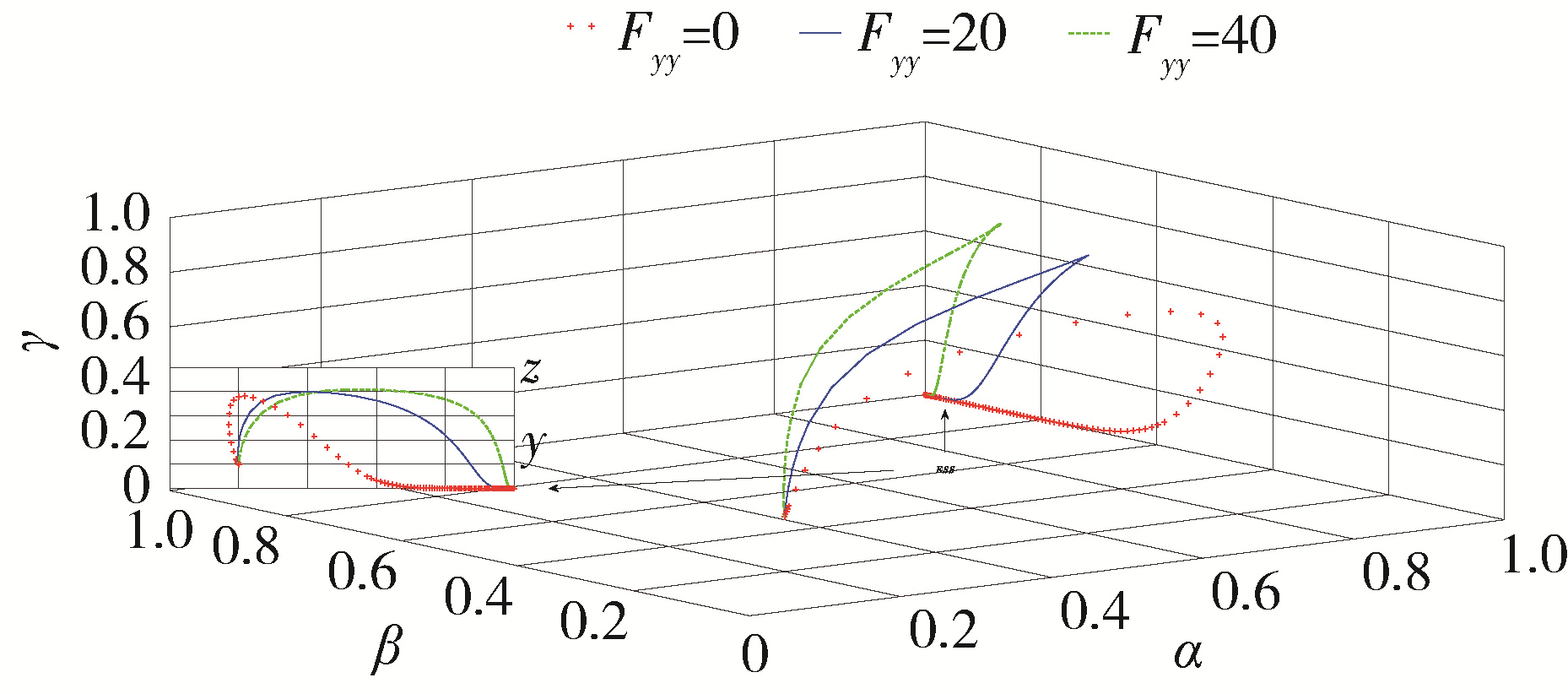
Impact of government penalties on the pharmaceutical industry"

Figure 5

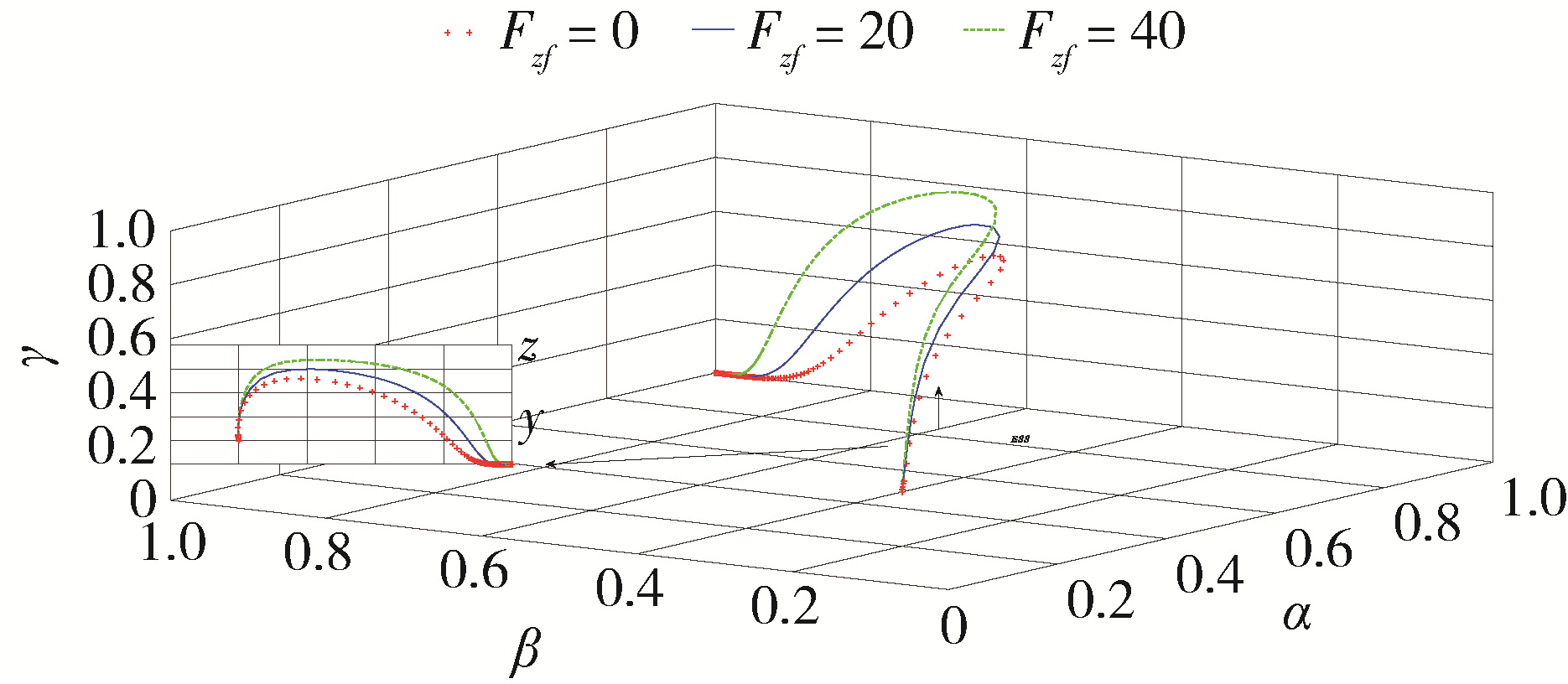
Impact of administrative penalties on the state of government inaction"

Figure 6

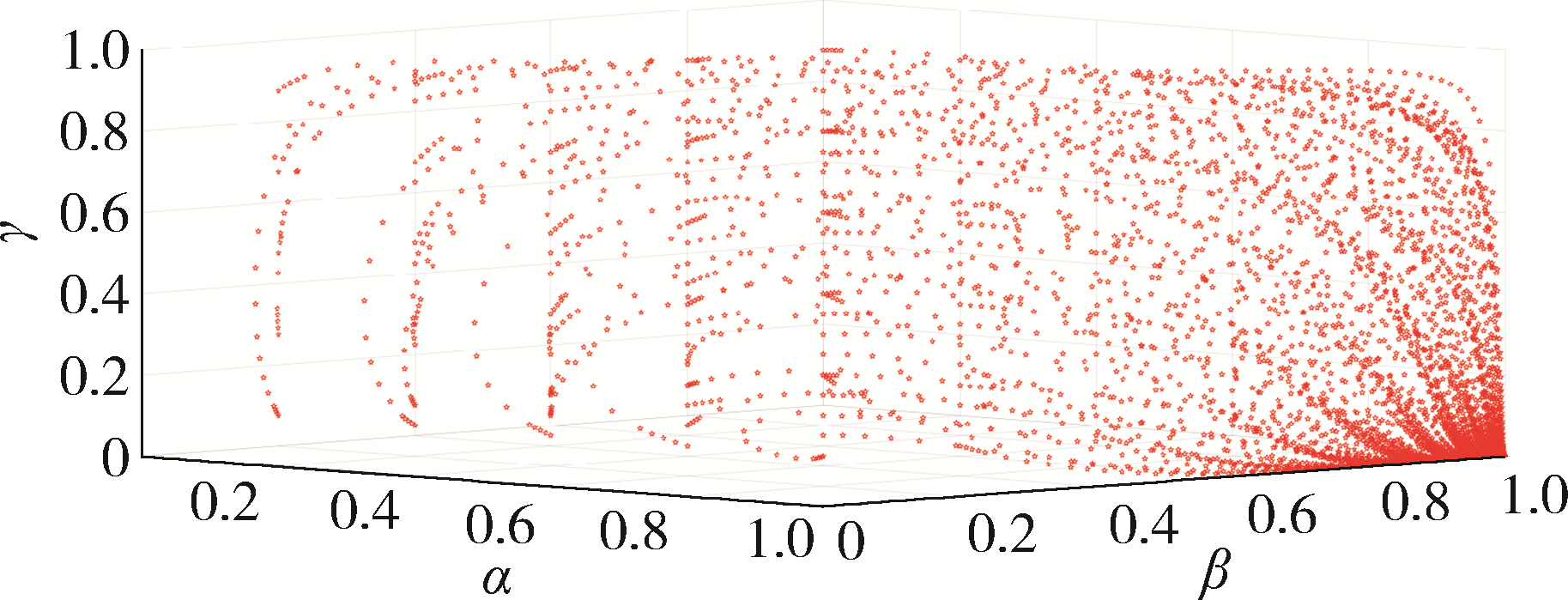
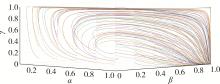
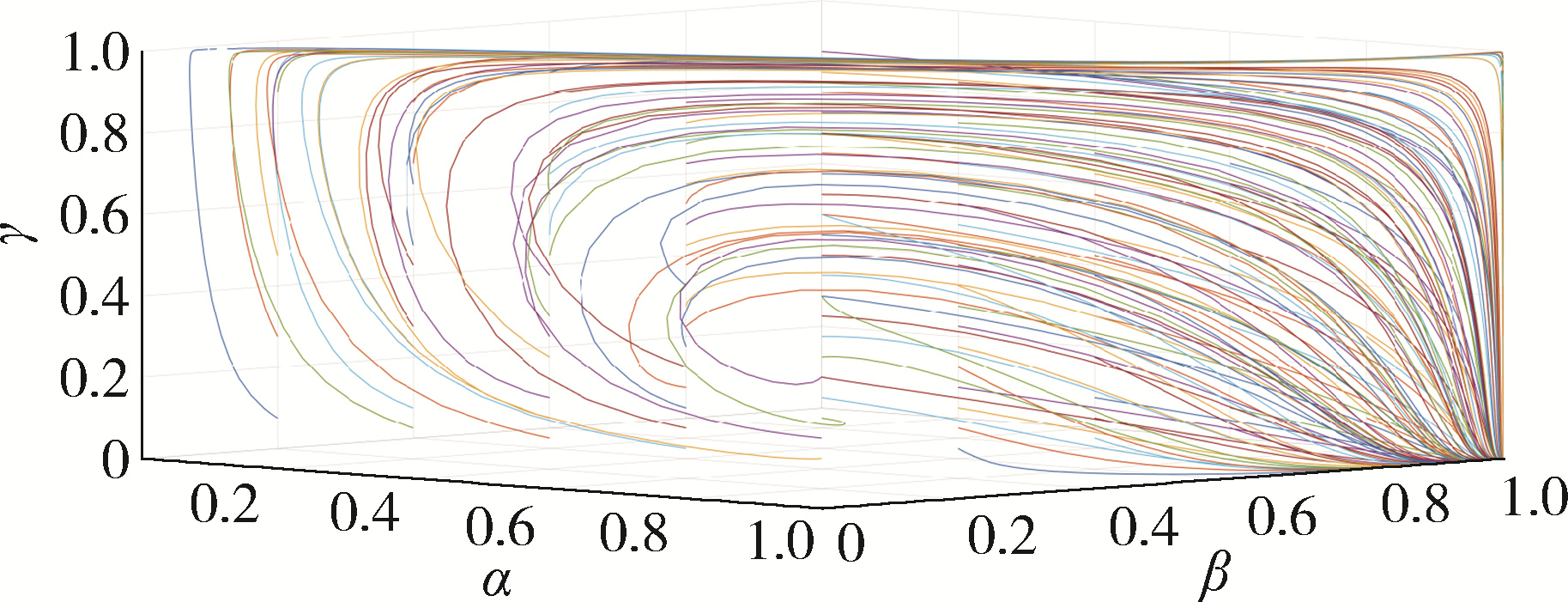
Results of evolving the first set of simulation data 50 times"

Figure 7

Results of evolving the second set of simulation data 50 times"

1
Fisher C , Flew T , Park S , et al. Improving trust in news: Audience solutions[J]. J Pract, 2021, 15 (10): 1497- 1515.
2
Lazer DMJ , Baum MA , Benkler Y , et al. The science of fake news[J]. Science, 2018, 359 (6380): 1094- 1096.

doi: 10.1126/science.aao2998
3
Govindankutty S , Padinjappurathu GS . Modeling rumor spread and influencer impact on social networks[J]. IEEE Access, 2023, 11, 121617- 121628.

doi: 10.1109/ACCESS.2023.3327863
4
Rocha YM , de Moura GA , Desidério GA , et al. The impact of fake news on social media and its influence on health during the COVID-19 pandemic: A systematic review[J]. J Public Health (Berl), 2023, 31 (7): 1007- 1016.

doi: 10.1007/s10389-021-01658-z
5
Nagendran M , Chen Y , Lovejoy CA , et al. Artificial intelligence versus clinicians: Systematic review of design, reporting standards, and claims of deep learning studies[J]. BMJ, 2020, 368, m689.
6
王治莹, 聂慧芳, 杨学亮. 考虑公众感知价值的突发性抢购事件演化博弈分析[J]. 中国管理科学, 2020, 28 (3): 71- 79.
7
杨阳, 王杰. 情绪因素影响下的突发事件网络舆情演化研究[J]. 情报科学, 2020, 38 (3): 35-41, 69.
8
祁凯, 杨志. 突发危机事件网络舆情治理的多情景演化博弈分析[J]. 中国管理科学, 2020, 28 (3): 59- 70.
9
Zhang Z , Wu JL , Qu CQ , et al. The generation and regulation of public opinion on multiplex social networks[J]. IEEE T Comput Soc Sy, 2024, 11 (5): 6513- 6527.

doi: 10.1109/TCSS.2024.3396229
10
Feng K , Han S , Feng M , et al. An evolutionary game with reputation-based imitation-mutation dynamics[J]. Appl Math Comput, 2024, 472, 128618.
11
Kannengiesser U , Gero JS . Design thinking, fast and slow: A framework for Kahneman' s dual-system theory in design[J]. Des Sci, 2019, 5, e10.

doi: 10.1017/dsj.2019.9
12
Stehle F . Governing climate change: Polycentricity in action[J]. Glob Environ Polit, 2021, 21 (1): 157- 159.

doi: 10.1162/glep_r_00596
13
Oussi A , Hamid K , Bouvet C . Managing emotions in panic disorder: A systematic review of studies related to emotional intelligence, alexithymia, emotion regulation, and coping[J]. J Behav Ther Exp Psy, 2023, 79, 101835.

doi: 10.1016/j.jbtep.2023.101835
14
Bergman K , Eli K , Osowski CP , et al. Public expressions of trust and distrust in governmental dietary advice in sweden[J]. Qual Health Res, 2019, 29 (8): 1161- 1173.

doi: 10.1177/1049732318825153
15
Chen L , Chen M . Danger control and fear control during public health emergencies: Considering the roles of fear and hope in the EPPM across different levels of trust[J]. Risk Anal, 2023, 43 (5): 928- 942.

doi: 10.1111/risa.13985
16
Lu Y , Ji Z , Zhang X , et al. Re-thinking the role of government information intervention in the COVID-19 pandemic: An agent-based modeling analysis[J]. Int J Environ Res Public Health, 2020, 18 (1): 147.

doi: 10.3390/ijerph18010147
17
Wang H , Xiong L , Guo J , et al. Predicting the antecedents of discontinuous usage intention of mobile government social media during public health emergencies[J]. Int J Disaster Risk Reduct, 2023, 87, 103582.

doi: 10.1016/j.ijdrr.2023.103582
18
Trauth-Goik A , Liu C . Black or fifty shades of grey? The power and limits of the social credit blacklist system in China[J]. J Contemp China, 2023, 32 (144): 1017- 1033.

doi: 10.1080/10670564.2022.2128638
19
Zhao X , Wang S , Gao J , et al. A game model and numerical simulation of risk communication in metro emergencies under the influence of emotions[J]. Int J Disaster Risk Reduct, 2023, 97, 104046.

doi: 10.1016/j.ijdrr.2023.104046
[1] Huyang ZHANG, Rize JING, Jinxi WANG, Hai FANG. Impact of outpatient services utilization of heart failure patients on hospitalization rate and its threshold effect: Taking patients with Urban Employee Basic Medical Insurance in Zhejiang Province as an example [J]. Journal of Peking University (Health Sciences), 2025, 57(4): 753-758.
[2] Biao LI, Yangcuoji BAO, Xinglin FENG. Policy objectives and tools for the construction of Chinese Medical Consortium: A quantitative study based on policy texts [J]. Journal of Peking University (Health Sciences), 2025, 57(3): 417-422.
[3] Qingbo WANG,Hongqiao FU. Main characteristics and historical evolution of China' s health financing transition [J]. Journal of Peking University (Health Sciences), 2024, 56(3): 462-470.
[4] Zhe-bin WANG,Zhi-jie ZHENG. Research on equity and influencing factors of disability among Chinese middle-aged and old people [J]. Journal of Peking University (Health Sciences), 2020, 52(3): 500-505.
[5] JIAN Wei-Yan, FANG Hai. An empirical analysis on the substitution effect of outpatient services on inpatient services [J]. Journal of Peking University(Health Sciences), 2015, 47(3): 459-463.
[6] ZHAO Xin, MING Di-Yao, MA Wen-Jun. Utilization and cost of outpatient care and their influencing factors among middle and aged peasant-workers in China [J]. Journal of Peking University(Health Sciences), 2015, 47(3): 464-468.
Viewed
Full text


Abstract

Cited

  Shared   
  Discussed   
No Suggested Reading articles found!