Journal of Peking University (Health Sciences) ›› 2026, Vol. 58 ›› Issue (2): 359-364. doi: 10.19723/j.issn.1671-167X.2026.02.021

Previous Articles     Next Articles

Super microsurgical lymphaticovenular anastomosis for limb lymphedema: An outcome analysis based on clinical stage and indocyanine green pattern

Jingheng WU1,*(), Yunhao XUE1, Shanlin CHEN1, Yintao GUO2, Yuntao LIU2, Wei ZHANG2   

  1. 1. Department of Hand Surgery, Beijing Jishuitan Hospital, Capital Medical University, Beijing 100035, China
    2. Department of Hand and Microsurgery, Zhengzhou Central Hospital Affiliated to Zhengzhou University, Zhengzhou 450007, China
  • Received:2025-12-19 Online:2026-04-18 Published:2026-02-11
  • Contact: Jingheng WU

RICH HTML


Abstract:

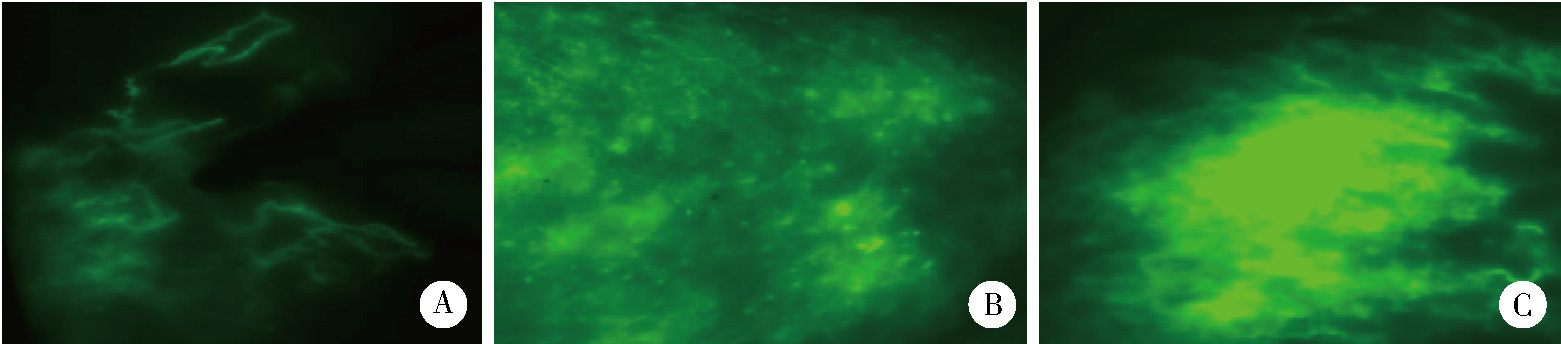
Objective: To investigate the differential efficacy of super-microsurgical lymphaticovenular anastomosis (LVA) for limb lymphedema stratified by International Society of Lymphology (ISL) stage and indocyanine green (ICG) lymphographic Yamamoto pattern, and to provide evidence-based guidance for patient selection. Methods: A retrospective analysis was performed on 32 patients with unilateral limb lymphedema admitted between December 2023 and April 2025. Preoperatively, the patients were classified into ISL stage Ⅰ-Ⅱ (30 cases) and stage Ⅲ (2 cases), and into ICG patterns of splash (6 cases), stardust (14 cases), and diffuse (12 cases). The primary endpoint was percentage reduction of limb volume (%REV) and limb circumferential reduction at 6 months postoperatively; secondary endpoints included anastomotic patency rate, cellulitis recurrence rate, compression garment downgrade rate, and patient satisfaction. One-way ANOVA with Bonferroni correction was used to compare %REV between ISL stages Ⅰ-Ⅱ and different ICG patterns; effect size was calculated with Cohen's d; multi-variate linear regression identified independent predictors of %REV; descriptive analysis was only performed for stage Ⅲ patients. All statistical tests were two-tailed. Results: (1) ISL stratification: the overall %REV of the patients with stages Ⅰ-Ⅱ was 53%±9%, including 63%±8% for stage Ⅰ and 50%±7% for stage Ⅱ; the %REV of the patients with stage Ⅲ was 36%±5% (descriptive result). (2) ICG stratification: %REV was 63%±6% for splash, 56%±7% for stardust, and 36%±4% for diffuse patterns (P < 0.001, d=3.5). (3) A clinically observed trend of efficacy attenuation was found between diffuse pattern and stage Ⅲ (not included in the statistical model under two-tailed test). Anastomotic patency at the end of 1 year was 92.2 %. Cellulitis recurrence decreased from 28.1 % to 0.0 % (P=0.01). Compression garment was downgraded in 26 patients (81.3%), and overall satisfaction reached 96.9%. Conclusion: LVA efficacy was significantly associated with both ISL stage and ICG pattern. The patients with splash pattern or at stage Ⅱ and below could achieve > 55% volume reduction and should be considered the primary indications for LVA. The patients with diffuse pattern or at stage Ⅲ disease might require adjunctive liposuction or vascularized lymph node transfer to improve outcomes. Preoperative evaluation combining ISL staging and ICG lymphography can provide a reliable basis for the selection of LVA surgical indications and the formulation of treatment plans.

Key words: Lymphedema, Super-microsurgery, Lymphaticovenular anastomosis, Indocyanine green pattern, International Society of Lymphology stage

CLC Number: 

  • R622.4

Figure 1

Indocyanine green lymphographic pattern classification A, splash pattern; B, stardust pattern; C, diffuse pattern."

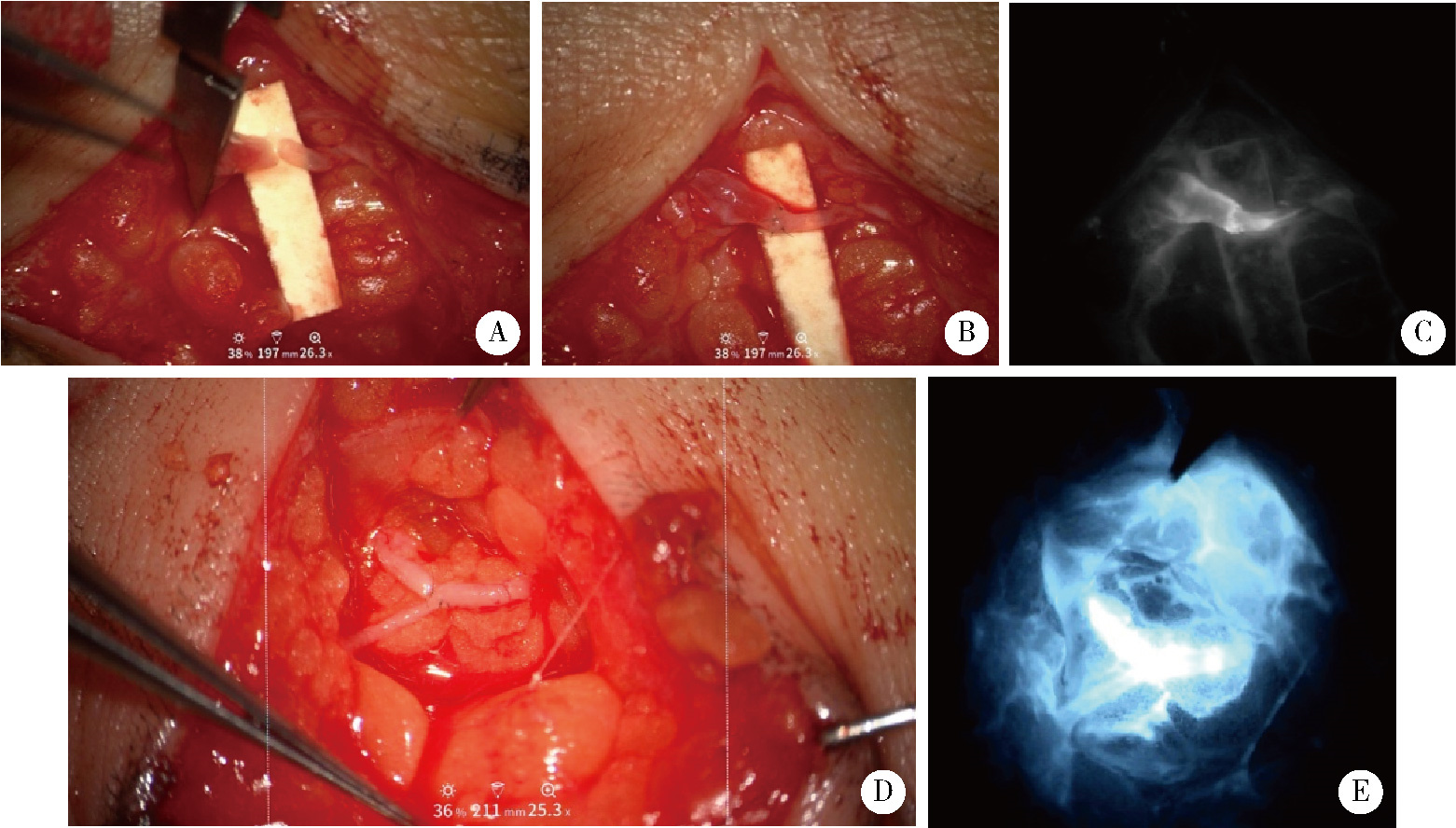
Figure 2

Lymphaticovenous anastomosis A, B, preoperative and postoperative images of end-to-end anastomosis between lymphatic vessels and veins under the microscope, respectively; C, fluorescence imaging after anastomosis; D, end-to-side anastomosis between lymphatic vessels and veins; E, fluorescence imaging after end-to-side anastomosis."

Table 1

Comparison of %REV in patients with different ICG patterns"

Groups n %REV 95%CI of %REV Cohen’s d (vs. diffuse)
Splash 6 63%± 6% 59%- 67% 3.5 (large effect)
Stardust 14 56%± 7% 52%- 60% 2.4 (large effect)
Diffuse 12 36%± 4% 32%- 40%

Figure 3

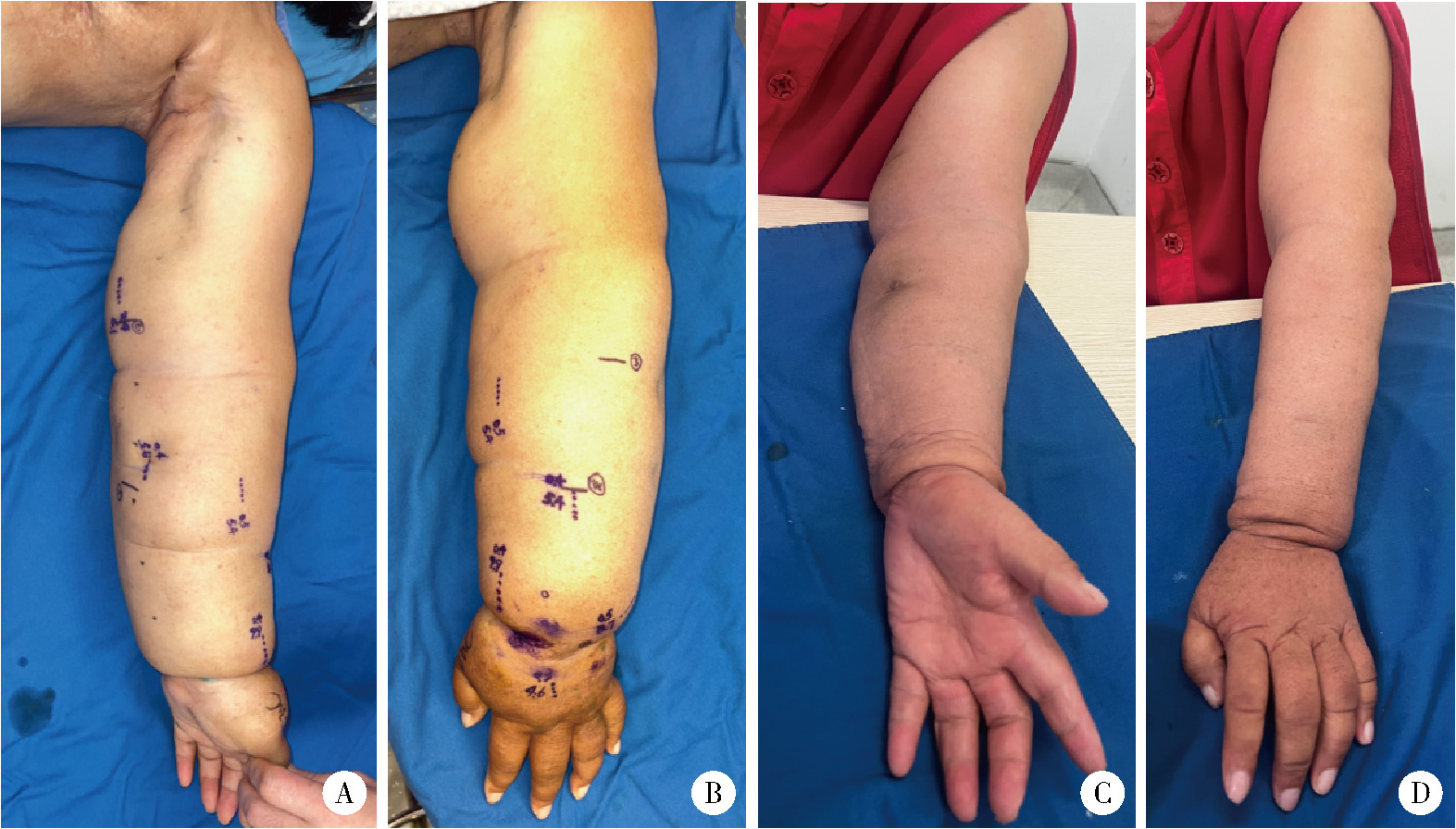
Comparison of breast cancer-related upper extremity lymphedema patients before and after LVA treatment A, B, preoperative photographs showing obvious swelling of the right upper limb; C, D, photographs at 2 months postoperatively, showing resolution of limb swelling with good restoration of appearance and function. LVA, lymphaticovenous anastomosis"

1
Cheville AL, McLaughlin SA, Glaser GE, et al. Cancer related lymphedema[J/OL]. BMJ, 2025, 390(2025-07-03)[2025-09-10]. https://pubmed.ncbi.nlm.nih.gov/41065270.
2
Yamamoto T , Yamamoto N , Azuma S , et al. Near-infrared illumination system-integrated microscope for supermicrosurgical lymphaticovenular anastomosis[J]. Microsurgery, 2014, 34 (1): 23- 27.

doi: 10.1002/micr.22115
3
Garza RM , Beederman M , Chang DW . Physical and functional outcomes of simultaneous vascularized lymph node transplant and lymphovenous bypass in the treatment of lymphedema[J]. Plast Reconstr Surg, 2022, 150 (1): 169- 180.

doi: 10.1097/PRS.0000000000009247
4
Mortada H , Alhithlool AW , AlBattal NZ , et al. Lipedema: Clinical features, diagnosis, and management[J]. Arch Plast Surg, 2025, 52 (3): 185- 196.

doi: 10.1055/a-2530-5875
5
Gilchrist L , Levenhagen K , Davies CC , et al. Effectiveness of complete decongestive therapy for upper extremity breast cancer-related lymphedema: A review of systematic reviews[J]. Med Oncol, 2024, 41 (11): 297.

doi: 10.1007/s12032-024-02421-6
6
Cho MJ , Chratian S , Visconti G , et al. Ultra high-frequency ultrasound in lymphatic surgery: The next frontier[J]. Expert Rev Med Devices, 2024, 21 (11): 995- 998.

doi: 10.1080/17434440.2024.2419476
7
Koshima I , Nanba Y , Tsutsui T , et al. Long-term follow-up after lymphaticovenular anastomosis for lymphedema in the leg[J]. J Reconstr Microsurg, 2003, 19 (4): 209- 215.

doi: 10.1055/s-2003-40575
8
Campisi C , Boccardo F , Zilli A , et al. Long-term results after lymphatic-venous anastomoses for the treatment of obstructive lymphedema[J]. Microsurgery, 2001, 21 (4): 135- 139.

doi: 10.1002/micr.1025
9
Mihara M , Hara H , Kikuchi K , et al. Scarless lymphatic venous anastomosis for latent and early-stage lymphoedema using indocyanine green lymphography and non-invasive instruments for visualising subcutaneous vein[J]. J Plast Reconstr Aesthet Surg, 2012, 65 (11): 1551- 1558.

doi: 10.1016/j.bjps.2012.05.026
10
Mihara M , Hara H , Hayashi Y , et al. Upper-limb lymphedema treated aesthetically with lymphaticovenous anastomosis using indocyanine green lymphography and noncontact vein visualization[J]. J Reconstr Microsurg, 2012, 28 (5): 327- 332.

doi: 10.1055/s-0032-1311691
11
Koshima I , Nanba Y , Tsutsui T , et al. Minimal invasive lympha-ticovenular anastomosis under local anesthesia for leg lymphedema: Is it effective for stage Ⅲ and Ⅳ?[J]. Ann Plast Surg, 2004, 53 (3): 261- 266.

doi: 10.1097/01.sap.0000120319.89926.07
12
Yamamoto T , Matsuda N , Doi K , et al. The earliest finding of indocyanine green lymphography in asymptomatic limbs of lower extremity lymphedema patients secondary to cancer treatment: The modified dermal backflow stage and concept of subclinical lymphedema[J]. Plast Reconstr Surg, 2011, 128 (4): 314e- 321e.

doi: 10.1097/PRS.0b013e3182268da8
13
Yamamoto T , Narushima M , Kikuchi K , et al. Lambda-shaped anastomosis with intravascular stenting method for safe and effective lymphaticovenular anastomosis[J]. Plast Reconstr Surg, 2011, 127 (5): 1987- 1992.

doi: 10.1097/PRS.0b013e31820cf5c6
14
Auba C , Marre D , Rodríguez-Losada G , et al. Lymphaticovenular anastomoses for lymphedema treatment: 18 months postoperative outcomes[J]. Microsurgery, 2012, 32 (4): 261- 268.

doi: 10.1002/micr.20980
15
Mihara M , Hara H , Furniss D , et al. Lymphaticovenular anastomosis to prevent cellulitis associated with lymphoedema[J]. Br J Surg, 2014, 101 (11): 1391- 1396.

doi: 10.1002/bjs.9588
[1] . [J]. Journal of Peking University(Health Sciences), 2015, 47(5): 891-封三.
Viewed
Full text


Abstract

Cited

  Shared   
  Discussed   
No Suggested Reading articles found!