Journal of Peking University (Health Sciences) ›› 2026, Vol. 58 ›› Issue (3): 446-454. doi: 10.19723/j.issn.1671-167X.2026.03.002

Previous Articles     Next Articles

Evaluation of bilateral vaccine cooperation priority countries on Chinese human papillomavirus vaccine using hierarchical K-means hybrid clustering

Yinge WU, Yangmu HUANG*()   

  1. Department of Global Health, Peking University School of Public Health, Beijing 100191, China
  • Received:2025-10-16 Online:2026-06-18 Published:2026-04-28
  • Contact: Yangmu HUANG
  • Supported by:
    the National Natural Science Foundation of China and Gates Foundation Joint Project(72361127504-2023YFVA1003)

RICH HTML


Abstract:

Objective: To evaluate priority target countries and formulate context-specific cooperation modalities for China ' s bilateral international collaboration on human papillomavirus (HPV) vaccines, thereby furnishing an evidence-based reference for optimizing China ' s bilateral vaccine cooperation stra-tegies and contributing to global health equity. Methods: Using a previously established index system designed for selecting preferred countries in China ' s international vaccine cooperation, we comprehensively applied a weighted-scoring approach to quantitatively rank 29 Phases 3 and 4 Global Alliance for Vaccines and Immunization (Gavi) eligible countries in HPV vaccine cooperation. Based on 5 first-level index (legal and regulatory factors, economic factors, political factors, social factors, and technological factors) scores, a hierarchical K-means hybrid method was used for clustering the countries. Hierarchical clustering was initially utilized to explore the underlying data structure and determine the optimal number of clusters, followed by K-means clustering to precisely categorize the evaluated nations based on their multidimensional characteristics. Results: The top10 countries were mostly Asian countries. African countries were mostly in the lower ranks. The countries were clustered into three types: (1) Technology transfer priority (n=3: Indonesia, Viet Nam, Uzbekistan), characterized by above-average economic, techno-scientific and political scores, robust vaccine-import volumes, non-negligible domestic manufacturing capacity and high political stability—recommended for priority collaboration; (2) Basic assistance (n=25), approximating mean indicator values, typically low-population or low-income economies suitable for aid-based or concessional-procurement models; (3) High barrier (n=1: India), exhibiting high socio-demographic and scientific base yet minimal legal-regulatory scores, indicating large demand, established vaccine industry, but formidable registration barriers. Policy recommendations included: concessional product export plus clinical-trial cooperation with Indonesia, with prospective licensing and technology transfer; clinical-trial collaboration with Viet Nam; and licensing/technology-transfer schemes with Uzbekistan. Conclusion: Indonesia, Viet Nam, and Uzbekistan are identified as the priority target countries for China ' s bilateral international cooperation on HPV vaccines. For these technology-transfer priority nations, cooperation should be strategically conducted through diverse modalities encompassing vaccine product export, clinical trial collaboration, authorized licensing, and technology transfer.

Key words: International cooperation, Human papillomavirus vaccine, Cluster analysis, Hierarchical clustering, K-means clustering

CLC Number: 

  • R186

Table 1

Primary and secondary indicators and their weights in the index system for identifying preferred countries in China ' s international vaccine cooperation"

Primary indicators (weights) Secondary indicators (weights) Combined weights of secondary indicators
Legal and regulatory factors (0.48) Vaccine product registration (0.40) 0.192
Vaccine clinical trial approval (0.20) 0.096
Requirements for overseas vaccine enterprises (0.40) 0.192
Economic factors (0.23) Target country economic scale (0.23) 0.053
Target country vaccine import scale (0.67) 0.154
Target country economic system (0.10) 0.023
Political factors (0.15) Political stability and absence of violence (0.23) 0.035
Government effectiveness (0.12) 0.018
Public service capacity (0.23) 0.035
Bilateral diplomatic relations (0.42) 0.063
Social factors (0.095) Population size and growth rate (0.20) 0.019
Burden of vaccine-preventable diseases (0.60) 0.057
Health system evaluation (0.20) 0.019
Technological factors (0.045) Vaccine research and development capacity (0.67) 0.030
Vaccine manufacturing capacity (0.33) 0.015

Table 2

Scores of primary indicators and total score ranking for human papillomavirus vaccine cooperation"

Countries Primary indicators Total score Rank
Legal and regulatory factors Economic factors Political factors Social factors Technological factors
Indonesia 31.87 19.18 11.00 2.14 2.64 66.83 1
Sri Lanka 38.40 9.60 10.36 1.74 0.03 60.13 2
Georgia 38.40 9.11 10.94 1.35 0.22 60.02 3
Viet Nam 32.19 12.14 12.37 1.63 1.69 60.02 4
Azerbaijan 38.40 9.41 9.64 1.20 0.13 58.78 5
Bhutan 38.40 8.37 7.40 1.13 0.00 55.30 6
Armenia 38.40 7.51 6.01 1.37 1.58 54.87 7
Moldova 38.40 8.94 6.26 0.95 0.06 54.61 8
Uzbekistan 28.80 9.04 12.99 1.71 1.58 54.12 9
Nigeria 41.47 2.21 8.17 1.76 0.00 53.61 10
Mongolia 28.80 9.57 12.13 1.60 0.07 52.17 11
Kenya 37.76 1.29 9.51 1.57 0.59 50.72 12
Lao PDR 28.80 8.76 11.47 1.12 0.06 50.21 13
Sao Tome and Principe 28.80 9.49 10.08 1.62 0.00 49.99 14
Bangladesh 34.56 2.39 9.44 1.71 1.36 49.46 15
Nicaragua 28.80 8.65 8.99 1.45 1.50 49.39 16
Djibouti 28.80 8.87 9.87 1.00 0.01 48.55 17
India 16.94 10.04 9.07 7.99 3.50 47.54 18
Papua New Guinea 28.80 7.49 9.41 1.06 0.01 46.77 19
Cuba 31.36 4.43 7.55 1.76 1.60 46.70 20
Angola 28.80 7.06 9.15 1.49 0.01 46.51 21
Côte d’Ivoire 28.80 6.61 8.39 1.37 1.05 46.22 22
Guyana 28.80 7.67 5.88 1.35 0.00 43.70 23
Honduras 28.80 7.78 4.72 1.49 0.40 43.19 24
Solomon Islands 28.80 1.84 10.80 1.56 0.00 43.00 25
Bolivia 28.80 3.66 9.07 1.33 0.00 42.86 26
Timor-Leste 28.80 2.13 10.59 1.26 0.00 42.78 27
Ghana 28.03 1.93 9.59 1.57 0.19 41.31 28
Kiribati 28.80 0.64 6.46 1.32 0.00 37.22 29

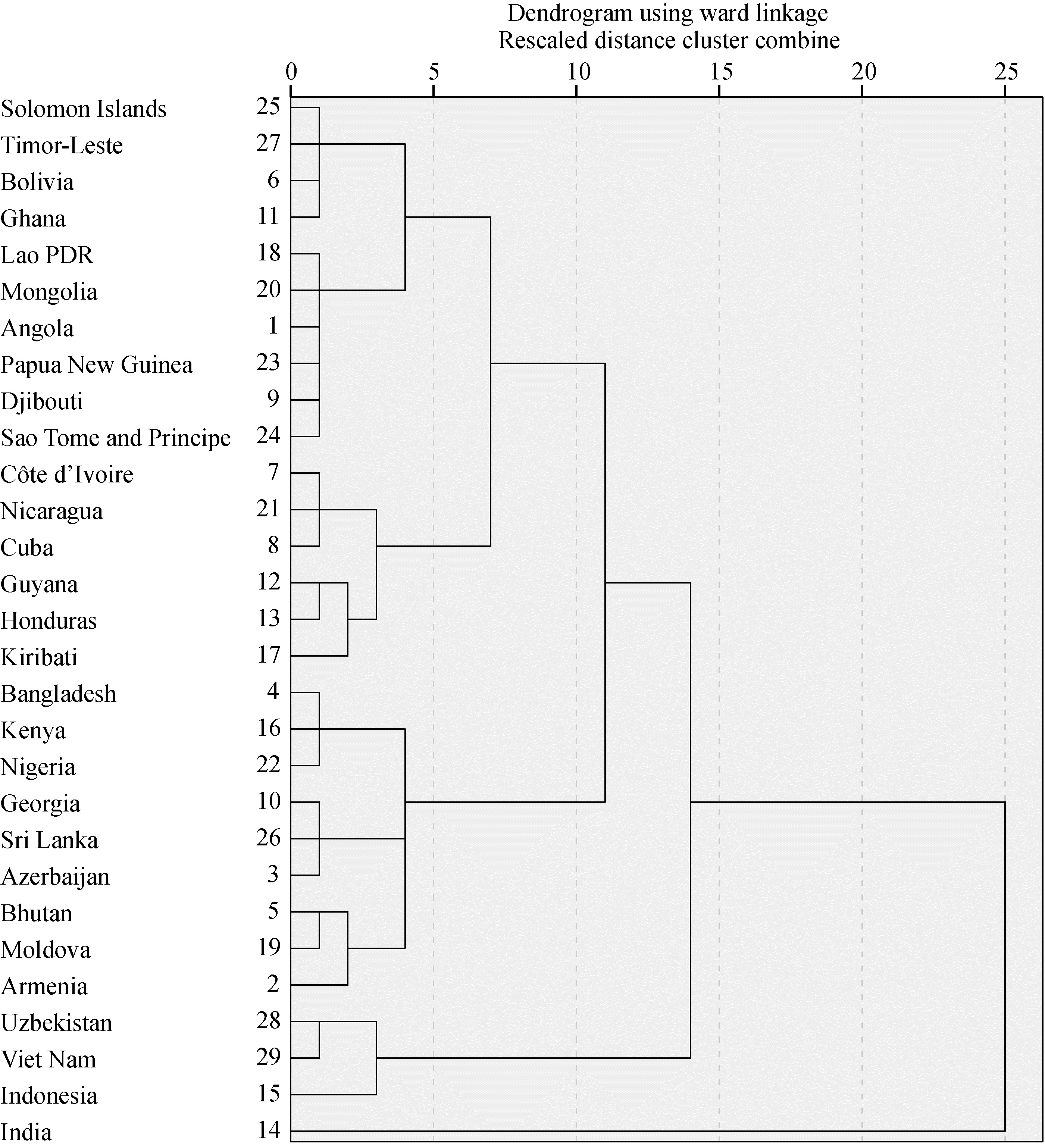
Figure 1

Hierarchical clustering dendrogram of 29 countries"

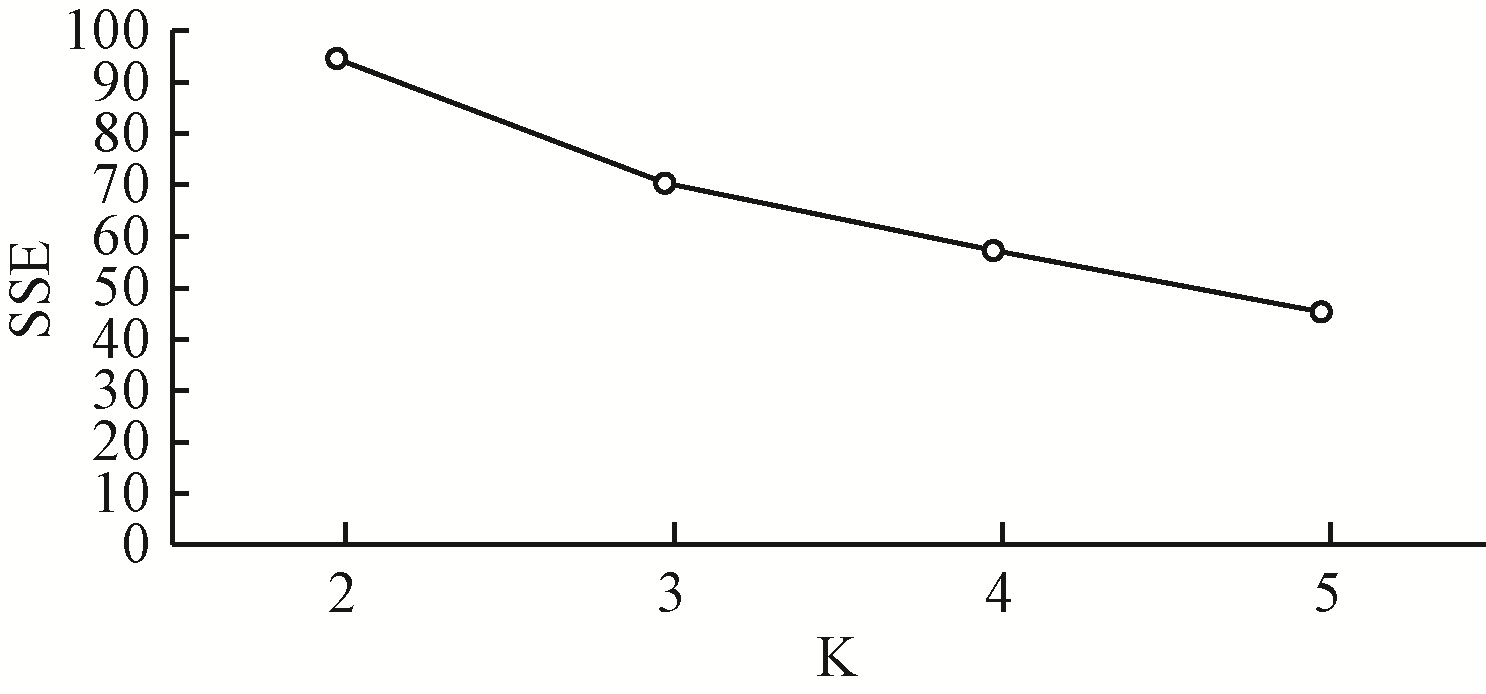
Figure 2

Variation of sum of squared errors (SSE) with candidate K values in K-means clustering"

Table 3

Final K-means cluster centers for 29 countries (K=3)"

Items Cluster
1 2 3
Economic factors 1.593 64 -0.220 75 0.737 87
Political factors 1.418 68 -0.167 36 -0.072 14
Social factors 0.121 29 -0.217 69 5.078 29
Technological factors 1.449 09 -0.298 05 3.104 07
Legal and regulatory factors -0.124 72 0.127 03 -2.801 65

Table 4

Clustering results of HPV vaccine cooperation"

Cluster Countries (ranked in descending order of total score within each cluster)
1 Technology transfer priority Indonesia, Viet Nam, Uzbekistan
2 Basic assistance Sri Lanka, Georgia, Azerbaijan, Bhutan, Armenia, Moldova, Nigeria, Mongolia, Kenya, Lao PDR, Sao Tome and Principe, Bangladesh, Niagara, Djibouti, Papua New Guinea, Cuba, Angola, Côte d’Ivoire, Guyana, Honduras, Solomon Island, Bolivia, Timor-Leste, Ghana, Kiribati
3 High barrier India

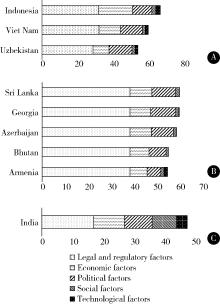
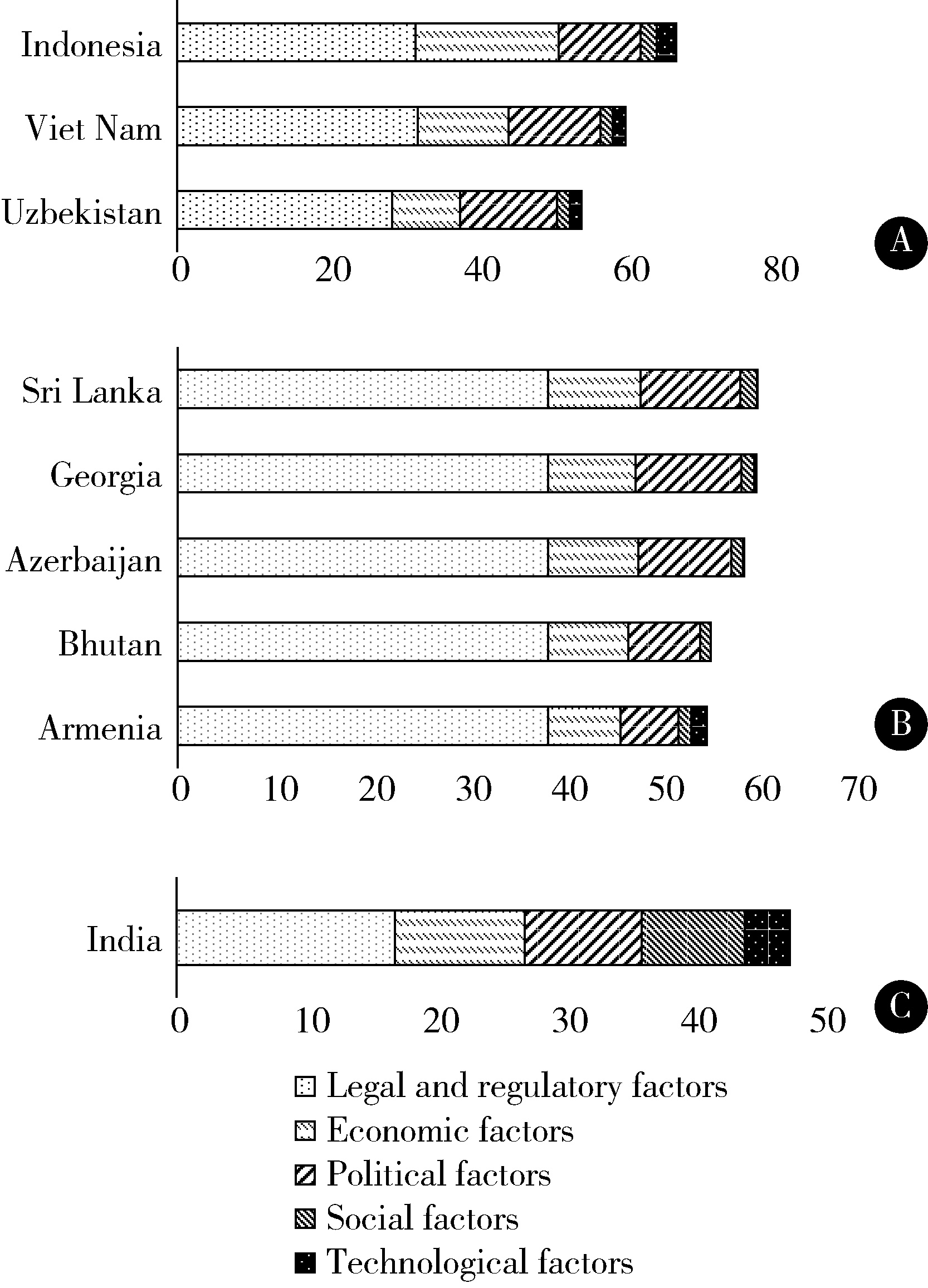
Figure 3

Score breakdown of countries in each cluster"

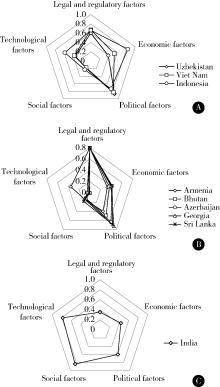
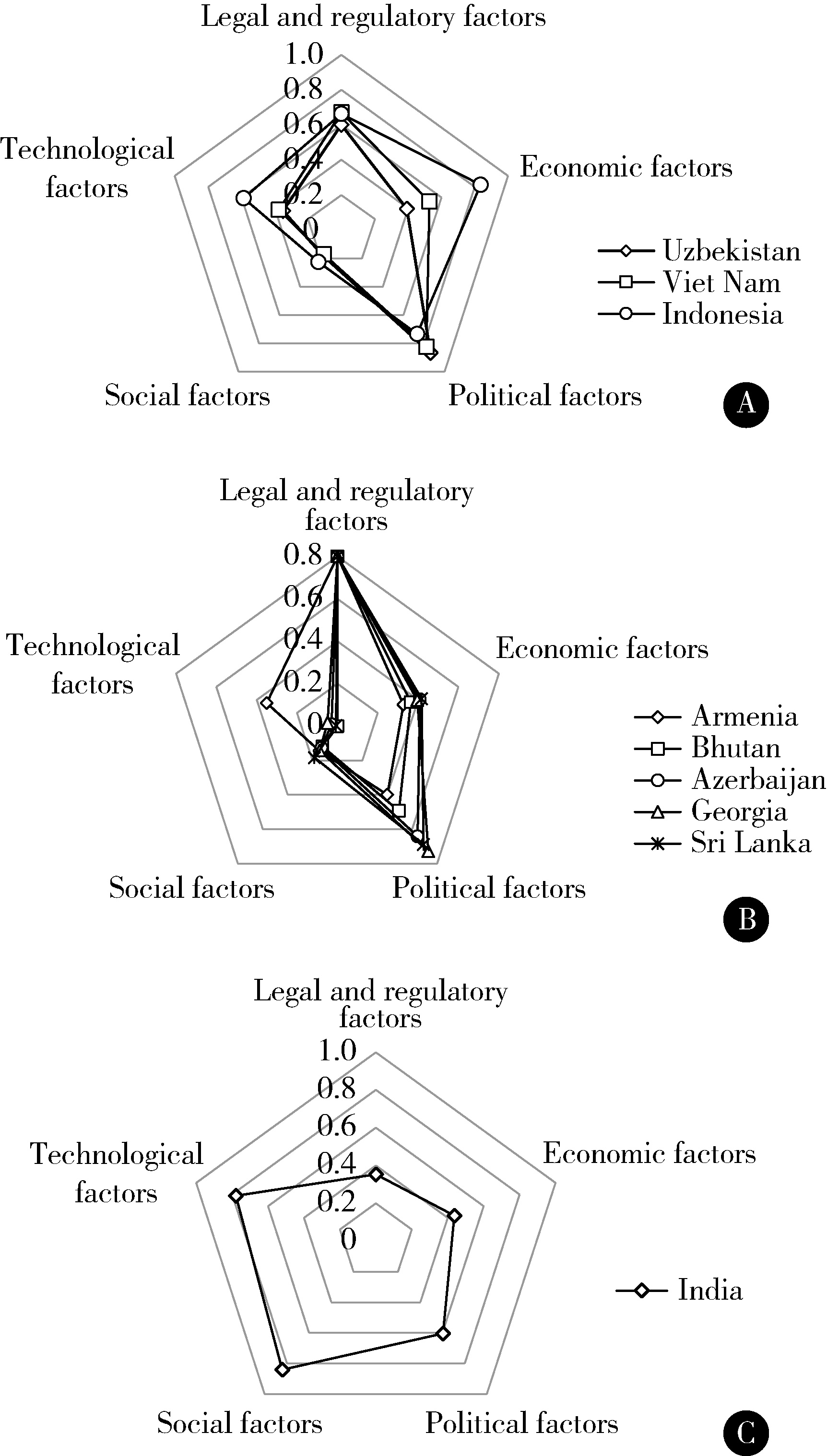
Figure 4

Scoring rates across five factors for countries in each cluster"

1
de Martel C , Georges D , Bray F , et al. Global burden of cancer attributable to infections in 2018:A worldwide incidence analysis[J]. Lancet Glob Health, 2020, 8 (2): e180- e190.

doi: 10.1016/S2214-109X(19)30488-7
2
World Health Organization. Global strategy to accelerate the elimination of cervical cancer as a public health problem[R]. Geneva: World Health Organization, 2020.
3
Dorji T , Nopsopon T , Tamang ST , et al. Human papillomavirus vaccination uptake in low-and middle-income countries: A meta-analysis[J]. EClinicalMedicine, 2021, 34, 100836.

doi: 10.1016/j.eclinm.2021.100836
4
Cernuschi T , Gaglione S , Bozzani F . Challenges to sustainable immunization systems in Gavi transitioning countries[J]. Vaccine, 2018, 36 (45): 6858- 6866.

doi: 10.1016/j.vaccine.2018.06.012
5
Li AJ , Kyesi F , Mwengee W , et al. Impact of the human papillomavirus (HPV) vaccine supply shortage on Tanzania ' s national HPV vaccine introduction[J]. Vaccine, 2022, 40, A26- A29.

doi: 10.1016/j.vaccine.2021.01.036
6
Wu T , Hu YM , Li J , et al. Immunogenicity and safety of an E. coli-produced bivalent human papillomavirus (type 16 and 18) vaccine: A randomized controlled phase 2 clinical trial[J]. Vaccine, 2015, 33 (32): 3740- 3746.
7
Zhu FC , Zhong GH , Huang WJ , et al. Head-to-head immunogenicity comparison of an Escherichia coli-produced 9-valent human papillomavirus vaccine and Gardasil 9 in women aged 18-26 years in China: A randomised blinded clinical trial[J]. Lancet Infect Dis, 2023, 23 (11): 1313- 1322.

doi: 10.1016/S1473-3099(23)00275-X
8
Li J , Shi LW , Li K , et al. Comparison of the safety and persistence of immunogenicity of bivalent HPV16/18 vaccine in healthy 9-14-year-old and 18-26-year-old Chinese females: A randomized, double-blind, non-inferiority clinical trial[J]. Vaccine, 2023, 41 (48): 7212- 7219.

doi: 10.1016/j.vaccine.2023.10.041
9
Bown CP, Snyder CM, Staiger RW. Vaccine supply chain resilience and international cooperation[R]. Hanover: Dartmouth College Economics Department, 2022.
10
Pratiwi FI , Muttaqien M , Samy M , et al. International cooperation during COVID-19:Case study vaccine cooperation and its impact in Indonesia[J]. Asian Polit Policy, 2022, 14 (3): 403- 422.

doi: 10.1111/aspp.12643
11
Sirleaf EJ , Clark H . Achieving vaccination justice: A call for global cooperation[J]. PLoS Glob Public Health, 2021, 1 (10): e0000036.

doi: 10.1371/journal.pgph.0000036
12
吴音格, 崔宇煊, 黄旸木. 中国国际疫苗合作优先国家筛选指标体系构建研究[J]. 中国卫生政策研究, 2024, 17 (9): 60- 67.
13
王谋, 康文梅, 张莹. 应对气候变化南南合作优先合作国家选择方法探讨[J]. 气候变化研究进展, 2021, 17 (6): 744- 751.
14
王怀豫, 肖尧, 李奕辰, 等. "一带一路"建设背景下中国与东盟国家农业科技合作的选择机制[J]. 科技管理研究, 2022, 42 (16): 35- 44.
15
Peterson AD , Ghosh AP , Maitra R . Merging K-means with hierarchical clustering for identifying general-shaped groups[J]. Stat (Int Stat Inst), 2018, 7 (1): e172.
16
Chen TS, Tsai TH, Chen YT, et al. A combined K-means and hierarchical clustering method for improving the clustering efficiency of microarray[C]//2005 International Symposium on Intelligent Signal Processing and Communication Systems. Piscataway, USA: IEEE, 2006: 405-408.
17
Gavi. Eligibility & Co-financing policies[EB/OL]. (2025-06-18)[2025-09-15]. https://www.gavi.org/programmes-impact/programmatic-policies/eligibility-co-financing-policies.
18
李文超, 周勇, 夏士雄. 一种新的基于层次和K-means方法的聚类算法[C]//第二十六届中国控制会议论文集. 张家界: 中国自动化学会控制理论专业委员会, 2007: 2331-2335.
19
胡伟. 改进的层次K均值聚类算法[J]. 计算机工程与应用, 2013, 49 (2): 157- 159.
20
World Health Organization. IA2030 Global Report 2024[EB/OL]. (2025-04-26)[2025-09-15]. https://www.immunizationagenda2030.org/images/documents/Immunization_Agenda_2030_Global_Progress_Report_2024_final.pdf.
21
Ver AT , Notarte KI , Velasco JV , et al. A systematic review of the barriers to implementing human papillomavirus vaccination programs in low- and middle-income countries in the Asia-Pacific[J]. Asia Pac J Clin Oncol, 2021, 17 (6): 530- 545.
22
Gallagher KE , Howard N , Kabakama S , et al. Human papillomavirus (HPV) vaccine coverage achievements in low and middle-income countries 2007-2016[J]. Papillomavirus Res, 2017, 4, 72- 78.

doi: 10.1016/j.pvr.2017.09.001
23
Kurniawati E, Madu L. Indonesia' s efforts to overcome COVID-19 pandemic through international cooperation[C]//Proceedings of the RSF conference series: Business, management and social sciences. Bandung, Indonesia: Research Synergy Foundation, 2021: 242-246.
24
Yeremia AE , Raditio KH . Indonesia-China vaccine cooperation and South China Sea diplomacy[J]. ISEAS Perspective, 2021 (55): 1- 15.
25
MSD in Indonesia. MSD and Bio Farma sign a framework agreement for technology transfer partnership to locally manufacture human papillomavirus (HPV) vaccine in Indonesia[EB/OL]. (2022-12-13)[2025-09-15]. https://www.msd-indonesia.com/news/msd-and-bio-farma-sign-a-framework-agreement-for-technology-transfer-partnership-to-locally-manufacture-human-papillomavirus-hpv-vaccine-in-indonesia/#:~:text=JAKARTA%2C%20INDONESIA%2C%20December%2013th,of%20HPV%20vaccine%20in%20Indonesia.
26
Setiawan D , Ramadani P , Lianawati L , et al. HPV vaccination program in Indonesia: Effectiveness, dose, scale-up costs, future prospects, and policy recommendations[J]. Asian Pac J Cancer Prev, 2025, 26 (2): 421- 434.

doi: 10.31557/APJCP.2025.26.2.421
27
Drolet M , Laprise JF , Martin D , et al. Optimal human papillomavirus vaccination strategies to prevent cervical cancer in low-income and middle-income countries in the context of limited resources: A mathematical modelling analysis[J]. Lancet Infect Dis, 2021, 21 (11): 1598- 1610.

doi: 10.1016/S1473-3099(20)30860-4
28
Le XTT , Nguyen PTN , Do TTT , et al. Intention to pay for HPV vaccination among women of childbearing age in Vietnam[J]. Int J Environ Res Public Health, 2020, 17 (9): 3144.

doi: 10.3390/ijerph17093144
29
World Health Organization. WHO adds an HPV vaccine for single-dose use[EB/OL]. (2024-10-04)[2025-09-15]. https://www.who.int/news/item/04-10-2024-who-adds-an-hpv-vaccine-for-single-dose-use.
30
Gavi. Detailed product profiles[EB/OL]. (2025-07-13)[2025-09-15]. https://www.gavi.org/news/document-library/detailed-product-profiles.
31
van Dijk RJL , Lo CY . The effect of Chinese vaccine diplomacy during COVID-19 in the Philippines and Vietnam: A multiple case study from a soft power perspective[J]. Humanit Soc Sci Commun, 2023, 10, 687.
32
Badur S , Ota M , Öztürk S , et al. Vaccine confidence: The keys to restoring trust[J]. Hum Vaccines Immunother, 2020, 16 (5): 1007- 1017.

doi: 10.1080/21645515.2020.1740559
33
Ussai S , Seyidov T , Khomasuridze T , et al. Regional alliance for cervical cancer prevention in eastern Europe and central Asia: Progressing towards the target 1 of the global strategy for cervical cancer elimination[J]. Healthcare, 2025, 13 (10): 1209.
34
Filipović A . Vaccine diplomacy of the United States, China, India, and Russia during the COVID-19 pandemic: A comparative analysis[J]. Me unarodna politika, 2024, 75 (1190): 57- 90.
35
Yan Q , Abdurakhmonov IY , Cao J . Cooperation and innovation: An interview with Minister Ibrokhim Y. Abdurakhmonov and Professor Jinghua Cao[J]. hLife, 2024, 2 (11): 547- 553.
36
UNICEF. Gavi Shipments 2025 Plan-Vaccines & Devices-All Regions[EB/OL]. (2025-08-28)[2025-09-15]. https://www.unicef.org/supply/media/24271/file/Gavi-shipments-Aug-2025.pdf.
[1] Wenhao LIN, Yang XIE, Fangqing WANG, Shuying WANG, Xiangjun LIU, Fanlei HU, Yuan JIA. Single-cell RNA sequencing of B cells reveals molecular typing in Sjögren syndrome [J]. Journal of Peking University (Health Sciences), 2025, 57(6): 1032-1041.
[2] Long CHEN, Minghui REN. Challenges and prospects of the application of the amendments to the International Health Regulations (2005) in China [J]. Journal of Peking University (Health Sciences), 2025, 57(3): 411-416.
Viewed
Full text


Abstract

Cited

  Shared   
  Discussed   
No Suggested Reading articles found!