Journal of Peking University (Health Sciences) ›› 2026, Vol. 58 ›› Issue (3): 551-559. doi: 10.19723/j.issn.1671-167X.2026.03.015

Previous Articles     Next Articles

Association between wearable-derived physical activity patterns and gut microbiota in older adults

Jiaqi GAO1,2, Wenpeng LI1, Xiaoyi LI3, Yinxi TAN1, Yixin LI1, Liping DUAN2, Tao WU3,4, Dafang CHEN3,4, Yonghua HU3,4, Mengying WANG1,3,*()   

  1. 1. Department of Nutrition and Food Hygiene, Peking University School of Public Health, Beijing 100191, China
    2. Department of Gastroenterology, Peking University Third Hospital, Beijing 100191, China
    3. Department of Epidemiology and Biostatistics, Peking University School of Public Health, Beijing 100191, China
    4. Key Laboratory of Epidemiology of Major Diseases, Ministry of Education, Beijing 100191, China
  • Received:2026-02-26 Online:2026-06-18 Published:2026-04-22
  • Contact: Mengying WANG
  • Supported by:
    the National Key Research and Development Program of China(2024YFC3606700)

RICH HTML


Abstract:

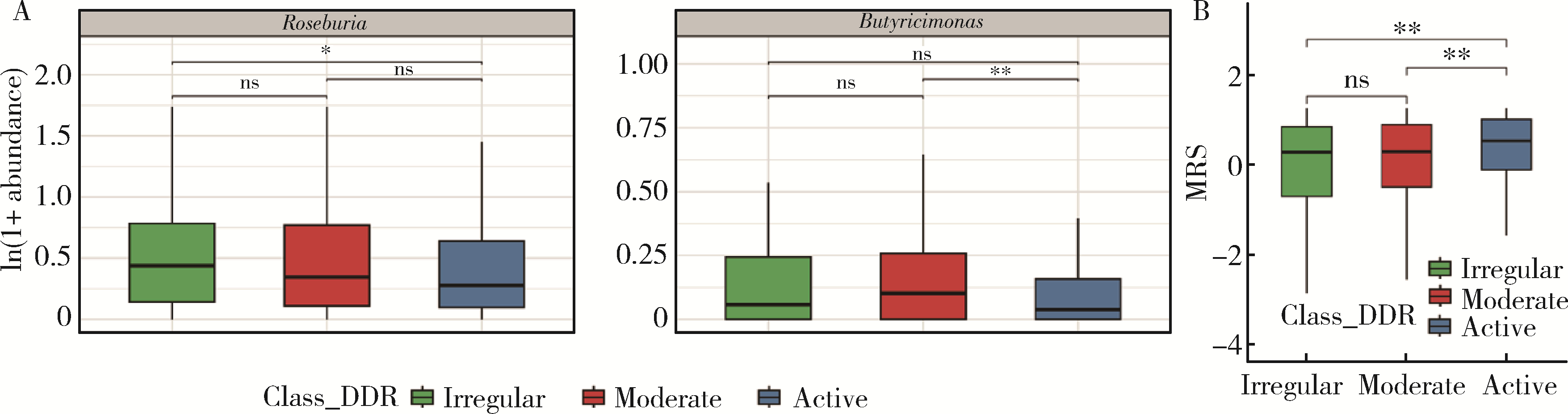
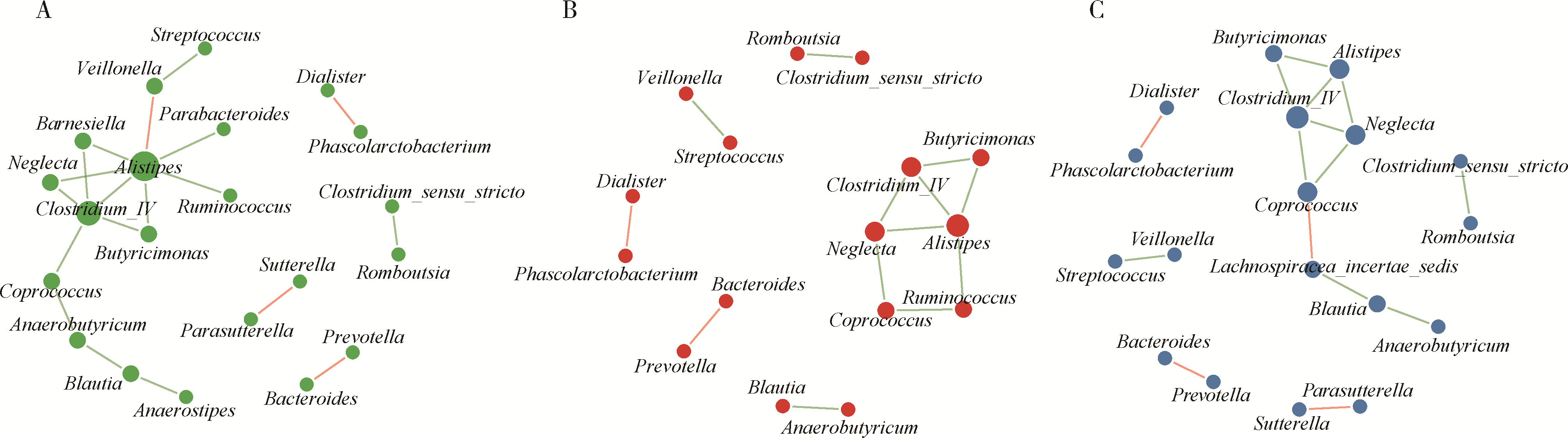
Objective: To identify real-world physical activity patterns in older adults using objective measurements from wearable devices, and to analyze the associations between these patterns and gut microbiota composition. Methods: Based on data collected from a real-world health management project, a total of 743 participants from Eastern, Central, and Northern China were enrolled between January 2018 and June 2025. A 180-day objective physical activity dataset prior to fecal sampling was collected via smart wearable devices to extract features including mean daily steps, coefficient of variation of steps, and the proportion of active days. Fecal samples underwent 16S ribosomal RNA (rRNA) gene (V3-V4 region) amplicon sequencing to obtain genus-level relative abundance matrices. Covariates, including demographics, lifestyle, and chronic disease history, were collected via questionnaires and physical examinations. The discriminative dimensionality reduction via learning a tree (DDRTree) algorithm combined with K-means clustering was applied to identify physical activity phenotypes. Alpha diversity was evaluated using the Shannon index (Kruskal-Wallis test), and beta diversity was assessed using covariate-adjusted permutational multivariate analysis of variance (PERMANOVA) based on Bray-Curtis distance. Multivariable linear regression with false discovery rate (FDR) correction was used to screen differential taxa. A microbial risk score (MRS) was constructed based on taxa with a raw P < 0.05, defined as the difference between the standardized abundance of beneficial and harmful taxa. Co-occurrence networks were constructed to evaluate micro-ecological topological structures. Results: The cohort comprised 381 (51.3%) individuals aged 60-74 years and 362 (48. 7%) aged ≥75 years. Compared with the 60-74 group, the ≥75 group had higher prevalences of hypertension (45.9% vs. 36.7%, P=0.045) and heart disease (34.0% vs. 25.2%, P=0.032), higher systolic blood pressure (median 130 mmHg vs. 120 mmHg, P < 0.001), and fewer mean daily steps (median 6 200 steps vs. 7 000 steps, P < 0.001). Clustering identified three activity patterns: active group (n=143, 19.2%; high steps, low variation, high adherence), moderate group (n=429, 57.7%), and irregular group (n=171, 23.0%; low steps, high variation, low adherence). The active group exhibited the lowest prevalences of hypertension (35.0%) and heart disease (21.7%), and the lowest systolic blood pressure (mean 124.4 mmHg), whereas the irregular group showed the highest values (51.5%, 40.4%, and 127.6 mmHg, respectively). Alpha diversity showed no significant differences among the groups. After adjusting for covariates, physical activity patterns showed no statistically significant effect on beta diversity (R2=0.003 7, P=0.115). Compared with the irregular group, two genera in the active group showed significant differences (P < 0.05). Specifically, the relative abundance of Roseburia in the active group was significantly lower than that in the irregular group (P < 0.05), and the relative abundance of Butyricimonas was also significantly lower than that in the moderate group (P < 0.01). However, these differences did not remain statistically significant after FDR correction. The MRS exhibited a significant gradient distribution across the groups, with the active group scoring the highest (P < 0.001). Co-occurrence network analysis revealed that the active group had the highest network density and proportion of positive correlations (84.5%), whereas the irregular group had the lowest (60.3%). Conclusion: Physical activity patterns identified from wearable device data are associated with gut microbiota composition and ecological network characteristics in older adults. Active and regular physical activity patterns indicate a higher MRS and more stable microbial co-occurrence networks, suggesting potential associations between activity regularity and gut microbial ecology, though causal inference requires longitudinal confirmation.

Key words: Older adults, Wearable electronic devices, Physical activity patterns, Gastrointestinal microbiome, Microbial risk score

CLC Number: 

  • R153.3

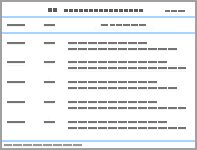
Table 1

Baseline characteristics of the study participants by age group"

Characteristics Age group Total (n=743) P value
60-74 years (n=381) ≥75 years (n=362)
Age/years 69.7±3.6 80.0±3.5 74.7±6.2 < 0.001
Sex (female) 284 (74.5) 224 (61.9) 508 (68.4) < 0.001
Education level 0.201
  Primary school or below 48 (12.6) 42 (11.6) 90 (12.1)
  Junior high school 116 (30.4) 79 (21.8) 195 (26.2)
  High school 207 (54.3) 231 (63.8) 438 (59.0)
  College or above 10 (2.6) 10 (2.8) 20 (2.7)
Dietary habits 0.198
  Meat-predominant 239 (62.7) 242 (66.9) 481 (64.7)
  Plant-predominant 74 (19.4) 82 (22.7) 156 (21.0)
  Balanced 66 (17.3) 37 (10.2) 103 (13.9)
  Others 2 (0.5) 1 (0.3) 3 (0.4)
Smoking/(cigarettes/d) 0.5±2.7 0.1±0.9 0.3±2.1 0.066
History of hypertension 140 (36.7) 166 (45.9) 306 (41.2) 0.042
History of diabetes 93 (24.4) 86 (23.8) 179 (24.1) 0.987
History of heart disease 96 (25.2) 123 (34.0) 219 (29.5) 0.032
History of hyperlipidemia 96 (25.2) 88 (24.3) 184 (24.8) 0.954
BMI/(kg/m2) 23.9±2.8 23.5±2.7 23.7±2.7 0.243
SBP/(mmHg) 124.5±10.3 127.6±9.5 126.0±10.1 < 0.001
DBP/(mmHg) 72.5±6.9 70.4±7.2 71.5±7.1 < 0.001
Fasting blood glucose/(mg/dL) 120±14 120±12 120±13 0.101
Mean daily steps/(steps/d) 7 300±2 900 6 400±2 600 6 900±2 800 < 0.001
Coefficient of variation of steps 0.50±0.17 0.50±0.17 0.50±0.17 0.998
Proportion of active days 0.97±0.05 0.97±0.06 0.97±0.06 0.81

Figure 1

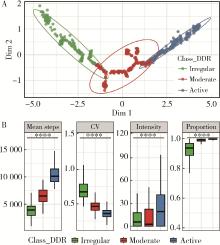
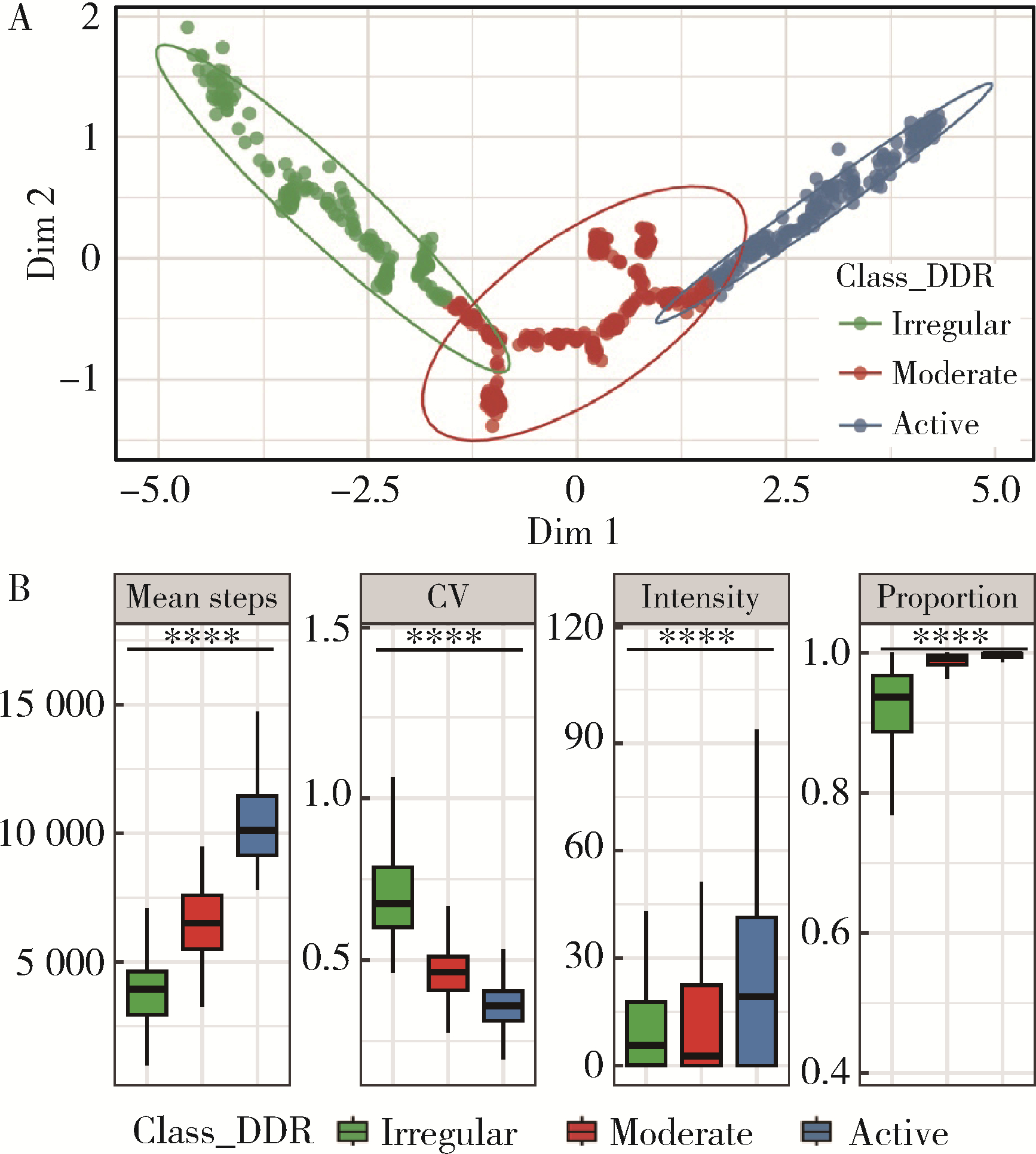
DDRTree classification of physical activity patterns and comparison of physical activity characteristics between patterns A, DDRTree manifold projection; B, distribution of core objective features. * * * *P < 0.000 1. DDRTreed, discriminative dimensionality reduction via learning a tree; CV, coefficient of variation; Dim, dimension."

Table 2

Comparison of baseline characteristics across physical activity patterns identified by DDRTree"

Characteristics Irregular (n=188) Moderate (n=375) Active (n=180) Total (n=743)
Age/years 75.4±6.6 74.7±6.1 74.2±5.9 74.7±6.2
Sex (female) 129 (68.6) 271 (72.3) 108 (60.0) 508 (68.4)
Education level
  Primary school or below 20 (10.6) 48 (12.8) 22 (12.2) 90 (12.1)
  Junior high school 40 (21.3) 108 (28.8) 47 (26.1) 195 (26.2)
  High school 124 (66.0) 209 (55.7) 105 (58.3) 438 (59.0)
  College or above 4 (2.1) 10 (2.7) 6 (3.3) 20 (2.7)
Dietary habits
  Meat-predominant 111 (59.0) 238 (63.5) 132 (73.3) 481 (64.7)
  Plant-predominant 44 (23.4) 82 (21.9) 30 (16.7) 156 (21.0)
  Balanced 33 (17.6) 52 (13.9) 18 (10.0) 103 (13.9)
  Others 0 (0) 3 (0.8) 0 (0) 3 (0.4)
Smoking/(cigarettes/d) 0.6±2.8 0.2±1.4 0.3±2.3 0.3±2.1
History of hypertension 89 (47.3) 158 (42.1) 59 (32.8) 306 (41.2)
History of diabetes 49 (26.1) 80 (21.3) 50 (27.8) 179 (24.1)
History of heart disease 77 (41.0) 110 (29.3) 32 (17.8) 219 (29.5)
History of hyperlipidemia 138 (73.4) 273 (72.8) 148 (82.2) 559 (75.2)
BMI/(kg/m2) 24.1±3.0 23.5±2.8 23.7±2.3 23.7±2.7
SBP/(mmHg) 127.6±10.1 126.0±9.7 124.4±10.6 126.0±10.1
DBP/(mmHg) 73.3±6.2 70.9±7.2 70.9±7.4 71.5±7.1
Fasting blood glucose/(mg/dL) 123.1±22.3 118.6±19.3 116.3±18.4 118.9±19.8
Mean daily steps/(steps/d) 3 924.2±1 317.6 6 557.7±1 300.3 10 569.4±1 817.3 6 863.2±2 766.6
Coefficient of variation of steps 0.72±0.17 0.46±0.08 0.36±0.07 0.50±0.17
Proportion of active days 0.91±0.09 0.99±0.02 0.99±0.02 0.97±0.06

Figure 2

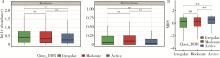
Key differential bacterial genera (A) and microbial risk scores (B) across different physical activity patterns *P < 0.05; * *P < 0.01. DDR, discriminative dimensionality reduction; MRS, microbial risk score; ns, no significance."

Figure 3

Microbial co-occurrence networks identified by DDRTree classification A, irregular group; B, moderate group; C, active group. DDRTreed, discriminative dimensionality reduction via learning a tree."

1
GBD 2019 Stroke Collaborators . Global, regional, and national burden of diseases and injuries for adults 70 years and older: Systematic analysis for the Global Burden of Disease 2019 Study[J]. BMJ, 2022, 376, e068208.
2
Chen H , Liu H , Long Y , et al. Global burden of falls 1990-2021: Aging effect, age-stratified risk factors, and projection to 2040 in older adults[J]. J Gerontol Ser A Biol Sci Med Sci, 2025, 80(12): glaf238.

doi: 10.1093/gerona/glaf238
3
Izquierdo M , Duque G , Morley JE . Physical activity guidelines for older people: Knowledge gaps and future directions[J]. Lancet Healthy Longev, 2021, 2(6): e380- e383.

doi: 10.1016/S2666-7568(21)00079-9
4
Izquierdo M , Merchant RA , Morley JE , et al. International exercise recommendations in older adults (ICFSR): Expert consensus guidelines[J]. J Nutr Health Aging, 2021, 25(7): 824- 853.

doi: 10.1007/s12603-021-1665-8
5
Prince SA , Adamo KB , Hamel M , et al. A comparison of direct versus self-report measures for assessing physical activity in adults: A systematic review[J]. Int J Behav Nutr Phys Act, 2008, 5(1): 56.

doi: 10.1186/1479-5868-5-56
6
Zhou W , Shang S , Cho Y . Associations of wearable activity tracker use with physical activity and health outcomes in patients with cancer: Findings from a population-based survey study[J]. J Med Internet Res, 2024, 26, e51291.

doi: 10.2196/51291
7
Khurshid S , Weng LC , Nauffal V , et al. Wearable accelerometer-derived physical activity and incident disease[J]. NPJ Digit Med, 2022, 5(1): 131.

doi: 10.1038/s41746-022-00676-9
8
Hay SI , Ong KL , Santomauro DF , et al. Burden of 375 diseases and injuries, risk-attributable burden of 88 risk factors, and healthy life expectancy in 204 countries and territories, including 660 subnational locations, 1990-2023: A systematic analysis for the Global Burden of Disease Study 2023[J]. Lancet, 2025, 406(10513): 1873- 1922.

doi: 10.1016/S0140-6736(25)01637-X
9
Jerome GJ , Boyer WR , Bustamante EE , et al. Increasing equity of physical activity promotion for optimal cardiovascular health in adults: A scientific statement from the American heart association[J]. Circulation, 2023, 147(25): 1951- 1962.

doi: 10.1161/CIR.0000000000001148
10
Al-Shaar L , Pernar CH , Chomistek AK , et al. Reproducibility, validity, and relative validity of self-report methods for assessing physical activity in epidemiologic studies: Findings from the women' s lifestyle validation study[J]. Am J Epidemiol, 2022, 191(4): 696- 710.

doi: 10.1093/aje/kwab294
11
Steene-Johannessen J , Anderssen SA , van der Ploeg HP , et al. Are self-report measures able to define individuals as physically active or inactive?[J]. Med Sci Phys Exerc, 2016, 48(2): 235- 244.

doi: 10.1249/MSS.0000000000000760
12
Ferrari P , Friedenreich C , Matthews CE . The role of measurement error in estimating levels of physical activity[J]. Am J Epidemiol, 2007, 166(7): 832- 840.

doi: 10.1093/aje/kwm148
13
Vetter VM , Özince DD , Kiselev J , et al. Self-reported and acce-lerometer-based assessment of physical activity in older adults: Results from the Berlin Aging Study Ⅱ[J]. Sci Rep, 2023, 13(1): 10047.

doi: 10.1038/s41598-023-36924-5
14
Si J , Vázquez-Castellanos JF , Gregory AC , et al. Long-term life history predicts current gut microbiome in a population-based cohort study[J]. Nat Aging, 2022, 2(10): 885- 895.

doi: 10.1038/s43587-022-00286-w
15
Walker RL , Vlamakis H , Lee JWJ , et al. Population study of the gut microbiome: Associations with diet, lifestyle, and cardiometabolic disease[J]. Genome Med, 2021, 13(1): 188.
16
Ramos C , Gibson GR , Walton GE , et al. Systematic review of the effects of exercise and physical activity on the gut microbiome of older adults[J]. Nutrients, 2022, 14(3): 674.

doi: 10.3390/nu14030674
17
Matthews CE , Kozey Keadle S , Moore SC , et al. Measurement of active and sedentary behavior in context of large epidemiologic studies[J]. Med Sci Phys Exerc, 2018, 50(2): 266- 276.

doi: 10.1249/MSS.0000000000001428
18
Brady R , Brown WJ , Hillsdon M , et al. Patterns of accelerometer-measured physical activity and health outcomes in adults: A systematic review[J]. Med Sci Phys Exerc, 2022, 54(7): 1155- 1166.

doi: 10.1249/MSS.0000000000002900
19
Cai Y , Ma T , Sirard J , et al. Move more beneficially: Physical activity variability as a novel metric of physical activity pattern and an independent predictor of mortality and chronic disease incidence[J]. Scand J Med Sci Sports, 2025, 35(8): e70124.

doi: 10.1111/sms.70124
20
dos Santos M , Ferrari G , Lee DH , et al. Association of the "weekend warrior" and other leisure-time physical activity patterns with all-cause and cause-specific mortality: A nationwide cohort study[J]. JAMA Intern Med, 2022, 182(8): 840.

doi: 10.1001/jamainternmed.2022.2488
21
Xiao H , Ding K , Li X , et al. A digital-health multidomain lifestyle management framework and its associations with cardiometabolic health: A real-world observational study[J]. BMC Med, 2026, 24(1): 285.
22
Daniels K , Vonck S , Robijns J , et al. Characterising physical activity patterns in community-dwelling older adults using digital phenotyping: A 2-week observational study protocol[J]. BMJ Open, 2025, 15(5): e095769.
23
Schrack JA , Cooper R , Koster A , et al. Assessing daily physical activity in older adults: Unraveling the complexity of monitors, measures, and methods[J]. J Gerontol Ser A Biol Sci Med Sci, 2016, 71(8): 1039- 1048.
24
Giurgiu M , Ketelhut S , Kubica C , et al. Assessment of 24-hour physical behaviour in adults via wearables: A systematic review of validation studies under laboratory conditions[J]. Int J Behav Nutr Phys Act, 2023, 20(1): 68.
25
Strain T , Wijndaele K , Dempsey PC , et al. Wearable-device-measured physical activity and future health risk[J]. Nat Med, 2020, 26(9): 1385- 1391.
26
Morita E , Yokoyama H , Imai D , et al. Aerobic exercise training with brisk walking increases intestinal bacteroides in healthy elderly women[J]. Nutrients, 2019, 11(4): 868.
27
Ding H , Ho K , Searls E , et al. Assessment of wearable device adherence for monitoring physical activity in older adults: Pilot cohort study[J]. JMIR Aging, 2024, 7, e60209.
28
Claesson MJ , Jeffery IB , Conde S , et al. Gut microbiota composition correlates with diet and health in the elderly[J]. Nature, 2012, 488(7410): 178- 184.
29
Bressa C , Bailén-Andrino M , Pérez-Santiago J , et al. Differences in gut microbiota profile between women with active lifestyle and sedentary women[J]. PLoS One, 2017, 12(2): e0171352.
30
Munukka E , Ahtiainen JP , Puigbó P , et al. Six-week endurance exercise alters gut metagenome that is not reflected in systemic metabolism in over-weight women[J]. Front Microbiol, 2018, 9, 2323.
31
Palmnäs-Bédard MS , Costabile G , Vetrani C , et al. The human gut microbiota and glucose metabolism: A scoping review of key bacteria and the potential role of SCFAs[J]. Am J Clin Nutr, 2022, 116(4): 862- 874.
32
Nogal A , Valdes AM , Menni C . The role of short-chain fatty acids in the interplay between gut microbiota and diet in cardio-metabolic health[J]. Gut Microbes, 2021, 13(1): 1897212.
33
Estaki M , Pither J , Baumeister P , et al. Cardiorespiratory fitness as a predictor of intestinal microbial diversity and distinct metagenomic functions[J]. Microbiome, 2016, 4(1): 42.
[1] Wei PAN, Liangxia CHEN, Xiaofei ZHANG, Haoyu ZHANG, Hewei MIN, Xiaoyan LEI, Xinying SUN, Xuxi ZHANG. Policy logic and multiple challenges of meal assistance services for older adults under the goal of healthy aging [J]. Journal of Peking University (Health Sciences), 2026, 58(3): 560-566.
[2] Qianying WEN, Liqing ZHANG, Anlin QIN, Xiaofeng LI. Small intestinal bacterial overgrowth and inflammatory factor expression levels in patients with asymptomatic hyperuricemia [J]. Journal of Peking University (Health Sciences), 2026, 58(2): 313-318.
[3] Dan HAN, Yangjin CIREN, Qiuhong LI, Jun LI. Changes of intestinal microflora in patients with colorectal benign and malignant tumors in high altitude area and comparison with the normal population in low altitude area [J]. Journal of Peking University (Health Sciences), 2025, 57(3): 578-583.
[4] Wen-han BAO,Wen TANG. Changes of gut microflora in newly diagnosed IgA nephropathy patients and its correlation with clinical risk factors [J]. Journal of Peking University (Health Sciences), 2023, 55(1): 124-132.
[5] Jia-he ZHANG, Jia-qi SHI, Zhang-jian CHEN, Guang JIA. Effects of nano titanium dioxide on gut microbiota based on human digestive tract microecology simulation system in vitro [J]. Journal of Peking University (Health Sciences), 2022, 54(3): 468-476.
[6] WANG Zi-jing,LI Zai-ling. Characteristics of gastric microbiota in children with Helicobacter pylori infection family history [J]. Journal of Peking University (Health Sciences), 2021, 53(6): 1115-1121.
Viewed
Full text


Abstract

Cited

  Shared   
  Discussed   
No Suggested Reading articles found!