Journal of Peking University (Health Sciences) ›› 2026, Vol. 58 ›› Issue (4): 787-793. doi: 10.19723/j.issn.1671-167X.2026.04.015

Previous Articles     Next Articles

Comparison of clinical outcomes between radical prostatectomy and permanent prostate brachytherapy in patients with oligometastatic prostate cancer: A propensity score-matched study

Dandan SU1, Baishun LI1,2, Ruotao XIAO1, Fan ZHANG1,*(), Shudong ZHANG1,*()   

  1. 1. Department of Urology, Peking University Third Hospital, Beijing 100191, China
    2. People's Hospital of Xishuangbanna Dai Autonomous Prefecture, Xishuangbanna Dai Autonomous Prefecture 666100, Yunnan, China
  • Received:2026-03-02 Online:2026-08-18 Published:2026-05-25
  • Contact: Fan ZHANG, Shudong ZHANG
  • Supported by:
    the National Natural Science Foundation of China(82072828); the Key Clinical Projects of Peking University Third Hospital

RICH HTML


Abstract:

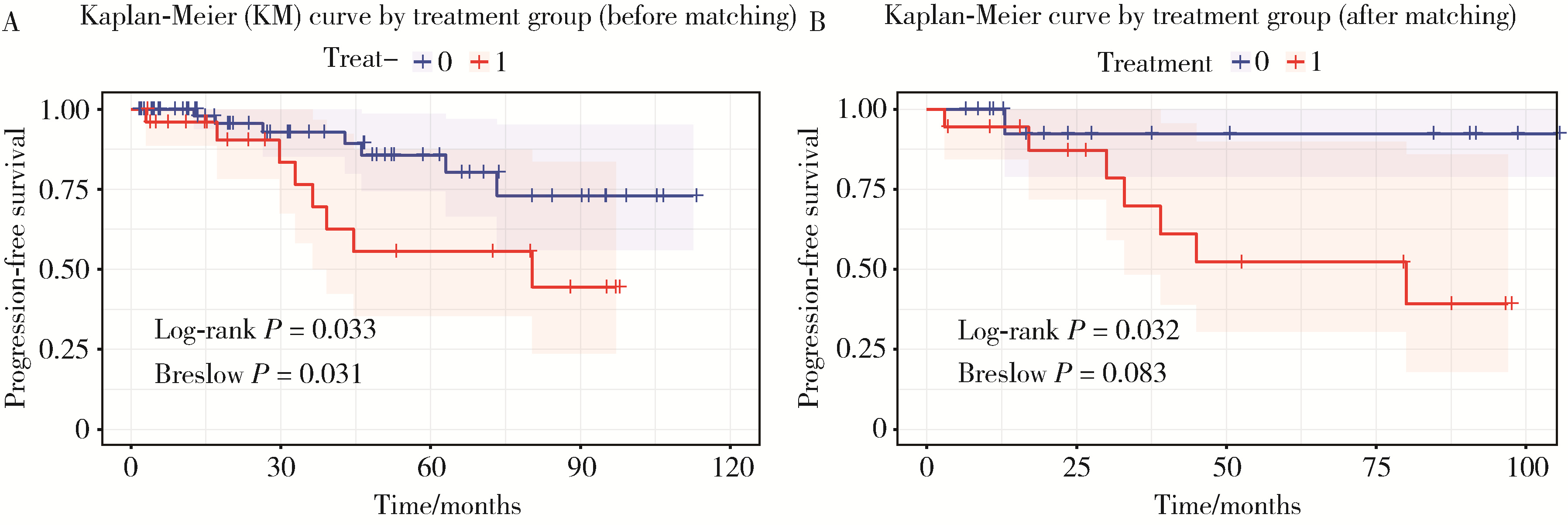
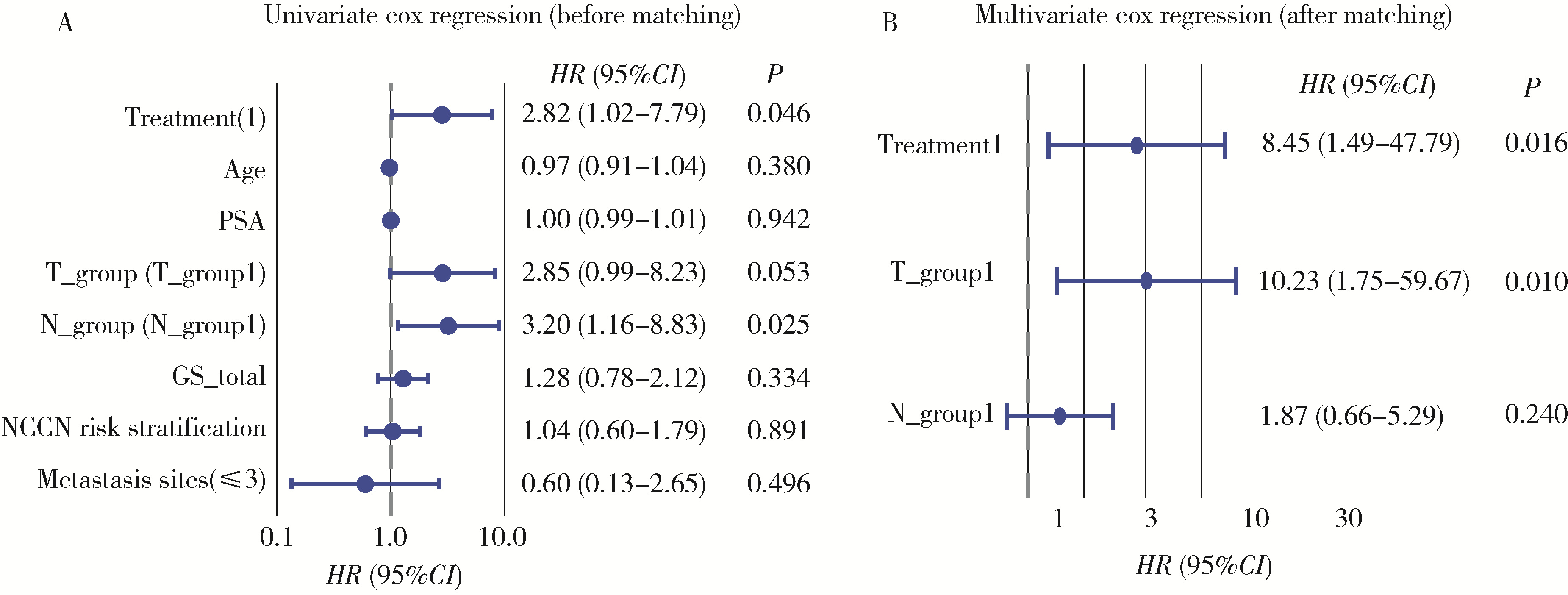
Objective: To compare radical prostatectomy (RP) versus permanent prostate brachytherapy (PPB) as primary local treatment modalities in delaying disease progression to castration-resistant prostate cancer (CRPC) among patients with oligometastatic prostate cancer (omPCa) receiving standard androgen deprivation therapy (ADT), and to provide clinical evidence for individualized treatment strategies. Methods: We performed a retrospective cohort analysis of 88 patients diagnosed with omPCa (defined as ≤5 metastatic lesions) at a single tertiary center between April 2011 and August 2019. All the patients, after receiving either RP (n=62) or PPB (n=26), were placed on a regimen of continuous ADT. To address significant baseline disparities-notably in patient age, presenting prostate-specific antigen (PSA) levels, and nodal disease burden: A 1 ∶ 1 propensity score matching (PSM) protocol was implemented. Matching variables included age at diagnosis, baseline PSA, clinical T stage (≤T2c vs. ≥ T3), and nodal status (N0 vs. N1). The primary study endpoint was the time interval from ADT initiation to CRPC development, as defined by the prostate cancer working group 3 (PCWG3) criteria. Survival outcomes were compared using Kaplan-Meier curves and the Log-rank test. Independent risk factors for progression were identified through both univariate and multivariate Cox proportional hazards regression analyses. Results: Prior to PSM, the RP and PPB groups exhibited significant differences in key prognostic factors: the PPB group was older (mean 73.2 vs. 68.1 years, P=0.002), had a higher median PSA (31.2 vs. 9.8 μg/L, P=0.002), and had a greater incidence of lymph node involvement (42.3% vs. 12.9%, P=0.006). Following PSM, a balanced cohort of 36 patients (18 in each group) was achieved. Over a median follow-up of 30.5 months (range: 3.2 to 113.4 months), 15 patients (17.0%) developed CRPC, with 8 events occurring in the PPB group and 7 in the RP group. Survival analysis demonstrated a consistent, statistically significant advantage for RP. In the pre-matched cohort, the RP group showed a significantly delayed progression to CRPC (Log-rank P=0.033, HR=3.38, 95%CI: 1.10-10.40), with a median CRPC-free survival of 80.0 months for PPB and not reached for RP. In the matched cohort, the survival advantage of RP was more pronounced (Log-rank P=0.032, HR=4.60, 95%CI: 1.14-18.49), with a median CRPC-free survival of 80.0 months for PPB and not reached for RP. Multivariate Cox regression, adjusting for T and N stages, confirmed treatment modality as a powerful independent predictor. Patients treated with PPB faced an 8.56-fold higher risk of progression compared with those treated with RP (HR=8.56, 95%CI: 1.51-48.64, P=0.015). Advanced primary tumor stage (≥T3) was also identified as a significant independent risk factor (HR=10.29, 95%CI: 1.75-60.57, P=0.010). Conclusion: For patients with omPCa receiving ADT, the choice of local therapeutic intervention significantly impacts the time to CRPC. Radical prostatectomy is associated with a markedly longer delay in disease progression to the castration-resistant state compared with permanent prostate brachytherapy, with the treatment modality itself serving as a strong independent prognostic factor. These findings underscore the importance of considering the type of local therapy in the multimodal management of omPCa and provide a rationale for individualized treatment planning. Prospective, randomized trials are necessary to validate these observations and further define optimal therapeutic paradigms.

Key words: Oligometastatic prostate cancer, Radical prostatectomy, Permanent prostate brachytherapy, Castration-resistant prostate cancer, Propensity score matching

CLC Number: 

  • R737.25

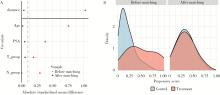
Figure 1

Propensity score matching quality diagnostic plot A, love plot (for covariate balance); B, propensity score distribution; PSA, prostate specific antigen."

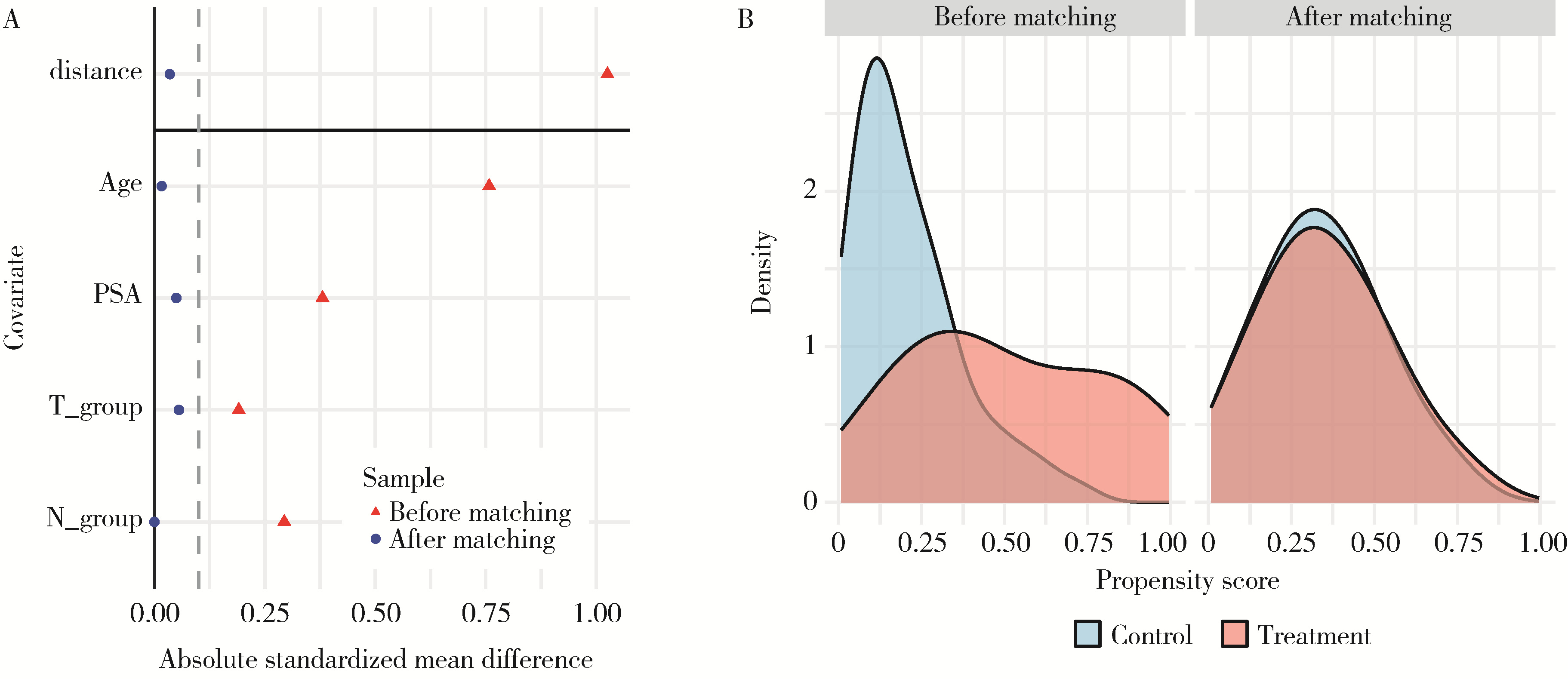
Table 1

Baseline characteristics before and after matching"

Characteristic Before matching After matching
PPB (n=26) RP (n=62) P PPB (n=18) RP (n=18) P
Age at PCa diagnosis, ±s 73.19±6.75 68.08±6.53 0.002* 71.94±7.12 71.28±4.42 0.684
PSA at PCa diagnosis/(μg/L), M(P25, P75) 31.2 (7.3, 61.5) 9.8 (6.6, 23.0) 0.002* 28.1 (8.0, 37.9) 14.0 (7.9, 24.1) 0.192
Gleason score, n (%) 0.725 0.477
  ≤ 7 9 (34.6) 31 (50.0) 7 (38.9) 9 (50.0)
  8-10 8 (30.8) 31 (50.0) 6 (33.3) 9 (50.0)
  Unknown 9 (34.6) 0 5 (27.8) 0
Clinical T stage, n (%) 0.061 >0.999
  ≤ 2c 23 (88.5) 43 (69.4) 15 (83.3) 16 (88.9)
  > 2c 3 (11.5) 19 (30.6) 3 (16.7) 2 (11.1)
N stage, n (%) 0.006* >0.999
  N0 15 (57.7) 54 (87.1) 14 (77.8) 15 (83.3)
  N1 11 (42.3) 8 (12.9) 4 (22.2) 3 (16.7)
NCCN risk stratification, n (%) 0.543 >0.999
  Low-risk 0 1 (1.6) >0.999
  Medium-risk 17 (65.4) 30 (48.4) 5 (27.8) 5 (27.8)
  High-risk 2 (7.7) 9 (14.5) 2 (11.1) 2 (11.1)
  Extremely high-risk 7 (26.9) 22 (35.5) 11 (61.1) 11 (61.1)
Sites of metastases, n (%) >0.999 >0.999
  ≤ 3 24 (92.3) 57 (91.9) 17 (94.4) 16 (88.9)
  > 3 2 (7.7) 5 (8.1) 1 (5.6) 2 (11.1)
Sites of metastases, n (%)
  Spine 8 (30.8) 25 (40.3) 6 (33.3) 8 (44.4)
  Rib 8 (30.8) 23 (37.1) 6 (33.3) 7 (38.9)
  Pelvis 15 (57.7) 21 (33.9) 9 (50.0) 5 (27.8)
  Shoulder 0 5 (8.1) 0 1 (5.6)
  Limb 2 (7.7) 3 (4.8) 1 (5.6) 0
  Skull 3 (11.5) 1 (1.6) 2 (11.1) 1 (5.6)

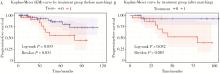
Figure 2

KM survival curves before and after matching A, KM curve before matching; B, survival curve after matching."

Figure 3

Forest plots of Cox regression analysis A, forest plot of univariate Cox regression analysis; B, forest plot of multivariate Cox regression analysis. PSA, prostate-specific antigen; NCCN, National Comprehensive Cancer Network."

1
Siegel RL , Kratzer TB , Giaquinto AN , et al. Cancer statistics, 2025[J]. CA Cancer J Clin, 2025, 75 (1): 10- 45.
2
Vanden Berg RNW , Zilli T , Achard V , et al. The diagnosis and treatment of castrate-sensitive oligometastatic prostate cancer: A review[J]. Prostate Cancer Prostatic Dis, 2023, 26 (4): 702- 711.

doi: 10.1038/s41391-023-00688-w
3
Vaugier L , Morvan C , Pasquier D , et al. Long-term outcomes and patterns of relapse following high-dose elective salvage radiotherapy and hormone therapy in oligorecurrent pelvic nodes in prostate cancer: OLIGOPELVIS (GETUG-P07)[J]. Eur Urol, 2025, 87 (1): 73- 76.

doi: 10.1016/j.eururo.2024.02.013
4
Dai B , Zhang S , Wan FN , et al. Combination of androgen deprivation therapy with radical local therapy versus androgen deprivation therapy alone for newly diagnosed oligometastatic prostate cancer: A phase Ⅱ randomized controlled trial[J]. Eur Urol Oncol, 2022, 5 (5): 519- 525.

doi: 10.1016/j.euo.2022.06.001
5
Giesen A , De Preter N , Fazekas T , et al. Direct treatment of all visible tumour in synchronous oligometastatic prostate cancer: Total eradication of tumour or the full monty treatment[J]. Eur Urol Oncol, 2025, 8 (4): 1203- 1207.

doi: 10.1016/j.euo.2025.04.011
6
Hagan CT , Bloomquist C , Kim I , et al. Continuous liquid interface production of 3D printed drug-loaded spacers to improve prostate cancer brachytherapy treatment[J]. Acta Biomater, 2022, 148, 163- 170.

doi: 10.1016/j.actbio.2022.06.023
7
Wan L , Liu Y , Liu R , et al. GAD1 contributes to the progression and drug resistance in castration resistant prostate cancer[J]. Cancer Cell Int, 2023, 23 (1): 255.

doi: 10.1186/s12935-023-03093-4
8
Weber M , Fendler WP , Ravi Kumar AS , et al. Prostate-specific membrane antigen positron emission tomography-detected disease extent and overall survival of patients with high-risk nonmetastatic castration-resistant prostate cancer: An international multicenter retrospective study[J]. Eur Urol, 2024, 85 (6): 511- 516.

doi: 10.1016/j.eururo.2024.01.019
9
Le Guevelou J , Cuccia F , Flippot R , et al. The current landscape of stereotactic body radiation therapy for metastatic castration-resistant prostate cancer[J]. Prostate Cancer Prostatic Dis, 2025, 28 (3): 546- 556.

doi: 10.1038/s41391-024-00862-8
10
Cheng B , Li B , Fu J , et al. Evaluating the effectiveness of cytoreductive surgery in oligometastatic prostate cancer: Insights from quantitative analysis and retrospective cohort studies[J]. Int J Surg, 2025, 111 (1): 122- 134.

doi: 10.1097/JS9.0000000000001968
11
Rajwa P , Robesti D , Chaloupka M , et al. Outcomes of cytoreductive radical prostatectomy for oligometastatic prostate cancer on prostate-specific membrane antigen positron emission tomography: Results of a multicenter European study[J]. Eur Urol Oncol, 2024, 7 (4): 721- 734.

doi: 10.1016/j.euo.2023.09.006
12
Rhinehart DP , Lai J , Sanin DE , et al. Intratumoral heterogeneity drives acquired therapy resistance in a patient with metastatic prostate cancer[J]. NPJ Precis Onc, 2024, 8, 275.

doi: 10.1038/s41698-024-00773-w
13
Cheng Q , Butler W , Zhou Y , et al. Pre-existing castration-resistant prostate cancer-like cells in primary prostate cancer promote resistance to hormonal therapy[J]. Eur Urol, 2022, 81 (5): 446- 455.

doi: 10.1016/j.eururo.2021.12.039
14
Sharifi MN , Sperger JM , Taylor AK , et al. High-purity CTC RNA sequencing identifies prostate cancer lineage phenotypes prognostic for clinical outcomes[J]. Cancer Discov, 2025, 15 (5): 969- 987.

doi: 10.1158/2159-8290.CD-24-1509
15
Kane N , Romero T , Diaz-Perez S , et al. Significant changes in macrophage and CD8 T cell densities in primary prostate tumors 2 weeks after SBRT[J]. Prostate Cancer Prostatic Dis, 2023, 26 (1): 207- 209.

doi: 10.1038/s41391-022-00498-6
16
Piffkó A , Pitroda SP , Liang HL , et al. Amphiregulin as a mediator of radiation-induced systemic effects in metastatic cancer: Balancing local control with distant progression[J]. Clin Cancer Res, 2025, 31 (23): 4899- 4902.

doi: 10.1158/1078-0432.CCR-25-2598
17
Chin JL , Lavi A , Metcalfe MJ , et al. Long-term outcomes of whole gland salvage cryotherapy for locally recurrent prostate cancer following radiation therapy: A combined analysis of two centers[J]. J Urol, 2021, 206 (3): 646- 654.

doi: 10.1097/JU.0000000000001831
18
Zhang Y , Ming A , Wang J , et al. PROTACs targeting androgen receptor signaling: Potential therapeutic agents for castration-resistant prostate cancer[J]. Pharmacol Res, 2024, 205, 107234.

doi: 10.1016/j.phrs.2024.107234
19
Marra G , Valerio M , Heidegger I , et al. Management of patients with node-positive prostate cancer at radical prostatectomy and pelvic lymph node dissection: A systematic review[J]. Eur Urol Oncol, 2020, 3 (5): 565- 581.

doi: 10.1016/j.euo.2020.08.005
20
Schaeffer EM , Srinivas S , Adra N , et al. NCCN Guidelines: Insights: Prostate Cancer, Version 3.2024[J]. J Natl Compr Canc Netw, 2024, 22 (3): 140- 150.

doi: 10.6004/jnccn.2024.0019
21
De B , Pasalic D , Barocas DA , et al. Patient-reported outcomes after external beam radiotherapy with low dose rate brachytherapy boost vs radical prostatectomy for localized prostate cancer: Five-year results from a prospective comparative effectiveness study[J]. J Urol, 2022, 208 (6): 1226- 1239.

doi: 10.1097/JU.0000000000002902
22
Marvaso G , Corrao G , Zaffaroni M , et al. ADT with SBRT versus SBRT alone for hormone-sensitive oligorecurrent prostate cancer (RADIOSA): A randomised, open-label, phase 2 clinical trial[J]. Lancet Oncol, 2025, 26 (3): 300- 311.

doi: 10.1016/S1470-2045(24)00730-7
23
Niazi T , Saad F , Tisseverasinghe S , et al. Metastases-directed therapy in addition to standard systemic therapy in oligometastatic castration-resistant prostate cancer in Canada (GROUQ-PCS 9): A multicentre, open-label, randomised, phase 2 trial[J]. Lancet Oncol, 2025, 26 (9): 1158- 1167.

doi: 10.1016/S1470-2045(25)00351-1
[1] Yaqing MAO, Zhen CHEN, Yao YU, Wenbo ZHANG, Yang LIU, Xin PENG. Impact of type 2 diabetes mellitus on the prognosis of patients with oral squamous cell carcinoma [J]. Journal of Peking University (Health Sciences), 2024, 56(6): 1089-1096.
[2] Shuhui YU,Jianing HAN,Lijun ZHONG,Congyu CHEN,Yunxiang XIAO,Yanbo HUANG,Yang YANG,Xinyan CHE. Predictive value of preoperative pelvic floor electrophysiological parameters on early urinary incontinence following radical prostatectomy [J]. Journal of Peking University (Health Sciences), 2024, 56(4): 594-599.
[3] Ye YAN,Xiaolong LI,Haizhui XIA,Xuehua ZHU,Yuting ZHANG,Fan ZHANG,Ke LIU,Cheng LIU,Lulin MA. Analysis of risk factors for long-term overactive bladder after radical prostatectomy [J]. Journal of Peking University (Health Sciences), 2024, 56(4): 589-593.
[4] JI Guang-jie, HUANG Cong, SONG Gang, LI Xue-song, SONG Yi, ZHOU Li-qun. Predictive factor analysis of time to progression of castration-resistant prostate cancer after androgen deprivation therapy [J]. Journal of Peking University(Health Sciences), 2017, 49(4): 657-662.
Viewed
Full text


Abstract

Cited

  Shared   
  Discussed   
No Suggested Reading articles found!