Journal of Peking University (Health Sciences) ›› 2025, Vol. 57 ›› Issue (4): 740-747. doi: 10.19723/j.issn.1671-167X.2025.04.018

Previous Articles     Next Articles

Association of increased greater tubercle angle and critical shoulder angle with rotator cuff tears

Hua JIANG1, Yu YAN2, Panpan LI1, Kang CHEN1, Hongbing MA1, Yong ZENG1, Xin TANG2, Guoqing CUI3,*()   

  1. 1. Department of Orthopedics, Chengdu Second People ' s Hospital, Affiliated Hospital of Chengdu Medical College, Chengdu 610017, China
    2. Department of Orthopedics, West China Hospital, Sichuan University, Chengdu 610041, China
    3. Department of Sports Medicine, Peking University Third Hospital, Beijing 100191, China
  • Received:2024-09-29 Online:2025-08-18 Published:2025-08-02
  • Contact: Guoqing CUI
  • Supported by:
    the Project of Chengdu Health and Health Commission(2020090); the Special Fund of Sichuan Provincial Administration of Traditional Chinese Medicine(2024MS179)

RICH HTML


Abstract:

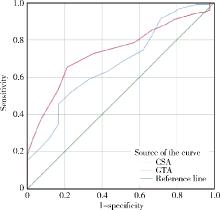
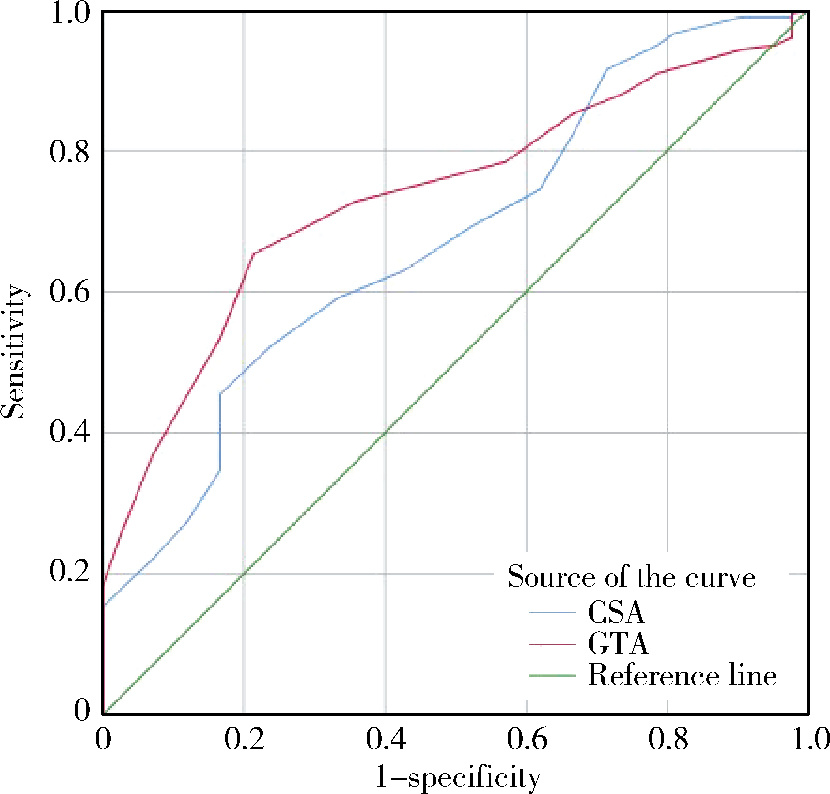
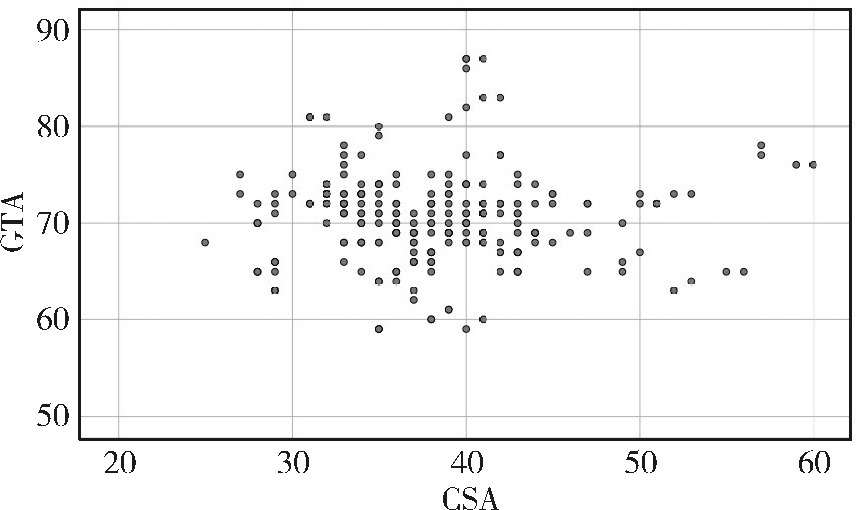
Objective: The greater tuberosity angle (GTA) and critical shoulder angle (CSA) are commonly referred to as radiographic markers which were used to described morphology of the greater tuberosity and acromion respectively. At present, most international studies focus on the correlation between the above two parameters and rotator cuff tears (RCTs), and their diagnostic value and risk assessment. This study attempts to find out the trend of GTA and CSA changes and risk threshold of RCTs, as well as the protective factors and risk factors. Methods: In this study, 130 individuals from May 2019 to December 2020 were recruited. According to Southern California Orthopedic Institute (SCOI) classification, the individuals were divided into four groups retrospectively: Group A, negative control group; Group B, partial tears (articular side); Group C, partial tears (bursal side); Group D, full-thickness tears. GTA and CSA were measured respectively on true anteroposterior position X-ray of shoulder with arm in neutral rotation and performed by the same trained technician team in single-blind. The correlations between RCTs and relevant factors were analyzed. Results: According to the area under the receiver operating characteristic curve (AUC), GTA and CSA of RCTs (Groups B, C and D) were 0.736 and 0.673 with 95% confidence interval (CI), the cut-off value of GTA and CSA of RCTs were 70.5° and 39.5° respectively. Comparing with the control group, RCTs groups had significant statistical differences in age and body mass index (BMI) (P < 0.05), especially the full-thickness RCTs (Group D), which was older than Groups A, B and C (P < 0.05, cut-off value: 56.5 years old) and shorter than Groups A and B (P < 0.05, cut-off value: 1.58 m). Analyzed from scatter plot and regression analysis, there was no linear correlation between GTA and CSA. There were no significant differences in gender, dominant shoulders and smoking between the RCTs groups and the control group (P>0.05). Conclusion: Larger GTA (>70.5°) and CSA (>39.5°) would be highly predictive in diagnosing RCTs without linear correlation, and GTA has a higher diagnostic value in contrast. Subacromial impingement and shoulder degeneration occurred before RCTs. Patients with age >56.5 years and height < 1.58 m were more likely to develop disease of full-thickness RCTs and no statistic differences in weight and BMI. Gender, dominant shoulder and smoking were neither risk factors nor protective factors.

Key words: Rotator cuff tears, Greater tuberosity angle, Critical shoulder angle, Shoulder impingement syndrome

CLC Number: 

  • R684

Figure 1

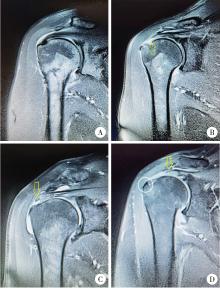
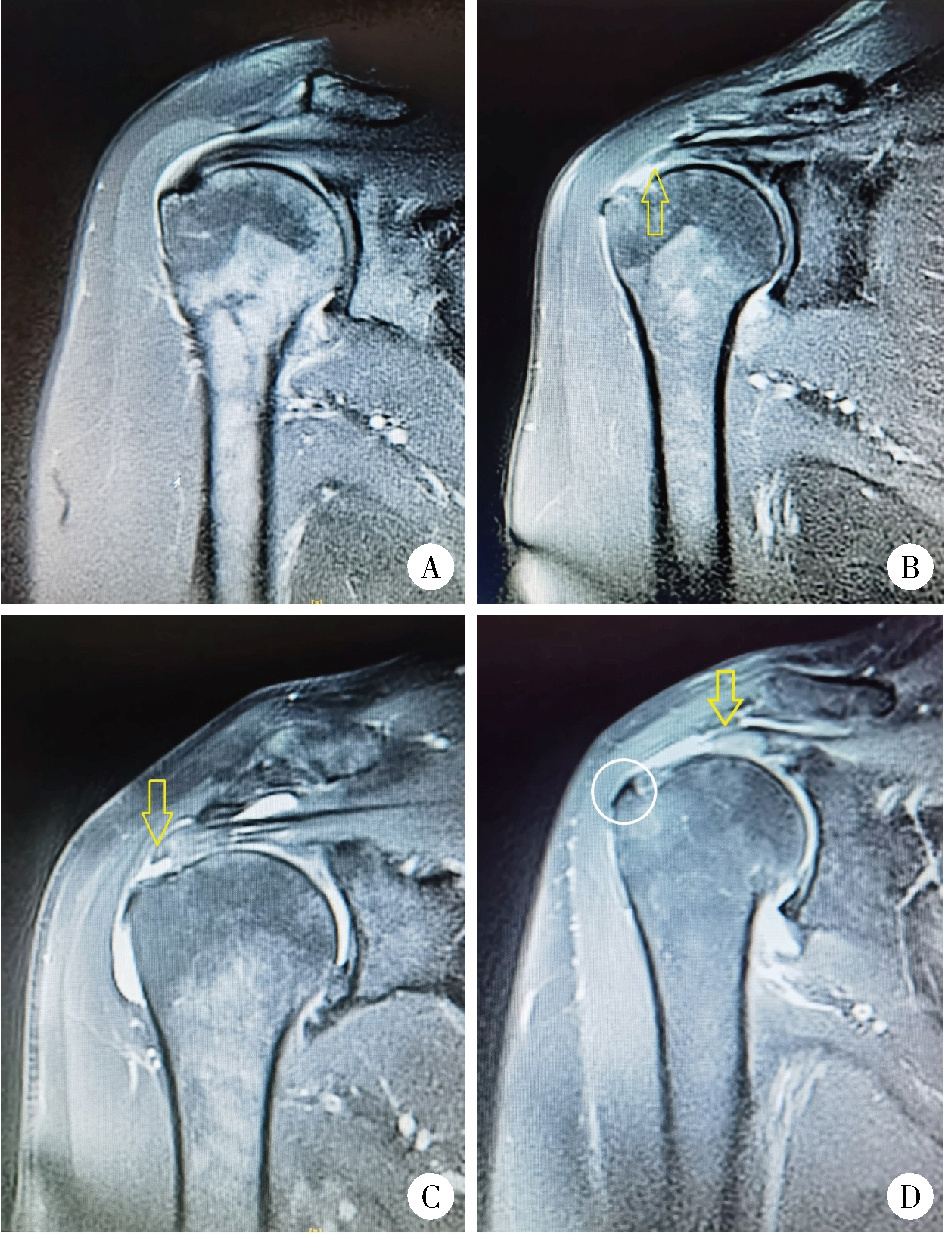
MRI images of patients with rotator cuff tears in each group A, negative control group; B, partial RCTs (articular side) group; C, partial RCTs (bursal side) group; D, full-thickness RCTs group. The arrow indicates the site of RCTs, the circle marks the osteophytes of greater tuberosity of humerus. RCTs, rotator cuff tears."

Figure 2

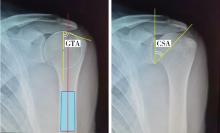
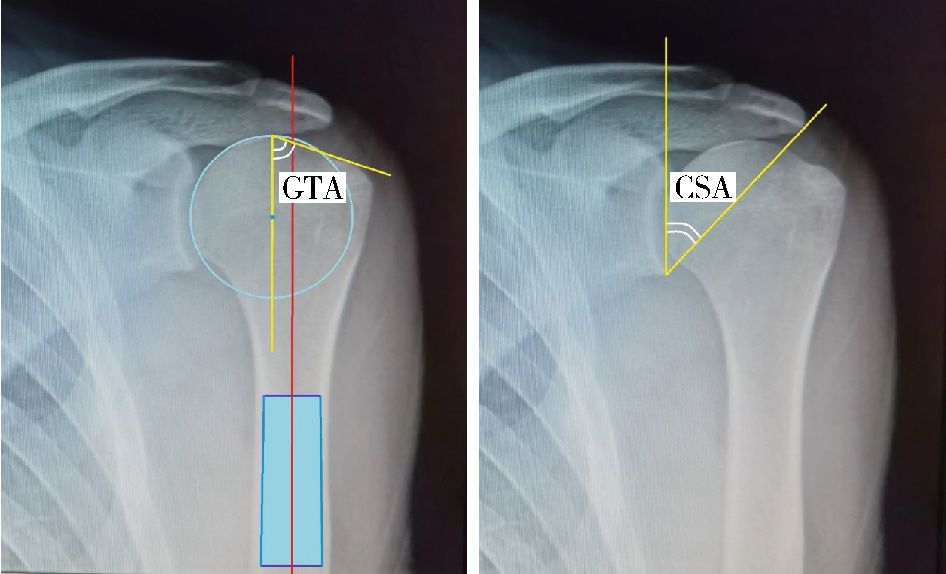
Measurement methods of GTA and CSA on apraxis of scapula Greater tuberosity angle (GTA) is made by two crossing lines. The first line passes through the center of humeral head and parallels to the humerus diaphysis, and the second one connects the upper border of the humeral head to the most superolateral edge of the greater tuberosity. Critical shoulder angle (CSA) consists of the angle with two crossing lines. One of which was drawn from the glenoid superior to inferior border, the other was drawn from the glenoid inferior border to lateral aspect of the acromion."

Table 1

Reliability of radiological measurements"

Measurements ICC-1 ICC-2 ICC-3
CSA 0.988 0.988 0.897
GTA 0.977 0.990 0.921

Figure 3

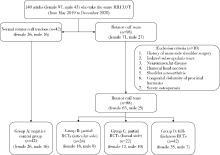
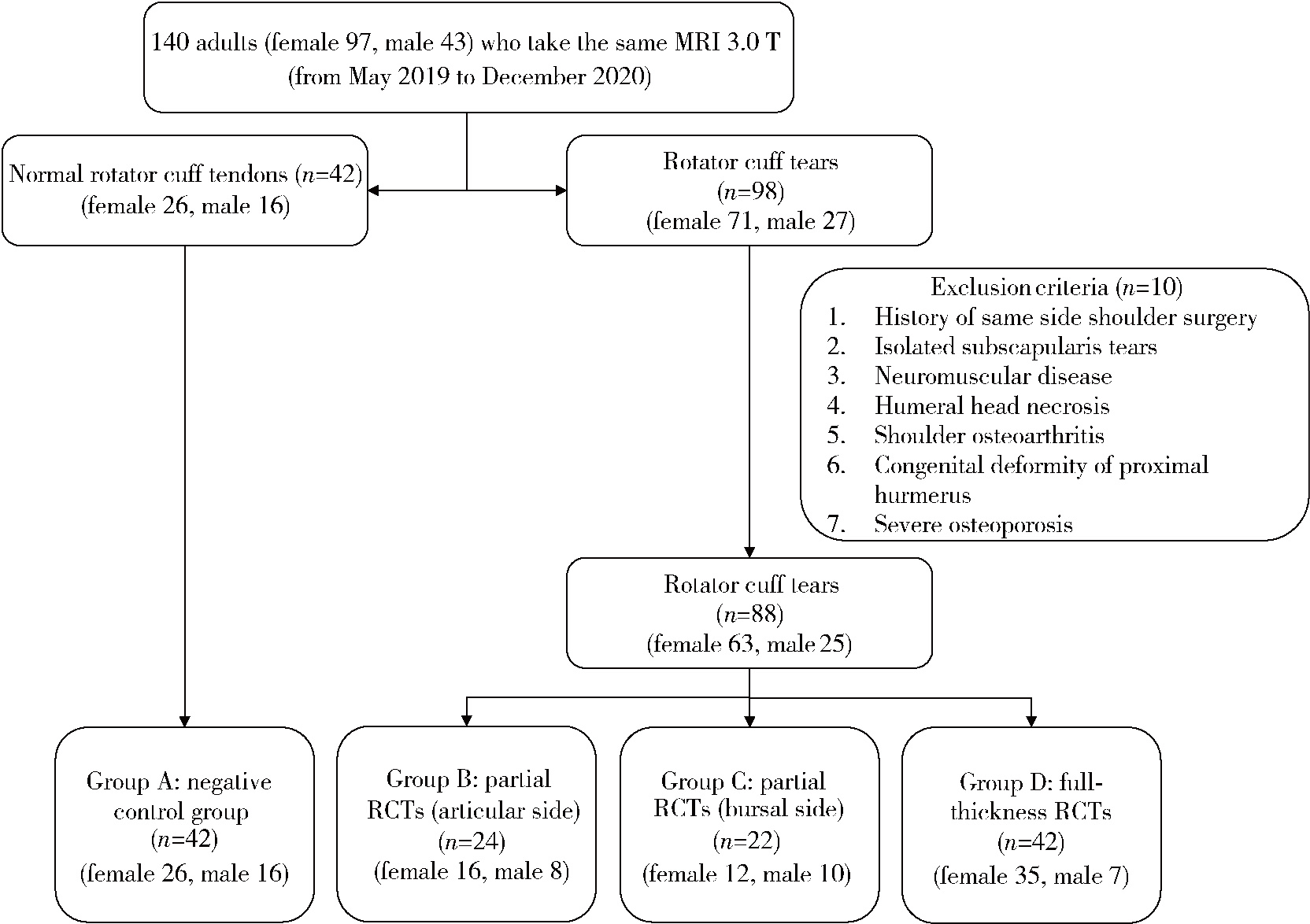
Enrollment flow chart Patients were screened and grouped according to inclusion and exclusion criteria (according to the exclusion criteria, 10 patients with RCTs were not included in this study and statistical analysis due to factors such as preoperative imaging data missing (not recorded) and non-timely review. RCTs, rotator cuff tears."

Table 2

Demographic data in each group"

Items Group A Group B Group C Group D P value
Age/years, ${\bar x}$±s 27.76±7.30 54.00±14.89 51.27±8.41 64.24±10.01 <0.001
Weight/kg, ${\bar x}$±s 58.90±6.51 63.83±9.06 63.27±6.13 61.43±10.06 0.075
Height/m, ${\bar x}$±s 1.64±0.50 1.65±0.78 1.62±0.68 1.59±0.07 0.001
BMI/(kg/m2), ${\bar x}$±s 21.82±1.73 23.24±1.91 24.04±1.54 24.10±2.93 <0.001
Gender (male/female), n 16/26 8/16 10/12 7/35 0.067
Shoulder (left/right), n 16/26 8/16 12/10 18/24 0.487
Smoking (yes/no), n 6/36 2/22 2/20 2/40 0.511

Table 3

Measured values of CSA and GTA in each group"

Items Group A Group B Group C Group D
CSA, ${\bar x}$±s 35.33±4.69 38.56±4.83 40.23±5.72 39.18±7.18
GTA, ${\bar x}$±s 68.36±3.06 70.54±3.08 71.09±5.31 72.62±5.37

Table 4

Multiple comparisons of CSA between groups (P value)"

Items Group A Group B Group C Group D
Group A - 0.028* 0.001** 0.002**
Group B 0.028* - 0.323 0.673
Group C 0.001** 0.323 - 0.485
Group D 0.002** 0.673 0.485 -

Figure 4

Analysis of critical values for CSA and GTA in RCTs patients under ROC curve ROC, receiver operating characteristic; GTA, greater tuberosity angle; CSA, critical shoulder angle; RCTs, rotator cuff tears."

Table 5

Multiple comparisons of GTA between groups (P value)"

Items Group A Group B Group C Group D
Group A - 0.045* 0.015* <0.001**
Group B 0.045 - 0.660 0.057
Group C 0.015* 0.660 - 0.172
Group D <0.001** 0.057 0.172 -

Figure 5

Scatter diagram of GTA and CSA GTA, greater tuberosity angle; CSA, critical shoulder angle."

Figure 6

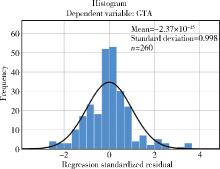
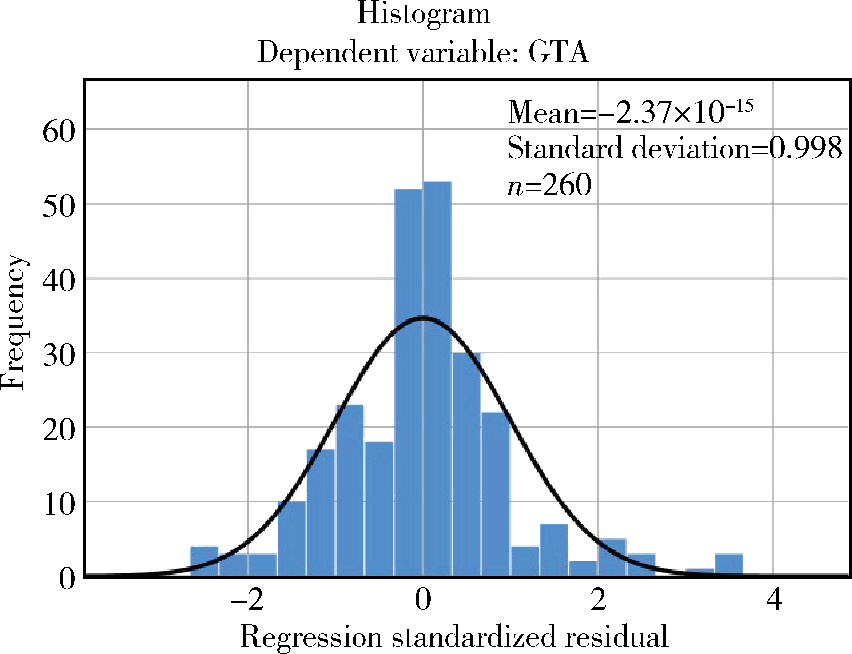
Regression standardized residual (dependent variable: GTA) follows a standard normal distribution (95%CI: -2, 2) GTA, greater tuberosity angle."

Table 6

Odd ratios of RCTs groups"

Items Group B Group C Group D
OR (95%CI) P value OR (95%CI) P value OR (95%CI) P value
Gender (male/female) 1.231 (0.430-3.527) 0.699 0.738 (0.260-2.100) 0.569 3.077 (1.106-8.558) 0.050
Shoulder (left/right) 1.231 (0.430-3.527) 0.699 0.513 (0.180-1.458) 0.208 0.821 (0.343-1.963) 0.657
Smoke (yes/no) 1.833 (0.340-9.895) 0.476 1.667 (0.307-9.042) 0.551 3.333 (0.632-17.574) 0.137
1
Neer CS . Anterior acromioplasty for the chronic impingement syndrome in the shoulder: A preliminary report[J]. J Bone Joint Surg Am, 1972, 54 (1): 41- 50.
2
Bigliani LU , D' Alessandro DF , Duralde XA , et al. Anterior acromioplasty for subacromial impingement in patients younger than 40 years of age[J]. Clin Orthop Relat Res, 1989 (246): 111- 116.
3
Cunningham G , Nicodeme-Paulin E , Smith MM , et al. The greater tuberosity angle: A new predictor for rotator cuff tear[J]. J Shoulder Elbow Surg, 2018, 27 (8): 1415- 1421.
4
Kocadal O , Tasdelen N , Yuksel K , et al. Volumetric evaluation of the subacromial space in shoulder impingement syndrome[J]. Orthop Traumatol Surg Res, 2022, 108 (2): 103- 110.
5
Bufe K , Müller KH , Retzlaff C , et al. Interobserver reliability of shoulder radiographic findings and correlation to MRI: A preliminary case series[J]. Arch Orthop Trauma Surg, 2024, 144 (8): 3313- 3322.
6
Bi AS , Morgan AM , O' Brien M , et al. Partial-thickness rotator cuff tears: Current concepts[J]. JBJS Rev, 2024, 12 (8): e24.00063.
7
王琦, 王会祥, 吴晓明. 峰盂角的定义及临床研究进展[J]. 中华骨科杂志, 2020, 40 (1): 55- 59.
8
陈俊, 楼珏翔, 申屠国建, 等. 肩关节峰盂角对肩袖撕裂修补术后再撕裂的影响[J]. 中国运动医学杂志, 2022, 41 (6): 423- 429.

doi: 10.3969/j.issn.1000-6710.2022.06.002
9
Moor BK , Bouaicha S , Rothenfluh DA , et al. Is there an association between the individual anatomy of the scapula and the deve-lopment of rotator cuff tears or osteoarthritis of the glenohumeral joint? A radiological study of the critical shoulder angle[J]. Bone Joint J, 2013, 95-B (7): 935- 941.
10
Bossuyt PM , Reitsma JB , Bruns DE , et al. STARD 2015:An updated list of essential items for reporting diagnostic accuracy studies[J]. BMJ, 2015, 351, h5527.
11
Seo J , Heo K , Kwon S , et al. Critical shoulder angle and greater tuberosity angle according to the partial thickness rotator cuff tear patterns[J]. Orthop Traumatol Surg Res, 2019, 105 (8): 1543- 1548.
12
Yoo JS , Heo K , Yang JH , et al. Greater tuberosity angle and critical shoulder angle according to the delamination patterns of rotator cuff tear[J]. J Orthop, 2019, 16 (5): 354- 358.
13
Schaaf JV , Weidinger L , Molleman L , et al. Test-retest reliability of reinforcement learning parameters[J]. Behav Res Methods, 2024, 56 (5): 4582- 4599.
14
Job TDW , Cross MR , Cronin JB . Comparison of shoulder rotation strength and test-retest reliability in 3 test positions with swimmers[J]. J Sport Rehabil, 2024, 11 (6): 1- 7.
15
Sutton P , Lund Ohlsson M , Röijezon U . Reduced shoulder proprioception due to fatigue after repeated handball throws and evaluation of test-retest reliability of a clinical shoulder joint position test[J]. Shoulder Elbow, 2024, 16 (1): 100- 109.
16
Othman R , Bajaber AM , Alhabshi AM , et al. Test-retest reliability of pain sensitivity measures in individuals with shoulder pain[J]. J Pain Res, 2024, 25 (17): 1917- 1927.
17
Bigliani LU , Levine WN . Subacromial impingement syndrome[J]. J Bone Joint Surg Am, 1997, 79 (12): 1854- 1868.
18
Akgün D , Gebauer H , Paksoy A , et al. Differences in osseous shoulder morphology, scapulothoracic orientation, and muscle volume in patients with constitutional static posterior shoulder instability (type C1) compared with healthy controls[J]. Am J Sports Med, 2024, 52 (5): 1299- 1307.
19
Dong W , Du K , Shi B , et al. Distribution and analysis of subacromial spurs and the relationship with acromial classification and angle in healthy individuals[J]. PLoS One, 2024, 19 (3): e0301066.
20
Abu El Kasem ST , Alaa FAA , Abd El-Raoof NA , et al. Efficacy of Mulligan thoracic sustained natural apophyseal glides on sub-acromial pain in patients with sub-acromial impingement syndrome: A single-blinded randomized controlled trial[J]. J Man Manip Ther, 2024, 32 (6): 584- 593.
21
Saengpetch N , Bamrungchaowkasem J , Chitrapazt N , et al. Predicting bursal-side supraspinatus tendon tears with the acromioclavicular angle[J]. Asia Pac J Sports Med Arthrosc Rehabil Technol, 2024, 27 (39): 15- 21.
22
Ellman H . Arthroscopic treatment of impingement of the shoulder[J]. Instr Course Lect, 1989, 38, 177- 185.
23
Gartsman GM , Blair ME , Jr. Noble PC , et al. Arthroscopic subacromial decompression: An anatomical study[J]. Am J Sports Med, 1988, 16 (1): 48- 50.
24
Lowry V , Lavigne P , Zidarov D , et al. A systematic review of clinical practice guidelines on the diagnosis and management of various shoulder disorders[J]. Arch Phys Med Rehabil, 2024, 105 (2): 411- 426.
25
Yang S , Pang L , Zhang C , et al. Lower reoperation rate and superior patient-reported outcome following arthroscopic rotator cuff repair with concomitant acromioplasty: An updated systematic review of randomized controlled trials[J]. Arthroscopy, 2025, 41 (5): 1618- 1634.
26
Zhao J , Huang H , Zeng L , et al. Acromioplasty combined with arthroscopic rotator cuff repair can reduce the risk of reoperation: A systematic review and meta-analysis[J]. Postgrad Med, 2024, 136 (6): 666- 677.
27
Maguire JA , Dhillon J , Scillia AJ , et al. Rotator cuff repair with or without acromioplasty: A systematic review of randomized controlled trials with outcomes based on acromial type[J]. Am J Sports Med, 2024, 52 (13): 3404- 3411.
28
Gatto L , Fernando A , Patel M , et al. Subacromial contact after acromioplasty in the rotator cuff deficient shoulder[J]. J Orthop Res, 2024, 42 (3): 588- 597.
29
Heydar AM , Kiyak G . Effect of arthroscopic acromioplasty on the isometric abduction strength[J]. Cureus, 2024, 16 (4): e59426.
30
Sayampanathan AA , Tan AHC . Editorial commentary: Long-term, clinical outcome of arthroscopic rotator cuff repair may be improved with concomitant acromioplasty in patients with a type Ⅲ acromion[J]. Arthroscopy, 2025, 41 (5): 1635- 1636.
31
Gutierrez-Naranjo JM , Salazar LM , Kanawade VA , et al. The greater tuberosity version angle: A novel method of acquiring humeral alignment during intramedullary nailing[J]. Bone Jt Open, 2024, 5 (10): 929- 936.
32
Castanheira A , Amaro P , Alonso R , et al. Influence of reestabli-shing greater tuberosity angle on patient outcomes following greater tuberosity fractures[J]. Eur J Orthop Surg Traumatol, 2024, 35 (1): 22- 26.
33
Klosterman EL , Tagliero AJ , Lenters TR , et al. The subcoracoid distance is correlated with pain and internal rotation after reverse shoulder arthroplasty[J]. JSES Int, 2024, 8 (3): 528- 534.
34
Açan AE , Hapa O , Gursan O , et al. The effect of arthroscopic coracoplasty on subscapularis strength in cases of subcoracoid impingement in the absence of subscapularis tear[J]. Medicine (Baltimore), 2024, 103 (3): e36947.
35
Gamiel A , Elkhawaga H , Badr M , et al. Multimodal physical therapy management of subcoracoid impingement: A case report with one-year follow-up and ultrasound measurement of coracohumeral distance[J]. Cureus, 2024, 16 (11): e73398.
36
Villatte G , van der Kruk E , Bhuta AI , et al. A biomechanical confirmation of the relationship between critical shoulder angle (CSA) and articular joint loading[J]. J Shoulder Elbow Surg, 2020, 29 (10): 1967- 1973.
37
Pandey V , Vijayan D , Tapashetti S , et al. Does scapular morphology affect the integrity of the rotator cuff?[J]. J Shoulder Elbow Surg, 2016, 25 (3): 413- 421.
38
Shinagawa K , Hatta T , Yamamoto N , et al. Critical shoulder angle in an East Asian population: Correlation to the incidence of rotator cuff tear and glenohumeral osteoarthritis[J]. J Shoulder Elbow Surg, 2018, 27 (9): 1602- 1606.
39
Moor BK , Wieser K , Slankamenac K , et al. Relationship of individual scapular anatomy and degenerative rotator cuff tears[J]. J Shoulder Elbow Surg, 2014, 23 (4): 536- 541.
40
Oladimeji AE , Amoo-Achampong K , Ode GE . Impact of critical shoulder angle in shoulder pathology: A current concepts review[J]. JSES Int, 2023, 8 (2): 287- 292.
41
Cerciello S , Mocini F , Proietti L , et al. Critical shoulder angle in patients with cuff tears[J]. Sports Med Arthrosc Rev, 2024, 32 (1): 38- 45.
[1] Silan AN,Qunyi ZHENG,Kai WANG,Shan GAO. Characteristics and influencing factors of early pain in patients after total knee arthroplasty [J]. Journal of Peking University (Health Sciences), 2024, 56(1): 167-173.
[2] Qiang FU,Guan-ying GAO,Yan XU,Zhuo-hua LIN,You-jing SUN,Li-gang CUI. Comparative study of ultrasound and magnetic resonance imaging in the diagnosis of asymptomatic anterosuperior acetabular labrum tears [J]. Journal of Peking University (Health Sciences), 2023, 55(4): 665-669.
[3] Hao WU,Li-ping PAN,Heng LIU,Hong-bin WANG,Tai-guo NING,Yong-ping CAO. Effect of posterior tibial slope on the short-term outcome in mobile-bearing unicompartmental knee arthroplasty [J]. Journal of Peking University (Health Sciences), 2021, 53(5): 877-882.
[4] Jia-peng ZHENG,Qi XIAO,Hui-yun DENG,Qing-quan WU,Wen-liang ZHAI,Da-sheng LIN. Arthroscopic classification and management for the popliteal hiatus of the lateral meniscus tears [J]. Journal of Peking University (Health Sciences), 2021, 53(5): 891-895.
[5] Zhen-xing SHAO,Qing-fa SONG,Yu-qing ZHAO,Guo-qing CUI. An arthroscopic “inlay” Bristow procedure with suture button fixation: Surgical technique and radiology evaluation [J]. Journal of Peking University (Health Sciences), 2021, 53(5): 896-901.
[6] Jing-xian ZHU,Sheng-nan LU,Yan-fang JIANG,Ling JIANG,Jian-quan WANG. Influencing factors of preoperative pulmonary function in elderly patients undergoing rotator cuff surgery [J]. Journal of Peking University (Health Sciences), 2021, 53(5): 902-906.
[7] Zhong-di LIU,Ting-min XU,Yu DANG,Dian-ying ZHANG,Zhong-guo FU. A mid-term clinical follow-up study on repair of the meniscus tears by a modified arthroscopic outside-in puncture suture technique [J]. Journal of Peking University (Health Sciences), 2020, 52(5): 870-874.
[8] Dong JIANG,Yue-lin HU,Chen JIAO,Qin-wei GUO,Xing XIE,Lin-xin CHEN,Feng ZHAO,Yan-bin PI. Mid-to-long term outcomes and influence factors of postoperative concurrent chronic ankle instability and posterior ankle impingement [J]. Journal of Peking University(Health Sciences), 2019, 51(3): 505-509.
[9] Cui-ping ZHANG,Pei-pei LIU,Qiang FU,Guan-ying GAO,Li-gang CUI,Yan XU,Jian-quan WANG. Application of ultrasound-guided hip joint drug injection in the postoperative rehabilitation of arthroscopie repair of acetabular labral tears [J]. Journal of Peking University(Health Sciences), 2019, 51(2): 265-267.
[10] LV Ming, ZHANG Jin-qing, WANG Xing-shan, HUANG Ye, LI Wei, ZHANG Chun-yu. Surgical technique and early clinical outcomes of direct anterior approach to total hip arthroplasty [J]. Journal of Peking University(Health Sciences), 2017, 49(2): 206-213.
[11] LI Yang, LI Zi-jian, ZHANG Ke, TIAN Hua, LIU Yan-qing, CAI Hong, LI Feng, ZHAO Min-wei. Analysis on the causes of unscheduled suspensions of knee and hip arthroplasty [J]. Journal of Peking University(Health Sciences), 2017, 49(2): 231-235.
[12] ZHANG Tie-chao, ZHANG Zhi-shan, ZHOU Fang, TIAN Yun, JI Hong-quan, GUO Yan, LV Yang, YANG Zhong-wei, HOU Guo-jin. Diagnosis and treatment for the basicervical fractures of the trochanteric region [J]. Journal of Peking University(Health Sciences), 2017, 49(2): 246-251.
[13] YU Zheng-rong, LI Chun-de, ZHU Sai-nan, SUN Hao-lin, ZHAO Yao, QI Long-tao. Efficacy of transforaminal endoscopic nerve root decompression in the treatment of degenerative lumbar spinal stenosis [J]. Journal of Peking University(Health Sciences), 2017, 49(2): 252-255.
[14] LI Wei, JIANG Chun-yan, WANG Zhan-wei, XIAO De-ming. Intraarticular injection of bevacizumab in treatment of osteoarthritis: a laboratory research on a rabbit model [J]. Journal of Peking University(Health Sciences), 2016, 48(2): 203-209.
[15] ZHA Ye-jun, JIANG Xie-yuan, GONG Mao-qi. Treatment of the old terrible triad of the elbow without operative history [J]. Journal of Peking University(Health Sciences), 2016, 48(2): 224-229.
Viewed
Full text


Abstract

Cited

  Shared   
  Discussed   
No Suggested Reading articles found!