Journal of Peking University (Health Sciences) ›› 2025, Vol. 57 ›› Issue (6): 1067-1073. doi: 10.19723/j.issn.1671-167X.2025.06.008

Previous Articles     Next Articles

Role of the SII and SIRI in risk prediction, disease activity assessment, and prog-nostic evaluation of Behçet disease uveitis

Yajing GAO1,2,3, Zhengfang LI1,3, Mengsi MA1,2,3, Lijun WU1,3,*()   

  1. 1. Department of Rheumatology and Immunology, People's Hospital of Xinjiang Uygur Autonomous Region, Uygur 830000, China
    2. Xinjiang Medical University, Uygur 830000, China
    3. Xinjiang Clinical Research Center for Rheumatoid Arthritis, Uygur 830000, China
  • Received:2025-08-12 Online:2025-12-18 Published:2025-10-30
  • Contact: Lijun WU
  • Supported by:
    the Key Research and Development Project of Xinjiang Uygur Autonomous Region(2022B03002-1)

RICH HTML


Abstract:

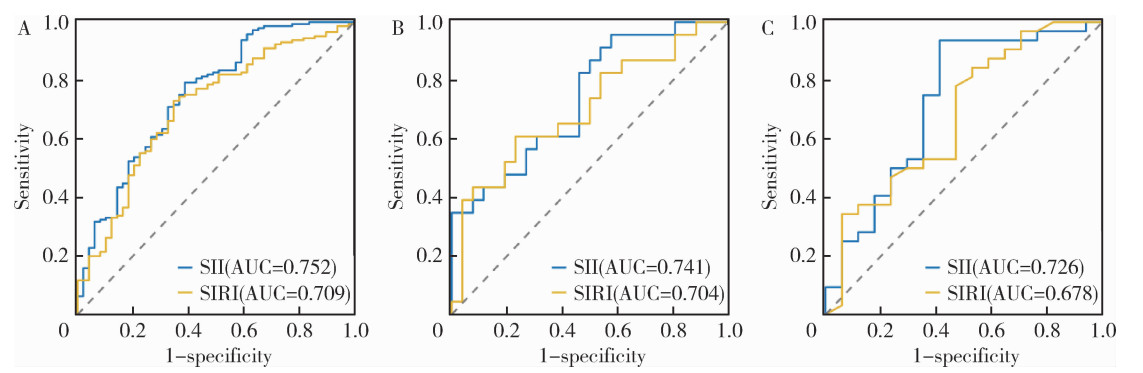
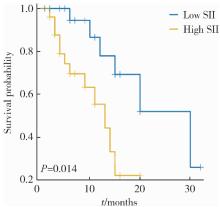
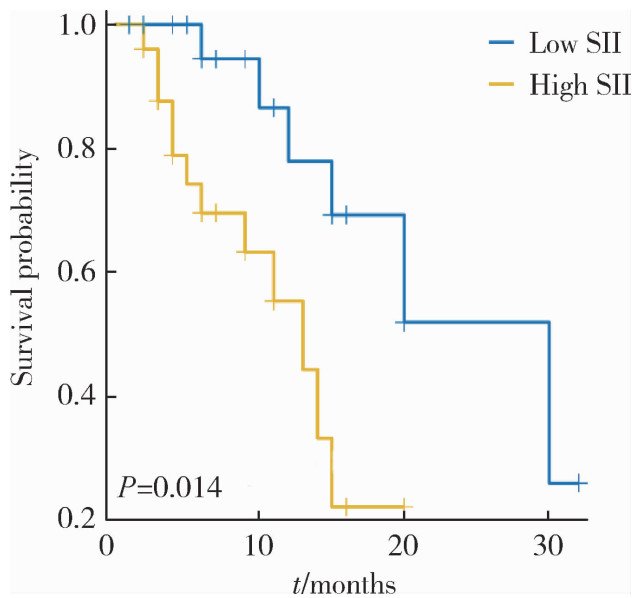
Objective: To evaluate the association of systemic immune-inflammation index (SII) and systemic inflammatory response index (SIRI) with Behçet disease uveitis (BU), and to assess their predictive value for inflammatory activity and clinical prognosis in BU patients. Methods: There were 194 patients diagnosed with Behçet disease (BD) and 122 healthy controls. The BD patients were classified into two subgroups based on disease activity: An active phase cohort (n=90) and a stable phase cohort (n=104). Furthermore, the patients were categorized according to the presence or absence of uveitis into two cohorts: BU (n=49) and non-BU (n=145). Among the BU cohort, 26 patients were in the active inflammatory stage, while 23 patients were in the quiescent inflammatory stage. SII and SIRI were calculated using routine blood parameters, including platelet, neutrophil, lymphocyte, and monocyte counts. Spearman correlation analysis was performed to assess the associations of SII and SIRI with BU onset, inflammatory activity, and inflammatory markers. Receiver operating characteristic (ROC) curve analysis was conducted to determine the optimal thresholds and predictive accuracy of SII and SIRI for BU onset and inflammatory activity. Results: SII and SIRI levels were significantly elevated in BD patients with ocular and vascular manifestations compared to those with stable disease (P < 0.05). No significant differences were observed in SII or SIRI levels among the patients with other clinical manifestations of BD. In the patients with BU, both SII and SIRI were significantly higher than in the non-BU and healthy control the groups (P < 0.001). Moreover, SII and SIRI levels were higher during the active inflamma-tory stage than in the inactive stage of BU (P=0.004). Spearman correlation analysis revealed that SII was positively associated with BD disease activity (ρ=0.303, P < 0.001), BU onset (ρ=0.442, P < 0.001), inflammatory activity (ρ=0.392, P=0.005), C-reactive protein (CRP, ρ=0.272, P < 0.001), and erythrocyte sedimentation rate (ESR, ρ=0.285, P < 0.001). SIRI was only positively correlated with BU onset (ρ=0.301, P=0.006). Logistic regression analysis demonstrated that eleva-ted SII was an independent risk factor for BU onset (OR=1.003, 95% CI: 1.001-1.004, P < 0.001). ROC curve analysis indicated that the optimal thresholds for SII were 711.800 [area under curve (AUC)=0.752] for predicting BU onset, 1 622.300 (AUC=0.741) for predicting inflammatory activity, and 1 634.200 (AUC=0.726) for predicting poor prognosis. The corresponding thresholds for SIRI were 1.260 (AUC=0.709), 1.390 (AUC=0.704), and 2.790 (AUC=0.678), respectively. Kaplan-Meier analysis indicated that elevated SII independently predicted adverse prognostic events (HR=3.440, 95%CI: 1.040-11.410, P=0.043). Conclusion: SII and SIRI may serve as potential clinical indicators for predicting inflammatory activity and prognosis in BD patients with uveitis. SII, in particular, demonstrates superior predictive performance for BU onset and disease activity, providing a basis for early identification of high-risk patients and clinical decision-making.

Key words: Behçet disease uveitis, Systemic immune inflammation index, Systemic inflammatory response index, Prognostic assessment

CLC Number: 

  • R593.22

Table 1

Baseline clinical characteristics of patients with BD"

Items BD (n=194)
Age/years 37.5 (30, 48)
BD disease course/years 5 (1, 10)
WBC/ (×109/L) 6.83 (5.05, 8.45)
RBC/ (×1012/L) 4.54 (4.16, 4.99)
PLT/ (×109/L) 245 (211.25, 308.00)
NEUT/ (×109/L) 4.05 (2.81, 5.58)
LYMPH/ (×109/L) 1.84 (1.38, 2.35)
MONO/ (×109/L) 0.46 (0.34, 0.63)
CRP/ (mg/L) 2.55 (1.20, 8.54)
ESR/ (mm/h) 17 (10, 30)
SII 510.55 (337.16, 849.29)
SIRI 0.98 (0.59, 1.79)

Table 2

Comparison of inflammatory markers between active and stable BD patients"

Items Active BD (n=90) Stable BD (n=104) P value
WBC/ (×109/L) 7.57 (5.54, 9.75) 6.45 (4.93, 7.76) 0.002
PLT/ (×109/L) 251.50 (213.00, 325.25) 241.00 (210.00, 293.75) 0.269
NEUT/ (×109/L) 4.98 (3.17, 6.65) 3.58 (2.66, 4.73) < 0.001
LYMPH/ (×109/L) 1.74 (1.28, 2.39) 1.92 (1.53, 2.42) 0.078
MONO/ (×109/L) 0.51 (0.37, 0.66) 0.45 (0.33, 0.62) 0.193
CRP/ (mg/L) 4.08 (1.30, 18.46) 2.50 (1.20, 5.25) 0.017
ESR/ (mm/h) 21.50 (10.75, 45.50) 15.50 (8.25, 24.00) 0.001
SII 638.36 (367.84, 1 375.35) 469.78 (227.87, 680.42) 0.001
SIRI 1.19 (0.70, 2.58) 0.82 (0.53, 1.30) 0.002

Table 3

Comparative analysis of SII and SIRI in clinical manifestations BD"

Manifestations Cases, n(%) SII,M(P25P75) P value SIRI, M(P25P75) P value
Oral aphthae 0.772 0.894
    Yes 192 (98.96) 510.55 (335.94, 858.82) 0.98 (0.59, 1.79)
    No 2 (1.04) 487.93 (335.75, 487.93) 1.24 (0.69, 1.24)
Genital aphthae 0.499 0.525
    Yes 153 (78.87) 508.22 (331.06, 808.88) 1.03 (0.60, 1.70)
    No 41 (21.13) 524.90 (351.78, 1 259.78)) 0.81 (0.51, 1.93)
Dermal 0.575 0.710
    Yes 81 (41.75) 504.20 (326.68, 724.67) 0.99 (0.57, 1.66)
    No 113 (58.25) 524.90 (341.59, 890.59) 0.97 (0.59, 1.81)
Uveitis < 0.001 < 0.001
    Yes 49 (25.26) 823.73 (498.34, 1 622.28) 1.61 (0.94, 2.90)
    No 145 (74.74) 453.16 (296.94, 684.78) 0.82 (0.54, 1.38)
Gastrointestinal 0.110 0.640
    Yes 25 (12.89) 704.76 (351.36, 1 441.90) 1.15 (0.57, 2.07)
    No 169 (87.11) 504.20 (332.88, 791.37) 0.97 (0.59, 1.71)
Vascular 0.040 0.038
    Yes 22 (11.34) 1 107.40 (422.73, 1 457.9) 1.56 (0.73, 1.72)
    No 172 (88.66) 671.45 (328.92, 772.03) 0.98 (0.57, 1.63)
Cardiovascular 0.363 0.340
    Yes 4 (2.06) 1 086.72 (349.43, 1 369.11) 1.93 (0.74, 2.72)
    No 190 (79.94) 506.85 (335.34, 813.91) 0.97 (0.59, 1.70)
Nervous system 0.435 0.856
    Yes 15 (7.73) 504.20 (335.75, 887.92) 1.07 (0.37, 2.55)
    No 179 (92.27) 512.89 (248.41, 707.32) 0.97 (0.60, 1.72)

Figure 1

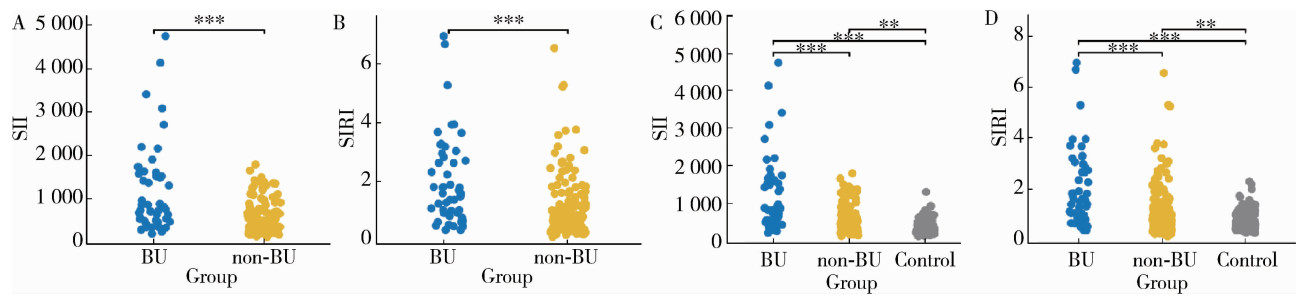
SII and SIRI levels in BU, non-BU and control groups * *P < 0.01; * * *P < 0.001. A, SII levels in BU and non-BU; B, SIRI levels in BU and non-BU; C, SII levels in BU, non-BU and control groups; D, SIRI levels in BU, non-BU and control groups. BU, Behçet disease uveitis; SII, systemic immune inflammation index; SIRI, systemic inflammatory response index."

Table 4

Multivariate Logistic regression analysis of BU"

Items β SE t P OR OR 95%CI
SII 0.003 0.001 19.702 < 0.001 1.003 1.001-1.004
SIRI 0.041 0.141 0.083 0.773 0.960 0.729-1.265

Table 5

Comparative analysis of systemic inflammation in active and stable BU"

Items Active BU (n=26) Stable BU (n=23) P value
WBC/ (×109/L) 9.36 (7.32, 11.49) 6.74 (5.08, 9.71) 0.002
PLT/ (×109/L) 308.50 (232.00, 366.00) 258.00 (213.00, 304.00) 0.113
NEUT/ (×109/L) 6.85 (4.81, 8.95) 4.39 (3.05, 5.74) 0.001
LYMPH/ (×109/L) 1.51 (1.06, 2.50) 1.54 (1.31, 2.09) 0.113
MONO/ (×109/L) 0.56 (0.40, 0.69) 0.51 (0.36, 0.75) 0.440
CRP/ (mg/L) 2.53 (1.18, 7.82) 2.50 (1.00, 6.56) 0.920
ESR/ (mm/h) 19.00 (11.00, 38.75) 18.00 (9.00, 33.00) 0.865
SII 1 471.74 (639.23, 1 970.36) 683.47 (347.29, 1 309.66) 0.004
SIRI 1.86 (1.36, 3.21) 1.11 (0.64, 2.26) 0.015

Figure 2

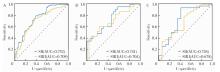
ROC curves of SII and SIRI for BU prediction A, onset risk prediction in BU; B, disease activity in BU; C, predicting prognosis risk in BU. SII, systemic immune inflammation index; SIRI, systemic inflammatory response index; BU, Behçet disease uveitis; ROC, Receiver operating characteristic; AUC, area under curve."

Figure 3

Kaplan-Meier curves of BU patients in different SII groups SII, systemic immune inflammation index. BU, Behçet disease uveitis."

1
Izzedine H , Jhaveri KD . Behçet's syndrome[J]. N Engl J Med, 2024, 390 (18): 1731.
2
Su G , Zhong Z , Zhou Q , et al. Identification of novel risk loci for Behçet' s disease-related uveitis in a Chinese population in a genome-wide association study[J]. Arthritis Rheumatol, 2022, 74 (4): 671- 681.

doi: 10.1002/art.41998
3
Li C , Li L , Wu X , et al. Clinical manifestations of Behçet' s disease in a large cohort of Chinese patients: Gender- and age-related differences[J]. Clin Rheumatol, 2020, 39 (11): 3449- 3454.

doi: 10.1007/s10067-020-05026-2
4
Zhong Z , Su G , Yang P . Risk factors, clinical features and treatment of Behçet's disease uveitis[J]. Prog Retin Eye Res, 2023, 97, 101216.

doi: 10.1016/j.preteyeres.2023.101216
5
Islam MM , Satici MO , Eroglu SE . Unraveling the clinical significance and prognostic value of the neutrophil-to-lymphocyte ratio, platelet-to-lymphocyte ratio, systemic immune-inflammation index, systemic inflammation response index, and delta neutrophil index: An extensive literature review[J]. Turk J Emerg Med, 2024, 24 (1): 8- 19.

doi: 10.4103/tjem.tjem_198_23
6
Yang CH , Wang XY , Zhang YH , et al. SIRI and SII as potential biomarkers of disease activity and lupus nephritis in systemic lupus erythematosus[J]. Front Immunol, 2025, 16, 1530534.

doi: 10.3389/fimmu.2025.1530534
7
Lu Z , Xie Z , Shen K , et al. Association of dietary inflammatory index with immune-inflammatory biomarkers in rheumatoid arthritis patients: Results from NHANES 1999-2018[J]. Front Nutr, 2024, 11, 1353964.

doi: 10.3389/fnut.2024.1353964
8
Davatchi F , Assaad-Khalil S , Calamia KT , et al. The Inter-national Criteria for Behçet' s Disease (ICBD): A collaborative study of 27 countries on the sensitivity and specificity of the new criteria[J]. Acad Dermatol Venereol, 2014, 28 (3): 338- 347.

doi: 10.1111/jdv.12107
9
Bhakta BB , Brennan P , James TE , et al. Behçet' s disease: Evaluation of a new instrument to measure clinical activity[J]. Rheumatology, 1999, 38 (8): 728- 733.

doi: 10.1093/rheumatology/38.8.728
10
Keino H . Evaluation of disease activity in uveoretinitis associated with Behçet's disease[J]. Immunol Med, 2021, 44 (2): 86- 97.

doi: 10.1080/25785826.2020.1800244
11
Koru L , Esen F , Turkyilmaz O , et al. Clinical characteristics of pediatric noninfectious uveitis and risk factors for severe disease: A single-center study[J]. Clin Rheumatol, 2024, 43 (9): 2933- 2942.
12
Wu Y , Ning K , Huang Z , et al. NETs-CD44-IL-17A feedback loop drives Th17-mediated inflammation in Behçet' s uveitis[J]. Adv Sci, 2025, 12 (16): 2411524.

doi: 10.1002/advs.202411524
13
Le Joncour A , Cacoub P , Boulaftali Y , et al. Neutrophil, NETs and Behçet' s disease: A review[J]. Clin Immunol, 2023, 250, 109318.
14
Dinkla S , van Cranenbroek B , van der Heijden WA , et al. Platelet microparticles inhibit IL-17 production by regulatory T cells through P-selectin[J]. Blood, 2016, 127 (16): 1976- 1986.
15
Citirik M , Ozdal PC , Keles A , et al. Platelet activation in ocular Behçet's patients with posterior segment involvement[J]. Middle East Afr J Ophthalmol, 2022, 28 (4): 203- 207.
16
Shadmanfar S , Masoumi M , Davatchi F , et al. Correlation of clinical signs and symptoms of Behçet's disease with platelet-to-lymphocyte ratio (PLR) and neutrophil-to-lymphocyte ratio (NLR)[J]. Immunol Res, 2021, 69 (4): 363- 371.

doi: 10.1007/s12026-021-09194-4
[1] Tao WU, Jianzi LIN, Yafeng ZHU, Jianda MA, Peiwen JIA, Lijuan YANG, jie PAN, Yaowei ZOU, Ying YANG, Ye LU, Lie DAI. Serum inter-alpha-trypsin inhibitor heavy chain H3 is identified as a potential biomarker for myopenia in patients with rheumatoid arthritis using proteomic profiling [J]. Journal of Peking University (Health Sciences), 2025, 57(6): 1024-1031.
[2] Xuebing LYU, Xuanhua YU, Weizhen ZHANG, Changquan LIU, Huhan LIN, Shanting ZENG, Huijuan HUANG, Yueping WU. Rheumatoid arthritis complicated with necrotizing fasciitis: A case report [J]. Journal of Peking University (Health Sciences), 2025, 57(6): 1198-1202.
[3] Ju YANG, Jing XU, Juhua DAI, Lianjie SHI. Expression of lumican protein in serum of patients with rheumatoid arthritis and its correlation with disease and immune activities [J]. Journal of Peking University (Health Sciences), 2025, 57(5): 911-918.
[4] Lianghua FENG, Lirong HONG, Yujia CHEN, Xueming CAI. Role and mechanism of ubiquitin-specific protease 35 in ferroptosis of rheumatoid arthritis-fibroblast like synoviocytes [J]. Journal of Peking University (Health Sciences), 2025, 57(5): 919-925.
[5] Yijun HAN, Xiaoli CHEN, Changhong LI, Jinxia ZHAO. Application status of methotrexate in patients with rheumatoid arthritis [J]. Journal of Peking University (Health Sciences), 2024, 56(6): 994-1000.
[6] Peiwen JIA, Ying YANG, Yaowei ZOU, Zhiming OUYANG, Jianzi LIN, Jianda MA, Kuimin YANG, Lie DAI. Clinical characteristics of overlapping syndromes of low muscle mass in patients with rheumatoid arthritis and their impact on physical function [J]. Journal of Peking University (Health Sciences), 2024, 56(6): 1009-1016.
[7] Doudou MA, Zhemin LU, Qian GUO, Sha ZHU, Jin GU, Yan DING, Lianjie SHI. Successful treatment of rheumatoid arthritis complicated with myasthenia gravis with low-dose rituximab: A case report [J]. Journal of Peking University (Health Sciences), 2024, 56(6): 1110-1114.
[8] Rui YAN, Dan KE, Yan ZHANG, Li LI, Huanran SU, Wei CHEN, Mingxia SUN, Xiaomin LIU, Liang LUO. Diagnostic significance of serum chemokine CXCL-10 and Krebs von den lungen-6 level in patients with rheumatoid arthritis associated interstitial lung disease [J]. Journal of Peking University (Health Sciences), 2024, 56(6): 956-962.
[9] Zhengfang LI,Cainan LUO,Lijun WU,Xue WU,Xinyan MENG,Xiaomei CHEN,Yamei SHI,Yan ZHONG. Application value of anti-carbamylated protein antibody in the diagnosis of rheumatoid arthritis [J]. Journal of Peking University (Health Sciences), 2024, 56(4): 729-734.
[10] Huina HUANG,Jing ZHAO,Xiangge ZHAO,Ziran BAI,Xia LI,Guan WANG. Regulatory effect of lactate on peripheral blood CD4+ T cell subsets in patients with rheumatoid arthritis [J]. Journal of Peking University (Health Sciences), 2024, 56(3): 519-525.
[11] Xiaofei TANG,Yonghong LI,Qiuling DING,Zhuo SUN,Yang ZHANG,Yumei WANG,Meiyi TIAN,Jian LIU. Incidence and risk factors of deep vein thrombosis in patients with rheumatoid arthritis [J]. Journal of Peking University (Health Sciences), 2024, 56(2): 279-283.
[12] Xue ZOU,Xiao-juan BAI,Li-qing ZHANG. Effectiveness of tofacitinib combined with iguratimod in the treatment of difficult-to-treat moderate-to-severe rheumatoid arthritis [J]. Journal of Peking University (Health Sciences), 2023, 55(6): 1013-1021.
[13] Yin-ji JIN,Lin SUN,Jin-xia ZHAO,Xiang-yuan LIU. Significance of IgA isotype of anti-v-raf murine sarcoma viral oncogene homologue B1 antibody in rheumatoid arthritis [J]. Journal of Peking University (Health Sciences), 2023, 55(4): 631-635.
[14] Wen-xin CAI,Shi-cheng LI,Yi-ming LIU,Ru-yu LIANG,Jing LI,Jian-ping GUO,Fan-lei HU,Xiao-lin SUN,Chun LI,Xu LIU,Hua YE,Li-zong DENG,Ru LI,Zhan-guo LI. A cross-sectional study on the clinical phenotypes of rheumatoid arthritis [J]. Journal of Peking University (Health Sciences), 2022, 54(6): 1068-1073.
[15] Fang CHENG,Shao-ying YANG,Xing-xing FANG,Xuan WANG,Fu-tao ZHAO. Role of the CCL28-CCR10 pathway in monocyte migration in rheumatoid arthritis [J]. Journal of Peking University (Health Sciences), 2022, 54(6): 1074-1078.
Viewed
Full text


Abstract

Cited

  Shared   
  Discussed   
No Suggested Reading articles found!