Journal of Peking University (Health Sciences) ›› 2026, Vol. 58 ›› Issue (4): 723-728. doi: 10.19723/j.issn.1671-167X.2026.04.007

Previous Articles     Next Articles

Risk factors for perioperative acute kidney injury following partial nephrectomy in patients with stage 3 chronic kidney disease

Ruotao XIAO1, Zhifei XIE1,2, Peng HONG1, Bin YANG1, Lei LIU1, Shudong ZHANG1,*()   

  1. 1. Department of Urology, Peking University Third Hospital, Beijing 100191, China
    2. Department of Urology, The Second People's Hospital of Wuqing Tianjin, Tianjin 300170, China
  • Received:2026-02-25 Online:2026-08-18 Published:2026-04-30
  • Contact: Shudong ZHANG
  • Supported by:
    the Clinical Key Project of Peking University Third Hospital(BYSYZD2023050)

RICH HTML


Abstract:

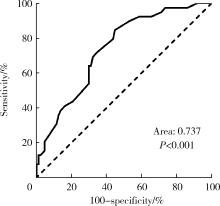
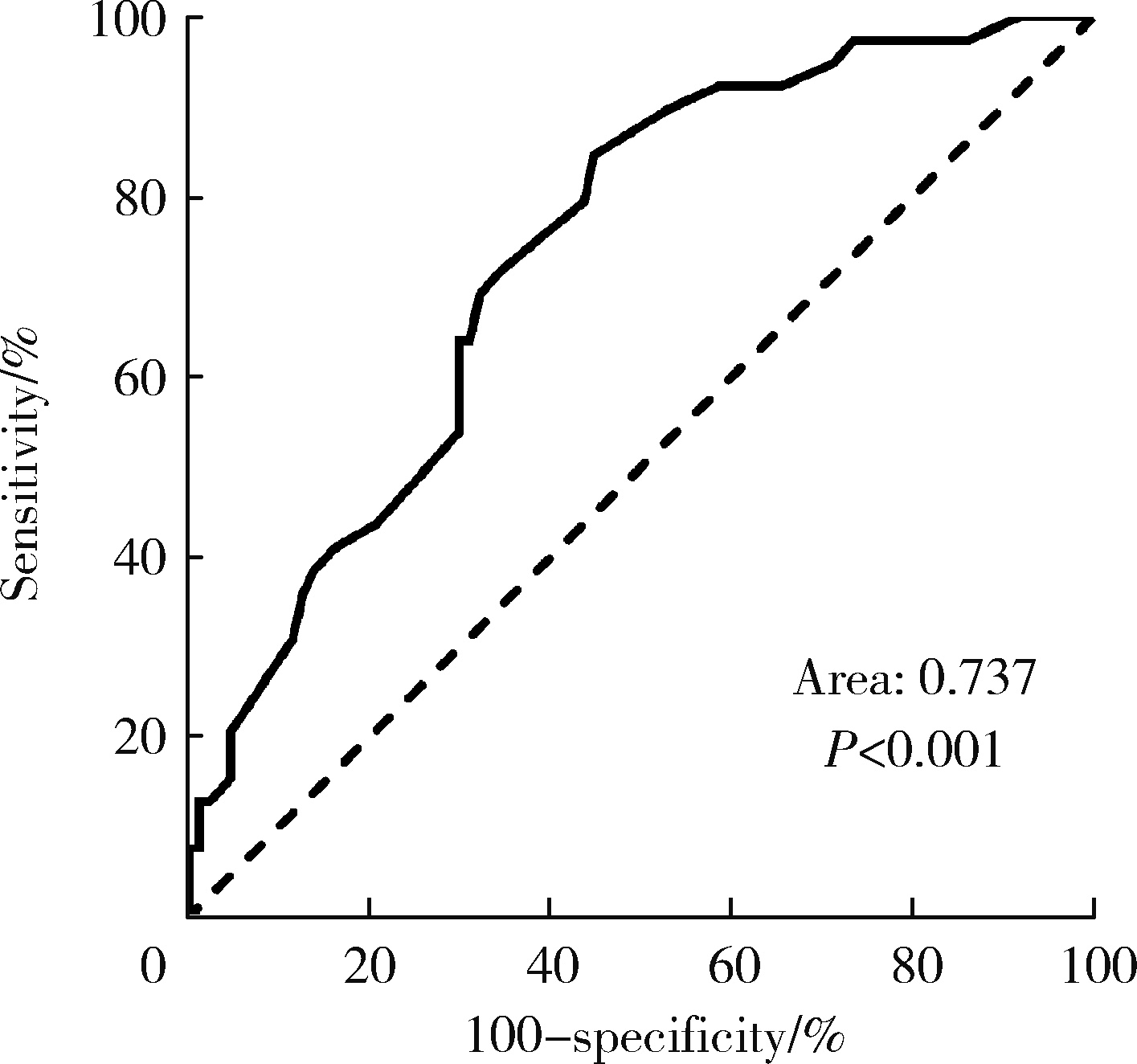
Objective: To explore the risk factors for acute kidney injury (AKI) in patients with stage 3 chronic kidney disease (CKD) after partial nephrectomy. Methods: The clinical data of 126 stage 3 CKD patients who underwent partial nephrectomy at Peking University Third Hospital from January 2013 to December 2025 were retrospectively analyzed. Demographic characteristics, comorbidities, surgical-related indicators, and laboratory data of the patients were collected. AKI was defined according to the Kidney Disease: Improving Global Outcomes (KDIGO) criteria. Univariate and multivariate regression analyses were used to identify the independent risk factors for postoperative AKI, and the predictive cutoff value of the receiver operating characteristic (ROC) curve was determined. Results: A total of 126 stage 3 CKD patients were included. The incidence of AKI after surgery was 31.0% (39/126). Univariate analysis showed that the proportion of robotic surgery was lower in the AKI group (12.8% vs. 33.3%, P=0.018), the duration of renal artery occlusion was longer (25 min vs. 18 min, P < 0.001), and the intraoperative blood loss was greater (20 mL vs. 50 mL, P=0.028). Multivariate Logistic regression analysis confirmed that the duration of renal artery occlusion (OR=1.105, 95%CI: 1.041-1.173, P=0.001) and intraoperative blood loss (OR=1.004, 95%CI: 1.000-1.007, P=0.046) were independent risk factors for postoperative AKI. ROC curve analysis showed that the area under the curve for predicting AKI by renal artery occlusion time was 0.737, and the optimal cutoff value was 18 min. The incidence of AKI was significantly higher in the patients with renal artery occlusion time ≥ 18 min than those with < 18 min (43.2% vs. 8.8%, P < 0.001). Conclusion: The incidence of AKI after partial nephrectomy in stage 3 CKD patients is relatively high. The duration of renal artery occlusion and intra-operative blood loss are independent risk factors for postoperative AKI. Controlling the renal artery occlusion time within 18 min and minimizing intraoperative blood loss can help reduce the risk of AKI in this high-risk population after surgery.

Key words: Chronic kidney disease stage 3, Partial nephrectomy, Acute kidney injury, Risk factors, Renal artery occlusion time

CLC Number: 

  • R699.2

Table 1

Comparison of baseline data between AKI group and non-AKI group"

Variable Non-AKI group (n=87) AKI group (n=39) χ2/t/Z P
Gender, n (%) 0.220 0.652
    Male 68 (78.2) 29 (74.4)
    Female 19 (21.8) 10 (25.6)
Age/years, $\bar x \pm s$ 70.34±9.01 68.46±8.48 1.104 0.272
BMI/(kg/m2), $\bar x \pm s$ 24.06±2.82 23.72±3.98 0.542 0.589
Symptom, n (%) 0.712 0.512
    Asymptomatic 7 (8.0) 5 (12.8)
    Symptomatic 80 (92.0) 34 (87.2)
Comorbidity, n (%)
    Hypertension 61 (70.1) 29 (74.4) 0.238 0.675
    Diabetes 32 (36.8) 12 (30.8) 0.428 0.551
    Cardiovascular diseases 23 (26.4) 12 (30.8) 0.252 0.669
ASA grade, n (%) 2.048 0.359
    Ⅰ 4 (4.6) 0 (0)
    Ⅱ 63 (72.4) 31 (79.5)
    Ⅲ-Ⅳ 20 (23.0) 8 (20.5)
Surgical approach, n (%) 5.751 0.018
    Laparoscopic 58 (66.7) 34 (87.2)
    Robotic 29 (33.3) 5 (12.8)
Tumor side, n (%) 0.301 0.695
    Left 40 (46.0) 19 (51.4)
    Right 47 (54.0) 18 (48.6)
Tumor size/cm, $\bar x \pm s$ 3.11±1.97 3.47±1.13 -1.081 0.282
R.E.N.A.L. scores, n (%) 3.199 0.202
    Low risk 35 (40.2) 10 (25.6)
    Moderate risk 35 (40.2) 22 (56.4)
    High risk 17 (19.6) 7 (18.0)
Duration of the surgery/min, M (P25, P75) 136 (112, 169) 155 (120, 196) -1.887 0.059
Duration of renal artery occlusion/min, M (P25, P75) 18 (13, 25) 25 (20, 30) -4.257 < 0.001
Intraoperative bleeding/mL, M (P25, P75) 20 (10, 50) 50 (20, 200) -2.200 0.028
Complication, n (%) 5 (5.7) 4 (10.3) 0.826 0.457
Length of hospital stay/d, M (P25, P75) 6 (5, 7) 6 (4, 7) -0.379 0.705
Pathologic subtype, n (%) 0.177 0.916
    ccRCC 67 (77.0) 31 (79.5)
    Non-ccRCC 16 (18.4) 6 (15.4)
    Benign tumor 4 (4.6) 2 (5.1)
Baseline creatinine/(μmol/L), $\bar x \pm s$ 113.03±27.42 120.82±49.04 -1.139 0.257
CKD stage, n (%) 0.860 0.381
    CKD 3a 67 (77.0) 27 (69.2)
    CKD 3b 20 (23.0) 12 (30.8)
Postoperative creatinine/(μmol/L), $\bar x \pm s$ 114.33±27.42 185.56±102.11 -5.850 < 0.001
Absolute increase in creatinine/(μmol/L), $\bar x \pm s$ 1.30±27.21 64.74±84.25 -6.747 < 0.001
Creatinine elevation rate/%, $\bar x \pm s$ 0.98±15.72 57.43±92.16 -5.561 < 0.001

Table 2

Multivariate Logistic regression model analysis of AKI occurrence after partial nephrectomy"

Variable OR 95%CI Wald Pa
Surgical approach
  Laparoscopic Reference Reference Reference
  Robotic 0.302 0.086-1.067 3.458 0.063
Duration of renal artery occlusion 1.105 1.041-1.173 10.758 0.001
Intraoperative bleeding 1.004 1.000-1.007 16.788 0.046

Figure 1

ROC curve of the relationship between the duration of renal artery occlusion and the occurrence of AKI AKI, acute kidney injury; ROC, receiver operating characteristic."

1
Bex A , Abu Ghanem Y , Albiges L , et al. European association of urology guidelines on renal cell carcinoma: The 2025 update[J]. Eur Urol, 2025, 87 (6): 683- 696.

doi: 10.1016/j.eururo.2025.02.020
2
Saitta C , Afari JA , Autorino R , et al. Development of a novel score (RENSAFE) to determine probability of acute kidney injury and renal functional decline post surgery: A multicenter analysis[J]. Urol Oncol, 2023, 41 (12): 487.e15- 487.e23.

doi: 10.1016/j.urolonc.2023.09.015
3
Yang X , Zhang T , Zhou H , et al. Acute kidney injury as an independent predicting factor for stage 3 or higher chronic kidney disease after nephrectomy[J]. Urol Oncol, 2023, 41 (3): 149.e1- 149.e9.

doi: 10.1016/j.urolonc.2022.10.011
4
Kong H , Yin QL , Li M , et al. Effect of perioperative dexmedetomidine on acute kidney injury after partial nephrectomy: A single-centre, randomised, double-blind, placebo-controlled trial[J]. Br J Anaesth, 2025, 135 (5): 1212- 1222.

doi: 10.1016/j.bja.2025.08.010
5
Rajan S , Babazade R , Govindarajan SR , et al. Perioperative factors associated with acute kidney injury after partial nephrectomy[J]. Br J Anaesth, 2016, 116 (1): 70- 76.

doi: 10.1093/bja/aev416
6
Bravi CA , Vertosick E , Benfante N , et al. Impact of acute kidney injury and its duration on long-term renal function after partial nephrectomy[J]. Eur Urol, 2019, 76 (3): 398- 403.

doi: 10.1016/j.eururo.2019.04.040
7
Suer E , Akpinar C , Izol V , et al. Predicting factors of acute kidney injury after partial nephrectomy and its impact on long-term renal function: A multicentre study of the Turkish Urooncology Association[J]. Int J Clin Pract, 2021, 75 (11): e14751.
8
Obrecht F , Padevit C , Froelicher G , et al. The association of ischemia type and duration with acute kidney injury after robot-assisted partial nephrectomy[J]. Curr Oncol, 2023, 30 (11): 9634- 9646.

doi: 10.3390/curroncol30110698
9
程改平, 秦伟, 刘婧, 等. 《KDOQI慢性肾脏病营养临床实践指南2020更新版》解读[J]. 中国全科医学, 2021, 24 (11): 1325- 1332.
10
Shu F , Liu Z , Duan P , et al. A predictive model for surgical approach selection in robotic partial nephrectomy and its perioperative outcomes based on single-center retrospective data[J]. Cancer Med, 2025, 14 (3): e70625.

doi: 10.1002/cam4.70625
11
邱敏, 宗有龙, 王滨帅, 等. 腹腔镜肾部分切除术治疗中高复杂程度肾肿瘤的效果[J]. 北京大学学报(医学版), 2023, 55 (5): 833- 837.

doi: 10.19723/j.issn.1671-167X.2023.05.009
12
张中元, 唐琦, 李学松, 等. R.E.N.A.L.肾肿瘤评分系统用于保留肾单位手术的临床分析[J]. 北京大学学报(医学版), 2012, 44 (4): 539- 543.
13
付帅, 李晓宁. 肾小球滤过率计算公式研究进展: 从Cockcroft-Gault公式到FAS公式[J]. 临床肾脏病杂志, 2020, 20 (1): 73- 77.
14
郭锦洲. 改善全球肾脏病预后组织(KDIGO)临床实践指南: 急性肾损伤[J]. 肾脏病与透析肾移植杂志, 2013, 22 (1): 57- 60.
15
Bravi CA , Mari A , Larcher A , et al. Toward individualized approaches to partial nephrectomy: Assessing the correlation between ischemia time and patient health status (RECORD2 project)[J]. Eur Urol Oncol, 2021, 4 (4): 645- 650.

doi: 10.1016/j.euo.2020.05.009
16
Bonventre JV , Yang L . Cellular pathophysiology of ischemic acute kidney injury[J]. J Clin Invest, 2011, 121 (11): 4210- 4221.

doi: 10.1172/JCI45161
17
Holderied A , Kraft F , Marschner JA , et al. "Point of no return" in unilateral renal ischemia reperfusion injury in mice[J]. J Biomed Sci, 2020, 27 (1): 34.

doi: 10.1186/s12929-020-0623-9
18
Schmid M , Abd-El-Barr AER , Gandaglia G , et al. Predictors of 30-day acute kidney injury following radical and partial nephrectomy for renal cell carcinoma[J]. Urol Oncol, 2014, 32 (8): 1259- 1266.

doi: 10.1016/j.urolonc.2014.05.002
19
Li Q , Huang Y , Zhang L , et al. Perioperative anemia predicts kidney injury after partial nephrectomy[J]. Investig Clin Urol, 2022, 63 (5): 514- 522.

doi: 10.4111/icu.20220160
20
Gumbert SD , Kork F , Jackson ML , et al. Perioperative acute kidney injury[J]. Anesthesiology, 2020, 132 (1): 180- 204.

doi: 10.1097/ALN.0000000000002968
21
Goren O , Matot I . Update on perioperative acute kidney injury[J]. Curr Opin Crit Care, 2016, 22 (4): 370- 378.
22
Karkouti K . Transfusion and risk of acute kidney injury in cardiac surgery[J]. Br J Anaesth, 2012, 109 (Suppl 1): i29- i38.
23
Thomas AA , Demirjian S , Lane BR , et al. Acute kidney injury: Novel biomarkers and potential utility for patient care in urology[J]. Urology, 2011, 77 (1): 5- 11.

doi: 10.1016/j.urology.2010.05.004
24
李强, 李铁军, 刘亮程, 等. 机器人辅助腹腔镜下阻断与不阻断肾血管肾部分切除术比较的系统评价和Meta分析[J]. 临床泌尿外科杂志, 2020, 35 (9): 709- 715.
[1] Hui WEI, Jingfeng ZHANG, Zhongqiang YAO, Jinxia ZHAO. Clinical characteristics and relevant factors of rheumatoid arthritis patients with anemia of chronic disease [J]. Journal of Peking University (Health Sciences), 2026, 58(2): 307-312.
[2] Jie ZHAO, Chun FU, Xiujuan ZHAO, Haiyan XUE, Shu LI, Zhenzhou WANG, Fengxue ZHU. Risk factors for ventilator-associated pneumonia in patients with chest trauma in intensive care unit [J]. Journal of Peking University (Health Sciences), 2026, 58(2): 351-358.
[3] Bowen LI, Qiang ZHANG, Yixin SUN. Establishment and validation of a risk prediction model for scoliosis after Nuss procedure in children and young adults with pectus excavatum [J]. Journal of Peking University (Health Sciences), 2025, 57(5): 941-946.
[4] Xiaoyong YANG, Fan ZHANG, Lulin MA, Cheng LIU. Clinical characteristics and influencing factors of extraglandular invasion of prostatic ductal adenocarcinoma [J]. Journal of Peking University (Health Sciences), 2025, 57(5): 956-960.
[5] Zezhen ZHOU, Liyuan GE, Fan ZHANG, Shaohui DENG, Ye YAN, Hongxian ZHANG, Guoliang WANG, Lei LIU, Yi HUANG, Shudong ZHANG. A retrospective matching study of partial nephrectomy and radical nephrectomy for pathological T3a stage renal cell carcinoma [J]. Journal of Peking University (Health Sciences), 2025, 57(4): 704-710.
[6] Wei LIU, Wen GUO, Zhe GUO, Chunyan LI, Yunlong LI, Siqi LIU, Liang ZHANG, Hui SONG. Risk factors associated with non-radiographic bone erosion in patients with gout [J]. Journal of Peking University (Health Sciences), 2025, 57(4): 735-739.
[7] Mengxi LU, Qiuping LIU, Tianjing ZHOU, Xiaofei LIU, Yexiang SUN, Peng SHEN, Hongbo LIN, Xun TANG, Pei GAO. Association of triglyceride-glucose index and cardiovascular disease in a community-based Chinese cohort [J]. Journal of Peking University (Health Sciences), 2025, 57(3): 430-435.
[8] Huaqiu GUO, Zhe WANG, Xue YANG, Jie BAI. Clinical features and risk factors of patients with oral bleeding in dental emergency [J]. Journal of Peking University (Health Sciences), 2025, 57(1): 142-147.
[9] Minting DENG, Nan WANG, Bin XIA, Yuming ZHAO, Junxia ZHU. Factors associated with spontaneous re-eruption of traumatically intruded permanent anterior teeth in children and adolescents [J]. Journal of Peking University (Health Sciences), 2025, 57(1): 148-153.
[10] Yukai LI, Hongyan WANG, Liang LUO, Yun LI, Chun LI. Clinical significance of antiphospholipid antibodies in Behcet disease with thrombosis [J]. Journal of Peking University (Health Sciences), 2024, 56(6): 1036-1040.
[11] Yang TIAN, Yongzheng HAN, Jiao LI, Mingya WANG, Yinyin QU, Jingchao FANG, Hui JIN, Min LI, Jun WANG, Mao XU, Shenglin WANG, Xiangyang GUO. Incidence and risk factors of postoperative epidural hematoma following anterior cervical spine surgery [J]. Journal of Peking University (Health Sciences), 2024, 56(6): 1058-1064.
[12] Mingrui WANG, Jinhui LAI, Jiaxiang JI, Xinwei TANG, Haopu HU, Qi WANG, Kexin XU, Tao XU, Hao HU. Risk factors for decreased quality of life in patients with kidney stones predicted by the Chinese version of Wisconsin stone quality of life questionnaire [J]. Journal of Peking University (Health Sciences), 2024, 56(6): 1069-1074.
[13] Zhicun LI, Tianyu WU, Lei LIANG, Yu FAN, Yisen MENG, Qian ZHANG. Risk factors analysis and nomogram model construction of postoperative pathological upgrade of prostate cancer patients with single core positive biopsy [J]. Journal of Peking University (Health Sciences), 2024, 56(5): 896-901.
[14] Ye YAN,Xiaolong LI,Haizhui XIA,Xuehua ZHU,Yuting ZHANG,Fan ZHANG,Ke LIU,Cheng LIU,Lulin MA. Analysis of risk factors for long-term overactive bladder after radical prostatectomy [J]. Journal of Peking University (Health Sciences), 2024, 56(4): 589-593.
[15] Kewei CHEN,Zhuo LIU,Shaohui DENG,Fan ZHANG,Jianfei YE,Guoliang WANG,Shudong ZHANG. Clinical diagnosis and treatment of renal angiomyolipoma with inferior vena cava tumor thrombus [J]. Journal of Peking University (Health Sciences), 2024, 56(4): 617-623.
Viewed
Full text


Abstract

Cited

  Shared   
  Discussed   
No Suggested Reading articles found!