Journal of Peking University (Health Sciences) ›› 2026, Vol. 58 ›› Issue (4): 794-802. doi: 10.19723/j.issn.1671-167X.2026.04.016

Previous Articles     Next Articles

Development of a 36-gene signature for predicting recurrence in non-muscle-invasive bladder cancer and validation in a Chinese cohort

Liyuan DONG, Yun PENG, Yuxuan SONG, Xiaoyang LI, Yiqing DU*(), Tao XU   

  1. Department of Urology, Peking University People's Hospital, Beijing 00044, China
  • Received:2026-03-02 Online:2026-08-18 Published:2026-05-13
  • Contact: Yiqing DU
  • Supported by:
    the Noncommunicable Chronic Diseases-National Science and Technology Major Project(2024ZD0525700); the National Natural Science Foundation of China(82471866); the National Natural Science Foundation of China(82472912); the Beijing Natural Science Foundation(L252190)

RICH HTML


Abstract:

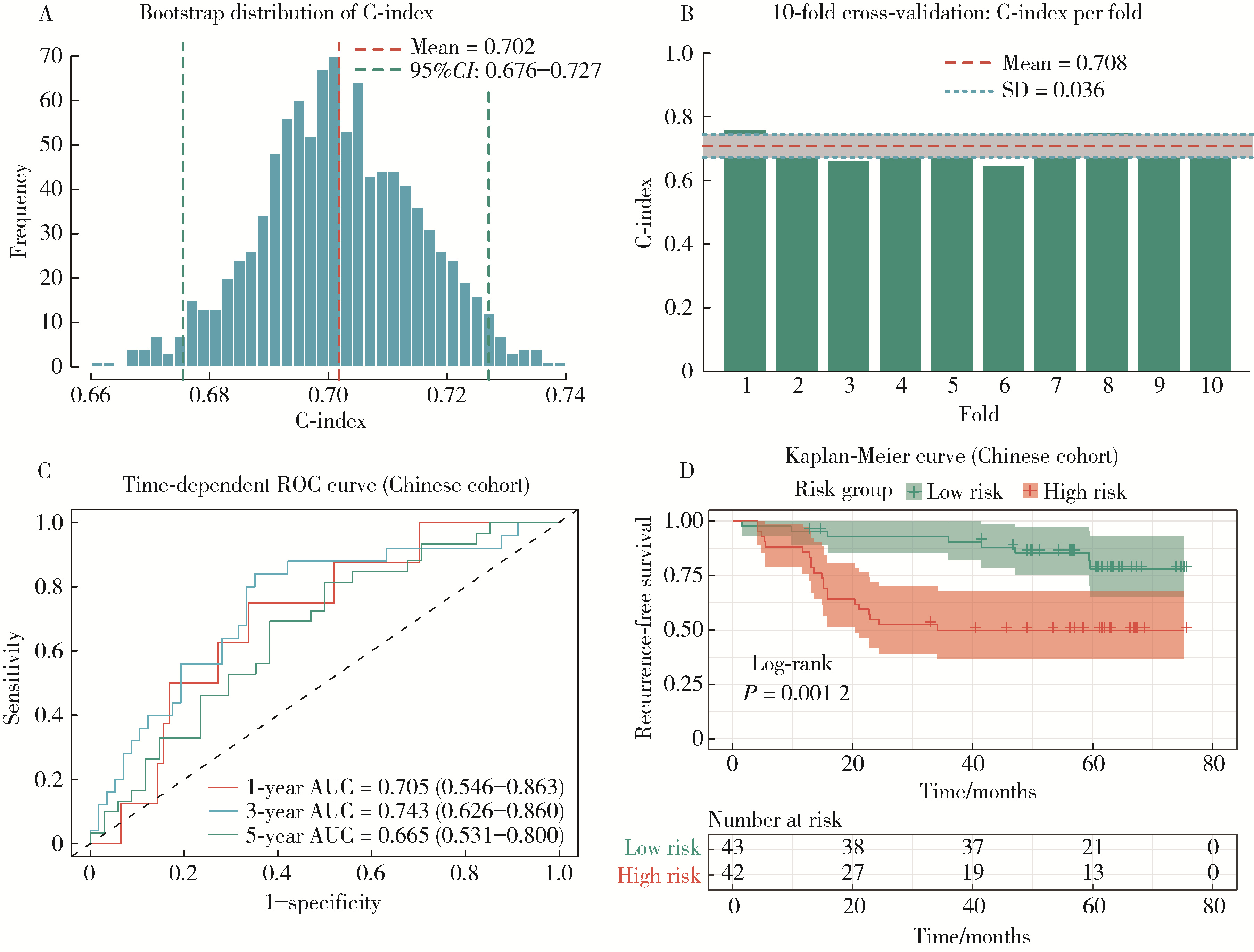
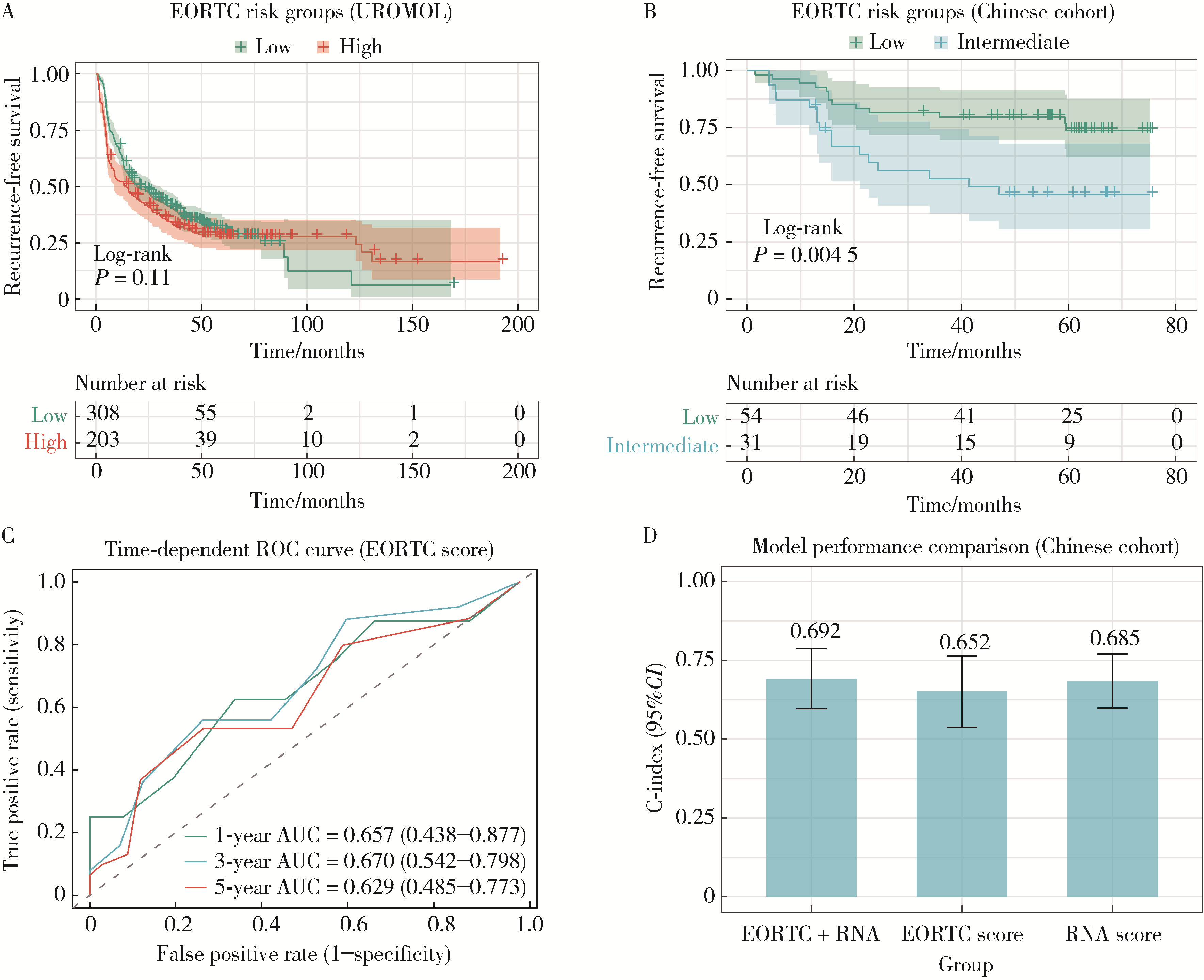
Objective: To develop a transcriptomic-based recurrence prediction model for non-muscle-invasive bladder cancer (NMIBC), to comprehensively validate its efficacy in an independent Chinese cohort, and to explore the underlying biological mechanisms driving tumor recurrence. Methods: Transcriptome profiling data from the multicenter European Urothelial Cancer Molecular Classification Consortium (UROMOL) cohort (n=535) were used as the training cohort. The least absolute shrinkage and selection operator (LASSO) Cox regression was employed to identify prognostic genes and construct a risk score model. Internal validation was strictly performed using Bootstrap resampling and 10-fold cross-validation. External validation was conducted in an independent Chinese cohort (n=85) from Peking University People ' s Hospital. Gene set enrichment analysis (GSEA) was applied to elucidate the distinct biological differences between high- and low-risk groups. Results: A 36-gene prognostic signature was identified from 12 170 genes to construct the risk score model. In the training cohort, the model achieved a concordance index (C-index) of 0.702 (95%CI: 0.664-0.740), with 1-, 3-, and 5-year areas under the receiver operating characteristic curve (AUC) of 0.782, 0.811, and 0.799, respectively. The 5-year recurrence-free survival (RFS) rates for the high- and low-risk groups were 35.2% and 72.8%, respectively (Log-rank P < 0.001). Internal validation via Bootstrap (C-index=0.702) and 10-fold cross-validation (C-index=0.708) demonstrated robust stability. In the independent Chinese validation cohort, the model maintained a favorable C-index of 0.685 (95%CI: 0.631-0.739), with 1-, 3-, and 5-year AUC of 0.705, 0.743, and 0.665, respectively. Its predictive performance was comparable to the traditional European Organization for Research and Treatment of Cancer (EORTC) risk score (C-index=0.652). GSEA revealed that the low-risk group was enriched in energy metabolism and protein homeostasis pathways, while the high-risk group was associated with extracellular matrix (ECM) remodeling and cell adhesion pathways. Conclusion: The 36-gene signature developed in this study demonstrates favorable predictive performance and stability across both the training and independent Chinese cohorts. While exhibiting comparable predictive efficacy to the traditional EORTC scoring system, the model serves as an independent prognostic factor that provides crucial supplementary molecular stratification. Furthermore, the model underscores the critical roles of energy metabolism and ECM remodeling in NMIBC recurrence, providing a valuable molecular basis for precise individualized management of NMIBC patients in China.

Key words: Non-muscle-invasive bladder cancer, Neoplasm recurrence, Prediction, Gene signatures, Cohort studies

CLC Number: 

  • R737.14

Table 1

Comparison of baseline clinical characteristics between the training and validation cohorts"

Variables Training cohort (n=535) Validation cohort (n=85) P
Age/years 69 (62.0-76.0) 67 (60.0-74.0) 0.065
Sex 0.541
  Male 414 (77.4) 66 (77.6)
  Female 121 (22.6) 19 (22.4)
T stage < 0.001
  CIS 3 (0.6) 1 (1.2)
  Ta 135 (25.2) 61 (71.8)
  T1 397 (74.2) 23 (27.1)
Tumor grade 0.881
  PUNLMP 0 (0) 11 (12.9)
  Low grade 320 (59.8) 34 (40.0)
  High grade 215 (40.2) 40 (47.1)
EORTC risk group 0.003
  Low risk 324 (60.6) 54 (63.5)
  Intermediate risk 0 (0) 31 (36.5)
  High risk 211 (39.4) 0 (0)

Figure 1

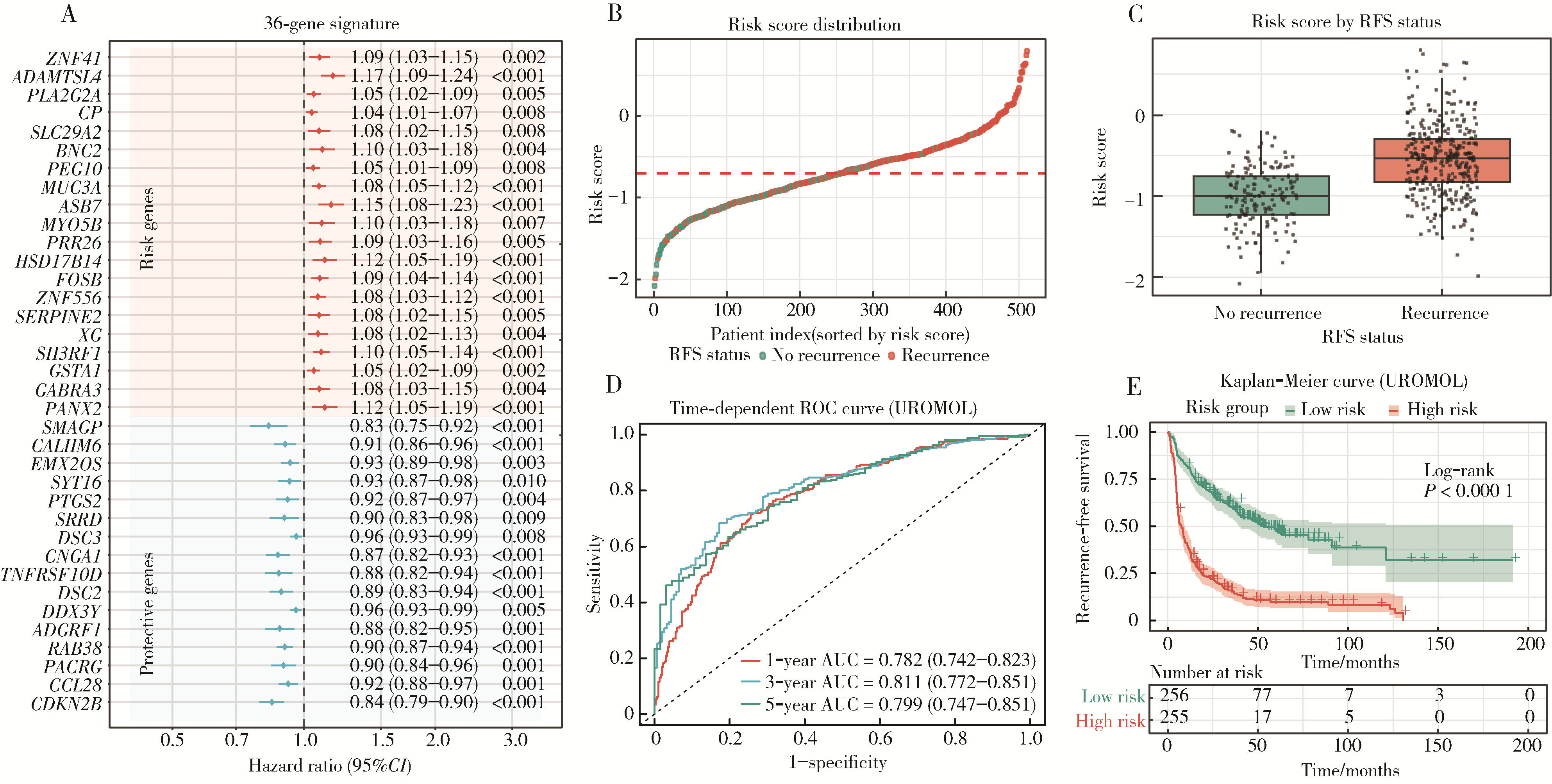
Construction and performance evaluation of the 36-gene signature A, forest plot of univariate Cox regression results for the 36 selected genes; B, RNA risk score distribution in the training cohort; C, comparison of risk scores between recurrent and non-recurrent patients; D, time-dependent ROC curves for 1-, 3-, and 5-year RFS prediction; E, Kaplan-Meier RFS curves for low-risk (green) and high-risk (red) groups based on the median cutoff. ROC, receiver operating characteristic; AUC, area under curve; RFS, recurrence-free survival; UROMOL, Urothelial Cancer Molecular Classification Consortium."

Figure 2

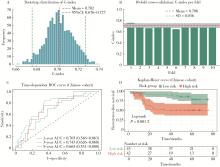
Internal validation and external validation of the model in an independent Chinese cohort A, Bootstrap distribution of concordance index (C-index) from 1 000 resamples; B, bar plot of C-index across 10-fold cross-validation; C, time-dependent ROC curves for 1-, 3-, and 5-year RFS prediction in the independent Chinese validation cohort; D, Kaplan-Meier RFS curves for low-risk (green) and high-risk (red) groups in the validation cohort. SD, standard deviation; Other abbreviations as in Figure 1."

Figure 3

Predictive efficacy in the 36-gene signature and EORTC score A, Kaplan-Meier RFS curves according to EORTC risk groups in the training cohort; B, Kaplan-Meier RFS curves according to EORTC risk groups in the validation cohort; C, time-dependent ROC curves for the EORTC score in the validation cohort; D, performance comparison across three models in the validation cohort. EORTC, European Organization for Research and Treatment of Cancer; C-index, concordance index; Other abbreviations as in Figure 1."

Figure 4

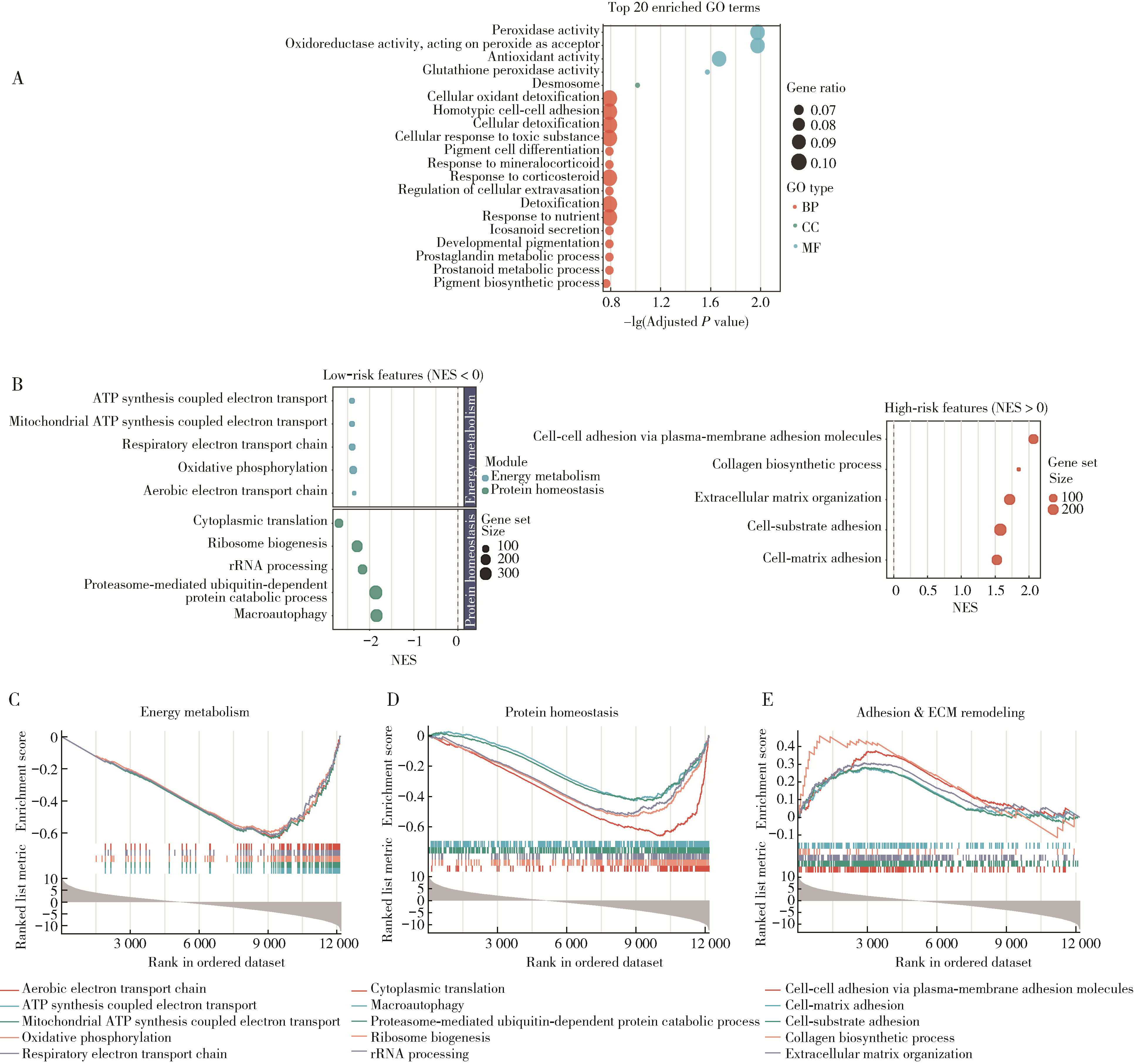
Biological pathways and mechanisms associated with the 36-gene signature A, GO enrichment analysis of the 36 signature genes (top 20 pathways ranked by adjusted P value shown); B, GSEA bubble plot in high-and low-risk patients; C, GSEA plot of the "Energy metabolism" pathway; D, GSEA plot of the "Protein homeostasis" pathway; E, GSEA plot of the "Adhesion and ECM remodeling" pathway. GO, gene ontology; NES, normalized enrichment score; GSEA, gene set enrichment analysis; ECM, extracellular matrix; BP, biological process; CC, cellular component; MF, molecular function."

1
Sung H , Ferlay J , Siegel RL , et al. Global cancer statistics 2020:GLOBOCAN estimates of incidence and mortality worldwide for 36 cancers in 185 countries[J]. CA A Cancer J Clin, 2021, 71 (3): 209- 249.
2
Babjuk M , Burger M , Capoun O , et al. European association of urology guidelines on non-muscle-invasive bladder cancer (Ta, T1, and carcinoma in situ)[J]. Eur Urol, 2022, 81 (1): 75- 94.

doi: 10.1016/j.eururo.2021.08.010
3
Sylvester RJ , van der Meijden APM , Oosterlinck W , et al. Predicting recurrence and progression in individual patients with stage Ta T1 bladder cancer using EORTC risk tables: A combined ana-lysis of 2596 patients from seven EORTC trials[J]. Eur Urol, 2006, 49 (3): 466- 477.

doi: 10.1016/j.eururo.2005.12.031
4
Ieda T , Muto S , Shimizu F , et al. Development and validation of a novel recurrence risk stratification for initial non-muscle invasive bladder cancer in Asia[J]. EBioMedicine, 2016, 12, 98- 104.

doi: 10.1016/j.ebiom.2016.08.051
5
Busato WFS Jr , Almeida GL , Ribas CAPM , et al. EORTC risk model to predict progression in patients with non-muscle-invasive bladder cancer: Is it safe to use in clinical practice?[J]. Clin Genitourin Cancer, 2016, 14 (2): 176- 182.

doi: 10.1016/j.clgc.2015.09.005
6
林瑞, 杜君, 张艳辉, 等. EORTC危险评分系统对T1期非肌层浸润性膀胱癌患者的预后评价[J]. 中国肿瘤临床, 2016, 43 (15): 655- 658.
7
Wang H , Ding W , Jiang G , et al. EORTC risk tables are more suitable for Chinese patients with nonmuscle-invasive bladder cancer than AUA risk stratification[J]. Medicine, 2018, 97 (36): e12006.

doi: 10.1097/MD.0000000000012006
8
Weinstein JN , Akbani R , Broom BM , et al. Comprehensive molecular characterization of urothelial bladder carcinoma[J]. Nature, 2014, 507 (7492): 315- 322.

doi: 10.1038/nature12965
9
Tibshirani R . The lasso method for variable selection in the cox model[J]. Stat Med, 1997, 16 (4): 385- 395.

doi: 10.1002/(SICI)1097-0258(19970228)16:4<385::AID-SIM380>3.0.CO;2-3
10
Hedegaard J , Lamy P , Nordentoft I , et al. Comprehensive transcriptional analysis of early-stage urothelial carcinoma[J]. Cancer Cell, 2016, 30 (1): 27- 42.

doi: 10.1016/j.ccell.2016.05.004
11
Wu T , Hu E , Xu S , et al. clusterProfiler 4.0:A universal enrichment tool for interpreting omics data[J]. Innovation (Camb), 2021, 2 (3): 100141.
12
Hu Q , Zhu Y , Mei J , et al. Extracellular matrix dynamics in tumor immunoregulation: From tumor microenvironment to immunotherapy[J]. J Hematol Oncol, 2025, 18 (1): 65.

doi: 10.1186/s13045-025-01717-y
13
Sleeboom JJF , van Tienderen GS , Schenke-Layland K , et al. The extracellular matrix as hallmark of cancer and metastasis: From biomechanics to therapeutic targets[J]. Sci Transl Med, 2024, 16 (728): eadg3840.

doi: 10.1126/scitranslmed.adg3840
14
Ding W , Chen Z , Gou Y , et al. Are EORTC risk tables suitable for Chinese patients with non-muscle-invasive bladder cancer?[J]. Cancer Epidemiol, 2014, 38 (2): 157- 161.

doi: 10.1016/j.canep.2014.02.001
15
Lindskrog SV , Prip F , Lamy P , et al. An integrated multi-omics analysis identifies prognostic molecular subtypes of non-muscle-invasive bladder cancer[J]. Nat Commun, 2021, 12 (1): 2301.

doi: 10.1038/s41467-021-22465-w
16
Aine M , Eriksson P , Liedberg F , et al. Biological determinants of bladder cancer gene expression subtypes[J]. Sci Rep, 2015, 5, 10957.

doi: 10.1038/srep10957
17
Zhang C , Yin H , Li T , et al. Identification of multicohort-based predictive signature for NMIBC recurrence reveals SDCBP as a novel oncogene in bladder cancer[J]. Ann Med, 2025, 57 (1): 2458211.

doi: 10.1080/07853890.2025.2458211
18
Zhang S , Wang C , Xia W , et al. Novel ferroptosis-related multigene prognostic models for patients with bladder cancer[J]. Int J Gen Med, 2021, 14, 8651- 8666.

doi: 10.2147/IJGM.S339996
19
Cambier S , Sylvester RJ , Collette L , et al. EORTC nomograms and risk groups for predicting recurrence, progression, and disease-specific and overall survival in non-muscle-invasive stage Ta-T1 urothelial bladder cancer patients treated with 1-3 years of maintenance bacillus Calmette-Guérin[J]. Eur Urol, 2016, 69 (1): 60- 69.

doi: 10.1016/j.eururo.2015.06.045
20
Warburg O . On the origin of cancer cells[J]. Science, 1956, 123 (3191): 309- 314.

doi: 10.1126/science.123.3191.309
21
Zhang Y , Yan H , Wei Y , et al. Decoding mitochondria ' s role in immunity and cancer therapy[J]. Biochim Biophys Acta Rev Cancer, 2024, 1879 (4): 189107.

doi: 10.1016/j.bbcan.2024.189107
22
Chen X , Hao B , Li D , et al. Melatonin inhibits lung cancer development by reversing the Warburg effect via stimulating the SIRT3/PDH axis[J]. J Pineal Res, 2021, 71 (2): e12755.

doi: 10.1111/jpi.12755
23
Jiang H , Tiche SJ , He CJ , et al. Restoring mitochondrial quantity and quality to reverse the Warburg effect and drive neuroblastoma differentiation[J]. Proc Natl Acad Sci USA, 2025, 122 (36): e2502483122.

doi: 10.1073/pnas.2502483122
24
Zhang C , Li J , Tang Q , et al. Targeting proteostasis for cancer therapy: Current advances, challenges, and future perspectives[J]. Mol Cancer, 2025, 24 (1): 265.

doi: 10.1186/s12943-025-02472-x
25
Zheng H , An M , Luo Y , et al. PDGFRα +ITGA11 + fibroblasts foster early-stage cancer lymphovascular invasion and lymphatic metastasis via ITGA11-SELE interplay[J]. Cancer Cell, 2024, 42 (4): 682- 700. e12.

doi: 10.1016/j.ccell.2024.02.002
26
Liang T , Tao T , Wu K , et al. Cancer-associated fibroblast-induced remodeling of tumor microenvironment in recurrent bladder cancer[J]. Adv Sci (Weinh, 2023, 10 (31): 2303230.
27
Mai Z , Lin Y , Lin P , et al. Modulating extracellular matrix stiffness: A strategic approach to boost cancer immunotherapy[J]. Cell Death Dis, 2024, 15 (5): 307.

doi: 10.1038/s41419-024-06697-4
28
Lee CJ , Jang TY , Jeon SE , et al. The dysadherin/MMP9 axis modifies the extracellular matrix to accelerate colorectal cancer progression[J]. Nat Commun, 2024, 15 (1): 10422.

doi: 10.1038/s41467-024-54920-9
29
Wang H , Zhu YN , Zhang S , et al. Transcriptome-wide analysis reveals potential roles of CFD and ANGPTL4 in fibroblasts regulating B cell lineage for extracellular matrix-driven clustering and novel avenues for immunotherapy in breast cancer[J]. Mol Med, 2025, 31 (1): 179.

doi: 10.1186/s10020-025-01237-y
30
Wang H , Sun H , Huang J , et al. Therapeutic targeting ERRγ suppresses metastasis via extracellular matrix remodeling in small cell lung cancer[J]. EMBO Mol Med, 2024, 16 (9): 2043- 2059.

doi: 10.1038/s44321-024-00108-z
[1] Meng FAN, Mengying WANG, Siyue WANG, Hexiang PENG, Xueheng WANG, Huangda GUO, Tianjiao HOU, Xueying QIN, Dafang CHEN, Yonghua HU, Jin LI, Yiqun WU, Tao WU. Association between indicators of arterial stiffness and all-cause mortality and cardiovascular deaths: A prospective cohort study [J]. Journal of Peking University (Health Sciences), 2025, 57(6): 1153-1159.
[2] Ye YAN,Xiaolong LI,Haizhui XIA,Xuehua ZHU,Yuting ZHANG,Fan ZHANG,Ke LIU,Cheng LIU,Lulin MA. Analysis of risk factors for long-term overactive bladder after radical prostatectomy [J]. Journal of Peking University (Health Sciences), 2024, 56(4): 589-593.
[3] Junqi SU,Xiaoying WANG,Zhiqiang SUN. Establishment and verification of a prognostic nomogram for survival of tongue squamous cell carcinoma patients who underwent cervical dissection [J]. Journal of Peking University (Health Sciences), 2024, 56(1): 120-130.
[4] Xiaoqiang LIU,Yin ZHOU. Risk factors of perioperative hypertension in dental implant surgeries with bone augmentation [J]. Journal of Peking University (Health Sciences), 2024, 56(1): 93-98.
[5] Qing PENG,Jia-jun LIU,Yan LIU,Hua SHANG,Guo TANG,Ya-xin HAN,Li LONG. Application of Padua prediction score and serum albumin level in evaluating venous thromboembolism in rheumatic inpatients [J]. Journal of Peking University (Health Sciences), 2023, 55(4): 625-630.
[6] Yun-jing ZHANG,Li-ying QIAO,Meng QI,Ying YAN,Wei-wei KANG,Guo-zhen LIU,Ming-yuan WANG,Yun-feng XI,Sheng-feng WANG. Development and validation of risk prediction model for new-onset cardiovascular diseases among breast cancer patients: Based on regional medical data of Inner Mongolia [J]. Journal of Peking University (Health Sciences), 2023, 55(3): 471-479.
[7] Tao MA,Yan-hui LI,Man-man CHEN,Ying MA,Di GAO,Li CHEN,Qi MA,Yi ZHANG,Jie-yu LIU,Xin-xin WANG,Yan-hui DONG,Jun MA. Associations between early onset of puberty and obesity types in children: Based on both the cross-sectional study and cohort study [J]. Journal of Peking University (Health Sciences), 2022, 54(5): 961-970.
[8] Yue WANG,Shuang ZHANG,Hong ZHANG,Li LIANG,Ling XU,Yuan-jia CHENG,Xue-ning DUAN,Yin-hua LIU,Ting LI. Clinicopathological features and prognosis of hormone receptor-positive/human epidermal growth factor receptor 2-negative breast cancer [J]. Journal of Peking University (Health Sciences), 2022, 54(5): 853-862.
[9] YUAN Lin-tian,MA Li-sha,LIU Run-yuan,QI wei,ZHANG Lu-dan,WANG Gui-yan,WANG Yu-guang. Computer simulation of molecular docking between methylene blue and some proteins of Porphyromonas gingivalis [J]. Journal of Peking University (Health Sciences), 2022, 54(1): 23-30.
[10] LIU Xiao-qiang,YANG Yang,ZHOU Jian-feng,LIU Jian-zhang,TAN Jian-guo. Blood pressure and heart rate changes of 640 single dental implant surgeries [J]. Journal of Peking University (Health Sciences), 2021, 53(2): 390-395.
[11] Huan-bin YU,Wen-jie WU,Xiao-ming LV,Yan SHI,Lei ZHENG,Jian-guo ZHANG. 125I seed brachytherapy for recurrent salivary gland carcinoma after external radiotherapy [J]. Journal of Peking University (Health Sciences), 2020, 52(5): 919-923.
[12] Huan LIU,Ying-dong HE,Jin-bo LIU,Wei HUANG,Na ZHAO,Hong-wei ZHAO,Xiao-hua ZHOU,Hong-yu WANG. Predictive value of vascular health indicators on newly cardiovascular events: Preliminary validation of Beijing vascular health stratification system [J]. Journal of Peking University (Health Sciences), 2020, 52(3): 514-520.
[13] Xun TANG,Du-dan ZHANG,Xiao-fei LIU,Qiu-ping LIU,Yang CAO,Na LI,Shao-ping HUANG,Hui-dong DOU,Pei GAO,Yong-hua HU. Application of the China-PAR stroke risk equations in a rural northern Chinese population [J]. Journal of Peking University (Health Sciences), 2020, 52(3): 444-450.
[14] Xu-chu ZHANG,Jian-hua ZHANG,Rong-fu WANG,Yan FAN,Zhan-li FU,Ping YAN,Guang-yu ZHAO,Yan-xia BAI. Diagnostic value of 18F-FDG PET/CT and tumor markers (CEA, CA19-9, CA24-2) in recurrence and metastasis of postoperative colorectal moderately differentiated adenocarcinoma [J]. Journal of Peking University(Health Sciences), 2019, 51(6): 1071-1077.
[15] Wen TANG,Jun-yi GAO,Xin-yu MA,Chao-he ZHANG,Lian-tao MA,Ya-sha WANG. Application of recurrent neural network in prognosis of peritoneal dialysis [J]. Journal of Peking University(Health Sciences), 2019, 51(3): 602-608.
Viewed
Full text


Abstract

Cited

  Shared   
  Discussed   
No Suggested Reading articles found!