Journal of Peking University (Health Sciences) ›› 2025, Vol. 57 ›› Issue (6): 1032-1041. doi: 10.19723/j.issn.1671-167X.2025.06.004

Previous Articles     Next Articles

Single-cell RNA sequencing of B cells reveals molecular typing in Sjögren syndrome

Wenhao LIN, Yang XIE, Fangqing WANG, Shuying WANG, Xiangjun LIU, Fanlei HU*(), Yuan JIA*()   

  1. Department of Rheumatology and Immunology, Peking University People ' s Hospital, Beijing 100044, China
  • Received:2025-08-18 Online:2025-12-18 Published:2025-10-23
  • Contact: Fanlei HU, Yuan JIA
  • Supported by:
    the National Key Research and Development Program of China(2022YFC3602000); the National Natural Science Foundation of China(81871281); the National Natural Science Foundation of China(32441099); the National Natural Science Foundation of China(82371807)

RICH HTML


Abstract:

Objective: To establish a molecular classification framework for Sjögren syndrome (SS) by stratifying patients into distinct subtypes through unsupervised clustering of B cell single-cell RNA sequencing (scRNA-seq). This study characterizes subtype-specific gene signatures to construct protein-protein interaction (PPI) networks, thereby elucidating core regulatory mechanisms and potential therapeutic targets. Concurrently, it defines the clinical heterogeneity of SS by profiling autoantibodies and B-cell subset distributions across subtypes. Methods: The scRNA-seq data from 24 SS patients and 4 healthy controls were obtained from the Gene Expression Omnibus (GEO) database. We constructed a B cell atlas and identified differential gene expression profiles between SS and healthy controls B cells. Unsupervised clustering was applied to stratify SS patients into different molecular subtypes. Functional enrichment analysis of subtype-specific gene signatures was performed to infer associated biological processes/pathways. PPI networks were constructed using the STRING database and Cytoscape software to identify core functions and potential therapeutic targets for subtype-specific genes. The prevalence of autoantibodies and proportions of B cell subsets were statistically analyzed across subtypes. Results: The B cells were classified into eight subsets: transitional B cell, naïve B cell, memory B cell, double negative 1 (DN1) B cell, double negative 2 (DN2) B cell, VAV3+IRF1+ B cell, GP9+ B cell, and plasma cell. The FindAllMarkers function identified 792 differentially expressed genes (DEGs) between the SS patients and healthy controls. Unsupervised clustering stratified patients into three subtypes: (1) Inter-feron-dominant subtype characterized by enrichment in type Ⅰ/Ⅱ interferon and non-canonical nuclear factor kappa-B (NF-κB) signaling pathways. This subtype showed the highest proportions of naïve B cells and transitional B cells, along with the highest anti-Sjögren syndrome antigen A (SSA)/Sjögren syndrome antigen B (SSB) positivity. (2) B cell activation subtype characterized by enrichment in Fc receptor and B cell receptor signaling pathways. This subtype exhibited the highest proportions of memory B cells and DN1 B cells. (3) Endoplasmic reticulum stress subtype characterized by enrichment in protein folding and endoplasmic reticulum-associated degradation pathways. This subtype was marked by the highest proportion of VAV3+IRF1+ B cells. PPI networks identified subtype-specific hub genes regulating these core functions. Conclusion: Stratification of SS patients through clustering of B cell DEGs successfully defined three molecular subtypes (interferon-dominant, B cell activation, and endoplasmic reticulum stress subtypes). Each subtype exhibits distinct autoantibody profiles and B cell subset distributions. This molecular typing framework advances our understanding of SS heterogeneity and provides actionable insights for targeted therapy development.

Key words: Sjögren syndrome, B-lymphocyte subsets, Single-cell sequencing, Cluster analysis, Molecular typing

CLC Number: 

  • R593.2

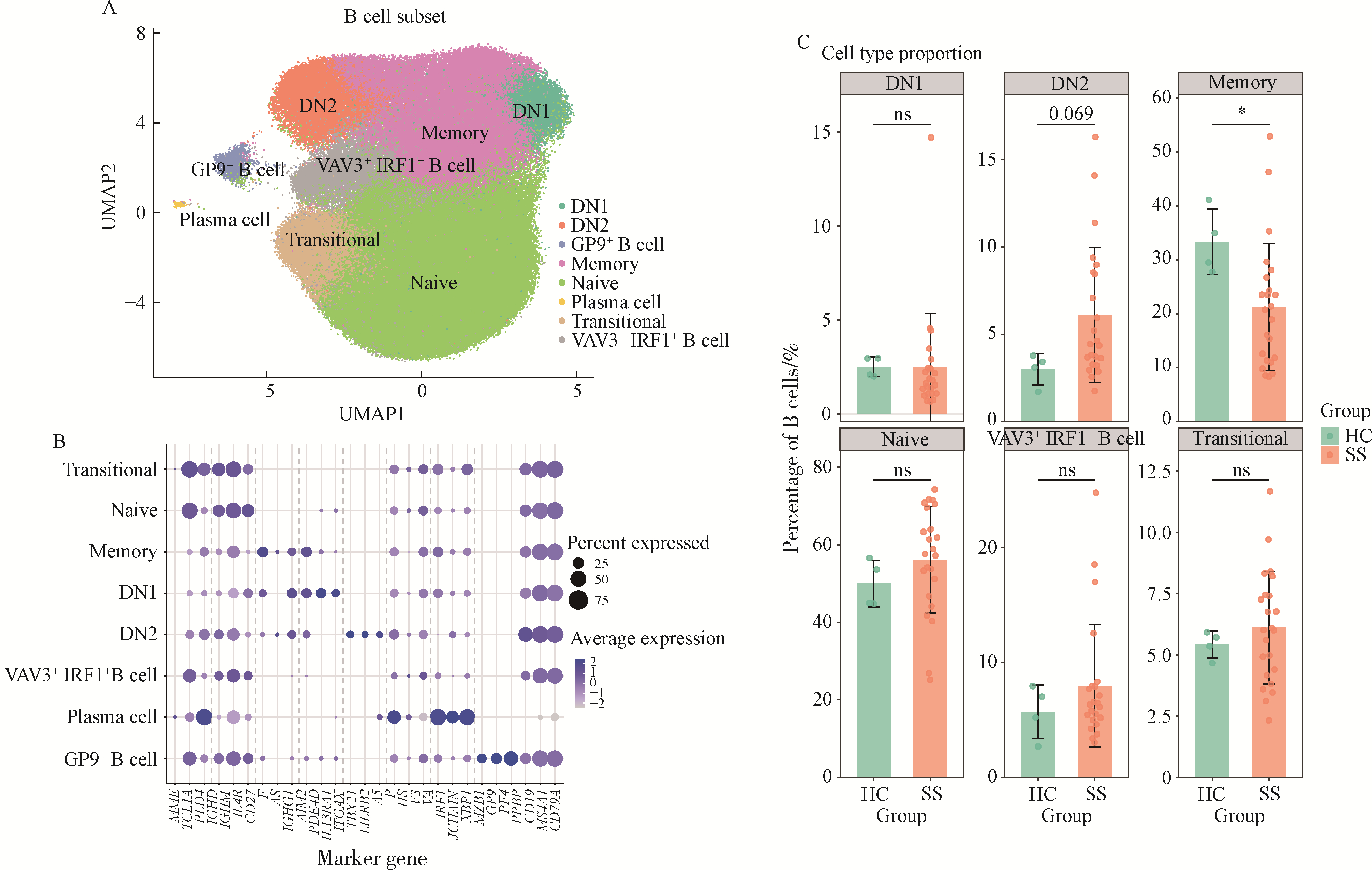
Figure 1

Identification and molecular characterization of B cell subsets of SS patients and HC A, UMAP plots of B cell subsets; B, dot plot showing marker gene expression across B cell subsets; C, comparative analysis of B cell subsets between SS patients and HC. *P≤0.05; ns, no significant, P>0.05. SS, Sjögren syndrome; HC, healthy control; UMAP, uniform manifold approximation and projection; DN1, double negative 1 B cell; DN2, double negative 2 B cell; Memory, memory B cell; Naive, naïve B cell; Transitional, transitional B cell."

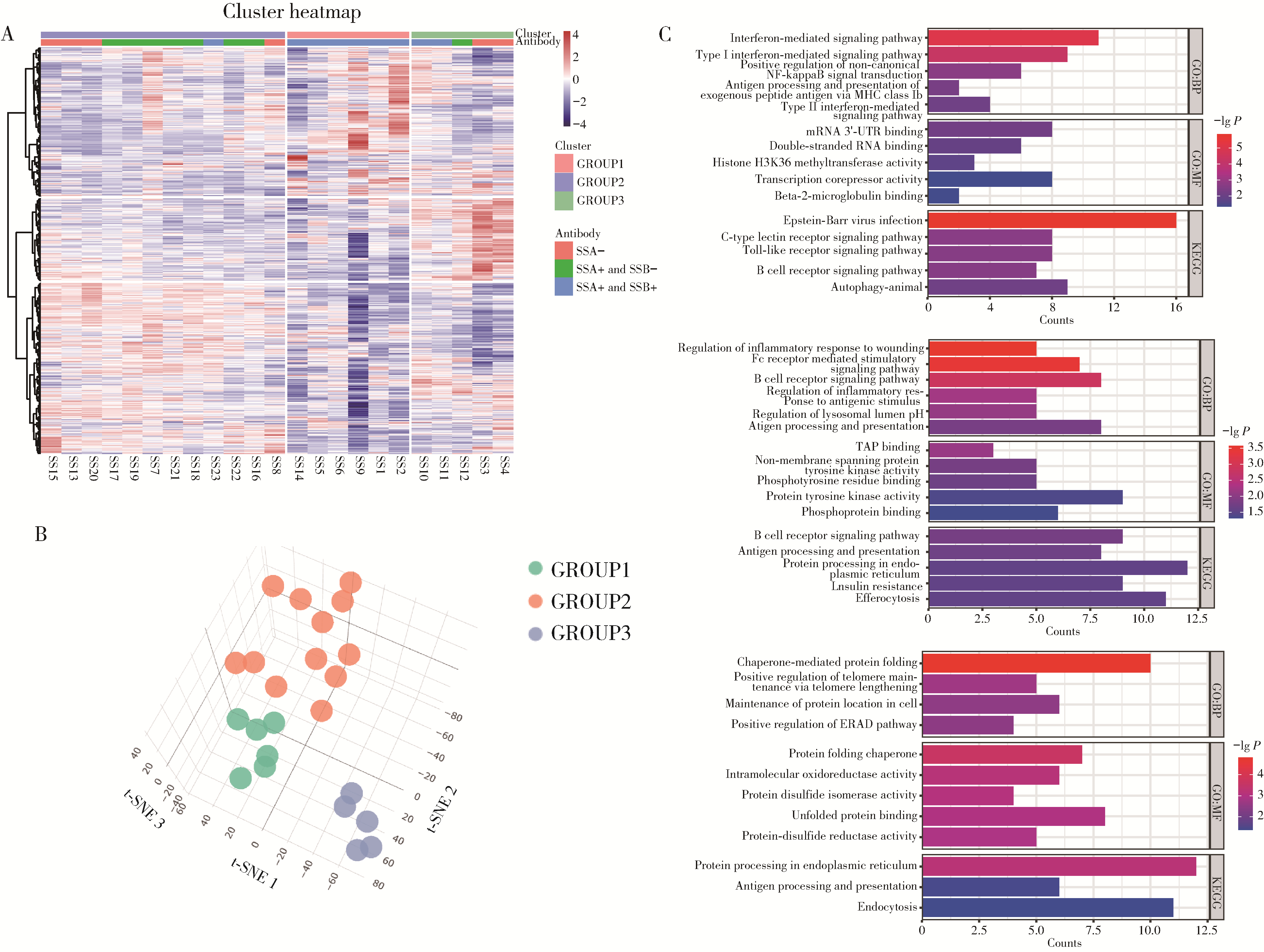
Figure 2

Molecular subtyping and enrichment analysis of patients based on differentially expressed genes A, integrated visualization from unsupervised consensus clustering on DEGs: molecular subtypes and anti-SSA/anti-SSB antibody status in SS patients; B, 3D t-SNE visualization of transcriptional stratification in SS subtypes; C, enrichment analysis across SS molecular subtypes via GO analysis (including biological processes and molecular functions) and KEGG pathway analysis. SS, Sjögren syndrome; SSA, Sjögren syndrome antigen A; SSB, Sjögren syndrome antigen B; DEGs, differentially expressed genes; t-SNE, t-distributed stochastic neighbor embedding; GO, Gene Ontology; BP, Biological Processes; MF, Molecular Functions; KEGG, Kyoto Encyclopedia of Genes and Genomes; GROUP1, interferon-dominant subtype; GROUP2, B cell activation subtype; GROUP3, endoplasmic reticulum stress subtype; Counts, the number of DEGs enriched in each GO or KEGG term."

Figure 3

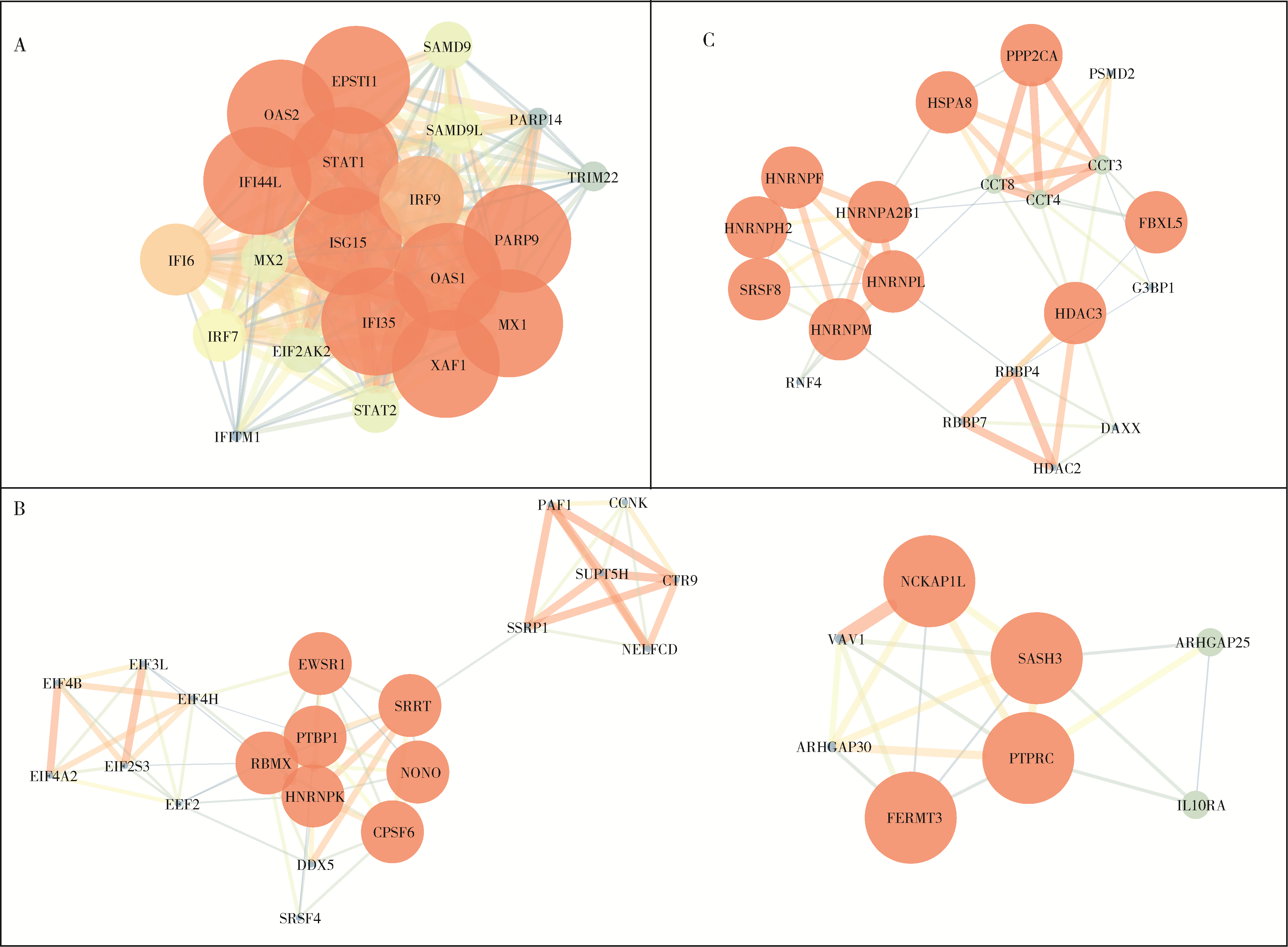
Interaction network of MCODE-identified core functional modules A, interferon-dominant subtype; B, B cell activation subtype; C, endoplasmic reticulum stress subtype. MCODE, Molecular Complex Detection."

Figure 4

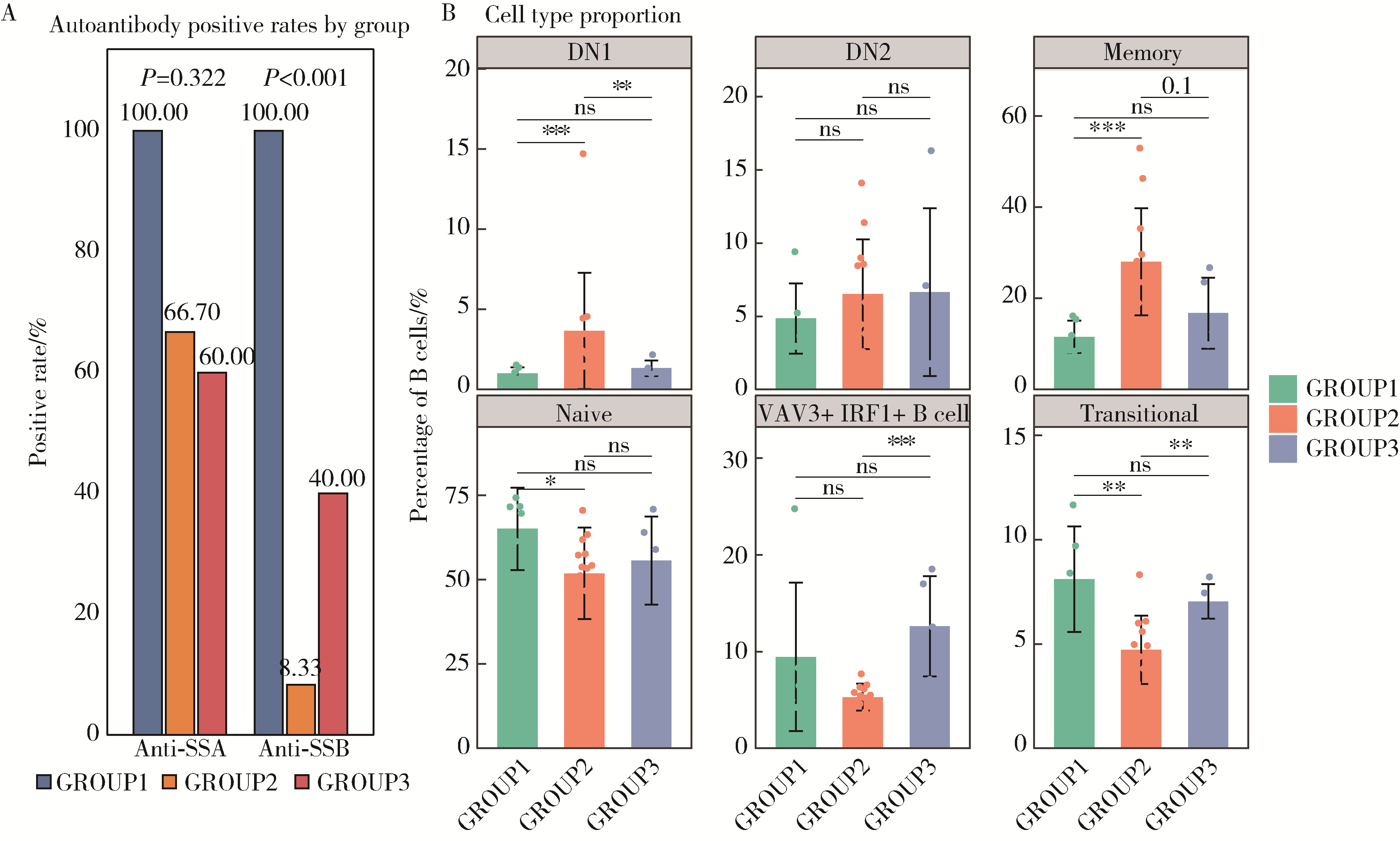
Comparison of serological autoantibodies and peripheral blood B cell subset characteristics among different subtypes of SS patients A, subtype-specific positivity rates of anti-SSA and anti-SSB antibodies; B, proportions of peripheral blood B cell subsets within total B cells in SS subtypes. *P≤0.05; * *P≤0.01; * * *P≤0.001; ns, no significant, P>0.05. GROUP1, interferon-dominant subtype; GROUP2, B cell activation subtype; GROUP3, endoplasmic reticulum stress subtype; DN1, double negative 1 B cell; DN2, double negative 2 B cell; Memory, memory B cell; Naive, naïve B cell; Transitional, transitional B cell; SS, Sjögren syndrome; SSA, Sjögren syndrome antigen A; SSB, Sjögren syndrome antigen B; HC, healthy control."

Table 1

Comparison of positive rates of anti-SSA and anti-SSB antibodies in three groups of patients"

Items Anti-SSA antibodies positive rate (positive/total) Anti-SSB antibodies positive rate (positive/total)
GROUP1 100.00% (6/6) 100.00% (6/6)
GROUP2 66.67% (8/12) 8.33% (1/12)
GROUP3 60.00% (3/5) 40.00% (2/5)
P value 0.322 < 0.001

Table 2

Distribution characteristics of B cell subsets in different subtypes of SS patients"

B cell subset GROUP1 GROUP2 GROUP3 GROUP1 vs. GROUP2 GROUP1 vs. GROUP3 GROUP2 vs. GROUP3
DN1/%, $\bar x \pm s$ 1.01±0.38 3.66±3.63 1.33±0.49 < 0.001 0.329 0.004
DN2/%, $\bar x \pm s$ 4.85±2.39 6.51±3.74 6.65±5.72 0.553 0.792 0.879
Memory/%, $\bar x \pm s$ 11.6±3.51 28.01±11.75 16.75±7.80 < 0.001 0.247 0.104
Naive/%, $\bar x \pm s$ 65.03±12.20 51.80±13.53 55.61±13.01 0.041 0.177 0.574
VAV3+IRF1+B cell/%, $\bar x \pm s$ 9.46±7.67 5.29±1.38 12.62±5.16 0.124 0.329 < 0.001
Transitional/%, $\bar x \pm s$ 8.10±2.53 4.72±1.64 7.04±0.83 < 0.001 0.329 < 0.001
1
中华医学会风湿病学分会. 干燥综合征诊断及治疗指南[J]. 中华风湿病学杂志, 2010, 14(11): 766- 768.
2
Nocturne G , Mariette X . B cells in the pathogenesis of primary Sjögren syndrome[J]. Nat Rev Rheumatol, 2018, 14(3): 133- 145.

doi: 10.1038/nrrheum.2018.1
3
Blair PA , Noreña LY , Flores-Borja F , et al. CD19(+)CD24(hi)CD38(hi) B cells exhibit regulatory capacity in healthy individuals but are functionally impaired in systemic lupus erythematosus patients[J]. Immunity, 2010, 32(1): 129- 140.

doi: 10.1016/j.immuni.2009.11.009
4
Arvidsson G , Czarnewski P , Johansson A , et al. Multimodal single-cell sequencing of B cells in primary Sjögren ' s syndrome[J]. Arthritis Rheumatol, 2024, 76(2): 255- 267.

doi: 10.1002/art.42683
5
Hubbard EL , Bachali P , Kingsmore KM , et al. Analysis of transcriptomic features reveals molecular endotypes of SLE with clinical implications[J]. Genome Med, 2023, 15(1): 84.

doi: 10.1186/s13073-023-01237-9
6
Zhao J , Wei K , Shi Y , et al. Identification of immunological characterization and anoikis-related molecular clusters in rheumatoid arthritis[J]. Front Mol Biosci, 2023, 10, 1202371.

doi: 10.3389/fmolb.2023.1202371
7
Zeng D , Yu Y , Qiu W , et al. Immunotyping the tumor microenvironment reveals molecular heterogeneity for personalized immunotherapy in cancer[J]. Adv Sci, 2025, 12(25): 2417593.

doi: 10.1002/advs.202417593
8
Korsunsky I , Millard N , Fan J , et al. Fast, sensitive and accurate integration of single-cell data with Harmony[J]. Nat Methods, 2019, 16(12): 1289- 1296.

doi: 10.1038/s41592-019-0619-0
9
Slovin S , Carissimo A , Panariello F , et al. Single-cell RNA sequencing analysis: A step-by-step overview[J]. Methods Mol Biol, 2021, 2284, 343- 365.
10
Butler A , Hoffman P , Smibert P , et al. Integrating single-cell transcriptomic data across different conditions, technologies, and species[J]. Nat Biotechnol, 2018, 36(5): 411- 420.

doi: 10.1038/nbt.4096
11
Szklarczyk D , Kirsch R , Koutrouli M , et al. The STRING database in 2023: Protein-protein association networks and functional enrichment analyses for any sequenced genome of interest[J]. Nucleic Acids Res, 2023, 51(D1): D638- D646.

doi: 10.1093/nar/gkac1000
12
Shannon P , Markiel A , Ozier O , et al. Cytoscape: A software environment for integrated models of biomolecular interaction networks[J]. Genome Res, 2003, 13(11): 2498- 2504.

doi: 10.1101/gr.1239303
13
Bader GD , Hogue CWV . An automated method for finding mole-cular complexes in large protein interaction networks[J]. BMC Bioinformatics, 2003, 4, 2.

doi: 10.1186/1471-2105-4-2
14
Tarn JR , Howard-Tripp N , Lendrem DW , et al. Symptom-based stratification of patients with primary Sjögren ' s syndrome: Multi-dimensional characterisation of international observational cohorts and reanalyses of randomised clinical trials[J]. Lancet Rheumatol, 2019, 1(2): e85- e94.

doi: 10.1016/S2665-9913(19)30042-6
15
Soret P , Le Dantec C , Desvaux E , et al. A new molecular classification to drive precision treatment strategies in primary Sjögren ' s syndrome[J]. Nat Commun, 2021, 12(1): 3523.

doi: 10.1038/s41467-021-23472-7
16
Broeren MGA , Wang JJ , Balzaretti G , et al. Proteogenomic analysis of the autoreactive B cell repertoire in blood and tissues of patients with Sjögren ' s syndrome[J]. Ann Rheum Dis, 2022, 81(5): 644- 652.

doi: 10.1136/annrheumdis-2021-221604
17
Yang Y , Zhang Y , Liu K , et al. IFI27, a potential candidate molecular marker for primary Sjogren ' s syndrome[J]. Clin Rheumatol, 2025, 44(5): 1949- 1960.

doi: 10.1007/s10067-025-07409-9
18
Mohammadnezhad L , Shekarkar Azgomi M , La Manna MP , et al. B-cell receptor signaling is thought to be a bridge between primary Sjogren syndrome and diffuse large B-cell lymphoma[J]. Int J Mol Sci, 2023, 24(9): 8385.

doi: 10.3390/ijms24098385
19
Takai T . Roles of Fc receptors in autoimmunity[J]. Nat Rev Immunol, 2002, 2(8): 580- 592.

doi: 10.1038/nri856
20
Cavalcanti GV , de Oliveira FR , Bannitz RF , et al. Endoplasmic reticulum stress in the salivary glands of patients with primary Sjögren ' s syndrome, associated Sjögren ' s syndrome, and non-Sjögren ' s sicca syndrome: A comparative analysis and the influence of chloroquine[J]. Adv Rheumatol, 2025, 65(1): 2.

doi: 10.1186/s42358-024-00430-7
21
Yin Y , Wang Y , Yu X , et al. Overactivation of XBP1 in plasma cells implies worse survival through innate immunity in esophageal squamous cell carcinoma[J]. Cancer Lett, 2024, 597, 217045.

doi: 10.1016/j.canlet.2024.217045
22
Zhou D , Yu X , Yu K , et al. Integrated analysis identifies upregulated SAMD9L as a potential biomarker correlating with the severity of primary Sjögren ' s syndrome[J]. J Inflamm Res, 2023, 16, 3725- 3738.

doi: 10.2147/JIR.S413581
23
Zhang R , Alt FW , Davidson L , et al. Defective signalling through the T- and B-cell antigen receptors in lymphoid cells lacking the vav proto-oncogene[J]. Nature, 1995, 374(6521): 470- 473.

doi: 10.1038/374470a0
24
Sun M , Wei Y , Zhang C , et al. Integrated DNA methylation and transcriptomics analyses of lacrimal glands identify the potential genes implicated in the development of Sjögren ' s syndrome-related dry eye[J]. J Inflamm Res, 2023, 16, 5697- 5714.

doi: 10.2147/JIR.S440263
25
Zhang X , Chen W , Gao Q , et al. Rapamycin directly activates lysosomal mucolipin TRP channels independent of mTOR[J]. PLoS Biol, 2019, 17(5): e3000252.

doi: 10.1371/journal.pbio.3000252
26
杜晶晶, 董兴红, 高洁, 等. 原发性干燥综合征患者抗SSB与其他实验室参数相关性研究[J]. 检验医学与临床, 2023, 20(16): 2395- 2399.
27
Feng R , Zhao J , Sun F , et al. Comparison of the deep immune profiling of B cell subsets between healthy adults and Sjögren ' s syndrome[J]. Ann Med, 2022, 54(1): 472- 483.

doi: 10.1080/07853890.2022.2031272
28
Chizzolini C , Guery JC , Noulet F , et al. Extrafollicular CD19(low)CXCR5 (-) CD11c (-) double negative 3 (DN3) B cells are significantly associated with disease activity in females with systemic lupus erythematosus[J]. J Transl Autoimmun, 2024, 9, 100252.

doi: 10.1016/j.jtauto.2024.100252
29
Nayak RC , Chang KH , Singh AK , et al. Nuclear Vav3 is required for polycomb repression complex-1 activity in B-cell lymphoblastic leukemogenesis[J]. Nat Commun, 2022, 13(1): 3056.

doi: 10.1038/s41467-022-30651-7
[1] Yayun ZHAO, Mengfan NI, Xue LI, Bei WANG, Gong CHENG, Jing HE, Yuebo JIN. Clinical efficacy and safety of rituximab in treating renal injury in primary Sjögren syndrome [J]. Journal of Peking University (Health Sciences), 2025, 57(6): 1051-1060.
[2] Zhao XIANG, Li YANG, Jing YANG. Untargeted metabolomics reveals differential serum metabolites and metabolic pathways in patients with primary Sjögren syndrome and thrombocytopenia [J]. Journal of Peking University (Health Sciences), 2025, 57(6): 1042-1050.
[3] Yuan LIU, Guixiu SHI. Change from Sjögren syndrome to Sjögren disease [J]. Journal of Peking University (Health Sciences), 2025, 57(6): 1015-1017.
[4] Lixiu ZHU, Renli CHEN, Sujuan ZHOU, Ye LIN, Yirong TANG, Zhen YE. Effect of aquaporin 5 on TLR4/MyD88/NF-κB signaling pathway in Sjögren syndrome rats [J]. Journal of Peking University (Health Sciences), 2025, 57(5): 875-883.
[5] Xiang CAI,Rendong WANG,Shijia WANG,Ziqi REN,Qiuhong YU,Dongguo LI. Dynamic trajectory and cell communication of different cell clusters in malignant progression of glioblastoma [J]. Journal of Peking University (Health Sciences), 2024, 56(2): 199-206.
Viewed
Full text


Abstract

Cited

  Shared   
  Discussed   
No Suggested Reading articles found!