Journal of Peking University (Health Sciences) ›› 2025, Vol. 57 ›› Issue (6): 1132-1135. doi: 10.19723/j.issn.1671-167X.2025.06.017

Previous Articles     Next Articles

Diagnostic value of fecal calprotectin detection in infants with milk protein-allergic enteritis

Xiaoyi JIA, Yan ZHANG, Weihong TANG*()   

  1. Department of Gastroenterology, Hangzhou Children's Hospital, Hangzhou 310015, China
  • Received:2024-03-12 Online:2025-12-18 Published:2025-10-30
  • Contact: Weihong TANG
  • Supported by:
    the Zhejiang Provincial Medical and Health Science and Technology Plan Project(2020KY757)

RICH HTML


Abstract:

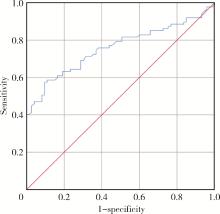
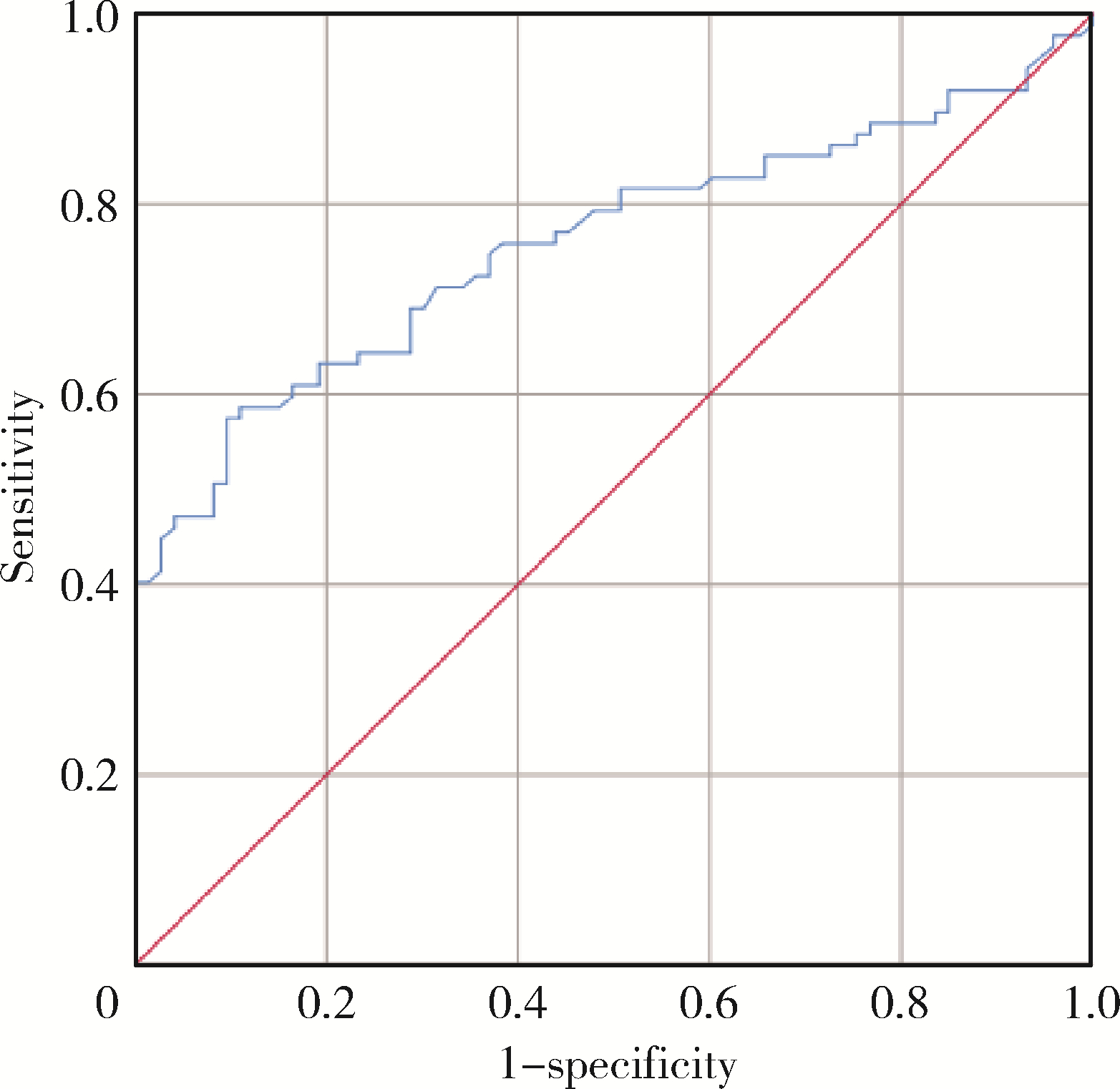
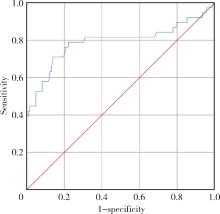
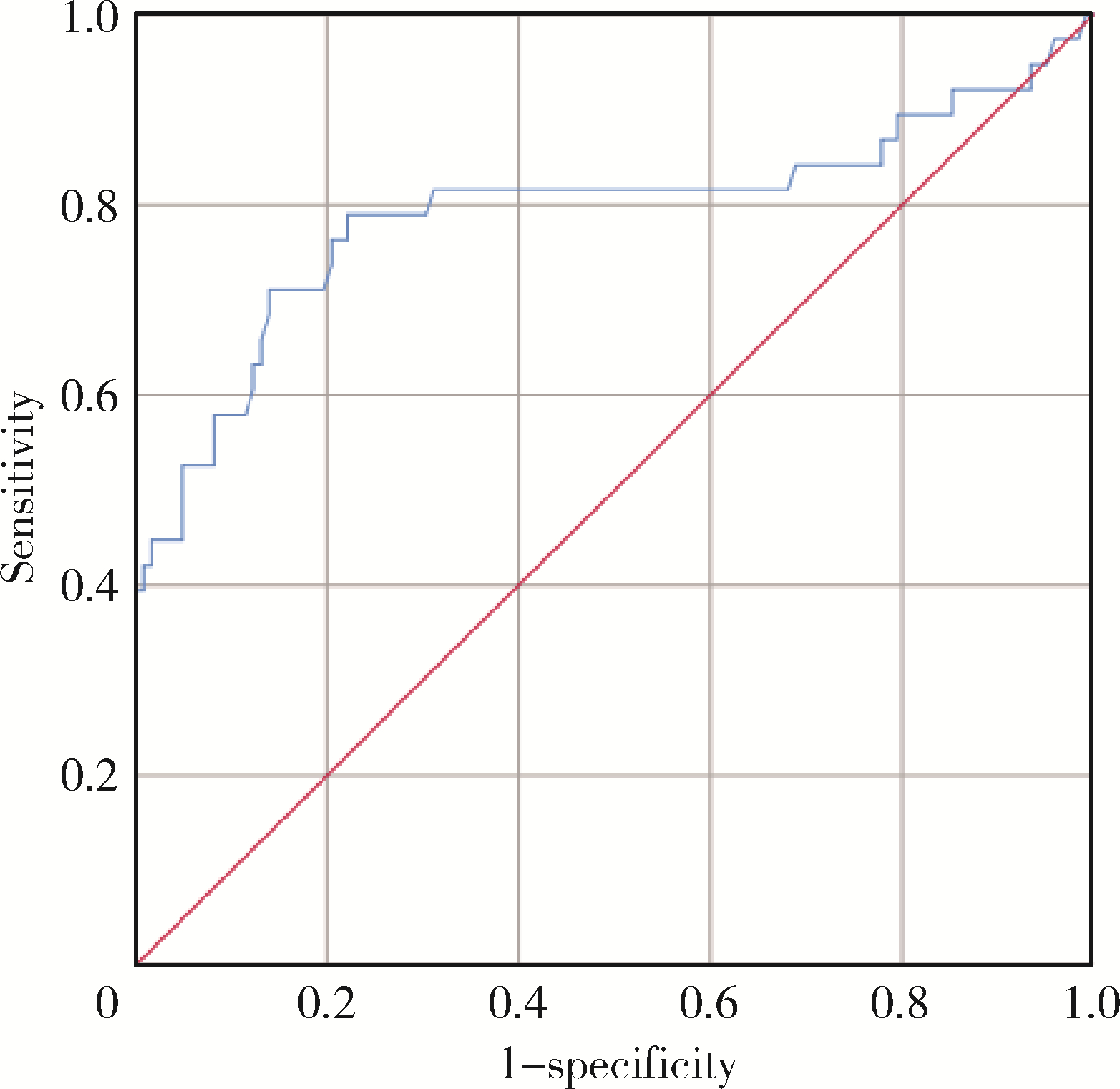
Objective: To explore the diagnostic significance of fecal calprotectin detection in infants with milk protein-allergic enteritis, and to provide valuable clinical basis for the early diagnosis and treatment decision-making of infants with milk protein-allergic enteritis. Methods: A retrospective analysis was conducted on the clinical data of 87 infants with suspected milk protein-allergic enteritis admitted in Hangzhou Children's Hospital from January 2020 to January 2023, and 38 infants with confirmed milk protein-allergic enteritis were assigned to group A, 49 infants with non-milk protein-allergic enteritis were assigned to group B, and 73 healthy infants who underwent physical examinations in Hangzhou Children's Hospital during the same period were assigned to the group C. General data of the three groups were collected through questionnaires, and fecal specimens were collected to detect the level of fecal calprotectin. The area under receiver operating characteristic (ROC)curve (AUC)was used to analyze the diagnostic value of fecal calprotectin for allergic enteritis and milk protein-allergic enteritis. The correlation between eosinophilic granulocytes (EOS)and platelets (PLT)levels and fecal calprotectin levels was analyzed by Pearson method. Results: The levels of EOS in groups A, B and C were (0.73±0.21)×109/L, (0.41±0.10)×109 /L, (0.26±0.05)×109 /L respectively, the levels of PLT were (381.03±46.04)×109 /L, (336.98±52.57)×109 /L, (300.22±23.00)×109 /L respectively, and the levels of EOS, PLT in group A were higher than those in group B and group C (P < 0.05), and those in group B were higher than those in group C (P < 0.05). The levels of fecal calprotectin in groups A, B and C were (324.45±174.56) μg/g, (196.12±83.39) μg/g, (143.73±50.54) μg/g respectively, and the levels of fecal calprotectin in group A were higher than those in group B and group C (P < 0.05), and those in group B were higher than those in group C (P < 0.05). The AUC values of fecal calprotectin and milk protein in the diagnosis of allergic enteritis were 0.758 and 0.792, respectively, the sensitivities were 0.575 and 0.711 respectively, the specificities were 0.904 and 0.861 respectively, the optimal cut-off values were 202.500 and 235.000 respectively, and the 95%CI were 0.683-0.833 and 0.688-0.896 respectively. The level of EOS was positively correlated with the level of fecal calprotectin (r=0.325, P < 0.05), and the PLT level was positively correlated with the level of fecal calprotectin (r=0.280, P < 0.05). Conclusion: Fecal calprotectin may have high clinical significance in infants with milk protein-allergic enteritis, and EOS and PLT levels may be positively correlated with the levels of fecal calprotectin. The higher the fecal calprotectin level, the more serious the inflammatory response.

Key words: Calprotectin, Milk protein allergy, Enteritis anaphylactica, Infant

CLC Number: 

  • R725.7

Table 1

Comparison of general data in three groups"

Group n Gender,n(%) Course of the
disease/months,M(P25, P75)
Age/months,
M(P25, P75)
Feeding methods,n(%) White blood
cell/(×109 /L),
M(P25P75)
Hemoglobin/(g/L),
M(P25P75)
EOS/(×109 L),$\bar x \pm s$ PLT/(×109 L),$\bar x \pm s$
Male Female Exclusive
breastfeeding
Artificial
feeding
Mixed
feeding
A 38 21 (55) 17 (45) 4.00
(3.00, 6.00)
5.50
(4.00, 7.75)
12 (32) 8 (21) 18 (47) 8.50
(8.00, 9.00)
115.50
(112.25, 118.00)
0.73±0.21 381.03±46.04
B 49 22 (45) 27 (55) 5.00
(3.00, 6.00)
6.00
(5.00, 7.00)
16 (33) 12 (24) 21 (43) 8.00
(8.00, 9.00)
114.00
(112.00, 118.00)
0.41±0.10* 336.98±52.57*
C 73 40 (55) 33 (45) 5.00
(3.00, 5.00)
6.00
(5.00, 7.00)
23 (32) 11 (15) 39 (53) 9.00
(8.00, 9.00)
116.00
(112.00, 119.00)
0.26±0.05*# 300.22±23.00*#
F/H/χ2 1.379 0.473 1.086 2.120 0.378 0.846 188.977 52.298
P 0.502 0.789 0.581 0.714 0.828 0.655 < 0.001 < 0.001

Figure 1

ROC curve of fecal calprotectin screening for infants with allergic enteritis"

Figure 2

ROC curve of fecal calprotectin screening for infants with milk protein-allergic enteritis"

1
Giannetti A , Toschi Vespasiani G , Ricci G , et al. Cow's milk protein allergy as a model of food allergies[J]. Nutrients, 2021, 13 (5): 1525.

doi: 10.3390/nu13051525
2
Cronin C , Ramesh Y , De Pieri C , et al. "Early introduction" of cow's milk for children with IgE-mediated cow's milk protein allergy: A review of current and emerging approaches for CMPA management[J]. Nutrients, 2023, 15 (6): 1397.

doi: 10.3390/nu15061397
3
李妍, 赵煜. 粪便钙卫蛋白在婴儿非IgE介导的牛奶蛋白过敏中的应用价值[J]. 中国中西医结合儿科学, 2023, 15 (1): 40- 45.
4
Chong KW , Goh SH , Saffari SE , et al. IgE-mediated cow's milk protein allergy in Singaporean children[J]. Asian Pac J Allergy Immunol, 2022, 40 (1): 65- 71.
5
宋祖贤, 诸葛远莉, 张琦, 等. 牛奶蛋白过敏致婴幼儿过敏性肠炎患儿粪便及外周血嗜酸性粒细胞、血小板计数表达变化及临床意义[J]. 国际检验医学杂志, 2023, 44 (7): 848-851, 856.
6
陈江滨. 粪便钙卫蛋白检测在新生儿过敏性肠炎中的应用价值[J]. 中外医疗, 2020, 39 (10): 13- 15.
7
Ometto F , Friso L , Astorri D , et al. Calprotectin in rheumatic diseases[J]. Exp Biol Med, 2017, 242 (8): 859- 873.

doi: 10.1177/1535370216681551
8
Ricciuto A , Griffiths AM . Clinical value of fecal calprotectin[J]. Crit Rev Clin Lab Sci, 2019, 56 (5): 307- 320.

doi: 10.1080/10408363.2019.1619159
9
中华医学会儿科学分会消化学组. 食物过敏相关消化道疾病诊断与管理专家共识[J]. 中华儿科杂志, 2017, 55 (7): 487- 492.
10
尹晶平, 程译文, 凌宗欣. IgE介导牛乳蛋白过敏婴幼儿肠道菌群改变初探[J]. 中国微生态学杂志, 2022, 34 (3): 295- 299.
11
Nakov RV , Nakov VN , Gerova VA , et al. Role of fecal calprotectin as a noninvasive indicator for ulcerative colitis disease activity[J]. Folia Med, 2019, 61 (2): 188- 196.

doi: 10.2478/folmed-2018-0071
12
Lęyk-Ciemniak E , Tworkiewicz M , Wilczyńska D , et al. Usefulness of testing for fecal calprotectin in pediatric gastroenterology clinical practice[J]. Med Princ Pract, 2021, 30 (4): 311- 319.

doi: 10.1159/000512631
13
高巧珍, 池艳华. 炎症性肠病患儿应用粪便钙卫蛋白指标检测对敏感性及特异性的影响研究[J]. 中国医药指南, 2023, 21 (15): 80- 82.
14
Lacy BE , Pimentel M , Brenner DM , et al. ACG clinical guideline: Management of irritable bowel syndrome[J]. Am J Gastroenterol, 2021, 116 (1): 17- 44.

doi: 10.14309/ajg.0000000000001036
[1] Ping ZHENG, Kunhong LIN, Mengyuan LIU, Xuyan ZHAO, Yangxin XIAO, Yan XING. A follow-up study on the physical and motor development of premature infants with small for gestational age within 2 years after birth [J]. Journal of Peking University (Health Sciences), 2025, 57(6): 1124-1131.
[2] Rui LI, Jing PAN, Qing YANG, Yan XING, Xiaomei TONG. Impact of donor human milk bank on clinical outcomes in infants with very/extremely low birth weight [J]. Journal of Peking University (Health Sciences), 2025, 57(4): 759-763.
[3] Chang LIU, Zhao LI, Lei JIN, Chunyi LIU, Chunjing WANG, Jie ZHANG, Lei JIN. Association between maternal periconceptional supplementation of folic acid or multiple micronutrients containing folic acid and perinatal mortality rate [J]. Journal of Peking University (Health Sciences), 2025, 57(3): 473-480.
[4] Xianru JIAO, Pan GONG, Yue NIU, Zhao XU, Zongpu ZHOU, Zhixian YANG. Phenotype of infantile epileptic spasm syndrome in pyridoxin-dependent epilepsy [J]. Journal of Peking University (Health Sciences), 2024, 56(5): 781-787.
[5] Yangyang LI,Lin HOU,Zijun MA,Shanyamei HUANG,Jie LIU,Chaomei ZENG,Jiong QIN. Association of pregnancy factors with cow's milk protein allergy in infants [J]. Journal of Peking University (Health Sciences), 2024, 56(1): 144-149.
[6] Pin LI,Ai ZHAO,Wei WU,Jian ZHANG,Pei-yu WANG,Hang-lian LAN,Yu-mei ZHANG. A follow-up study on the introduction of vegetables and fruits during infants aged 4-8 months in Beijing and Chenzhou City of Hunan Province [J]. Journal of Peking University (Health Sciences), 2022, 54(3): 526-531.
[7] GAO Hong-yu,MENG Huan-xin,HOU Jian-xia,HUANG Bao-xin,LI Wei. Expression and distribution of calprotectin in healthy and inflamed periodontal tissues [J]. Journal of Peking University (Health Sciences), 2021, 53(4): 744-749.
[8] YAO Xiao-ying,LIU Zhi-ke,LI Ning,MA Rui,ZHAO Xue-fei,ZHANG Liang,XU Guo-zhang,ZHAN Si-yan,FANG Ting. Epidemiological study of infantile epilepsy incidence density among infants under 36 months of age in Ningbo City from 2015 to 2019 [J]. Journal of Peking University (Health Sciences), 2021, 53(3): 485-490.
[9] HU Di,ZHANG Miao,KANG Hui-ying,PENG Yun. Investigation and validation of magnetic resonance white matter atlas for 0 to 2 years old infants [J]. Journal of Peking University (Health Sciences), 2021, 53(2): 341-347.
[10] Xiu-lan LI,Yan WU,Xiao-yun ZHONG,Min WANG,Li HUANG. Breastfeeding promotion strategies study on preterm infants in the neonatal intensive care unit [J]. Journal of Peking University(Health Sciences), 2019, 51(4): 711-715.
[11] Ju BAO,Jia LIU,Yuan QU,Dong-liang MU. Predictive value of umbilical arterial cord pH on complications during hospitalization in neonates after cesarean section [J]. Journal of Peking University(Health Sciences), 2019, 51(1): 159-164.
[12] YANG Xi-ying, ZHU Ling-ping, LIU Xue-qin, ZHANG Chun-yu, YAO Yong, WU Ye. Genetic diagnosis of Caroli syndrome with autosomal recessive polycystic kidney disease: a case report and literature review [J]. Journal of Peking University(Health Sciences), 2018, 50(2): 335-339.
[13] WANG Shu-qi, YANG Zhi-xian, LI Hui. Clinical and genetic characteristics of Williams-Beuren syndrome: 2 cases report [J]. Journal of Peking University(Health Sciences), 2017, 49(5): 899-903.
[14] ZHANG Xin, RU Xi-fang, WANG Ying, LI Xing, SANG Tian, FENG Qi. Clinical characteristics of neonatal fungal sepsis in neonatal intensive care unit [J]. Journal of Peking University(Health Sciences), 2017, 49(5): 789-793.
[15] WU Yan, ZHONG Xiao-yun, JIANG Jing, GONG Hua. Prospective and controlled study on effect of fortified human milk feeding on infants with extremely and very low birth weight during hospital stay [J]. Journal of Peking University(Health Sciences), 2016, 48(1): 143-148.
Viewed
Full text


Abstract

Cited

  Shared   
  Discussed   
No Suggested Reading articles found!