Journal of Peking University (Health Sciences) ›› 2025, Vol. 57 ›› Issue (6): 1188-1192. doi: 10.19723/j.issn.1671-167X.2025.06.026

Previous Articles     Next Articles

Central nervous system infection mimicking neuropsychiatric systemic lupus erythematosus: A case report

Kai ZHAO, Fu'ai LU, Yongfu WANG*()   

  1. Department of Rheumatism and Immunology, the First Affiliated Hospital of Baotou Medical College, Inner Mongolia University of Science and Technology; Inner Mongolia Autoimmunology Key Laboratory, Baotou 014010, Inner Mongolia, China
  • Received:2025-08-10 Online:2025-12-18 Published:2025-10-20
  • Contact: Yongfu WANG

RICH HTML


Abstract:

This article presents a comprehensive case analysis of a young female patient with systemic lupus erythematosus (SLE) who developed neuropsychiatric symptoms during prolonged immunosuppressive therapy. The patient, maintained on glucocorticoids and cyclosporine, presented with fever, headache, and left-sided limb numbness. Cranial magnetic resonance imaging (MRI) revealed an acute inflammatory lesion in the right parietal lobe, leading to an initial clinical diagnosis of neuropsychiatric systemic lupus erythematosus (NPSLE). However, despite adjustments to the immunosuppressive regimen, her condition continued to deteriorate, manifesting as impaired consciousness and meningeal signs including neck stiffness. Subsequent laboratory investigations proved crucial for diagnostic reevaluation: Blood culture identified Listeria monocytogenes, and cerebrospinal fluid (CSF) analysis via next-generation sequencing (NGS) detected varicella-zoster virus (VZV). Targeted anti-infective therapy with meropenem and linezolid, combined with intravenous immunoglobulin support, resulted in significant improvement of neurological symptoms and radiological abnormalities, ultimately confirming central nervous system (CNS) mixed infection rather than NPSLE. This case underscored the critical importance of differentiating between CNS infection and NPSLE in immunosuppressed SLE patients. Clinical observations indicated that CNS infections typically presented with more pronounced systemic manifestations including high-grade fever, severe headache, and marked meningeal signs, accompanied by significantly elevated inflammatory markers. In contrast, NPSLE patients might exhibit fever but generally show lower overall lupus disease activity scores. CSF analysis played a pivotal diagnostic role: CNS infections commonly demonstrate significant pleocytosis, elevated protein levels, and reduced glucose concentrations, whereas NPSLE-related CSF changes were usually milder. Serial neuroimaging follow-up and treatment response assessment provided additional discriminatory value, as infectious lesions typically showed rapid resolution following appropriate antimicrobial therapy. The application of CSF NGS technology in this case enabled rapid identification of mixed pathogens, highlighting its advantage in diagnosing complex infections. Clinical management should integrate comprehensive evaluation of etiological, radiological, and therapeutic response characteristics to prevent misdiagnosis as NPSLE, which could lead to inappropriate intensification of immunosuppression and subsequent clinical deterioration. We recommend early multidisciplinary collaboration and proactive utilization of precision diagnostic techniques like CSF NGS to guide timely, targeted anti-infective strategies, ultimately improving the patient outcomes. This case provides valuable insights for clinicians regarding the differential diagnosis of CNS complications in immunocompromised patients, emphasizing the necessity of integrated modern diagnostic approaches for personalized therapeutic decision-making.

Key words: Systemic lupus erythematosus, Neuropsychiatric systemic lupus erythematosus, Central nervous system

CLC Number: 

  • R593.24

Figure 1

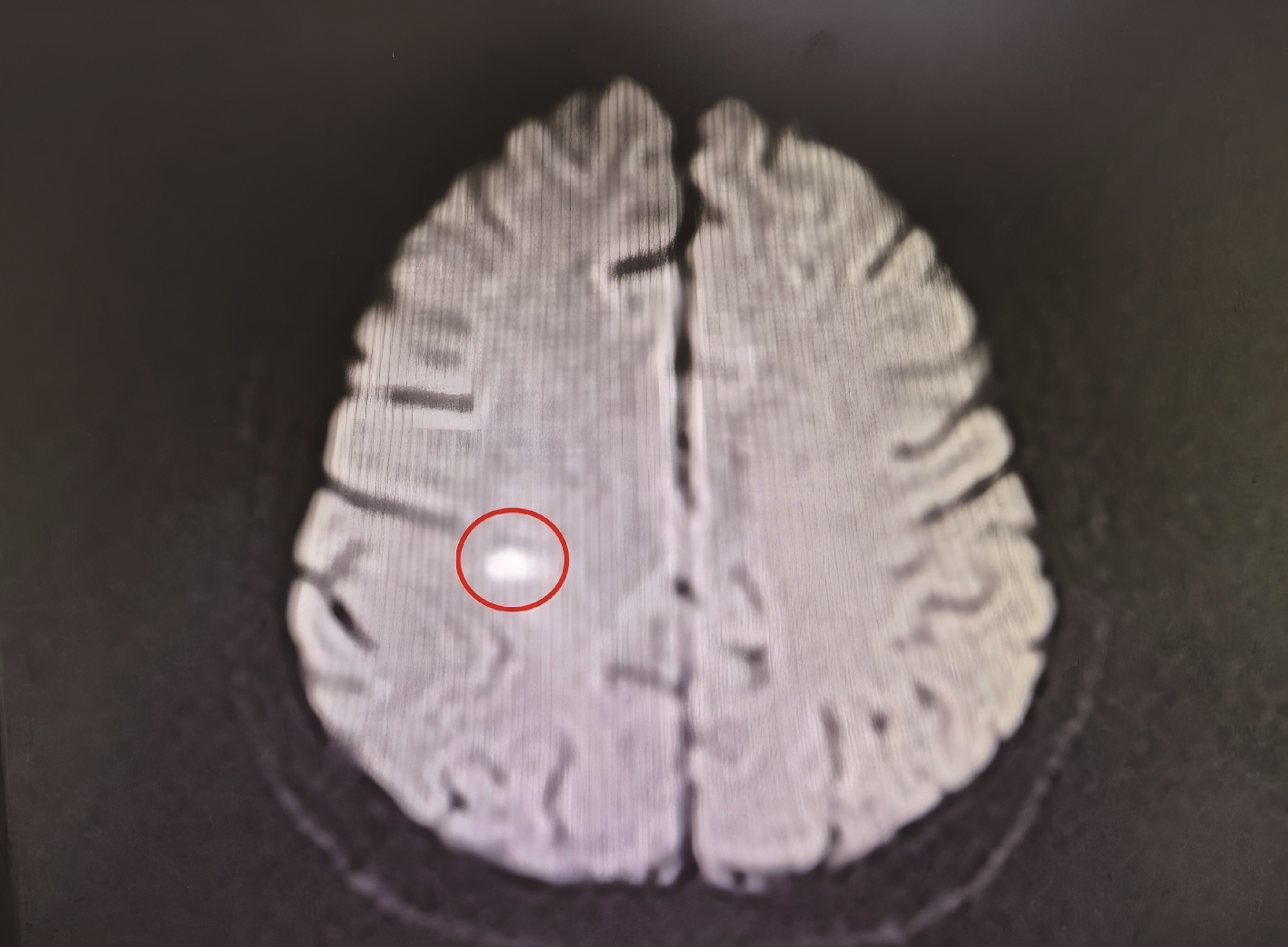
Cranial MRI of patient on July 30, 2024 Patchy abnormal signal is observed in the right parietal subcortical white matter (marked with a red box). T1WI shows isointense signal, T2WI and T2FLAIR show hyperintense signal, DWI shows hyperintense signal, and ADC shows hypointense signal, suggesting an acute inflammatory lesion (possible infection or demyelination). T1WI, T1-weighted imaging; T2WI, T2-weighted imaging; T2FLAIR, T2-fluid attenuated inversion recovery; DWI, diffusion-weighted imaging; ADC, apparent diffusion coefficient."

Figure 2

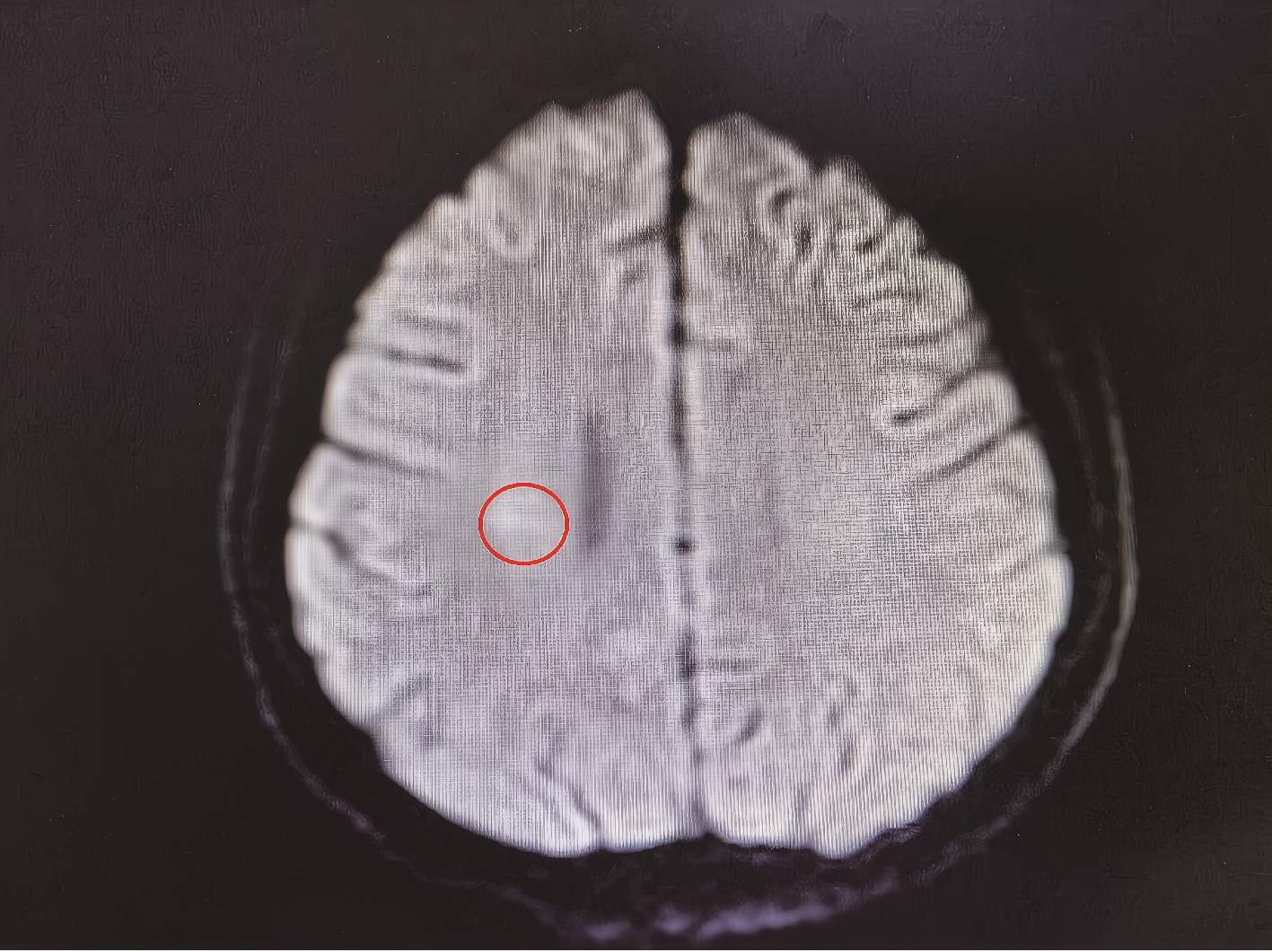
Cranial MRI of patient on August 14, 2024 The previously abnormal signal area in the subcortical white matter of the right parietal lobe (marked with a red box) has significantly reduced compared to before, with decreased signal intensity (T2 FLAIR high signal weakened, DWI high signal disappeared), indicating lesion absorption consistent with effective anti-infective treatment, and NPSLE is excluded (NPSLE lesions are mostly non-infectious inflammation; without adjusting the immunotherapy regimen, lesions are unlikely to absorb in the short term). T2FLAIR, T2-fluid attenuated inversion recovery; DWI, diffusion-weighted imaging; NPSLE, neuropsychiatric systemic lupus erythematosus."

1
Manca E . Autoantibodies in neuropsychiatric systemic lupus erythematosus (NPSLE): Can they be used as biomarkers for the differential diagnosis of this disease?[J]. Clin Rev Allergy Immunol, 2022, 63 (2): 194- 209.
2
Moore E , Huang MW , Putterman C . Advances in the diagnosis, pathogenesis and treatment of neuropsychiatric systemic lupus erythematosus[J]. Curr Opin Rheumatol, 2020, 32 (2): 152- 158.

doi: 10.1097/BOR.0000000000000682
3
Schwartz N , Stock AD , Putterman C . Neuropsychiatric lupus: New mechanistic insights and future treatment directions[J]. Nat Rev Rheumatol, 2019, 15 (3): 137- 152.

doi: 10.1038/s41584-018-0156-8
4
国家皮肤与免疫疾病临床医学研究中心, 中华医学会风湿病学分会, 风湿免疫病学教育部重点实验室, 等. 中国成人中枢神经精神狼疮临床实践专家共识(2024版)[J]. 中华风湿病学杂志, 2024, 28 (9): 613- 625.
5
Li C , Zeng H , Ding X , et al. Perinatal listeriosis patients treated at a maternity hospital in Beijing, China, from 2013 to 2018[J]. BMC Infect Dis, 2020, 20 (1): 601.

doi: 10.1186/s12879-020-05327-6
6
Lopes-Luz L , Mendonça M , Bernardes Fogaça M , et al. Listeria monocytogenes: Review of pathogenesis and virulence determinants-targeted immunological assays[J]. Crit Rev Micro-biol, 2021, 47 (5): 647- 666.

doi: 10.1080/1040841X.2021.1911930
7
蒋钟吉, 许智坤, 吴劲松, 等. 深圳单核细胞增生李斯特菌感染10例临床分析[J]. 中国抗生素杂志, 2022, 47 (11): 1202- 1206.
8
Scobie A , Kanagarajah S , Harris RJ , et al. Mortality risk factors for listeriosis: A 10 year review of non-pregnancy associated cases in England 2006—2015[J]. J Infect, 2019, 78 (3): 208- 214.

doi: 10.1016/j.jinf.2018.11.007
9
年李想, 葛沈瑞, 帅垠琦. 系统性红斑狼疮合并李斯特菌脓毒症1例[J]. 临床医学进展, 2024, 14 (4): 718- 723.
10
Deijns SJ , Broen JCA , Kruyt ND , et al. The immunologic etiology of psychiatric manifestations in systemic lupus erythematosus: A narrative review on the role of the blood brain barrier, antibodies, cytokines and chemokines[J]. Autoimmun Rev, 2020, 19 (8): 102592.

doi: 10.1016/j.autrev.2020.102592
11
罗芷筠, 吴佳佳, 宋优, 等. 伴神经精神系统病变的系统性红斑狼疮相关巨噬细胞活化综合征2例[J]. 北京大学学报(医学版), 2023, 55 (6): 1111- 1117.

doi: 10.19723/j.issn.1671-167X.2023.06.024
[1] Xinyi LI, Jinxia ZHAO, Rong MU. Impact of aspirin use on pregnancy outcomes in patients with systemic lupus erythematosus [J]. Journal of Peking University (Health Sciences), 2025, 57(6): 1074-1080.
[2] Xiaolin WANG, Shaoyi GUO, Dazhao CHEN, Xijie WEN, Yong HUA, Liang ZHANG, Qin ZHANG. A follow-up study on total hip arthroplasty in patients with systemic lupus erythematosus combined with osteonecrosis of femoral head [J]. Journal of Peking University (Health Sciences), 2025, 57(6): 1081-1088.
[3] Chun WEI, Yue YANG, Xinju ZHAO, Xu LIU, Yuan JIA. Systemic lupus erythematosus complicated by autoimmune nodopathy: A case report [J]. Journal of Peking University (Health Sciences), 2025, 57(6): 1174-1179.
[4] Wenqiong WANG, Yuke HOU, Chun LI, Xuewu ZHANG. Predictors of adverse pregnancy outcomes in patients with systemic lupus erythematosus [J]. Journal of Peking University (Health Sciences), 2025, 57(3): 599-603.
[5] Hongyan WANG, Xinming LI, Kechi FANG, Huaqun ZHU, Rulin JIA, Jing WANG. Analysis of characteristics related to the disease activity of systemic lupus erythematosus and construction of an evaluation model [J]. Journal of Peking University (Health Sciences), 2024, 56(6): 1017-1022.
[6] Dandan CHEN, Yun LI, Qingyi LU, Xiaohong XIANG, Feng SUN, Yingni LI, Jing ZHAO, Hongyan WANG, Chun LI. Ovarian function in patients of childbearing age with systemic lupus erythematosus [J]. Journal of Peking University (Health Sciences), 2024, 56(6): 1023-1028.
[7] Li WANG, Chao GAO, Huanhuan REN, Yanping SHEN, Xiaowei HUANG, Hong YAO, Dandan HAN. Current status and influential factors of self-management ability in patients with systemic lupus erythematosus [J]. Journal of Peking University (Health Sciences), 2024, 56(6): 1029-1035.
[8] Jing CHAI, Yue WANG, Rong MU, Jinxia ZHAO. Systemic lupus erythematosus involving the fornix column leading to hyponatremia: A case report [J]. Journal of Peking University (Health Sciences), 2024, 56(6): 1115-1118.
[9] Mingxia WANG, Ling DING, Min WANG, Chanjuan ZOU, Siyu YAN, Yingwen LIANG, Weijia WANG, Shanzhi HE. Safe pregnancy and delivery in a female patient with systemic lupus erythematosus after discontinuation of dual-target chimeric antigen receptor T cells therapy [J]. Journal of Peking University (Health Sciences), 2024, 56(6): 1119-1125.
[10] Zhihui WU, Mingzhi HU, Qiaoying ZHAO, Fengfeng LV, Jingying ZHANG, Wei ZHANG, Yongfu WANG, Xiaolin SUN, Hui WANG. Immunomodulatory mechanism of umbilical cord mesenchymal stem cells modified by miR-125b-5p in systemic lupus erythematosus [J]. Journal of Peking University (Health Sciences), 2024, 56(5): 860-867.
[11] Limin REN,Chuchu ZHAO,Yi ZHAO,Huiqiong ZHOU,Liyun ZHANG,Youlian WANG,Lingxun SHEN,Wenqiang FAN,Yang LI,Xiaomei LI,Jibo WANG,Yongjing CHENG,Jiajing PENG,Xiaozhen ZHAO,Miao SHAO,Ru Li. Low disease activity and remission status of systemic lupus erythematosus in a real-world study [J]. Journal of Peking University (Health Sciences), 2024, 56(2): 273-278.
[12] Zhi-jun LUO,Jia-jia WU,You SONG,Chun-li MEI,Rong DU. Systemic lupus erythematosus associated macrophage activation syndrome with neuropsychiatric symptoms: A report of 2 cases [J]. Journal of Peking University (Health Sciences), 2023, 55(6): 1111-1117.
[13] Hai-hong YAO,Fan YANG,Su-mei TANG,Xia ZHANG,Jing HE,Yuan JIA. Clinical characteristics and diagnostic indicators of macrophage activation syndrome in patients with systemic lupus erythematosus and adult-onset Still's disease [J]. Journal of Peking University (Health Sciences), 2023, 55(6): 966-974.
[14] Xiang-ge ZHAO,Jia-qing LIU,Hui-na HUANG,Zhi-min LU,Zi-ran BAI,Xia LI,Jing-jing QI. Interferon-α mediating the functional damage of CD56dimCD57+natural killer cells in peripheral blood of systemic lupus erythematosuss [J]. Journal of Peking University (Health Sciences), 2023, 55(6): 975-981.
[15] Miao SHAO,Hui-fang GUO,Ling-yan LEI,Qing ZHAO,Yan-jie DING,Jin LIN,Rui WU,Feng YU,Yu-cui LI,Hua-li MIAO,Li-yun ZHANG,Yan DU,Rui-ying JIAO,Li-xia PANG,Li LONG,Zhan-guo LI,Ru LI. A multicenter study on the tolerance of intravenous low-dose cyclophosphamide in systemic lupus erythematosus [J]. Journal of Peking University (Health Sciences), 2022, 54(6): 1112-1116.
Viewed
Full text


Abstract

Cited

  Shared   
  Discussed   
No Suggested Reading articles found!