Journal of Peking University (Health Sciences) ›› 2026, Vol. 58 ›› Issue (3): 503-512. doi: 10.19723/j.issn.1671-167X.2026.03.009

Previous Articles     Next Articles

Association between periconception maternal cold and heat exposure and the risk of congenital heart disease in offspring in China

Huiying XU1, Xinghou HE1, Wei HUANG1,*(), Bin ZHANG1, Mengyao LI1, Jiahui LIU1, Yan FANG1, Erlu ZHAO1, Xiangrui WEI1, Xu MA2, Ying YANG2,*()   

  1. 1. Department of Occupational and Environmental Health, Peking University School of Public Health, Beijing 100191, China
    2. Institute of Science and Technology, National Health Commission, Beijing 100081, China
  • Received:2026-01-22 Online:2026-06-18 Published:2026-04-24
  • Contact: Wei HUANG, Ying YANG
  • Supported by:
    the National Natural Science Foundation of China(82273589); National Key Research and Development Program of China(2016YFC1000307); Beijing Natural Science Foundation(7222246)

RICH HTML


Abstract:

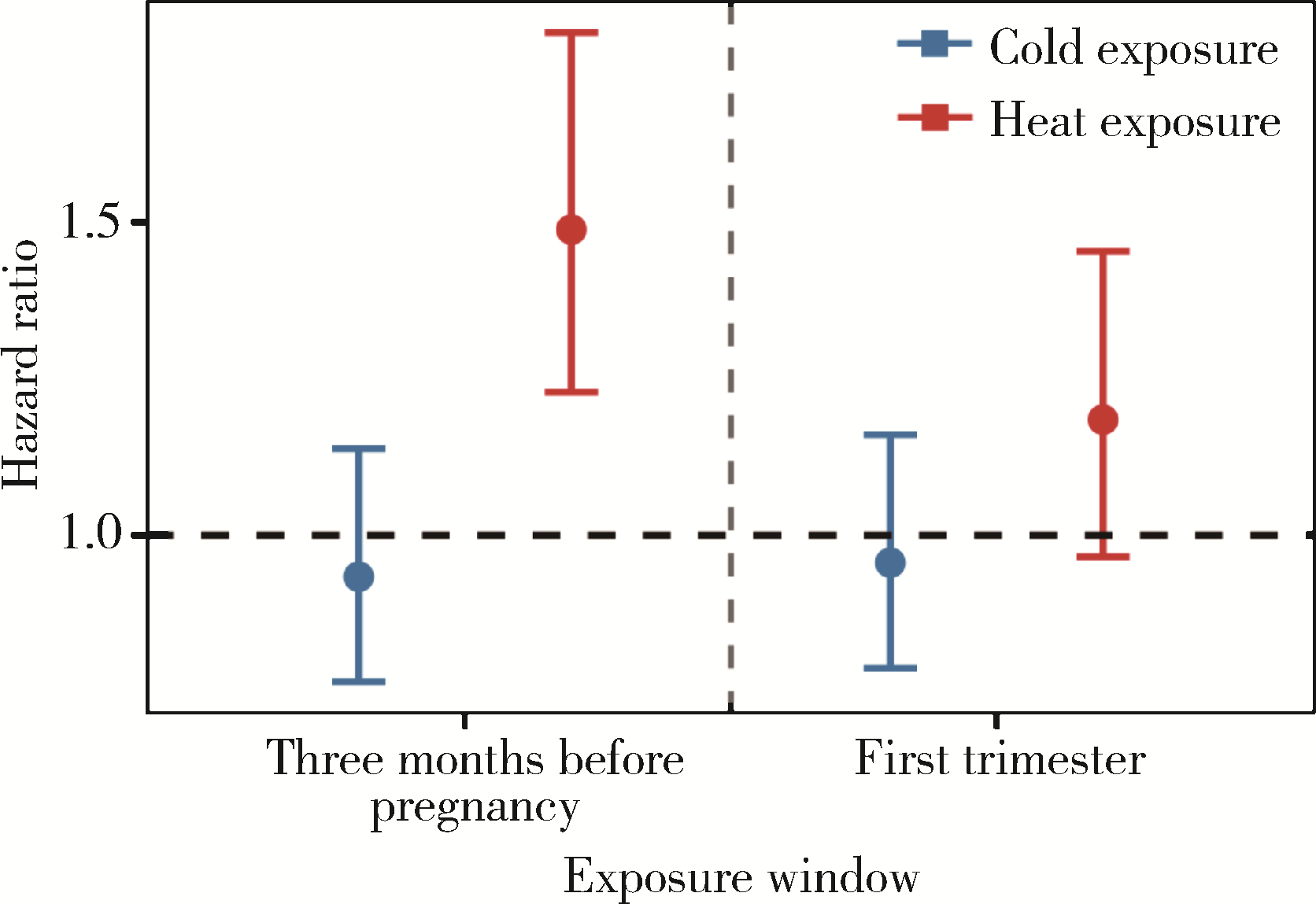
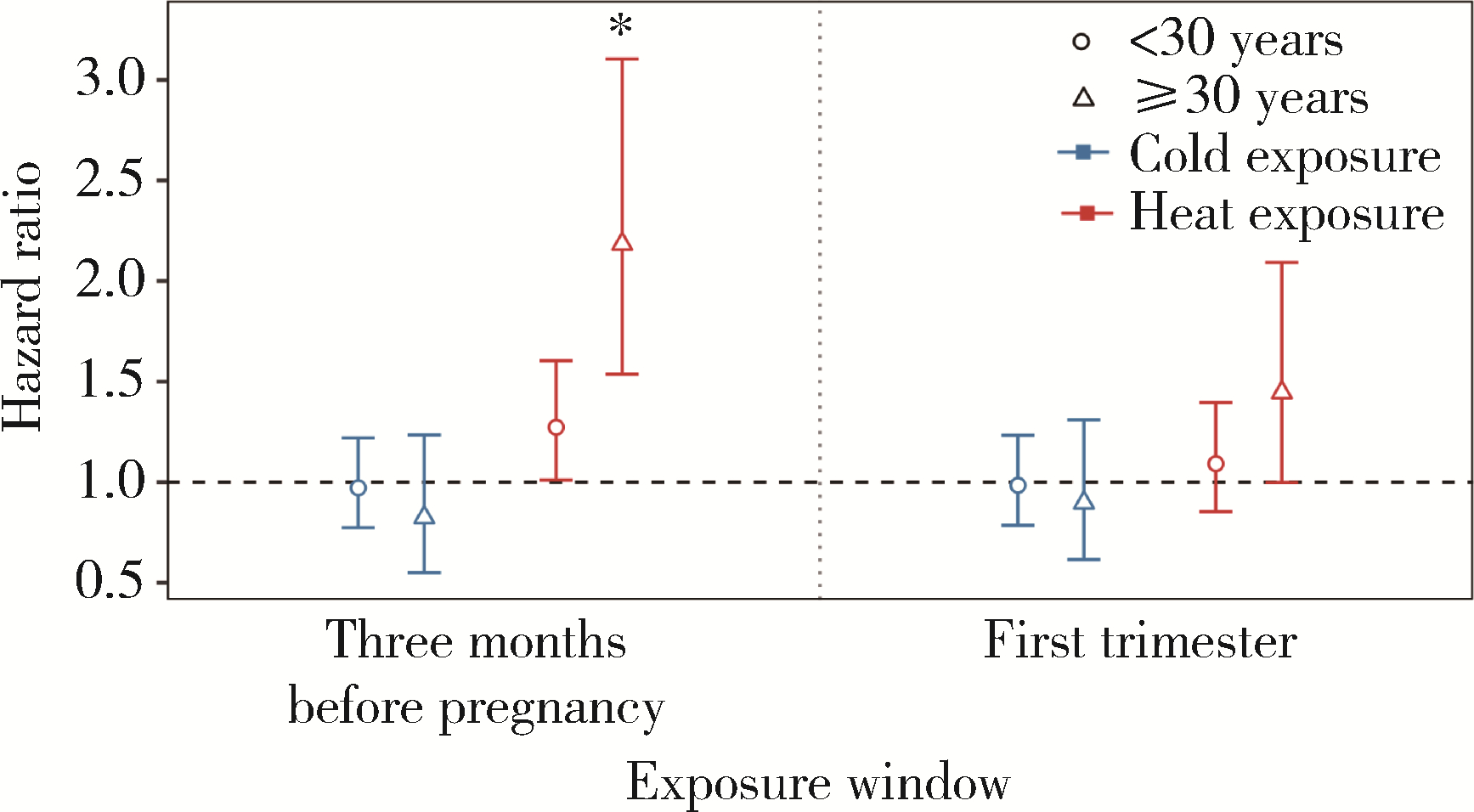
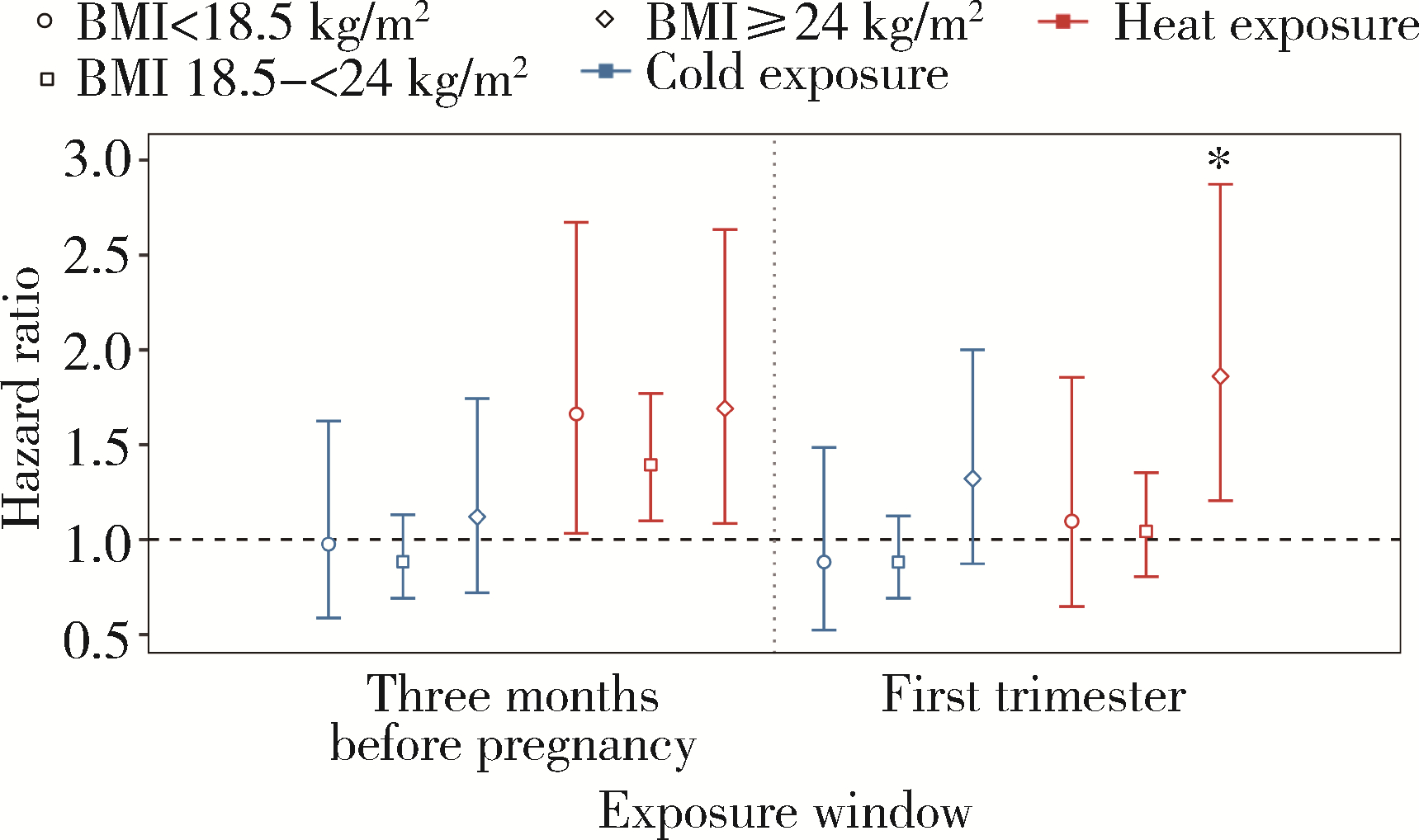
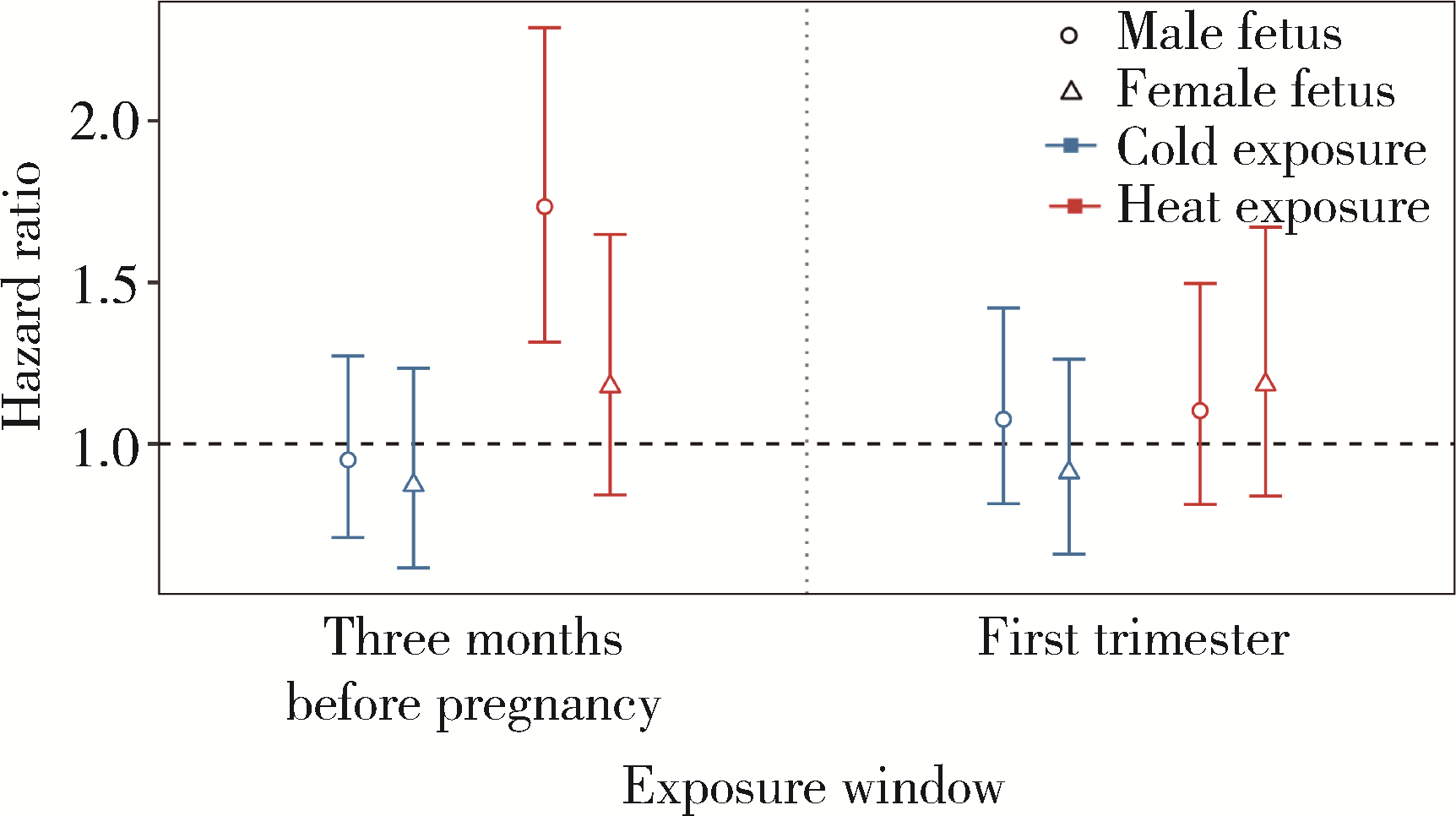
Objective: To investigate the associations between maternal exposure to cold and heat exposure during the three months before pregnancy and early pregnancy and the risk of congenital heart disease (CHD) in offspring, and to identify critical exposure windows and modifying factors. Methods: This nationwide cohort study included women aged 20-49 years with complete pregnancy outcome follow-up from the National Free Pre-pregnancy Check-ups Project (NFPCP) database between January 1, 2014 and April 21, 2020. Meteorological data from the European Centre for Medium-Range Weather Forecasts Reanalysis v5 (ERA5) dataset were linked to residential addresses. Cold and heat exposure were defined based on relative thresholds stratified by climate zone: heat and cold were defined as temperatures above the 90th percentile or below the 10th percentile, respectively, of the location-specific temperature distribution during each exposure window. Cox proportional hazards models were used to analyze the associations between cold and heat exposure during the three months before pregnancy and early pregnancy and the risk of CHD, and to calculate hazard ratios (HR) and 95% confidence intervals (CI) after adjusting for maternal age, body mass index (BMI), education level, geographical region, conception season, and relative humidity. Stratified analyses were performed to examine the effects of age, BMI, and fetal sex on the associations between cold and heat exposure and the risk of CHD. Results: A total of 6 322 635 women aged 20-49 years with complete pregnancy outcome follow-up were included, and 1 478 cases of CHD were diagnosed among their offspring. The analysis showed that heat exposure during the three months before pregnancy was significantly associated with an increased risk of CHD in offspring (HR=1.49, 95%CI: 1.23-1.80); while no significant association was found for heat exposure during early pregnancy. No significant association was observed for cold exposure during the three months before pregnancy and early pregnancy (three months before pregnancy: HR=0.93, 95%CI: 0.77-1.14; early pregnancy: HR=0.95, 95%CI: 0.79-1.16). Stratified analyses showed that the risk of CHD associated with heat exposure during the three months before pregnancy was increased in women aged ≥30 years (HR=2.18, 95%CI: 1.54-3.10) and in male fetuses (HR=1.73, 95%CI: 1.31-2.29); the risk of CHD associated with heat exposure during early pregnancy was significantly increased in women with BMI ≥24 kg/m2 (HR=1.86, 95%CI: 1.21-2.87). Conclusion: Heat exposure during the three months before pregnancy might increase the risk of congenital heart disease in offspring, and this risk was elevated in both women aged ≥30 years and male fetuses. Furthermore, heat exposure during early pregnancy significantly increased the risk of congenital heart disease in offspring among women with BMI ≥24 kg/m2. No significant association was observed between cold exposure and the risk of congenital heart disease.

Key words: Cold exposure, Heat exposure, Congenital heart disease, Cohort, Risk

CLC Number: 

  • R122.2

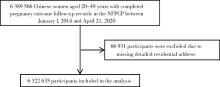
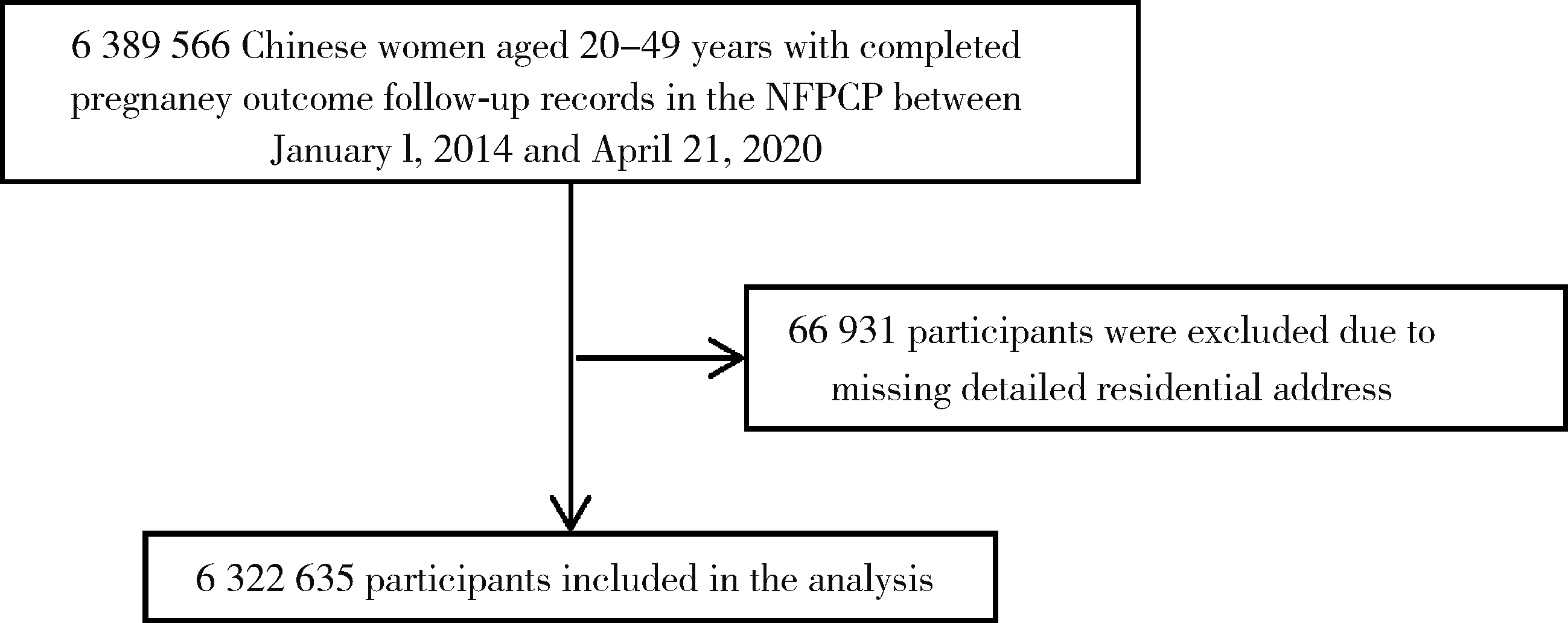
Figure 1

Flowchart of participant selection NFPCP, National Free Pre-pregnancy Check-ups project."

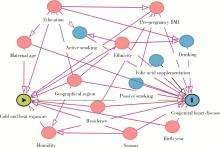
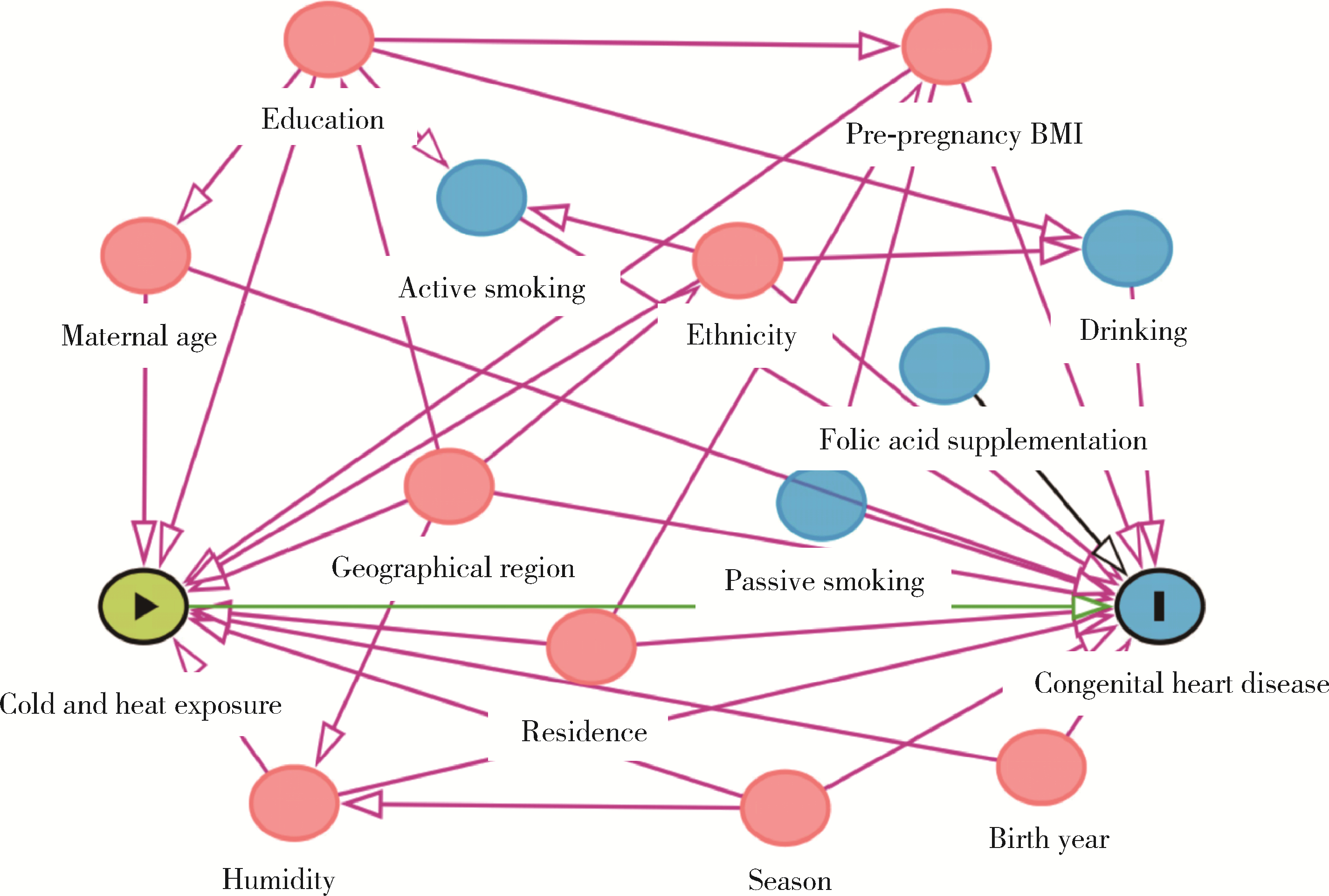
Figure 2

Directed acyclic graph for the selection of potential confounders BMI, body mass index."

Table 1

Baseline characteristics of study participants stratified by cold/heat exposure status during the three months before pregnancy and the first trimester"

Characteristic Total (n=6 322 635) Heat exposure group (n=632 260) Cold exposure group (n=632 264) Reference group (n=5 058 111) P value
Maternal age <0.001/<0.001
  ≤25 years 2 954 301 (46.73) 277 919 (43.96) 311 376 (49.25) 2 365 006 (46.76)
  26-30 years 2 340 674 (37.02) 245 876 (38.89) 223 325 (35.32) 1 871 473 (37.00)
  31-35 years 753 035 (11.91) 80 159 (12.68) 71 573 (11.32) 601 303 (11.89)
  36-40 years 237 627 (3.76) 24 609 (3.89) 22 264 (3.52) 190 754 (3.77)
  >40 years 36 998 (0.59) 3 697 (0.58) 3 726 (0.59) 29 575 (0.58)
Parity <0.001/<0.001
  0 3 187 438 (50.41) 310 842 (49.16) 321 770 (50.89) 2 554 826 (50.51)
  ≥1 2 710 740 (42.87) 278 429 (44.04) 273 172 (43.21) 2 159 139 (42.69)
  Missing 424 457 (6.71) 42 989 (6.80) 37 322 (5.90) 344 146 (6.80)
Ethnicity <0.001/<0.001
  Han Chinese 5 786 746 (91.52) 591 045 (93.48) 557 828 (88.23) 4 637 873 (91.69)
  Ethnic minority 368 979 (5.84) 21 064 (3.33) 60 055 (9.50) 287 860 (5.69)
  Missing 166 910 (2.64) 20 151 (3.19) 14 381 (2.27) 132 378 (2.62)
Pre-pregnancy BMI, kg/m2 <0.001/<0.001
  <18.5 836 772 (13.23) 86 856 (13.74) 78 230 (12.37) 671 686 (13.28)
  ≥18.5-<24 4 406 391 (69.69) 436 429 (69.03) 447 815 (70.83) 3 522 147 (69.63)
  ≥24-<28 835 383 (13.21) 83 607 (13.22) 82 809 (13.10) 668 967 (13.23)
  ≥28 206 453 (3.27) 20 878 (3.30) 20 345 (3.22) 165 230 (3.27)
  Missing 37 636 (0.60) 4 490 (0.71) 3 065 (0.48) 30 081 (0.59)
Education <0.001/<0.001
  Junior high school or below 3 381 720 (53.49) 311 218 (49.22) 381 363 (60.32) 2 689 139 (53.16)
  Senior high school 1 352 056 (21.38) 140 163 (22.17) 119 920 (18.97) 1 091 973 (21.59)
  College or above 1 262 756 (19.97) 138 245 (21.87) 108 629 (17.18) 1 015 882 (20.08)
  Missing 326 103 (5.16) 42 634 (6.74) 22 352 (3.54) 261 117 (5.16)
Residence <0.001/<0.001
  Rural 5 653 361 (89.41) 555 060 (87.79) 580 233 (91.77) 4 518 068 (89.32)
  Urban 667 753 (10.56) 76 839 (12.15) 51 989 (8.22) 538 925 (10.65)
  Missing 1 521 (0.02) 361 (0.06) 42 (0.01) 1 118 (0.02)
Occupation <0.001/<0.001
  Farmer 3 945 602 (62.40) 371 929 (58.83) 435 849 (68.93) 3 137 824 (62.04)
  Worker 726 121 (11.48) 73 792 (11.67) 64 321 (10.17) 588 008 (11.63)
  Other 1 273 756 (20.15) 139 527 (22.07) 104 656 (16.55) 1 029 573 (20.35)
  Missing 377 156 (5.97) 47 012 (7.44) 27 438 (4.34) 302 706 (5.98)
Smoking <0.001/<0.001
  No 6 266 975 (99.12) 625 940 (99.00) 627 715 (99.28) 5 013 320 (99.11)
  Yes 12 613 (0.20) 1 169 (0.18) 1 220 (0.19) 10 224 (0.20)
  Missing 43 047 (0.68) 5 151 (0.81) 3 329 (0.53) 34 567 (0.68)
Passive smoking <0.001/<0.001
  No 5 639 696 (89.20) 558 973 (88.41) 573 912 (90.77) 4 506 811 (89.10)
  Yes 639 714 (10.12) 68 164 (10.78) 55 031 (8.70) 516 519 (10.21)
  Missing 43 225 (0.68) 5 123 (0.81) 3 321 (0.53) 34 781 (0.69)
Drinking <0.001/<0.001
  No 6 111 037 (96.65) 608 280 (96.21) 616 308 (97.48) 4 886 449 (96.61)
  Yes 162 586 (2.57) 18 247 (2.89) 12 034 (1.90) 132 305 (2.62)
  Missing 49 012 (0.78) 5 733 (0.91) 3 922 (0.62) 39 357 (0.78)
Folic acid supplementation <0.001/<0.001
  No 1 132 478 (17.91) 114 881 (18.17) 97 806 (15.47) 919 791 (18.18)
  Regular 4 868 152 (77.00) 487 320 (77.08) 501 073 (79.25) 3 879 759 (76.70)
  Irregular 219 736 (3.48) 20 366 (3.22) 21 481 (3.40) 177 889 (3.52)
  Missing 102 269 (1.62) 9 693 (1.53) 11 904 (1.88) 80 672 (1.59)
Season of conception <0.001/<0.001
  Spring 1 834 270 (29.01) 25 875 (4.09) 60 516 (9.57) 1 747 879 (34.56)
  Summer 1 537 980 (24.32) 574 307 (90.83) 3 518 (0.56) 960 155 (18.98)
  Autumn 1 311 823 (20.75) 27 260 (4.31) 38 083 (6.02) 1 246 480 (24.64)
  Winter 1 638 562 (25.92) 4 818 (0.76) 530 147 (83.85) 1 103 597 (21.82)
Year of birth <0.001/<0.001
  2014 355 234 (5.62) 2 602 (0.41) 112 108 (17.73) 240 524 (4.76)
  2015 1 386 551 (21.93) 126 373 (19.99) 108 391 (17.14) 1 151 787 (22.77)
  2016 1 430 994 (22.63) 105 069 (16.62) 139 850 (22.12) 1 186 075 (23.45)
  2017 1 514 811 (23.96) 184 651 (29.20) 111 367 (17.61) 1 218 793 (24.10)
  2018 1 010 052 (15.98) 126 048 (19.94) 99 094 (15.67) 784 910 (15.52)
  2019 571 710 (9.04) 84 100 (13.30) 60 911 (9.63) 426 699 (8.44)
  2020 53 283 (0.84) 3 417 (0.54) 543 (0.09) 49 323 (0.98)
Neonate’s gender <0.001/<0.001
  Male 3 271 381 (51.74) 327 550 (51.81) 326 282 (51.61) 2 617 549 (51.75)
  Female 3 023 385 (47.82) 302 247 (47.80) 302 746 (47.88) 2 418 392 (47.81)
  Missing 27 869 (0.44) 2 463 (0.39) 3 236 (0.51) 22 170 (0.44)
Mode of delivery <0.001/<0.001
  Vaginal delivery 4 517 758 (71.45) 455 719 (72.08) 450 798 (71.30) 3 611 241 (71.40)
  Cesarean section 1 787 130 (28.27) 174 968 (27.67) 179 490 (28.39) 1 432 672 (28.32)
  Missing 17 747 (0.28) 1 573 (0.25) 1 976 (0.31) 14 198 (0.28)
Geographic region <0.001/<0.001
  Northern 380 976 (6.03) 29 319 (4.64) 73 873 (11.68) 277 784 (5.49)
  Northeast 73 447 (1.16) 6 514 (1.03) 8 741 (1.38) 58 192 (1.15)
  Eastern 1 563 946 (24.74) 137 595 (21.76) 186 272 (29.46) 1 240 079 (24.52)
  Central 2 335 185 (36.93) 295 028 (46.66) 133 708 (21.15) 1 906 449 (37.69)
  Southern 1 002 141 (15.85) 119 162 (18.85) 68 741 (10.87) 814 238 (16.10)
  Southwest 501 732 (7.94) 20 424 (3.23) 41 613 (6.58) 439 695 (8.69)
  Northwest 465 208 (7.36) 24 218 (3.83) 119 316 (18.87) 321 674 (6.36)
Climate zone 0.999/>0.999
  Tropic humid 1 056 022 (16.70) 105 603 (16.70) 105 603 (16.70) 844 816 (16.70)
  Subtropical humid 2 793 125 (44.18) 279 313 (44.18) 279 313 (44.18) 2 234 499 (44.18)
  Qinghai-Xizang Plateau 51 951 (0.82) 5 195 (0.82) 5 195 (0.82) 41 561 (0.82)
  Warmtemperate humid and subhumid 2 147 904 (33.97) 214 785 (33.97) 214 791 (33.97) 1 718 328 (33.97)
  Temperate humid and subhumid 129 444 (2.05) 12 945 (2.05) 12 945 (2.05) 103 554 (2.05)
  Temperate grassland 75 508 (1.19) 7 551 (1.19) 7 549 (1.19) 60 408 (1.19)
  Temperate and warmtemperate desert 68 681 (1.09) 6 868 (1.09) 6 868 (1.09) 54 945 (1.09)

Table 2

Distribution of ambient temperature exposure during the three months before pregnancy and the first trimester across climate zones"

Climate zone Mean/℃ P5/℃ P10/℃ P15/℃ P85/℃ P90/℃ P95/℃
Subtropical humid 16.51 8.55 9.49 10.31 23.15 23.78 24.48
Warmtemperate humid and subhumid 14.31 4.10 5.78 6.88 22.55 23.29 23.93
Temperate and warmtemperate desert 6.09 -7.73 -6.11 -4.75 16.64 17.46 18.43
Temperate humid and subhumid 8.62 -3.41 -1.56 -0.31 18.03 19.32 21.56
Temperate grassland 8.73 -3.67 -1.57 0.15 18.22 19.19 20.20
Tropic humid 21.82 16.05 17.11 17.76 26.10 26.56 27.05
Qinghai-Xizang Plateau 3.34 -6.83 -4.89 -3.60 10.83 11.91 13.12

Table 3

Distribution of ambient relative humidity exposure during the three months before pregnancy and the first trimester across climate zones"

Climate zone Mean/% Minimum/% P25/% Median/% P75/% Maximum/%
Subtropical humid 75.90 37.21 72.85 76.51 79.44 92.22
Warm-temperate humid and sub-humid 62.25 32.49 57.78 63.15 67.54 83.02
Temperate and warm-temperate desert 61.92 31.21 56.46 62.94 68.21 82.37
Temperate humid and sub-humid 45.35 17.06 37.68 44.41 53.00 78.69
Temperate grassland 45.43 27.54 39.19 44.55 50.79 74.52
Tropic humid 79.77 44.98 76.90 80.37 83.21 92.83
Qinghai-Xizang Plateau 57.54 22.63 49.76 57.17 64.59 91.02

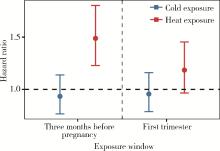
Figure 3

Association of maternal cold/heat exposure during the three months before pregnancy and the first trimester with the risk of congenital heart disease in offspring"

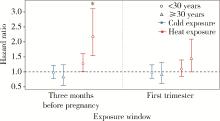
Figure 4

Association of cold/heat exposure with the risk of congenital heart disease stratified by maternal age * P < 0.05, vs. heat exposure during the three months before pregnancy in the group aged < 30 years."

Figure 5

Association of cold/heat exposure with the risk of congenital heart disease stratified by maternal pre-pregnancy body mass index * P < 0.05, vs. heat exposure during the first trimester in the group with BMI ≥18.5- < 24 kg/m2. BMI, body mass index."

Figure 6

Association of cold/heat exposure with the risk of congenital heart disease stratified by fetal sex"

Table 4

Association of maternal cold/heat exposure during the three months before pregnancy and early pregnancy with the risk of congenital heart disease risk using different relative thresholds"

Exposure window Exposure threshold Exposure type HR (95%CI) P value
Three months before pregnancy P5 Cold exposure 0.91 (0.70-1.20) 0.513
Three months before pregnancy P15 Cold exposure 0.85 (0.72-1.02) 0.076
Three months before pregnancy P85 Heat exposure 1.29 (1.08-1.55) 0.006
Three months before pregnancy P95 Heat exposure 1.31 (1.03-1.69) 0.031
First trimester P5 Cold exposure 0.75 (0.56-0.99) 0.041
First trimester P15 Cold exposure 0.90 (0.75-1.07) 0.222
First trimester P85 Heat exposure 1.15 (0.96-1.38) 0.131
First trimester P95 Heat exposure 1.01 (0.76-1.34) 0.931
1
Climate change exacerbates almost two-thirds of pathogenic diseases affecting humans[J]. Nat Clim Chang, 2022, 12(9): 791-792.
2
Intergovernmental Panel on Climate Change. Climate change 2021: The physical science basis: Working group Ⅰ contribution to the IPCC sixth assessment report[R/OL]. (2021-08-09)[2025-12-06]. https://www.ipcc.ch/report/ar6/wg1.
3
丁一汇, 任国玉, 石广玉, 等. 气候变化国家评估报告(Ⅰ): 中国气候变化的历史和未来趋势[J]. 气候变化研究进展, 2006, 2 (1): 3- 8.
4
Fitzgerald EF , Pantea C , Lin S . Cold spells and the risk of hospitalization for asthma: New York, USA 1991-2006[J]. Lung, 2014, 192 (6): 947- 954.

doi: 10.1007/s00408-014-9645-y
5
Kenny GP , Yardley J , Brown C , et al. Heat stress in older individuals and patients with common chronic diseases[J]. CMAJ, 2010, 182 (10): 1053- 1060.

doi: 10.1503/cmaj.081050
6
Lakhoo DP , Brink N , Radebe L , et al. A systematic review and meta-analysis of heat exposure impacts on maternal, fetal and neonatal health[J]. Nat Med, 2025, 31 (2): 684- 694.

doi: 10.1038/s41591-024-03395-8
7
Lee W , Choi HM , Lee JY , et al. Temporal changes in mortality impacts of heat wave and cold spell in Korea and Japan[J]. Environ Int, 2018, 116, 136- 146.

doi: 10.1016/j.envint.2018.04.017
8
Kodo K , Uchida K , Yamagishi H . Genetic and cellular interaction during cardiovascular development implicated in congenital heart diseases[J]. Front Cardiovasc Med, 2021, 8, 653244.

doi: 10.3389/fcvm.2021.653244
9
Roth GA , Mensah GA , Johnson CO , et al. Global burden of cardiovascular diseases and risk factors, 1990-2019: Update from the GBD 2019 study[J]. J Am Coll Cardiol, 2020, 76 (25): 2982- 3021.

doi: 10.1016/j.jacc.2020.11.010
10
Auger N , Fraser WD , Sauve R , et al. Risk of congenital heart defects after ambient heat exposure early in pregnancy[J]. Environ Health Perspect, 2017, 125 (1): 8- 14.

doi: 10.1289/EHP171
11
欧向阳, 丁锦丽, 杨哲, 等. HSP70在早期胚胎发育中作用的研究进展[J]. 中华生殖与避孕杂志, 2024, 44 (11): 1196- 1199.
12
Agay-Shay K , Friger M , Linn S , et al. Ambient temperature and congenital heart defects[J]. Hum Reprod, 2013, 28 (8): 2289- 2297.
13
Judge CM , Chasan-Taber L , Gensburg L , et al. Physical exposures during pregnancy and congenital cardiovascular malformations[J]. Paediatr Perinat Epidemiol, 2004, 18 (5): 352- 360.

doi: 10.1111/j.1365-3016.2004.00586.x
14
Tikkanen J , Heinonen OP . Maternal hyperthermia during pregnancy and cardiovascular malformations in the offspring[J]. Eur J Epidemiol, 1991, 7 (6): 628- 635.
15
Yu X , Miao H , Zeng Q , et al. Associations between ambient heat exposure early in pregnancy and risk of congenital heart defects: A large population-based study[J]. Environ Sci Pollut Res Int, 2022, 29 (5): 7627- 7638.

doi: 10.1007/s11356-021-16237-8
16
Ding G , Chen B , McCarrey JR , et al. The epigenetic mechanisms underlying gamete origin of adult-onset diseases[J]. Sci Bull, 2022, 67 (17): 1724- 1727.

doi: 10.1016/j.scib.2022.07.030
17
Samuels L , Nakstad B , Roos N , et al. Physiological mechanisms of the impact of heat during pregnancy and the clinical implications: Review of the evidence from an expert group meeting[J]. Int J Biometeorol, 2022, 66 (8): 1505- 1513.
18
Meng X , Zhang P , Zhang L . Fetal hypoxia impacts on proliferation and differentiation of Sca-1+ cardiac progenitor cells and maturation of cardiomyocytes: A role of microRNA-210[J]. Genes (Basel), 2020, 11 (3): 328.
19
Guo J , Ruan Y , Wang Y , et al. Maternal exposure to extreme cold events and risk of congenital heart defects: A large multicenter study in China[J]. Environ Sci Technol, 2024, 58 (8): 3737- 3746.
20
Cimadomo D , Fabozzi G , Vaiarelli A , et al. Impact of maternal age on oocyte and embryo competence[J]. Front Endocrinol, 2018, 9, 327.

doi: 10.3389/fendo.2018.00327
21
Turunen R , Pulakka A , Metsälä J , et al. Maternal diabetes and overweight and congenital heart defects in offspring[J]. JAMA Netw Open, 2024, 7 (1): e2350579.
22
Conlon FL , Arnold AP . Sex chromosome mechanisms in cardiac development and disease[J]. Nat Cardiovasc Res, 2023, 2 (4): 340- 350.
23
Pugnaloni F , Felici A , Corno AF , et al. Gender differences in congenital heart defects: A narrative review[J]. Transl Pediatr, 2023, 12 (9): 1753- 1764.
[1] Jingxian MO, Haijun WANG, Jue LIU, Qin LI, Tao SU, Yuelong JI. Association between umbilical cord blood proteome and early infant neurodevelopmental risk [J]. Journal of Peking University (Health Sciences), 2026, 58(3): 479-489.
[2] Yulin WANG, Xin GAO, Zhike LIU, Siyan ZHAN. Epidemiological characteristics of intussusception in children aged 0-3 years in Jiangsu Province from 2018 to 2023 [J]. Journal of Peking University (Health Sciences), 2026, 58(3): 490-495.
[3] Mengxi LU, Binghan WANG, Jiali KANG, Qiuping LIU, Yifan ZHOU, Yexiang SUN, Peng SHEN, Hongbo LIN, Xun TANG, Pei GAO. Application of biological age for cardiovascular risk prediction in a community-based Chinese cohort [J]. Journal of Peking University (Health Sciences), 2026, 58(3): 543-550.
[4] Jiaqi GAO, Wenpeng LI, Xiaoyi LI, Yinxi TAN, Yixin LI, Liping DUAN, Tao WU, Dafang CHEN, Yonghua HU, Mengying WANG. Association between wearable-derived physical activity patterns and gut microbiota in older adults [J]. Journal of Peking University (Health Sciences), 2026, 58(3): 551-559.
[5] Qingxian LUAN. To create the era of oral health management in China [J]. Journal of Peking University (Health Sciences), 2026, 58(2): 244-246.
[6] Hui WEI, Jingfeng ZHANG, Zhongqiang YAO, Jinxia ZHAO. Clinical characteristics and relevant factors of rheumatoid arthritis patients with anemia of chronic disease [J]. Journal of Peking University (Health Sciences), 2026, 58(2): 307-312.
[7] Jie ZHAO, Chun FU, Xiujuan ZHAO, Haiyan XUE, Shu LI, Zhenzhou WANG, Fengxue ZHU. Risk factors for ventilator-associated pneumonia in patients with chest trauma in intensive care unit [J]. Journal of Peking University (Health Sciences), 2026, 58(2): 351-358.
[8] Ning HUANG, Xiaohan LIU, Jing GUO. Impact of medical insurance on public health services utilization of floating population with chronic disease and the moderating role of health risk perception [J]. Journal of Peking University (Health Sciences), 2026, 58(1): 160-168.
[9] Meng FAN, Mengying WANG, Siyue WANG, Hexiang PENG, Xueheng WANG, Huangda GUO, Tianjiao HOU, Xueying QIN, Dafang CHEN, Yonghua HU, Jin LI, Yiqun WU, Tao WU. Association between indicators of arterial stiffness and all-cause mortality and cardiovascular deaths: A prospective cohort study [J]. Journal of Peking University (Health Sciences), 2025, 57(6): 1153-1159.
[10] Bowen LI, Qiang ZHANG, Yixin SUN. Establishment and validation of a risk prediction model for scoliosis after Nuss procedure in children and young adults with pectus excavatum [J]. Journal of Peking University (Health Sciences), 2025, 57(5): 941-946.
[11] Xiaoyong YANG, Fan ZHANG, Lulin MA, Cheng LIU. Clinical characteristics and influencing factors of extraglandular invasion of prostatic ductal adenocarcinoma [J]. Journal of Peking University (Health Sciences), 2025, 57(5): 956-960.
[12] Wei LIU, Wen GUO, Zhe GUO, Chunyan LI, Yunlong LI, Siqi LIU, Liang ZHANG, Hui SONG. Risk factors associated with non-radiographic bone erosion in patients with gout [J]. Journal of Peking University (Health Sciences), 2025, 57(4): 735-739.
[13] Mengxi LU, Qiuping LIU, Tianjing ZHOU, Xiaofei LIU, Yexiang SUN, Peng SHEN, Hongbo LIN, Xun TANG, Pei GAO. Association of triglyceride-glucose index and cardiovascular disease in a community-based Chinese cohort [J]. Journal of Peking University (Health Sciences), 2025, 57(3): 430-435.
[14] Shuhan YANG, Yixin LI, Haoliang CUI, Youxin WANG, Yuying WU, Mingyue WANG, Yifan YANG, Nur Enkar, Lei YANG, Hui WANG. Associations of metabolic dysfunction-associated steatotic liver disease and cardiometabolic risk factor abnormalities with adverse pregnancy outcomes [J]. Journal of Peking University (Health Sciences), 2025, 57(3): 487-495.
[15] Longao YANG, Xu JIN, Wenchu HUANG, Lihua HE, Juan CHEN. Epidemiological investigation of asthenopia and dry eye among visual display terminal workers [J]. Journal of Peking University (Health Sciences), 2025, 57(3): 554-561.
Viewed
Full text


Abstract

Cited

  Shared   
  Discussed   
No Suggested Reading articles found!