Journal of Peking University (Health Sciences) ›› 2026, Vol. 58 ›› Issue (3): 490-495. doi: 10.19723/j.issn.1671-167X.2026.03.007

Previous Articles     Next Articles

Epidemiological characteristics of intussusception in children aged 0-3 years in Jiangsu Province from 2018 to 2023

Yulin WANG1,2, Xin GAO1,2, Zhike LIU1,2,*(), Siyan ZHAN1,2,3,4,*()   

  1. 1. Department of Epidemiology and Biostatistics, Peking University School of Public Health, Beijing 100191, China
    2. Key Laboratory of Epidemiology of Major Diseases (Peking University), Ministry of Education, Beijing 100191, China
    3. Research Center of Clinical Epidemiology, Peking University Third Hospital, Beijing 100191, China
    4. Center for Intelligent Public Health, Institute for Artificial Intelligence, Peking University, Beijing 100871, China
  • Received:2026-01-15 Online:2026-06-18 Published:2026-04-15
  • Contact: Zhike LIU, Siyan ZHAN
  • Supported by:
    the Gates Foundation(INV-035024); the National Natural Science Foundation of China(82204175); the National Natural Science Foundation of China(72361127500); the National Natural Science Foundation of China(82330107)

RICH HTML


Abstract:

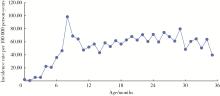
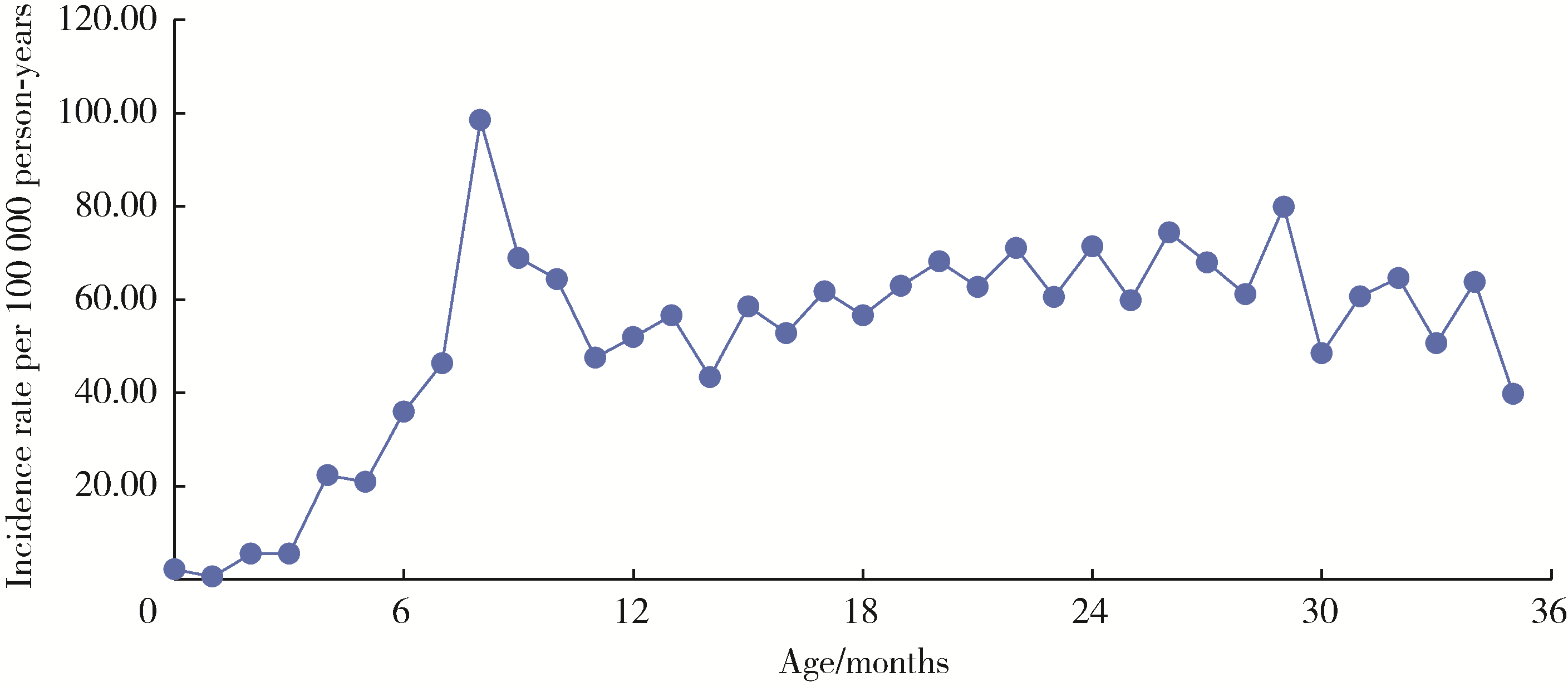
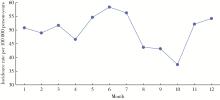
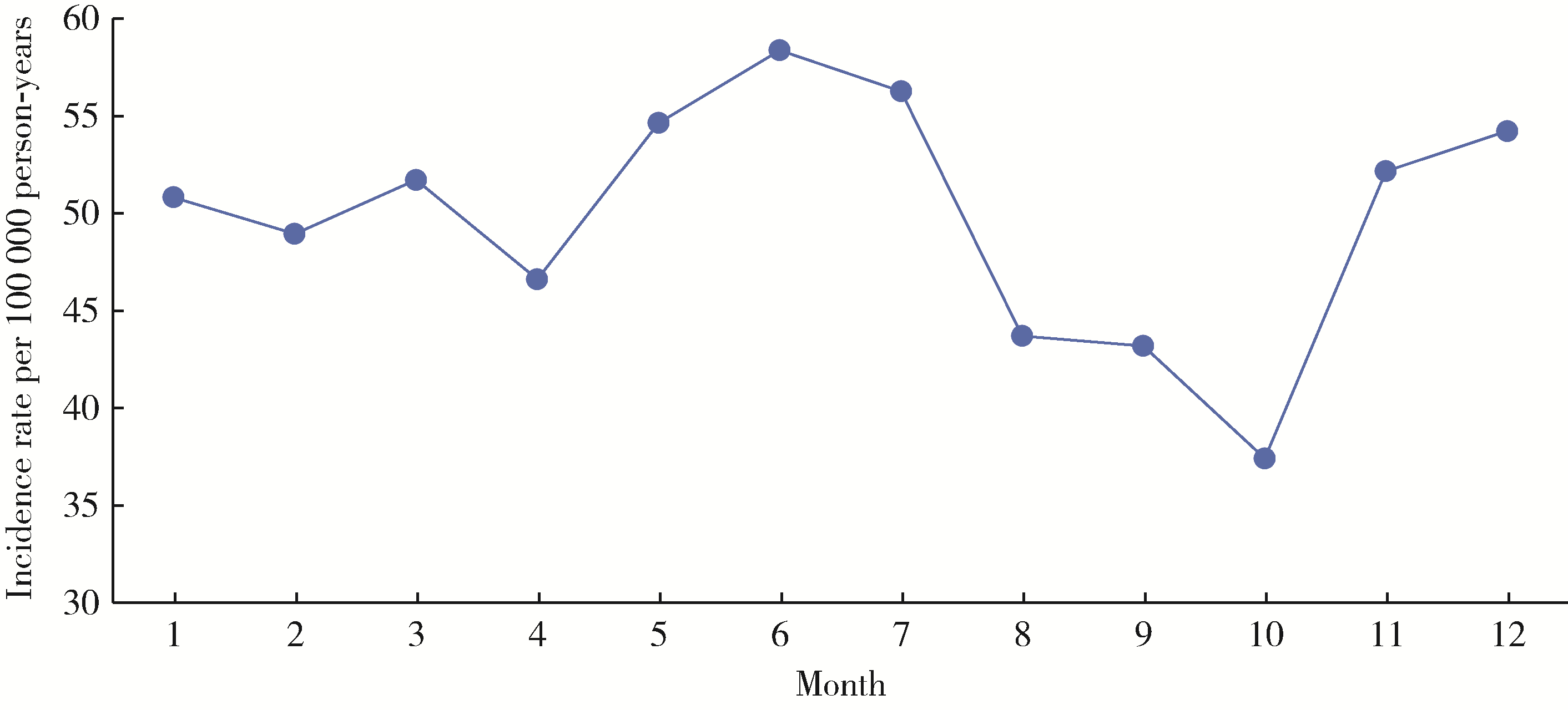
Objective: To describe the incidence density of intussusception and its distribution characteristics across different ages, genders, and time periods among resident children aged 0-3 years in Jiangsu Province from 2018 to 2023, providing a scientific basis for health administrative departments in the region to formulate prevention and control strategies and measures for intussusception in children aged 0-3 years. Methods: A retrospective cohort study was conducted using data from the Jiangsu Regional Health Information Platform (RHIP). Resident children aged 0-3 years born between January 1, 2018, and December 31, 2023, were included. Suspected cases were identified by retrieving the International Statistical Classification of Diseases and Related Health Problems, 10 revision (ICD-10) code "K56.1" and semantically related keywords for "intussusception" from the original text using a regular expression matching algorithm. An incident case was defined as the first occurrence of the disease during the study period. Follow-up person-years were calculated using the exact person-time method. The Poisson distribution was applied to estimate the overall and subgroup incidence densities and their 95% confidence intervals (CI). Poisson regression models were constructed to calculate incidence rate ratio (IRR) and examine the effects of age (in months) and seasonal differences on incidence density. Results: A birth cohort comprising 2 252 691 children aged 0-3 years was established, accumulating a total follow-up of 5 316 389.55 person-years. During the study period, 2 650 incident cases of intussusception were identified, including 1 600 boys (60.4%) and 1 050 girls (39.6%). The overall incidence density was 49.8 (95%CI: 47.9-51.7) per 100 000 person-years. The incidence density was 57.8 (95%CI: 54.9-60.6) per 100 000 person-years for boys and 41.2 (95%CI: 38.7-43.7) per 100 000 person-years for girls, with a statistically significant difference between the sexes. Seasonal variations were observed, with peaks occurring in summer and winter. The incidence density exhibited a unimodal pattern, peaking at 8 months (98.5 per 100 000 person-years). The median age of onset was 19.2 months [interquartile range (IQR): 11.4-26.6 months]. Conclusion: This large retrospective cohort study based on the Jiangsu RHIP clarified the epidemiological characteristics of intussusception among local children aged 0-3 years from 2018 to 2023. Boys and children aged 8 months to 3 years were identified as high-risk populations for intussusception, with peak incidence occurring in summer and winter. These findings provide evidence-based support for health authorities to formulate targeted strategies for early surveillance, prevention, and healthcare resource allocation.

Key words: Intussusception, Incidence density, Epidemiology, Cohort study

CLC Number: 

  • R181.3

Table 1

Baseline demographic characteristics of the study cohort"

Characteristic Total cohort (n=2 252 691) Cases (n=2 650) χ2 value P value
Gender, n (%) 71.99 <0.001
  Male 1 174 324 (52.13) 1 600 (60.38)
  Female 1 078 367 (47.87) 1 050 (39.62)
Residence, n (%) 7.87 0.005
  Urban 1 887 426 (83.78) 2 274 (85.81)
  Rural 365 265 (16.22) 376 (14.19)
Birth year, n (%)
  2018 409 210 (18.17) 332 (12.53)
  2019 434 083 (19.27) 573 (21.62)
  2020 410 813 (18.24) 690 (26.04)
  2021 358 774 (15.93) 672 (25.36)
  2022 344 582 (15.30) 327 (12.34)
  2023 295 229 (13.10) 56 (2.11)

Table 2

Distribution of incidence density of intussusception by population characteristics"

Characteristic Cases Person-years Incidence density(/100 000 person-years) IRR (95%CI) P value
Total 2 650 5 316 389.55 49.8 (47.9-51.7)
Gender 1.40 (1.30-1.52) <0.001
  Male 1 600 2 770 401.07 57.8 (54.9-60.6)
  Female 1 050 2 545 988.47 41.2 (38.7-43.7)
Residence 1.12 (1.00-1.25) 0.046
  Urban 2 274 4 487 101.09 50.7 (48.6-52.8)
  Rural 376 829 288.46 45.3 (40.8-49.9)

Figure 1

Age-specific incidence density of intussusception among children aged 0-35 months in Jiangsu Province"

Figure 2

Monthly distribution of incidence density of intussusception in Jiangsu Province"

1
Li Y , Zhou Q , Liu C , et al. Epidemiology, clinical characteristics, and treatment of children with acute intussusception: A case series[J]. BMC Pediatr, 2023, 23 (1): 143.

doi: 10.1186/s12887-023-03961-y
2
Bines JE , Kohl KS , Forster J , et al. Acute intussusception in infants and children as an adverse event following immunization: Case definition and guidelines of data collection, analysis, and presentation[J]. Vaccine, 2004, 22 (5/6): 569- 574.
3
Clark AD , Hasso-Agopsowicz M , Kraus MW , et al. Update on the global epidemiology of intussusception: A systematic review of incidence rates, age distributions and case-fatality ratios among children aged < 5 years, before the introduction of rotavirus vaccination[J]. Int J Epidemiol, 2019, 48 (4): 1316- 1326.

doi: 10.1093/ije/dyz028
4
郭宏溪, 杨俊, 卞红强, 等. 2016—2022年武汉儿童原发性肠套叠流行病学特征及变化趋势[J]. 陆军军医大学学报, 2023, 45 (19): 2085- 2091.
5
Green LA , Fryer GE Jr , Yawn BP , et al. The ecology of medical care revisited[J]. N Engl J Med, 2001, 344 (26): 2021- 2025.

doi: 10.1056/NEJM200106283442611
6
Pilkington M , Theivendram A , Brogly SB , et al. Rising incidence of childhood intussusception in Ontario: A population-based study from 1997-2016[J]. Am Surg, 2023, 89 (1): 129- 136.

doi: 10.1177/00031348211011139
7
Kramarz P , France EK , Destefano F , et al. Population-based study of rotavirus vaccination and intussusception[J]. Pediatr Infect Dis J, 2001, 20 (4): 410- 416.

doi: 10.1097/00006454-200104000-00008
8
Lei J , Wen D , Zhang X , et al. Enabling health reform through regional health information exchange: A model study from China[J]. J Healthc Eng, 2017, 2017, 1053403.
9
陆家发, 赵群, 唐凯, 等. 江苏省全民健康信息平台数据治理实践研究[J]. 中国卫生质量管理, 2023, 30 (8): 63- 67.
10
Liu Z , Li N , Liu G , et al. No increased risk of intussusception after pentavalent rotavirus vaccination in China: A retrospective birth cohort using electronic health records of Ningbo City[J]. Emerg Microbes Infect, 2023, 12 (2): 2270062.

doi: 10.1080/22221751.2023.2270062
11
Liu N , Yen C , Huang T , et al. Incidence and epidemiology of intussusception among children under 2 years of age in Chenzhou and Kaifeng, China, 2009-2013[J]. Vaccine, 2018, 36 (51): 7862- 7867.

doi: 10.1016/j.vaccine.2018.02.032
12
Zhang T , Cui L , Geng X , et al. Epidemiology study of pediatric primary intussusception aged ≤24 months in pre-rotavirus vaccine era of Jinan, China[J]. Vaccine, 2019, 37 (11): 1436- 1442.

doi: 10.1016/j.vaccine.2019.01.060
13
崔朋伟, 刘娜, 李静欣, 等. 苏州市2007—2013年2岁以下儿童住院肠套叠流行特征[J]. 中华流行病学杂志, 2016, 37 (3): 410- 414.
14
Van Trang N , Le Nguyen NT , Dao HT , et al. Incidence and epidemiology of intussusception among infants in Ho Chi Minh City, Vietnam[J]. J Pediatr, 2014, 164 (2): 366- 371.

doi: 10.1016/j.jpeds.2013.10.006
15
Takeuchi M , Osamura T , Yasunaga H , et al. Intussusception among Japanese children: An epidemiologic study using an administrative database[J]. BMC Pediatr, 2012, 12, 36.

doi: 10.1186/1471-2431-12-36
16
Fotso Kamdem A , Vidal C , Pazart L , et al. Incidence of acute intussusception among infants in eastern France: Results of the EPIstudy trial[J]. Eur J Pediatr, 2017, 176 (3): 301- 309.

doi: 10.1007/s00431-016-2838-z
17
Jenke AC , Klaassen-Mielke R , Zilbauer M , et al. Intussusception: Incidence and treatment-insights from the nationwide German surveillance[J]. J Pediatr Gastroenterol Nutr, 2011, 52 (4): 446- 451.

doi: 10.1097/MPG.0b013e31820e1bec
18
Gadroen K , Kemmeren JM , Bruijning-Verhagen PC , et al. Baseline incidence of intussusception in early childhood before rotavirus vaccine introduction, the Netherlands, January 2008 to December 2012[J]. Euro Surveill, 2017, 22 (25): 30556.
19
Jiang J , Jiang B , Parashar U , et al. Childhood intussusception: A literature review[J]. PLoS One, 2013, 8 (7): e68482.

doi: 10.1371/journal.pone.0068482
20
Johnson B , Gargiullo P , Murphy TV , et al. Sociodemographic and dietary risk factors for natural infant intussusception in the United States[J]. J Pediatr Gastroenterol Nutr, 2010, 51 (4): 458- 463.

doi: 10.1097/MPG.0b013e3181d3273f
21
World Health Organization. Acute intussusception in infants and children: Incidence, clinical representation and management: A global perspective[R]. Geneva: World Health Organization, 2002.
22
Chang CY , Chen YY , Lin CH , et al. Recurrence of pediatric intussusception: A nationwide population-based descriptive study in Taiwan[J]. Medicine, 2023, 102 (35): e34727.

doi: 10.1097/MD.0000000000034727
23
Hwang S , Kim J , Jung JY , et al. The epidemiology of childhood intussusception in South Korea: An observational study[J]. PLoS One, 2019, 14 (12): e0219286.

doi: 10.1371/journal.pone.0219286
24
Trotta F , Da Cas R , Bella A , et al. Intussusception hospitalizations incidence in the pediatric population in Italy: A nationwide cross-sectional study[J]. Ital J Pediatr, 2016, 42 (1): 89.

doi: 10.1186/s13052-016-0298-8
25
Panzera F , Di Venere B , Rizzi M , et al. Bowel intussusception in adult: Prevalence, diagnostic tools and therapy[J]. World J Methodol, 2021, 11 (3): 81- 87.

doi: 10.5662/wjm.v11.i3.81
26
国家统计局. 中国统计年鉴2024[M]. 北京: 中国统计出版社, 2024.
27
Althubaiti A . Information bias in health research: Definition, pitfalls, and adjustment methods[J]. J Multidiscip Healthc, 2016, 9, 211- 217.
28
Liang J , Zheng X , Chen Z , et al. The experience and challenges of healthcare-reform-driven medical consortia and Regional Health Information Technologies in China: A longitudinal study[J]. Int J Med Inform, 2019, 131, 103954.

doi: 10.1016/j.ijmedinf.2019.103954
29
Li C , Xu X , Zhou G , et al. Implementation of national health informatization in China: Survey about the status quo[J]. JMIR Med Inform, 2019, 7 (1): e12238.
30
江苏省统计局. 江苏统计年鉴2024[M]. 南京: 江苏省统计局, 2024.
31
Burnett E , Kabir F , van Trang N , et al. Infectious etiologies of intussusception among children <2 years old in 4 Asian countries[J]. J Infect Dis, 2020, 221 (9): 1499- 1505.
[1] Mengxi LU, Binghan WANG, Jiali KANG, Qiuping LIU, Yifan ZHOU, Yexiang SUN, Peng SHEN, Hongbo LIN, Xun TANG, Pei GAO. Application of biological age for cardiovascular risk prediction in a community-based Chinese cohort [J]. Journal of Peking University (Health Sciences), 2026, 58(3): 543-550.
[2] Zichen PAN, Kai CHEN, Yukun HOU, Bohan YANG, Jixin ZHANG, Yongsu MA, Xiaodong TIAN, Yinmo YANG. Research progress in clinical pathology and molecular mechanisms of pancreatic adenosquamous carcinoma [J]. Journal of Peking University (Health Sciences), 2026, 58(2): 431-435.
[3] Junjie HUANG, Zhaorui LIU, Tingting ZHANG, Yueqin HUANG. Cross-century process of mental health surveys in China [J]. Journal of Peking University (Health Sciences), 2025, 57(5): 868-874.
[4] Xin CHEN, Junting YANG, Jinxin GUO, Shuya LI, Zhike LIU, Yingliang ZHU, Fengjuan LI, Siyan ZHAN, Juanjuan GUO. Prevalence characteristics of autoimmune thyroid disease in women aged 10-59 years in Qingdao City from 2022 to 2024 [J]. Journal of Peking University (Health Sciences), 2025, 57(3): 507-513.
[5] Mengxi LU, Qiuping LIU, Tianjing ZHOU, Xiaofei LIU, Yexiang SUN, Peng SHEN, Hongbo LIN, Xun TANG, Pei GAO. Association of triglyceride-glucose index and cardiovascular disease in a community-based Chinese cohort [J]. Journal of Peking University (Health Sciences), 2025, 57(3): 430-435.
[6] Guangxu LIU, Liang ZHANG, Houyu ZHAO, Siwei DENG, Junting YANG, Ning LI, Rui MA, Yan HE, Guozhang XU, Zhike LIU, Siyan ZHAN. Epidemiological characteristics of febrile seizure among children under 6 years old in Ningbo City from 2015 to 2021 [J]. Journal of Peking University (Health Sciences), 2025, 57(3): 584-591.
[7] Zi-kai WANG,Jia-li MO,Meng ZHANG,Ji-ping LIAO. Epidemiology and hospitalization costs analysis of female inpatients with acute exacerbation of chronic obstructive pulmonary disease in Beijing from 2013 to 2020 [J]. Journal of Peking University (Health Sciences), 2023, 55(6): 1074-1081.
[8] Zhe WANG,Wei SUN,Xue YANG,Ying SONG,Ai-ping JI,Jie BAI. Clinical analysis of patients with oral and maxillofacial infections in oral emergency [J]. Journal of Peking University (Health Sciences), 2023, 55(3): 543-547.
[9] Huan YU,Ruo-tong YANG,Si-yue WANG,Jun-hui WU,Meng-ying WANG,Xue-ying QIN,Tao WU,Da-fang CHEN,Yi-qun WU,Yong-hua HU. Metformin use and risk of ischemic stroke in patients with type 2 diabetes: A cohort study [J]. Journal of Peking University (Health Sciences), 2023, 55(3): 456-464.
[10] Bing-jie HE,Zhi-ke LIU,Peng SHEN,Ye-xiang SUN,Bin CHEN,Si-yan ZHAN,Hong-bo LIN. Epidemiological study on the incidence of inflammatory bowel disease in Yinzhou District, Ningbo City from 2011 to 2020 [J]. Journal of Peking University (Health Sciences), 2022, 54(3): 511-519.
[11] LIU Jie,GUO Chao. A prospective cohort study of the influence of positive/negative effectivity on the mortality risk of the Chinese elderly [J]. Journal of Peking University (Health Sciences), 2022, 54(2): 255-260.
[12] YAO Xiao-ying,LIU Zhi-ke,LI Ning,MA Rui,ZHAO Xue-fei,ZHANG Liang,XU Guo-zhang,ZHAN Si-yan,FANG Ting. Epidemiological study of infantile epilepsy incidence density among infants under 36 months of age in Ningbo City from 2015 to 2019 [J]. Journal of Peking University (Health Sciences), 2021, 53(3): 485-490.
[13] Si-wei DENG,Ze-yi CHEN,Zhi-ke LIU,Jian WANG,Lin ZHUO,Shuang-qing GAO,Jia-kuo YU,Si-yan ZHAN. Epidemiological study of bone and joint injury based on urban medical insurance database [J]. Journal of Peking University (Health Sciences), 2020, 52(3): 527-534.
[14] Wen-ying MENG,Wan-tong HUANG,Jie ZHANG,Ming-yuan JIAO,Lei JIN,Lei JIN. Relationship between serum vitamin E concentration in first trimester and the risk of developing hypertension disorders complicating pregnancy [J]. Journal of Peking University (Health Sciences), 2020, 52(3): 470-478.
[15] Xun TANG,Du-dan ZHANG,Xiao-fei LIU,Qiu-ping LIU,Yang CAO,Na LI,Shao-ping HUANG,Hui-dong DOU,Pei GAO,Yong-hua HU. Application of the China-PAR stroke risk equations in a rural northern Chinese population [J]. Journal of Peking University (Health Sciences), 2020, 52(3): 444-450.
Viewed
Full text


Abstract

Cited

  Shared   
  Discussed   
No Suggested Reading articles found!