北京大学学报(医学版) ›› 2026, Vol. 58 ›› Issue (4): 872-876. doi: 10.19723/j.issn.1671-167X.2026.04.027

• 病例报告 • 上一篇    下一篇

成人阴茎囊性淋巴管瘤1例

杨庆凯1, 卢剑1, 陆敏2, 洪锴1,*()   

  1. 1. 北京大学第三医院泌尿外科,北京 100191
    2. 北京大学第三医院病理科,北京 100191
  • 收稿日期:2026-02-27 出版日期:2026-08-18 发布日期:2026-05-19
  • 通讯作者: 洪锴

Cystic lymphangioma of the penis in an adult: A case report

Qingkai YANG1, Jian LU1, Min LU2, Kai HONG1,*()   

  1. 1. Department of Urology, Peking University Third Hospital, Beijing 100191, China
    2. Department of Pathology, Peking University Third Hospital, Beijing 100191, China
  • Received:2026-02-27 Online:2026-08-18 Published:2026-05-19
  • Contact: Kai HONG

RICH HTML


摘要:

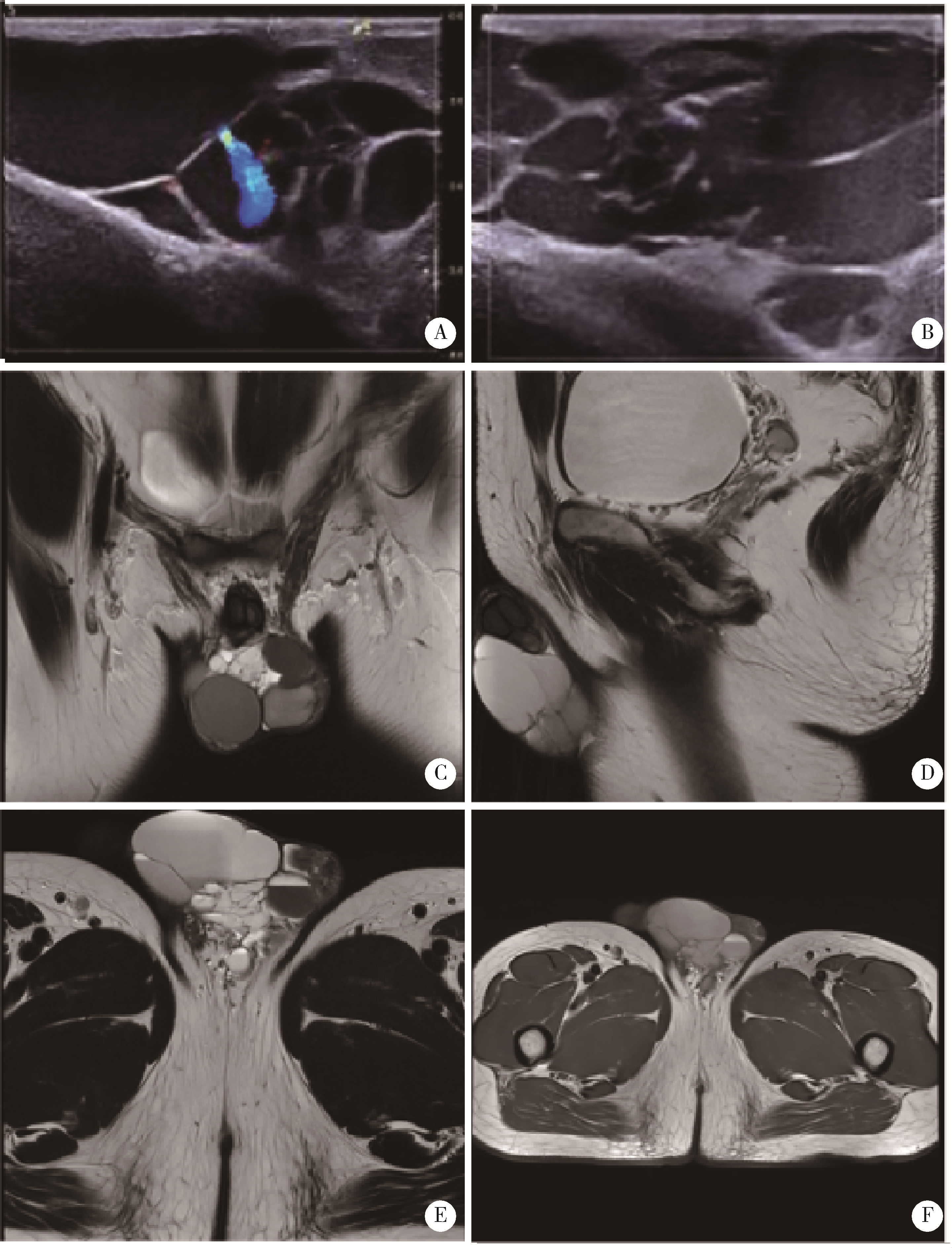
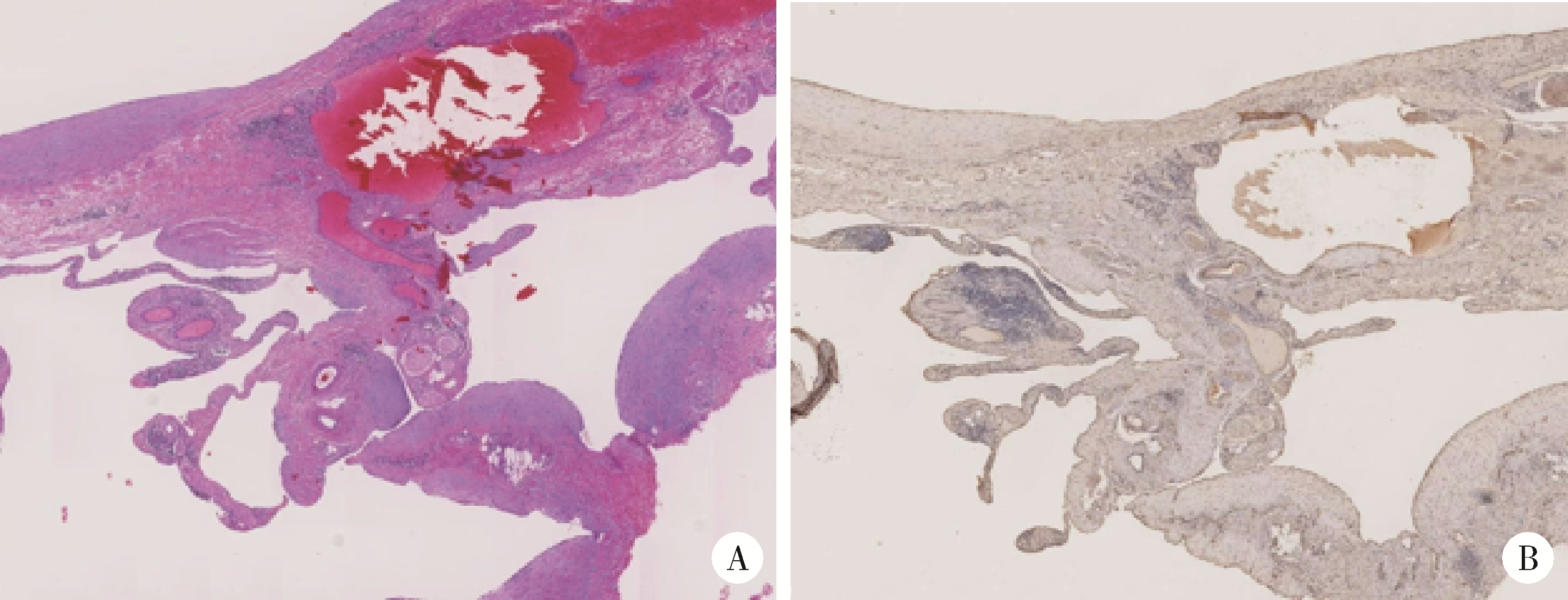
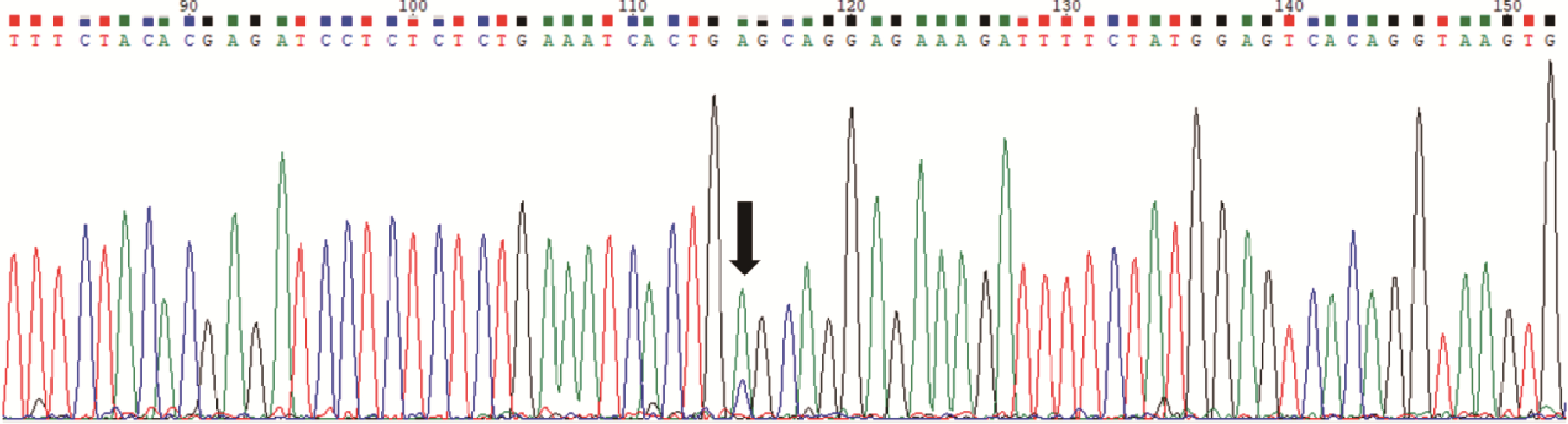
淋巴管瘤是由淋巴系统发育异常所致的先天性脉管畸形,发病率约1/4 000,多见于儿童,头颈部为好发部位,成人阴茎部位发病极为罕见,临床易误诊漏诊。本文报告1例成人阴茎囊性淋巴管瘤病例,患者42岁,因阴茎根部肿物30余年、近半年明显增大入院。查体于阴茎根部偏左侧触及约7 cm×4 cm×5 cm囊性肿物,透光试验阳性,双侧睾丸、附睾及精索未见异常。超声提示阴茎和阴囊交界区囊性无回声灶,边界清、形态不规则;磁共振成像显示阴茎根部多房囊性病变,范围约5.6 cm×3.8 cm×6.3 cm,影像学均支持囊性淋巴管瘤诊断。患者在硬膜外麻醉下行囊性肿物完整切除术,术中见肿物呈多房囊性,内含灰褐色液体;术后病理示囊壁内衬内皮细胞,免疫组织化学染色提示CD31阳性,确诊为囊性淋巴管瘤。基因检测提示体细胞PIK3CA基因E545(GAG>GCG)杂合突变,与淋巴管瘤主要致病机制相符。淋巴管瘤主要与体细胞PIK3CA基因突变相关,突变可激活下游信号通路,促进淋巴内皮细胞异常增殖,进而形成囊性病变。临床表现以缓慢增大的无痛性囊性肿物为主,确诊依赖影像学与病理检查,需与腹股沟斜疝、鞘膜积液、精索静脉曲张等疾病鉴别。治疗以手术完整切除为首选,可有效降低复发;无法手术者可选择硬化治疗或西罗莫司、阿培利司等靶向药物。本例患者术后恢复良好,随访1个月无复发。成人阴茎囊性淋巴管瘤虽罕见,但具备典型临床、影像及病理特征,结合基因检测可明确诊断;早期完整切除预后良好,临床应加强对罕见部位淋巴管瘤的识别与规范处理。

关键词: 阴茎, 囊性淋巴管瘤, 淋巴管畸形

Abstract:

Lymphangioma is a congenital vascular malformation arising from aberrant lymphatic deve-lopment, with a reported incidence of approximately 1 in 4 000. The condition predominates in the pedia-tric population, with the head and neck representing the most frequently affected anatomical regions. By contrast, scrotal lymphangioma in adults is exceedingly rare and remains highly susceptible to misdiagnosis or diagnostic omission in clinical settings. Here, we report a case of cystic lymphangioma of the penis in a 42-year-old male who presented with a mass at the penile root persisting for over 30 years, with marked enlargement over the preceding six months. Physical examination revealed a cystic mass measuring approximately 7 cm×4 cm×5 cm on the left aspect of the penile root, with a positive transillumination sign. Bilateral testes, epididymides, and spermatic cords were unremarkable. Ultrasonography demonstrated an irregular cystic anechoic lesion at the penoscrotal junction with well-defined margins. Magnetic resonance imaging (MRI) revealed a multilocular cystic lesion at the scrotal root measuring approximately 5.6 cm×3.8 cm×6.3 cm. Both imaging modalities were consistent with cystic lymphangioma. The patient underwent complete surgical resection under epidural anesthesia. Intraoperatively, the mass was confirmed to be multilocular and contained taupe-colored fluid. Histopathological analysis revealed endothelial cell lining of the cyst wall, and immunohistochemical staining was positive for CD31, establishing the definitive diagnosis of cystic lymphangioma. Genomic profiling identified a somatic heterozygous missense mutation in the PIK3CA gene at codon E545 (GAG>GCG), consistent with the established pathogenic mechanism underlying lymphangioma. Mechanistically, somatic PIK3CA mutations activate downstream signaling cascades, driving aberrant proliferation of lymphatic endothelial cells and culminating in cystic lesion formation. Clinically, lymphangioma typically manifests as a painless, slowly enlarging cystic mass. Definitive diagnosis relies on integrated imaging and histopathological evaluation, with differential diagnoses encompassing indirect inguinal hernia, hydrocele, and varicocele. Complete surgical resection remains the first-line therapeutic strategy and is associated with a substantially reduced recurrence rate. For patients deemed ineligible for surgery, sclerotherapy or molecularly targeted agents, including sirolimus and alpelisib, represent viable alternatives. The patient achieved an uneventful postoperative recovery with no evidence of recurrence at one-month follow-up. Although adult scrotal cystic lymphangioma is a rare clinical entity, it exhibits characteristic clinical, radiological, and pathological features that, in conjunction with molecular genetic analysis, enable accurate diagnosis. Early complete resection confers a favorable prognosis. Heightened clinical awareness and standardized management of lymphangioma at atypical anatomical sites are warranted.

Key words: Penis, Cystic lymphangioma, Lymphatic malformation

中图分类号: 

  • R737.27

图1

囊性淋巴管瘤超声及磁共振成像"

图2

囊性淋巴管瘤的组织学特征"

图3

囊性淋巴管瘤基因测序结果"

1
中华医学会整形外科分会血管瘤脉管畸形学组, 林晓曦. 血管瘤与脉管畸形诊疗指南(2024版)[J]. 组织工程与重建外科, 2024, 20 (1): 1- 50.
2
Karkkainen MJ , Haiko P , Sainio K , et al. Vascular endothelial growth factor C is required for sprouting of the first lymphatic vessels from embryonic veins[J]. Nat Immunol, 2004, 5 (1): 74- 80.

doi: 10.1038/ni1013
3
Hägerling R , Pollmann C , Andreas M , et al. A novel multistep mechanism for initial lymphangiogenesis in mouse embryos based on ultramicroscopy[J]. EMBO J, 2013, 32 (5): 629- 644.

doi: 10.1038/emboj.2012.340
4
Petrova TV , Karpanen T , Norrmén C , et al. Defective valves and abnormal mural cell recruitment underlie lymphatic vascular failure in lymphedema distichiasis[J]. Nat Med, 2004, 10 (9): 974- 981.

doi: 10.1038/nm1094
5
Martin-Almedina S , Martinez-Corral I , Holdhus R , et al. EPHB4 kinase-inactivating mutations cause autosomal dominant lymphatic-related hydrops fetalis[J]. J Clin Invest, 2016, 126 (8): 3080- 3088.

doi: 10.1172/JCI85794
6
Zhang G , Brady J , Liang WC , et al. EphB4 forward signalling regulates lymphatic valve development[J]. Nat Commun, 2015, 6, 6625.

doi: 10.1038/ncomms7625
7
Mäkinen T , Adams RH , Bailey J , et al. PDZ interaction site in ephrinB2 is required for the remodeling of lymphatic vasculature[J]. Genes Dev, 2005, 19 (3): 397- 410.

doi: 10.1101/gad.330105
8
Mäkinen T , Boon LM , Vikkula M , et al. Lymphatic malformations: Genetics, mechanisms and therapeutic strategies[J]. Circ Res, 2021, 129 (1): 136- 154.

doi: 10.1161/CIRCRESAHA.121.318142
9
Kunimoto K , Yamamoto Y , Jinnin M . ISSVA classification of vascular anomalies and molecular biology[J]. Int J Mol Sci, 2022, 23 (4): 2358.

doi: 10.3390/ijms23042358
10
Luks VL , Kamitaki N , Vivero MP , et al. Lymphatic and other vascular malformative/overgrowth disorders are caused by somatic mutations in PIK3CA[J]. J Pediatr, 2015, 166 (4): 1048- 1054.

doi: 10.1016/j.jpeds.2014.12.069
11
Osborn AJ , Dickie P , Neilson DE , et al. Activating PIK3CA alleles and lymphangiogenic phenotype of lymphatic endothelial cells isolated from lymphatic malformations[J]. Hum Mol Genet, 2015, 24 (4): 926- 938.

doi: 10.1093/hmg/ddu505
12
Janardhan HP , Saheera S , Jung R , et al. Vascular and lymphatic malformations: Perspectives from human and vertebrate studies[J]. Circ Res, 2021, 129 (1): 131- 135.

doi: 10.1161/CIRCRESAHA.121.319587
13
Elluru RG , Balakrishnan K , Padua HM . Lymphatic malformations: Diagnosis and management[J]. Semin Pediatr Surg, 2014, 23 (4): 178- 185.

doi: 10.1053/j.sempedsurg.2014.07.002
14
Rodriguez-Laguna L , Agra N , Ibañez K , et al. Somatic activating mutations in PIK3CA cause generalized lymphatic anomaly[J]. J Exp Med, 2019, 216 (2): 407- 418.

doi: 10.1084/jem.20181353
15
Martinez-Corral I , Zhang Y , Petkova M , et al. Blockade of VEGF-C signaling inhibits lymphatic malformations driven by oncogenic PIK3CA mutation[J]. Nat Commun, 2020, 11, 2869.

doi: 10.1038/s41467-020-16496-y
16
Churchill P , Otal D , Pemberton J , et al. Sclerotherapy for lymphatic malformations in children: A scoping review[J]. J Pediatr Surg, 2011, 46 (5): 912- 922.

doi: 10.1016/j.jpedsurg.2011.02.027
17
Ghaffarpour N , Petrini B , Svensson L , et al. Patients with lymphatic malformations who receive the immunostimulant OK-432 experience excellent long-term outcomes[J]. Acta Paediatr, 2015, 104 (11): 1169- 1173.

doi: 10.1111/apa.13086
[1] 王杰, 王建伟, 夏海缀, 徐啸, 翟建坡, 何峰, 黄广林, 李贵忠. 阴茎远端尿道狭窄疾病的手术治疗方式[J]. 北京大学学报(医学版), 2024, 56(6): 1075-1082.
[2] 陈延,李况蒙,洪锴,张树栋,程建星,郑仲杰,唐文豪,赵连明,张海涛,姜辉,林浩成. 阴茎海绵体注射试验对阴茎血管功能影响的回顾性研究[J]. 北京大学学报(医学版), 2024, 56(4): 680-686.
[3] 何海龙,李清,徐涛,张晓威. 耻骨上吸脂术联合改良Devine术治疗成人获得性隐匿性阴茎[J]. 北京大学学报(医学版), 2022, 54(4): 741-745.
[4] 张春龙,李赫,李清,白文俊,徐涛,张晓威. 脱细胞异体补片移植阴茎增粗术后患者决策后悔分析[J]. 北京大学学报(医学版), 2020, 52(4): 678-683.
[5] 辛钟成,杨璧铖,李猛,袁亦铭,崔万寿,唐渊,方冬,宋卫东. 脱细胞异体真皮在泌尿生殖疾病手术治疗中的应用[J]. 北京大学学报(医学版), 2019, 51(4): 778-782.
[6] 王建伟,满立波,黄广林,何峰,王海,王海东,徐啸,李伟,翟建坡,刘振华. 口腔黏膜背侧移植结合阴茎带蒂皮瓣腹侧覆盖治疗阴茎部尿道狭窄[J]. 北京大学学报(医学版), 2019, 51(4): 641-645.
[7] 许庭珉,张晓威,张国喜,白文俊,李清,徐涛. 应用脱细胞异体真皮补片行阴茎增粗术的并发症及处理[J]. 北京大学学报(医学版), 2019, 51(4): 636-640.
[8] 许永德,关瑞礼,吴元翼,雷洪恩,杨璧铖,李辉喜,王林,郭应禄,辛钟成. 裸鼠肾被膜下阴茎海绵体组织和盆神经节移植的可行性[J]. 北京大学学报(医学版), 2016, 48(4): 725-728.
[9] 鲍正清,方冬,岳才博,蔡林,王天昱,李学松,周利群. 原发性阴茎阴囊Paget病22例临床分析[J]. 北京大学学报(医学版), 2016, 48(4): 638-642.
[10] 杨竣, 王涛, 张岩, 徐华, 王少刚, 刘继红, 叶章群. 碱性成纤维细胞生长因子在老龄大鼠血清及阴茎海绵体中的含量[J]. 北京大学学报(医学版), 2015, 47(4): 582-585.
[11] 秦锋,钱升强,袁久洪. 小儿阴茎异常勃起的治疗与预防策略[J]. 北京大学学报(医学版), 2013, 45(6): 1001-1006.
[12] 朱根应, 周谋望, 黄红拾, 陈亚平, 王文婷, 曾凡硕. 高选择性脊神经后根切断对SD大鼠膀胱和阴茎勃起功能的影响[J]. 北京大学学报(医学版), 2010, 42(5): 530-534.
[13] 廉文清, 崔万寿, 金哲, 张建, 刘涛, 李维仁, 袁亦铭, 辛钟成. 阴茎海绵体-尿道海绵体分流术+隧道术治疗拖延性缺血性阴茎异常勃起[J]. 北京大学学报(医学版), 2010, 42(4): 421-424.
[14] 金哲, 朱一辰, 崔万寿, 刘涛, 李维仁, 袁亦铭, 宋卫东, 辛钟成. 阴茎起勃器植入手术治疗重度勃起功能障碍的效果和患者满意度[J]. 北京大学学报(医学版), 2010, 42(4): 413-417.
[15] 蔡志明, 朱辉, 龙云, 宋博, 张蒂荣, 马雅, 龙道畴. 阴茎大部分缺损功能性修复术的研究[J]. 北京大学学报(医学版), 2004, 36(6): 587-590.
Viewed
Full text


Abstract

Cited

  Shared   
  Discussed   
No Suggested Reading articles found!