北京大学学报(医学版) ›› 2026, Vol. 58 ›› Issue (4): 794-802. doi: 10.19723/j.issn.1671-167X.2026.04.016

• 论著 • 上一篇    下一篇

基于36基因标签的非肌层浸润性膀胱癌复发预测模型及中国队列验证

董丽媛*, 彭云*, 宋宇轩, 李晓阳, 杜依青*(), 徐涛   

  1. 北京大学人民医院泌尿外科, 北京 100044
  • 收稿日期:2026-03-02 出版日期:2026-08-18 发布日期:2026-05-13
  • 通讯作者: 杜依青
  • 作者简介:

    * These authors contributed equally to this work

  • 基金资助:
    科技创新2030-“癌症、心脑血管、呼吸和代谢性疾病防治研究”国家科技重大专项(2024ZD0525700); 国家自然科学基金(82471866); 国家自然科学基金(82472912); 北京市自然科学基金(L252190)

Development of a 36-gene signature for predicting recurrence in non-muscle-invasive bladder cancer and validation in a Chinese cohort

Liyuan DONG, Yun PENG, Yuxuan SONG, Xiaoyang LI, Yiqing DU*(), Tao XU   

  1. Department of Urology, Peking University People's Hospital, Beijing 00044, China
  • Received:2026-03-02 Online:2026-08-18 Published:2026-05-13
  • Contact: Yiqing DU
  • Supported by:
    the Noncommunicable Chronic Diseases-National Science and Technology Major Project(2024ZD0525700); the National Natural Science Foundation of China(82471866); the National Natural Science Foundation of China(82472912); the Beijing Natural Science Foundation(L252190)

RICH HTML


摘要:

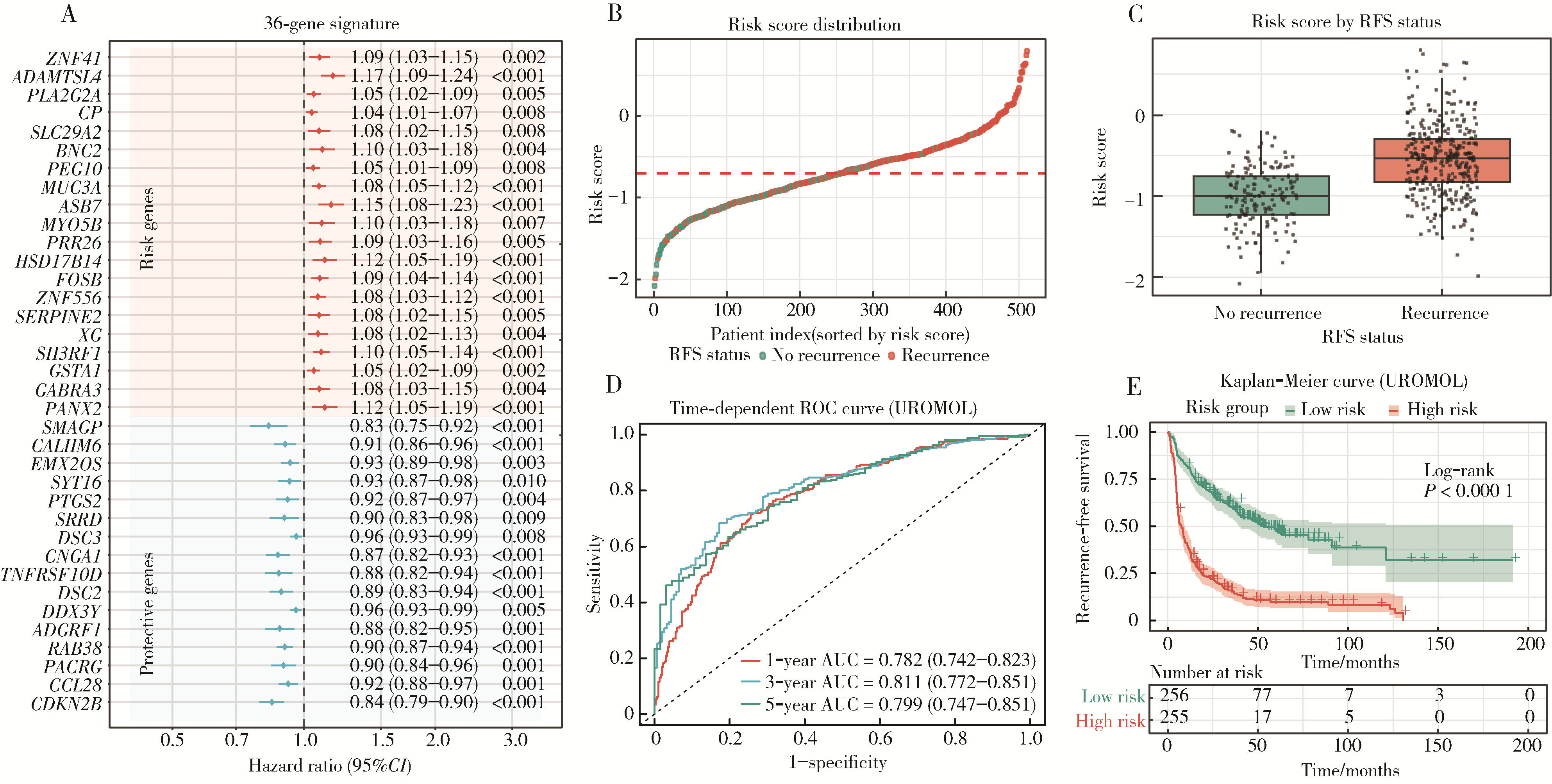
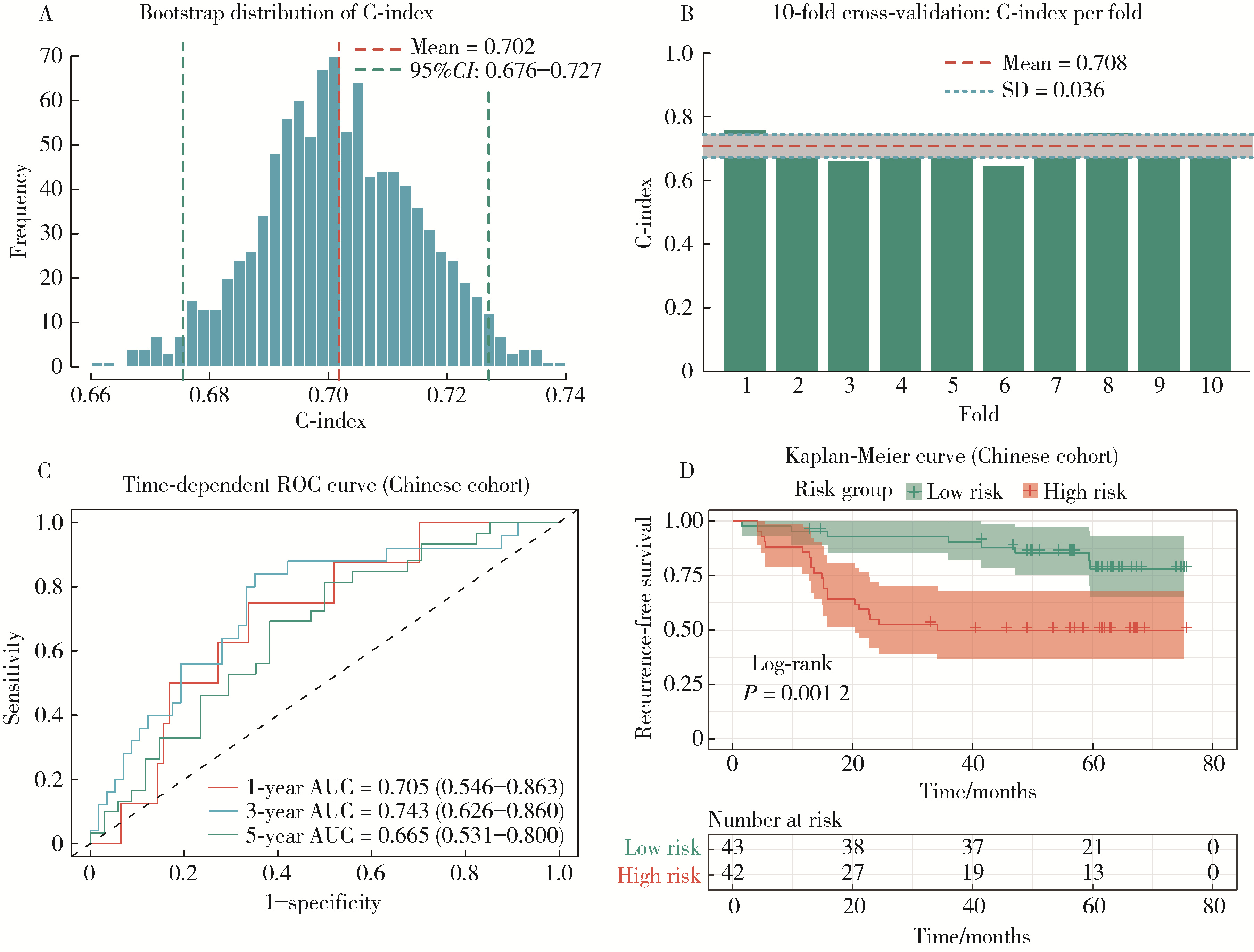
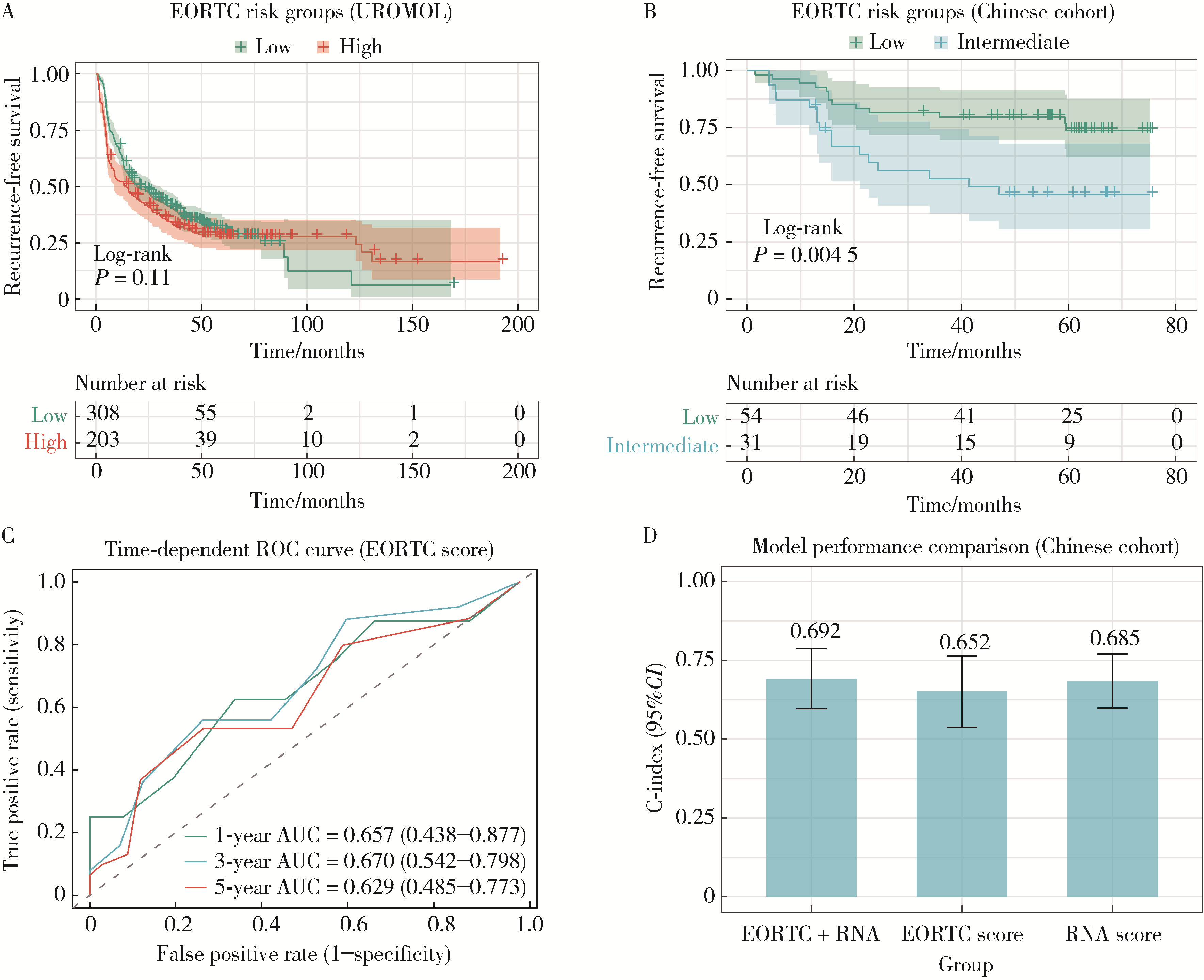
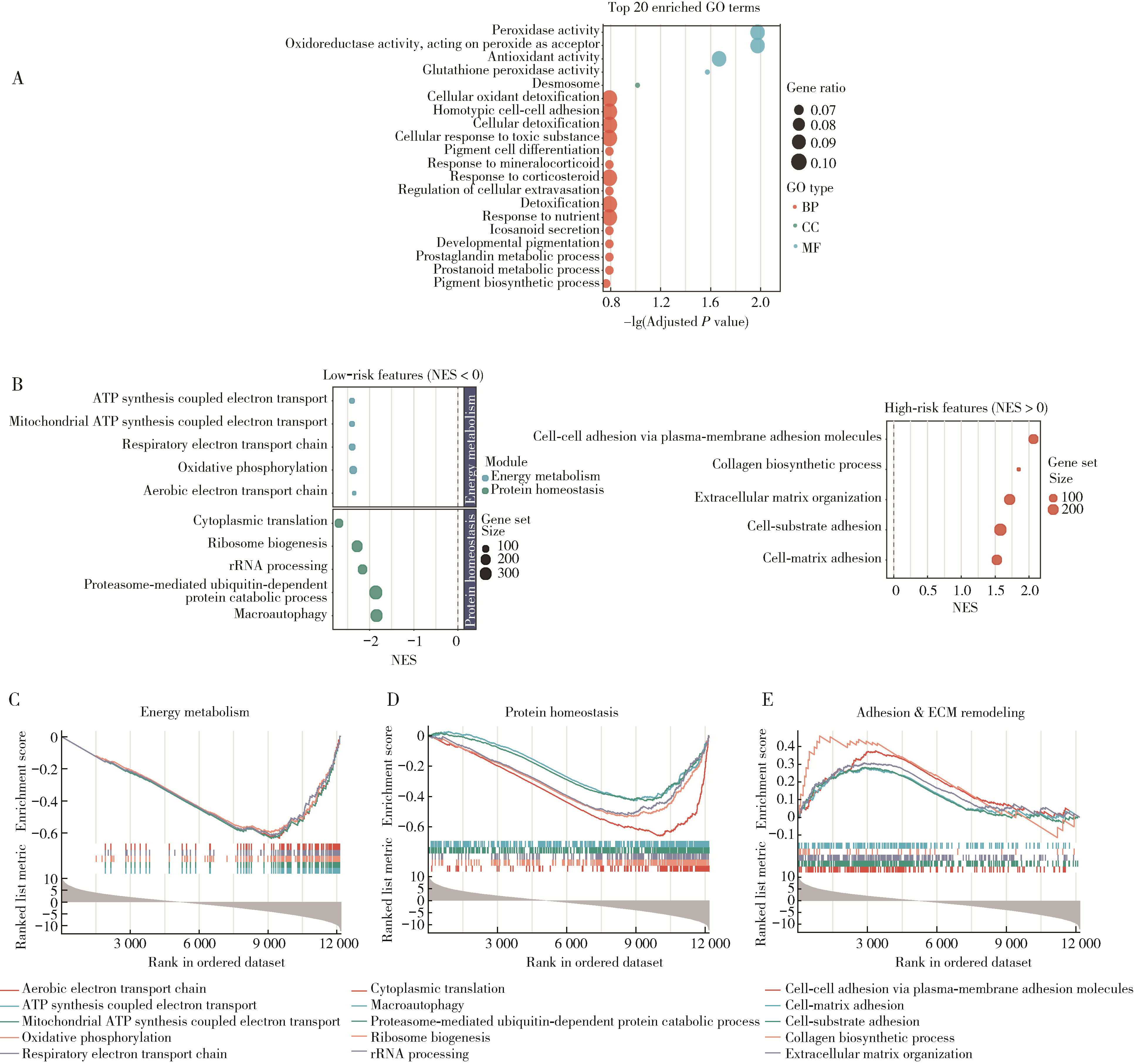
目的: 构建基于RNA表达的非肌层浸润性膀胱癌(non-muscle-invasive bladder cancer, NMIBC)的复发预测模型,在中国队列中验证其有效性,并探讨潜在的生物学机制。方法: 基于欧洲尿路上皮癌分子分型联盟(Urothelial Cancer Molecular Classification Consortium, UROMOL)多中心队列(n=535)的转录组数据,采用最小绝对收缩和选择算子(least absolute shrinkage and selection operator, LASSO)Cox回归筛选预后基因并构建风险评分模型,并根据评分将患者分为高风险组和低风险组。通过Bootstrap重抽样和10折交叉验证进行内部验证,在北京大学人民医院独立的中国队列(n=85)中进行外部验证。采用基因集富集分析(gene set enrichment analysis, GSEA)探索高风险组和低风险组的生物学差异。结果: 从12 170个基因中筛选出36个构建模型,训练队列中,模型一致性指数(concordance index, C-index) 为0.702(95%CI:0.664~0.740),1、3、5年曲线下面积(area under curve, AUC)分别为0.782、0.811、0.799;高风险组与低风险组5年无复发生存率相比,差异有统计学意义(35.2% vs. 72.8%,Log-rank P < 0.001)。内部验证显示,模型稳定性良好(C-index分别为0.702和0.708),在独立的中国验证队列中,模型的C-index为0.685(95%CI:0.631~0.739),1、3、5年的AUC分别为0.705、0.743、0.665,预测效能与欧洲癌症研究与治疗组织(European Organization for Research and Treatment of Cancer, EORTC)评分(C-index=0.652)相当。GSEA分析显示,低风险组富集于能量代谢和蛋白质稳态通路,高风险组富集于细胞外基质(extracellular matrix, ECM)重塑和细胞黏附通路。结论: 本研究构建的36基因模型在独立的中国队列中显示出稳定的预测效能,与经典EORTC系统的预测效能相当,并揭示了能量代谢和ECM重塑等关键通路在NMIBC复发中的作用,为中国患者的个体化治疗提供了分子依据。

关键词: 非肌层浸润性膀胱癌, 肿瘤复发, 预测, 基因标签, 队列研究

Abstract:

Objective: To develop a transcriptomic-based recurrence prediction model for non-muscle-invasive bladder cancer (NMIBC), to comprehensively validate its efficacy in an independent Chinese cohort, and to explore the underlying biological mechanisms driving tumor recurrence. Methods: Transcriptome profiling data from the multicenter European Urothelial Cancer Molecular Classification Consortium (UROMOL) cohort (n=535) were used as the training cohort. The least absolute shrinkage and selection operator (LASSO) Cox regression was employed to identify prognostic genes and construct a risk score model. Internal validation was strictly performed using Bootstrap resampling and 10-fold cross-validation. External validation was conducted in an independent Chinese cohort (n=85) from Peking University People ' s Hospital. Gene set enrichment analysis (GSEA) was applied to elucidate the distinct biological differences between high- and low-risk groups. Results: A 36-gene prognostic signature was identified from 12 170 genes to construct the risk score model. In the training cohort, the model achieved a concordance index (C-index) of 0.702 (95%CI: 0.664-0.740), with 1-, 3-, and 5-year areas under the receiver operating characteristic curve (AUC) of 0.782, 0.811, and 0.799, respectively. The 5-year recurrence-free survival (RFS) rates for the high- and low-risk groups were 35.2% and 72.8%, respectively (Log-rank P < 0.001). Internal validation via Bootstrap (C-index=0.702) and 10-fold cross-validation (C-index=0.708) demonstrated robust stability. In the independent Chinese validation cohort, the model maintained a favorable C-index of 0.685 (95%CI: 0.631-0.739), with 1-, 3-, and 5-year AUC of 0.705, 0.743, and 0.665, respectively. Its predictive performance was comparable to the traditional European Organization for Research and Treatment of Cancer (EORTC) risk score (C-index=0.652). GSEA revealed that the low-risk group was enriched in energy metabolism and protein homeostasis pathways, while the high-risk group was associated with extracellular matrix (ECM) remodeling and cell adhesion pathways. Conclusion: The 36-gene signature developed in this study demonstrates favorable predictive performance and stability across both the training and independent Chinese cohorts. While exhibiting comparable predictive efficacy to the traditional EORTC scoring system, the model serves as an independent prognostic factor that provides crucial supplementary molecular stratification. Furthermore, the model underscores the critical roles of energy metabolism and ECM remodeling in NMIBC recurrence, providing a valuable molecular basis for precise individualized management of NMIBC patients in China.

Key words: Non-muscle-invasive bladder cancer, Neoplasm recurrence, Prediction, Gene signatures, Cohort studies

中图分类号: 

  • R737.14

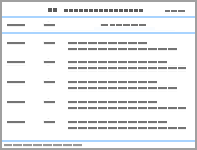
表1

训练队列和验证队列患者基线特征的比较"

Variables Training cohort (n=535) Validation cohort (n=85) P
Age/years 69 (62.0-76.0) 67 (60.0-74.0) 0.065
Sex 0.541
  Male 414 (77.4) 66 (77.6)
  Female 121 (22.6) 19 (22.4)
T stage < 0.001
  CIS 3 (0.6) 1 (1.2)
  Ta 135 (25.2) 61 (71.8)
  T1 397 (74.2) 23 (27.1)
Tumor grade 0.881
  PUNLMP 0 (0) 11 (12.9)
  Low grade 320 (59.8) 34 (40.0)
  High grade 215 (40.2) 40 (47.1)
EORTC risk group 0.003
  Low risk 324 (60.6) 54 (63.5)
  Intermediate risk 0 (0) 31 (36.5)
  High risk 211 (39.4) 0 (0)

图1

训练队列中36基因模型的构建与性能评估"

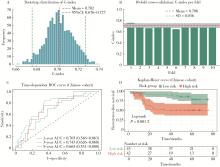
图2

模型内部验证及独立中国队列的外部验证"

图3

36基因模型与EORTC评分预测性能的比较"

图4

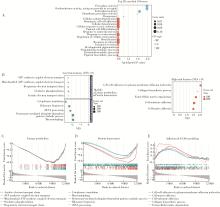
36基因模型相关的生物学通路和机制"

1
Sung H , Ferlay J , Siegel RL , et al. Global cancer statistics 2020:GLOBOCAN estimates of incidence and mortality worldwide for 36 cancers in 185 countries[J]. CA A Cancer J Clin, 2021, 71 (3): 209- 249.
2
Babjuk M , Burger M , Capoun O , et al. European association of urology guidelines on non-muscle-invasive bladder cancer (Ta, T1, and carcinoma in situ)[J]. Eur Urol, 2022, 81 (1): 75- 94.

doi: 10.1016/j.eururo.2021.08.010
3
Sylvester RJ , van der Meijden APM , Oosterlinck W , et al. Predicting recurrence and progression in individual patients with stage Ta T1 bladder cancer using EORTC risk tables: A combined ana-lysis of 2596 patients from seven EORTC trials[J]. Eur Urol, 2006, 49 (3): 466- 477.

doi: 10.1016/j.eururo.2005.12.031
4
Ieda T , Muto S , Shimizu F , et al. Development and validation of a novel recurrence risk stratification for initial non-muscle invasive bladder cancer in Asia[J]. EBioMedicine, 2016, 12, 98- 104.

doi: 10.1016/j.ebiom.2016.08.051
5
Busato WFS Jr , Almeida GL , Ribas CAPM , et al. EORTC risk model to predict progression in patients with non-muscle-invasive bladder cancer: Is it safe to use in clinical practice?[J]. Clin Genitourin Cancer, 2016, 14 (2): 176- 182.

doi: 10.1016/j.clgc.2015.09.005
6
林瑞, 杜君, 张艳辉, 等. EORTC危险评分系统对T1期非肌层浸润性膀胱癌患者的预后评价[J]. 中国肿瘤临床, 2016, 43 (15): 655- 658.
7
Wang H , Ding W , Jiang G , et al. EORTC risk tables are more suitable for Chinese patients with nonmuscle-invasive bladder cancer than AUA risk stratification[J]. Medicine, 2018, 97 (36): e12006.

doi: 10.1097/MD.0000000000012006
8
Weinstein JN , Akbani R , Broom BM , et al. Comprehensive molecular characterization of urothelial bladder carcinoma[J]. Nature, 2014, 507 (7492): 315- 322.

doi: 10.1038/nature12965
9
Tibshirani R . The lasso method for variable selection in the cox model[J]. Stat Med, 1997, 16 (4): 385- 395.

doi: 10.1002/(SICI)1097-0258(19970228)16:4<385::AID-SIM380>3.0.CO;2-3
10
Hedegaard J , Lamy P , Nordentoft I , et al. Comprehensive transcriptional analysis of early-stage urothelial carcinoma[J]. Cancer Cell, 2016, 30 (1): 27- 42.

doi: 10.1016/j.ccell.2016.05.004
11
Wu T , Hu E , Xu S , et al. clusterProfiler 4.0:A universal enrichment tool for interpreting omics data[J]. Innovation (Camb), 2021, 2 (3): 100141.
12
Hu Q , Zhu Y , Mei J , et al. Extracellular matrix dynamics in tumor immunoregulation: From tumor microenvironment to immunotherapy[J]. J Hematol Oncol, 2025, 18 (1): 65.

doi: 10.1186/s13045-025-01717-y
13
Sleeboom JJF , van Tienderen GS , Schenke-Layland K , et al. The extracellular matrix as hallmark of cancer and metastasis: From biomechanics to therapeutic targets[J]. Sci Transl Med, 2024, 16 (728): eadg3840.

doi: 10.1126/scitranslmed.adg3840
14
Ding W , Chen Z , Gou Y , et al. Are EORTC risk tables suitable for Chinese patients with non-muscle-invasive bladder cancer?[J]. Cancer Epidemiol, 2014, 38 (2): 157- 161.

doi: 10.1016/j.canep.2014.02.001
15
Lindskrog SV , Prip F , Lamy P , et al. An integrated multi-omics analysis identifies prognostic molecular subtypes of non-muscle-invasive bladder cancer[J]. Nat Commun, 2021, 12 (1): 2301.

doi: 10.1038/s41467-021-22465-w
16
Aine M , Eriksson P , Liedberg F , et al. Biological determinants of bladder cancer gene expression subtypes[J]. Sci Rep, 2015, 5, 10957.

doi: 10.1038/srep10957
17
Zhang C , Yin H , Li T , et al. Identification of multicohort-based predictive signature for NMIBC recurrence reveals SDCBP as a novel oncogene in bladder cancer[J]. Ann Med, 2025, 57 (1): 2458211.

doi: 10.1080/07853890.2025.2458211
18
Zhang S , Wang C , Xia W , et al. Novel ferroptosis-related multigene prognostic models for patients with bladder cancer[J]. Int J Gen Med, 2021, 14, 8651- 8666.

doi: 10.2147/IJGM.S339996
19
Cambier S , Sylvester RJ , Collette L , et al. EORTC nomograms and risk groups for predicting recurrence, progression, and disease-specific and overall survival in non-muscle-invasive stage Ta-T1 urothelial bladder cancer patients treated with 1-3 years of maintenance bacillus Calmette-Guérin[J]. Eur Urol, 2016, 69 (1): 60- 69.

doi: 10.1016/j.eururo.2015.06.045
20
Warburg O . On the origin of cancer cells[J]. Science, 1956, 123 (3191): 309- 314.

doi: 10.1126/science.123.3191.309
21
Zhang Y , Yan H , Wei Y , et al. Decoding mitochondria ' s role in immunity and cancer therapy[J]. Biochim Biophys Acta Rev Cancer, 2024, 1879 (4): 189107.

doi: 10.1016/j.bbcan.2024.189107
22
Chen X , Hao B , Li D , et al. Melatonin inhibits lung cancer development by reversing the Warburg effect via stimulating the SIRT3/PDH axis[J]. J Pineal Res, 2021, 71 (2): e12755.

doi: 10.1111/jpi.12755
23
Jiang H , Tiche SJ , He CJ , et al. Restoring mitochondrial quantity and quality to reverse the Warburg effect and drive neuroblastoma differentiation[J]. Proc Natl Acad Sci USA, 2025, 122 (36): e2502483122.

doi: 10.1073/pnas.2502483122
24
Zhang C , Li J , Tang Q , et al. Targeting proteostasis for cancer therapy: Current advances, challenges, and future perspectives[J]. Mol Cancer, 2025, 24 (1): 265.

doi: 10.1186/s12943-025-02472-x
25
Zheng H , An M , Luo Y , et al. PDGFRα +ITGA11 + fibroblasts foster early-stage cancer lymphovascular invasion and lymphatic metastasis via ITGA11-SELE interplay[J]. Cancer Cell, 2024, 42 (4): 682- 700. e12.

doi: 10.1016/j.ccell.2024.02.002
26
Liang T , Tao T , Wu K , et al. Cancer-associated fibroblast-induced remodeling of tumor microenvironment in recurrent bladder cancer[J]. Adv Sci (Weinh, 2023, 10 (31): 2303230.
27
Mai Z , Lin Y , Lin P , et al. Modulating extracellular matrix stiffness: A strategic approach to boost cancer immunotherapy[J]. Cell Death Dis, 2024, 15 (5): 307.

doi: 10.1038/s41419-024-06697-4
28
Lee CJ , Jang TY , Jeon SE , et al. The dysadherin/MMP9 axis modifies the extracellular matrix to accelerate colorectal cancer progression[J]. Nat Commun, 2024, 15 (1): 10422.

doi: 10.1038/s41467-024-54920-9
29
Wang H , Zhu YN , Zhang S , et al. Transcriptome-wide analysis reveals potential roles of CFD and ANGPTL4 in fibroblasts regulating B cell lineage for extracellular matrix-driven clustering and novel avenues for immunotherapy in breast cancer[J]. Mol Med, 2025, 31 (1): 179.

doi: 10.1186/s10020-025-01237-y
30
Wang H , Sun H , Huang J , et al. Therapeutic targeting ERRγ suppresses metastasis via extracellular matrix remodeling in small cell lung cancer[J]. EMBO Mol Med, 2024, 16 (9): 2043- 2059.

doi: 10.1038/s44321-024-00108-z
[1] 姬家祥, 赖金惠, 王飞, 胡浩. 合并低级别成分对高级别非肌层浸润性膀胱癌预后的影响[J]. 北京大学学报(医学版), 2026, 58(4): 803-807.
[2] 王玉霖, 郜鑫, 刘志科, 詹思延. 2018—2023年江苏省0~3岁婴幼儿肠套叠发病的流行病学特征[J]. 北京大学学报(医学版), 2026, 58(3): 490-495.
[3] 徐慧颖, 何兴侯, 黄薇, 张彬, 李梦瑶, 刘家辉, 方言, 赵二璐, 魏相睿, 马旭, 杨英. 中国育龄女性围孕期冷热暴露与先天性心脏病发病风险的关联[J]. 北京大学学报(医学版), 2026, 58(3): 503-512.
[4] 陆梦溪, 王炳翰, 康佳丽, 刘秋萍, 周逸帆, 孙烨祥, 沈鹏, 林鸿波, 唐迅, 高培. 生物学年龄在社区人群队列中预测心血管病风险的应用[J]. 北京大学学报(医学版), 2026, 58(3): 543-550.
[5] 王楠楠, 袁大晋, 朱昱冰, 丁磊. 结直肠癌根治术后肝转移风险多中心列线图预测模型的构建与验证[J]. 北京大学学报(医学版), 2026, 58(2): 290-300.
[6] 范梦, 王梦莹, 王斯悦, 彭和香, 王雪珩, 郭煌达, 侯天姣, 秦雪英, 陈大方, 胡永华, 李劲, 武轶群, 吴涛. 动脉硬化相关指标与死亡风险的前瞻性队列研究[J]. 北京大学学报(医学版), 2025, 57(6): 1153-1159.
[7] 陆梦溪, 刘秋萍, 周恬静, 刘晓非, 孙烨祥, 沈鹏, 林鸿波, 唐迅, 高培. 基于社区人群队列的甘油三酯-葡萄糖指数与心血管病发病和死亡的关联[J]. 北京大学学报(医学版), 2025, 57(3): 430-435.
[8] 王文琼, 侯玉珂, 李春, 张学武. 系统性红斑狼疮患者不良妊娠结局的预测因素[J]. 北京大学学报(医学版), 2025, 57(3): 599-603.
[9] 颜野,李小龙,夏海缀,朱学华,张羽婷,张帆,刘可,刘承,马潞林. 前列腺癌根治术后远期膀胱过度活动症的危险因素[J]. 北京大学学报(医学版), 2024, 56(4): 589-593.
[10] 何海龙,李清,徐涛,张晓威. 构建显微精索手术治疗精索疼痛的术后疼痛缓解预测模型[J]. 北京大学学报(医学版), 2024, 56(4): 646-655.
[11] 苏俊琪,王晓颖,孙志强. 舌鳞状细胞癌根治性切除术后患者预后预测列线图的构建与验证[J]. 北京大学学报(医学版), 2024, 56(1): 120-130.
[12] 刘晓强,周寅. 牙种植同期植骨术围术期高血压的相关危险因素[J]. 北京大学学报(医学版), 2024, 56(1): 93-98.
[13] 彭清,刘佳君,刘焱,尚华,唐果,韩雅欣,龙丽. Padua预测评分和血清白蛋白水平在评估风湿病住院患者静脉血栓栓塞中的应用[J]. 北京大学学报(医学版), 2023, 55(4): 625-630.
[14] 于欢,杨若彤,王斯悦,吴俊慧,王梦莹,秦雪英,吴涛,陈大方,武轶群,胡永华. 2型糖尿病患者使用二甲双胍与缺血性脑卒中发病风险的队列研究[J]. 北京大学学报(医学版), 2023, 55(3): 456-464.
[15] 张云静,乔丽颖,祁萌,严颖,亢伟伟,刘国臻,王明远,席云峰,王胜锋. 乳腺癌患者新发心血管疾病预测模型的建立与验证:基于内蒙古区域医疗数据[J]. 北京大学学报(医学版), 2023, 55(3): 471-479.
Viewed
Full text


Abstract

Cited

  Shared   
  Discussed   
No Suggested Reading articles found!