Journal of Peking University (Health Sciences) ›› 2026, Vol. 58 ›› Issue (3): 592-599. doi: 10.19723/j.issn.1671-167X.2026.03.020

Previous Articles     Next Articles

Association between ambient personal temperature exposure and oxygen saturation during sleep in patients with chronic obstructive pulmonary disease

Meng ZUO1, Wenlou ZHANG1, Baiqi CHEN1, Chen ZHAO2, Yahong CHEN3, Jianhui HE4, Xinbiao GUO1, Furong DENG1,*()   

  1. 1. Department of Occupational and Environmental Health Sciences, Peking University School of Public Health, Beijing 100191, China
    2. Community Health Service Center, Huayuan Road, Haidian District, Beijing 100088, China
    3. Department of Pulmonary and Critical Care Medicine, Peking University Third Hospital, Beijing 100191, China
    4. School of Public Health and Primary Care, The Chinese University of Hong Kong, HKSAR 999077, China
  • Received:2026-02-25 Online:2026-06-18 Published:2026-04-24
  • Contact: Furong DENG
  • Supported by:
    the National Natural Science Foundation of China(22376005); the National Natural Science Foundation of China(22076006); the Capital Health Development Research Project(2020-2Z-40917)

RICH HTML


Abstract:

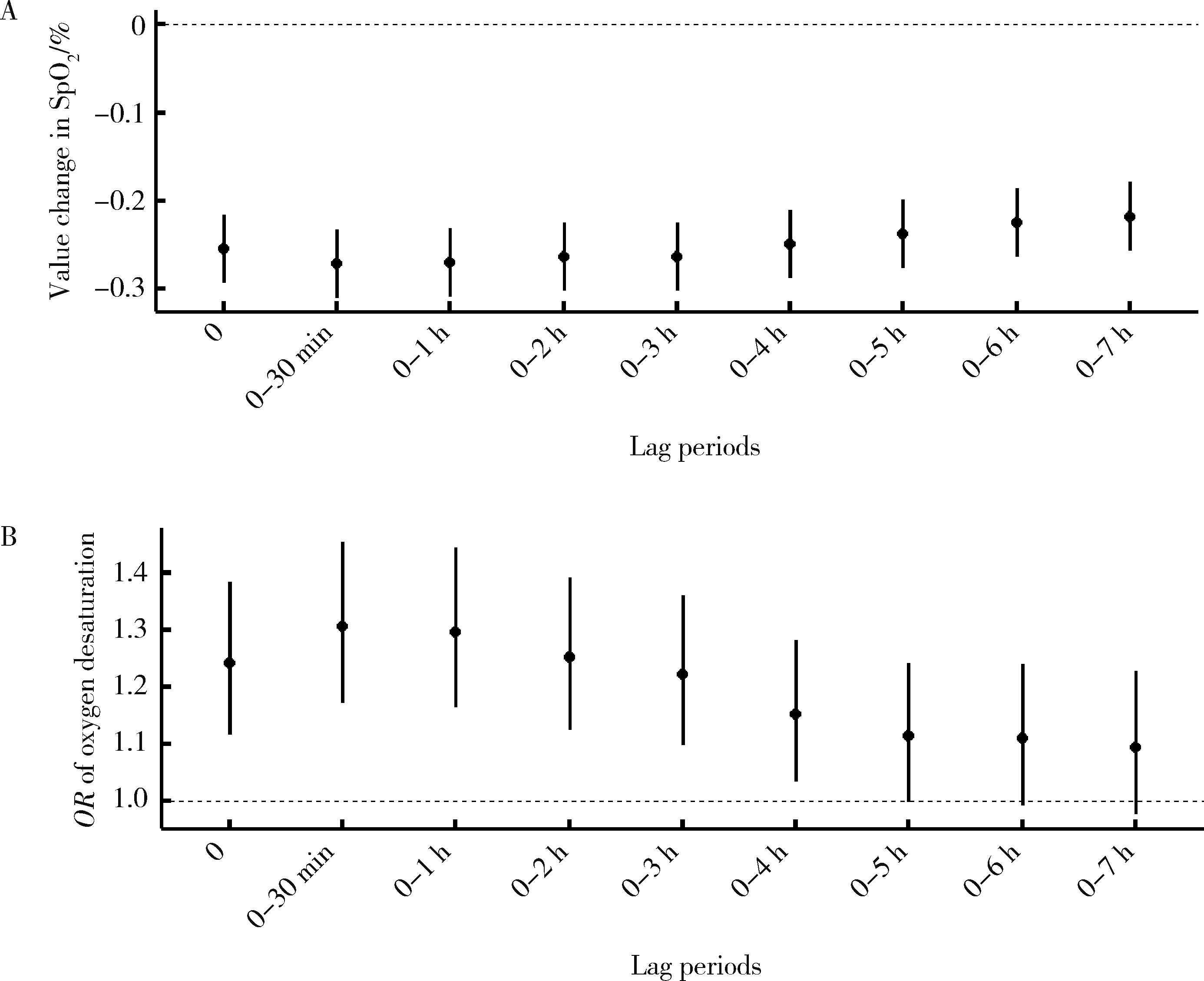
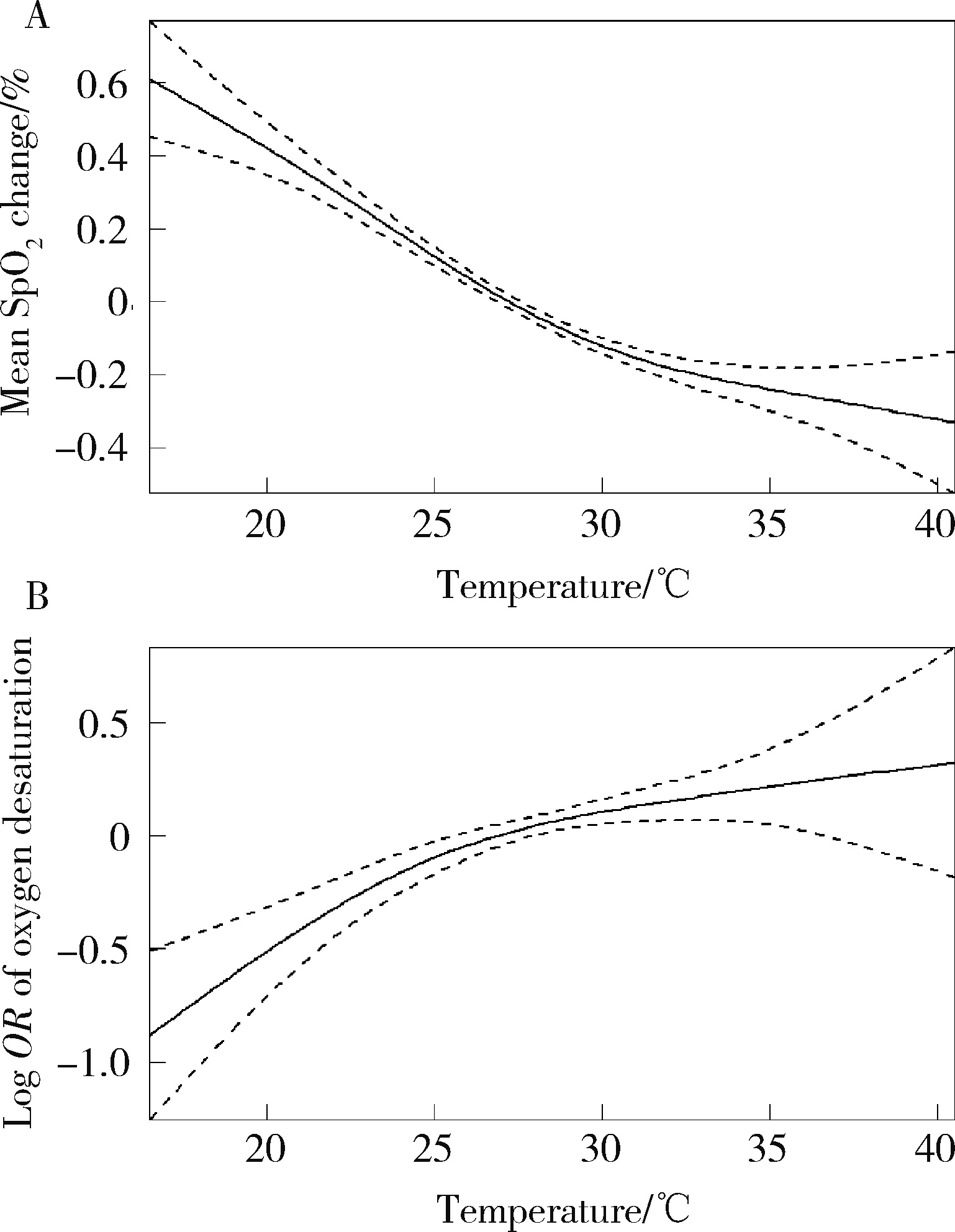
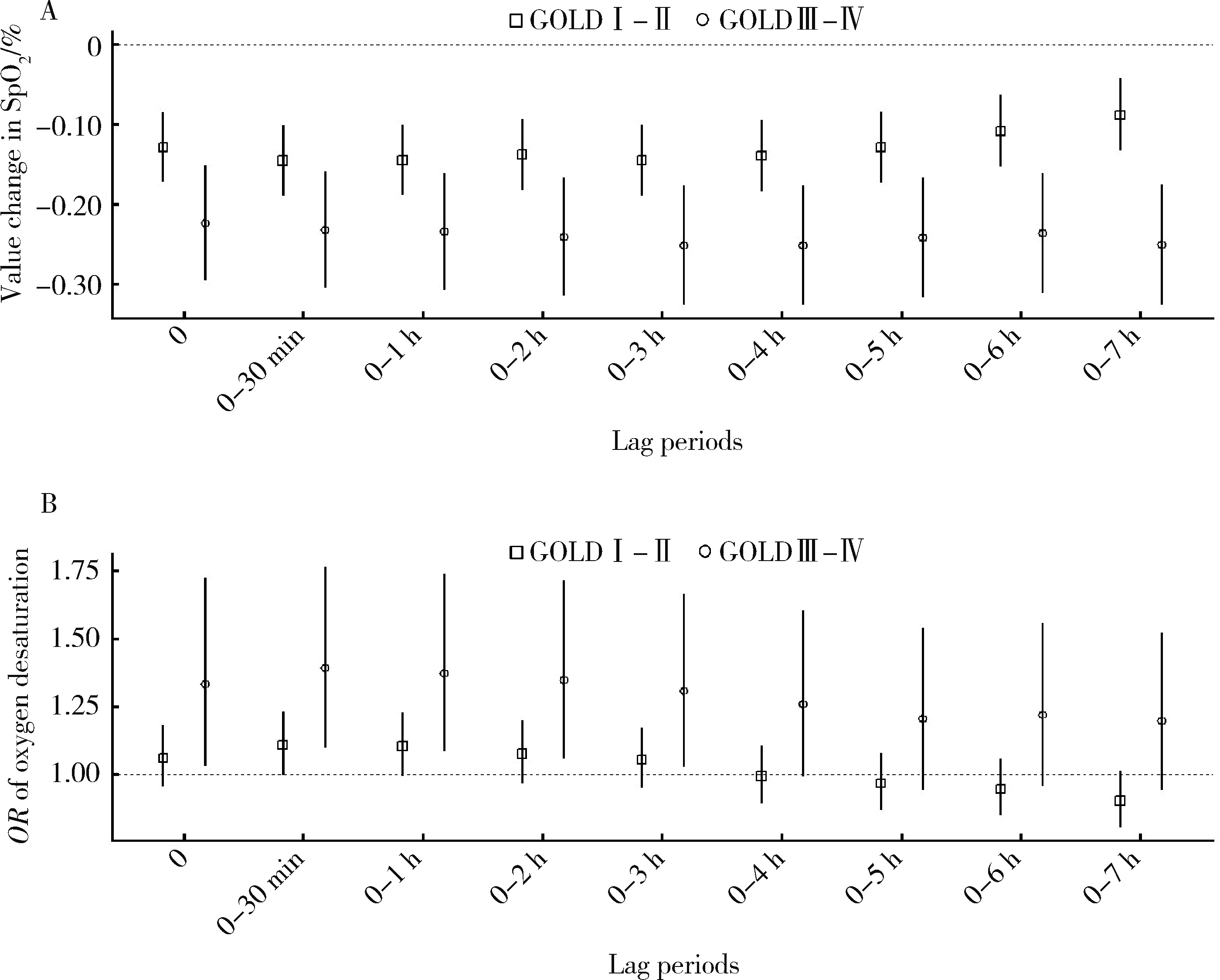
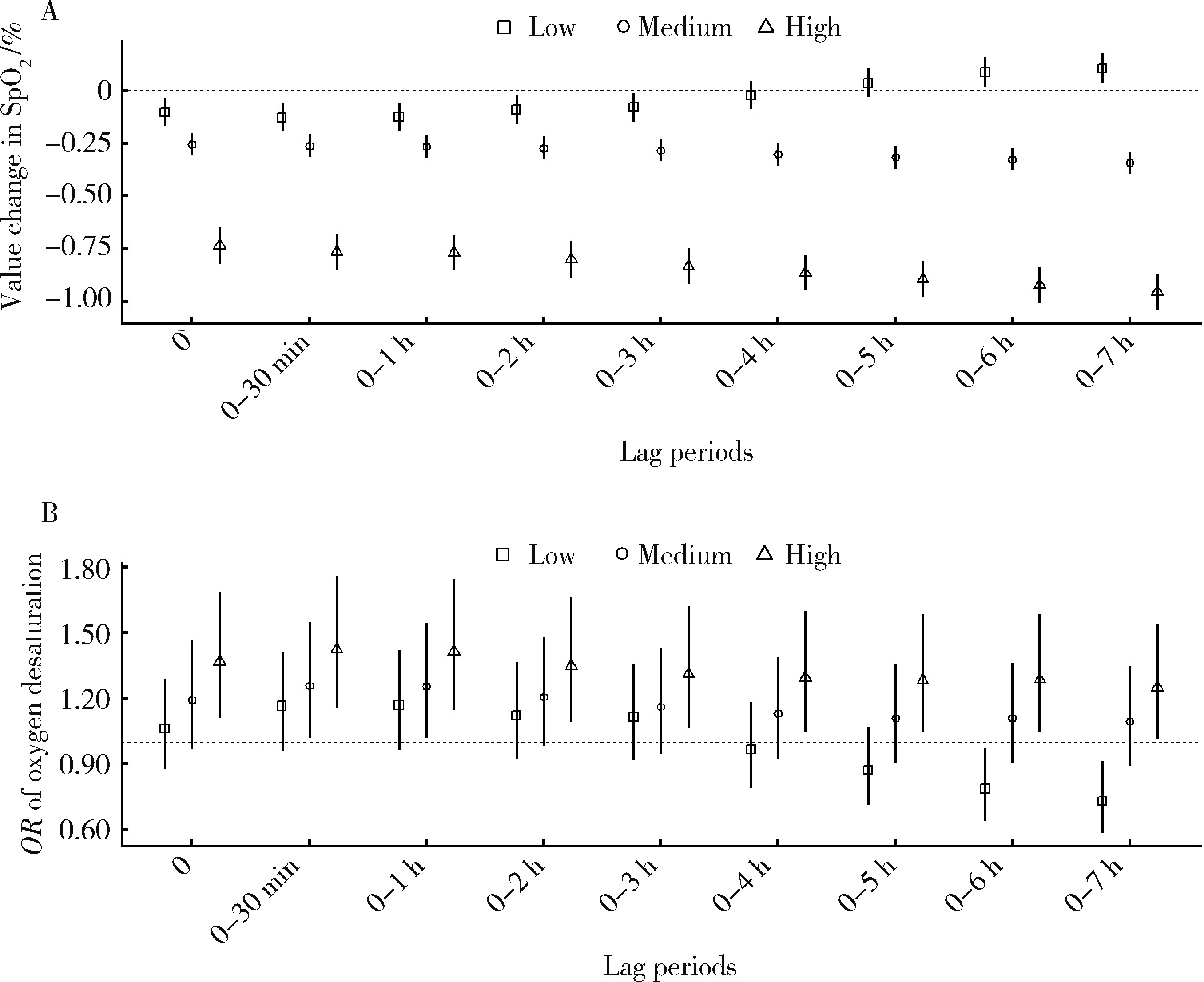
Objective: To assess the association between personal temperature exposure and oxygen saturation (SpO2) during sleep in chronic obstructive pulmonary disease (COPD) patients, to analyze potential susceptibility factors and to provide a scientific basis for the adoption of effective measures to safeguard the health of susceptible populations. Methods: In this prospective panel study, 96 stable COPD patients were recruited. From March 2021 to September 2023 in Beijing, all participants completed 202 nights (from 20:00 to 08:00) of dynamic real-time SpO2 monitoring during sleep, simultaneously monitoring personal exposure level to temperature, alongside environmental humidity and other key air pollutant data. Based on previous clinical studies, SpO2 < 90% was defined as desaturation to assess the risk of hypoxic events occurring during sleep. Linear mixed-effects models and generalized linear mixed-effects models were used to analyze the association between personal temperature exposure and SpO2 during sleep, as well as the risk of oxygen desaturation. Interaction models were constructed to evaluate susceptibility factors. Results: During the study, the average personal temperature exposure was (27.5± 2.6) ℃, with a temperature range from 16.5 ℃ to 40.0 ℃. Short-term exposure to personal temperature was associated with a decline in SpO2 and an increased risk of oxygen desaturation during sleep in the COPD patients. The effect of temperature exposure was strongest at lag 0-30 min, with a 0.24% (95%CI: -0.28%, -0.20%) decrease in SpO2, and with an odds ratio (OR) of oxygen desaturation was 1.26 (95% CI: 1.12, 1.42) for each interquartile range (IQR, 6.0 ℃) increase in temperature. Besides, the patients exposed to medium and high humidity levels were more likely to be affected by temperature exposure compared with the patients exposed to low humidity levels. Personal temperature exposure had a stronger effect on SpO2 during sleep in the patients with global initiative for chronic obstructive lung disease (GOLD) Ⅲ-Ⅳ compared with the patients with GOLD Ⅰ-Ⅱ (Pinteraction < 0.05). Conclusion: From 16.5 ℃ to 40.0 ℃, personal temperature exposure is associated with SpO2 decline during sleep in COPD patients. There was a significant synergistic amplification between temperature and humidity, patients were more susceptible to damage under high temperature and high humidity conditions. Moreover, patients with poorer lung function are more significantly affected by temperature.

Key words: Chronic obstructive pulmonary disease, Oxygen saturation, Temperature, Personal exposure

CLC Number: 

  • R122.2

Table 1

Descriptive statistics for basic information of participants, exposure and health indicators"

Variable Value
Gender
  Male, n(%) 85 (88.5)
  Female, n(%) 11 (11.5)
Age/years, $\bar x \pm s$ 69.0±6.3
BMI/(kg/m2), $\bar x \pm s$ 24.0±3.3
Smoking status, n(%)
  Never 19 (19.8)
  Former 48 (50.0)
  Current 29 (30.2)
GOLD stage, n(%)
  Ⅰ 13 (13.5)
  Ⅱ 50 (52.1)
  Ⅲ 27 (28.1)
  Ⅳ 6 (6.3)
Lung function, $\bar x \pm s$
  FEV1/L 1.6±0.6
  FEV1%pred/% 58.4±17.8
  FVC/L 2.8±0.8
  FVC%pred/% 75.5±17.0
  FEV1/FVC 0.57±0.09
Temperature/℃, $\bar x \pm s$ 27.5±2.6
Humidity/%, $\bar x \pm s$ 21.1±7.1
Sleep SpO2/%, $\bar x \pm s$ 94.1±2.6
Air pollutants,$\bar x \pm s$
  PM2.5/(μg/L) 21.0±18.6
  PM10/(μg/L) 23.0±15.3
  NO2/(μg/L) 15.5±6.6
  O3/(μg/L) 29.5±17.3
  SO2/(μg/L) 0.9±0.4
  CO/(mg/L) 0.5±0.3

Figure 1

Association between personal temperature exposure and SpO2 (A) and the risk of oxygen desaturation (B) during sleep in patients SpO2, oxygen saturation; OR, odds ratio."

Figure 2

The exposure-response relationship between personal temperature exposure and SpO2 (A) and the risk of oxygen desaturation(B) during sleep in patients SpO2, oxygen saturation; OR, odds ratio; Log, Logistic."

Figure 3

Association of personal temperature exposure with SpO2(A)and risk of oxygen desaturation(B) during sleep with different pulmonary function statuses SpO2, oxygen saturation; OR, odds ratio; GOLD, global initiative for chronic obstructive lung disease."

Figure 4

Association of personal temperature exposure at different RH levels with SpO2(A) and risk of oxygen desaturation(B) during sleep in patients SpO2, oxygen saturation; OR, odds ratio."

Table 2

Sensitivity analysis of the association between personal temperature exposure and SpO2 and risk of oxygen desaturation during sleep"

Model Value change in SpO2(95%CI)/% P OR of oxygen desaturation (95%CI) P
Main model -0.26 (-0.29,-0.22) < 0.001 1.34 (1.20,1.49) < 0.001
Adjust model
+PM10 -0.21 (-0.24,-0.16) < 0.001 1.23 (1.11,1.37) < 0.001
+NO2 -0.23 (-0.27,-0.19) < 0.001 1.30 (1.16,1.45) < 0.001
+O3 -0.21 (-0.21,-0.25) < 0.001 1.25 (1.12,1.39) < 0.001
+SO2 -0.26 (-0.30,-0.22) < 0.001 1.23 (1.10,1.37) < 0.001
+CO -0.18 (-0.22,-0.14) < 0.001 1.18 (1.05,1.32) < 0.001
1
Thompson R , Lawrance EL , Roberts LF , et al. Ambient temperature and mental health: A systematic review and meta-analysis[J]. Lancet Planet Health, 2023, 7 (7): e580- e589.

doi: 10.1016/S2542-5196(23)00104-3
2
Liu J , Varghese BM , Hansen A , et al. Heat exposure and cardiovascular health outcomes: A systematic review and meta-analysis[J]. Lancet Planet Health, 2022, 6 (6): e484- e495.

doi: 10.1016/S2542-5196(22)00117-6
3
Chen R , Yin P , Wang L , et al. Association between ambient temperature and mortality risk and burden: Time series study in 272 main Chinese cities[J]. BMJ, 2018, 363, k4306.
4
Wu Q , Yang M , Wu K , et al. Abnormal ambient temperature change increases the risk of out-of-hospital cardiac arrest: A systematic review and meta-analysis of exposure types, risk, and vulnerable populations[J]. Sci Total Environ, 2023, 861, 160554.

doi: 10.1016/j.scitotenv.2022.160554
5
Tran HM , Tsai FJ , Lee KY , et al. Extreme temperature increases the risk of COPD morbimortality: A systematic review and meta-analysis[J]. Sci Total Environ, 2025, 958, 178087.

doi: 10.1016/j.scitotenv.2024.178087
6
Wang C , Xu J , Yang L , et al. Prevalence and risk factors of chronic obstructive pulmonary disease in China (the China Pulmonary Health[CPH] study): A national cross-sectional study[J]. Lancet, 2018, 391 (10131): 1706- 1717.

doi: 10.1016/S0140-6736(18)30841-9
7
Zhang Y , Liu X , Kong D , et al. Effects of ambient temperature on acute exacerbations of chronic obstructive pulmonary disease: Results from a time-series analysis of 143 318 hospitalizations[J]. Int J Chron Obstruct Pulmon Dis, 2020, 15, 213- 223.

doi: 10.2147/COPD.S224198
8
Rau A , Tarr GAM , Baldomero AK , et al. Heat and cold wave-related mortality risk among United States veterans with chronic obstructive pulmonary disease: A case-crossover study[J]. Environ Health Perspect, 2024, 132 (2): 27004.

doi: 10.1289/EHP13176
9
Mekhuri S , Quach S , Barakat C , et al. A cross-sectional survey on the effects of ambient temperature and humidity on health outcomes in individuals with chronic respiratory disease[J]. Rev Can De La Ther Respir, 2023, 59, 256- 269.
10
Shi C , Zhu J , Wu Q , et al. Effects of ambient temperature and humidity on COPD mortality in Ganzhou city, China[J]. Int J Biometeorol, 2024, 68 (9): 1789- 1798.

doi: 10.1007/s00484-024-02705-6
11
Kent BD , Mitchell PD , McNicholas WT . Hypoxemia in patients with COPD: Cause, effects, and disease progression[J]. Int J Chron Obstruct Pulmon Dis, 2011, 6, 199- 208.
12
Kendzerska T , Leung RS , Aaron SD , et al. Cardiovascular outcomes and all-cause mortality in patients with obstructive sleep apnea and chronic obstructive pulmonary disease (overlap syndrome)[J]. Ann Am Thorac Soc, 2019, 16 (1): 71- 81.

doi: 10.1513/AnnalsATS.201802-136OC
13
Qiu H , Xia X , Man CL , et al. Real-time monitoring of the effects of personal temperature exposure on the blood oxygen saturation level in elderly people with and without chronic obstructive pulmonary disease: A panel study in Hong Kong[J]. Environ Sci Technol, 2020, 54 (11): 6869- 6877.

doi: 10.1021/acs.est.0c01799
14
Goldberg MS , Giannetti N , Burnett RT , et al. A panel study in congestive heart failure to estimate the short-term effects from personal factors and environmental conditions on oxygen saturation and pulse rate[J]. Occup Environ Med, 2008, 65 (10): 659- 666.

doi: 10.1136/oem.2007.034934
15
Li A , Zhang Q , Yao Y , et al. Higher ambient temperatures may worsen obstructive sleep apnea: A nationwide smartwatch-based analysis of 6.2 million person-days[J]. Sci Bull, 2024, 69 (13): 2114- 2121.

doi: 10.1016/j.scib.2024.05.016
16
Nøhr N , Jepsen R , Jørsboe H , et al. Physiological responses to heat exposure in a general population cohort in Denmark: The Lolland-Falster Health Study[J]. Eur J Public Health, 2024, 34 (5): 1008- 1014.

doi: 10.1093/eurpub/ckae121
17
朱蕾, 刘又宁, 钮善福. 临床呼吸生理学[M]. 北京: 人民卫生出版社, 2008: 331- 337.
18
He BT , Lu G , Xiao SC , et al. Coexistence of OSA may compensate for sleep related reduction in neural respiratory drive in patients with COPD[J]. Thorax, 2017, 72 (3): 256- 262.

doi: 10.1136/thoraxjnl-2016-208467
19
Zhao R , Xue J , Zhang X , et al. Comparison of ring pulse oximetry using reflective photoplethysmography and PSG in the detection of OSA in Chinese adults: A pilot study[J]. Nat Sci Sleep, 2022, 14, 1427- 1436.

doi: 10.2147/NSS.S367400
20
Mu Z , Chen PL , Geng FH , et al. Synergistic effects of temperature and humidity on the symptoms of COPD patients[J]. Int J Biometeorol, 2017, 61 (11): 1919- 1925.

doi: 10.1007/s00484-017-1379-0
21
Han A , Deng S , Yu J , et al. Asthma triggered by extreme tempe-ratures: From epidemiological evidence to biological plausibility[J]. Environ Res, 2023, 216 (Pt 2): 114489.
22
Liu C , Yavar Z , Sun Q . Cardiovascular response to thermoregulatory challenges[J]. Am J Physiol Heart Circ Physiol, 2015, 309 (11): H1793- H1812.

doi: 10.1152/ajpheart.00199.2015
23
Schlader ZJ , Rivas E , Soller BR , et al. Tissue oxygen saturation during hyperthermic progressive central hypovolemia[J]. Am J Physiol Regul Integr Comp Physiol, 2014, 307 (6): R731- R736.

doi: 10.1152/ajpregu.00190.2014
[1] Zhuoma GONGJUE, Yiting MAO, Puzhen DAWA, Ciren LABA, Qi YAN. Sex-specific hemoglobin thresholds for oxygen saturation: A non-linear regression analysis based on Tibetan inpatients [J]. Journal of Peking University (Health Sciences), 2026, 58(1): 196-200.
[2] Shuo ZHANG, Yongbing LAN, Dianjianyi SUN, Pei PEI, Huaidong DU, Junshi CHEN, Zhengming CHEN, Jun LV, Liming LI, Canqing YU, (for the China Kadoorie Biobank Collaborative Group). Prospective association between physical activity and mortality in patients with chronic obstructive pulmonary disease [J]. Journal of Peking University (Health Sciences), 2025, 57(3): 537-544.
[3] Yuxin WANG, Ru CAO, Jing HUANG, Ponsawansong Pitakchon, Tawatsupa Benjawan, Xiaochuan PAN, Prapamontol Tippawan, Guoxing LI. Impact of fine particulate matter exposure on non-accidental mortality under different apparent temperature levels [J]. Journal of Peking University (Health Sciences), 2024, 56(5): 820-827.
[4] Bo PANG,Tongjun GUO,Xi CHEN,Huaqi GUO,Jiazhang SHI,Juan CHEN,Xinmei WANG,Yaoyan LI,Anqi SHAN,Hengyi YU,Jing HUANG,Naijun TANG,Yan WANG,Xinbiao GUO,Guoxing LI,Shaowei WU. Personal nitrogen oxides exposure levels and related influencing factors in adults over 35 years old in Tianjin and Shanghai [J]. Journal of Peking University (Health Sciences), 2024, 56(4): 700-707.
[5] Qingxin ZHOU,Qingqing YANG,Shuyuan SHI,Pei LI,Feng SUN. Association between serum uric acid and airflow obstruction based on the health-checkup population [J]. Journal of Peking University (Health Sciences), 2024, 56(4): 693-699.
[6] Zi-kai WANG,Jia-li MO,Meng ZHANG,Ji-ping LIAO. Epidemiology and hospitalization costs analysis of female inpatients with acute exacerbation of chronic obstructive pulmonary disease in Beijing from 2013 to 2020 [J]. Journal of Peking University (Health Sciences), 2023, 55(6): 1074-1081.
[7] Su-huan XU,Bei-bei WANG,Qiu-ying PANG,Li-jun ZHONG,Yan-ming DING,Yan-bo HUANG,Xin-yan CHE. Effect of equal temperature bladder irrigation in patients with transurethral resection of prostate: A meta-analysis [J]. Journal of Peking University (Health Sciences), 2023, 55(4): 676-683.
[8] Ruo-qing ZHONG,Meng-qian ZHU,Ying-long LI,Jie PAN. Antibacterial effect of low-temperature plasma on Enterococcus faecalis in dentinal tubules in vitro [J]. Journal of Peking University (Health Sciences), 2023, 55(1): 38-43.
[9] Hai-rong BAO,Xiao-ju LIU,En-li TAN,Juan SHU,Ji-yuan DONG,Sheng LI. Effects of temperature and relative humidity on the number of outpatients with chronic obstructive pulmonary disease and their interaction effect in Lanzhou, China [J]. Journal of Peking University (Health Sciences), 2020, 52(2): 308-316.
[10] Jiao HE,Ge-heng YUAN,Jun-qing ZHANG,Xiao-hui GUO. Approach to creating early diabetic peripheral neuropathy rat model [J]. Journal of Peking University(Health Sciences), 2019, 51(6): 1150-1154.
[11] Yuan ZHANG,Jian-min HAN,Lin LIU,Xu-liang DENG. Study of bond strength of one-piece glass fiber posts-and-cores with flared root canals in vitro [J]. Journal of Peking University(Health Sciences), 2019, 51(2): 327-334.
[12] Jiang XIE,Fei LI. Association of sleep overlap syndrome with type 2 diabetes in a cross-sectional study [J]. Journal of Peking University(Health Sciences), 2019, 51(2): 252-255.
[13] WANG Jin-yu, LI Sheng, DONG Ji-yuan, LI Shou-yu, LI Pu, JIA Qing, WANG Ling-qing, CHANG Xu-hong. Distributed lag effects on the relationship between daily mean temperature and the incidence of bacillary dysentery in Lanzhou city [J]. Journal of Peking University(Health Sciences), 2018, 50(5): 861-867.
[14] QU Wei, BAI Wei, LIANG Yu-hong, GAO Xue-jun. Real temperature of the continuous-wave pluggers [J]. Journal of Peking University(Health Sciences), 2015, 47(5): 834-837.
[15] TIAN Fu-Cong, WANG Xiao-Yan, Gao-Xue-Jun. Influence of thermalcycling on bonding durability of selfetch adhesives with dentin [J]. Journal of Peking University(Health Sciences), 2014, 46(2): 284-287.
Viewed
Full text


Abstract

Cited

  Shared   
  Discussed   
No Suggested Reading articles found!