Journal of Peking University (Health Sciences) ›› 2026, Vol. 58 ›› Issue (4): 855-859. doi: 10.19723/j.issn.1671-167X.2026.04.024

Previous Articles     Next Articles

Effect of modified hot-etching treatment on the mechanical properties of zirconia and zirconia/resin bond strength

Xin YANG1, Yu WU2, Pin LV2,*()   

  1. 1. First Clinical Division, Peking University School and Hospital of Stomatology & National Center for Stomatology & National Clinical Research Center for Oral Diseases & National Engineering Research Center of Oral Biomaterials and Digital Medical Devices, Beijing 100081, China
    2. Department of Stomatology, Peking University Third Hospital, Beijing 100191, China
  • Received:2025-10-10 Online:2026-08-18 Published:2026-05-19
  • Contact: Pin LV
  • Supported by:
    the Peking University Third Hospital Fund for Interdisciplinary Research(BYSYJC2024029)

RICH HTML


Abstract:

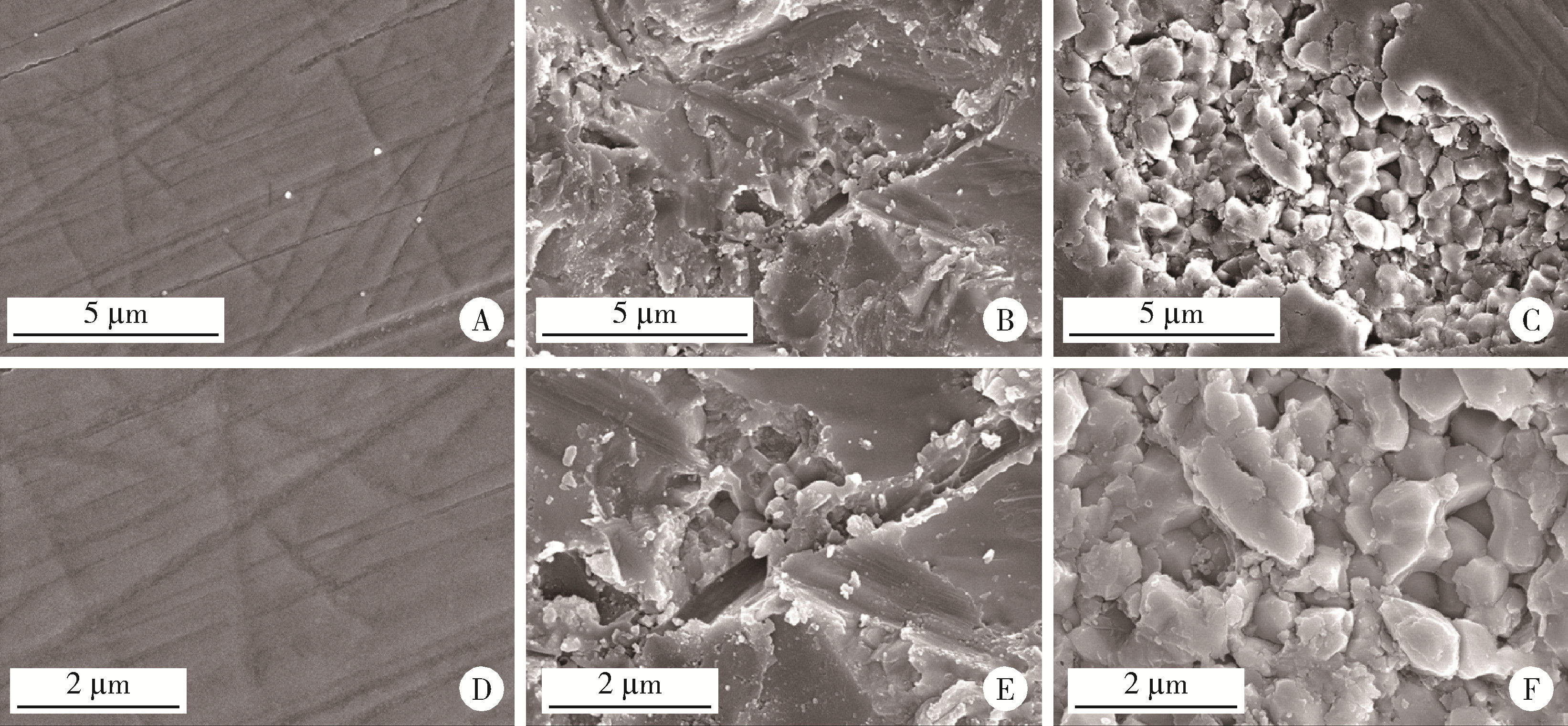
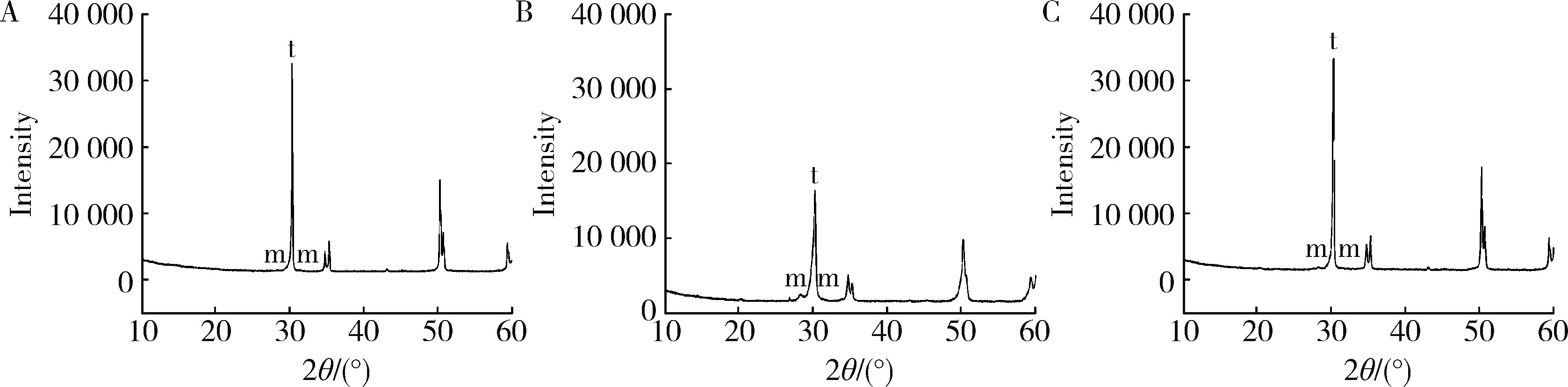
Objective: To investigate the effect of modified hot-etching treatment on the flexural strength and surface crystalline phase proportions of zirconia and zirconia/resin bond strength. Methods: Zirconia specimens were divided into three groups according to different surface treatments, including blank group, sandblasting treatment group and modified hot-etching treatment group. A scanning electron microscope (SEM) was used to observe the surface morphology of the treated zirconia, an X-ray diffractometer (XRD) was employed to detect the surface crystalline phase proportions, and a universal mechanical testing machine was utilized to measure the three-point flexural strength of the zirconia specimens of different treatment groups. A bonding surface was prepared with bovine enamel, and the zirconia specimens were bonded using resin cement. Half of the bonded specimens underwent 5 000 cycles of thermal cycling fatigue test, and the immediate and fatigued shear bond strengths (SBS) were detected by using a universal mechanical testing machine. Results: SEM observations revealed that the surface of the control group was smooth, the surface of sandblasting treatment group exhibited irregular scratches, and the surface of modified hot-etching treatment group showed a honeycomb-like etched morphology. XRD results indicated that the monoclinic phase proportions were 8.18% for the control group, 28.34% for the sandblasting treatment group, and 9.69% for the modified hot-etching treatment group. The flexural strength of the sandblasting treatment group [(316.40±58.37) MPa] was significantly (P < 0.01) lower than that of the blank group [(415.30±47.64) MPa] and the modified hot-etching treatment group [(398.77±47.94) MPa]. The immediate SBS of the modified hot-etching treatment group [(53.77±8.36) MPa] was higher (P < 0.01) than that of blank group[(35.50±4.72) MPa] and sandblasting treatment group [(42.97±6.95) MPa]. After thermal cycling fatigue test, the fatigued SBS of the blank group [(21.65±4.01) MPa] was lower (P < 0.01) than that of the modified hot-etching treatment group [(30.69±7.36) MPa] and the sandblasting treatment group [(29.37±5.73) MPa]. Conclusion: The modified hot-etching treatment could enhance the immediate zirconia/resin SBS, exhibited similar resistance to thermal fatigue test with sandblasting treatment group, could not significantly reduce the flexural strength, and did not obviously alter the surface crystalline phase proportions.

Key words: Modified hot-etching treatment, Zirconia, Flexural strength, Thermal cycling fatigue, Shear bond strength

CLC Number: 

  • R783.1

Figure 1

Scanning electron microscope images of the zirconia surface morphology for each group A, blank group at ×10 000; B, sandblasting group at ×10 000; C, modified hot-etching group at ×10 000; D, blank group at ×20 000; E, sandblasting group at ×20 000; F, modified hot-etching group at ×20 000."

Figure 2

XRD patterns of zirconia specimens of each group A, blank group; B, sandblasting group; C, modified hot-etching group. m, monoclinic; t, tetragonal; XRD, X-ray diffractometer."

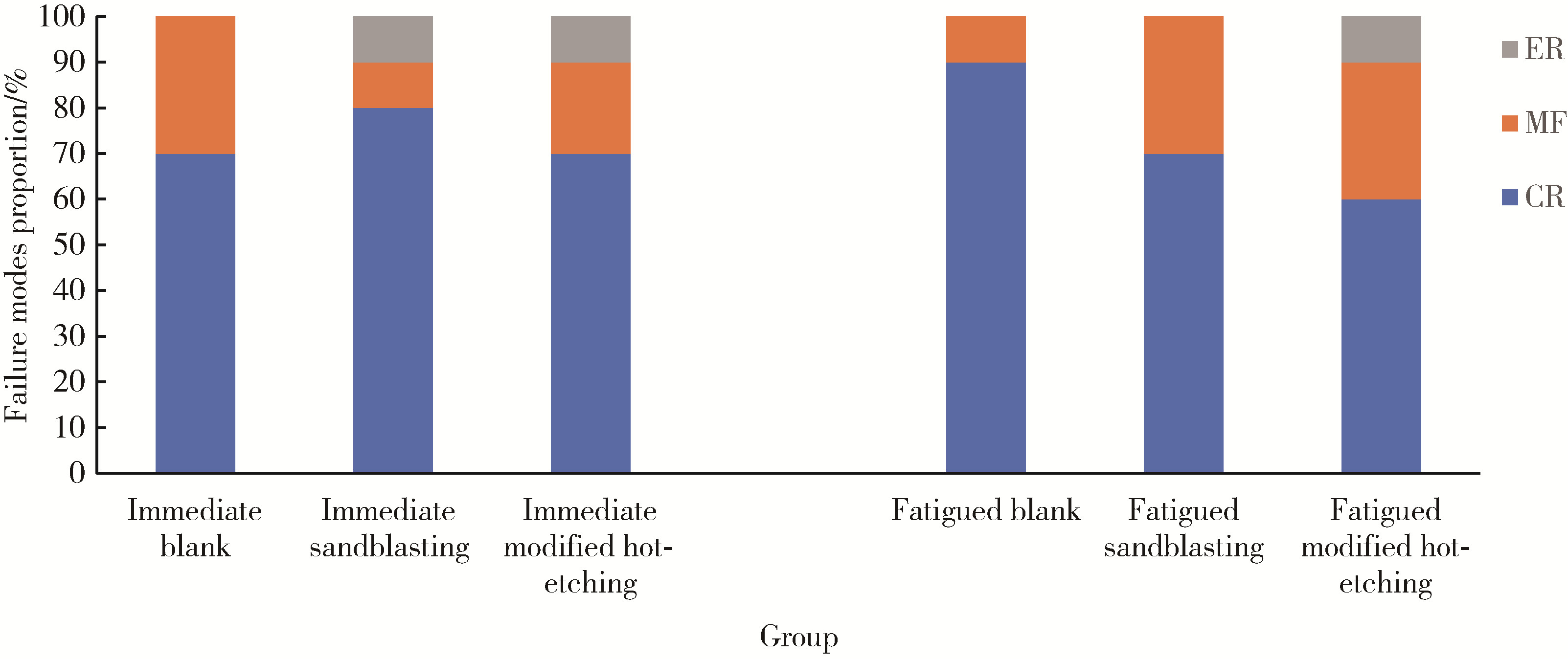
Figure 3

Failure modes of zirconia bonded specimens by groups ER, enamel/resin interfacial failure; MF, mixed failure; CR, ceramic/resin interfacial failure."

1
Zenthöfer A , Schwindling FS , Schmitt C , et al. Strength and reliability of zirconia fabricated by additive manufacturing tech-nology[J]. Dent Mater, 2022, 38 (10): 1565- 1574.

doi: 10.1016/j.dental.2022.07.004
2
Sulaiman TA , Suliman AA , Abdulmajeed AA , et al. Zirconia restoration types, properties, tooth preparation design, and bon-ding. A narrative review[J]. J Esthet Restor Dent, 2024, 36 (1): 78- 84.

doi: 10.1111/jerd.13151
3
Alammar A , Att W . Bonding durability between zirconia and different types of tooth or implant abutments: A systematic review. Part II: Outcomes of clinical studies[J]. Int J Pros-thodont, 2022, 25 (4): 512- 529.
4
Lupu IC , Tatarciuc MS , Vitalariu AM , et al. Bonding strategies for zirconia fixed restorations: A scoping review of surface treatments, cementation protocols, and long-term durability[J]. Biomimetics, 2025, 10 (9): 632.

doi: 10.3390/biomimetics10090632
5
Nishizawa Y , Komagata Y , Nagamatsu Y , et al. Chemical etching of CAD-CAM glass-ceramic-based materials using fluoride solutions for bonding pretreatment[J]. Dent Mater J, 2024, 43 (4): 504- 516.

doi: 10.4012/dmj.2023-333
6
Komine F , Furuchi M , Honda J , et al. Clinical performance of laminate veneers: A review of the literature[J]. J Prosthodont Res, 2024, 68 (3): 368- 379.

doi: 10.2186/jpr.JPR_D_23_00151
7
D'Alessandro C , Josic U , Mazzitelli C , et al. Is zirconia surface etching a viable alternative to airborne particle abrasion? A syste-matic review and meta-analysis of in vitro studies[J]. J Dent, 2024, 151, 105394.

doi: 10.1016/j.jdent.2024.105394
8
Sadid-Zadeh R , Strazzella A , Li R , et al. Effect of zirconia etching solution on the shear bond strength between zirconia and resin cement[J]. J Prosthet Dent, 2021, 126 (5): 693- 697.

doi: 10.1016/j.prosdent.2020.09.016
9
You GE , Lim MJ , Min KS , et al. Surface property changes observed in zirconia during etching with high-concentration hydrofluoric acid over various immersion times[J]. Dent Mater J, 2024, 43 (1): 52- 57.

doi: 10.4012/dmj.2023-091
10
Cadenaro M , Josic U , Maravić T , et al. Progress in dental adhesive materials[J]. J Dent Res, 2023, 102 (3): 254- 262.

doi: 10.1177/00220345221145673
11
Lima RBW , Silva AF , da Rosa WLO , et al. Bonding efficacy of universal resin adhesives to zirconia substrates: Systematic review and meta-analysis[J]. J Adhes Dent, 2023, 25, 51- 62.
12
Akar T , İçen G . Effect of dentin and zirconia surface treatments with laser irradiation versus sandblasting on the bonding ability of zirconia[J]. Photobiomodul Photomed Laser Surg, 2023, 41 (9): 501- 508.
13
Kim HK , Yoo KW , Kim SJ , et al. Phase transformations and subsurface changes in three dental zirconia grades after sandblasting with various Al2O3 particle sizes[J]. Materials, 2021, 14 (18): 5321.

doi: 10.3390/ma14185321
14
Jakovac M , Klaser T , Radatovic' B , et al. Impact of sandblasting on morphology, structure and conductivity of zirconia dental ceramics material[J]. Materials, 2021, 14 (11): 2834.

doi: 10.3390/ma14112834
15
Jin C , Wang J , Huang Y , et al. Effects of hydrofluoric acid concentration and etching time on the bond strength to ceramic-coated zirconia[J]. J Adhes Dent, 2022, 24, 125- 136.
16
魏萌, 朱红, 梁琢然, 等. 不同热酸蚀液对氧化锆粘接强度和抗折性能的影响[J]. 实用口腔医学杂志, 2022, 38 (4): 445- 449.
17
梁琢然, 张研楠, 魏萌, 等. 2种酸液热酸蚀对氧化锆表面形貌及粘接强度的影响[J]. 上海口腔医学, 2023, 32 (4): 369- 374.
18
Casucci A , Osorio E , Osorio R , et al. Influence of different surface treatments on surface zirconia frameworks[J]. J Dent, 2009, 37 (11): 891- 897.

doi: 10.1016/j.jdent.2009.06.013
19
Casucci A , Mazzitelli C , Monticelli F , et al. Morphological analysis of three zirconium oxide ceramics: Effect of surface treatments[J]. Dent Mater, 2010, 26 (8): 751- 760.

doi: 10.1016/j.dental.2010.03.020
20
El-Korashy DI , El-Refai DA . Mechanical properties and bonding potential of partially stabilized zirconia treated with different chemomechanical treatments[J]. J Adhes Dent, 2014, 16 (4): 365- 376.
21
Casucci A , Monticelli F , Goracci C , et al. Effect of surface pre-treatments on the zirconia ceramic: Resin cement microtensile bond strength[J]. Dent Mater, 2011, 27 (10): 1024- 1030.

doi: 10.1016/j.dental.2011.07.002
[1] Jianxiao ZHAO, Qian DING, Wenjin LI, Quanquan MA, Yixiao LAN, Lei ZHANG, Jianmin HAN. Effect of porous surface structure on fatigue strength of 3D printed zirconia [J]. Journal of Peking University (Health Sciences), 2025, 57(6): 1165-1173.
[2] Kun QIAN, Yihong LIU. Fitness of onlays fabricated with direct and indirect CAD/CAM technology in vitro [J]. Journal of Peking University (Health Sciences), 2025, 57(3): 604-609.
[3] Qian DING,Wen-jin LI,Feng-bo SUN,Jing-hua GU,Yuan-hua LIN,Lei ZHANG. Effects of surface treatment on the phase and fracture strength of yttria- and magnesia-stabilized zirconia implants [J]. Journal of Peking University (Health Sciences), 2023, 55(4): 721-728.
[4] Wei-wei LI,Hu CHEN,Yong WANG,Yu-chun SUN. Research on friction and wear behaviors of silicon-lithium spray coating on zirconia ceramics [J]. Journal of Peking University (Health Sciences), 2023, 55(1): 94-100.
[5] WANG Zheng,DING Qian,GAO Yuan,MA Quan-quan,ZHANG Lei,GE Xi-yuan,SUN Yu-chun,XIE Qiu-fei. Effect of porous zirconia ceramics on proliferation and differentiation of osteoblasts [J]. Journal of Peking University (Health Sciences), 2022, 54(1): 31-39.
[6] LI Wen-jin,DING Qian,YUAN Fu-song,Sun Feng-bo,ZHENG Jian-qiao,BAO Rui,Zhang Lei. Effects of femtosecond laser treatment on surface characteristics and flexural strength of zirconia [J]. Journal of Peking University (Health Sciences), 2021, 53(4): 770-775.
[7] YANG Xin,LI Rong,YE Hong-qiang,CHEN Hu,WANG Yong,ZHOU Yong-sheng,SUN Yu-chun. Evaluation of fracture strength of two kinds of zirconia all-ceramic crowns with different edge compensation angles [J]. Journal of Peking University (Health Sciences), 2021, 53(2): 402-405.
[8] Miao ZHENG,Ling-lu ZHAN,Zhi-qiang LIU,He-ping LI,Jian-guo TAN. Effect of different plasma treated zirconia on the adhensive behaviour of human gingival fibroblasts [J]. Journal of Peking University(Health Sciences), 2019, 51(2): 315-320.
[9] ZHOU Tuan-feng, WANG Xin-zhi . Clinical observation of the restoration of computer aided designed and manufactured one-piece zirconia posts and cores: a 5-year prospective follow-up study [J]. Journal of Peking University(Health Sciences), 2018, 50(4): 680-684.
[10] CUI Xin-yue, TONG Dai, WANG Xin-zhi, SHEN Zhi-jian. Comparison of the translucency and color masking effect of the zirconia ceramics made by milling and gel deposition [J]. Journal of Peking University(Health Sciences), 2018, 50(1): 85-90.
[11] LIAO Yu, LIU Xiao-qiang, CHEN Li, ZHOU Jian-feng, TAN Jian-guo. Effects of different surface treatments on the zirconia-resin cement bond strength [J]. Journal of Peking University(Health Sciences), 2018, 50(1): 53-57.
[12] JIAO Yang, WANG Ji-de, DENG Jiu-peng. Effect of different surface treatments on the crystal structure and properties of zirconia [J]. Journal of Peking University(Health Sciences), 2018, 50(1): 49-52.
[13] ZHOU Tuan-Feng, ZHANG Xiang-Hao, WANG Xin-Zhi. Three-dimensional finite element analysis of one-piece computer aided design and computer aided manufacture involved zirconia post and core [J]. Journal of Peking University(Health Sciences), 2015, 47(1): 78-84.
[14] 吕Pin , JIANG Ting. Effect of surface hot-etching treatment on zirconia/resin bonding strength [J]. Journal of Peking University(Health Sciences), 2014, 46(2): 302-305.
[15] LIU Yi-hong, WANG Yong, ZHANG Qing-hui, GAO Yuan, FENG Hai-lan. Fracture reliability of zirconia all-ceramic crown according to zirconia coping design [J]. Journal of Peking University(Health Sciences), 2014, 46(1): 71-75.
Viewed
Full text


Abstract

Cited

  Shared   
  Discussed   
No Suggested Reading articles found!