Journal of Peking University (Health Sciences) ›› 2026, Vol. 58 ›› Issue (3): 567-574. doi: 10.19723/j.issn.1671-167X.2026.03.017

Previous Articles     Next Articles

Perioperative hyperglycemia predicts poorer prognosis of esophageal squamous cell carcinoma patients treated with esophagectomy

Bo PENG1, Fangfang LIU1, Wei YANG2, Ruiping XU3, Lei CHEN2, Baozhong LI3, Xinjia WANG2, Ji KE1, Wenlei YANG1, Yu HE4, Zhen LIU1, Bolin HOU5, Liqun ZHANG2, Miaoping LIN2, Lixin ZHANG3, Fan ZHANG2, Fen CAI2, Huawen XU2, Mengfei LIU1, Ying LIU1, Yaqi PAN1, Zhonghu HE6,*(), Yang KE6,*()   

  1. 1. Key Laboratory of Carcinogenesis and Translational Research(Ministry of Education), Department of Genetics, Peking University Cancer Hospital & Institute, Beijing 100142, China
    2. Cancer Hospital of Shantou University Medical College, Shantou 515031, Guangdong, China
    3. Anyang Cancer Hospital, Anyang 455000, Henan, China
    4. Chinese Preventive Medicine Association, Beijing 100062, China
    5. Linkdoc AI Research(LAIR), Beijing 100080, China
    6. State Key Laboratory of Molecular Oncology, Department of Genetics, Peking University Cancer Hospital & Institute, Beijing 100142, China
  • Received:2026-02-24 Online:2026-06-18 Published:2026-04-10
  • Contact: Zhonghu HE, Yang KE
  • About author:

    * These authors contributed equally to this work

  • Supported by:
    the National Key R&D Program of China(2021YFC2500405)

RICH HTML


Abstract:

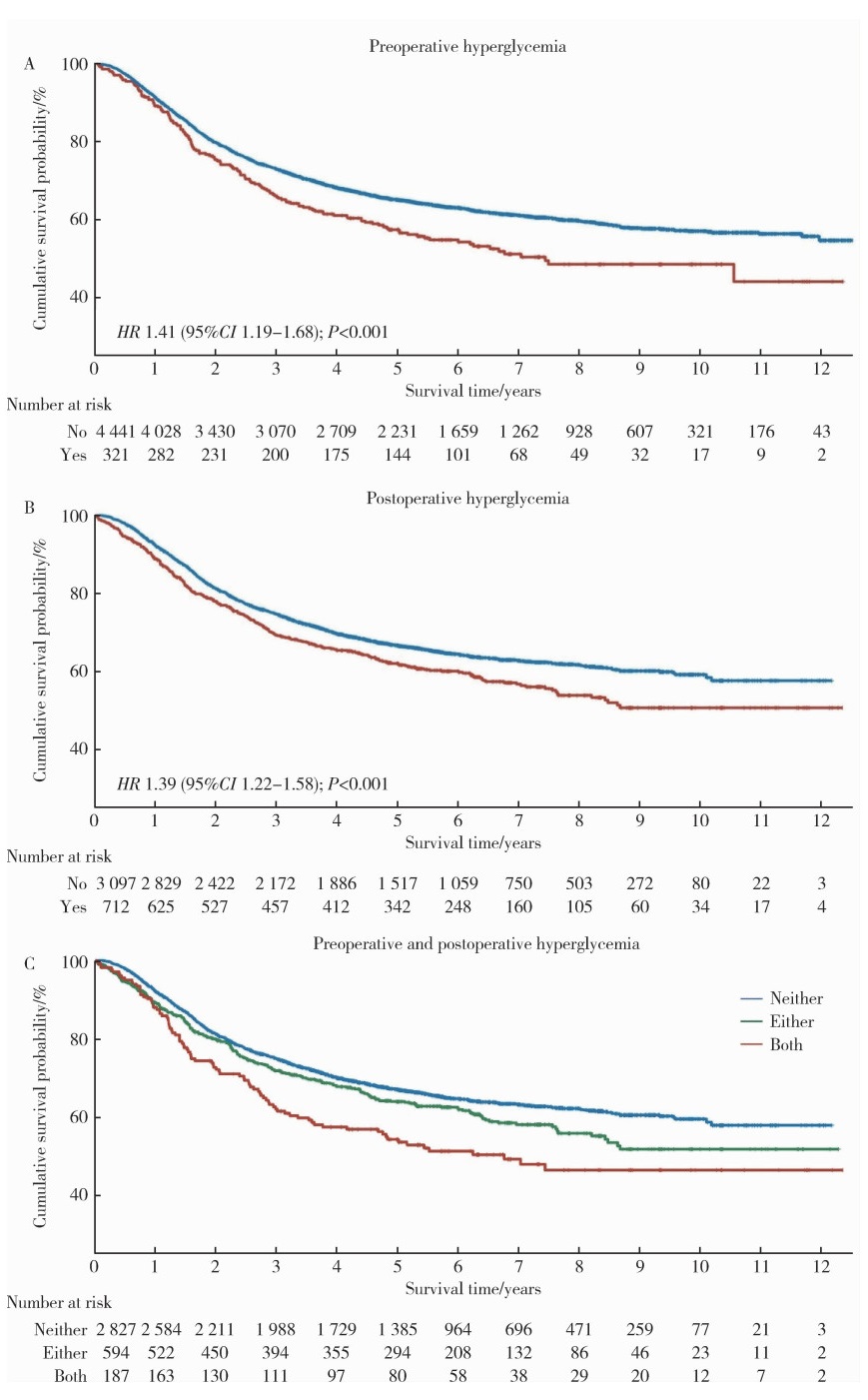
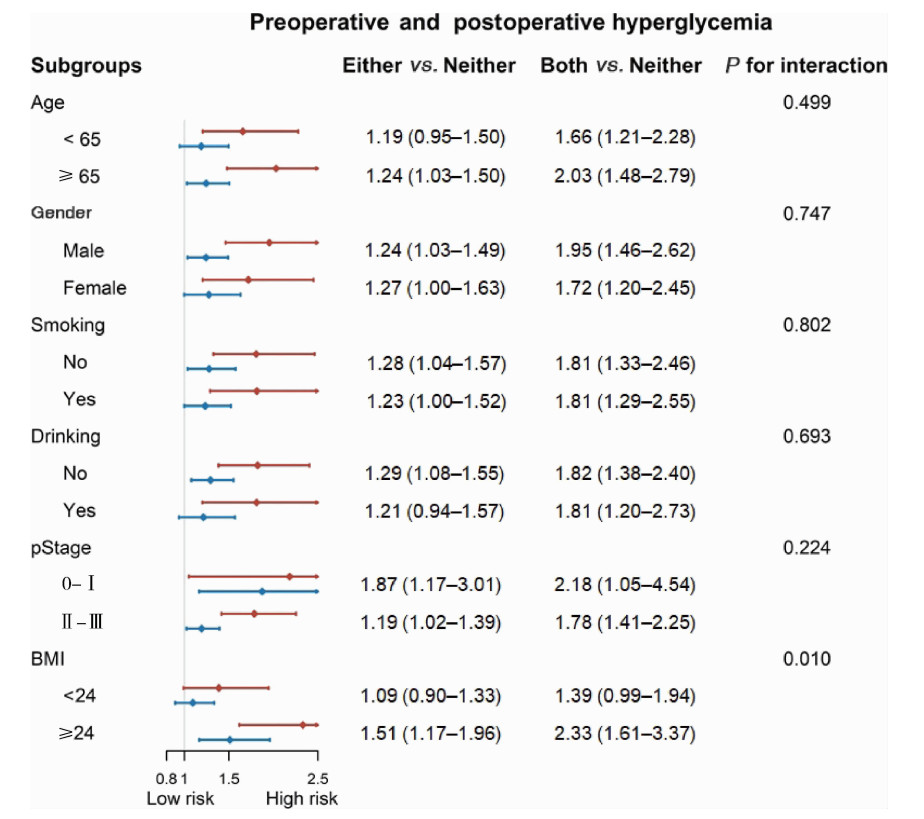
Objective: To systematically evaluate the association between perioperative hyperglycemia and postoperative prognosis in esophageal squamous cell carcinoma (ESCC) patients using large-scale, multicenter real-world data. Methods: A total of 5 952 patients with ESCC who underwent radical esophagectomy were consecutively included in this retrospective cohort study from the Anyang Cancer Hospital in Anyang, Henan Province (January 2012 to December 2017) and the Cancer Hospital of Shantou University Medical College in Shantou, Guangdong Province (August 2009 to December 2018). Perioperative fasting glucose data were obtained from the hospital information system. The perioperative period was divided into preoperative and postoperative phases: Preoperative hyperglycemia was defined as a mean fasting glucose level ≥7.0 mmol/L from day 14 to day 2 before surgery, and postoperative hyperglycemia was defined as a mean fasting glucose level ≥7.0 mmol/L from day 2 to day 14 after surgery. The primary outcome was overall survival (OS), and secondary outcomes included 30 d/90 d postoperative mortality and in-hospital complications. Multivariable Cox proportional hazards models were used to assess the association between perioperative hyperglycemia and OS, with adjusted hazard ratios (HR) and 95% confidence intervals (CI) calculated. Results: The maximum follow-up period was 12 years. The prevalence of preoperative and postoperative hyperglycemia was 6.7% and 18.3%, respectively. Patients with preoperative hyperglycemia had a lower 5-year OS rate than those without (57.3% vs. 65.0%), with an adjusted HR of 1.41 (95%CI: 1.19-1.68). The patients with postoperative hyperglycemia also had reduced 5-year survival (61.8% vs. 66.4%), with an adjusted HR of 1.39 (95%CI: 1.22-1.58). Joint analysis showed that compared with patients without hyperglycemia, those with hyperglycemia in either the preoperative or postoperative phase alone had an elevated mortality risk (HR=1.24, 95%CI: 1.07-1.43), while the patients with hyperglycemia in both phases had the highest mortality risk (HR=1.86, 95%CI: 1.49-2.32). Stratified analysis revealed that BMI significantly modified the association between hyperglycemia and adverse prognosis (Pinteraction=0.010), with the association being particularly pronounced in patients with BMI ≥24.0 kg/m2. Additionally, perioperative hyperglycemia was associated with poorer short-term postoperative outcomes. Conclusion: Perioperative hyperglycemia is an independent risk factor for long-term survival in ESCC patients undergoing curative esophagectomy. These findings suggest that enhanced routine glucose monitoring and control during perioperative management of ESCC may help improve long-term patient outcomes.

Key words: Perioperative hyperglycemia, Diabetes, Prognosis, Complications, Esophageal squamous cell carcinoma

CLC Number: 

  • R735.1

Table 1

Selected characteristics of ESCC patients who underwent radical esophagectomy, stratified by perioperative glucose status"

Characteristics Total(n=5 952) Preoperative hyperglycemiaa Postoperative hyperglycemiaa
No (n=5 341) Yes (n=381) P valueb No (n=3 796) Yes (n=848) P valueb
Age/years 63.0 (58.0, 68.0) 63.0 (58.0, 68.0) 64.0 (60.0, 68.0) 0.018 64.0 (59.0, 68.0) 65.0 (60.5, 70.0) < 0.001
Gender < 0.001 < 0.001
  Male 3 840 (64.5) 3 482 (94.6) 197 (5.4) 2 515 (85.3) 433 (14.7)
  Female 2 112 (35.5) 1 859 (91.0) 184 (9.0) 1 281 (75.5) 415 (24.5)
Smokingc < 0.001 < 0.001
  No 2 719 (46.8) 2 385 (91.4) 224 (8.6) 1 710 (77.3) 503 (22.7)
  Yes 3 086 (53.2) 2 827 (95.2) 144 (4.8) 1 978 (86.1) 320 (13.9)
Drinkingc 0.042 < 0.001
  No 3 762 (65.5) 3 349 (92.9) 257 (7.1) 2 386 (80.2) 589 (19.8)
  Yes 1 980 (34.5) 1 805 (94.3) 109 (5.7) 1 253 (84.8) 224 (15.2)
BMI/(kg/m2)c < 0.001 < 0.001
   < 24.0 3 337 (70.0) 3 068 (95.2) 153 (4.8) 2 050 (85.0) 361 (15.0)
  ≥ 24.0 1 431 (30.0) 1 224 (89.6) 142 (10.4) 900 (76.4) 278 (23.6)
pStageb 0.822 0.102
  0 andⅠ 1 356 (22.9) 1 206 (93.1) 89 (6.9) 910 (79.6) 233 (20.4)
  Ⅱ 2 401 (40.6) 2 162 (93.6) 149 (6.4) 1 592 (82.1) 347 (17.9)
  Ⅲ 2 157 (36.5) 1 939 (93.1) 143 (6.9) 1 267 (82.7) 265 (17.3)
Center 0.021 0.065
  Northern 4 001 (67.2) 3 562 (92.8) 276 (7.2) 2 891 (81.2) 671 (18.8)
  Southern 1 951 (32.8) 1 779 (94.4) 105 (5.6) 905 (83.6) 177 (16.4)

Figure 1

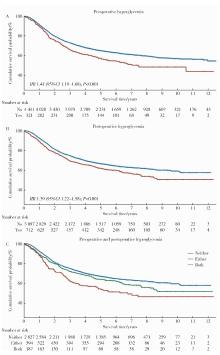
Kaplan-Meier survival curves for long-term OS by perioperative glucose status among ESCC patients who underwent radical esophagectomy OS, overall survival; ESCC, esophageal squamous cell carcinoma."

Figure 2

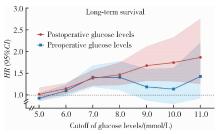
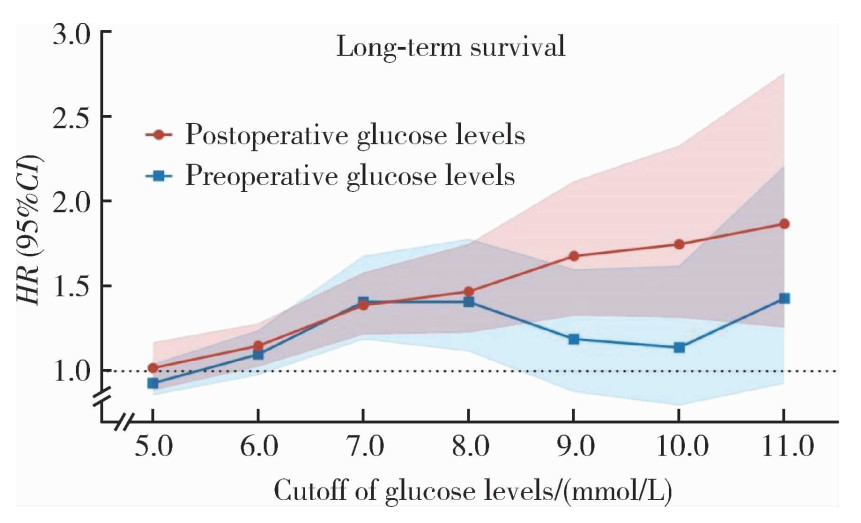
Association of high perioperative glucose levels, defined using different cutoffs, with long-term OS of ESCC patients who underwent radical esophagectomy Different cutoffs of glucose levels (from 5.0 to 11.0 mmol/L with an increment of 1.0 mmol/L) were used to divide patients into high and low-to-normal levels of blood glucose concentrations. HR and 95% CI representing the survival effect of high postoperative (red lines) and preoperative (blue lines) glucose levels as compared with low-to-normal glucose levels were obtained using multivariable Cox proportional-hazard models adjusting for age, gender, smoking, alcohol consumption, body mass index, presence of comorbidities, tumor location, tumor morphology, pathological tumor-lymph node-metastasis (pTNM) stage, tumor grade, tumor size, number of lymph nodes harvested, surgical margin status, calendar year of operation, and center. CI, confidence interval; ESCC, esophageal squamous cell carcinoma; HR, hazard ratio; OS, overall survival."

Table 2

Dose-response relationship of perioperative glucose levels with long-term OS among ESCC patients who underwent radical esophagectomy"

Glucose levels/(mmol/L) Total,n (%) Death,n (%) 5-year survival/% (95%CI) Adjusted HR (95%CI)a P valuea
Preoperative
   < 7.0 4 441 (93.3) 1 667 (37.5) 66.5 (64.8-68.1) Reference
  7.0- < 11.0 271 (5.7) 126 (46.5) 56.7 (51.0-63.2) 1.40 (1.17-1.69) < 0.001
  ≥ 11.0 50 (1.1) 21 (42.0) 60.6 (48.3-76.2) 1.47 (0.95-2.27) 0.081
  Ptrend < 0.001
Postoperative
   < 7.0 3 097 (81.3) 1 086 (35.1) 66.4 (64.7-68.2) Reference
  7.0- < 11.0 668 (17.5) 267 (40.0) 63.0 (59.3-66.9) 1.35 (1.18-1.55) < 0.001
  ≥ 11.0 44 (1.2) 26 (59.1) 43.4 (30.5-61.7) 1.98 (1.34-2.94) 0.001
  Ptrend < 0.001

Figure 3

Subgroup analysis of the associations between perioperative glucose levels and long-term OS among ESCC patients who underwent radical esophagectomy HR and 95% CI were obtained using multivariable Cox proportional-hazard models, adjusting for age, sex, smoking, alcohol consumption, body mass index (BMI), presence of comorbidities, tumor location, tumor morphology, pathological tumor-lymph node-metastasis (pTNM) stage, tumor grade, tumor size, margin status, postoperative treatment modality, calendar year of operation, and study center. The multiplicative interaction between hyperglycemia and each one of the stratified factors was evaluated by including an interaction term in the multivariable Cox proportional-hazard regression model. Both preoperative and postoperative hyperglycemia were defined as mean glucose levels ≥ 7.0 mmol/L (126 mg/dL). Perioperative glucose status was categorized as "Neither" (with no hyperglycemia), "Either" (with preoperative or postoperative hyperglycemia alone), and "Both" (with both preoperative and postoperative hyperglycemia). CI, confidence interval; ESCC, esophageal squamous cell carcinoma; HR, hazard ratio; OS, overall survival."

1
Sung H , Ferlay J , Siegel RL , et al. Global cancer statistics 2020:GLOBOCAN estimates of incidence and mortality worldwide for 36 cancers in 185 countries[J]. CA Cancer J Clin, 2021, 71 (3): 209- 249.
2
Arnold M , Soerjomataram I , Ferlay J , et al. Global incidence of oesophageal cancer by histological subtype in 2012[J]. Gut, 2015, 64 (3): 381- 387.

doi: 10.1136/gutjnl-2014-308124
3
Abnet CC , Arnold M , Wei WQ . Epidemiology of esophageal squamous cell carcinoma[J]. Gastroenterology, 2018, 154 (2): 360- 373.

doi: 10.1053/j.gastro.2017.08.023
4
Liang H , Liang H , Fan JH , et al. Epidemiology, etiology, and prevention of esophageal squamous cell carcinoma in China[J]. Cancer Biol Med, 2017, 14 (1): 33- 41.

doi: 10.20892/j.issn.2095-3941.2016.0093
5
Mao YS , Gao SG , Wang Q , et al. Analysis of a registry database for esophageal cancer from high-volume centers in China[J]. Dis Esophagus, 2020, 33 (8): doz091.

doi: 10.1093/dote/doz091
6
Rice TW , Rusch VW , Apperson-Hansen C , et al. Worldwide esophageal cancer collaboration[J]. Dis Esophagus, 2009, 22 (1): 1- 8.

doi: 10.1111/j.1442-2050.2008.00901.x
7
Watanabe M , Toh Y , Ishihara R , et al. Comprehensive registry of esophageal cancer in Japan, 2015[J]. Esophagus, 2023, 20 (1): 1- 28.

doi: 10.1007/s10388-022-00950-5
8
Allemani C , Matsuda T , Di Carlo V , et al. Global surveillance of trends in cancer survival 2000-14 (CONCORD-3): analysis of individual records for 37 513 025 patients diagnosed with one of 18 cancers from 322 population-based registries in 71 countries[J]. Lancet, 2018, 391 (10125): 1023- 1075.
9
Gallagher EJ , LeRoith D . Obesity and diabetes: The increased risk of cancer and cancer-related mortality[J]. Physiol Rev, 2015, 95 (3): 727- 748.

doi: 10.1152/physrev.00030.2014
10
Giovannucci E , Harlan DM , Archer MC , et al. Diabetes and cancer: A consensus report[J]. CA A Cancer J Clin, 2010, 60 (4): 207- 221.
11
Eshuis WJ , Hermanides J , van Dalen JW , et al. Early postoperative hyperglycemia is associated with postoperative complications after pancreatoduodenectomy[J]. Ann Surg, 2011, 253 (4): 739- 744.

doi: 10.1097/SLA.0b013e31820b4bfc
12
Karl RC , Schreiber R , Boulware D , et al. Factors affecting morbidity, mortality, and survival in patients undergoing IVOR lewis esophagogastrectomy[J]. Ann Surg, 2000, 231 (5): 635- 643.

doi: 10.1097/00000658-200005000-00003
13
Yao W , Meng Y , Lu M , et al. Impact of type 2 diabetes mellitus on short-term and long-term outcomes of patients with esophageal squamous cell cancer undergoing resection: A propensity score analysis[J]. Cancer Commun, 2018, 38, 14.

doi: 10.1186/s40880-018-0275-2
14
Zheng X , Ma X , Deng HY , et al. Diabetes mellitus and survival of esophageal cancer patients after esophagectomy: A systematic review and meta-analysis[J]. Dis Esophagus, 2020, 33 (2): doz098.

doi: 10.1093/dote/doz098
15
Peng F , Hu D , Lin X , et al. Analysis of preoperative metabolic risk factors affecting the prognosis of patients with esophageal squamous cell carcinoma: The Fujian prospective investigation of cancer (FIESTA) study[J]. EBioMedicine, 2017, 16, 115- 123.

doi: 10.1016/j.ebiom.2017.01.035
16
Lin Y , Totsuka Y , Shan B , et al. Esophageal cancer in high-risk areas of China: Research progress and challenges[J]. Ann Epidemiol, 2017, 27 (3): 215- 221.

doi: 10.1016/j.annepidem.2016.11.004
17
Tian H , Yang W , Hu Y , et al. Estimating cancer incidence based on claims data from medical insurance systems in two areas lacking cancer registries in China[J]. EClinicalMedicine, 2020, 20, 100312.

doi: 10.1016/j.eclinm.2020.100312
18
Rice TW , Blackstone EH , Rusch VW . 7th edition of the AJCC cancer staging manual: Esophagus and esophagogastric junction[J]. Ann Surg Oncol, 2010, 17 (7): 1721- 1724.

doi: 10.1245/s10434-010-1024-1
19
Zhang Z . Missing data imputation: Focusing on single imputation[J]. Ann Transl Med, 2016, 4 (1): 9.
20
Groenwold RHH , White IR , Donders ART , et al. Missing covariate data in clinical research: When and when not to use the missing-indicator method for analysis[J]. Can Med Assoc J, 2012, 184 (11): 1265- 1269.

doi: 10.1503/cmaj.110977
21
Baird TA , Parsons MW , Phan T , et al. Persistent poststroke hyperglycemia is independently associated with infarct expansion and worse clinical outcome[J]. Stroke, 2003, 34 (9): 2208- 2214.

doi: 10.1161/01.STR.0000085087.41330.FF
22
Epstein FH . SPECIAL ARTICLE: Hyperglycemia a risk factor in coronary heart disease[J]. Circulation, 1967, 36 (4): 609- 619.

doi: 10.1161/01.CIR.36.4.609
23
Jacob P , Chowdhury TA . Management of diabetes in patients with cancer[J]. Qjm, 2015, 108 (6): 443- 448.

doi: 10.1093/qjmed/hcu218
24
Ramteke P , Deb A , Shepal V , et al. Hyperglycemia associated metabolic and molecular alterations in cancer risk, progression, treatment, and mortality[J]. Cancers, 2019, 11 (9): 1402.
[1] Siyan YUAN, Hewei MIN, Ping CHEN, Yibo WU, Hongxia CUI, Xuxi ZHANG, Xinying SUN. Health education preferences in patients with type 2 diabetes mellitus based on Big Five personality traits [J]. Journal of Peking University (Health Sciences), 2026, 58(3): 600-605.
[2] Fan SHU, Liyuan GE, Hanzhang DENG, Haoming YIN, Junyong OU, Shaohui DENG, Yichang HAO, Min LU, Zhanyi ZHANG, Peichen DUAN, Shudong ZHANG. Molecular characteristics for poor prognosis related renal cell carcinoma with lymph metastases [J]. Journal of Peking University (Health Sciences), 2026, 58(3): 631-640.
[3] Hao FU, Luyan SHEN, Bingyang HUANG, Shaohua MA. Clinical strategies for perioperative management of esophageal squamous cell carcinoma in the immunotherapy era [J]. Journal of Peking University (Health Sciences), 2026, 58(2): 266-271.
[4] Lingfu ZHANG, Ming CHEN, Xiaoyu ZHAO, Gang WANG, Long CUI, Xiaofeng LING, Lixin WANG, Zhi XU, Limei GUO, Chunsheng HOU. Gross classification of gallbladder cancer with primary lesion limited to the gallbladder wall and its correlation with prognosis and precancerous lesions [J]. Journal of Peking University (Health Sciences), 2026, 58(1): 184-189.
[5] Xueli TIAN, Zhiqiang SONG, Yonghui HUANG, Wei YAO. Analysis of early complications and risk factors in patients with amyotrophic lateral sclerosis after percutaneous endoscopic gastrostomy [J]. Journal of Peking University (Health Sciences), 2026, 58(1): 190-195.
[6] Xiaolin WANG, Shaoyi GUO, Dazhao CHEN, Xijie WEN, Yong HUA, Liang ZHANG, Qin ZHANG. A follow-up study on total hip arthroplasty in patients with systemic lupus erythematosus combined with osteonecrosis of femoral head [J]. Journal of Peking University (Health Sciences), 2025, 57(6): 1081-1088.
[7] Hewei MIN, Yibo WU, Yuhui SHI, Mingzi LI, Xinying SUN. Analyzing the influential factors of dietary patterns and blood glucose control in type 2 diabetes patients based on the model of health action process approach model [J]. Journal of Peking University (Health Sciences), 2025, 57(6): 1145-1152.
[8] Jingyan GU, Xinyi LI, Jinxia ZHAO, Rong MU. Diabetic Charcot neuroarthropathy initially misdiagnosed as rheumatoid arthritis and gout: A case report [J]. Journal of Peking University (Health Sciences), 2025, 57(6): 1193-1197.
[9] Pei CAO, Qingxian LUAN. Periodontitis and systemic diseases: Thinking and explorations [J]. Journal of Peking University (Health Sciences), 2025, 57(5): 852-858.
[10] Boda GUO, Min LU, Guoliang WANG, Hongxian ZHANG, Lei LIU, Xiaofei HOU, Lei ZHAO, Xiaojun TIAN, Shudong ZHANG. Clinicopathological and prognostic differences between clear cell and non-clear cell renal cell carcinoma with venous tumor thrombus [J]. Journal of Peking University (Health Sciences), 2025, 57(4): 644-649.
[11] Chao ZUO, Guoli WANG, Kunlin YANG, Xinyan CHE, Yisen MENG, Kai ZHANG. Comparison of efficacy and safety of transurethral thulium fiber laser enucleation of prostate in patients with different prostate volumes [J]. Journal of Peking University (Health Sciences), 2025, 57(4): 711-716.
[12] Zhao ZHAO, Weiyu ZHANG, Wenbo YANG, Yongjie ZHANG, Xiaopeng ZHANG, Huiying ZHAO, Gang ZHOU, Qiang WANG. Kidney transplantation in low-age, low-weight children: A report of two cases [J]. Journal of Peking University (Health Sciences), 2025, 57(4): 803-807.
[13] Ziyan CHEN, Xiaoyue ZHANG, Yiwu GU, Chun CHANG. Type 2 diabetes patients use E-health to manage disease willingness and influence mechanisms [J]. Journal of Peking University (Health Sciences), 2025, 57(3): 522-528.
[14] Weihao LI, Jing LI, Xuemin ZHANG, Wei LI, Qingle LI, Xiaoming ZHANG. Effect of intraoperative blood salvage autotransfusion on the prognosis of patients after carotid body tumor resection [J]. Journal of Peking University (Health Sciences), 2025, 57(2): 272-276.
[15] Fei WANG, Xinyue ZHANG, Muqing LIU, Enbo WANG, Denghui DUAN. Clinical application and three-dimensional finite element analysis of along-axis extraction method in mandibular mesial and horizontally impacted third molar surgery [J]. Journal of Peking University (Health Sciences), 2025, 57(1): 106-112.
Viewed
Full text


Abstract

Cited

  Shared   
  Discussed   
No Suggested Reading articles found!