北京大学学报(医学版) ›› 2025, Vol. 57 ›› Issue (6): 1132-1135. doi: 10.19723/j.issn.1671-167X.2025.06.017

• 论著 • 上一篇    下一篇

粪便钙卫蛋白检测在婴儿牛奶蛋白过敏性肠炎中的诊断价值

贾晓怡, 张炎, 汤卫红*()   

  1. 杭州市儿童医院消化内科, 杭州 310015
  • 收稿日期:2024-03-12 出版日期:2025-12-18 发布日期:2025-10-30
  • 通讯作者: 汤卫红
  • 基金资助:
    浙江省医药卫生科技计划项目(2020KY757)

Diagnostic value of fecal calprotectin detection in infants with milk protein-allergic enteritis

Xiaoyi JIA, Yan ZHANG, Weihong TANG*()   

  1. Department of Gastroenterology, Hangzhou Children's Hospital, Hangzhou 310015, China
  • Received:2024-03-12 Online:2025-12-18 Published:2025-10-30
  • Contact: Weihong TANG
  • Supported by:
    the Zhejiang Provincial Medical and Health Science and Technology Plan Project(2020KY757)

RICH HTML


摘要:

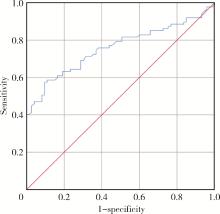
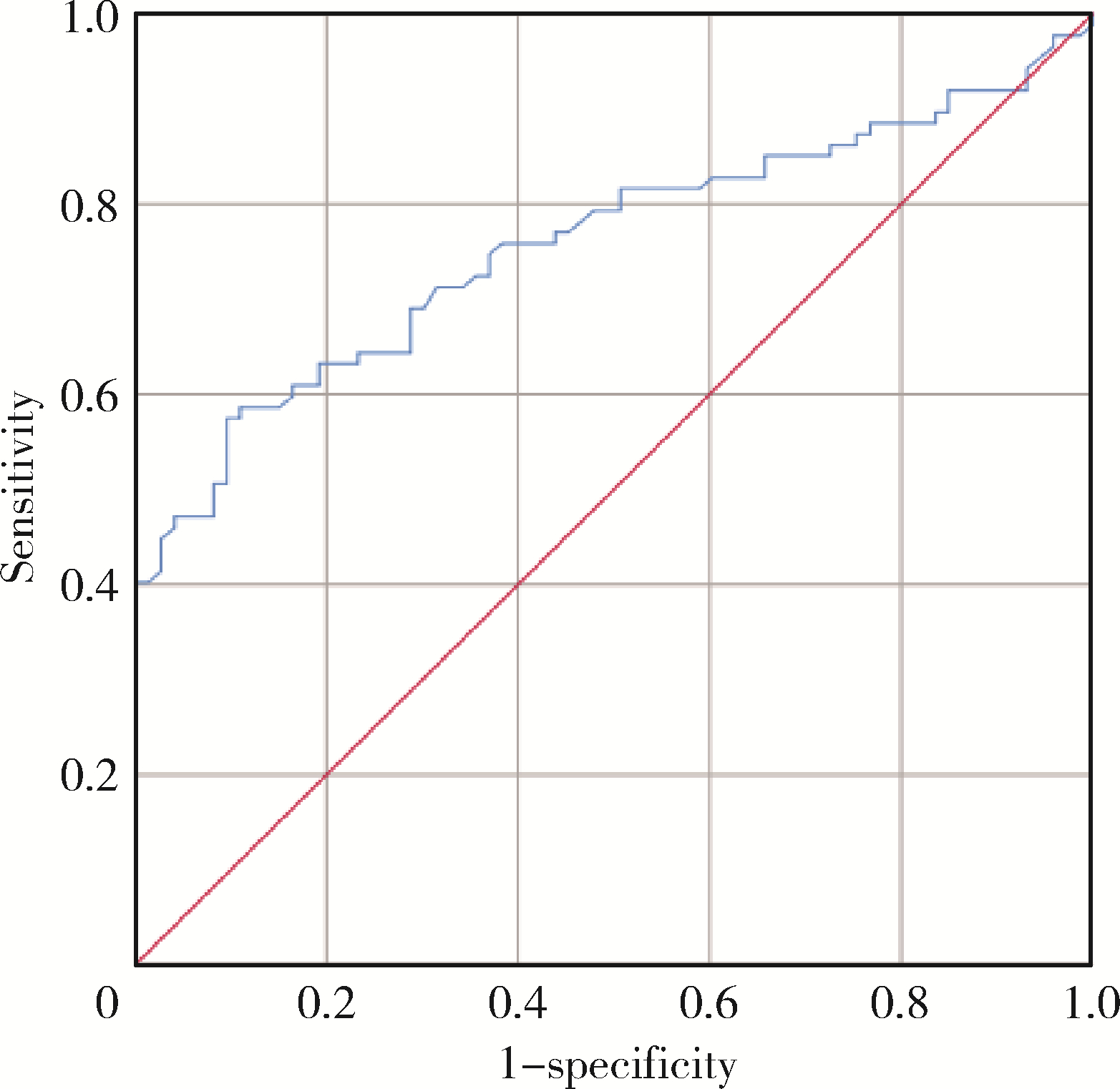
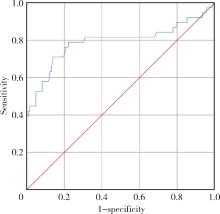
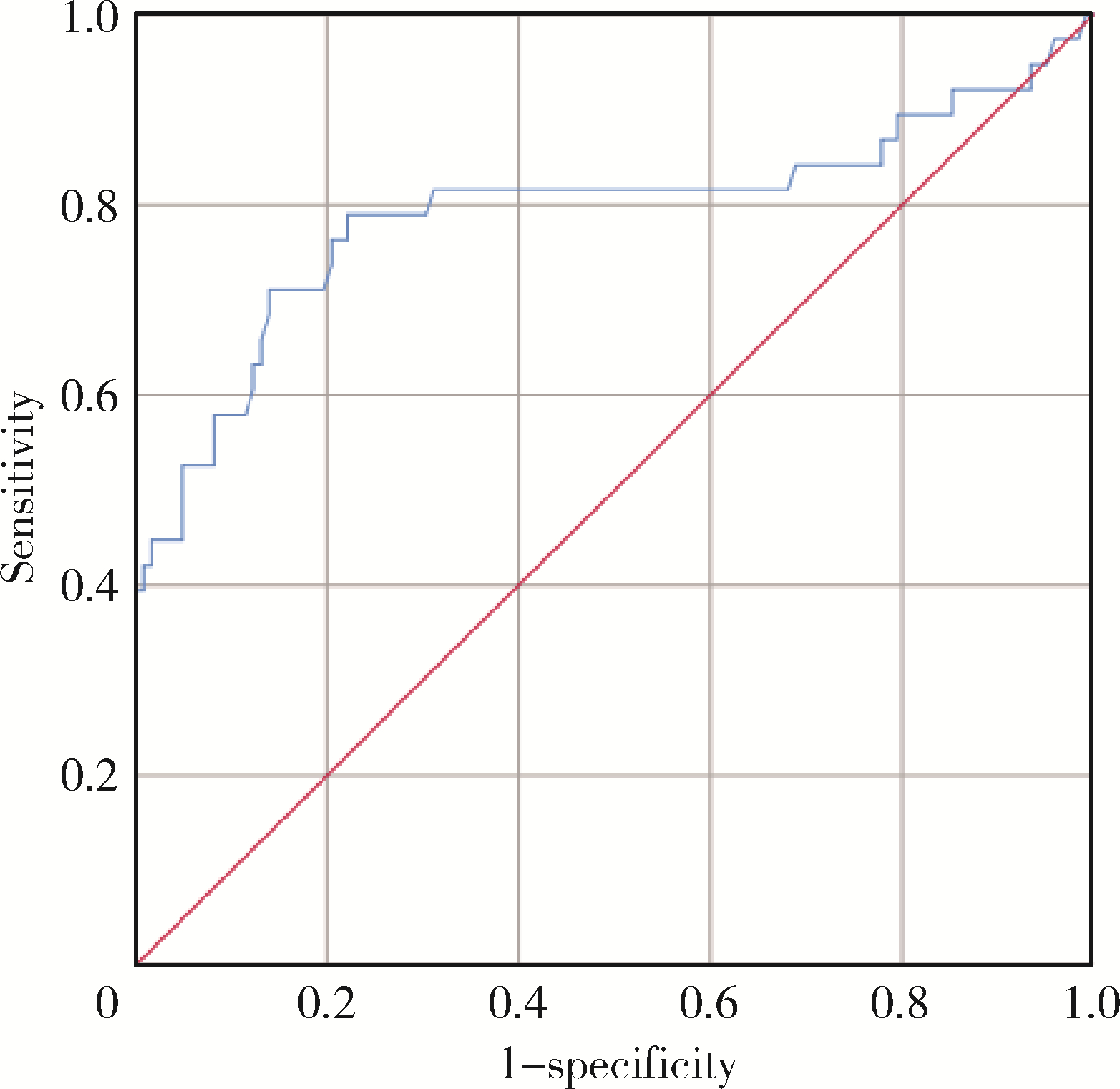
目的: 探讨粪便钙卫蛋白检测在婴儿牛奶蛋白过敏性肠炎中的诊断价值。方法: 连续纳入2020年1月至2023年1月在杭州市儿童医院消化内科就诊的87例过敏性肠炎婴儿的病例资料进行回顾性分析, 将确诊为牛奶蛋白过敏性肠炎的38例婴儿设为A组, 非牛奶蛋白过敏性肠炎的49例婴儿设为B组, 再收集同期在杭州市儿童医院体检的健康婴儿73例设为C组。收集3组婴儿一般资料, 并采集粪便标本以检测粪便钙卫蛋白水平。采用受试者工作特征(receiver operating characteristic, ROC)曲线下面积(area under characteristic, AUC)分析粪便钙卫蛋白对过敏性肠炎以及牛奶蛋白过敏性肠炎的诊断价值, 并采用Pearson法分析嗜酸性粒细胞(eosinophilic granulocytes, EOS)、血小板(platelets, PLT)水平与粪便钙卫蛋白水平的相关性。结果: A、B、C组的EOS水平分别为(0.73±0.21)×109 /L、(0.41±0.10)×109 /L、(0.26±0.05)×109 /L, PLT水平分别为(381.03±46.04)×109 /L、(336.98±52.57)×109 /L、(300.22±23.00)×109 /L, A组EOS、PLT水平均高于B组和C组(P < 0.05), B组EOS、PLT水平均高于C组(P < 0.05)。A、B、C组的粪便钙卫蛋白水平分别为(324.45±174.56)μg/g、(196.12±83.39) μg/g、(143.73±50.54) μg/g, A组粪便钙卫蛋白水平高于B组、C组(P < 0.05), B组粪便钙卫蛋白水平高于C组(P < 0.05)。粪便钙卫蛋白诊断过敏性肠炎、牛奶蛋白过敏性肠炎的AUC值分别为0.758、0.792, 灵敏度分别为0.575、0.711, 特异度分别为0.904、0.861, 最佳截断值分别为202.500μg/g、235.000μg/g, 95%CI分别为0.683~0.833、0.688~0.896。EOS水平与粪便钙卫蛋白水平呈正相关(r=0.325, P < 0.05), PLT水平与粪便钙卫蛋白水平呈正相关(r=0.280, P < 0.05)。结论: 粪便钙卫蛋白在牛奶蛋白过敏性肠炎婴儿中可能有较高的诊断价值, 且EOS、PLT水平与粪便钙卫蛋白水平呈正相关, 粪便钙卫蛋白水平越高, 炎症反应越严重。

关键词: 钙卫蛋白, 牛奶蛋白过敏, 过敏性肠炎, 婴儿

Abstract:

Objective: To explore the diagnostic significance of fecal calprotectin detection in infants with milk protein-allergic enteritis, and to provide valuable clinical basis for the early diagnosis and treatment decision-making of infants with milk protein-allergic enteritis. Methods: A retrospective analysis was conducted on the clinical data of 87 infants with suspected milk protein-allergic enteritis admitted in Hangzhou Children's Hospital from January 2020 to January 2023, and 38 infants with confirmed milk protein-allergic enteritis were assigned to group A, 49 infants with non-milk protein-allergic enteritis were assigned to group B, and 73 healthy infants who underwent physical examinations in Hangzhou Children's Hospital during the same period were assigned to the group C. General data of the three groups were collected through questionnaires, and fecal specimens were collected to detect the level of fecal calprotectin. The area under receiver operating characteristic (ROC)curve (AUC)was used to analyze the diagnostic value of fecal calprotectin for allergic enteritis and milk protein-allergic enteritis. The correlation between eosinophilic granulocytes (EOS)and platelets (PLT)levels and fecal calprotectin levels was analyzed by Pearson method. Results: The levels of EOS in groups A, B and C were (0.73±0.21)×109/L, (0.41±0.10)×109 /L, (0.26±0.05)×109 /L respectively, the levels of PLT were (381.03±46.04)×109 /L, (336.98±52.57)×109 /L, (300.22±23.00)×109 /L respectively, and the levels of EOS, PLT in group A were higher than those in group B and group C (P < 0.05), and those in group B were higher than those in group C (P < 0.05). The levels of fecal calprotectin in groups A, B and C were (324.45±174.56) μg/g, (196.12±83.39) μg/g, (143.73±50.54) μg/g respectively, and the levels of fecal calprotectin in group A were higher than those in group B and group C (P < 0.05), and those in group B were higher than those in group C (P < 0.05). The AUC values of fecal calprotectin and milk protein in the diagnosis of allergic enteritis were 0.758 and 0.792, respectively, the sensitivities were 0.575 and 0.711 respectively, the specificities were 0.904 and 0.861 respectively, the optimal cut-off values were 202.500 and 235.000 respectively, and the 95%CI were 0.683-0.833 and 0.688-0.896 respectively. The level of EOS was positively correlated with the level of fecal calprotectin (r=0.325, P < 0.05), and the PLT level was positively correlated with the level of fecal calprotectin (r=0.280, P < 0.05). Conclusion: Fecal calprotectin may have high clinical significance in infants with milk protein-allergic enteritis, and EOS and PLT levels may be positively correlated with the levels of fecal calprotectin. The higher the fecal calprotectin level, the more serious the inflammatory response.

Key words: Calprotectin, Milk protein allergy, Enteritis anaphylactica, Infant

中图分类号: 

  • R725.7

表1

3组婴儿一般资料比较"

Group n Gender,n(%) Course of the
disease/months,M(P25, P75)
Age/months,
M(P25, P75)
Feeding methods,n(%) White blood
cell/(×109 /L),
M(P25P75)
Hemoglobin/(g/L),
M(P25P75)
EOS/(×109 L),$\bar x \pm s$ PLT/(×109 L),$\bar x \pm s$
Male Female Exclusive
breastfeeding
Artificial
feeding
Mixed
feeding
A 38 21 (55) 17 (45) 4.00
(3.00, 6.00)
5.50
(4.00, 7.75)
12 (32) 8 (21) 18 (47) 8.50
(8.00, 9.00)
115.50
(112.25, 118.00)
0.73±0.21 381.03±46.04
B 49 22 (45) 27 (55) 5.00
(3.00, 6.00)
6.00
(5.00, 7.00)
16 (33) 12 (24) 21 (43) 8.00
(8.00, 9.00)
114.00
(112.00, 118.00)
0.41±0.10* 336.98±52.57*
C 73 40 (55) 33 (45) 5.00
(3.00, 5.00)
6.00
(5.00, 7.00)
23 (32) 11 (15) 39 (53) 9.00
(8.00, 9.00)
116.00
(112.00, 119.00)
0.26±0.05*# 300.22±23.00*#
F/H/χ2 1.379 0.473 1.086 2.120 0.378 0.846 188.977 52.298
P 0.502 0.789 0.581 0.714 0.828 0.655 < 0.001 < 0.001

图1

粪便钙卫蛋白筛查过敏性肠炎婴儿的ROC曲线"

图2

粪便钙卫蛋白筛查牛奶蛋白过敏性肠炎婴儿的ROC曲线"

1
Giannetti A , Toschi Vespasiani G , Ricci G , et al. Cow's milk protein allergy as a model of food allergies[J]. Nutrients, 2021, 13 (5): 1525.

doi: 10.3390/nu13051525
2
Cronin C , Ramesh Y , De Pieri C , et al. "Early introduction" of cow's milk for children with IgE-mediated cow's milk protein allergy: A review of current and emerging approaches for CMPA management[J]. Nutrients, 2023, 15 (6): 1397.

doi: 10.3390/nu15061397
3
李妍, 赵煜. 粪便钙卫蛋白在婴儿非IgE介导的牛奶蛋白过敏中的应用价值[J]. 中国中西医结合儿科学, 2023, 15 (1): 40- 45.
4
Chong KW , Goh SH , Saffari SE , et al. IgE-mediated cow's milk protein allergy in Singaporean children[J]. Asian Pac J Allergy Immunol, 2022, 40 (1): 65- 71.
5
宋祖贤, 诸葛远莉, 张琦, 等. 牛奶蛋白过敏致婴幼儿过敏性肠炎患儿粪便及外周血嗜酸性粒细胞、血小板计数表达变化及临床意义[J]. 国际检验医学杂志, 2023, 44 (7): 848-851, 856.
6
陈江滨. 粪便钙卫蛋白检测在新生儿过敏性肠炎中的应用价值[J]. 中外医疗, 2020, 39 (10): 13- 15.
7
Ometto F , Friso L , Astorri D , et al. Calprotectin in rheumatic diseases[J]. Exp Biol Med, 2017, 242 (8): 859- 873.

doi: 10.1177/1535370216681551
8
Ricciuto A , Griffiths AM . Clinical value of fecal calprotectin[J]. Crit Rev Clin Lab Sci, 2019, 56 (5): 307- 320.

doi: 10.1080/10408363.2019.1619159
9
中华医学会儿科学分会消化学组. 食物过敏相关消化道疾病诊断与管理专家共识[J]. 中华儿科杂志, 2017, 55 (7): 487- 492.
10
尹晶平, 程译文, 凌宗欣. IgE介导牛乳蛋白过敏婴幼儿肠道菌群改变初探[J]. 中国微生态学杂志, 2022, 34 (3): 295- 299.
11
Nakov RV , Nakov VN , Gerova VA , et al. Role of fecal calprotectin as a noninvasive indicator for ulcerative colitis disease activity[J]. Folia Med, 2019, 61 (2): 188- 196.

doi: 10.2478/folmed-2018-0071
12
Lęyk-Ciemniak E , Tworkiewicz M , Wilczyńska D , et al. Usefulness of testing for fecal calprotectin in pediatric gastroenterology clinical practice[J]. Med Princ Pract, 2021, 30 (4): 311- 319.

doi: 10.1159/000512631
13
高巧珍, 池艳华. 炎症性肠病患儿应用粪便钙卫蛋白指标检测对敏感性及特异性的影响研究[J]. 中国医药指南, 2023, 21 (15): 80- 82.
14
Lacy BE , Pimentel M , Brenner DM , et al. ACG clinical guideline: Management of irritable bowel syndrome[J]. Am J Gastroenterol, 2021, 116 (1): 17- 44.

doi: 10.14309/ajg.0000000000001036
[1] 焦莶如, 龚潘, 牛悦, 徐兆, 周宗朴, 杨志仙. 以婴儿癫痫性痉挛综合征为表型的吡哆醇依赖性癫痫[J]. 北京大学学报(医学版), 2024, 56(5): 781-787.
[2] 李洋洋,侯林,马紫君,黄山雅美,刘捷,曾超美,秦炯. 孕期因素与婴儿牛奶蛋白过敏的关系[J]. 北京大学学报(医学版), 2024, 56(1): 144-149.
[3] 李玭,赵艾,武薇,张健,王培玉,蓝航莲,张玉梅. 北京市和湖南省郴州市4~8月龄婴儿蔬菜水果添加情况的追踪性调查[J]. 北京大学学报(医学版), 2022, 54(3): 526-531.
[4] 姚晓莹,刘志科,李宁,马瑞,赵薛飞,张良,许国章,詹思延,方挺. 2015—2019年宁波市0~36月龄婴幼儿癫痫发病的流行病学研究[J]. 北京大学学报(医学版), 2021, 53(3): 485-490.
[5] 李秀兰,吴艳,钟晓云,王敏,黄利. 新生儿重症监护室早产儿母乳喂养促进策略研究[J]. 北京大学学报(医学版), 2019, 51(4): 711-715.
[6] 包菊,刘佳,曲元,穆东亮. 脐动脉血气pH值对剖宫产新生儿住院期间并发症的预测价值[J]. 北京大学学报(医学版), 2019, 51(1): 159-164.
[7] 杨夕樱,朱灵平,刘雪芹,张春雨,姚勇,吴晔. 基因诊断Caroli综合征合并常染色体隐性遗传性多囊肾1例及文献回顾[J]. 北京大学学报(医学版), 2018, 50(2): 335-339.
[8] 张欣, 茹喜芳, 王颖, 李星, 桑田, 冯琪. 新生儿重症监护病房中新生儿真菌败血症的临床特点[J]. 北京大学学报(医学版), 2017, 49(5): 789-793.
[9] 王姝琪, 杨志仙, 李慧. Williams-Beuren综合征的临床及遗传学特点:2例报道[J]. 北京大学学报(医学版), 2017, 49(5): 899-903.
[10] 吴艳, 钟晓云, 蒋静, 龚华. 住院早产超低和极低出生体重儿强化母乳喂养的前瞻性对照研究[J]. 北京大学学报(医学版), 2016, 48(1): 143-148.
[11] 李子一1, 王金子, 张雅蓉, 余恺, 司徒文佑, 尤莉莉, 陈程, 李文军, 王培玉, 张玉梅. 家长自报4~36月龄婴幼儿挑食行为的准确性评价[J]. 北京大学学报(医学版), 2014, 46(3): 383-388.
[12] 姜毅, 侯新琳, 李昕, 林志淼, 崔晨. 新生儿遗传性营养不良性大疱性表皮松解症基因诊断1例[J]. 北京大学学报(医学版), 2013, 45(2): 202-.
[13] 周文娟, 梁爱民, 王凤芝, 崔文红, 王秀云, 刘秋明, 游红, 贺春燕, 彭金荣, 张迎武, . 北京市四区/县18月龄儿童发育迟缓的流行病学研究[J]. 北京大学学报(医学版), 2013, 45(2): 211-.
[14] 冯琪. 早产儿院内营养策略进展及其意义[J]. 北京大学学报(医学版), 2013, 45(2): 333-.
[15] 叶华, 陈适, 安媛. 系统性红斑狼疮患者的妊娠结局:41例患者情况分析[J]. 北京大学学报(医学版), 2012, 44(2): 233-235.
Viewed
Full text


Abstract

Cited

  Shared   
  Discussed   
No Suggested Reading articles found!