Journal of Peking University (Health Sciences) ›› 2026, Vol. 58 ›› Issue (2): 342-350. doi: 10.19723/j.issn.1671-167X.2026.02.019

Previous Articles     Next Articles

Endoscopic characteristics of primary gastric lymphoma and prediction of treatment response

Jingyao WEI1, Juxiang YE2, Meiling ZHOU1, Weiwei FU1, Xin LIU1, Kangle ZHAI1, Yanyan SHI3, Shigang DING1,*(), Jing ZHANG1,*()   

  1. 1. Department of Gastroenterology, Peking University Third Hospital, Beijing 100191, China
    2. Department of Pathology, Peking University Third Hospital, Beijing 100191, China
    3. Clinical Epidemiology Research Center, Peking University Third Hospital, Beijing 100191, China
  • Received:2025-11-03 Online:2026-04-18 Published:2026-02-25
  • Contact: Shigang DING, Jing ZHANG

RICH HTML


Abstract:

Objective: Primary gastric lymphoma (PGL) is a rare form of lymphoma that arises within the gastric mucosa-associated lymphoid tissue (MALT), often linked to Helicobacter pylori (Hp) infection. The endoscopic features of PGL are heterogeneous, and understanding these characteristics could help distinguish between different lymphoma subtypes. This study aims to systematically assess the endoscopic features of PGL and explore the role of complement receptor type 2/B-cell lymphoma 6 protein (CD21/BCL6)-based grading of lymphoid follicular disruption in predicting the effectiveness of Hp eradication (HPE) treatment in gastric MALT lymphoma. Methods: A retrospective study was conducted involving 100 patients diagnosed with PGL at Peking University Third Hospital between January 2010 and January 2025. Patients were divided into two groups based on histopathological findings: indolent and aggressive lymphoma. The clinical and endoscopic characteristics of these two groups were compared. Survival analysis, including overall survival (OS) and progression-free survival (PFS), was performed using Kaplan-Meier curves and Log-rank tests. A subgroup of 25 patients with gastric MALT lymphoma and known HPE outcomes was selected for further analysis. Diagnostic biopsies were immunohistochemically stained with CD21 and BCL6 and graded from G0 to G4 based on follicular disruption. Logistic regression analysis was used to identify factors associated with HPE failure. Results: Among the 100 patients, the average age was 63.0 (55.8, 71.0) years, with 47 men and 53 women. Aggressive lymphoma showed a significantly higher incidence of B symptoms compared with indolent lymphoma (49.0% vs. 19.6%, P= 0.004). Endoscopically, aggressive lymphoma presented more frequently with ulcerative or mixed morphologies (P < 0.001) and exhibited higher rates of mucosal erosion, ulceration with white slough, lesion friability, bleeding tendency, gastric stenosis, and impaired peristalsis (P < 0.001 for all). Aggressive lymphoma also had significantly worse OS and PFS (OS: P=0.009; PFS: P=0.003). In the subgroup of 25 MALT lymphoma patients, those with ineffective HPE were more likely to be Hp-negative (P=0.049) and had a significantly higher degree of follicular disruption (P=0.015). Multivariable Logistic regression revealed that follicular disruption grading was independently associated with HPE failure (AOR=3.63, 95%CI: 1.14-11.58, P=0.021), while Hp infection status was not (P=0.240). Conclusion: PGL demonstrates considerable variability in its endoscopic presentation. Features, such as ulcerative/mixed morphology, friability, bleeding tendency, stenosis, and impaired peristalsis are indicative of more aggressive disease and correlate with poorer survival outcomes. The CD21/BCL6-based grading of lymphoid follicular disruption provides a valuable tool for identifying patients at high risk of HPE failure, supporting early intervention and risk stratification for gastric MALT lymphoma treatment.

Key words: Primary gastric lymphoma, Endoscopic features, Mucosa-associated lymphoid tissue (MALT) lymphoma, Helicobacter pylori eradication response, Lymphoid follicular disruption grading

CLC Number: 

  • R735.2

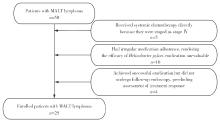
Figure 1

Flow diagram of patient selection MALT, mucosa associated lymphoid tissue."

Table 1

Grading of lymphoid follicular architecture disruption"

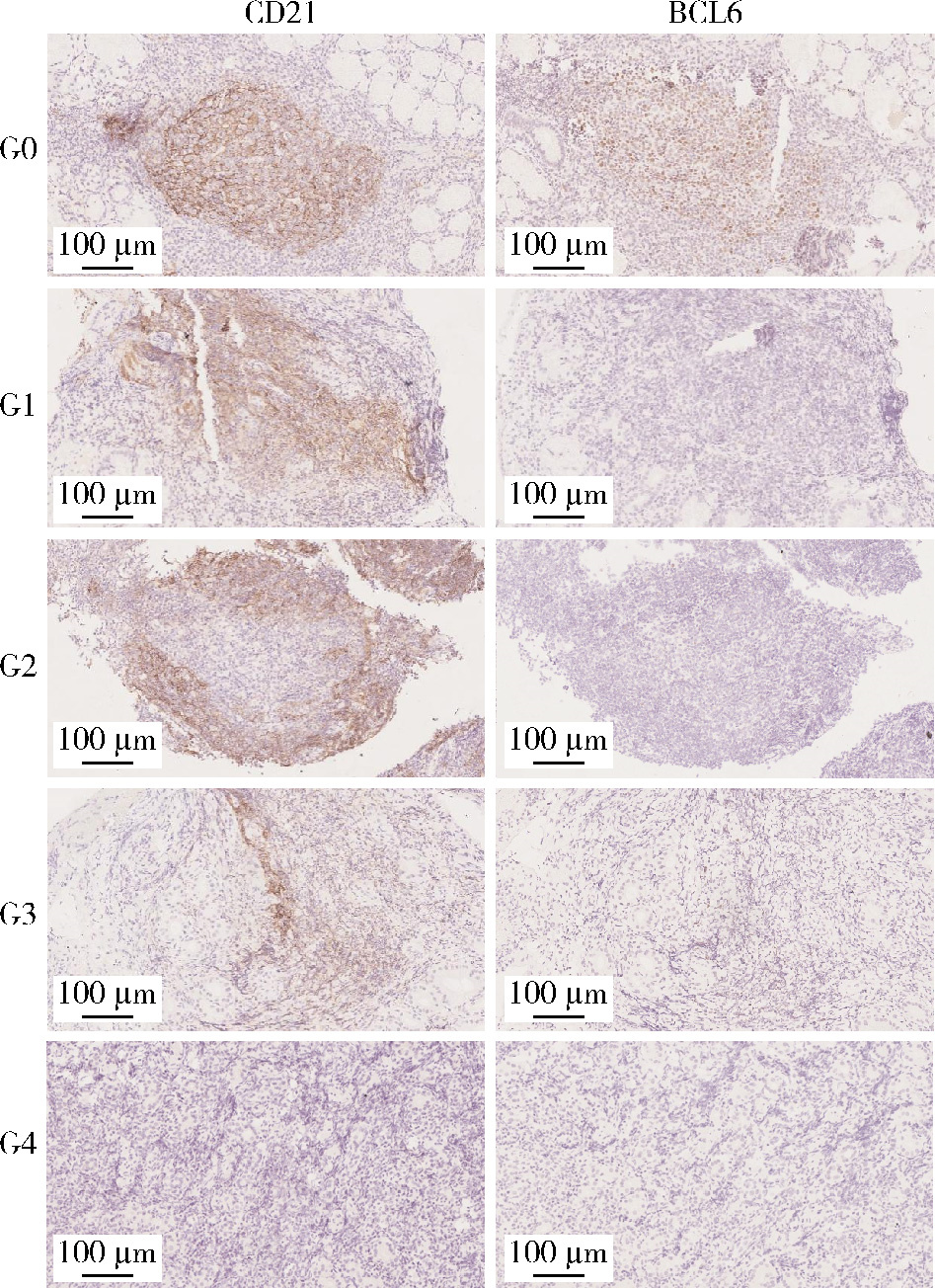
Grade Name Histomorphological features
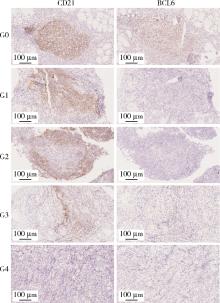
G0 Architecture-intact type A continuous, dense CD21 meshwork surrounds a well-defined BCL6-positive germinal center; The follicular contour is intact, with no disruption
G1 Marginal thinning/eccentric type The CD21 meshwork remains continuous but shows peripheral “crescent-shaped” condensation toward the outer margin or focal thinning; The germinal center remains intact
G2 Disrupted with preserved outline type The CD21 meshwork shows breaks and/or gaps; The follicular outline is still preserved. Features suggestive of tumor cell “follicular colonization” are present (BCL6-positive areas are intercalated by non-germinal-center cells)
G3 Outline-loss type The follicular contour is indistinct or largely lost; Only scattered fragmentary CD21 meshwork persists, and BCL6-positive germinal-center cells are no longer detectable
G4 Absent/disintegrated type The CD21 meshwork is almost completely unrecognizable/absent; Germinal centers are lost, or only rare scattered BCL6-positive cells are seen

Table 2

Baseline data of 100 primary gastric lymphma (PGL) patients"

Indicator Indolent lymphoma (n=51) Aggressive lymphoma (n=49) P
Gender 0.680
  Male 25 (49.0) 22 (44.9)
  Female 26 (51.0) 27 (55.1)
Age/years
  Male 63.52±8.71a 60.68±14.34a 0.410
  Female 59.88±12.90a 65.26±11.84a 0.120
Presenting symptoms 0.137
  Abdominal pain 13 (25.5) 22 (44.9)
  Abdominal distension 8 (15.7) 5 (10.2)
  Acid reflux/heartburn 3 (5.9) 3 (6.1)
  Nausea/vomiting 4 (7.8) 4 (8.2)
  Hematemesis/melena 8 (15.7) 10 (20.4)
  Asymptomatic 15 (29.4) 5 (10.2)
Hypertension 0.790
  No 32 (62.7) 32 (65.3)
  Yes 19 (37.3) 17 (34.7)
Diabetes mellitus 0.716
  No 44 (86.3) 41 (83.7)
  Yes 7 (13.7) 8 (16.3)
Smoking 0.722
  No 38 (74.5) 38 (77.6)
  Yes 13 (25.5) 11 (22.4)
Alcohol consumption 0.315
  No 41 (80.4) 43 (87.8)
  Yes 10 (19.6) 6 (12.2)
B symptoms 0.004
  No 40 (80.4) 25 (51.0)
  Yes 11 (19.6) 24 (49.0)

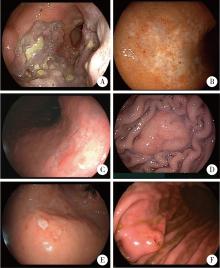
Figure 2

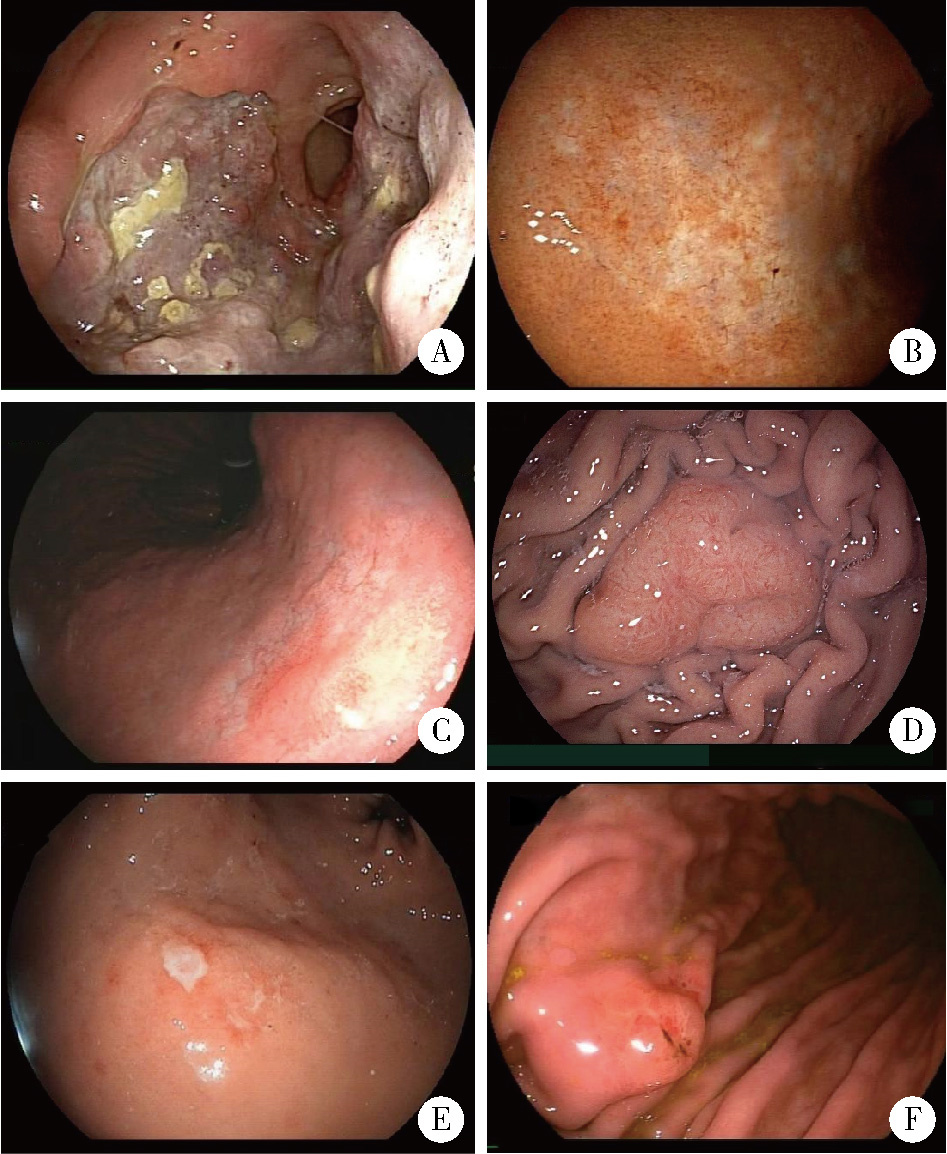
Endoscopic appearance of PGL A, ulcer type; B, infiltrative type; C, nodular type; D, polypoid type; E and F, mixed type in sequence; PGL, primary gastric lymphma."

Table 3

Endoscopic characteristics of 100 PGL patients"

Indicator Indolent lymphoma (n=51) Aggressive lymphoma (n=49) P
Lesion locationb 0.104
  Cardia 0 (0.0) 1 (1.2)
  Fundus 7 (8.8) 5 (6.0)
  Upper gastric body 18 (22.5) 9 (10.8)
  Middle gastric body 22 (27.5) 19 (22.9)
  Lower gastric body 22 (27.5) 27 (32.5)
  Antrum 11 (13.7) 22 (26.6)
Lesion orientation 0.103
  Anterior wall 13 (25.5) 8 (16.3)
  Posterior wall 6 (11.8) 9 (18.4)
  Lesser curvature 7 (13.7) 15 (30.6)
  Greater curvature 25 (49.0) 17 (34.7)
Gross morphology < 0.001
  Ulcerative type 11 (21.6) 35 (71.4)
  Infiltrative type 12 (23.5) 0 (0.0)
  Nodular type 19 (37.3) 1 (2.0)
  Polypoid type 4 (7.8) 1 (2.0)
  Mixed type 5 (9.8) 12 (24.6)
Number of lesions 0.568
  Solitary 19 (37.3) 21 (42.9)
  Multiple 32 (62.7) 28 (57.1)
Long diameter/cmc 0.178a
  <1 7 (23.3) 4 (12.9)
  1-<3 16 (53.4) 13 (41.9)
  ≥3 7 (23.3) 14 (45.2)
Short diameter/cmc 0.131a
  <1 11 (36.7) 8 (25.8)
  1-<3 15 (50.0) 12 (38.7)
  ≥3 4 (13.3) 11 (35.5)
Erosion < 0.001
  Absent 26 (51.0) 1 (2.0)
  Present 25 (49.0) 48 (98.0)
Ulceration/white slough < 0.001
  Absent 32 (62.7) 2 (4.0)
  Present 19 (37.3) 47 (96.0)
Consistency < 0.001
  Soft 32 (62.7) 8 (16.3)
  Hard 4 (7.8) 5 (10.2)
  Tough/firm 9 (17.6) 13 (26.5)
  Brittle 6 (11.9) 23 (47.0)
Bleeding 0.008
  Active bleeding 4 (7.8) 9 (18.4)
  Easy bleeding on biopsy 40 (78.4) 40 (81.6)
  Not prone to bleeding 7 (13.8) 0 (0.0)
Perilesional mucosa 0.550
  Normal mucosa 1 (2.0) 0 (0.0)
  Erythema/edema 21 (41.2) 16 (32.7)
  Converging folds 6 (11.8) 5 (10.2)
  Uneven mucosa 23 (45.0) 28 (57.1)
Background mucosa 0.259
  Normal mucosa 4 (7.8) 2 (4.1)
  Erythema/edema 5 (9.8) 5 (10.2)
  Mottled mucosa 32 (62.7) 24 (49.0)
  Uneven mucosa 10 (19.7) 18 (36.7)
Gastric lumen < 0.001
  Patent 51 (100.0) 30 (61.2)
  Stenosis 0 (0.0) 19 (38.8)
Peristalsis < 0.001
  Good 46 (90.2) 25 (51.0)
  Poor 5 (9.8) 24 (49.0)

Table 4

Staging and treatment data of 100 PGL patients"

Indicator Indolent lymphoma (n=51) Aggressive lymphoma (n=49) P
Lugano classification < 0.001a
  Stage Ⅰ 37 (72.5) 8 (16.3)
  Stage Ⅱ 9 (17.6) 9 (18.4)
  Stage Ⅲ 0 (0.0) 2 (4.1)
  Stage Ⅳ 5 (9.9) 30 (61.2)
Therapeutic regimen < 0.001
  Untreated 6 (11.8) 4 (8.2)
  HPE only 16 (31.4) 0 (0.0)
  Radiotherapy/chemotherapy/surgery 7 (13.7) 42 (85.7)
  HPE+Radiotherapy/chemotherapy 22 (43.1) 3 (6.1)
Follow-up effect 0.007
  Remission after treatment 31 (60.7) 30 (61.2)
  Residual/ineffective 8 (15.7) 1 (2.0)
  Progress/death 6 (11.8) 16 (32.7)
  Untreated and alive 6 (11.8) 2 (4.1)

Figure 3

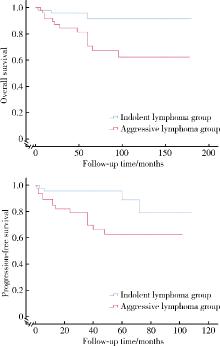
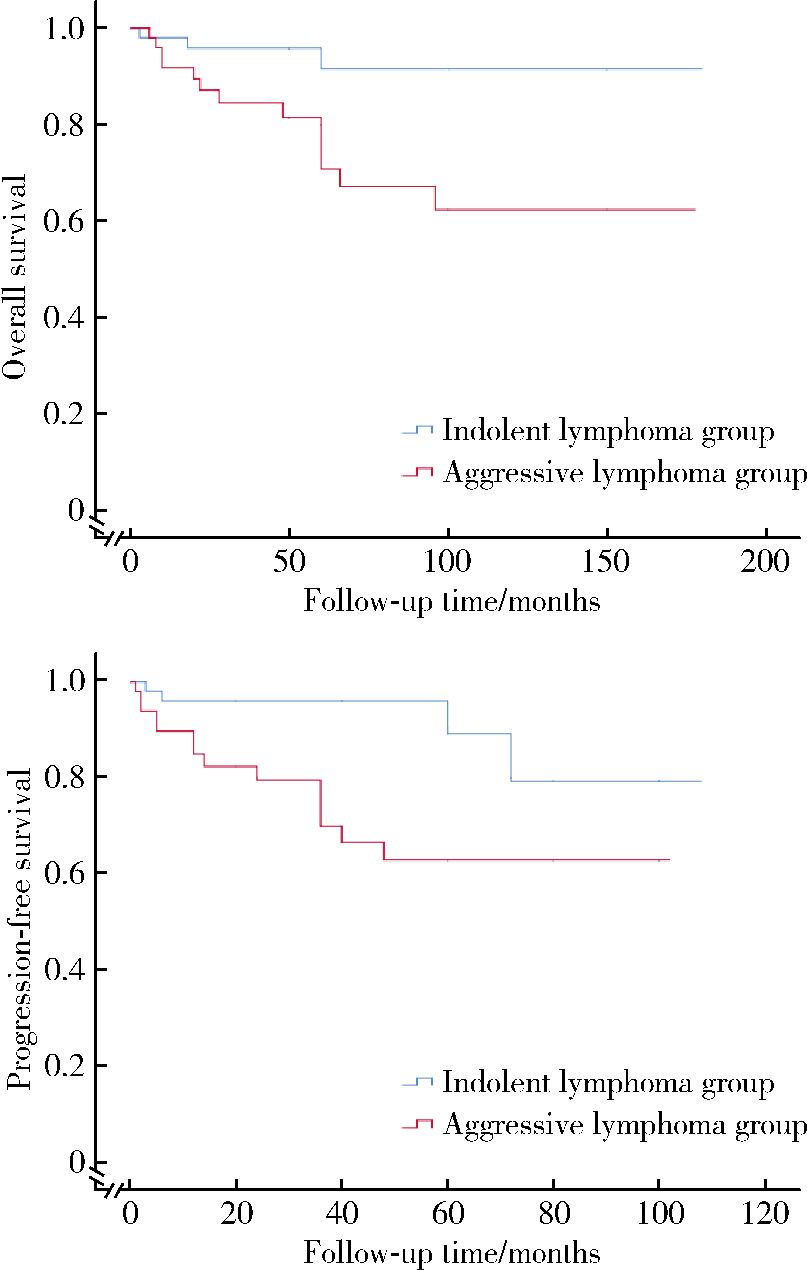
Survival curve of primary gestric lymphoma (PGL) patients"

Figure 4

Schematic diagram of G0-G4 level immunohistochemistry (×20) CD21, complement receptor type 2; BCL6, B-cell lymphoma 6 protein."

Table 5

Inter group comparison of HPE effective group and HPE ineffective group"

Indicator HPE effective (n=10) HPE ineffective (n=15) P
Gender 0.099
  Male 2 (20.0) 9 (60.0)
  Female 8 (80.0) 6 (40.0)
Age/years 61.1 (52.8, 68.0) 62.9 (59.0, 69.0) 0.453
Hypertension >0.999
  No 6 (60.0) 9 (60.0)
  Yes 4 (40.0) 6 (40.0)
Diabetes mellitus >0.999
  No 8 (80.0) 13 (86.7)
  Yes 2 (20.0) 2 (13.3)
Smoking 0.179
  No 9 (90.0) 9 (60.0)
  Yes 1 (10.0) 6 (40.0)
Alcohol 0.615
  No 9 (90.0) 11 (73.3)
  Yes 1 (10.0) 4 (26.7)
B symptoms 0.499
  No 7 (70.0) 13 (86.7)
  Yes 3 (30.0) 2 (13.3)
Lesion orientation >0.999
  Anterior wall 2 (20.0) 2 (13.3)
  Posterior wall 1 (10.0) 1 (6.7)
  Lesser curvature 2 (20.0) 3 (20.0)
  Greater curvature 5 (50.0) 9 (60.0)
Gross morphology 0.912
  Ulcerative type 1 (10.0) 2 (13.3)
  Infiltrative type 2 (20.0) 2 (13.3)
  Nodular type 6 (60.0) 8 (53.5)
  Polypoid type 0 (0.0) 2 (13.3)
  Mixed type 1 (10.0) 1 (6.7)
Number of lesions >0.999
  Solitary 3 (30.0) 5 (33.3)
  Multiple 7 (70.0) 10 (66.7)
  Erosion >0.999
  Absent 6 (60.0) 9 (60.0)
  Present 4 (40.0) 6 (40.0)
Ulceration >0.999
  Absent 7 (70.0) 11 (73.3)
  Present 3 (30.0) 4 (26.7)
Consistency 0.510
  Soft 5 (50.0) 11 (73.3)
  Hard 1 (10.0) 0 (0.0)
  Tough 1 (10.0) 2 (13.3)
  Brittle 3 (30.0) 2 (13.3)
Peristalsis 0.400
  Good 9 (90.0) 15 (100.0)
  Poor 1 (10.0) 0 (0.0)
Hp infection status 0.049
  Positive 7 (70.0) 4 (26.7)
  Negative 3 (30.0) 11 (73.3)
Disruption grading 0.015
  G0 3 (30.0) 0 (0.0)
  G1 1 (10.0) 0 (0.0)
  G2 4 (40.0) 3 (20.0)
  G3 0 (0.0) 8 (53.3)
  G4 2 (20.0) 4 (26.7)
1
Dizengof V , Levi I , Etzion O , et al. Incidence rates and clinical characteristics of primary gastrointestinal non-Hodgkin lymphoma: A population study[J]. Eur J Gastroenterol Hepatol, 2020, 32 (5): 569- 574.

doi: 10.1097/MEG.0000000000001651
2
National Comprehensive Cancer Network (NCCN). NCCN Guidelines Navigator: B-cell lymphomas. Version 3.2025[EB/OL]. [2025-10-01]. https://www.nccn.org/guidelines/guidelines-detail?category=1&id=1480.
3
Eyre TA , Cwynarski K , D'Amore F , et al. Lymphomas: ESMO clinical practice guideline for diagnosis, treatment and follow-up[J]. Ann Oncol, 2025, 36 (11): 1263- 1284.

doi: 10.1016/j.annonc.2025.07.014
4
Ghimire P . Primary gastrointestinal lymphoma[J]. World J Gastroenterol, 2011, 17 (6): 697.

doi: 10.3748/wjg.v17.i6.697
5
Rohatiner A , D'Amore F , Coiffier B , et al. Report on a workshop convened to discuss the pathological and staging classifications of gastrointestinal tract lymphoma[J]. Ann Oncol, 1994, 5 (5): 397- 400.

doi: 10.1093/oxfordjournals.annonc.a058869
6
Alaggio R , Amador C , Anagnostopoulos I , et al. The 5th edition of the World Health Organization classification of haematolymphoid tumours: lymphoid neoplasms[J]. Leukemia, 2022, 36 (7): 1720- 1748.

doi: 10.1038/s41375-022-01620-2
7
Copie-Bergman C , Wotherspoon AC , Capella C , et al. Gela histological scoring system for post-treatment biopsies of patients with gastric MALT lymphoma is feasible and reliable in routine practice[J]. Br J Haematol, 2013, 160 (1): 47- 52.

doi: 10.1111/bjh.12078
8
Kurshumliu F , Sadiku-Zehri F , Qerimi A , et al. Divergent immunohistochemical expression of CD21 and CD23 by follicular dendritic cells with increasing grade of follicular lymphoma[J]. World J Surg Oncol, 2019, 17 (1): 115.

doi: 10.1186/s12957-019-1659-8
9
Herlevic V, Reynolds SB, Morris JD. Gastric Lymphoma[M/OL]. In: StatPearls[Internet]. Treasure Island (FL): StatPearls Publishing, 2024[2025-10-01]. https://www.ncbi.nlm.nih.gov/books/NBK567799/.
10
Watanabe M , Nonaka K , Kishino M , et al. Endoscopic features of gastric mucosa-associated lymphoid tissue lymphoma without Helicobacter pylori[J]. Diagnostics, 2024, 14 (6): 607.

doi: 10.3390/diagnostics14060607
11
Matysiak-Budnik T , Priadko K , Bossard C , et al. Clinical management of patients with gastric MALT lymphoma: A gastroen-terologist' s point of view[J]. Cancers, 2023, 15 (15): 3811.

doi: 10.3390/cancers15153811
12
Yang BC , Yan HL , Luo XY , et al. Endoscopic morphology of gastric MALT lymphoma correlate with API2/MALT1 fusion and predict treatment response after Helicobacter pylori eradication[J]. BMC Gastroenterol, 2024, 24 (1): 388.

doi: 10.1186/s12876-024-03476-5
13
Walewska R , Eyre TA , Barrington S , et al. Guideline for the diagnosis and management of marginal zone lymphomas: A British Society of Haematology Guideline[J]. Br J Haematol, 2024, 204 (1): 86- 107.

doi: 10.1111/bjh.19064
14
Fischbach W , Herold J , Eck M . Watch-and-Wait und Nachsorge Bei gastralen MALT-lymphomen nach alleiniger Helicobacter pylori-eradikation unter besonderer Berücksichtigung der Patientencompliance[J]. Z Gastroenterol, 2025, 63 (12): 1246- 1252.

doi: 10.1055/a-2685-2913
15
Lewis CS , Joy G , Jensen P , et al. Primary gastric diffuse large B-cell lymphoma: A multicentre retrospective study[J]. Br J Haematol, 2024, 205 (2): 534- 541.

doi: 10.1111/bjh.19470
16
Lu SN , Huang C , Li LL , et al. Synchronous early gastric and intestinal mucosa-associated lymphoid tissue lymphoma in a Helicobacter pylori-negative patient: A case report[J]. World J Clin Cases, 2022, 10 (33): 12447- 12454.

doi: 10.12998/wjcc.v10.i33.12447
17
Salama ME , Lossos IS , Warnke RA , et al. Immunoarchitectural patterns in nodal marginal zone B-cell lymphoma[J]. Am J Clin Pathol, 2009, 132 (1): 39- 49.

doi: 10.1309/AJCPZQ1GXBBNG8OG
18
Iwamuro M , Takenaka R , Miyahara K , et al. Long-term monitoring of gastric mucosa-associated lymphoid tissue lymphoma in patients with extra copies of the MALT1 gene[J]. Sci Rep, 2024, 14, 4953.

doi: 10.1038/s41598-024-55663-9
19
Blosse A , Peru S , Levy M , et al. APRIL-producing eosinophils are involved in gastric MALT lymphomagenesis induced by Helicobacter sp infection[J]. Sci Rep, 2020, 10, 14858.

doi: 10.1038/s41598-020-71792-3
20
Liu H , Ye H , Ruskone-Fourmestraux A , et al. T(11;18) is a marker for all stage gastric MALT lymphomas that will not respond to H. pylori eradication[J]. Gastroenterology, 2002, 122 (5): 1286- 1294.

doi: 10.1053/gast.2002.33047
21
Yeh KH . Nuclear expression of BCL10 or nuclear factor kappa B helps predict Helicobacter pylori-independent status of low-grade gastric mucosa-associated lymphoid tissue lymphomas with or without t(11;18)(q21;q21)[J]. Blood, 2005, 106 (3): 1037- 1041.

doi: 10.1182/blood-2005-01-0004
22
Tsai HJ , Tai JJ , Chen LT , et al. A multicenter prospective study of first-line antibiotic therapy for early-stage gastric mucosa-associated lymphoid tissue lymphoma and diffuse large B-cell lymphoma with histological evidence of mucosa-associated lymphoid tissue[J]. Haematologica, 2020, 105 (7): e349- e354.

doi: 10.3324/haematol.2019.228775
23
Ishikawa E , Nakamura M , Satou A , et al. Mucosa-associated lymphoid tissue (MALT) lymphoma in the gastrointestinal tract in the modern era[J]. Cancers, 2022, 14 (2): 446.

doi: 10.3390/cancers14020446
24
Min GJ , Kang D , Lee HH , et al. Long-term clinical outcomes of gastric mucosa-associated lymphoid tissue lymphoma in real-world experience[J]. Ann Hematol, 2023, 102 (4): 877- 888.

doi: 10.1007/s00277-023-05130-8
25
Jeon SH , Chang JH , Kim IH , et al. Reduced-dose radiation therapy for stage IE gastric mucosa-associated lymphoid tissue lymphoma: A multi-institutional prospective study (KROG 16-18)[J]. Int J Radiat Oncol, 2025, 121 (4): 1000- 1005.

doi: 10.1016/j.ijrobp.2024.10.020
[1] Jiafu JI, Jingtao WEI, Ke JI, Zhaode BU. Bottlenecks and breakthroughs in gastric cancer diagnosis and treatment: Towards a new era of precision and intelligent integration [J]. Journal of Peking University (Health Sciences), 2026, 58(2): 231-238.
[2] Zhaode BU, Mengyu FENG, Ke JI. Practice and reflection on sentinel lymph node navigation surgery for early gastric cancer [J]. Journal of Peking University (Health Sciences), 2026, 58(2): 239-243.
[3] Bixian LUO, Hongming LIU, Weixun XIE, Weihua GONG. Novel clinical insights and frontier issues in alpha- fetoprotein-producing gastric cancer [J]. Journal of Peking University (Health Sciences), 2026, 58(2): 257-265.
[4] Youdong LIU, Yajun LYU, Jie CHEN, Mingde ZANG, Hongda PAN, Xiaowen LIU, Jun LU, Fenglin LIU. Clinical efficacy and safety of totally laparoscopic subtotal gastrectomy with cardia-gastric fundus preservation in middle-upper gastric cancer [J]. Journal of Peking University (Health Sciences), 2026, 58(2): 301-306.
[5] Jialin LI, Liqiao CHEN, Jiatian TANG, Yan WU, Anqiang WANG. Conversion therapy for hepatoid adenocarcinoma of the stomach: A case report [J]. Journal of Peking University (Health Sciences), 2026, 58(2): 399-404.
[6] 郭芷均, 俎明, 马超, 张贺军, 张静, 丁士刚. [J]. Journal of Peking University (Health Sciences), 2026, 58(2): 410-415.
[7] Bin LI, Han LIANG. Robotic gastrectomy: Research progress and practical challenges [J]. Journal of Peking University (Health Sciences), 2026, 58(2): 416-422.
[8] Weihua HOU, Shujie SONG, Zhongyue SHI, Lu LIU, Mulan JIN. Neuroendocrine carcinoma with significantly vacuolar nucleus at the esophagogastric junction: A case report [J]. Journal of Peking University (Health Sciences), 2025, 57(5): 1005-1009.
[9] Zhemin LI, Jiafu JI, Guoxin LI, Ziyu LI, Zhaode BU, Xiangyu GAO, Di DONG, Lei TANG, Xiaofang XING, Shuqin JIA, Ting GUO, Lianhai ZHANG, Fei SHAN, Xin JI, Anqiang WANG. Development and dissemination of precision medicine approaches in gastric cancer management [J]. Journal of Peking University (Health Sciences), 2025, 57(5): 864-867.
[10] Wei-hua HOU,Shu-jie SONG,Zhong-yue SHI,Mu-lan JIN. Clinicopathological features of Helicobacter pylori-negative early gastric cancer [J]. Journal of Peking University (Health Sciences), 2023, 55(2): 292-298.
[11] Ju-mei LIU,Li LIANG,Ji-xin ZHANG,Long RONG,Zi-yi ZHANG,You WU,Xu-dong ZHAO,Ting LI. Pathological evaluation of endoscopic submucosal dissection for early gastric cancer and precancerous lesion in 411 cases [J]. Journal of Peking University (Health Sciences), 2023, 55(2): 299-307.
[12] NIU Zhan-yue,XUE Yan,ZHANG Jing,ZHANG He-jun,DING Shi-gang. Analysis of endoscopic and pathological features of gastric adenomatous polyps and risk factors for canceration [J]. Journal of Peking University (Health Sciences), 2021, 53(6): 1122-1127.
[13] Ying-chao WU,Yun-long CAI,Long RONG,Ji-xin ZHANG,Jin LIU,Xin WANG. Characteristics of lymph node metastasis and evaluating the efficacy of endoscopic submucosal dissection in early gastric cancer [J]. Journal of Peking University (Health Sciences), 2020, 52(6): 1093-1097.
[14] Yang YANG,Yi-qiang LIU,Xiao-hong WANG,Ke JI,Zhong-wu LI,Jian BAI,Ai-rong YANG,Ying HU,Hai-bo HAN,Zi-yu LI,Zhao-de BU,Xiao-jiang WU,Lian-hai ZHANG,Jia-fu JI. Clinicopathological and molecular characteristics of Epstein-Barr virus associated gastric cancer: a single center large sample case investigation [J]. Journal of Peking University(Health Sciences), 2019, 51(3): 451-458.
[15] Xin LIU,Jing ZHANG,Ye WANG,He-jun ZHANG,Shi-gang DING,Li-ya Zhou. Characteristics analysis of early gastric cancer under white light endoscopy [J]. Journal of Peking University(Health Sciences), 2019, 51(2): 302-306.
Viewed
Full text


Abstract

Cited

  Shared   
  Discussed   
No Suggested Reading articles found!