Journal of Peking University (Health Sciences) ›› 2025, Vol. 57 ›› Issue (3): 604-609. doi: 10.19723/j.issn.1671-167X.2025.03.027

Previous Articles     Next Articles

Fitness of onlays fabricated with direct and indirect CAD/CAM technology in vitro

Kun QIAN, Yihong LIU*()   

  1. Department of General Dentistry, Peking University School and Hospital of Stomatology & National Center for Stomatology & National Clinical Research Center for Oral Diseases & National Engineering Research Center of Oral Biomaterials and Digital Medical Devices & Beijing Key Laboratory of Digital Stomatology & NHC Research Center of Engineering and Technology for Computerized Dentistry & NMPA Key Laboratory for Dental Materials, Beijing 100081, China
  • Received:2022-10-06 Online:2025-06-18 Published:2025-06-13
  • Contact: Yihong LIU
  • Supported by:
    National Natural Science Foundation of China(52111530189)

RICH HTML


Abstract:

Objective: To analyze the fitness of zirconia and lithium disilicate glass-ceramic onlays fabricated with direct and indirect computer-aided design and computer-aided manufacturing (CAD/CAM) technology in vitro. Methods: In the study, 48 standardised typodont left mandibular first molars received standardised onlay preparation. Then, all the specimens were randomly divided into 4 groups. There were 12 specimens in each group. The preparation quality was checked under the stereomicroscope. All the specimens were fixed in typodonts. Subsequently, the typodonts were fixed in the dental simulators to simulate the oral conditions. In groups A and B, the digital impressions were obtained by using the intraoral scanner. In groups C and D, conventional impressions of polyether impression material were obtained according to the instructions of the manufacturer using individual trays. The stone casts were made with type Ⅳ gypsum later. Then, all casts were digitized with the model scanner. Based on the data obtained from the scan, onlay restorations of all the groups were designed using the corresponding software, the simulated cement thickness was set to 50 μm. Then, the final onlays restorations of all the groups were machined with the milling machines in lab. The fabrication materials were different in groups. The specimens of groups A and C were fabricated with zirconia. While, the specimens of groups B and D were fabricated with lithium disilicate glass-ceramic. The marginal gap and internal gap of all restorations were analyzed by 3D replica technique, for each measurement, the specimen was digitised using the model scanner. Results: The marginal gap of the onlays fabricated with indirect digital impressions were smaller than that with direct digital impressions (P < 0.05). At the same time, the internal gap of the onlays fabricated with indirect digital impressions were smaller than that with direct digi-tal impressions (P < 0.05). The marginal gap was larger in distal gingival than that in the other regions in all the groups (P < 0.05). Different fabrication materials, zirconia or lithium disilicate reinforced glass-ceramic, had no effect on onlay marginal and internal fit (P>0.05). Conclusion: The marginal and internal adaptation of the onlays fabricated with indirect digital impressions was better than with direct digital impressions. Zirconia and lithium disilicate reinforced glass-ceramic had no effect on the onlay adaptation.

Key words: Dental impression technique, Dental porcelain, Zirconia, Lithium disilicate, Onlay

CLC Number: 

  • R783.3

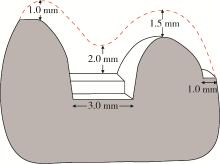
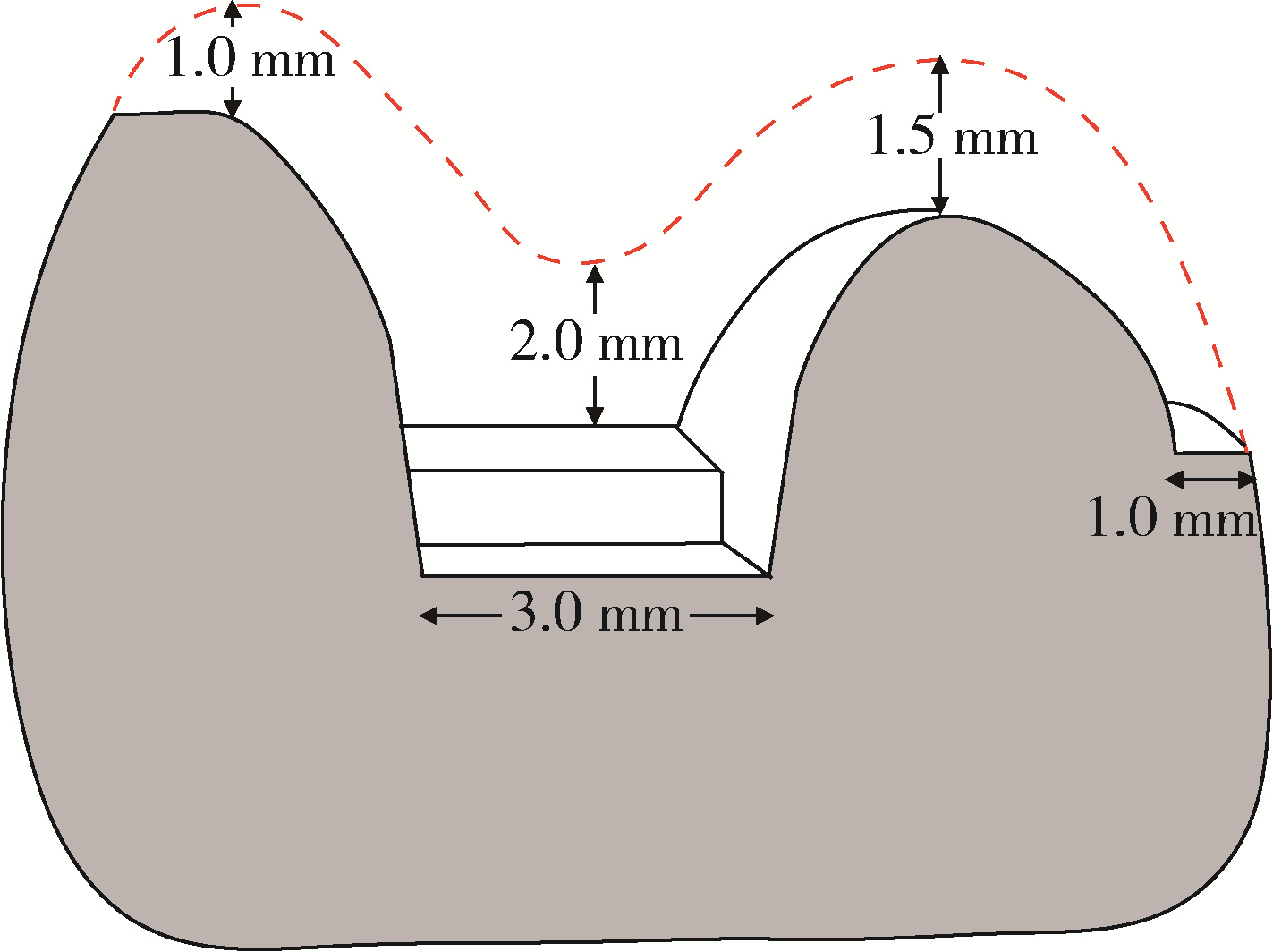
Figure 1

Schematic diagram showing the designed parameters of the onlay"

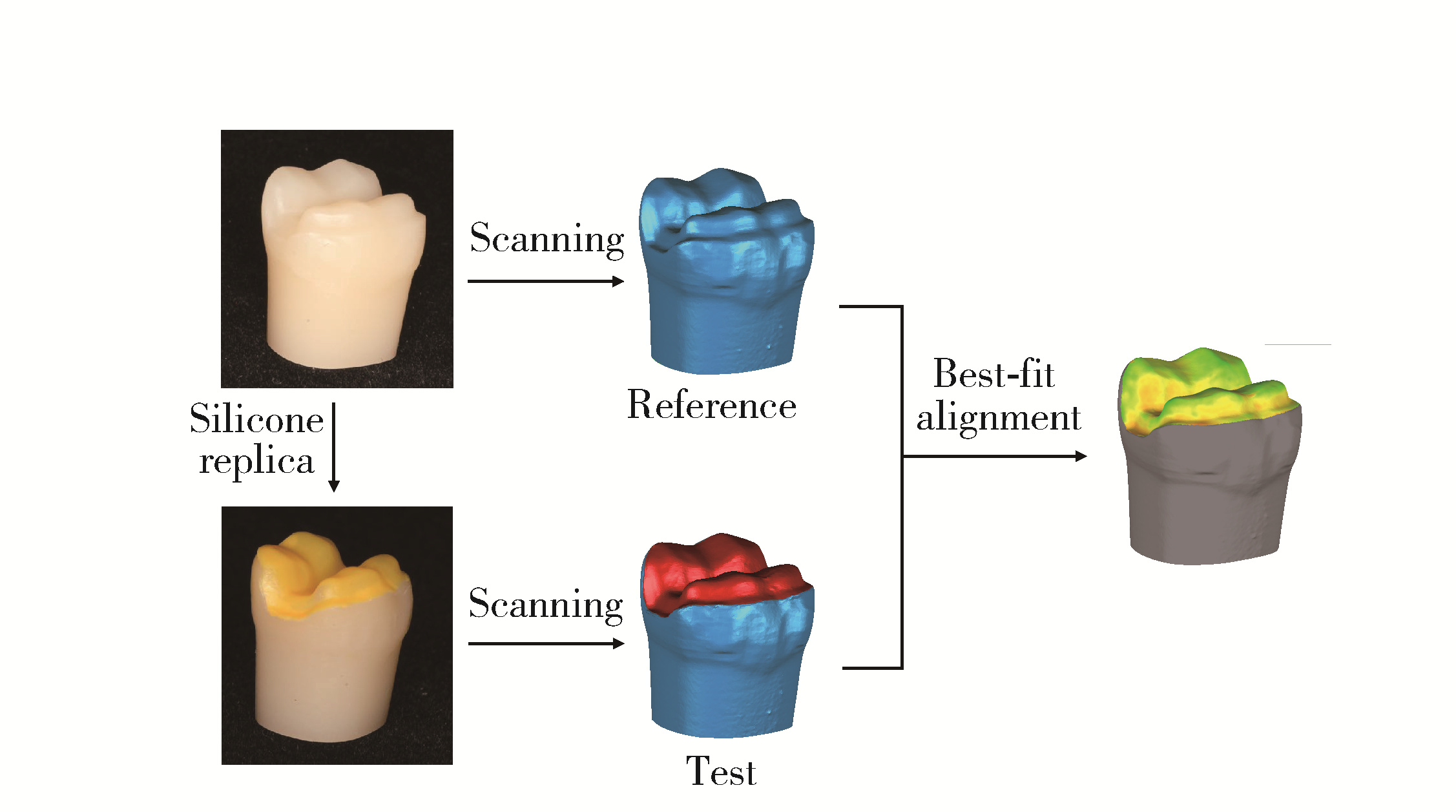
Figure 2

Workflow for 3D analysis"

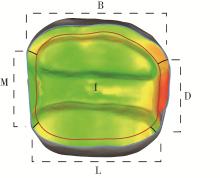
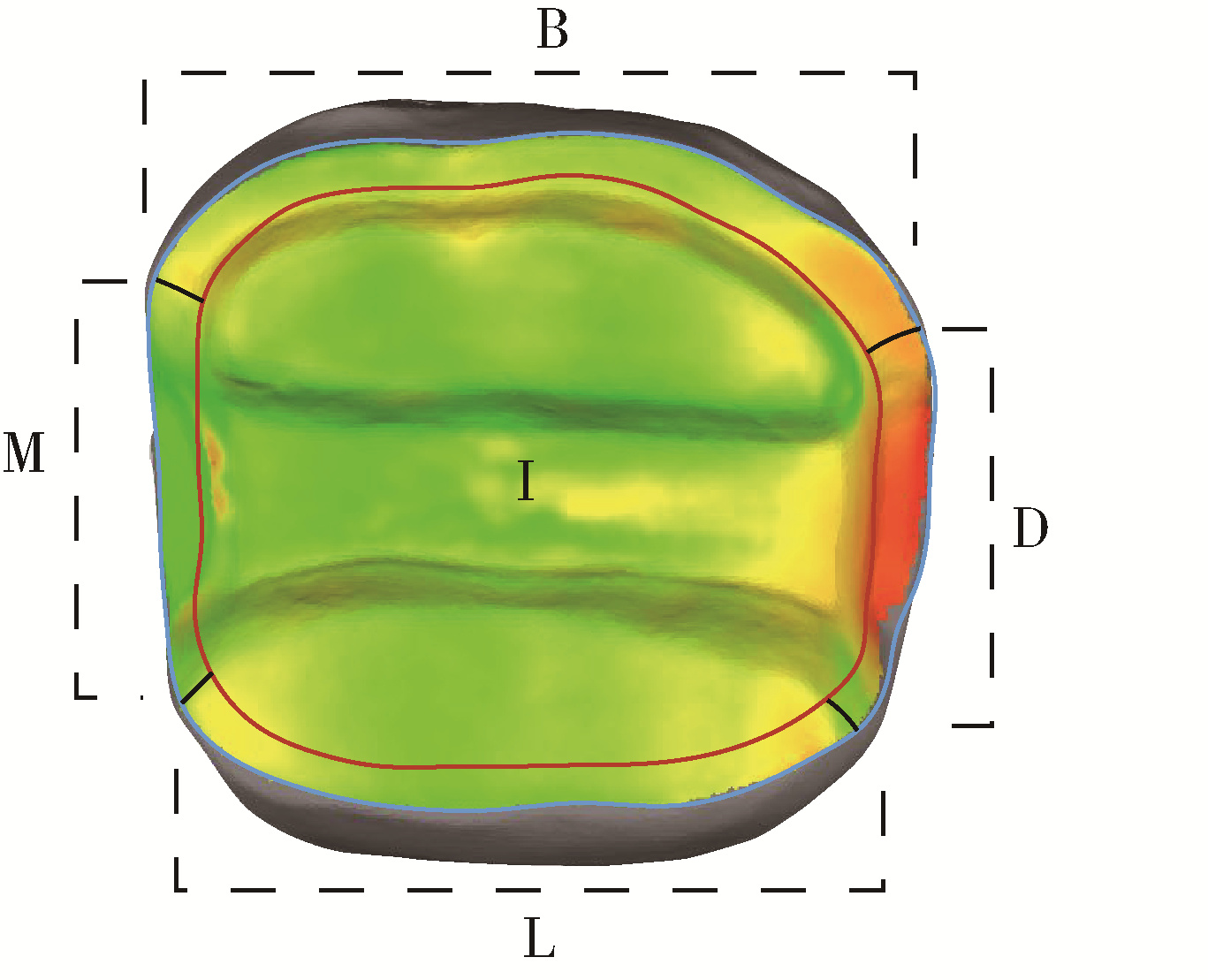
Figure 3

Location of the part where the gaps were measured M, mesial margin; D, distal margin; B, buccal margin; L, lingual margin; I, internal."

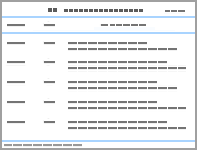
Table 1

Internal and marginal gap values for each group"

Group Method Material Internal gap values/μm Marginal gap values/μm
A (n=12) Direct Zirconia 135.54±14.69 144.30±20.44
B (n=12) Direct Ceramic 124.16±22.04 135.53±23.44
C (n=12) Indirect Zirconia 103.77±13.61 104.55±19.02
D (n=12) Indirect Ceramic 108.49±17.83 122.78±23.36

Table 2

Two-way ANOVA analysis of internal gap"

Source Type Ⅲ sum of squares df Mean square F P
Corrected model 5 251.241a 2 2 625.621 8.717 0.001
Intercept 515 841.350 1 515 841.350 1 712.556 < 0.001
Method 5 211.009 1 5 211.009 17.300 < 0.001
Material 40.232 1 40.232 0.134 0.717

Table 3

Three-way ANOVA analysis of marginal gap"

Source Type Ⅲ sum of squares df Mean square F P
Corrected model 150 406.021a 15 10 027.068 9.374 < 0.001
Intercept 2 532 324.909 1 2 532 324.909 2 367.339 < 0.001
Method 13 937.982 1 13 937.982 13.030 < 0.001
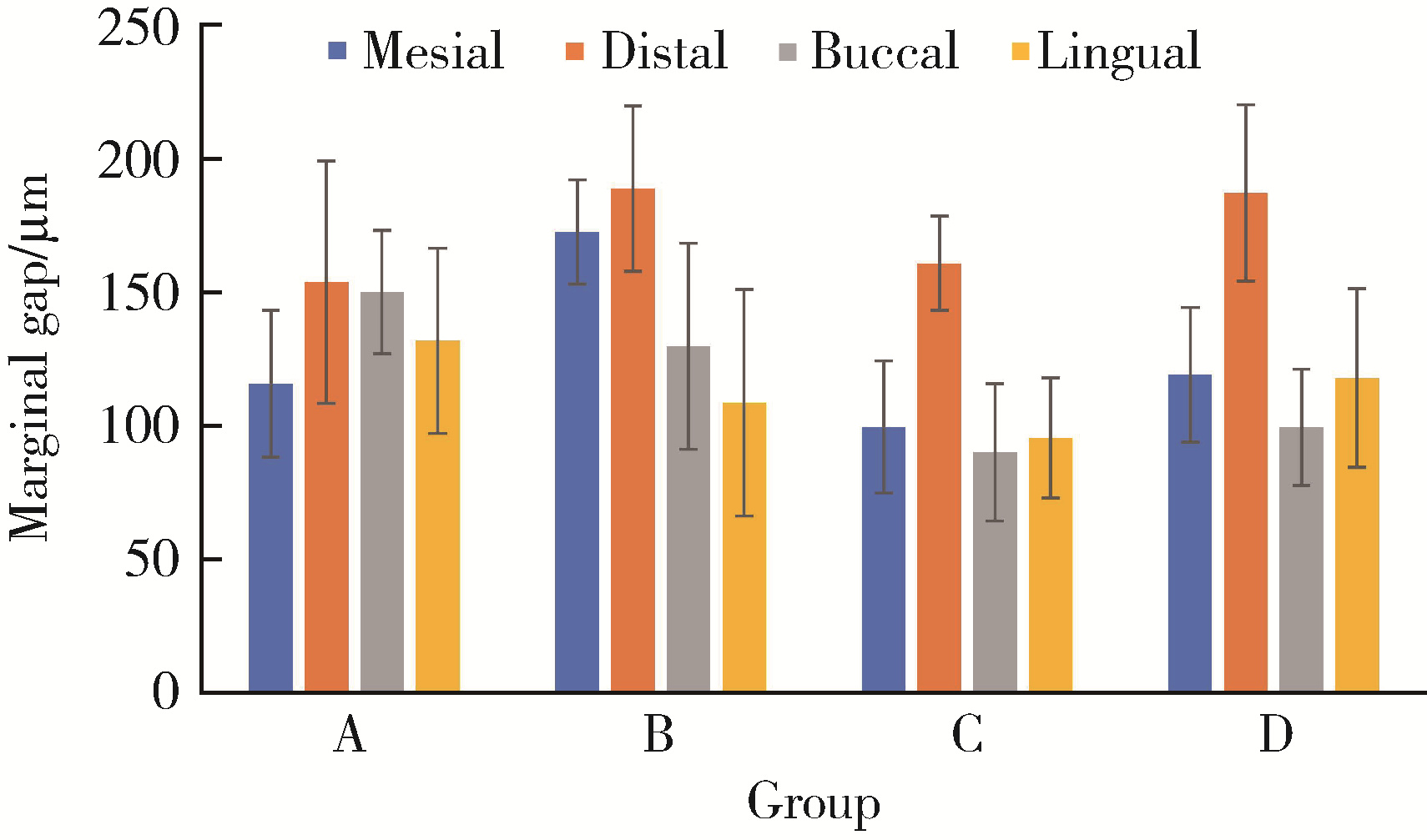
Position 84 163.215 3 28 054.405 26.227 < 0.001
Material 3 819.499 1 3 819.499 3.571 0.061
Method×Position 12 588.477 3 4 196.159 3.923 0.010
Method×Material 3 140.300 1 3 140.300 2.936 0.089
Position×Material 14 902.929 3 4 967.643 4.644 0.004
Method×Position×Material 9 945.476 3 3 315.159 3.099 0.029

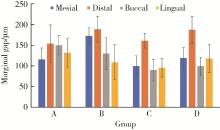
Figure 4

Different regions' marginal gaps of each group The description of the four groups are shown in the notes of Table 1."

1
Rekow ED . Digital dentistry: The new state of the art. Is it disruptive or destructive?[J]. Dent Mater, 2020, 36 (1): 9- 24.

doi: 10.1016/j.dental.2019.08.103
2
Papaspyridakos P , Gallucci GO , Chen CJ , et al. Digital versus conventional implant impressions for edentulous patients: Accuracy outcomes[J]. Clin Oral Implants Res, 2016, 27 (4): 465- 472.

doi: 10.1111/clr.12567
3
Ender A , Zimmermann M , Attin T . In vivo precision of conventional and digital methods for obtaining quadrant dental impressions[J]. Clin Oral Invest, 2016, 20 (7): 1495- 1504.

doi: 10.1007/s00784-015-1641-y
4
Güth JF , Edelhoff D , Schweiger J . A new method for the evaluation of the accuracy of full-arch digital impressions in vitro[J]. Clin Oral Invest, 2016, 20 (7): 1487- 1494.

doi: 10.1007/s00784-015-1626-x
5
Rhee YK , Huh YH , Cho LR . Comparison of intraoral scanning and conventional impression techniques using 3-dimensional superimposition[J]. J Adv Prosthodont, 2015, 7 (6): 460- 467.

doi: 10.4047/jap.2015.7.6.460
6
Wismeijer D , Mans R , van Genuchten M . Patients' preferences when comparing analogue implant impressions using a polyether impression material versus digital impressions (intraoral scan) of dental implants[J]. Clin Oral Implants Res, 2014, 25 (10): 1113- 1118.

doi: 10.1111/clr.12234
7
Yuzbasioglu E , Kurt H , Turunc R . Comparison of digital and conventional impression techniques: Evaluation of patients' perception, treatment comfort, effectiveness and clinical outcomes[J]. BMC Oral Health, 2014, 14, 10.

doi: 10.1186/1472-6831-14-10
8
Holmes JR , Bayne SC , Holland GA , et al. Considerations in measurement of marginal fit[J]. J Prosthet Dent, 1989, 62 (4): 405- 408.

doi: 10.1016/0022-3913(89)90170-4
9
Ahrberg D , Lauer HC , Ahrberg M , et al. Evaluation of fit and efficiency of CAD/CAM fabricated all-ceramic restorations based on direct and indirect digitalization: A double-blinded, randomized clinical trial[J]. Clin Oral Invest, 2016, 20 (2): 291- 300.

doi: 10.1007/s00784-015-1504-6
10
Kale E , Seker E , Yilmaz B , et al. Effect of cement space on the marginal fit of CAD-CAM-fabricated monolithic zirconia crowns[J]. J Prosthet Dent, 2016, 116 (6): 890- 895.

doi: 10.1016/j.prosdent.2016.05.006
11
Abdel-Azim T , Rogers K , Elathamna E . Comparison of the marginal fit of lithium disilicate crowns fabricated with CAD/CAM technology by using conventional impressions and two intraoral di-gital scanners[J]. J Prosthet Dent, 2015, 114 (4): 554- 559.

doi: 10.1016/j.prosdent.2015.04.001
12
Zeltner M , Sailer I , Mühlemann S , et al. Randomized controlled within-subject evaluation of digital and conventional workflows for the fabrication of lithium disilicate single crowns. Part Ⅲ: Margi-nal and internal fit[J]. J Prosthet Dent, 2017, 117 (3): 354- 362.

doi: 10.1016/j.prosdent.2016.04.028
13
Agm A , Ham B , Pc C , et al. Marginal and internal fit of CAD-CAM inlay/onlay restorations: A systematic review of in vitro stu-dies[J]. J Prosthet Dent, 2019, 121 (4): 590- 597.

doi: 10.1016/j.prosdent.2018.06.006
14
Liu Y , Ye H , Yong W , et al. Three-dimensional analysis of internal adaptations of crowns cast from resin patterns fabricated using computer-aided design/computer-assisted manufacturing technologies[J]. Int J Prosthodont, 2018, 31 (4): 386- 393.
15
DeLong R , Pintado MR , Ko CC , et al. Factors influencing optical 3D scanning of vinyl polysiloxane impression materials[J]. J Prosthodont, 2001, 10 (2): 78- 85.

doi: 10.1111/j.1532-849X.2001.00078.x
16
Abduo J , Elseyoufi M . Accuracy of intraoral scanners: A syste-matic review of influencing factors[J]. Eur J Prosthodont Restor Dent, 2018, 26 (3): 101- 121.
17
Rudolph H , Luthardt RG , Walter MH . Computer-aided analysis of the influence of digitizing and surfacing on the accuracy in den-tal CAD/CAM technology[J]. Comput Biol Med, 2007, 37 (5): 579- 587.

doi: 10.1016/j.compbiomed.2006.05.006
18
姜楠, 包旭东, 岳琳. 全冠预备体终止线局部扫描正确度对整体的影响[J]. 北京大学学报(医学版), 2021, 53 (1): 102- 108.
19
Kim DY , Kim JH , Kim HY , et al. Comparison and evaluation of marginal and internal gaps in cobalt-chromium alloy copings fabricated using subtractive and additive manufacturing[J]. J Pros-thodont Res, 2018, 62 (1): 56- 64.

doi: 10.1016/j.jpor.2017.05.008
20
McLean JW , von Fraunhofer JA . The estimation of cement film thickness by an in vivo technique[J]. Brit Dent J, 1971, 131 (3): 107- 111.

doi: 10.1038/sj.bdj.4802708
21
Guess PC , Vagkopoulou T , Zhang Y . Marginal and internal fit of heat pressed versus CAD/CAM fabricated all-ceramic onlays after exposure to thermo-mechanical fatigue[J]. J Dent, 2014, 42 (2): 199- 209.

doi: 10.1016/j.jdent.2013.10.002
22
Bindl A , Mörmann WH . Clinical and SEM evaluation of all-ceramic chair-side CAD/CAM generated partial crowns[J]. Eur J Oral Sci, 2003, 111 (2): 163- 169.

doi: 10.1034/j.1600-0722.2003.00022.x
23
Merrill TC , Mackey T , Luc R , et al. Effect of chairside CAD/CAM restoration type on marginal fit accuracy: A comparison of crown, inlay and onlay restorations[J]. Eur J Prosthodont Restor Dent, 2021, 29 (2): 119- 127.
24
Colpani JT , Borba M , Della Bona A . Evaluation of marginal and internal fit of ceramic crown copings[J]. Dent Mater, 2013, 29 (2): 174- 180.

doi: 10.1016/j.dental.2012.10.012
25
Mously HA , Finkelman M , Zandparsa R , et al. Marginal and internal adaptation of ceramic crown restorations fabricated with CAD/CAM technology and the heat-press technique[J]. J Prosthet Dent, 2014, 112 (2): 249- 256.

doi: 10.1016/j.prosdent.2014.03.017
26
Lins L , Bemfica V , Queiroz C , et al. In vitro evaluation of the internal and marginal misfit of CAD/CAM zirconia copings[J]. J Prosthet Dent, 2015, 113 (3): 205- 211.

doi: 10.1016/j.prosdent.2014.09.010
27
Alfaro DP , Ruse ND , Carvalho RM , et al. Assessment of the internal fit of lithium disilicate crowns using micro-CT[J]. J Prosthodont, 2015, 24 (5): 381- 386.

doi: 10.1111/jopr.12274
28
Bosch G , Ender A , Mehl A . A 3-dimensional accuracy analysis of chairside CAD/CAM milling processes[J]. J Prosthet Dent, 2014, 112 (6): 1425- 1431.

doi: 10.1016/j.prosdent.2014.05.012
29
Akalin ZF , Ozkan YK , Ekerim A . Effects of implant angulation, impression material, and variation in arch curvature width on implant transfer model accuracy[J]. Int J Oral Maxillofac Implants, 2013, 28 (1): 149- 157.

doi: 10.11607/jomi.2070
30
Persson A , A Odén , Andersson M , et al. Digitization of simulated clinical dental impressions: Virtual three-dimensional analysis of exactness[J]. Dent Mater, 2009, 25 (7): 929- 936.

doi: 10.1016/j.dental.2009.01.100
31
Duqum IS , Brenes C , Mendonca G , et al. Marginal fit evaluation of CAD/CAM all ceramic crowns obtained by two digital workflows: An in vitro study using micro-CT technology[J]. J Pros-thodont, 2019, 28 (9): 1037- 1043.
32
Francesco R , Massimo A , Renato L , et al. In vitro evaluation of the marginal fit and internal adaptation of zirconia and lithium disilicate single crowns: Micro-CT comparison between different manufacturing procedures[J]. Open Dent J, 2018, 12 (1): 160- 172.

doi: 10.2174/1874210601812010160
33
Fuzzi M , Tricarico MG , Cagidiaco EF , et al. Nanoleakage and internal adaptation of zirconia and lithium disilicate single crowns with feather edge preparation[J]. Journal of Osseointegration, 2017, 9 (2): 250- 262.
34
Jemt T , Hjalmarsson L . In vitro measurements of precision of fit of implant-supported frameworks. A comparison between "virtual" and "physical" assessments of fit using two different techniques of measurements[J]. Clin Implant Dent R, 2012, 14 (Suppl 1): e175- e175.
35
Schaefer O , Watts DC , Sigusch BW , et al. Marginal and internal fit of pressed lithium disilicate partial crowns in vitro: A three-dimensional analysis of accuracy and reproducibility[J]. Dent Mater, 2012, 28 (3): 320- 326.

doi: 10.1016/j.dental.2011.12.008
36
Kuhn K , Ostertag S , Ostertag M . Comparison of an analog and digital quantitative and qualitative analysis for the fit of dental copings[J]. Comput Biol Med, 2015, 57, 32- 41.

doi: 10.1016/j.compbiomed.2014.11.017
37
Qian K , Li B , Pu T , et al. Fitness of self-glazed zirconia onlays using conventional and digital impressions[J]. Adv Appl Ceram, 2022, 121 (3): 93- 100.

doi: 10.1080/17436753.2022.2069988
[1] Meichen WU,Tongkai XU,Wei AN,Zhongning LIU,Ting JIANG. Four-year follow-up study of onlay and occlusal veneer restorations on posterior teeth [J]. Journal of Peking University (Health Sciences), 2024, 56(1): 88-92.
[2] Qian DING,Wen-jin LI,Feng-bo SUN,Jing-hua GU,Yuan-hua LIN,Lei ZHANG. Effects of surface treatment on the phase and fracture strength of yttria- and magnesia-stabilized zirconia implants [J]. Journal of Peking University (Health Sciences), 2023, 55(4): 721-728.
[3] Si-yu WU,Ya-ning LI,Xiao ZHANG,Long-wei LV,Yun-song LIU,Hong-qiang YE,Yong-sheng ZHOU. Prediction, analysis and application of learning curve of tooth preparation for all ceramic crowns of maxillary central incisors [J]. Journal of Peking University (Health Sciences), 2023, 55(1): 108-113.
[4] Wei-wei LI,Hu CHEN,Yong WANG,Yu-chun SUN. Research on friction and wear behaviors of silicon-lithium spray coating on zirconia ceramics [J]. Journal of Peking University (Health Sciences), 2023, 55(1): 94-100.
[5] WANG Juan,YU Hua-jie,SUN Jing-de,QIU Li-xin. Application evaluation of prefabricated rigid connecting bar in implants immediate impression preparation of edentulous jaw [J]. Journal of Peking University (Health Sciences), 2022, 54(1): 187-192.
[6] WANG Zheng,DING Qian,GAO Yuan,MA Quan-quan,ZHANG Lei,GE Xi-yuan,SUN Yu-chun,XIE Qiu-fei. Effect of porous zirconia ceramics on proliferation and differentiation of osteoblasts [J]. Journal of Peking University (Health Sciences), 2022, 54(1): 31-39.
[7] LI Wen-jin,DING Qian,YUAN Fu-song,Sun Feng-bo,ZHENG Jian-qiao,BAO Rui,Zhang Lei. Effects of femtosecond laser treatment on surface characteristics and flexural strength of zirconia [J]. Journal of Peking University (Health Sciences), 2021, 53(4): 770-775.
[8] YANG Xin,LI Rong,YE Hong-qiang,CHEN Hu,WANG Yong,ZHOU Yong-sheng,SUN Yu-chun. Evaluation of fracture strength of two kinds of zirconia all-ceramic crowns with different edge compensation angles [J]. Journal of Peking University (Health Sciences), 2021, 53(2): 402-405.
[9] XU Xiao-xiang,CAO Ye,ZHAO Yi-jiao,JIA Lu,XIE Qiu-fei. In vitro evaluation of the application of digital individual tooth tray in the impression making of mandibular full-arch crown abutments [J]. Journal of Peking University (Health Sciences), 2021, 53(1): 54-61.
[10] Miao ZHENG,Ling-lu ZHAN,Zhi-qiang LIU,He-ping LI,Jian-guo TAN. Effect of different plasma treated zirconia on the adhensive behaviour of human gingival fibroblasts [J]. Journal of Peking University(Health Sciences), 2019, 51(2): 315-320.
[11] ZHOU Tuan-feng, WANG Xin-zhi . Clinical observation of the restoration of computer aided designed and manufactured one-piece zirconia posts and cores: a 5-year prospective follow-up study [J]. Journal of Peking University(Health Sciences), 2018, 50(4): 680-684.
[12] CHENG Ming-xuan, JIANG Ting, SUN Yu-chun, ZHANG Hao-yu. Influence of intraoral scan and dental cast scan on occlusal quantitative analysis of virtual dental model [J]. Journal of Peking University(Health Sciences), 2018, 50(1): 136-140.
[13] CUI Xin-yue, TONG Dai, WANG Xin-zhi, SHEN Zhi-jian. Comparison of the translucency and color masking effect of the zirconia ceramics made by milling and gel deposition [J]. Journal of Peking University(Health Sciences), 2018, 50(1): 85-90.
[14] ZHANG Hao-yu, JIANG Ting, CHENG Ming-xuan, ZHANG Yu-wei. Wear intensity and surface roughness of microhybrid composite and ceramic occlusal veneers on premolars after the thermocycling and cyclic mechanical loading tests [J]. Journal of Peking University(Health Sciences), 2018, 50(1): 73-77.
[15] LIAO Yu, LIU Xiao-qiang, CHEN Li, ZHOU Jian-feng, TAN Jian-guo. Effects of different surface treatments on the zirconia-resin cement bond strength [J]. Journal of Peking University(Health Sciences), 2018, 50(1): 53-57.
Viewed
Full text


Abstract

Cited

  Shared   
  Discussed   
No Suggested Reading articles found!