Journal of Peking University (Health Sciences) ›› 2026, Vol. 58 ›› Issue (3): 631-640. doi: 10.19723/j.issn.1671-167X.2026.03.025

Previous Articles     Next Articles

Molecular characteristics for poor prognosis related renal cell carcinoma with lymph metastases

Fan SHU1,2, Liyuan GE1, Hanzhang DENG1,3, Haoming YIN1, Junyong OU1, Shaohui DENG1, Yichang HAO1, Min LU4,5, Zhanyi ZHANG1, Peichen DUAN1, Shudong ZHANG1,*()   

  1. 1. Department of Urology, Peking University Third Hospital, Beijing 100191, China
    2. Department of Urology, The Second Affiliated Hospital of Kunming Medical University, Kunming 650101, China
    3. Center for Biomarker Discovery and Validation, National Infrastructures for Translation Medicine, Institute of Clinical Medicine, Peking Union Medical College Hospital, Beijing 100730, China
    4. Department of Pathology, Peking University Third Hospital, Beijing 100191, China
    5. Department of Pathology, Peking University School of Basic Medical Sciences, Beijing 100191, China
  • Received:2024-07-10 Online:2026-06-18 Published:2026-01-07
  • Contact: Shudong ZHANG
  • Supported by:
    the National Natural Science Foundation of China(82273389); the Natural Science Foundation of Beijing(7232212)

RICH HTML


Abstract:

Objective: Next-generation sequencing (NGS) technology was used to analyze the gene mutation profile of lymph node metastases in renal cell carcinoma, and the molecular characteristics associated with poor prognosis were found, providing new ideas for mechanism research and treatment. Methods: Retrospective clinical data collection was conducted on 31 patients with lymphoid metastatic renal cell carcinoma and 21 patients with non-metastatic renal cell carcinoma. A total of 81 formalin-fixed paraffin-embedded tissue samples were retrieved from the Department of Pathology, including primary tumor, lymph node metastasis, and distant metastasis samples. The gene mutation profiles of the patients were examined using next-generation sequencing technology. The patients were followed up to analyze the correlation between lymph node metastasis and patient prognosis. Results: The lymph node metastasis group showed differences in tumor size (P=0.006), World Health Organization (WHO)/International Society of Urological Pathology (ISUP) grade (P=0.002), T stage (P=0.003) and tumor thrombus (P=0.025) compared with non-metastatic renal cell carcinoma. The most commonly mutated genes in our cohort were the tumor suppressor genes VHL (38%), PBRM1 (22%), and SETD2 (20%). More-over, copy number variations were associated with tumor metastasis, and some mutation features were highly similar to known mutation patterns. There was a difference in mutation frequency between the patients in the metastasis group and samples in the non-metastasis group. The mutation frequency of most genes in the metastasis group was higher, however, Reactome pathway enrichment analysis did not show statistically significant differences in the shared enriched pathways between the two groups. There was a strong degree of concordance between the tumor' s primary and metastatic foci in the same patient, and genomic indicators [such as purity, ploidy, weighted-genomic integrity index (WGII), and intra-tumor heterogeneity (ITH)] as well as clonal and subclonal composition analysis further supported this consistency. The overall survival (OS) was higher in the patients without metastases (P=0.041), and specific gene mutations (such as IGF2R, JUN, EPHA5, and FH) were associated with poorer prognosis. To facilitate distant metastasis, lymph nodes might function as a "metastatic pool". Conclusion: The multigene NGS evaluates multiple relevant markers simultaneously, revealing several genetic alterations in the patients with lymphatic metastatic renal cell carcinorma. NGS-based molecular analysis can assist clinicians in assessing a patient' s prognosis and identifying novel, potentially therapeutic mechanisms.

Key words: Renal cell carcinoma, Lymphatic metastasis, High-throughput nucleotide Sequencing, DNA mutational analysis, Prognosis

CLC Number: 

  • R737.11

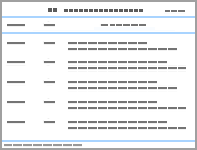
Table 1

Demographic and clinical characteristics between lymphoid metastatic renal cell carcinoma group and non-metastatic group"

Variable Overall Metastatic group Non-metastatic group P value
Number of patients 52 31 21
Gender, n (%) >0.999
  Female 19 (36.5) 11 (35.5) 8 (38.1)
  Male 33 (63.5) 20 (64.5) 13 (61.9)
T stage, n (%) 0.003
  Tx 2 (3.8) 2 (6.5) 0 (0)
  T0 2 (3.8) 0 (0) 2 (9.5)
  T1 14 (26.9) 3 (9.7) 11 (52.4)
  T2 2 (3.8) 1 (3.2) 1 (4.8)
  T3 29 (55.8) 22 (71.0) 7 (33.3)
  T4 3 (5.8) 3 (9.7) 0 (0)
Smoking, n (%) 0.325
  No 35 (67.3) 23 (74.2) 12 (57.1)
  Yes 17 (32.7) 8 (25.8) 9 (42.9)
Drinking, n (%) 0.415
  No 39 (75.0) 25 (80.6) 14 (66.7)
  Yes 13 (25.0) 6 (19.4) 7 (33.3)
Hypertension, n (%) 0.367
  No 27 (51.9) 14 (45.2) 13 (61.9)
  Yes 25 (48.1) 17 (54.8) 8 (38.1)
Pathological type, n (%) 0.293
  ccRCC 34 (65.4) 18 (58.1) 16 (76.2)
  nccRCC 18 (34.6) 13 (41.9) 5 (23.8)
WHO/ISUP grade, n (%) 0.002
  1 1 (1.9) 1 (3.2) 0 (0)
  2 17 (32.7) 3 (9.7) 14 (66.7)
  3 22 (42.3) 18 (58.1) 4 (19.0)
  4 12 (23.1) 9 (29.0) 3 (14.3)
Tumor thrombus, n (%) 0.025
  No 34 (65.4) 16 (51.6) 18 (85.7)
  Yes 18 (34.6) 15 (48.4) 3 (14.3)
Age/years, M (P25, P75) 53.50 (43.00, 63.25) 53.00 (46.00, 63.50) 58.00 (43.00, 61.00) 0.867
Tumor size/cm, M (P25, P75) 6.70 (4.42, 9.93) 8.20 (5.85, 10.60) 4.60 (2.60, 6.50) 0.006
BMI/(kg/m2), M (P25, P75) 24.44 (21.96, 26.09) 24.44 (20.92, 26.02) 24.42 (23.51, 26.12) 0.396
Hemoglobin/(g/L), M (P25, P75) 133.50 (112.00, 150.25) 128.00 (112.00, 137.00) 151.00 (132.00, 162.00) 0.002
BUN/(mmol/L), M (P25, P75) 5.25 (4.38, 6.00) 5.55 (4.80, 6.25) 4.80 (4.00, 5.70) 0.097
Creatinine/(μmol/L), M (P25, P75) 80.50 (71.25, 102.25) 84.00 (71.00, 116.50) 78.00 (72.00, 85.00) 0.138

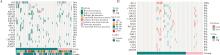
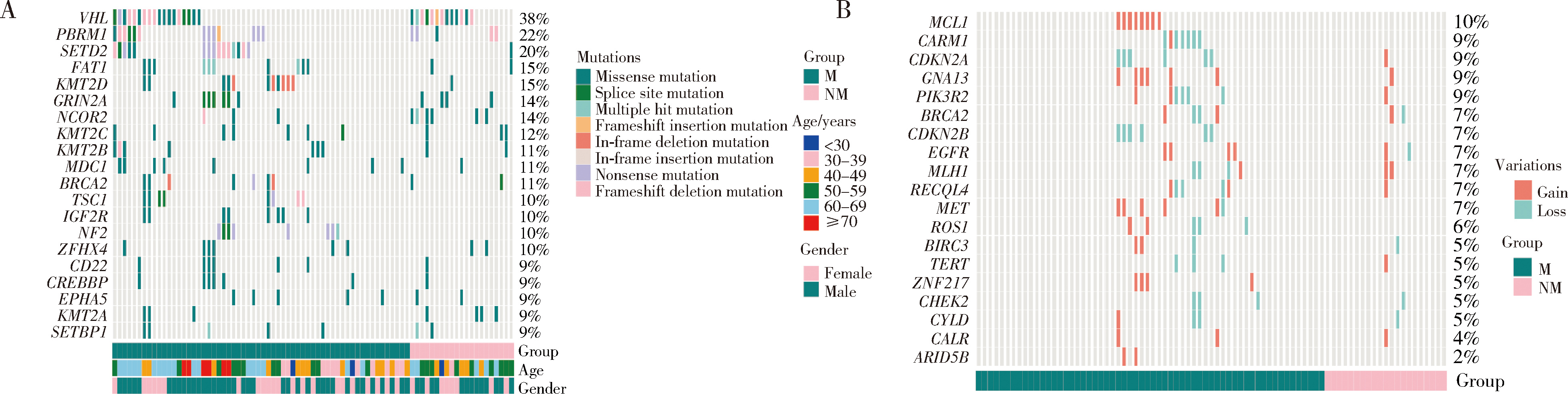
Figure 1

Molecular profile of all renal cell carcinoma samples A, whole exome sequencing revealed the somatic mutations that were most frequent in our cohort. Patients are displayed individually in the columns (grey squares), with colored squares denoting the presence of somatic mutations. B, the copy number variants (CNVs) that are prevalent in this cohort. M, metastatic group; NM, non-metastatic group."

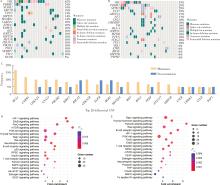
Figure 2

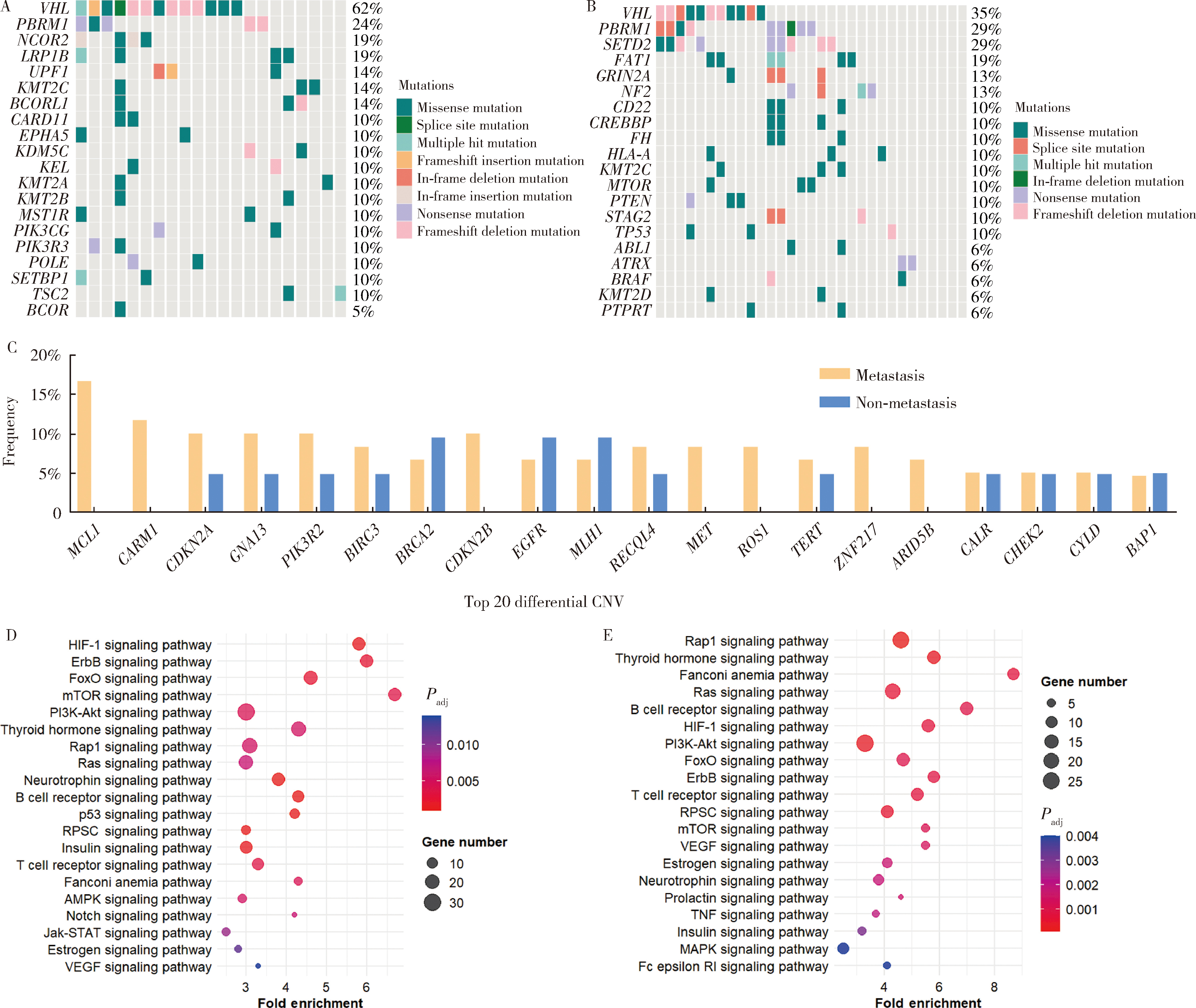
The genomic landscape of somatic mutations in renal cell carcinoma with or without lymphoid metastasis A, oncoprint illustrations of somatic alterations in nonmetastatic RCC by gene frequency; B, oncoprint illustrations of somatic alterations in metastatic RCC by gene frequency; C, the top 20 differential CNV between metastatic and nonmetastatic ccRCC patients; D, KEGG analysis of mutated genes with different prevalence in the nonmetastatic group; E, KEGG analysis of mutated genes with different prevalence in the metastatic group. RPSC signaling pathway: signaling pathways regulating pluripotency of stem cells. RCC, renal cell carcinoma; ccRCC, clear cell renal cell carcinoma; CNV, copy number variants; Padj, adjusted P value; KEGG, Kyoto Encyclopedia of Genes and Genomes."

Figure 3

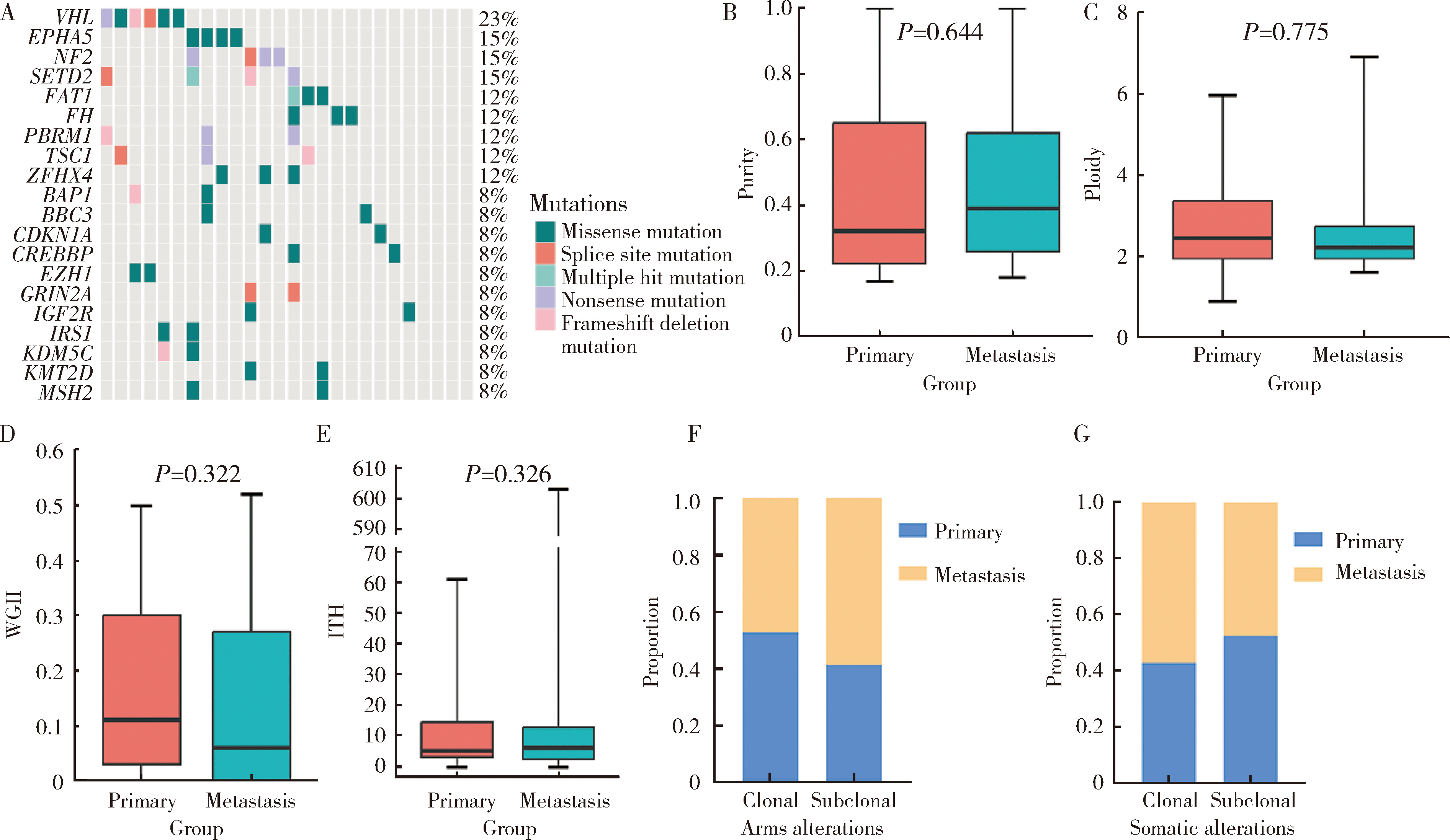
Discordance of mutation patterns between primary and metastatic renal cell carcinoma A, oncoprint illustrations of somatic alterations in metastasis by gene frequency. B-E, four box plots summarizing: purity, ploidy, weighted-genomic integrity index (WGII), and intra-tumor heterogeneity (ITH). Values are compared between primary and metastatic tumors, and the P value is at the top of the plot. F, composition of clonal and subclonal arms alterations in the primary and metastatic tumors. G, composition of clonal and subclonal somatic alterations in the primary and metastatic tumors."

Figure 4

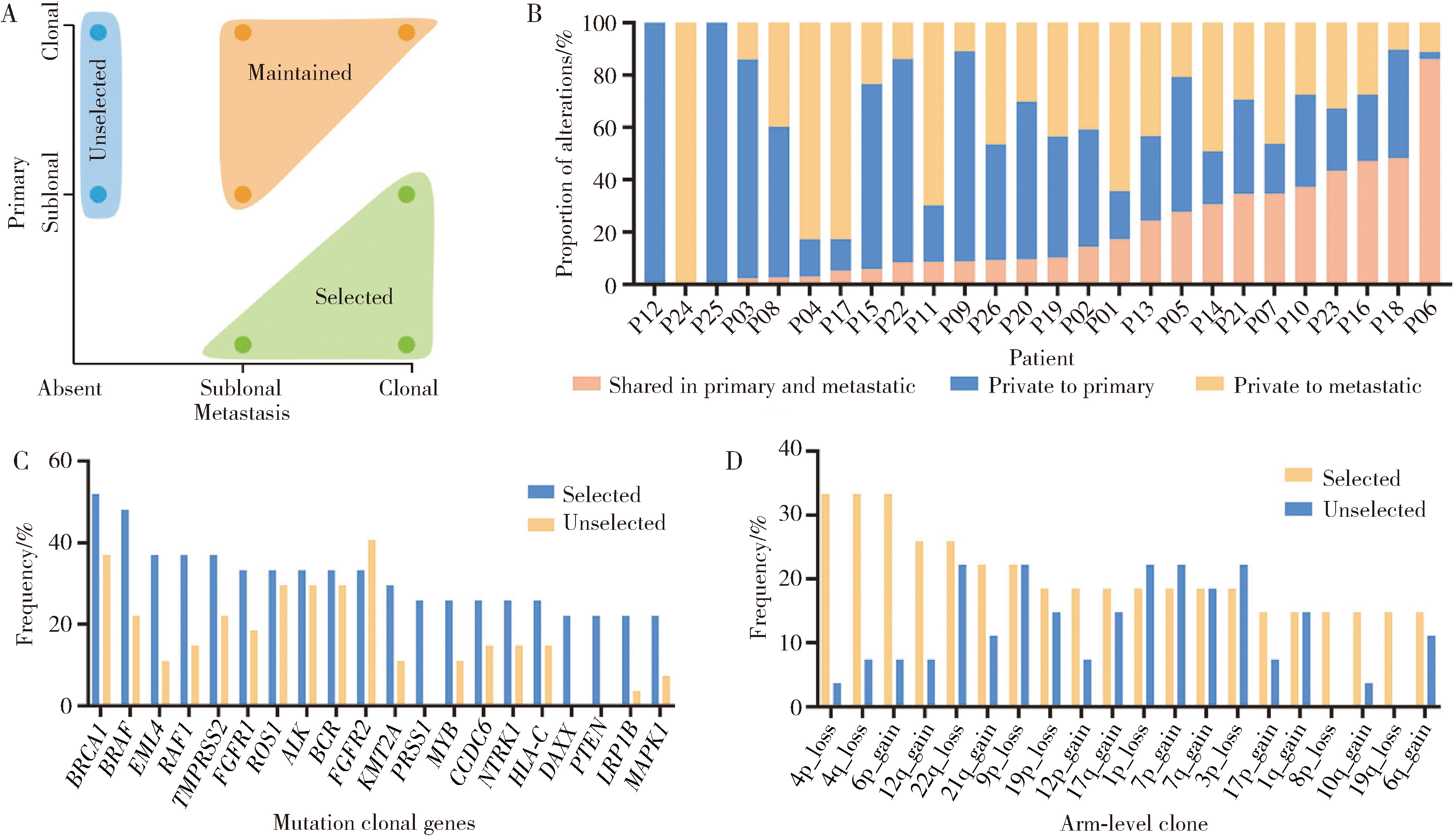
Characterization of metastasizing clones between primary and metastatic renal cell carcinoma A, illustration of the method used to categorize tumor clones. B, shared and private mutations among the paired primary and metastatic samples. Every column represents a patient and the height of the column depicts the percentage of mutations in that pair. C, the selection of alterations between primary tumor and metastasis, the bar chart demonstrates the percentage of mutation clonal genes. D, the selection of alterations between primary tumor and metastasis, the bar chart demonstrates the percentage of arm-level clone."

Figure 5

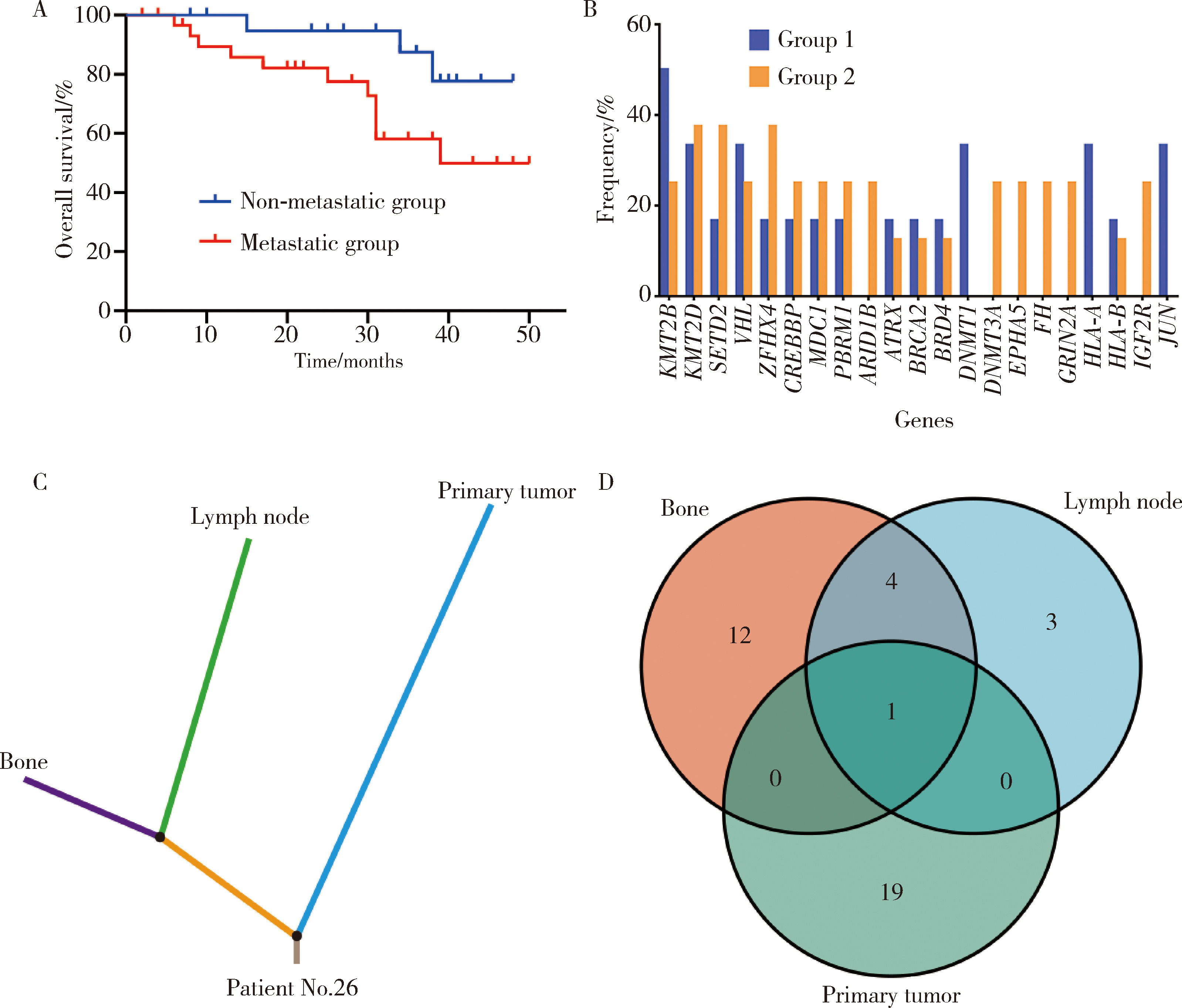
Correlation analysis between lymph node metastasis and prognosis in renal cell carcinoma A, Kaplan-Meier curve showing the overall survival (OS) to time of death compared by lymphatic metastasis via the Log-rank test. Patients lost to follow-up were censored from analysis and are represented by the tick marks on the curves. B, the frequency of genes with different prevalence between different prognostic groups. Group 1 represented the population in which an outcome event (death) occurred during follow-up. Group 2 represented the patients who were still alive at the last follow-up. C-D, lymph nodes act as a "metastatic pool" to support distant metastasis of the tumor. C, molecular evolution in a typical renal cell carcinoma patient with both lymph node and bone metastases, and the number of mutations determines the length of the corresponding branch and trunk. D, venn diagram illustrated the overlap and independently mutated genes between the primary tumor, lymph node and bone metastases."

1
Chen W , Zheng R , Baade PD , et al. Cancer statistics in China, 2015[J]. CA Cancer J Clin, 2016, 66 (2): 115- 132.
2
Capitanio U , Montorsi F . Renal cancer[J]. Lancet, 2016, 387 (10021): 894- 906.

doi: 10.1016/S0140-6736(15)00046-X
3
Dudani S , de Velasco G , Wells JC , et al. Evaluation of clear cell, papillary, and chromophobe renal cell carcinoma metastasis sites and association with survival[J]. JAMA Netw Open, 2021, 4 (1): e2021869.

doi: 10.1001/jamanetworkopen.2020.21869
4
Cohen HT , McGovern FJ . Renal-cell carcinoma[J]. N Engl J Med, 2005, 353 (23): 2477- 2490.

doi: 10.1056/NEJMra043172
5
Capitanio U , Becker F , Blute ML , et al. Lymph node dissection in renal cell carcinoma[J]. Eur Urol, 2011, 60 (6): 1212- 1220.

doi: 10.1016/j.eururo.2011.09.003
6
Zhong T , Jiang Z , Wang X , et al. Key genes associated with prognosis and metastasis of clear cell renal cell carcinoma[J]. PeerJ, 2022, 10, e12493.

doi: 10.7717/peerj.12493
7
Khan MI , Dębski KJ , Dabrowski M , et al. Gene set enrichment analysis and ingenuity pathway analysis of metastatic clear cell renal cell carcinoma cell line[J]. Am J Physiol Renal Physiol, 2016, 311 (2): F424- F436.

doi: 10.1152/ajprenal.00138.2016
8
Turajlic S , Xu H , Litchfield K , et al. Tracking cancer evolution reveals constrained routes to metastases: TRACERx renal[J]. Cell, 2018, 173 (3): 581- 594.

doi: 10.1016/j.cell.2018.03.057
9
Becerra MF , Reznik E , Redzematovic A , et al. Comparative genomic profiling of matched primary and metastatic tumors in renal cell carcinoma[J]. Eur Urol Focus, 2018, 4 (6): 986- 994.

doi: 10.1016/j.euf.2017.09.016
10
Durinck S , Stawiski EW , Pavía-Jiménez A , et al. Spectrum of diverse genomic alterations define non-clear cell renal carcinoma subtypes[J]. Nat Genet, 2015, 47 (1): 13- 21.

doi: 10.1038/ng.3146
11
Chen F , Zhang Y , Şenbabaoǧlu Y , et al. Multilevel genomics-based taxonomy of renal cell carcinoma[J]. Cell Rep, 2016, 14 (10): 2476- 2489.

doi: 10.1016/j.celrep.2016.02.024
12
de Velasco G , Wankowicz SA , Madison R , et al. Targeted genomic landscape of metastases compared to primary tumours in clear cell metastatic renal cell carcinoma[J]. Br J Cancer, 2018, 118 (9): 1238- 1242.

doi: 10.1038/s41416-018-0064-3
13
Li W , Wang B , Dong S , et al. A novel nomogram for prediction and evaluation of lymphatic metastasis in patients with renal cell carcinoma[J]. Front Oncol, 2022, 12, 851552.

doi: 10.3389/fonc.2022.851552
14
Torre LA , Bray F , Siegel RL , et al. Global cancer statistics, 2012[J]. CA Cancer J Clin, 2015, 65 (2): 87- 108.
15
Wong KK . DNMT1: A key drug target in triple-negative breast cancer[J]. Semin Cancer Biol, 2021, 72, 198- 213.

doi: 10.1016/j.semcancer.2020.05.010
16
Wong KK . DNMT1 as a therapeutic target in pancreatic cancer: Mechanisms and clinical implications[J]. Cell Oncol, 2020, 43 (5): 779- 792.

doi: 10.1007/s13402-020-00526-4
17
Liu Y , Sun L , Fong P , et al. An association between overexpression of DNA methyltransferase 3B4 and clear cell renal cell carcinoma[J]. Oncotarget, 2017, 8 (12): 19712- 19722.

doi: 10.18632/oncotarget.14966
18
Li M , Wang Y , Song Y , et al. Expression profiling and clinicopathological significance of DNA methyltransferase 1, 3A and 3B in sporadic human renal cell carcinoma[J]. Int J Clin Exp Pathol, 2014, 7 (11): 7597- 7609.
19
Yuan D , Guo T , Qian H , et al. Icariside Ⅱ suppresses the tumorigenesis and development of ovarian cancer by regulating miR-144-3p/IGF2R axis[J]. Drug Dev Res, 2022, 83 (6): 1383- 1393.

doi: 10.1002/ddr.21967
20
Sun X , Jia L , Wang T , et al. Trop2 binding IGF2R induces gefitinib resistance in NSCLC by remodeling the tumor microenvironment[J]. J Cancer, 2021, 12 (17): 5310- 5319.

doi: 10.7150/jca.57711
21
Liu C , He Y , Feng X , et al. Expression of EPHA5 in lung adenocarcinoma is associated with lymph node metastasis and EGFR mutation[J]. APMIS, 2022, 130 (6): 338- 345.

doi: 10.1111/apm.13222
22
Chen Z , Chen J , Ren D , et al. EPHA5 mutations predict survival after immunotherapy in lung adenocarcinoma[J]. Aging, 2020, 13 (1): 598- 618.
23
Zhang R , Liu J , Zhang W , et al. EphA5 knockdown enhances the invasion and migration ability of esophageal squamous cell carcinoma via epithelial-mesenchymal transition through activating Wnt/β-catenin pathway[J]. Cancer Cell Int, 2020, 20, 20.

doi: 10.1186/s12935-020-1101-x
24
Tomlinson IPM , Alam NA , Rowan AJ , et al. Germline mutations in FH predispose to dominantly inherited uterine fibroids, skin leiomyomata and papillary renal cell cancer[J]. Nat Genet, 2002, 30 (4): 406- 410.

doi: 10.1038/ng849
25
Kancherla P , Daneshvar M , Sager RA , et al. Fumarate hydratase as a therapeutic target in renal cancer[J]. Expert Opin Ther Targets, 2020, 24 (9): 923- 936.

doi: 10.1080/14728222.2020.1804862
26
Xiao R , Xu C , Ge L , et al. Prognostic value of positive lymph nodes in patients with renal cell carcinoma and tumor thrombus undergoing nephrectomy and thrombectomy[J]. Urol Int, 2021, 105 (7/8): 657- 665.
27
Pantuck AJ , Zisman A , Dorey F , et al. Renal cell carcinoma with retroperitoneal lymph nodes: Role of lymph node dissection[J]. J Urol, 2003, 169 (6): 2076- 2083.
28
Zheng W , Zhu W , Yu S , et al. Development and validation of a nomogram to predict overall survival for patients with metastatic renal cell carcinoma[J]. BMC Cancer, 2020, 20 (1): 1066.
29
Dell'Oglio P , Larcher A , Muttin F , et al. Lymph node dissection should not be dismissed in case of localized renal cell carcinoma in the presence of larger diseases[J]. Urol Oncol, 2017, 35 (11): 662. e9- 662. e15.
30
Li C , Xu J , Wang X , et al. Whole exome and transcriptome sequencing reveal clonal evolution and exhibit immune-related features in metastatic colorectal tumors[J]. Cell Death Discov, 2021, 7 (1): 222.
31
Paintal A , Antic T . The emerging role of NF2 alterations in new and established subtypes of renal cell carcinoma[J]. Hum Pathol, 2023, 133, 87- 91.
32
Argani P , Reuter VE , Eble JN , et al. Biphasic hyalinizing psammomatous renal cell carcinoma (BHP RCC): A distinctive neoplasm associated with somatic NF2 mutations[J]. Am J Surg Pathol, 2020, 44 (7): 901- 916.
33
Paintal A , Tjota MY , Wang P , et al. NF2-mutated renal carcinomas have common morphologic features which overlap with biphasic hyalinizing psammomatous renal cell carcinoma: A comprehensive study of 14 cases[J]. Am J Surg Pathol, 2022, 46 (5): 617- 627.
[1] Bo PENG, Fangfang LIU, Wei YANG, Ruiping XU, Lei CHEN, Baozhong LI, Xinjia WANG, Ji KE, Wenlei YANG, Yu HE, Zhen LIU, Bolin HOU, Liqun ZHANG, Miaoping LIN, Lixin ZHANG, Fan ZHANG, Fen CAI, Huawen XU, Mengfei LIU, Ying LIU, Yaqi PAN, Zhonghu HE, Yang KE. Perioperative hyperglycemia predicts poorer prognosis of esophageal squamous cell carcinoma patients treated with esophagectomy [J]. Journal of Peking University (Health Sciences), 2026, 58(3): 567-574.
[2] Haoming YIN, Zijie WANG, Fan SHU, Zhanyi ZHANG, Hui LIANG, Shudong ZHANG. Expression and significance of the FABP6 long transcript in clear cell renal cell carcinoma [J]. Journal of Peking University (Health Sciences), 2026, 58(2): 393-398.
[3] Lingfu ZHANG, Ming CHEN, Xiaoyu ZHAO, Gang WANG, Long CUI, Xiaofeng LING, Lixin WANG, Zhi XU, Limei GUO, Chunsheng HOU. Gross classification of gallbladder cancer with primary lesion limited to the gallbladder wall and its correlation with prognosis and precancerous lesions [J]. Journal of Peking University (Health Sciences), 2026, 58(1): 184-189.
[4] Boda GUO, Min LU, Guoliang WANG, Hongxian ZHANG, Lei LIU, Xiaofei HOU, Lei ZHAO, Xiaojun TIAN, Shudong ZHANG. Clinicopathological and prognostic differences between clear cell and non-clear cell renal cell carcinoma with venous tumor thrombus [J]. Journal of Peking University (Health Sciences), 2025, 57(4): 644-649.
[5] Zhanyi ZHANG, Min LU, Yuehao SUN, Jinghan DONG, Xiaofei HOU, Chunlei XIAO, Guoliang WANG, Xiaojun TIAN, Lulin MA, Hongxian ZHANG, Shudong ZHANG. Clinicopathological features and survival analysis of TFE3-rearranged renal cell carcinoma with venous tumor thrombus [J]. Journal of Peking University (Health Sciences), 2025, 57(4): 650-661.
[6] Zeyuan WANG, Shuanbao YU, Haoke ZHENG, Jin TAO, Yafeng FAN, Xuepei ZHANG. A preoperative prediction model for pelvic lymph node metastasis in prostate cancer: Integrating clinical characteristics and multiparametric MRI [J]. Journal of Peking University (Health Sciences), 2025, 57(4): 684-691.
[7] Zezhen ZHOU, Liyuan GE, Fan ZHANG, Shaohui DENG, Ye YAN, Hongxian ZHANG, Guoliang WANG, Lei LIU, Yi HUANG, Shudong ZHANG. A retrospective matching study of partial nephrectomy and radical nephrectomy for pathological T3a stage renal cell carcinoma [J]. Journal of Peking University (Health Sciences), 2025, 57(4): 704-710.
[8] Weihao LI, Jing LI, Xuemin ZHANG, Wei LI, Qingle LI, Xiaoming ZHANG. Effect of intraoperative blood salvage autotransfusion on the prognosis of patients after carotid body tumor resection [J]. Journal of Peking University (Health Sciences), 2025, 57(2): 272-276.
[9] Yaqing MAO, Zhen CHEN, Yao YU, Wenbo ZHANG, Yang LIU, Xin PENG. Impact of type 2 diabetes mellitus on the prognosis of patients with oral squamous cell carcinoma [J]. Journal of Peking University (Health Sciences), 2024, 56(6): 1089-1096.
[10] Junyong OU,Kunming NI,Lulin MA,Guoliang WANG,Ye YAN,Bin YANG,Gengwu LI,Haodong SONG,Min LU,Jianfei YE,Shudong ZHANG. Prognostic factors of patients with muscle invasive bladder cancer with intermediate-to-high risk prostate cancer [J]. Journal of Peking University (Health Sciences), 2024, 56(4): 582-588.
[11] Shuai LIU,Lei LIU,Zhuo LIU,Fan ZHANG,Lulin MA,Xiaojun TIAN,Xiaofei HOU,Guoliang WANG,Lei ZHAO,Shudong ZHANG. Clinical treatment and prognosis of adrenocortical carcinoma with venous tumor thrombus [J]. Journal of Peking University (Health Sciences), 2024, 56(4): 624-630.
[12] Le YU,Shaohui DENG,Fan ZHANG,Ye YAN,Jianfei YE,Shudong ZHANG. Clinicopathological characteristics and prognosis of multilocular cystic renal neoplasm of low malignant potential [J]. Journal of Peking University (Health Sciences), 2024, 56(4): 661-666.
[13] Fan SHU,Yichang HAO,Zhanyi ZHANG,Shaohui DENG,Hongxian ZHANG,Lei LIU,Guoliang WANG,Xiaojun TIAN,Lei ZHAO,Lulin MA,Shudong ZHANG. Functional and oncologic outcomes of partial nephrectomy for cystic renal cell carcinoma: A single-center retrospective study [J]. Journal of Peking University (Health Sciences), 2024, 56(4): 667-672.
[14] Zezhen ZHOU,Shaohui DENG,Ye YAN,Fan ZHANG,Yichang HAO,Liyuan GE,Hongxian ZHANG,Guoliang WANG,Shudong ZHANG. Predicting the 3-year tumor-specific survival in patients with T3a non-metastatic renal cell carcinoma [J]. Journal of Peking University (Health Sciences), 2024, 56(4): 673-679.
[15] Yangyi FANG,Qiang LI,Zhigao HUANG,Min LU,Kai HONG,Shudong ZHANG. Well-differentiated papillary mesothelial tumour of the tunica vaginalis: A case report [J]. Journal of Peking University (Health Sciences), 2024, 56(4): 741-744.
Viewed
Full text


Abstract

Cited

  Shared   
  Discussed   
No Suggested Reading articles found!