北京大学学报(医学版) ›› 2026, Vol. 58 ›› Issue (3): 472-478. doi: 10.19723/j.issn.1671-167X.2026.03.005

• 论著 • 上一篇    下一篇

北京市儿科医疗资源空间可及性与优化

张佳伟1,2,3, 朱正1,2,3, 巩超1,2,3, 韩润之1,2,3, 杨莉1,2,3,*()   

  1. 1. 北京大学公共卫生学院卫生政策与管理学系, 北京 100191
    2. 北京大学首都卫生与健康发展研究院, 北京 100191
    3. 国家卫生健康委卫生体系改革与治理研究重点实验室, 北京 100191
  • 收稿日期:2026-02-25 出版日期:2026-06-18 发布日期:2026-04-10
  • 通讯作者: 杨莉
  • 基金资助:
    首都卫生发展科研专项项目(2026-2R-4402); 国家自然科学基金(72174010)

Spatial accessibility and optimization of pediatric healthcare resources in Beijing

Jiawei ZHANG1,2,3, Zheng ZHU1,2,3, Chao GONG1,2,3, Runzhi HAN1,2,3, Li YANG1,2,3,*()   

  1. 1. Department of Health Policy and Management, School of Public Health, Peking University, Beijing, 100191, China
    2. Beijing Institute for Health Development, Peking University, Beijing, 100191, China
    3. National Health Commission Key Laboratory of Health System Reform and Governance (Peking University), Beijing, 100191, China
  • Received:2026-02-25 Online:2026-06-18 Published:2026-04-10
  • Contact: Li YANG
  • Supported by:
    Capital Health Research and Development of Special Fund(2026-2R-4402); the National Natural Science Foundation of China(72174010)

RICH HTML


摘要:

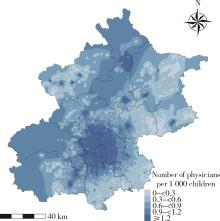
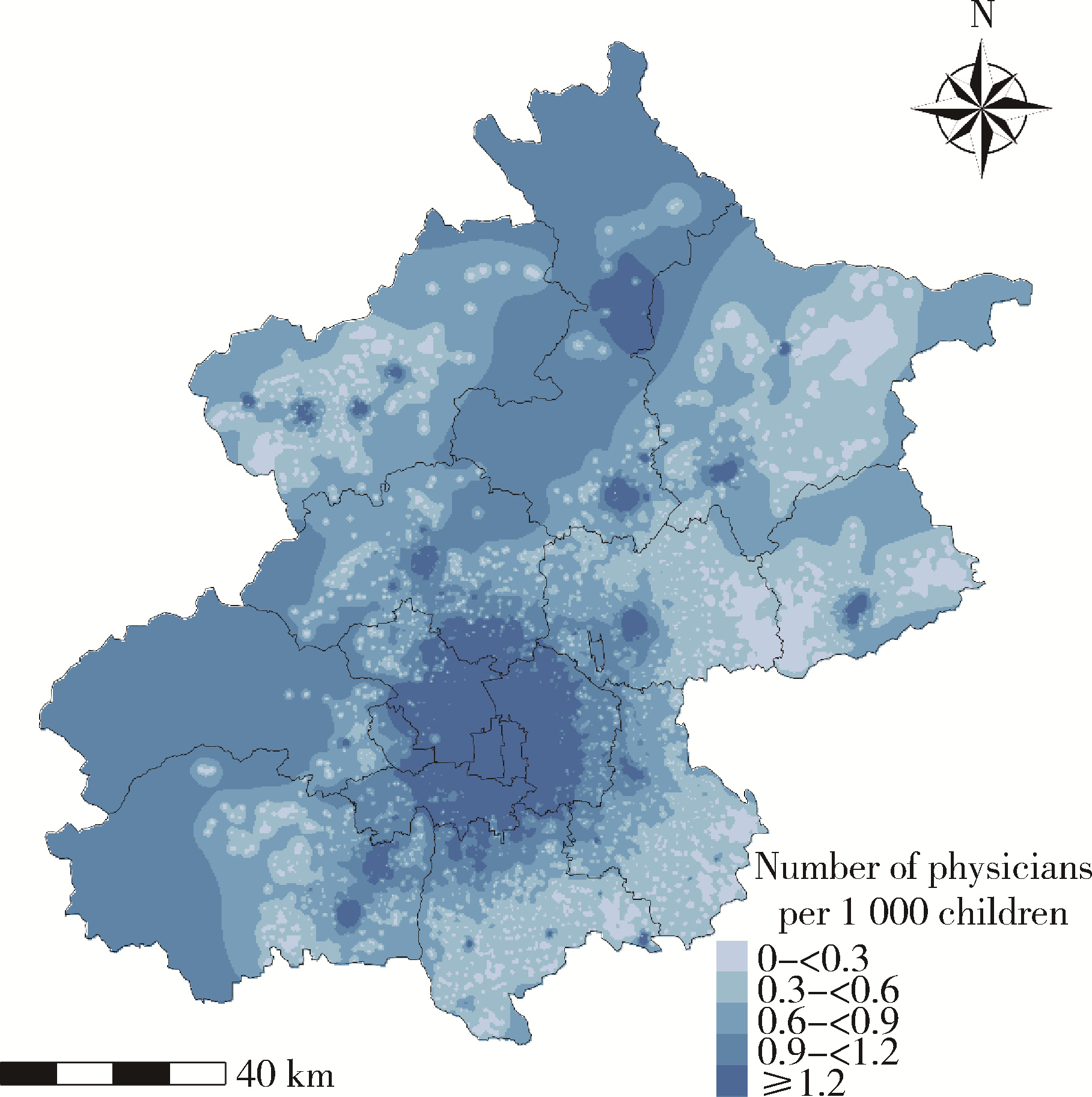
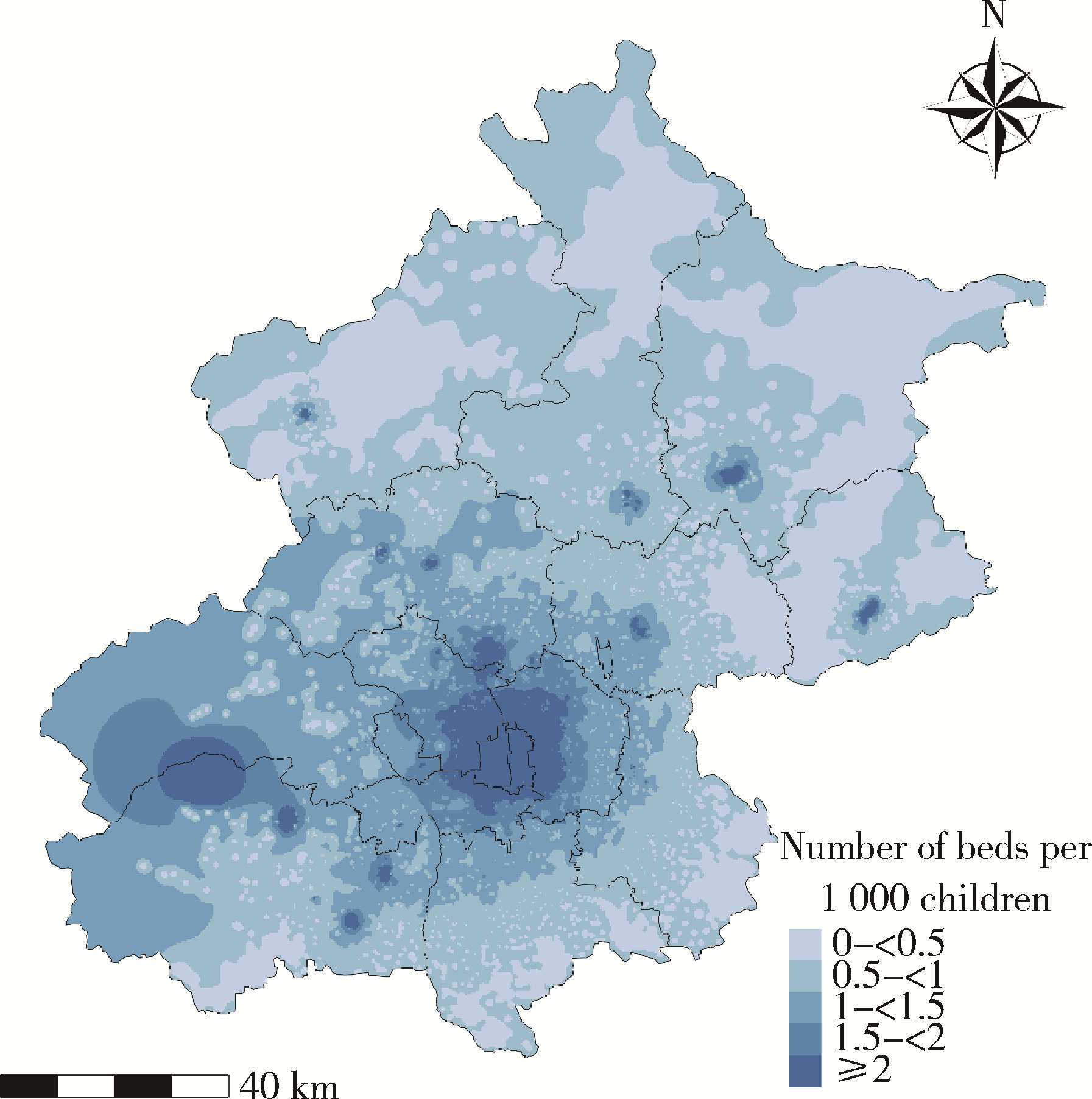
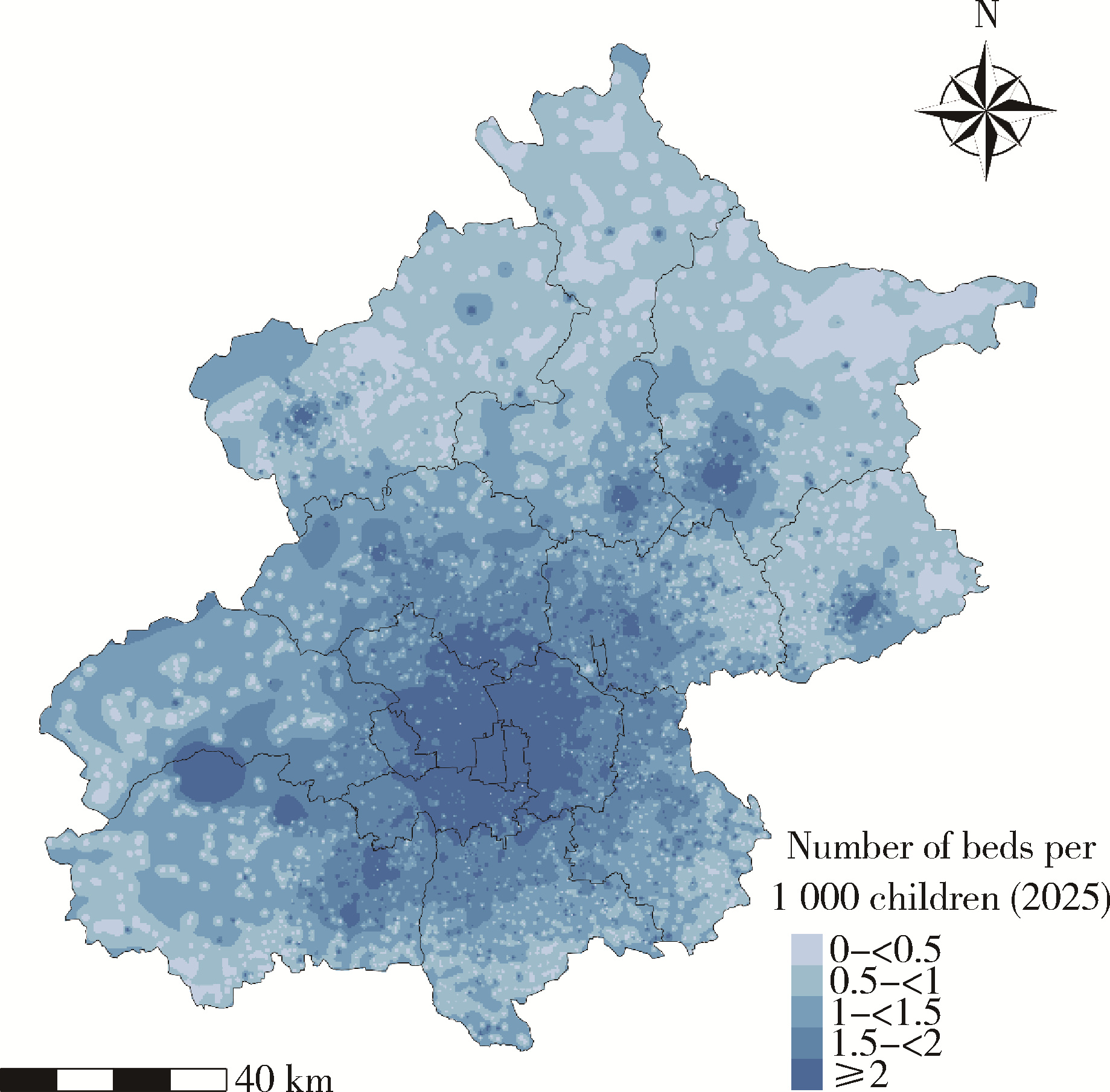
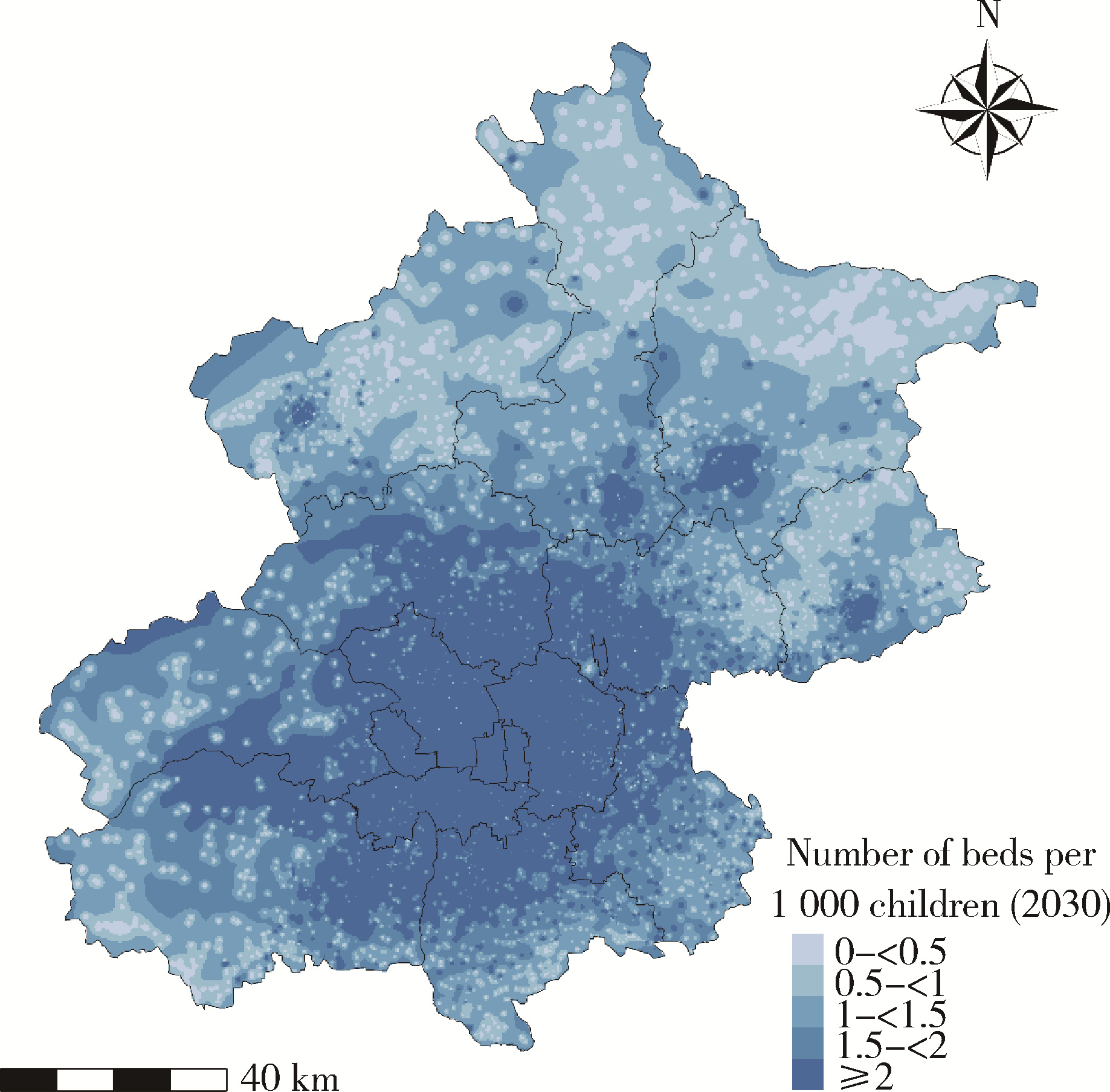
目的: 评估北京市儿科医疗资源空间可及性,并构建儿科资源优化模型,探索2025年与2030年儿科医疗资源的优化方案。方法: 基于北京市2020年儿童人口数据及2022年儿科执业(助理)医师、床位数据,采用改进的两步移动搜寻法测算儿科医疗资源空间可及性。在此基础上,结合2025年与2030年儿童人口预测结果,构建以最小化可及性差异为目标的优化模型,在新增资源总量固定的情况下求解床位分配方案,并与基于人口规模分配的传统方案进行比较。结果: 2022年北京市共配置儿科床位4 704张、儿科执业(助理)医师4 011名,儿科床位与儿科执业(助理)医师空间可及性平均值分别为1.17和0.97,床位可及性标准差为2.78,可及性呈现中心城区高、外围地区低的空间格局。2022年北京市每千名儿童儿科执业(助理)医师数达到1.52人,已超过2025年及2030年国家目标,在总量层面不涉及新增。按照2025年目标优化儿科床位后,床位空间可及性平均值提升至1.68,标准差2.45,地区间差异程度明显下降;按照2030年目标优化后,可及性平均值进一步提升至2.31,标准差为2.56,可及性水平持续改善。优化模型显示,大兴区、通州区与门头沟区为新增床位重点配置地区;传统按人口规模分配则将新增资源主要投向大兴区、海淀区和通州区。两种方案在总体布局方向上具有一致性,优化模型可更有效地缓解地区间可及性的不均衡。结论: 北京市儿科医疗资源存在空间分布不均衡现象。基于可及性差异最小化的优化方案在资源总量固定条件下,有助于改善空间可及性并缓解地区间差异,可作为传统按人口规模配置资源的有效补充,将可及性指标纳入资源配置过程,为儿科医疗资源精细化规划与动态调整提供量化依据。在医师总量已达标的背景下,应充分发挥医联体协同机制与多点执业政策,推动优质儿科医师资源向可及性不足地区流动与下沉,以实现空间配置的结构性优化。

关键词: 儿科资源, 空间可及性, 医疗资源配置, 布局优化

Abstract:

Objective: To assess the spatial accessibility of pediatric healthcare resources in Beijing and to develop an optimization model for resource allocation under a fixed additional resource constraint, with the aim of exploring optimal allocation strategies for 2025 and 2030. Methods: Using communities as the unit of analysis, this study integrated data on Beijing ' s child population in 2020 and pediatric healthcare resources in 2022. An improved two-step floating catchment area (2SFCA) method was applied to measure spatial accessibility. Based on projected child population data for 2025 and 2030, an optimization model was constructed to minimize regional disparities in accessibility. Under the constraint of a fixed total number of additional resources, optimal spatial allocation schemes were derived and compared with a conventional population-based allocation approach. Results: In 2022, Beijing had 4 704 pediatric beds and 4 011 pediatric physicians. The mean spatial accessibility for pediatric beds and pediatric physicians was 1.17 and 0.97, respectively, with a standard deviation of 2.78 for bed accessibility, exhibiting a clear spatial pattern of higher accessibility in central districts and lower accessibility in suburban districts. In the same year, the number of pediatric physicians per 1 000 children in Beijing reached 1.52, already exceeding the targets for 2025 and 2030; therefore, no additional increase in total physician numbers was required. Under the 2025 optimization scenario, the mean accessibility of pediatric beds increased to 1.68, with the standard deviation declining to 2.45, indicating a reduction in regional disparities. Under the 2030 scenario, the mean accessibility further increased to 2. 31, with a standard deviation of 2.56, reflecting continued improvement in accessibility. The optimization model identified Daxing District, Tongzhou District, and Mentougou District as priority districts for additional bed allocation, whereas the conventional population-based approach allocated more resources to Daxing District, Haidian District, and Tongzhou District. While the two approaches showed general consistency in overall spatial allocation, the optimization model more effectively addressed inter-district disparities in accessibility. Conclusion: Significant spatial disparities were identified in the distribution of pediatric healthcare resources in Beijing. The accessibility-oriented optimization approach, under a fixed resource constraint, improved the alignment between supply and demand and reduced regional inequities. It served as a useful complement to conventional population-based allocation methods and provided quantitative evidence to support refined planning and dynamic adjustment of pediatric healthcare resources. Given that the total number of pediatric physicians has already met national targets, leveraging integrated medical consortium and multi-site practice policies to promote the mobility of qualified pediatric physicians toward underserved areas represents a promising pathway toward structural optimization of spatial resource distribution.

Key words: Pediatric resources, Spatial accessibility, Resource allocation, Optimization

中图分类号: 

  • R197.1

表1

空间可及性公式参数含义"

Parameters Definition Indicator
Ai Spatial accessibility of residential location i Number of beds per 1 000 children; Number of physicians per 1 000 children
Sj Service capacity of healthcare institution j Pediatric resources of each healthcare institution
Dk Number of population at residential location k Child population at location k
dij Impedance between residential location i and healthcare institution j Travel time by driving
d0 Travel time threshold 120 minutes for bed accessibility; 60 minutes for physician accessibility
n Number of destination points Number of healthcare institutions
m Number of origin points Number of population locations
β Distance decay coefficient 1.5

图1

北京市儿科执业(助理)医师空间可及性分布图"

图2

北京市儿科床位空间可及性分布图"

表2

两种方法预测2025年和2030年应新增床位数比较"

District A B B-A ABP
2025 2030 2025 2030 2025 2030
Changping 568 651 723 83 155 9 2
Chaoyang 852 984 927 132 75 153 94
Daxing 225 631 676 406 451 245 207
Dongcheng 245 219 158 / / 57 45
Fangshan 321 436 434 115 113 41 37
Fengtai 219 539 477 320 258 29 20
Haidian 470 847 690 377 220 44 30
Huairou 105 122 104 17 / 138 124
Mentougou 68 112 103 44 35 203 237
Miyun 92 160 159 68 67 198 139
Pinggu 78 153 150 75 72 172 112
Shijingshan 85 163 171 78 86 54 50
Shunyi 281 400 379 119 98 6 2
Tongzhou 214 572 620 358 406 203 186
Xicheng 830 352 256 / / 46 30
Yanqing 51 98 99 47 48 137 107
Total 4 704 6 439 6 126 1 735 1 422 1 735 1 422

图3

2025年优化后儿科床位空间可及性分布图"

图4

2030年优化后儿科床位空间可及性分布图"

1
Xiong X , Li VJ , Huang B , et al. Equality and social determinants of spatial accessibility, availability, and affordability to primary health care in Hong Kong, a descriptive study from the perspective of spatial analysis[J]. BMC Health Serv Res, 2022, 22 (1): 1364.

doi: 10.1186/s12913-022-08760-2
2
Levesque JF , Harris MF , Russell G . Patient-centred access to health care: Conceptualising access at the interface of health systems and populations[J]. Int J Equity Health, 2013, 12 (1): 18.

doi: 10.1186/1475-9276-12-18
3
李向民. 医疗卫生服务可及性的概念与评估[J]. 医学与哲学, 2024, 45 (11): 29- 33.
4
扆运杰, 赵君, 李熹, 等. 基于GIS的医疗设施布局及空间可达性研究: 以北京市Z区为例[J]. 中国卫生政策研究, 2021, 14 (6): 66- 71.
5
李朝奎, 卜璞, 方军, 等. 基于改进引力模型的医疗服务可达性评价[J]. 经济地理, 2018, 38 (12): 83- 88.
6
杨华珍, 曾文麒, 王桾蔓, 等. 四川省基层医疗服务可及性现状研究[J]. 华西医学, 2019, 34 (12): 1368- 1373.
7
Xu R , Xu C , Wu L , et al. Spatial accessibility and equity of primary healthcare in Zhejiang, China[J]. Int J Equity Health, 2024, 23 (1): 247.

doi: 10.1186/s12939-024-02333-x
8
Qi F , Barragan D , Rodriguez MG , et al. Evaluating spatial accessibility to COVID-19 vaccine resources in diversely populated counties in the United States[J]. Front Public Health, 2022, 10, 895538.

doi: 10.3389/fpubh.2022.895538
9
覃青连. 二孩政策实施前后南宁市妇幼卫生服务空间可及性的时空趋势研究[D]. 南宁: 广西医科大学, 2021.
10
董维佳. 山西省医疗机构儿科医疗资源配置公平性及效率研究[D]. 太原: 山西医科大学, 2014.
11
北京市人民政府. 北京市医疗卫生设施专项规划(2020年-2035年)[EB/OL]. (2021-09-01)[2023-08-15]. https://www.beijing.gov.cn/zhengce/zhengcefagui/202109/t20210912_2490910.html.
12
McGrail MR , Humphreys JS . Measuring spatial accessibility to primary health care services: Utilising dynamic catchment sizes[J]. Appl Geogr, 2014, 54, 182- 188.

doi: 10.1016/j.apgeog.2014.08.005
13
刘纪平, 曹元晖, 王勇, 等. 利用网络泛地图资源评价15 min生活圈医疗服务可达性: 以上海市为例[J]. 武汉大学学报(信息科学版), 2022, 47 (12): 2054- 2063.
14
陶卓霖, 程杨. 两步移动搜寻法及其扩展形式研究进展[J]. 地理科学进展, 2016, 35 (5): 589- 599.
15
Tao Z , Yao Z , Kong H , et al. Spatial accessibility to healthcare services in Shenzhen, China: Improving the multi-modal two-step floating catchment area method by estimating travel time via online map APIs[J]. BMC Health Serv Res, 2018, 18 (1): 345.

doi: 10.1186/s12913-018-3132-8
16
Pan X , Kwan MP , Yang L , et al. Evaluating the accessibility of healthcare facilities using an integrated catchment area approach[J]. Int J Environ Res Public Health, 2018, 15 (9): 2051.

doi: 10.3390/ijerph15092051
17
孔令才, 任六艺, 孟红, 等. 分级诊疗制度下广州市居民就医空间可达性分析[J]. 广州大学学报(自然科学版), 2025, 24 (2): 14- 23.
18
丁秋贤, 朱丽霞, 罗静. 武汉市养老设施空间可达性分析[J]. 人文地理, 2016, 31 (2): 36- 42.
19
Siegel M , Koller D , Vogt V , et al. Developing a composite index of spatial accessibility across different health care sectors: A German example[J]. Health Policy, 2016, 120 (2): 205- 212.

doi: 10.1016/j.healthpol.2016.01.001
20
Jia P , Wang F , Xierali IM . Using a huff-based model to delineate hospital service areas[J]. Prof Geogr, 2017, 69 (4): 522- 530.

doi: 10.1080/00330124.2016.1266950
21
McGrail MR . Spatial accessibility of primary health care utilising the two step floating catchment area method: An assessment of recent improvements[J]. Int J Health Geogr, 2012, 11 (1): 50.
22
陶卓霖, 程杨, 戴特奇, 等. 基于公平最大化目标的2020年北京市养老设施布局优化[J]. 地理科学进展, 2015, 34 (12): 1609- 1616.
23
Wang F , Tang Q . Planning toward equal accessibility to services: A quadratic programming approach[J]. Environ Plann B Plann Des, 2013, 40 (2): 195- 212.

doi: 10.1068/b37096
24
Zhao P , Li S , Liu D . Unequable spatial accessibility to hospitals in developing megacities: New evidence from Beijing[J]. Health Place, 2020, 65, 102406.

doi: 10.1016/j.healthplace.2020.102406
25
方国栋, 杨园园, 孙威. 基于多循环Acc-Cost模型的北京市医疗资源优化配置研究[J]. 地理研究, 2025, 44 (2): 603- 618.
26
王书平, 黄二丹, 胡晔康, 等. 医疗卫生服务体系规划编制方法研究进展[J]. 卫生软科学, 2020, 34 (9): 33- 37.
27
欧阳亚如. 合肥市医疗机构空间布局与优化策略研究[D]. 合肥: 安徽中医药大学, 2025.
28
田帆. 区域均衡发展视角下中国县域医疗卫生资源的空间配置及其优化研究[D]. 成都: 四川大学, 2023.
[1] 张佳伟, 韩沛恩, 杨莉. 新型冠状病毒肺炎疫情分级防控水平下北京市发热门诊空间可及性[J]. 北京大学学报(医学版), 2021, 53(3): 543-548.
Viewed
Full text


Abstract

Cited

  Shared   
  Discussed   
No Suggested Reading articles found!