北京大学学报(医学版) ›› 2025, Vol. 57 ›› Issue (6): 1032-1041. doi: 10.19723/j.issn.1671-167X.2025.06.004

• 论著 • 上一篇    下一篇

基于B细胞单细胞转录组测序的干燥综合征分子分型

林文灏, 谢阳, 王芳晴, 王淑盈, 刘香君, 胡凡磊*(), 贾园*()   

  1. 北京大学人民医院风湿免疫科,北京 100044
  • 收稿日期:2025-08-18 出版日期:2025-12-18 发布日期:2025-10-23
  • 通讯作者: 胡凡磊, 贾园
  • 基金资助:
    国家重点研发计划(2022YFC3602000); 国家自然科学基金(81871281); 国家自然科学基金(32441099); 国家自然科学基金(82371807)

Single-cell RNA sequencing of B cells reveals molecular typing in Sjögren syndrome

Wenhao LIN, Yang XIE, Fangqing WANG, Shuying WANG, Xiangjun LIU, Fanlei HU*(), Yuan JIA*()   

  1. Department of Rheumatology and Immunology, Peking University People ' s Hospital, Beijing 100044, China
  • Received:2025-08-18 Online:2025-12-18 Published:2025-10-23
  • Contact: Fanlei HU, Yuan JIA
  • Supported by:
    the National Key Research and Development Program of China(2022YFC3602000); the National Natural Science Foundation of China(81871281); the National Natural Science Foundation of China(32441099); the National Natural Science Foundation of China(82371807)

RICH HTML


摘要:

目的: 通过无监督聚类的方法分析B细胞单细胞转录组数据,将干燥综合征(Sjögren syndrome, SS)患者区分为不同亚型,建立SS的分子分型框架;同时根据不同亚型特征基因集构建蛋白质-蛋白质相互作用(protein-protein interaction,PPI)网络以探索不同亚型的核心调控机制,为精准的分子分型提供依据,并揭示SS潜在的治疗靶点,同时探索不同亚型患者的自身抗体及B细胞亚群特点。方法: 从基因表达综合数据库(Gene Expression Omnibus,GEO)获取SS患者(n=24)和健康对照(n=4)单细胞转录组测序数据,构建B细胞图谱并识别SS患者与健康对照的B细胞差异基因。通过无监督聚类将SS患者区分为不同亚型,并通过富集分析其特征基因集推测其生物学过程或通路。利用相互作用基因/蛋白质检索工具(Search Tool for the Retrieval of Interacting Genes/Proteins,STRING)数据库和Cytoscape软件构建PPI网络,推断不同亚型特征基因集的核心功能和潜在的靶点。统计并分析不同亚型患者的自身抗体情况及B细胞亚群比例。结果: 将B细胞识别为8个细胞亚群,包括过渡B细胞、初始B细胞、记忆B细胞、双阴性B细胞1型、双阴性B细胞2型、VAV3+IRF1+B细胞、GP9+B细胞和浆细胞。使用FindAllMarkers功能识别出SS患者与健康对照的B细胞差异基因792个,通过对差异基因无监督聚类分析,将SS患者分为3个亚型。通过富集分析,按照其生物学过程或通路,将3个亚型分别命名为干扰素主导亚型、B细胞活化亚型、内质网应激亚型。针对每个亚型特异的基因表达特征,构建了PPI网络,并筛选出每个亚型中的核心枢纽蛋白。每个亚型拥有不同的B细胞亚群及自身抗体特征:干扰素主导亚型有着最高的初始B细胞和过渡B细胞比例,且抗干燥综合征抗原B (Sjögren syndrome antigen B, SSB)抗体阳性率最高;B细胞活化亚型有着最高的记忆B细胞和双阴性B细胞1型比例;内质网应激亚型则有着最高的VAV3+IRF1+B细胞比例。结论: 通过无监督聚类分析SS患者与健康对照的B细胞差异表达基因,成功将SS患者分为3个分子分型,各亚型表现出特征性的自身抗体谱和优势B细胞亚群,此分子分型框架揭示了SS的B细胞特征,为探索潜在治疗靶点和指导精准治疗提供了新的依据。

关键词: 干燥综合征, B淋巴细胞亚群, 单细胞测序, 聚类分析, 分子分类

Abstract:

Objective: To establish a molecular classification framework for Sjögren syndrome (SS) by stratifying patients into distinct subtypes through unsupervised clustering of B cell single-cell RNA sequencing (scRNA-seq). This study characterizes subtype-specific gene signatures to construct protein-protein interaction (PPI) networks, thereby elucidating core regulatory mechanisms and potential therapeutic targets. Concurrently, it defines the clinical heterogeneity of SS by profiling autoantibodies and B-cell subset distributions across subtypes. Methods: The scRNA-seq data from 24 SS patients and 4 healthy controls were obtained from the Gene Expression Omnibus (GEO) database. We constructed a B cell atlas and identified differential gene expression profiles between SS and healthy controls B cells. Unsupervised clustering was applied to stratify SS patients into different molecular subtypes. Functional enrichment analysis of subtype-specific gene signatures was performed to infer associated biological processes/pathways. PPI networks were constructed using the STRING database and Cytoscape software to identify core functions and potential therapeutic targets for subtype-specific genes. The prevalence of autoantibodies and proportions of B cell subsets were statistically analyzed across subtypes. Results: The B cells were classified into eight subsets: transitional B cell, naïve B cell, memory B cell, double negative 1 (DN1) B cell, double negative 2 (DN2) B cell, VAV3+IRF1+ B cell, GP9+ B cell, and plasma cell. The FindAllMarkers function identified 792 differentially expressed genes (DEGs) between the SS patients and healthy controls. Unsupervised clustering stratified patients into three subtypes: (1) Inter-feron-dominant subtype characterized by enrichment in type Ⅰ/Ⅱ interferon and non-canonical nuclear factor kappa-B (NF-κB) signaling pathways. This subtype showed the highest proportions of naïve B cells and transitional B cells, along with the highest anti-Sjögren syndrome antigen A (SSA)/Sjögren syndrome antigen B (SSB) positivity. (2) B cell activation subtype characterized by enrichment in Fc receptor and B cell receptor signaling pathways. This subtype exhibited the highest proportions of memory B cells and DN1 B cells. (3) Endoplasmic reticulum stress subtype characterized by enrichment in protein folding and endoplasmic reticulum-associated degradation pathways. This subtype was marked by the highest proportion of VAV3+IRF1+ B cells. PPI networks identified subtype-specific hub genes regulating these core functions. Conclusion: Stratification of SS patients through clustering of B cell DEGs successfully defined three molecular subtypes (interferon-dominant, B cell activation, and endoplasmic reticulum stress subtypes). Each subtype exhibits distinct autoantibody profiles and B cell subset distributions. This molecular typing framework advances our understanding of SS heterogeneity and provides actionable insights for targeted therapy development.

Key words: Sjögren syndrome, B-lymphocyte subsets, Single-cell sequencing, Cluster analysis, Molecular typing

中图分类号: 

  • R593.2

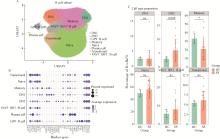
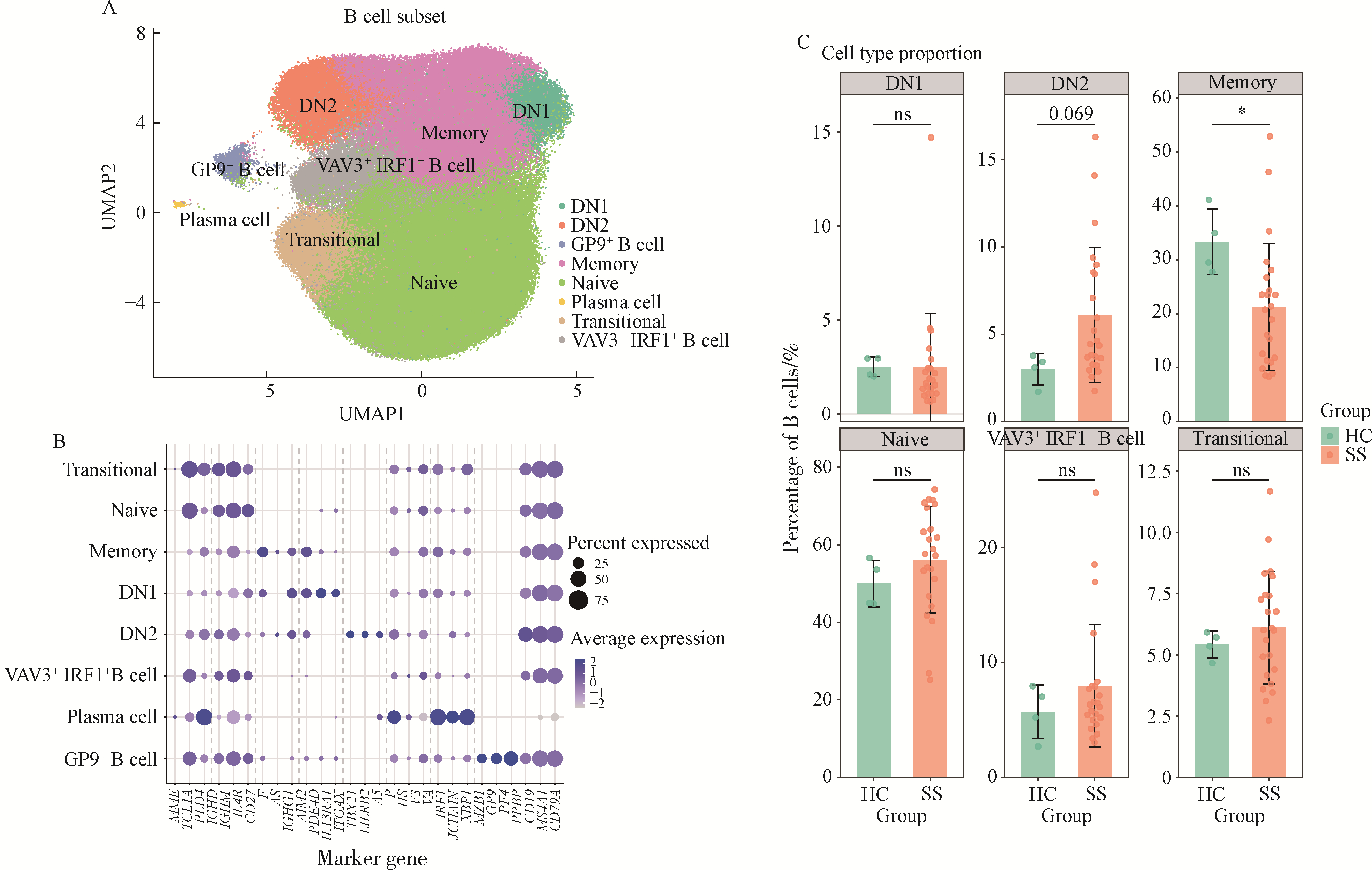
图1

SS患者和健康对照的B细胞亚群的分子鉴定及可视化分析"

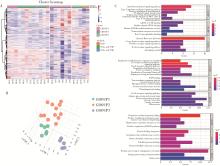
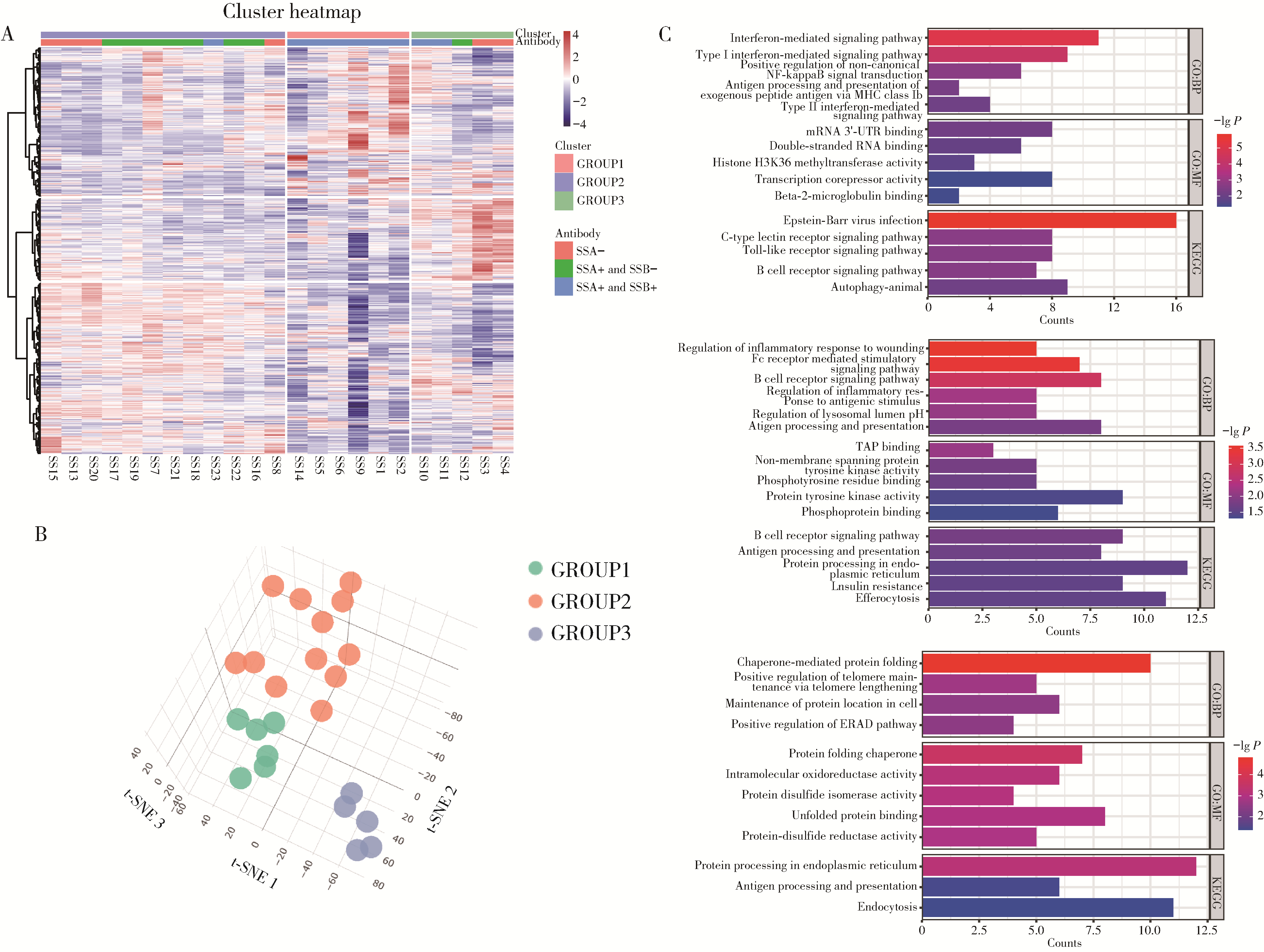
图2

基于B细胞基因表达谱的患者分型及其功能富集分析"

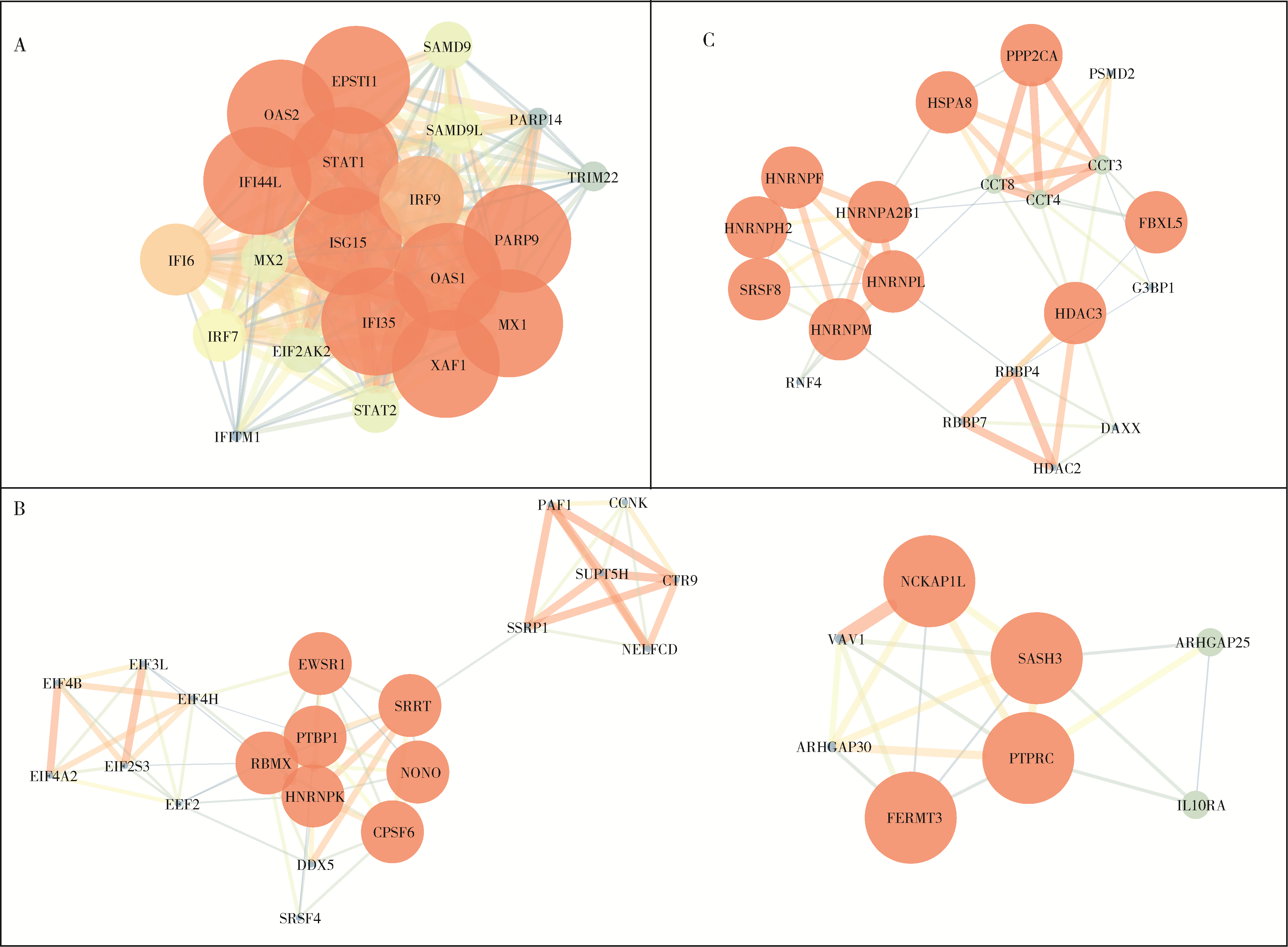
图3

MCODE识别的核心功能模块互作网络"

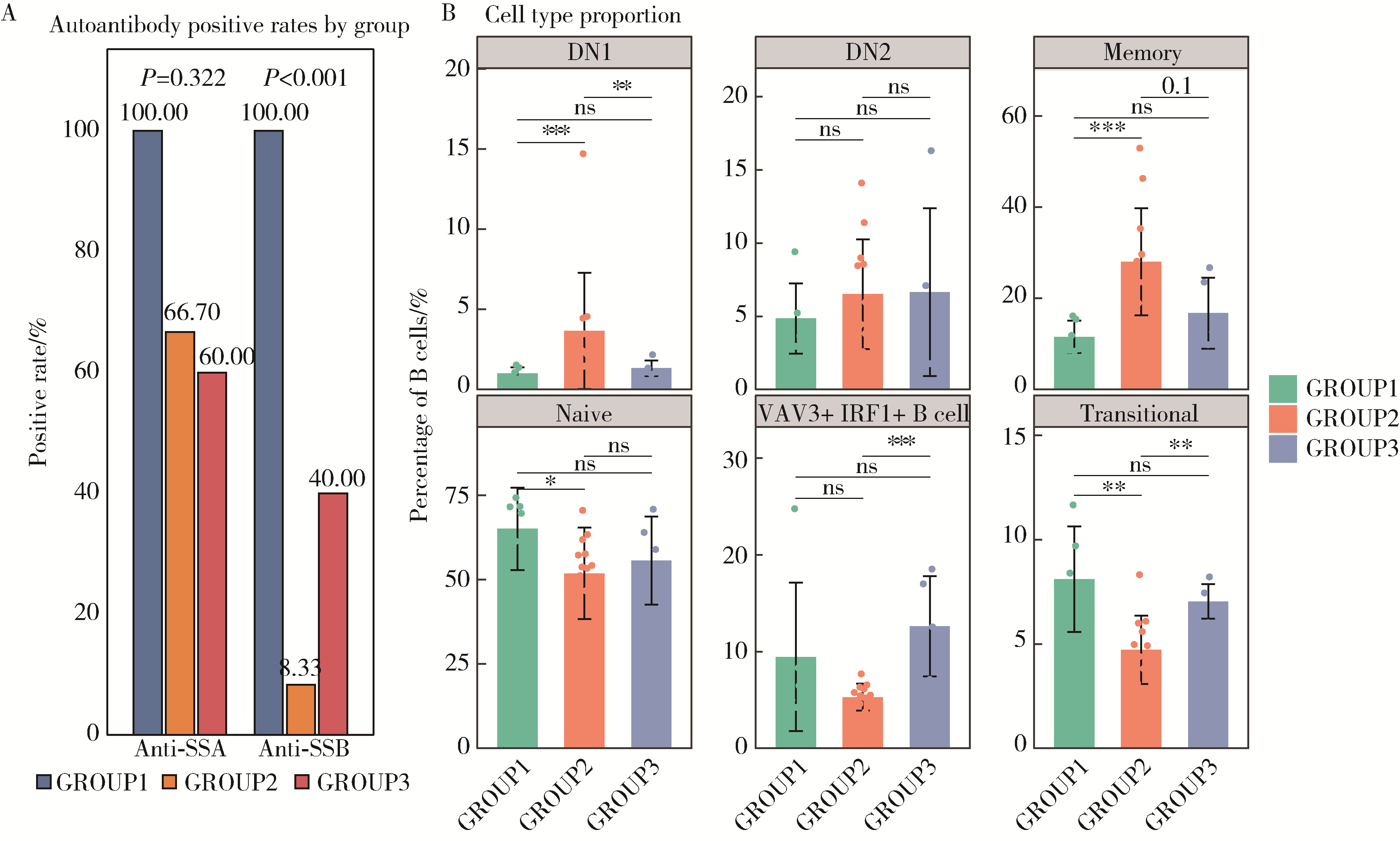
图4

SS不同分子亚型患者血清学自身抗体及外周血B细胞亚群特征比较"

表1

三组患者抗SSA抗体与抗SSB抗体阳性率比较"

Items Anti-SSA antibodies positive rate (positive/total) Anti-SSB antibodies positive rate (positive/total)
GROUP1 100.00% (6/6) 100.00% (6/6)
GROUP2 66.67% (8/12) 8.33% (1/12)
GROUP3 60.00% (3/5) 40.00% (2/5)
P value 0.322 < 0.001

表2

不同亚型SS患者B细胞亚群分布特征"

B cell subset GROUP1 GROUP2 GROUP3 GROUP1 vs. GROUP2 GROUP1 vs. GROUP3 GROUP2 vs. GROUP3
DN1/%, $\bar x \pm s$ 1.01±0.38 3.66±3.63 1.33±0.49 < 0.001 0.329 0.004
DN2/%, $\bar x \pm s$ 4.85±2.39 6.51±3.74 6.65±5.72 0.553 0.792 0.879
Memory/%, $\bar x \pm s$ 11.6±3.51 28.01±11.75 16.75±7.80 < 0.001 0.247 0.104
Naive/%, $\bar x \pm s$ 65.03±12.20 51.80±13.53 55.61±13.01 0.041 0.177 0.574
VAV3+IRF1+B cell/%, $\bar x \pm s$ 9.46±7.67 5.29±1.38 12.62±5.16 0.124 0.329 < 0.001
Transitional/%, $\bar x \pm s$ 8.10±2.53 4.72±1.64 7.04±0.83 < 0.001 0.329 < 0.001
1
中华医学会风湿病学分会. 干燥综合征诊断及治疗指南[J]. 中华风湿病学杂志, 2010, 14(11): 766- 768.
2
Nocturne G , Mariette X . B cells in the pathogenesis of primary Sjögren syndrome[J]. Nat Rev Rheumatol, 2018, 14(3): 133- 145.

doi: 10.1038/nrrheum.2018.1
3
Blair PA , Noreña LY , Flores-Borja F , et al. CD19(+)CD24(hi)CD38(hi) B cells exhibit regulatory capacity in healthy individuals but are functionally impaired in systemic lupus erythematosus patients[J]. Immunity, 2010, 32(1): 129- 140.

doi: 10.1016/j.immuni.2009.11.009
4
Arvidsson G , Czarnewski P , Johansson A , et al. Multimodal single-cell sequencing of B cells in primary Sjögren ' s syndrome[J]. Arthritis Rheumatol, 2024, 76(2): 255- 267.

doi: 10.1002/art.42683
5
Hubbard EL , Bachali P , Kingsmore KM , et al. Analysis of transcriptomic features reveals molecular endotypes of SLE with clinical implications[J]. Genome Med, 2023, 15(1): 84.

doi: 10.1186/s13073-023-01237-9
6
Zhao J , Wei K , Shi Y , et al. Identification of immunological characterization and anoikis-related molecular clusters in rheumatoid arthritis[J]. Front Mol Biosci, 2023, 10, 1202371.

doi: 10.3389/fmolb.2023.1202371
7
Zeng D , Yu Y , Qiu W , et al. Immunotyping the tumor microenvironment reveals molecular heterogeneity for personalized immunotherapy in cancer[J]. Adv Sci, 2025, 12(25): 2417593.

doi: 10.1002/advs.202417593
8
Korsunsky I , Millard N , Fan J , et al. Fast, sensitive and accurate integration of single-cell data with Harmony[J]. Nat Methods, 2019, 16(12): 1289- 1296.

doi: 10.1038/s41592-019-0619-0
9
Slovin S , Carissimo A , Panariello F , et al. Single-cell RNA sequencing analysis: A step-by-step overview[J]. Methods Mol Biol, 2021, 2284, 343- 365.
10
Butler A , Hoffman P , Smibert P , et al. Integrating single-cell transcriptomic data across different conditions, technologies, and species[J]. Nat Biotechnol, 2018, 36(5): 411- 420.

doi: 10.1038/nbt.4096
11
Szklarczyk D , Kirsch R , Koutrouli M , et al. The STRING database in 2023: Protein-protein association networks and functional enrichment analyses for any sequenced genome of interest[J]. Nucleic Acids Res, 2023, 51(D1): D638- D646.

doi: 10.1093/nar/gkac1000
12
Shannon P , Markiel A , Ozier O , et al. Cytoscape: A software environment for integrated models of biomolecular interaction networks[J]. Genome Res, 2003, 13(11): 2498- 2504.

doi: 10.1101/gr.1239303
13
Bader GD , Hogue CWV . An automated method for finding mole-cular complexes in large protein interaction networks[J]. BMC Bioinformatics, 2003, 4, 2.

doi: 10.1186/1471-2105-4-2
14
Tarn JR , Howard-Tripp N , Lendrem DW , et al. Symptom-based stratification of patients with primary Sjögren ' s syndrome: Multi-dimensional characterisation of international observational cohorts and reanalyses of randomised clinical trials[J]. Lancet Rheumatol, 2019, 1(2): e85- e94.

doi: 10.1016/S2665-9913(19)30042-6
15
Soret P , Le Dantec C , Desvaux E , et al. A new molecular classification to drive precision treatment strategies in primary Sjögren ' s syndrome[J]. Nat Commun, 2021, 12(1): 3523.

doi: 10.1038/s41467-021-23472-7
16
Broeren MGA , Wang JJ , Balzaretti G , et al. Proteogenomic analysis of the autoreactive B cell repertoire in blood and tissues of patients with Sjögren ' s syndrome[J]. Ann Rheum Dis, 2022, 81(5): 644- 652.

doi: 10.1136/annrheumdis-2021-221604
17
Yang Y , Zhang Y , Liu K , et al. IFI27, a potential candidate molecular marker for primary Sjogren ' s syndrome[J]. Clin Rheumatol, 2025, 44(5): 1949- 1960.

doi: 10.1007/s10067-025-07409-9
18
Mohammadnezhad L , Shekarkar Azgomi M , La Manna MP , et al. B-cell receptor signaling is thought to be a bridge between primary Sjogren syndrome and diffuse large B-cell lymphoma[J]. Int J Mol Sci, 2023, 24(9): 8385.

doi: 10.3390/ijms24098385
19
Takai T . Roles of Fc receptors in autoimmunity[J]. Nat Rev Immunol, 2002, 2(8): 580- 592.

doi: 10.1038/nri856
20
Cavalcanti GV , de Oliveira FR , Bannitz RF , et al. Endoplasmic reticulum stress in the salivary glands of patients with primary Sjögren ' s syndrome, associated Sjögren ' s syndrome, and non-Sjögren ' s sicca syndrome: A comparative analysis and the influence of chloroquine[J]. Adv Rheumatol, 2025, 65(1): 2.

doi: 10.1186/s42358-024-00430-7
21
Yin Y , Wang Y , Yu X , et al. Overactivation of XBP1 in plasma cells implies worse survival through innate immunity in esophageal squamous cell carcinoma[J]. Cancer Lett, 2024, 597, 217045.

doi: 10.1016/j.canlet.2024.217045
22
Zhou D , Yu X , Yu K , et al. Integrated analysis identifies upregulated SAMD9L as a potential biomarker correlating with the severity of primary Sjögren ' s syndrome[J]. J Inflamm Res, 2023, 16, 3725- 3738.

doi: 10.2147/JIR.S413581
23
Zhang R , Alt FW , Davidson L , et al. Defective signalling through the T- and B-cell antigen receptors in lymphoid cells lacking the vav proto-oncogene[J]. Nature, 1995, 374(6521): 470- 473.

doi: 10.1038/374470a0
24
Sun M , Wei Y , Zhang C , et al. Integrated DNA methylation and transcriptomics analyses of lacrimal glands identify the potential genes implicated in the development of Sjögren ' s syndrome-related dry eye[J]. J Inflamm Res, 2023, 16, 5697- 5714.

doi: 10.2147/JIR.S440263
25
Zhang X , Chen W , Gao Q , et al. Rapamycin directly activates lysosomal mucolipin TRP channels independent of mTOR[J]. PLoS Biol, 2019, 17(5): e3000252.

doi: 10.1371/journal.pbio.3000252
26
杜晶晶, 董兴红, 高洁, 等. 原发性干燥综合征患者抗SSB与其他实验室参数相关性研究[J]. 检验医学与临床, 2023, 20(16): 2395- 2399.
27
Feng R , Zhao J , Sun F , et al. Comparison of the deep immune profiling of B cell subsets between healthy adults and Sjögren ' s syndrome[J]. Ann Med, 2022, 54(1): 472- 483.

doi: 10.1080/07853890.2022.2031272
28
Chizzolini C , Guery JC , Noulet F , et al. Extrafollicular CD19(low)CXCR5 (-) CD11c (-) double negative 3 (DN3) B cells are significantly associated with disease activity in females with systemic lupus erythematosus[J]. J Transl Autoimmun, 2024, 9, 100252.

doi: 10.1016/j.jtauto.2024.100252
29
Nayak RC , Chang KH , Singh AK , et al. Nuclear Vav3 is required for polycomb repression complex-1 activity in B-cell lymphoblastic leukemogenesis[J]. Nat Commun, 2022, 13(1): 3056.

doi: 10.1038/s41467-022-30651-7
[1] 刘源, 石桂秀. 干燥综合征到干燥病的命名变迁[J]. 北京大学学报(医学版), 2025, 57(6): 1015-1017.
[2] 向钊, 杨莉, 杨静. 非靶向代谢组学揭示原发性干燥综合征血小板减少患者血清差异代谢物及代谢通路[J]. 北京大学学报(医学版), 2025, 57(6): 1042-1050.
[3] 赵亚云, 倪梦凡, 李雪, 王蓓, 程功, 何菁, 金月波. 利妥昔单抗治疗原发性干燥综合征肾损害的临床疗效和安全性[J]. 北京大学学报(医学版), 2025, 57(6): 1051-1060.
[4] 朱丽秀, 陈仁利, 周素娟, 林烨, 汤一榕, 叶桢. 水通道蛋白5对干燥综合征大鼠TLR4/MyD88/NF-κB信号的影响[J]. 北京大学学报(医学版), 2025, 57(5): 875-883.
[5] 宁圆, 张晓盈, 李雪, 李原, 何菁, 金月波. 干燥综合征并发乳腺淋巴瘤1例[J]. 北京大学学报(医学版), 2025, 57(4): 808-811.
[6] 杨玉淑, 齐晅, 丁萌, 王炜, 郭惠芳, 高丽霞. 抗唾液腺蛋白1抗体联合抗腮腺分泌蛋白抗体对干燥综合征的诊断价值[J]. 北京大学学报(医学版), 2024, 56(5): 845-852.
[7] 蔡祥,王仁东,王世佳,任梓齐,于秋红,李冬果. 胶质母细胞瘤恶性进展中不同细胞亚群的动态轨迹和细胞通讯网络[J]. 北京大学学报(医学版), 2024, 56(2): 199-206.
[8] 韩艺钧,李常虹,陈秀英,赵金霞. 抗SSB抗体阳性和阴性的原发性干燥综合征患者临床及免疫学特征的比较[J]. 北京大学学报(医学版), 2023, 55(6): 1000-1006.
[9] 李建斌,吕梦娜,池强,彭一琳,刘鹏程,吴锐. 干燥综合征患者发生重症新型冠状病毒肺炎的早期预测[J]. 北京大学学报(医学版), 2023, 55(6): 1007-1012.
[10] 孟彦宏,陈怡帆,周培茹. CENP-B抗体阳性的原发性干燥综合征患者的临床和免疫学特征[J]. 北京大学学报(医学版), 2023, 55(6): 1088-1096.
[11] 吴洁,张雯,梁舒,秦艺璐,范文强. 妊娠期原发性干燥综合征合并视神经脊髓炎谱系疾病危重症1例[J]. 北京大学学报(医学版), 2023, 55(6): 1118-1124.
[12] 王丽芳,石连杰,宁武,高乃姝,王宽婷. 干燥综合征合并冷凝集素病1例[J]. 北京大学学报(医学版), 2023, 55(6): 1130-1134.
[13] 邢海霞,王琳,乔迪,刘畅,潘洁. 干燥综合征口腔疾病的治疗特点[J]. 北京大学学报(医学版), 2023, 55(5): 929-933.
[14] 蔡文心,李仕成,刘一鸣,梁如玉,李静,郭建萍,胡凡磊,孙晓麟,李春,刘栩,叶华,邓立宗,李茹,栗占国. 类风湿关节炎临床分层及其特征的横断面研究[J]. 北京大学学报(医学版), 2022, 54(6): 1068-1073.
[15] 刘杨,程昉,王艳玲,艾香艳,朱振航,赵福涛. 唾液腺超声对干燥综合征的诊断价值[J]. 北京大学学报(医学版), 2022, 54(6): 1123-1127.
Viewed
Full text


Abstract

Cited

  Shared   
  Discussed   
No Suggested Reading articles found!