北京大学学报(医学版) ›› 2025, Vol. 57 ›› Issue (3): 487-495. doi: 10.19723/j.issn.1671-167X.2025.03.012

• 论著 • 上一篇    下一篇

代谢相关脂肪性肝病及其心脏代谢风险指标异常与不良妊娠结局的相关性

杨树涵1, 李奕昕2, 崔浩亮3, 王佑新1, 吴玉莹1, 王明月1, 杨依凡1, 恩卡尔·努尔1, 杨磊4,*(), 王辉1,*()   

  1. 1. 北京大学公共卫生学院妇幼卫生学系, 北京 100191
    2. 北京大学公共卫生学院流行病与卫生统计学系, 北京 100191
    3. 北京大学公共卫生学院全球卫生学系, 北京 100191
    4. 首都医科大学附属北京友谊医院妇产科, 北京 100050
  • 收稿日期:2025-02-07 出版日期:2025-06-18 发布日期:2025-06-13
  • 通讯作者: 杨磊, 王辉

Associations of metabolic dysfunction-associated steatotic liver disease and cardiometabolic risk factor abnormalities with adverse pregnancy outcomes

Shuhan YANG1, Yixin LI2, Haoliang CUI3, Youxin WANG1, Yuying WU1, Mingyue WANG1, Yifan YANG1, Nur Enkar1, Lei YANG4,*(), Hui WANG1,*()   

  1. 1. Department of Maternal and Child Health, School of Public Health, Peking University, Beijing 100191, China
    2. Department of Epidemiology and Biostatistics, School of Public Health, Peking University, Beijing 100191, China
    3. Department of Global Health, School of Public Health, Peking University, Beijing 100191, China
    4. Department of Obstetrics and Gynecology, Beijing Friendship Hospital, Capital University of Medical Sciences, Beijing 100050, China
  • Received:2025-02-07 Online:2025-06-18 Published:2025-06-13
  • Contact: Lei YANG, Hui WANG

RICH HTML


摘要:

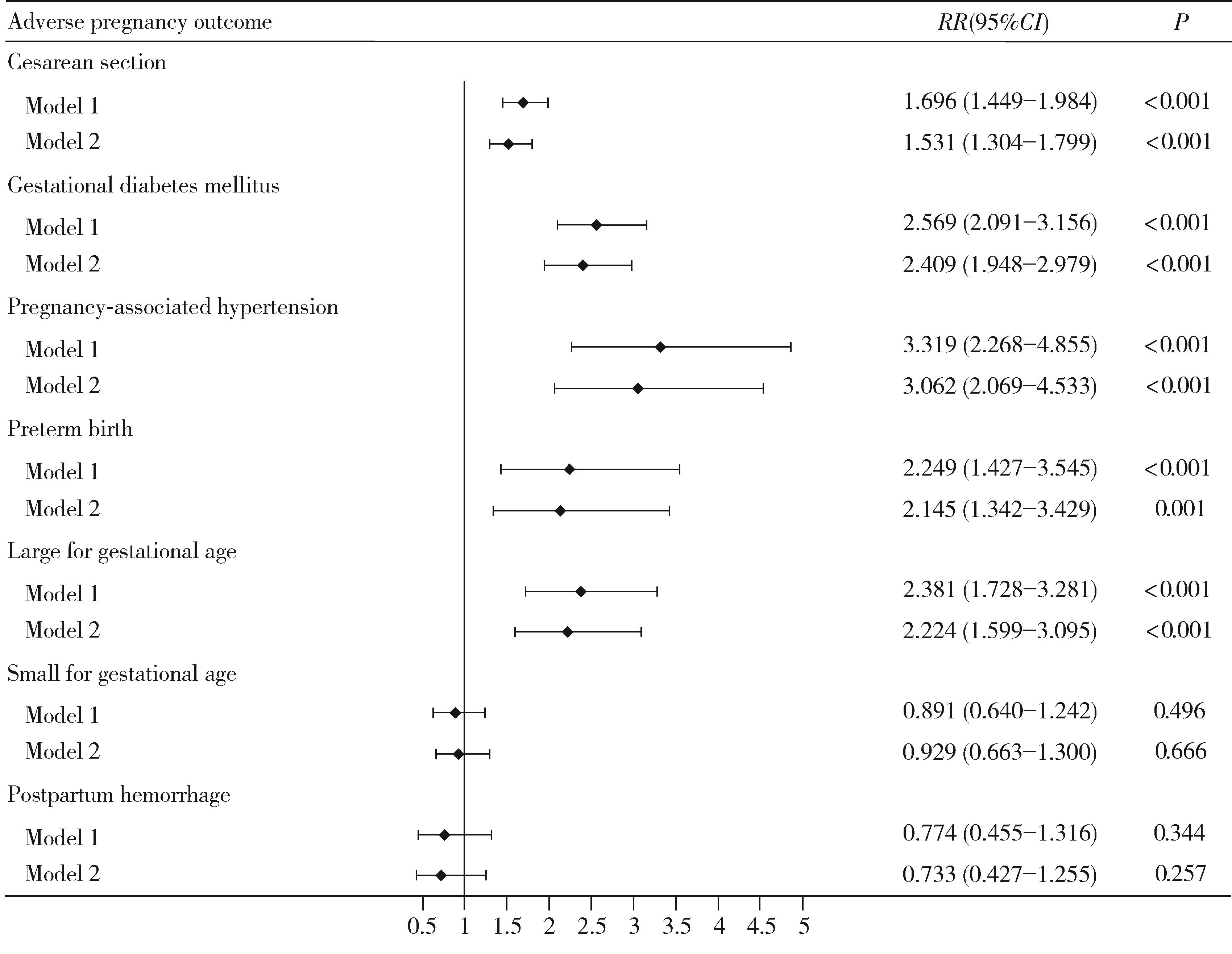
目的: 探讨代谢相关脂肪性肝病(metabolic dysfunction-associated steatotic liver disease, MASLD)与不良妊娠结局的相关性, 并分析心脏代谢风险指标(cardiometabolic risk factor, CMRF)异常的种类及其严重程度对该相关性的影响。方法: 采用回顾性队列研究, 选择2020年3月10日至2022年12月31日在首都医科大学附属北京友谊医院产科建档的单胎初产孕妇, 共纳入2 623名孕妇。记录基本信息和分娩结局, 并进行肝脏超声检查及相关产前检查, 对不良妊娠结局进行诊断。采用修正Poisson回归方法分析MASLD及其不同CMRF异常种类与不良妊娠结局的相关性, 并探究MASLD的CMRF异常程度变化与不良妊娠结局发生风险的相关性。结果: 调整年龄、孕期增重水平和受教育水平等协变量后, MASLD与剖宫产(RR=1.531, 95%CI:1.304~1.799, P < 0.001)、妊娠期糖尿病(RR=2.409, 95%CI:1.948~2.979, P < 0.001)、妊娠相关高血压(RR=3.062, 95%CI: 2.069~4.533, P < 0.001)、早产(RR=2.145, 95%CI: 1.342~3.429, P=0.001)和大于胎龄儿(RR=2.224, 95%CI: 1.599~3.095, P < 0.001)的风险升高相关。在控制其他种类CMRF异常的影响后, 不同CMRF异常MASLD孕妇的不良妊娠结局风险存在差异, 体重指数异常组的剖宫产、妊娠期糖尿病、妊娠相关高血压、早产和大于胎龄儿风险升高;血糖异常组的妊娠期糖尿病风险升高;血压异常组的妊娠相关高血压风险升高;高密度脂蛋白胆固醇异常组的剖宫产、妊娠期糖尿病和妊娠相关高血压风险升高;甘油三酯异常组的妊娠期糖尿病和早产风险升高。随着CMRF异常程度的加重, MASLD孕妇的剖宫产、妊娠期糖尿病、妊娠相关高血压、早产和大于胎龄儿风险持续升高(P均 < 0.05)。结论: 妊娠期MASLD与多种不良妊娠结局风险升高相关, 且MASLD的CMRF异常种类及严重程度对该相关性存在影响, 这提示在诊断MASLD时关注CMRF异常的具体情况, 有助于实施针对性干预并降低不良妊娠结局的发生风险。

关键词: 心脏代谢风险指标, 妊娠结局, 肝脏疾病, 代谢相关脂肪性肝病, 不良妊娠结局

Abstract:

Objective: To investigate the association between metabolic dysfunction-associated steatotic liver disease (MASLD) and the risk of adverse pregnancy outcomes, and to analyze the impact of the type and severity of cardiometabolic risk factor (CMRF) abnormalities on this association. Methods: A retrospective cohort study was conducted among primiparous women with singleton pregnancies who had registered at Beijing Friendship Hospital from March 10, 2020, to December 31, 2022. A total of 2 623 women were included. Basic characteristics and delivery outcomes were documented, liver ultrasound and relevant prenatal examinations were performed, and adverse pregnancy outcomes were diagnosed. Modified Poisson regression models were used to analyze the association between MASLD and adverse pregnancy outcomes. The relationship between the type or severity of CMRF abnormalities in MASLD and the risk of adverse pregnancy outcomes was also explored. Results: After adjusting for confounding factors including age, gestational weight gain, and education level, MASLD was associated with an increased risk of cesarean section (RR=1.531, 95%CI: 1.304-1.799, P < 0.001), gestational diabetes mellitus (GDM; RR=2.409, 95%CI: 1.948-2.979, P < 0.001), pregnancy-associated hypertension (PAH; RR=3.062, 95%CI: 2.069-4.533, P < 0.001), preterm birth (RR=2.145, 95%CI: 1.342-3.429, P=0.001), and large for gestational age (LGA; 2.224, 95%CI: 1.599-3.095, P < 0.001). However, no significant associations were found for small for gestational age or postpartum hemorrhage. After adjusting for other CMRF abnormalities, the risk of adverse pregnancy outcomes varied among MASLD pregnant women with different CMRF abnormalities: the body mass index abnormal group had higher risks of cesarean section, GDM, PAH, preterm birth, and LGA; the glucose abnormal group had an increased risk of GDM; the blood pressure abnormal group had a higher risk of PAH; the high density lipoprotein cholesterol abnormal group had higher risks of cesarean section, GDM, and PAH; and the triglyceride abnormal group was associated with higher risks of GDM and preterm birth. Additional, as the severity of CMRF abnormalities increased, the risks of cesarean section (RR=1.199, 95%CI: 1.112-1.292, P < 0.001), GDM (RR=1.478, 95%CI: 1.345-1.624, P < 0.001), PAH (RR=1.626, 95%CI: 1.367-1.934, P < 0.001), preterm birth (RR=1.384, 95%CI: 1.120-1.710, P=0.003), and LGA (RR=1.422, 95%CI: 1.224-1.650, P < 0.001) continued to rise. Conclusion: MASLD during pregnancy is associated with an increased risk of multiple adverse pregnancy outcomes, and the type and severity of CMRF abnormalities significantly influence this association. These results suggest that attention should be paid to the specific CMRF abnormalities when diagnosed MASLD, as this may help to facilitate targeted interventions and reduce the risk of adverse pregnancy outcomes.

Key words: Cardiometabolic risk factor, Pregnancy outcome, Liver disease, Metabolic dysfunction-associated steatotic liver disease, Adverse pregnancy outcome

中图分类号: 

  • R714.25

表1

研究对象的基本资料及不良妊娠结局发生情况"

Variables Control group(n=2 321) MASLD group(n=302) χ2/t P
Maternal age/years 31.20 ± 3.12 32.57 ± 3.64 6.23 < 0.001
   < 35 2 075 (89.4) 226 (74.8) 51.31 < 0.001
  ≥35 246 (10.6) 76 (25.2)
Height/cm 162.86±5.10 162.79±5.42 0.22 0.824
Pre-pregnancy weight/kg 53.98±5.61 74.54±11.88 29.64 < 0.001
Pre-pregnancy BMI/(kg/m2) 20.34±1.75 28.07±3.85 34.46 < 0.001
  Underweight 329 (14.2) 0 (0.0) 2 294.87 < 0.001
  Normal weight 1 992 (85.8) 34 (11.3)
  Overweight 0 (0.0) 131 (43.4)
  Obese 0 (0.0) 137 (45.4)
Weight before delivery/kg 67.78±7.58 84.46±12.88 22.01 < 0.001
Gestational weight gain/kg 13.81±4.92 9.92±6.41 10.16 < 0.001
  Insufficient 263 (11.3) 79 (26.2) 61.10 < 0.001
  Adequate 1 096 (47.3) 93 (30.8)
  Excessive 959 (41.4) 130 (43.0)
Systolic blood pressure/mmHg 111.61±9.95 122.41±11.65 15.39 < 0.001
Diastolic blood pressure/mmHg 66.02±7.91 73.97±9.26 14.27 < 0.001
Education level
  Below bachelor’s degree 439 (18.9) 86 (28.5) 14.67 < 0.001
  Bachelor’s degree or higher 1 882 (81.1) 216 (71.5)
Primiparous 2 263 (97.5) 295 (97.7) < 0.001 1.000
Chronic hypertension history 0 (0.0) 27 (8.9) 200.98 < 0.001
Type 2 diabetes mellitus history 0 (0.0) 25 (8.3) 185.32 < 0.001
Adverse pregnancy outcome
  Cesarean section 861 (37.1) 190 (62.9) 73.11 < 0.001
  Gestational diabetes mellitus 362 (15.6) 121 (40.1) 104.88 < 0.001
  Pregnancy-associated hypertension 88 (3.8) 38 (12.6) 43.26 < 0.001
  Preterm birth 82 (3.5) 24 (7.9) 12.31 < 0.001
  Large for gestational age 158 (6.8) 49 (16.2) 31.26 < 0.001
  Small for gestational age 336 (14.5) 39 (12.9) 0.42 0.517
  Postpartum hemorrhage 149 (6.4) 15 (5.0) 0.73 0.393

图1

MASLD与不良妊娠结局的相关性分析"

表2

不同CMRF异常组的不良妊娠结局发生情况"

Adverse pregnancy outcome BMI abnormal group (n=268) Glucose abnormal group (n=46) Blood pressure abnormal group (n=40) HDL-C abnormal group (n=164) TG abnormal group (n=83) χ2 P
Cesarean section 166 (61.94) 34 (73.91) 26 (65.00) 102 (62.20) 48 (57.83) 3.48 0.481
Gestational diabetes mellitus 107 (39.93) 33 (71.74) 19 (47.50) 64 (39.02) 37 (44.58) 17.96 0.001
Pregnancy associated hypertension 35 (13.06) 5 (10.87) 4 (10.00) 21 (12.80) 10 (12.05) 0.45 0.978
Preterm birth 21 (7.84) 4 (8.70) 5 (12.50) 10 (6.10) 8 (9.64) 2.25 0.689
Large for gestational age 44 (16.42) 11 (23.91) 8 (20.00) 22 (13.41) 18 (21.69) 4.63 0.328
Small for gestational age 34 (12.69) 5 (10.87) 7 (17.50) 21 (12.80) 11 (13.25) 0.94 0.919
Postpartum hemorrhage 12 (4.48) 4 (8.70) 1 (2.50) 9 (5.49) 6 (7.23) 2.66 0.617

表3

不同CMRF异常MASLD与不良妊娠结局的相关性分析"

Adverse pregnancy outcome Control group BMI abnormal group Glucose abnormal group Blood pressure abnormal group HDL-C abnormal group TG abnormal group
RR (95% CI) P RR (95% CI) P RR (95% CI) P RR (95% CI) P RR (95% CI) P
Cesarean section
Model 1 1.000 1.670(1.414, 1.972) < 0.001 1.992 (1.414, 2.807) < 0.001 1.752 (1.186, 2.588) 0.005 1.677(1.366, 2.059) < 0.001 1.559 (1.166, 2.085) 0.003
Model 2 1.000 1.498(1.264, 1.776) < 0.001 1.617 (1.139, 2.298) 0.007 1.509 (1.017, 2.240) 0.041 1.518(1.232, 1.869) < 0.001 1.363 (1.015, 1.830) 0.040
Model 3 1.000 1.572(1.224, 2.018) < 0.001 2.779 (0.796, 9.705) 0.109 3.206 (0.714, 14.395) 0.128 1.971(1.226, 3.170) 0.005 1.371 (0.641, 2.934) 0.416
Gestational diabetes mellitus
Model 1 1.000 2.560(2.063, 3.176) < 0.001 4.600 (3.221, 6.569) < 0.001 3.046 (1.920, 4.831) < 0.001 2.502(1.918, 3.264) < 0.001 2.85 8 (2.03 8, 4.009) < 0.001
Model 2 1.000 2.411(1.930, 3.012) < 0.001 3.825 (2.628, 5.567) < 0.001 2.548 (1.591, 4.081) < 0.001 2.284(1.741, 2.997) < 0.001 2.506 (1.773, 3.544) < 0.001
Model 3 1.000 2.308 (1.665, 3.198) < 0.001 6.734 (1.934, 23.444) 0.003 2.174 (0.267, 17.688) 0.468 2.098(1.067, 4.126) 0.032 2.862 (1.314, 6.235) 0.008
Pregnancy-associated hypertension
Model 1 1.000 3.444(2.328, 5.096) < 0.001 2.867 (1.164, 7.059) 0.022 2.638 (0.968, 7.184) 0.058 3.377(2.098, 5.436) < 0.001 3.178 (1.652, 6.112) < 0.001
Model 2 1.000 3.161(2.113, 4.728) < 0.001 2.3 89 (0.944, 6.049) 0.066 2.526 (0.913, 6.987) 0.074 3.221(1.981, 5.239) < 0.001 2.793 (1.427, 5.467) 0.003
Model 3 1.000 3.288(1.859, 5.814) < 0.001 6.097 (0.372, 100.030) 0.205 15.649 (1.194, 205.006) 0.036 3.764(1.172, 12.091) 0.026 2.372 (0.319, 17.662) 0.399
Preterm birth
Model 1 1.000 2.218(1.373, 3.582) 0.001 2.461 (0.902, 6.715) 0.079 3.538 (1.434, 8.727) 0.006 1.726(0.895, 3.328) 0.103 2.728 (1.320, 5.638) 0.007
Model 2 1.000 2.185(1.333, 3.582) 0.002 2.055 (0.728, 5.800) 0.174 2.932 (1.161, 7.407) 0.023 1.650(0.846, 3.217) 0.142 2.408 (1.146, 5.062) 0.020
Model 3 1.000 2.459(1.231, 4.913) 0.011 1.239 (0.191, 8.030) 0.823 - - 1.333(0.182, 9.738) 0.777 4.285 (1.031, 17.810) 0.045
Large for gestational age
Model 1 1.000 2.410(1.725, 3.366) < 0.001 3.510 (1.905, 6.467) < 0.001 2.935 (1.443, 5.972) 0.003 1.969(1.260, 3.076) 0.003 3.183 (1.955, 5.183) < 0.001
Model 2 1.000 2.249(1.595, 3.171) < 0.001 3.270 (1.732, 6.174) < 0.001 2.844 (1.382, 5.852) 0.005 1.832(1.164, 2.884) 0.009 3.019 (1.832, 4.976) < 0.001
Model 3 1.000 2.266(1.388, 3.697) 0.001 4.962 (0.485, 50.773) 0.177 - - 1.376(0.416, 4.549) 0.601 3.223 (0.980, 10.593) 0.054
Small for gestational age
Model 1 1.000 0.876(0.615, 1.246) 0.460 0.750 (0.310, 1.814) 0.523 1.208 (0.571, 2.553) 0.621 0.884(0.569, 1.373) 0.583 0.915 (0.502, 1.668) 0.771
Model 2 1.000 0.916(0.641, 1.310) 0.631 0.785 (0.322, 1.916) 0.596 1.227 (0.577, 2.606) 0.595 0.909(0.583, 1.419) 0.676 0.949 (0.519, 1.738) 0.867
Model 3 1.000 0.925(0.536, 1.594) 0.778 4.515 (0.564, 36.128) 0.155 - - 1.265(0.467, 3.432) 0.644 1.132 (0.275, 4.656) 0.863
Postpartum hemorrhage
Model 1 1.000 0.697(0.387, 1.256) 0.230 1.355 (0.502, 3.657) 0.549 0.389 (0.054, 2.783) 0.347 0.855(0.436, 1.675) 0.648 1.126 (0.498, 2.547) 0.776
Model 2 1.000 0.668(0.369, 1.212) 0.185 1.205 (0.439, 3.313) 0.717 0.349 (0.049, 2.508) 0.296 0.806(0.409, 1.589) 0.533 1.014 (0.445, 2.313) 0.974
Model 3 1.000 0.487(0.167, 1.420) 0.188 2.519 (0.134, 47.306) 0.537 - - 0.503(0.065, 3.890) 0.510 2.517 (0.628, 10.086) 0. 192

表4

不同CMRF异常程度组的不良妊娠结局"

Adverse pregnancy outcome Control group (n=2 321) Mild CMRF abnormality group (n=104) Moderate CMRF abnormality group (n=125) Severe CMRF abnormality group (n=73) χ2 P
Cesarean section 861 (37.1) 65 (62.50) 78 (62.40) 47 (64.38) 74.26 < 0.001
Gestational diabetes mellitus 362 (15.6) 36 (34.62) 48 (38.40) 37 (50.68) 114.27 < 0.001
Pregnancy-associated hypertension 88 (3.8) 10 (9.62) 19 (15.20) 9 (12.33) 49.05 < 0.001
Preterm birth 82 (3.5) 7 (6.73) 11 (8.80) 6 (8.22) 14.07 0.003
Large for gestational age 158 (6.8) 19 (18.27) 13 (10.40) 17 (23.29) 43.97 < 0.001
Small for gestational age 336 (14.5) 11 (10.58) 19 (15.20) 9 (12.33) 1.56 0.669
Postpartum hemorrhage 149 (6.4) 3 (2.88) 8 (6.40) 4 (5.48) 2.20 0.532

表5

CMRF异常程度变化与不良妊娠结局的相关性分析"

Adverse pregnancy outcome RR (95%CI) P
Cesarean section
  Model 1 1.258 (1.169, 1.354) < 0.001
  Model 2 1.199 (1.112, 1.292) < 0.001
Gestational diabetes mellitus
  Model 1 1.529 (1.396, 1.675) < 0.001
  Model 2 1.478 (1.345, 1.624) < 0.001
Pregnancy-associated hypertension
  Model 1 1.672 (1.416, 1.974) < 0.001
  Model 2 1.626 (1.367, 1.934) < 0.001
Preterm birth
  Model 1 1.432 (1.166, 1.758) < 0.001
  Model 2 1.384 (1.120, 1.710) 0.003
Large for gestational age
  Model 1 1.465 (1.268, 1.692) < 0.001
  Model 2 1.422 (1.224, 1.650) < 0.001
Small for gestational age
  Model 1 0.962 (0.820, 1.129) 0.639
  Model 2 0.981 (0.834, 1.153) 0.812
Postpartum hemorrhage
  Model 1 0.929 (0.723, 1.194) 0.567
  Model 2 0.905 (0.702, 1.167) 0.443
1
Wu T , Ye J , Mo S , et al. Impact of nomenclature as metabolic associated steatotic liver disease on steatotic liver disease prevalence and screening: A prospective population survey in Asians[J]. J Gastroenterol Hepatol, 2024, 39 (8): 1636- 1647.

doi: 10.1111/jgh.16554
2
Sarkar M , Grab J , Dodge JL , et al. Non-alcoholic fatty liver disease in pregnancy is associated with adverse maternal and perinatal outcomes[J]. J Hepatol, 2020, 73 (3): 516- 522.

doi: 10.1016/j.jhep.2020.03.049
3
窦紫岩, 钱文红, 孔邻润, 等. 非酒精性脂肪性肝病检出率现状及其影响因素: 基于北京市32万人群数据[J]. 中国全科医学, 2024, 27 (2): 144-149, 155.
4
Shulman GI . Ectopic fat in insulin resistance, dyslipidemia, and cardiometabolic disease[J]. N Engl J Med, 2014, 371 (12): 1131- 1141.

doi: 10.1056/NEJMra1011035
5
Melchiorre K , Sharma R , Khalil A , et al. Maternal cardiovascular function in normal pregnancy: Evidence of maladaptation to chronic volume overload[J]. Hypertension, 2016, 67 (4): 754- 762.

doi: 10.1161/HYPERTENSIONAHA.115.06667
6
Targher G , Byrne CD , Lonardo A , et al. Non-alcoholic fatty liver disease and risk of incident cardiovascular disease: A meta-analysis[J]. J Hepatol, 2016, 65 (3): 589- 600.

doi: 10.1016/j.jhep.2016.05.013
7
中华医学会肝病学分会. 代谢相关(非酒精性)脂肪性肝病防治指南(2024年版)[J]. 中华肝脏病杂志, 2024, 32 (5): 418- 434.
8
Rinella ME , Lazarus JV , Ratziu V , et al. A multisociety Delphi consensus statement on new fatty liver disease nomenclature[J]. Hepatology, 2023, 78 (6): 1966- 1986.

doi: 10.1097/HEP.0000000000000520
9
Niu C , Zhang J , Khalid N , et al. Cardiovascular complications during delivery hospitalizations in patients with nonalcoholic fatty liver disease in pregnancy[J]. Eur J Gastroenterol Hepatol, 2024, 36 (9): 1141- 1148.

doi: 10.1097/MEG.0000000000002802
10
Catalano PM , Shankar K . Obesity and pregnancy: Mechanisms of short term and long term adverse consequences for mother and child[J]. BMJ, 2017, 356, j1.
11
Woollett LA , Catov JM , Jones HN . Roles of maternal HDL during pregnancy[J]. Biochim Biophys Acta Mol Cell Biol Lipids, 2022, 1867 (3): 159106.
12
Tomiyama H . Vascular function: A key player in hypertension[J]. Hypertens Res, 2023, 46 (9): 2145- 2158.

doi: 10.1038/s41440-023-01354-3
13
中华人民共和国国家卫生和计划生育委员会. 成人体重判定[S]. 北京: 中国标准出版社, 2013.
14
中华人民共和国国家卫生健康委员会. 妊娠期妇女体重增长推荐值标准[S]. 北京: 中国标准出版社, 2022.
15
中华医学会肝病学分会脂肪肝和酒精性肝病学组, 中国医师协会脂肪性肝病专家委员会. 非酒精性脂肪性肝病防治指南(2018更新版)[J]. 中华肝脏病杂志, 2018, 26 (3): 195- 203.
16
Metzger BE , Gabbe SG , Persson B , et al. International association of diabetes and pregnancy study groups recommendations on the diagnosis and classification of hyperglycemia in pregnancy[J]. Diabetes Care, 2010, 33 (3): 676- 682.

doi: 10.2337/dc09-1848
17
Hypertension in pregnancy: Executive summary [J]. Obstet Gynecol, 2013, 122(5): 1122-1131.
18
American College of Obstetricians and Gynecologists' Committee on Practice Bulletins-Obstetrics . Practice bulletin No. 171: Management of preterm labor[J]. Obstet Gynecol, 2016, 128 (4): e155- e164.

doi: 10.1097/AOG.0000000000001711
19
Marsál K , Persson PH , Larsen T , et al. Intrauterine growth curves based on ultrasonically estimated foetal weights[J]. Acta Paediatr, 1996, 85 (7): 843- 848.

doi: 10.1111/j.1651-2227.1996.tb14164.x
20
中华人民共和国国家卫生健康委员会. 不同胎龄新生儿出生时生长评价标准[S]. 北京: 中国标准出版社, 2022.
21
谢幸, 孔北华, 段涛, 等. 妇产科学[M]. 9版 北京: 人民卫生出版社, 2018: 204.
22
Qian Y , Zhang Y , Fan X , et al. Nonalcoholic fatty liver disease and adverse pregnancy outcomes in women with normal prepregnant weight[J]. J Clin Endocrinol Metab, 2023, 108 (2): 463- 471.

doi: 10.1210/clinem/dgac567
23
Monteiro R , Azevedo I . Chronic inflammation in obesity and the metabolic syndrome[J]. Mediators Inflamm, 2010, 2010, 289645.
24
Shan D , Wang A , Yi K . Lipids, apolipoproteins and gestational diabetes mellitus: A Mendelian randomization study[J]. BMC Pregnancy Childbirth, 2024, 24 (1): 347.

doi: 10.1186/s12884-024-06556-2
25
Coates D , Homer C , Wilson A , et al. Indications for, and timing of, planned caesarean section: A systematic analysis of clinical guidelines[J]. Women Birth, 2020, 33 (1): 22- 34.

doi: 10.1016/j.wombi.2019.06.011
26
Nasioudis D , Doulaveris G , Kanninen TT . Dyslipidemia in pregnancy and maternal-fetal outcome[J]. Minerva Ginecol, 2019, 71 (2): 155- 162.
27
Brereton MF , Rohm M , Shimomura K , et al. Hyperglycaemia induces metabolic dysfunction and glycogen accumulation in pancreatic β-cells[J]. Nat Commun, 2016, 7, 13496.

doi: 10.1038/ncomms13496
28
Tomasi M , Cherubini A , Pelusi S , et al. Circulating interlukin-32 and altered blood pressure control in individuals with metabolic dysfunction[J]. Int J Mol Sci, 2023, 24 (8): 7465.

doi: 10.3390/ijms24087465
29
Mottillo S , Filion KB , Genest J , et al. The metabolic syndrome and cardiovascular risk a systematic review and meta-analysis[J]. J Am Coll Cardiol, 2010, 56 (14): 1113- 1132.

doi: 10.1016/j.jacc.2010.05.034
30
Metzger BE , Coustan DR , Trimble ER . Hyperglycemia and adverse pregnancy outcomes[J]. Clin Chem, 2019, 65 (7): 937- 938.

doi: 10.1373/clinchem.2019.303990
31
Litwin M , Kułaga Z . Obesity, metabolic syndrome, and primary hypertension[J]. Pediatr Nephrol, 2021, 36 (4): 825- 837.

doi: 10.1007/s00467-020-04579-3
32
Hilton C , Sabaratnam R , Drakesmith H , et al. Iron, glucose and fat metabolism and obesity: An intertwined relationship[J]. Int J Obes (Lond), 2023, 47 (7): 554- 563.

doi: 10.1038/s41366-023-01299-0
33
Malaza N , Masete M , Adam S , et al. A systematic review to compare adverse pregnancy outcomes in women with pregestational diabetes and gestational diabetes[J]. Int J Environ Res Public Health, 2022, 19 (17): 10846.

doi: 10.3390/ijerph191710846
[1] 王文琼, 侯玉珂, 李春, 张学武. 系统性红斑狼疮患者不良妊娠结局的预测因素[J]. 北京大学学报(医学版), 2025, 57(3): 599-603.
[2] 卞雯, 周文君, 吴天晨, 朱培静, 陈一诺, 原鹏波, 王学举, 王颖, 魏瑗, 赵扬玉. 单绒毛膜双羊膜囊双胎妊娠双胎之一胎死宫内对妊娠结局的影响[J]. 北京大学学报(医学版), 2025, 57(3): 592-598.
[3] 马会超,李军,王永清. 妊娠合并炎症性肠病的临床特点[J]. 北京大学学报(医学版), 2024, 56(2): 260-266.
[4] 游芳凝,罗靓,刘香君,张学武,李春. 未分化结缔组织病患者的妊娠结局、疾病演变及其影响因素[J]. 北京大学学报(医学版), 2023, 55(6): 1045-1052.
[5] 孙希雅,陈艺璐,曾琳,闫丽盈,乔杰,李蓉,智旭. 不孕女性维生素D水平与抗苗勒氏管激素的相关性及对妊娠结局的预测[J]. 北京大学学报(医学版), 2023, 55(1): 167-173.
[6] 郑晓娟, 邓晓莉, 刘湘源. 54例抗磷脂综合征患者的妊娠结局[J]. 北京大学学报(医学版), 2014, 46(2): 323-328.
[7] 任昀,杨硕,杨蕊,李蓉,陈新娜,王海燕,马彩虹,刘平,乔杰. 促性腺激素释放激素激动剂长方案与拮抗剂方案对体外受精治疗妊娠结局的影响[J]. 北京大学学报(医学版), 2013, 45(6): 877-881.
[8] 陈倩, 郭燕燕. 妊娠合并慢性肾炎19例临床分析及随访[J]. 北京大学学报(医学版), 2002, 34(1): 93-94.
Viewed
Full text


Abstract

Cited

  Shared   
  Discussed   
No Suggested Reading articles found!