北京大学学报(医学版) ›› 2026, Vol. 58 ›› Issue (2): 313-318. doi: 10.19723/j.issn.1671-167X.2026.02.014

• 论著 • 上一篇    下一篇

无症状高尿酸血症患者小肠细菌过度生长及炎症细胞因子表达水平

温倩颖1,2, 张丽卿1,*(), 秦安霖1, 李小峰3   

  1. 1. 山西医科大学附属汾阳医院, 山西省汾阳医院风湿免疫科, 山西汾阳 032200
    2. 临汾市妇幼保健院儿童医院, 山西临汾 041000
    3. 山西医科大学第二医院风湿免疫科, 太原 030001
  • 收稿日期:2024-05-16 出版日期:2026-04-18 发布日期:2026-03-12
  • 通讯作者: 张丽卿
  • 基金资助:
    山西省吕梁市重点研发计划(社会发展)项目(2022SHFZ19)

Small intestinal bacterial overgrowth and inflammatory factor expression levels in patients with asymptomatic hyperuricemia

Qianying WEN1,2, Liqing ZHANG1,*(), Anlin QIN1, Xiaofeng LI3   

  1. 1. Department of Rheumatology and Immunology, Shanxi Fenyanq Hospital, Fenyang 032200, Shanxi, China
    2. Linfen Maternal and Child Health Hospital Children's Hospital, Linfen 041000, Shanxi, China
    3. Department of Rheumatology and lmmunology, Second Hospital of Shanxi Medical University, Taiyuan 030001, China
  • Received:2024-05-16 Online:2026-04-18 Published:2026-03-12
  • Contact: Liqing ZHANG
  • Supported by:
    Lvliang Key Research and Development Plan (Social Development) Project in Shanxi Province(2022SHFZ19)

RICH HTML


摘要:

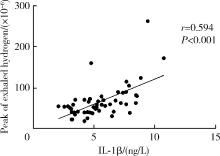
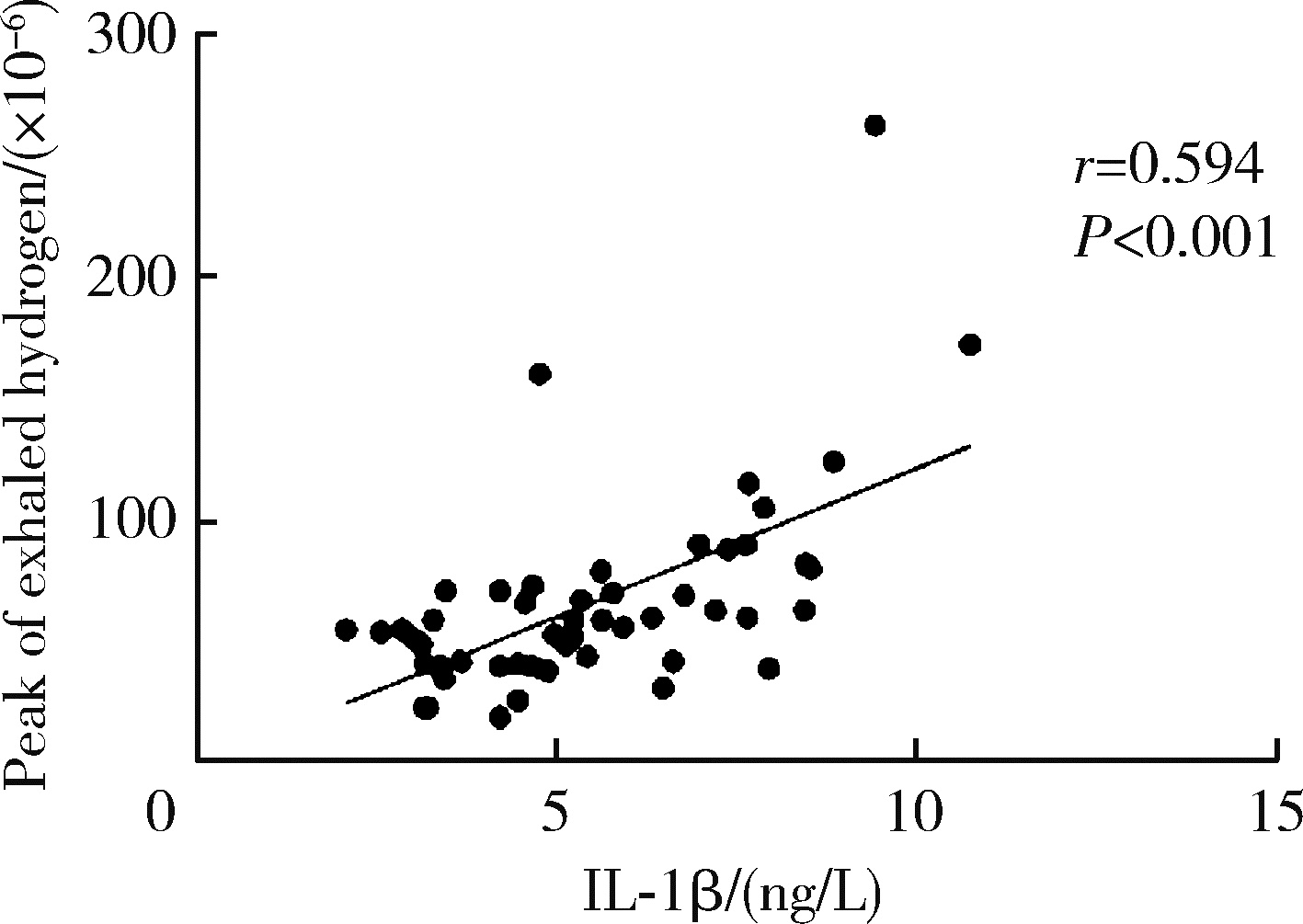
目的: 分析无症状高尿酸血症(hyperuricemia, HUA)患者小肠细菌过度生长(small intestinal bacterial overgrowth, SIBO)发生情况及无症状HUA合并SIBO患者血清中C-反应蛋白(C-reactive protein, CRP)、白细胞介素(interleukin, IL)-1β、IL-6和肿瘤坏死因子-α(tumor necrosis factor-α, TNF-α)表达水平。方法: 选取山西省汾阳医院2023年6月至2024年6月的87例无症状HUA患者和40例健康对照者为研究对象, 收集基线资料和实验室指标。采用乳果糖甲烷-氢呼气试验(lactulose methane-hydrogen breath test, LHBT)检测SIBO的发生情况, 并根据LHBT的检测结果将无症状HUA患者分为SIBO阳性组及SIBO阴性组, 分析无症状HUA患者SIBO阳性率, 比较无症状HUA患者与健康对照者各个时间点(0、30、60和90 min)H2和CH4浓度及CRP、IL-1β、IL-6、TNF-α水平, 以及SIBO阳性组和SIBO阴性组之间的CRP、IL-1β、IL-6、TNF-α水平。采用多因素Logistic回归分析无症状HUA患者发生SIBO的影响因素, 采用Spearman秩相关分析无症状HUA患者CRP、IL-1β、IL-6、TNF-α水平与SIBO的相关性。结果: 无症状HUA患者SIBO阳性率高于健康对照者, 差异有统计学意义(58.62% vs. 20.00%, χ2=16.431, P<0.001)。无症状HUA患者与健康对照者呼出H2浓度在各时间点差异均有统计学意义(P<0.05), 但呼出CH4浓度在各时间点差异均无统计学意义(P>0.05)。无症状HUA患者CRP、IL-1β、IL-6、TNF-α水平高于健康对照者, 差异有统计学意义(P<0.05)。无症状HUA患者SIBO阳性组血清CRP、IL-1β、IL-6水平均明显高于SIBO阴性组(P < 0.05), 但TNF-α水平在两组间差异无统计学意义(P>0.05)。多因素Logistic回归分析分析表明, IL-1β升高(OR=1.332, 95%CI: 1.005~1.764, P=0.046)、IL-6升高(OR=1.586, 95%CI: 1.216~2.069, P=0.001)是无症状HUA患者发生SIBO的独立危险因素。无症状HUA合并SIBO患者中, LHBT集值与血清IL-1β成正相关(r=0.594, P<0.001)。结论: 无症状HUA患者较健康人群更容易发生SIBO, 且SIBO的发生与炎症因子水平密切相关, 应重视无症状HUA患者SIBO的检测和干预。

关键词: 高尿酸血症, 无症状疾病, 小肠细菌过度生长, 炎症细胞因子, 胃肠道微生物组

Abstract:

Objective: To analyze the incidence of small intestinal bacterial overgrowth (SIBO) in patients with asymptomatic hyperuricemia (HUA) and the serum levels of C-reactive protein (CRP), interleukin-1β (IL-1β), interleukin-6 (IL-6), and tumor necrosis factor-α (TNF-α) in patients with asymptomatic HUA and SIBO. Methods: A total of 87 asymptomatic HUA patients and 40 healthy controls from Shanxi Fenyang Hospital from June 2023 to June 2024 were selected as the study subjects, and the baseline data, laboratory indicators were collected. Lactulose methane-hydrogen breath test (LHBT) was used to detect the occurrence of SIBO, and the asymptomatic HUA patients was divided into SIBO-positive group and SIBO-negative group according to the test results of LHBT. The positive rate of SIBO in the asymptomatic HUA patients was analyzed, and the concentrations of H2 and CH4, the levels of CRP, IL-1β, IL-6 and TNF-α at each time point between the asymptomatic HUA patients and the healthy controls were compared, and the levels of CRP, IL-1β, IL-6 and TNF-α were compared between the SIBO-positive group and the SIBO-negative group. Multivariate Logistic regression analysis was performed to analyze the influencing factors of SIBO in asymptomatic HUA. Spearman rank correlation analysis was used to analyze the correlation between CRP, IL-1β, IL-6 and TNF-α levels and SIBO in asymptomatic HUA patients. Results: The positive rate of SIBO in the asymptomatic HUA patients was 58.62%, which was higher than that in the healthy controls (20.00%), and the difference was statistically significant (χ2=16.431, P < 0.001). There were significant differences in exhaled H2 concentration between the asymptomatic HUA patients and the healthy controls at 0, 30, 60 and 90 min (P < 0.05), and there was no significant difference in exhaled CH4 concentration at each time point (P>0.05). The levels of CRP, IL-1β, IL-6 and TNF-α in the asymptomatic HUA patients were significantly higher than those in the healthy controls (P < 0.05). The serum levels of CRP, IL-1β and IL-6 in the SIBO-positive group were significantly higher than those in the SIBO-negative group (P < 0.05), while the levels of TNF-α were not significantly different between the two groups (P>0.05). Multivariate Logistic regression ana-lysis of the influencing factors of SIBO in the asymptomatic HUA showed that increased IL-1β (OR=1.332, 95%CI: 1.005-1.764, P=0.046) and increased IL-6 (OR=1.586, 95%CI: 1.216-2.069, P=0.001) were independent risk factors for SIBO in the HUA patients. In asymptomatic HUA patients with SIBO, the LHBT set value was positively correlated with serum IL-1β (r=0.594, P < 0.001). Conclusion: Asymptomatic HUA patients are more likely to develop SIBO than healthy people, and SIBO in asymptomatic HUA patients is closely related to the level of inflammatory factors, so attention should be paid to the detection and intervention of SIBO in asymptomatic HUA patients.

Key words: Hyperuricemia, Asymptomatic diseases, Small intestinal bacterial overgrowth, Inflammatory cytokines, Gastrointestinal microbiome

中图分类号: 

  • R589

表1

无症状HUA患者与健康对照者的基本信息及SIBO阳性率比较"

Items Asymptomatic HUA (n=87) Healthy control (n=40) Statistic P value
Gender, n(%) χ2=0.543 0.461
  Male 62 (71.26) 31 (77.50)
  Female 25 (28.74) 9 (22.50)
Age/years, ${\bar x}$±s 40.11±7.65 38.13±8.17 t=-1.333 0.185
BMI/(kg/m2), ${\bar x}$±s 26.33±2.33 24.83±2.61 t=-1.394 0.167
SIBO, n(%) χ2=16.431 <0.001
  Positive 51 (58.62) 8 (20.00)
  Negative 36 (41.38) 32 (80.00)

表2

无症状HUA患者与健康对照者LHBT结果"

Items Asymptomatic HUA (n=87) Healthy controls (n=40) Z value P value
H2M(P25, P75)
  Baseline 7.00 (4.00, 12.00) 5.00 (4.00, 9.00) -2.100 0.036
  30 min 11.00 (6.00, 15.00) 6.00 (4.25, 11.50) -2.676 0.007
  60 min 10.00 (5.00, 16.00) 5.00 (4.00, 11.25) -2.910 0.004
  90 min 12.00 (8.00, 24.00) 8.00 (5.00, 14.00) -3.049 0.002
CH4M(P25, P75)
  Baseline 6.00 (4.00, 9.00) 6.50 (4.00, 8.00) -0.329 0.742
  30 min 7.00 (4.00, 9.00) 7.00 (5.25, 8.00) -0.089 0.929
  60 min 6.00 (4.00, 10.00) 6.00 (5.00, 8.00) -0.723 0.470
  90 min 7.00 (5.00, 12.00) 7.00 (4.00, 8.00) -1.714 0.086

表3

无症状HUA患者与健康对照者的炎症因子比较"

Items Asymptomatic HUA (n=87) Healthy controls (n=40) Z value P value
CRP/(mg/L),M(P25, P75) 20.00 (10.00, 33.00) 5.00 (3.00, 11.00) -7.596 <0.001
IL-1β/(ng/L),M(P25, P75) 4.67 (3.38, 6.62) 2.03 (1.45, 2.77) -5.955 <0.001
IL-6/(ng/L),M(P25, P75) 3.42 (2.01, 6.07) 2.46 (1.22, 3.65) -2.852 0.004
TNF-α/(ng/L),M(P25, P75) 1.21 (0.81, 1.77) 0.97 (0.61, 1.23) -2.943 0.003

表4

无症状HUA患者SIBO阳性组与SIBO阴性组的临床和实验室指标比较"

Items SIBO positive group (n=51) SIBO negative group (n=36) Statistics P value
Gender χ2=0.634 0.426
  Male 38 (74.51) 24 (66.67)
  Female 13 (37.25) 12 (33.33)
Age/years 40.98±5.35 38.89±10.01 t=1.144 0.258
BMI/(kg/m2) 26.14±2.20 26.60±2.50 t=-0.917 0.362
Laboratory indicators
  WBC/(×109/L) 7.12±1.94 7.37±2.43 t=-0.512 0.610
  HGB/(g/L) 160.71±13.54 158.42±11.65 t=0.822 0.413
  PLT/(×109/L) 239.00±40.74 233.83±40.74 t=0.550 0.584
  NLR 2.36 (1.56, 3.40) 2.11 (1.51, 2.36) Z=1.896 0.058
  ALT/(U/L) 28.45±9.05 25.66±6.50 Z=1.674 0.098
  AST/(U/L) 30.35±7.81 30.28±13.59 t=0.033 0.976
  BUN/(mmol/L) 5.73±1.10 5.51±1.33 t=0.820 0.415
  GGT/(mmol/L) 35.63±15.19 38.22±16.28 t=-0.762 0.448
  Scr/(μmol/L) 81.45±17.31 78.60±19.24 t=0.321 0.749
  UA/(μmol/L) 507.94±44.72 504.25±51.96 t=0.354 0.724
  TC/(mmol/L) 4.74±0.88 4.64±0.71 t=0.571 0.570
  TG/(mmol/L) 3.09±0.82 4.64±0.71 t=0.739 0.462
  HDL-C/(mmol/L) 1.00±0.32 1.08±0.21 t=-1.601 0.113
  LDL-C/(mmol/L) 2.83±0.68 2.73±0.63 t=0.631 0.535
  CRP/(mg/L) 24.00 (13.00, 36.00) 16.50 (7.25, 29.75) Z=2.069 0.039
  IL-1β/(ng/L) 5.23 (3.67, 7.21) 4.04 (3.04, 5.64) Z=2.366 0.018
  IL-6/(ng/L) 4.54 (3.18, 8.02) 2.13 (0.97, 3.53) Z=4.456 <0.001
  TNF-α/(ng/L) 1.25 (0.88, 1.86) 1.10 (0.77, 1.74) Z=1.418 0.156

表5

多因素Logistic回归分析无症状HUA患者发生SIBO的影响因素"

Items B SE Wald χ2 P OR (95%CI)
CRP -0.017 0.020 0.730 0.393 0.983 (0.946-1.022)
IL-1β 0.286 0.144 3.983 0.046 1.332 (1.005-1.764)
IL-6 0.461 0.136 11.549 0.001 1.586 (1.216-2.069)

图1

无症状HUA合并SIBO患者LHBT集值与血清IL-1β水平的相关性散点图"

1
封番番, 张蓓, 周连锁, 等. 无症状高尿酸血症的诊治和管理[J]. 江苏医药, 2021, 47 (11): 1182- 1185.
2
Zhu B , Wang Y , Zhou W , et al. Trend dynamics of gout prevalence among the Chinese population, 1990-2019: A joinpoint and age-period-cohort analysis[J]. Front Public Health, 2022, 10, 1008598.

doi: 10.3389/fpubh.2022.1008598
3
Chen B , Zhu S , Du L , et al. Reduced interstitial cells of Cajal and increased intraepithelial lymphocytes are associated with deve-lopment of small intestinal bacterial overgrowth in post-infectious IBS mouse model[J]. Scand J Gastroenterol, 2017, 52 (10): 1065- 1071.

doi: 10.1080/00365521.2017.1342141
4
中华医学会内分泌学分会. 中国高尿酸血症与痛风诊疗指南(2019)[J]. 中华内分泌代谢杂志, 2020, 36 (1): 1- 13.
5
Rezaie A , Buresi M , Lembo A , et al. Hydrogen and methane-based breath testing in gastrointestinal disorders: The North American consensus[J]. Am J Gastroenterol, 2017, 112 (5): 775- 784.

doi: 10.1038/ajg.2017.46
6
Pimentel M , Saad RJ , Long MD , et al. ACG clinical guideline: Small intestinal bacterial overgrowth[J]. Am J Gastroenterol, 2020, 115 (2): 165- 178.

doi: 10.14309/ajg.0000000000000501
7
Adarsh MB , Sharma SK , Sinha SK , et al. Gastrointestinal dysmotility and infections in systemic sclerosis: An Indian scenario[J]. Curr Rheumatol Rev, 2018, 14 (2): 172- 176.

doi: 10.2174/1573397113666170425145405
8
Sawicka-Gutaj N , Gruszczyński D , Zawalna N , et al. Microbiota alterations in patients with autoimmune thyroid diseases: A syste-matic review[J]. Int J Mol Sci, 2022, 23 (21): 13450.

doi: 10.3390/ijms232113450
9
Shah A , Morrison M , Burger D , et al. Systematic review with meta-analysis: The prevalence of small intestinal bacterial overgrowth in inflammatory bowel disease[J]. Aliment Pharmacol Ther, 2019, 49 (6): 624- 635.

doi: 10.1111/apt.15133
10
Hasan A , Hasan LK , Schnabl B , et al. Microbiome of the aero-digestive tract in health and esophageal disease[J]. Dig Dis Sci, 2021, 66 (1): 12- 18.

doi: 10.1007/s10620-020-06720-6
11
Kim HW , Yoon EJ , Jeong SH , et al. Distinct gut microbiota in patients with asymptomatic hyperuricemia: A potential protector against gout development[J]. Yonsei Med J, 2022, 63 (3): 241- 251.

doi: 10.3349/ymj.2022.63.3.241
12
王帅, 左丽娟, 高扬, 等. 小肠细菌过度生长的治疗研究进展[J]. 临床消化病杂志, 2021, 33 (4): 303- 306.
13
Leite G , Morales W , Weitsman S , et al. The duodenal micro-biome is altered in small intestinal bacterial overgrowth[J]. PLoS One, 2020, 15 (7): e0234906.

doi: 10.1371/journal.pone.0234906
14
Ostojic SM . Inadequate production of H2 by gut microbiota and Parkinson disease[J]. Trends Endocrinol Metab, 2018, 29 (5): 286- 288.

doi: 10.1016/j.tem.2018.02.006
15
Rana SV , Sharma S , Sinha SK , et al. Incidence of predominant methanogenic flora in irritable bowel syndrome patients and appa-rently healthy controls from North India[J]. Dig Dis Sci, 2009, 54 (1): 132- 135.

doi: 10.1007/s10620-008-0315-x
16
Fahim SM , Donowitz JR , Smirnova E , et al. Small intestine bacterial overgrowth is associated with increased Campylobacter and epithelial injury in duodenal biopsies of Bangladeshi children[J]. PLoS Negl Trop Dis, 2024, 18 (3): e0012023.

doi: 10.1371/journal.pntd.0012023
17
Wang M , Lin X , Yang X , et al. Research progress on related mechanisms of uric acid activating NLRP3 inflammasome in chro-nic kidney disease[J]. Ren Fail, 2022, 44 (1): 615- 624.

doi: 10.1080/0886022X.2022.2036620
18
Kim S , Lee KS , Choi S , et al. NF-κB-responsive miRNA-31-5p elicits endothelial dysfunction associated with preeclampsia via down-regulation of endothelial nitric-oxide synthase[J]. J Biol Chem, 2018, 293 (49): 18989- 19000.

doi: 10.1074/jbc.RA118.005197
19
Crişan TO , Cleophas MCP , Oosting M , et al. Soluble uric acid primes TLR-induced proinflammatory cytokine production by human primary cells via inhibition of IL-1Ra[J]. Ann Rheum Dis, 2016, 75 (4): 755- 762.

doi: 10.1136/annrheumdis-2014-206564
20
Ghoshal UC , Srivastava D . Irritable bowel syndrome and small intestinal bacterial overgrowth: Meaningful association or unneces-sary hype[J]. World J Gastroenterol, 2014, 20 (10): 2482- 2491.

doi: 10.3748/wjg.v20.i10.2482
21
阚美佳, 张尤历, 徐岷. 炎症性肠病与小肠细菌过度生长关系的荟萃分析[J]. 胃肠病学和肝病学杂志, 2019, 28 (11): 1256- 1261.
22
Yu X , Li Y , Xiang F , et al. Correlation between small intestinal bacterial overgrowth and irritable bowel syndrome and the prognosis of treatment[J]. Ann Palliat Med, 2021, 10 (3): 3364- 3370.

doi: 10.21037/apm-21-427
23
Srivastava D , Ghoshal U , Mittal RD , et al. Associations between IL-1RA polymorphisms and small intestinal bacterial overgrowth among patients with irritable bowel syndrome from India[J]. Neurogastroenterol Motil, 2014, 26 (10): 1408- 1416.

doi: 10.1111/nmo.12399
[1] 傅强,高冠英,徐雁,林卓华,孙由静,崔立刚. 无症状髋关节前上盂唇撕裂超声与磁共振检查的对比研究[J]. 北京大学学报(医学版), 2023, 55(4): 665-669.
[2] 包文晗,唐雯. 初诊IgA肾病患者的肠道菌群及其与疾病进展因素的相关分析[J]. 北京大学学报(医学版), 2023, 55(1): 124-132.
[3] 张家赫, 史佳琪, 陈章健, 贾光. 基于人消化道微生态体外模拟系统观察纳米二氧化钛对肠道菌群的影响[J]. 北京大学学报(医学版), 2022, 54(3): 468-476.
[4] 王子靖,李在玲. 有幽门螺杆菌感染家族史儿童胃部菌群的特点[J]. 北京大学学报(医学版), 2021, 53(6): 1115-1121.
[5] 张学武. 痛风关节炎治疗中几个备受关注的问题[J]. 北京大学学报(医学版), 2021, 53(6): 1017-1019.
[6] 赵卫, 高辉, 朱佳鑫, 张学武, 栗占国. 血清Dickkopf-1与原发性痛风性关节炎骨破坏的相关性[J]. 北京大学学报(医学版), 2012, 44(2): 254-258.
[7] 武丽君, 宋小芸, 库尔班江, 石亚妹, 黄慈波, 黄嘉, 刘爱华, 米克拉依, 滕玉芬, 古丽娜, 孟新艳, 单新洁, 木亚赛, 苑爱萍, 张莉. 新疆吐鲁番地区维吾尔族人群高尿酸血症和痛风的流行病学调查[J]. 北京大学学报(医学版), 2012, 44(2): 250-253.
[8] 李丽君, 陈红, 任景怡, 王岚, 罗宇. 微粒化非诺贝特对高脂血症患者血脂及尿酸代谢的影响[J]. 北京大学学报(医学版), 2009, 41(5): 541-544.
Viewed
Full text


Abstract

Cited

  Shared   
  Discussed   
No Suggested Reading articles found!