Journal of Peking University (Health Sciences) ›› 2025, Vol. 57 ›› Issue (5): 895-902. doi: 10.19723/j.issn.1671-167X.2025.05.013

Previous Articles     Next Articles

Protein biomarker screening and functional analysis of salivary exosomes in patients with ulcerative colitis

Congyi YANG1, Xiaowen ZHENG2, Jingyi CHEN1, Jun XU1, Feng CHEN2, Yang CHEN3, Ning CHEN1,*()   

  1. 1. Department of Gastroenterology, Peking University People's Hospital, Beijing 100044, China
    2. Central Laboratory, Peking University School and Hospital of Stomatology & National Center of Stomatology & National Clinical Research Center for Oral Diseases & National Engineering Laboratory for Digital and Material Technology of Stomatology, Beijing 100081, China
    3. Center for Precision Medicine Multi-Omics Research, Peking University School of Basic Medical Science, Beijing 100191, China
  • Received:2023-04-08 Online:2025-10-18 Published:2025-04-17
  • Contact: Ning CHEN
  • Supported by:
    the National Natural Science Foundation of China(82070566); National Key Research and Development Program of China(2018YFA0507102); Capital health development research project(首发2020-2Z-40813); KCL and PKUHSC Joint Institute for Medical Research Fund(BMU2020KCL003)

RICH HTML


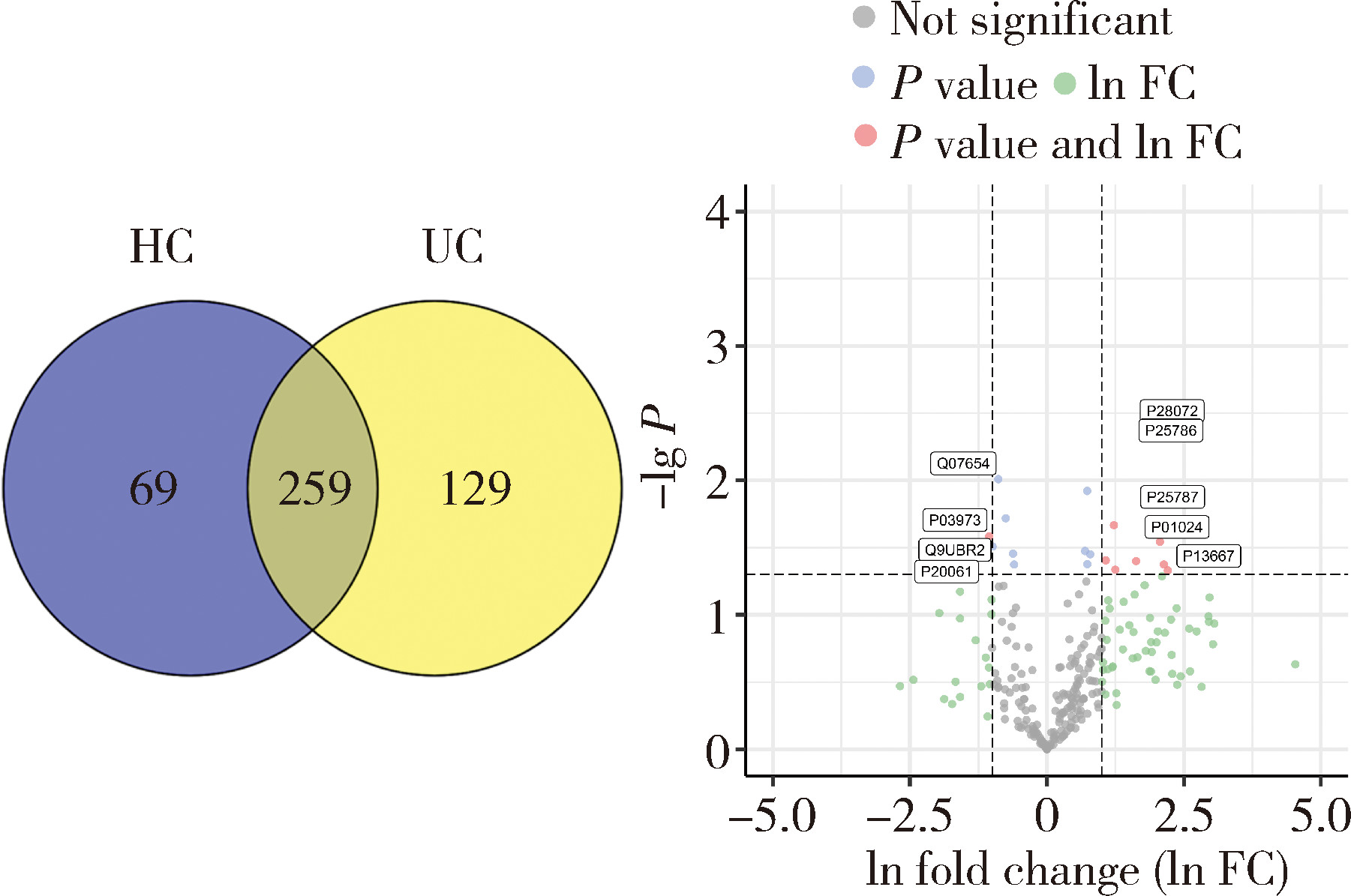
Abstract: Objective: To identify protein markers that may be associated with ulcerative colitis (UC) by analyzing differential proteins in the salivary exosomes from newly diagnosed patients with active UC and healthy controls (HC), and to investigate the function of salivary exosome-specific high-expression proteins in UC patients and their potential role in the pathogenesis of UC. Methods: All patients and healthy controls were recruited from Peking University People' s Hospital. Whole saliva was obtained from 37 patients with newly diagnosed active ulcerative colitis (n=37) and apparently healthy controls (n=10). Salivary exosomes were extracted from samples, and the proteins within the exosomes were identified by liquid chromatograph-mass spectrometer (LC-MS/MS). The differentially expressed protein genes underwent gene ontology (GO) and Kyoto encyclopedia of genes and genomes (KEGG) enrichment analysis using the DAVID tool. In vitro, macrophages were co-cultured with salivary exosomes from UC group and those from HC group, respectively, and real-time quantitative polymerase chain reaction (qPCR) was used to detect levels of CD80+ and CD86+. Additionally, ELISA was performed to measure secretion levels of interleukin-6 (IL-6), interleukin-1β (IL-1β), tumor necrosis factor-α (TNF-α) in the cell supernatant. Results: A total of 259 proteins were co-expressed in saliva exosomes from UC group and HC group, among which 11 proteins were highly expressed in the UC group, including PDIA4, A2M, EEF2, C3, PSMA2, PSMB6, PSMA1, IGHG1, IGHG3, IGHG4 and SERPING1, while 4 proteins were lowly expressed in UC group, including TCN1, SLPI and SERPING. Functional analysis of these 15 proteins, along with 129 specific proteins found only in the UC patients and 69 specific proteins found only in HC patients, respectively, was conducted using GO/KEGG. The results revealed that in the UC group, proteasome-related proteins such as PSMA1, PSMA2 and PSMB6 expressions were increased in salivary exosomes while many key molecules involved in complement cascade pathways, such as C3 were up-regu-lated. In vitro co-culture experiments demonstrated that compared with healthy controls, the salivary exosomes of the UC patients in active stage could play a pro-inflammatory role by promoting the transformation of macrophages into M1 type cells that secrete inflammatory factors IL-1β, IL-6 and TNF-α. Conclusion: Salivary exosomes in the UC patients may have the function of promoting inflammation. Analysis of protein levels in the saliva of the UC patients and healthy controls revealed significant differences in the expression levels of 15 co-expressed proteins between the two groups. Among them, C3, PSMA2, PSMB6 and PSMA1 were found to be mainly related to immune and inflammatory reactions in the UC group. These findings suggest that proteins with high specific expression in salivary exosomes of the UC patients have the potential to be used as a disease marker for UC diagnosis and may contribute to the pathogenesis of UC.

Key words: Ulcerative colitis, Salivary exosomes, Biomarker, Gut immunity

CLC Number: 

  • R574.62

Table 1

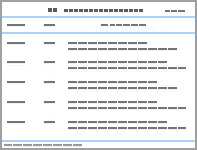
The sequences of target genes' primers used in qPCR amplification"

Gene Forward (5′-3′) Reverse (5′-3′)
CD86+ CTGCTCATCTATACACGGTTACC GGAAACGTCGTACAGTTCTGTG
CD80+ GGCCCGAGTACAAGAACCG TCGTATGTGCCCTCGTCAGAT
GAPDH GGAGCGAGATCCCTCCAAAAT GGCTGTTGTCATACTTCTCATGG

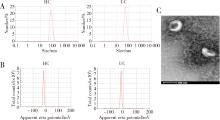
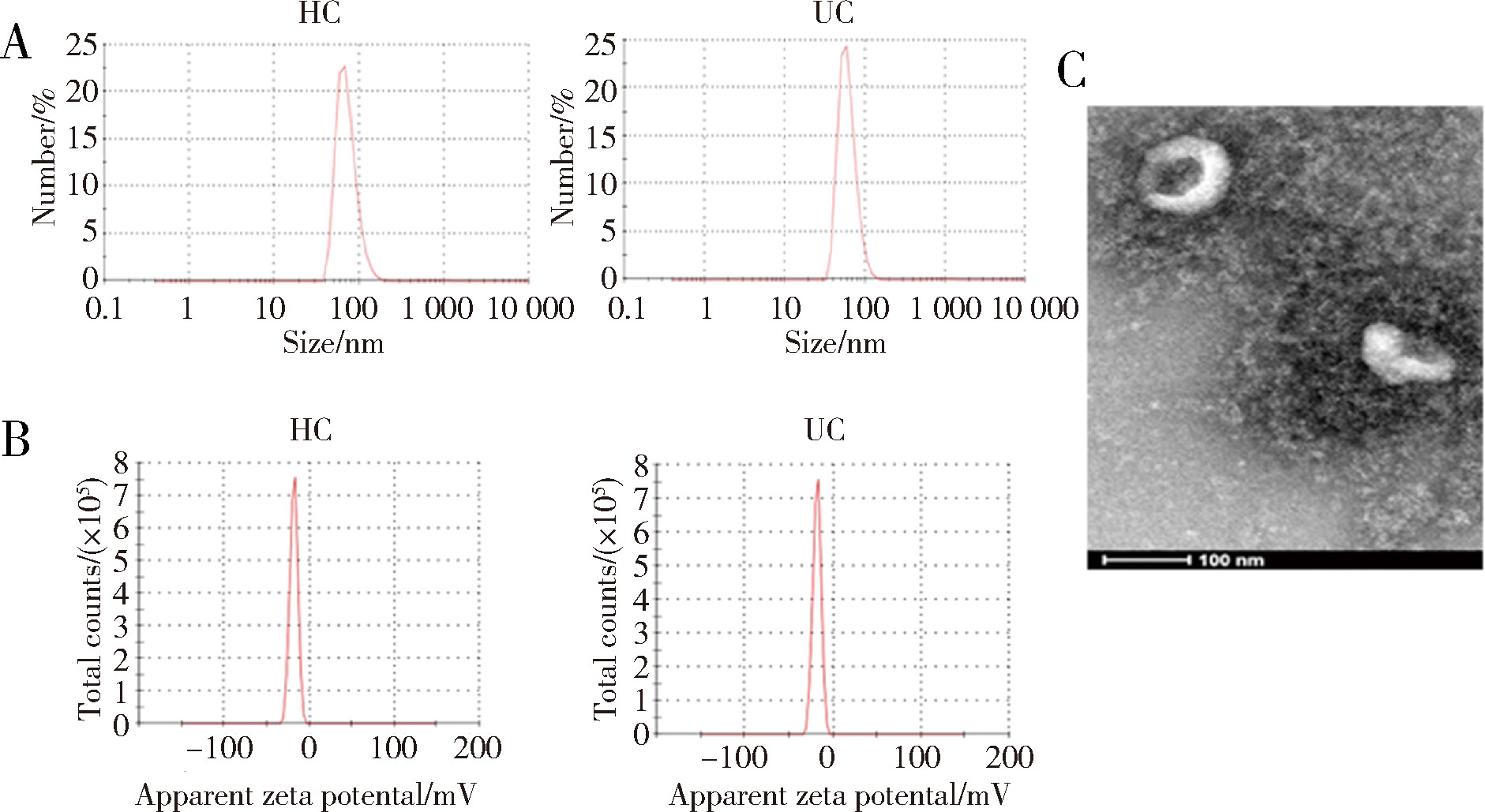
Figure 1

Characterization of salivary exosomes A, dynamic light scattering analysis of salivary exosomes; B, zeta potential distribution analysis of salivary exosomes; C, TEM imaging of salivary exosomes. HC, healthy control; UC, ulcerative colitis."

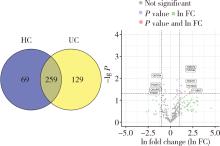
Figure 2

Comparison of salivary exosomal proteins between the ulcerative colitis (UC) group and the healthy control (HC) group"

Table 2

15 differential proteins in salivary exosomes between the UC group and the healthy group"

Protein ID Gene Description Fuction
Up regulated (11)
P13667 PDIA4 Protein disulfide-isomerase A4 Protein processing in endoplasmic reticulum
P01023 A2M Alpha-2-macroglobulin Complement and coagulation cascades
P13639 EEF2 Elongation factor 2 Neutrophil degranulation
P01024 C3 Complement C3 Complement and coagulation cascades
P25787 PSMA2 Proteasome subunit alpha type-2 Proteasome actvities
P28072 PSMB6 Proteasome subunit beta type-6 Proteasome activities
P25786 PSMA1 Proteasome subunit alpha type-1 Proteasome activities
P01857 IGHG1 Ig gamma-1 chain C region Immunoglobulin receptor binding
P01860 IGHG3 lg gamma-3 chain C region Immunoglobulin receptor binding
P01861 IGHG4 Ig gamma-4 chain C region Immunoglobulin receptor binding
B4E1H2 SERPING1 Plasma protease C1 inhibitor Complement and coagulation cascades
Down regulated (4)
P20061 TCN1 Transcobalamin-1 Vitamin binding
P03973 SLPI Antileukoproteinase Endopeptidase regulator activity
Q9UBR2 CTSZ Cathepsin Z Endopeptidase activity
Q07654 TFF3 Trefoil factor 3 Regulation of small molecule metabolic process

Figure 3

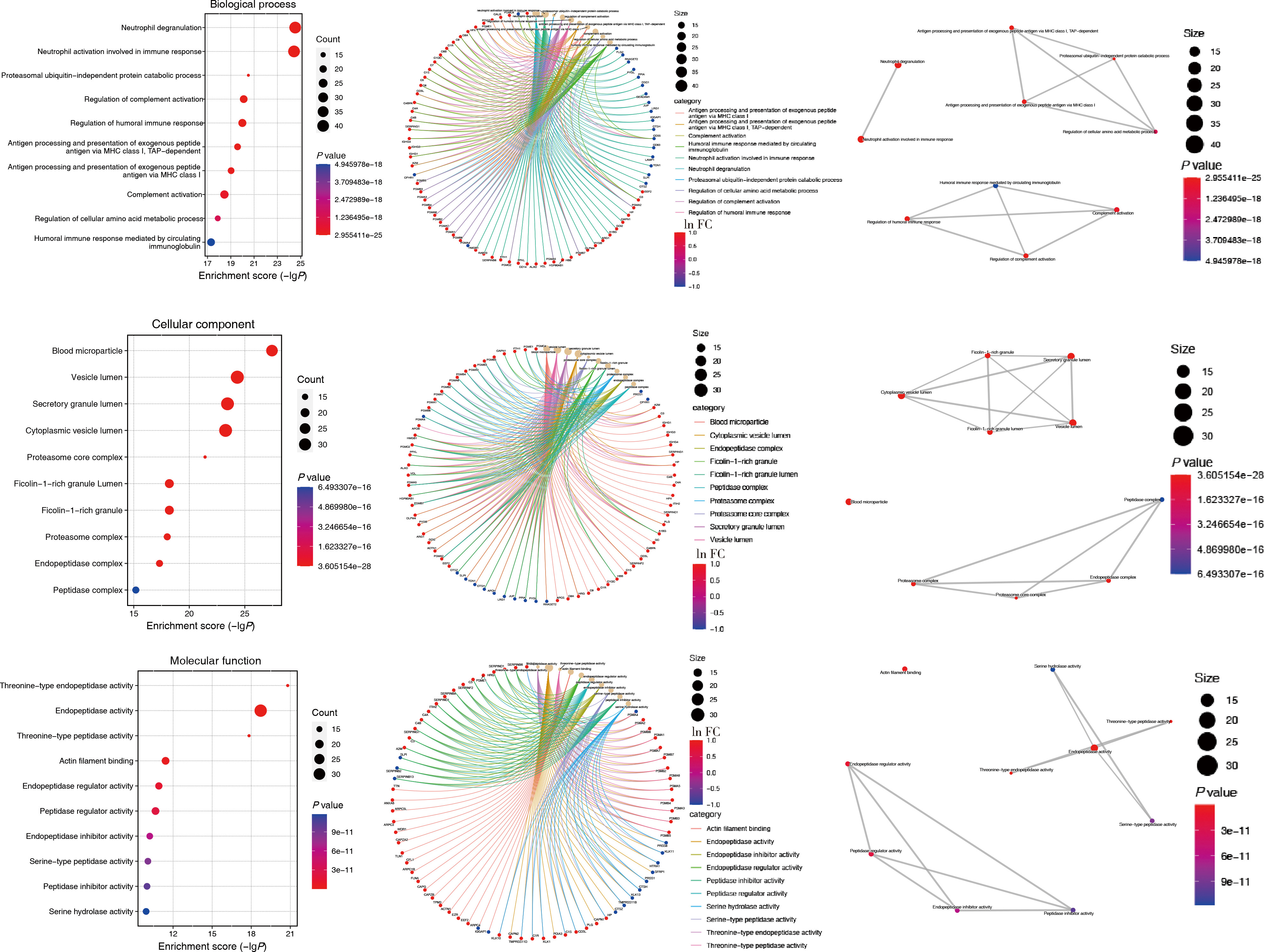
Gene ontoloy (GO) analysis of 213 differential proteins in salivary exosomes between the ulcerative colitis (UC) group and the healthy group"

Figure 4

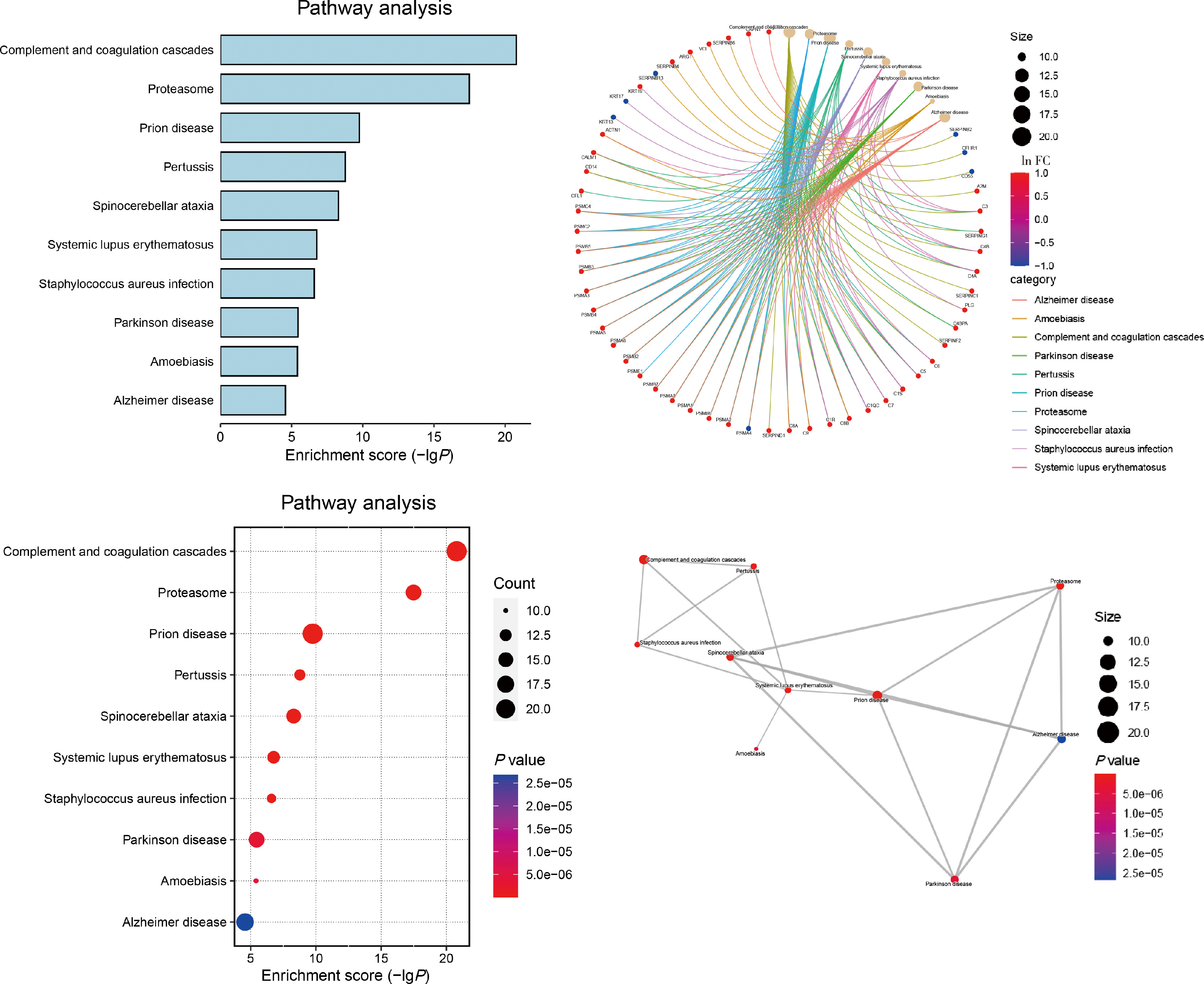
KEGG analysis of 213 differential proteins in salivary exosomes between the ulcerative colitis (UC) group and the healthy group"

Figure 5

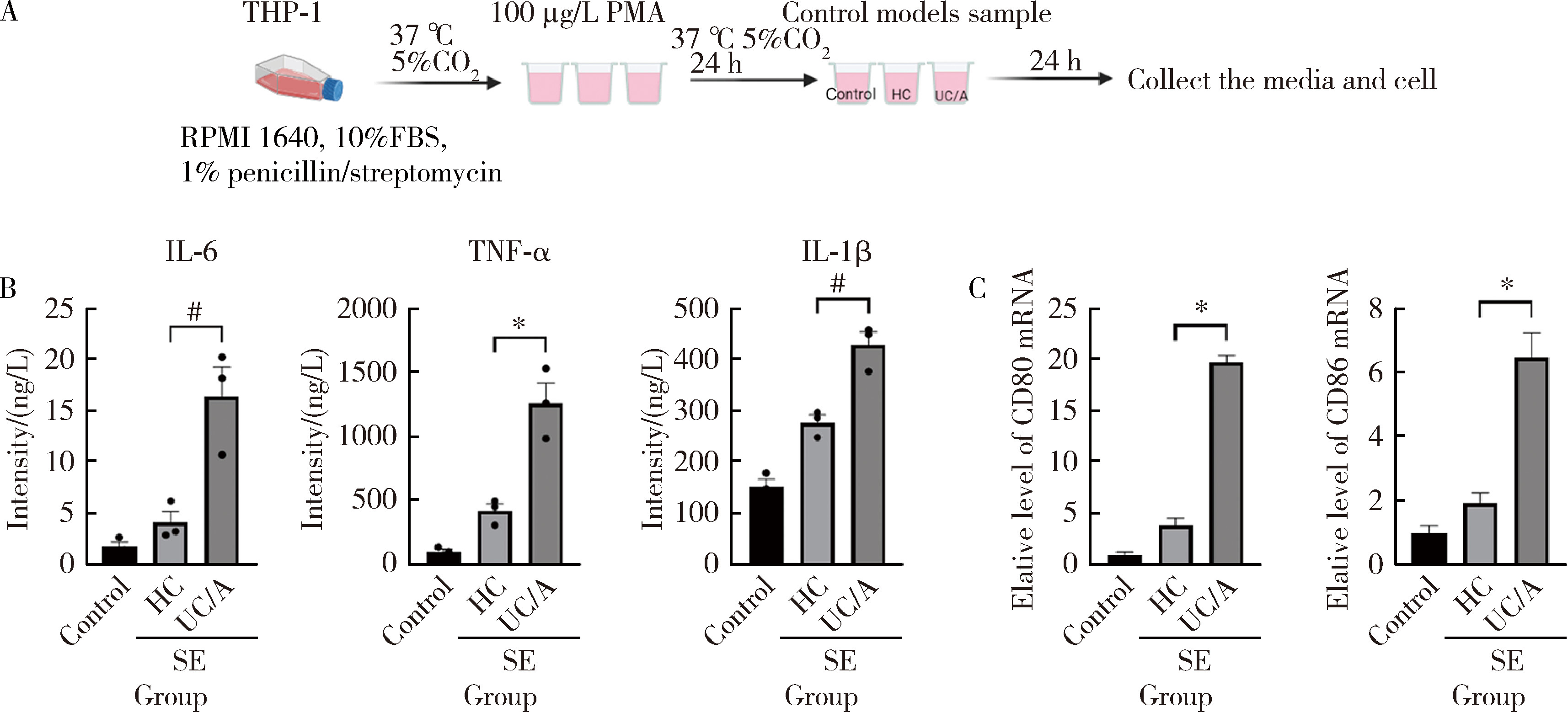
Effect of salivary exosomes on THP-1 cells in vitro A, co-culture model diagram of human monocyte leukemia cells (THP-1) cells and salivary exosomes; B, expression of inflammatory cytokines in cell culture supernatant detected by ELISA; C, mRNA expression profile of surface markers in M1 macrophages. Control, blank group without exosome stimulation; HC, healthy control; UC/A, active UC patients; SE, salivary exosomes. Data are $\bar x \pm s$, # P < 0.01, *P < 0.001."

1
Lauritano D, Boccalari E, Di Stasio D, et al. Prevalence of oral lesions and correlation with intestinal symptoms of inflammatory bowel disease: A systematic review[J]. Diagnostics(Basel), 2019, 9(3): 77.
2
Ng SC, Shi HY, Hamidi N, et al. Worldwide incidence and prevalence of inflammatory bowel disease in the 21st century: A systematic review of population-based studies[J]. Lancet, 2017, 390(10114): 2769- 2778.

doi: 10.1016/S0140-6736(17)32448-0
3
Xavier RJ, Podolsky DK. Unravelling the pathogenesis of inflammatory bowel disease[J]. Nature, 2007, 448(7152): 427- 434.

doi: 10.1038/nature06005
4
Vermeire S, Van Assche G, Rutgeerts P. Laboratory markers in IBD: Useful, magic, or unnecessary toys[J]. Gut, 2006, 55(3): 426- 431.

doi: 10.1136/gut.2005.069476
5
Kalluri R, LeBleu VS. The biology, function, and biomedical applications of exosomes[J]. Science, 2020, 367(6478): eaau6977.

doi: 10.1126/science.aau6977
6
Chen IH, Xue L, Hsu CC, et al. Phosphoproteins in extracellular vesicles as candidate markers for breast cancer[J]. Proc Natl Acad Sci USA, 2017, 114(12): 3175- 3180.

doi: 10.1073/pnas.1618088114
7
Yang B, Chen Y, Shi J. Exosome biochemistry and advanced nanotechnology for next-generation theranostic platforms[J]. Adv Mater, 2019, 31(2): e1802896.

doi: 10.1002/adma.201802896
8
Yu G, Wang LG, Han Y, et al. Clusterprofiler: An R package for comparing biological themes among gene clusters[J]. OMICS, 2012, 16(5): 284- 287.

doi: 10.1089/omi.2011.0118
9
Luo W, Brouwer C. Pathview: An R/Bioconductor package for pathway-based data integration and visualization[J]. Bioinfor-matics, 2013, 29(14): 1830- 1831.

doi: 10.1093/bioinformatics/btt285
10
Doyle LM, Wang MZ. Overview of extracellular vesicles, their origin, composition, purpose, and methods for exosome isolation and analysis[J]. Cells, 2019, 8(7): 727.

doi: 10.3390/cells8070727
11
Gao X, Jiang S, Koh D, et al. Salivary biomarkers for dental caries[J]. Periodontol 2000, 2016, 70(1): 128- 141.

doi: 10.1111/prd.12100
12
Goldoni R, Dolci C, Boccalari E, et al. Salivary biomarkers of neurodegenerative and demyelinating diseases and biosensors for their detection[J]. Ageing Res Rev, 2022, 76, 101587.

doi: 10.1016/j.arr.2022.101587
13
Han Y, Jia L, Zheng Y, et al. Salivary exosomes: Emerging roles in systemic disease[J]. Int J Biol Sci, 2018, 14(6): 633- 643.

doi: 10.7150/ijbs.25018
14
Liu D, Saikam V, Skrada KA, et al. Inflammatory bowel disease biomarkers[J]. BMJ, 2022, 42(5): 1856- 1887.
15
Shao J, Jin Y, Shao C, et al. Serum exosomal pregnancy zone protein as a promising biomarker in inflammatory bowel disease[J]. Cell Mol Biol Lett, 2021, 26(1): 36.

doi: 10.1186/s11658-021-00280-x
16
Okita Y, Nakayama KI. UPS delivers pluripotency[J]. Cell Stem Cell, 2012, 11(6): 728- 730.

doi: 10.1016/j.stem.2012.11.009
17
Cleynen I, Vazeille E, Artieda M, et al. Genetic and microbial factors modulating the ubiquitin proteasome system in inflammatory bowel disease[J]. Gut, 2014, 63(8): 1265- 1274.

doi: 10.1136/gutjnl-2012-303205
18
Arimochi H, Sasaki Y, Kitamura A, et al. Dysfunctional immunoproteasomes in autoinflammatory diseases[J]. Inflamm Regen, 2016, 36, 13.

doi: 10.1186/s41232-016-0011-8
19
Muchamuel T, Basler M, Aujay MA, et al. A selective inhibitor of the immunoproteasome subunit LMP7 blocks cytokine production and attenuates progression of experimental arthritis[J]. Nat Med, 2009, 15(7): 781- 787.

doi: 10.1038/nm.1978
20
Harboe M, Thorgersen EB, Mollnes TE. Advances in assay of complement function and activation[J]. Adv Drug Deliv Rev, 2011, 63(12): 976- 987.

doi: 10.1016/j.addr.2011.05.010
21
Wong WY, Lee MM, Chan BD, et al. Proteomic profiling of dextran sulfate sodium induced acute ulcerative colitis mice serum exosomes and their immunomodulatory impact on macrophages[J]. Proteomics, 2016, 16(7): 1131- 1145.

doi: 10.1002/pmic.201500174
22
Halstensen TS, Mollnes TE, Fausa O, et al. Deposits of terminal complement complex (TCC) in muscularis mucosae and submucosal vessels in ulcerative colitis and Crohn's disease of the colon[J]. Gut, 1989, 30(3): 361- 366.

doi: 10.1136/gut.30.3.361
23
Atarashi K, Suda W, Luo C, et al. Ectopic colonization of oral bacteria in the intestine drives TH1 cell induction and inflammation[J]. Science, 2017, 358(6361): 359- 365.

doi: 10.1126/science.aan4526
24
Mitsuhashi S, Feldbrügge L, Csizmadia E, et al. Luminal extracellular vesicles (EVs) in inflammatory bowel disease (IBD) exhibit proinflammatory effects on epithelial cells and macrophages[J]. Inflamm Bowel Dis, 2016, 22(7): 1587- 1595.

doi: 10.1097/MIB.0000000000000840
[1] Xiangyu SUN, Chao YUAN, Xinzhu ZHOU, Jing DIAO, Shuguo ZHENG. Application of salivary micro-ecosystem in early prevention and control of oral and systemic diseases [J]. Journal of Peking University (Health Sciences), 2025, 57(5): 859-863.
[2] Zhong CAO,Hong-bing CEN,Jian-hong ZHAO,Jun MEI,Ling-zhi QIN,Wei LIAO,Qi-lin AO. Expression and significance of INSM1 and SOX11 in pancreatic neuroendocrine tumor and solid pseudopapillary neoplasm [J]. Journal of Peking University (Health Sciences), 2023, 55(4): 575-581.
[3] Fang CAO,Ming ZHONG,Cong-rong LIU. Uterine POLE mutant endometrioid carcinoma combined with human papilloma virus-associated cervical adenocarcinoma: A case report and literature review [J]. Journal of Peking University (Health Sciences), 2023, 55(2): 370-374.
[4] Li LIANG,Xin LI,Lin NONG,Ying DONG,Ji-xin ZHANG,Dong LI,Ting LI. Analysis of microsatellite instability in endometrial cancer: The significance of minimal microsatellite shift [J]. Journal of Peking University (Health Sciences), 2023, 55(2): 254-261.
[5] Tian-yu CAI,Zhen-peng ZHU,Chun-ru XU,Xing JI,Tong-de LV,Zhen-ke GUO,Jian LIN. Expression and significance of fibroblast growth factor receptor 2 in clear cell renal cell carcinoma [J]. Journal of Peking University (Health Sciences), 2022, 54(4): 628-635.
[6] Bing-jie HE,Zhi-ke LIU,Peng SHEN,Ye-xiang SUN,Bin CHEN,Si-yan ZHAN,Hong-bo LIN. Epidemiological study on the incidence of inflammatory bowel disease in Yinzhou District, Ningbo City from 2011 to 2020 [J]. Journal of Peking University (Health Sciences), 2022, 54(3): 511-519.
[7] PANG Yong,ZHANG Sha,YANG Hua,ZHOU Rou-li. Serum LAPTM4B-35 protein as a novel diagnostic marker for hepatocellular carcinoma [J]. Journal of Peking University (Health Sciences), 2021, 53(4): 710-715.
[8] ZHOU Chuan, MA Xue, XING Yun-kun, LI Lu-di, CHEN Jie, YAO Bi-yun, FU Juan-ling, ZHAO Peng. Exploratory screening of potential pan-cancer biomarkers based on The Cancer Genome Atlas database [J]. Journal of Peking University (Health Sciences), 2021, 53(3): 602-607.
[9] CHEN Huai-an,LIU Shuo,LI Xiu-jun,WANG Zhe,ZHANG Chao,LI Feng-qi,MIAO Wen-long. Clinical value of inflammatory biomarkers in predicting prognosis of patients with ureteral urothelial carcinoma [J]. Journal of Peking University (Health Sciences), 2021, 53(2): 302-307.
[10] Xu-chu ZHANG,Jian-hua ZHANG,Rong-fu WANG,Yan FAN,Zhan-li FU,Ping YAN,Guang-yu ZHAO,Yan-xia BAI. Diagnostic value of 18F-FDG PET/CT and tumor markers (CEA, CA19-9, CA24-2) in recurrence and metastasis of postoperative colorectal moderately differentiated adenocarcinoma [J]. Journal of Peking University(Health Sciences), 2019, 51(6): 1071-1077.
[11] Ting-ting WANG,Ying HAN,Fang-fang GAO,Lei YE,Yu-jun ZHANG. Effects of circular RNA circ-SOD2 on intestinal epithelial barrier and ulcerative colitis [J]. Journal of Peking University(Health Sciences), 2019, 51(5): 805-812.
[12] Fei-long YANG,Kai HONG,Guo-jiang ZHAO,Cheng LIU,Yi-meng SONG,Lu-lin MA. Construction of prognostic model and identification of prognostic biomarkers based on the expression of long non-coding RNA in bladder cancer via bioinformatics [J]. Journal of Peking University(Health Sciences), 2019, 51(4): 615-622.
[13] LIU Jin, XIONG Geng-yan, TANG Qi, FANG Dong, LI Xue-song, ZHOU Li-qun. Methylation status of RASSF1A gene promoter in upper tract urothelial carcinoma and its clinical significance [J]. Journal of Peking University(Health Sciences), 2016, 48(4): 571-578.
Viewed
Full text


Abstract

Cited

  Shared   
  Discussed   
No Suggested Reading articles found!