Journal of Peking University (Health Sciences) ›› 2025, Vol. 57 ›› Issue (6): 1180-1183. doi: 10.19723/j.issn.1671-167X.2025.06.024

Previous Articles     Next Articles

VEXAS syndrome mimicking relapsing polychondritis: A case report

Qi DONG1,2, Jing HE1, Yuan JIA1, Haihong YAO1, Xia ZHANG1,*()   

  1. 1. Department of Rheumatology and Immunology, Peking University People' s Hospital, Beijing 100044, China
    2. Department of Rheumatology and Immunology, Shijiazhuang Municipal Hospital, Shijiazhuang 050000, China
  • Received:2025-08-18 Online:2025-12-18 Published:2025-10-22
  • Contact: Xia ZHANG

RICH HTML


Abstract:

This article reports the diagnosis and therapeutic management of a 53-year-old male with VEXAS syndrome mimicking relapsing polychondritis. The patient presented with multiple subcutaneous nodules and auricular/nasal chondritis. Blood routine examination revealed leukopenia, moderate macrocytic anemia and thrombocytopenia. Inflammatory markers were elevated, including erythrocyte sedimentation rate, C-reactive protein (CRP) and interleukin-6. Serological tests were negative for antinuclear antibody (ANA), anti-extractable nuclear antigen antibody spectrum (ENA), and anti-neutrophil cytoplasmic antibody (ANCA), but positive for anticardiolipin antibodies, anti-β2-glycoprotein Ⅰ anti-bodies, and anti-phosphatidylserine-prothrombin antibodies, and screening revealed no thromboembolic events, with no evidence of infection. Genetic testing confirmed a UBA1 gene mutation in Exon 3, spe- cifically p.Met41Val (c.121A>G). Bone marrow aspiration demonstrated grade Ⅲ bone marrow hyperplasia and vacuolization of myeloid precursors without dyshematopoiesis. A skin biopsy indicated a perivascular lymphocytic infiltrate with focal dense neutrophilic infiltrates, consistent with neutrophilic dermatosis. The consultation with experts from the hematology department indicated that there was currently insufficient evidence for the diagnosis of myelodysplastic syndrome. Based on these findings, a diagnosis of VEXAS syndrome was established, with main involvements of the ears/nasal cartilage, skin, and hematopoietic system. The patient' s condition improved significantly following treatment with high-dose glucocorticoids, intravenous immunoglobulin and ruxolitinib phosphate. Throughout the scheduled follow-up period, the patient showed marked clinical improvement, with resolution of subcutaneous nodules and alleviation of swelling and pain in the auricles and nasal bridge. Hematologic parameters improved significantly, serum inflammatory markers returned to near-normal levels, and both anti-cardiolipin antibody and anti-β2-glycoprotein Ⅰ antibody turned negative. Additionally, the titer of anti-phosphatidylserine-prothrombin antibody decreased substantially. Notwithstanding substantial concerns about thrombotic risk due to positive phospholipid antibodies in the context of ruxolitinib treatment, thrombotic events were avoided with patient compliance to low-dose aspirin therapy. This case highlighted that the male patients aged over 50 years presenting with chondritis, refractory autoinflammatory manifestations, and/or unexplained hematological abnormalities, clinicians should consider bone marrow evaluation and UBA1 gene testing to promptly identify VEXAS syndrome, enabling early personalized treatment and improved outcomes.

Key words: VEXAS syndrome, Relapsing polychondritis, Auto-inflammatory diseases, UBA1 gene mutation

CLC Number: 

  • R593.2

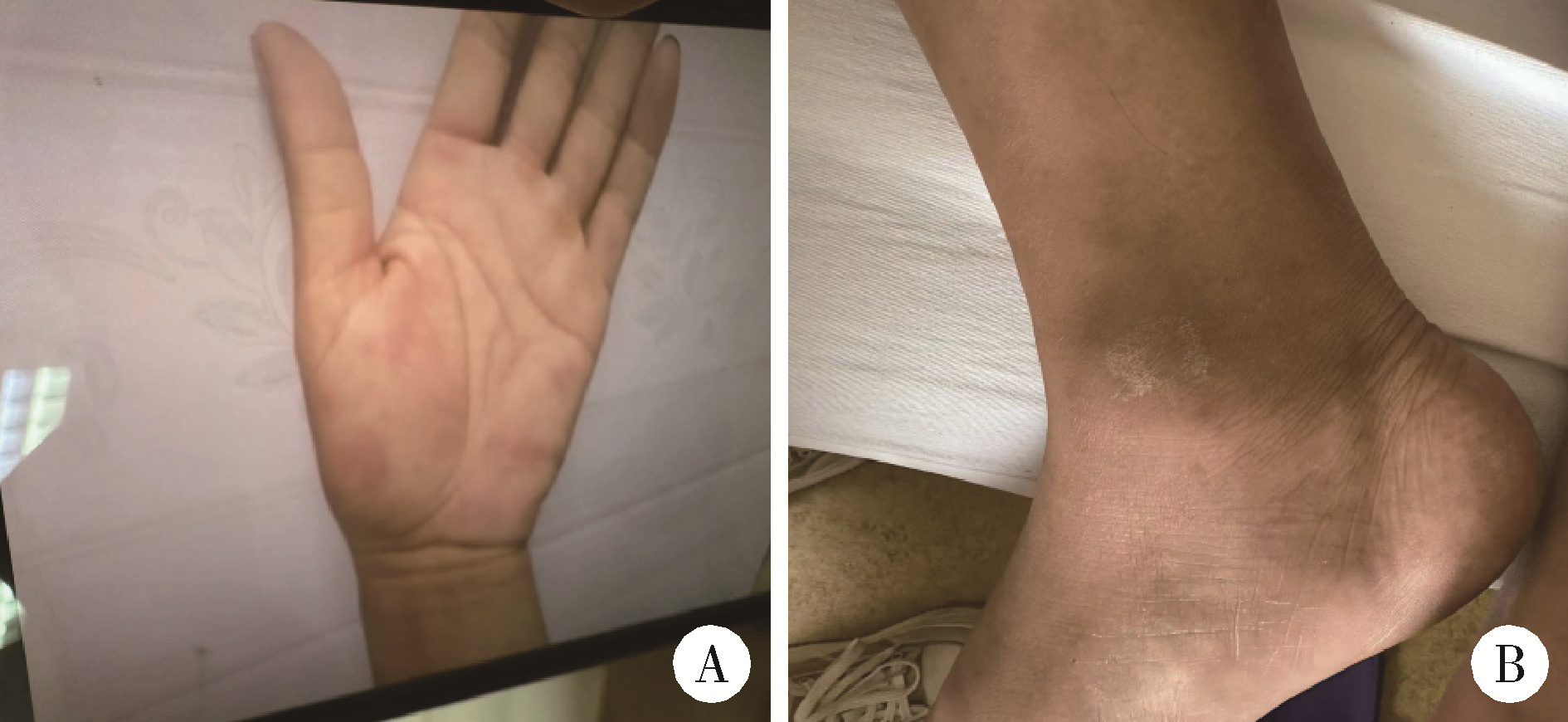
Figure 1

Manifestations of neutrophilic dermatosis in patients with VEXAS syndrome"

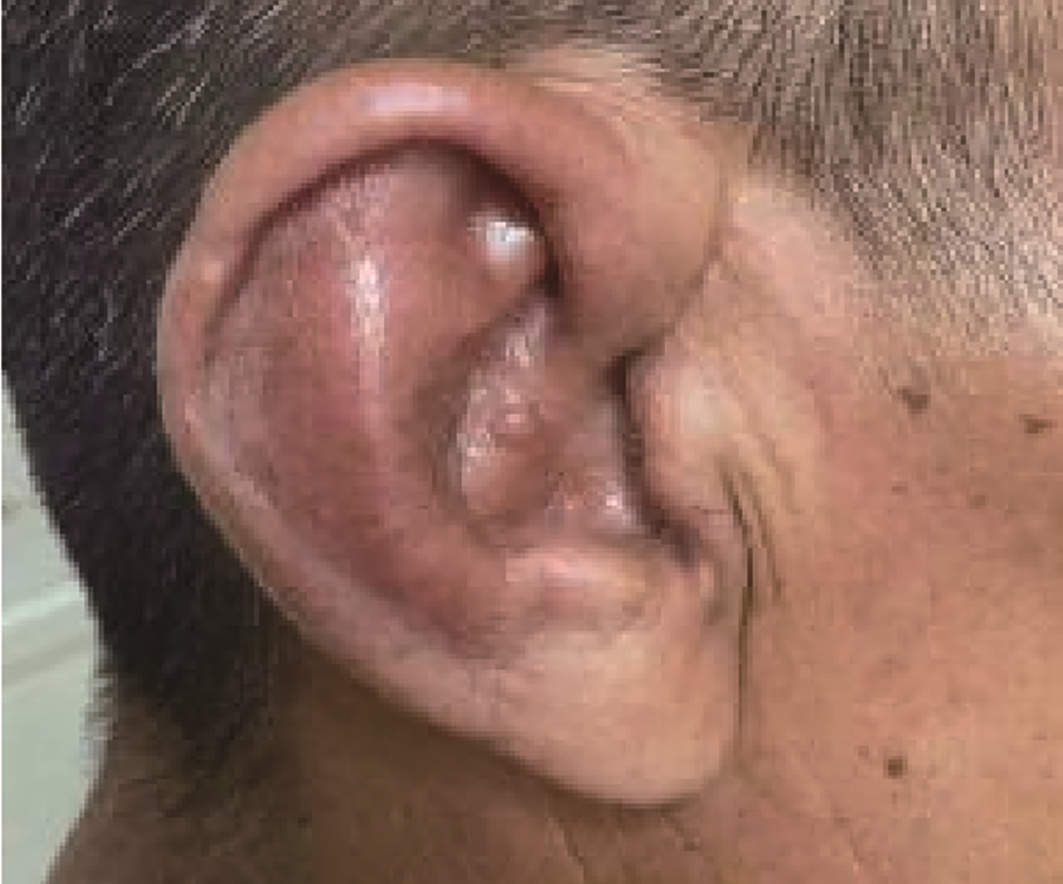
Figure 2

Manifestations of auricular chondritis in patients with VEXAS syndrome"

1
Beck DB , Ferrada MA , Sikora KA , et al. Somatic mutations in UBA1 and severe adult-onset autoinflammatory disease[J]. N Engl J Med, 2020, 383 (27): 2628- 2638.
2
Kosmider O , Possémé C , Templé M , et al. VEXAS syndrome is characterized by inflammasome activation and monocyte dysregulation[J]. Nat Commun, 2024, 15 (1): 910.
3
Mekinian AM, Georgin-Lavaille S, Ferrada MA, et al. American college of rheumatology guidance statement for diagnosis and management of VEXAS developed by the international VEXAS working group expert panel[J/OL]. Arthritis Rheumatol, 2025(2025-08-11)[2025-08-11]. https://doi.org/10.1002/art.43287.
4
Saad AJ , Patil MK , Cruz N , et al. VEXAS syndrome: A review of cutaneous findings and treatments in an emerging autoinflammatory disease[J]. Exp Dermatol, 2024, 33 (3): e15050.
5
Sullivan MM , Mead-Harvey C , Sartori-Valinotti JC , et al. Vas-culitis associated with VEXAS syndrome[J]. Rheumatology, 2025, 64 (6): 3889- 3894.
6
Wöllenstein P , Vallelian F , Varga Z , et al. Fatal haemorrhage in VEXAS syndrome: A lethal complication unveiled[J]. BMJ Case Rep, 2025, 18 (7): e263741.
7
Kusne Y , Ghorbanzadeh A , Dulau-Florea A , et al. Venous and arterial thrombosis in patients with VEXAS syndrome[J]. Blood, 2024, 143 (21): 2190- 2200.
8
Bourbon E , Heiblig M , Gerfaud Valentin M , et al. Therapeutic options in VEXAS syndrome: Insights from a retrospective series[J]. Blood, 2021, 137 (26): 3682- 3684.
9
Heiblig M , Ferrada MA , Koster MJ , et al. Ruxolitinib is more effective than other JAK inhibitors to treat VEXAS syndrome: A retrospective multicenter study[J]. Blood, 2022, 140 (8): 927- 931.
10
Koster MJ , Lasho TL , Olteanu H , et al. VEXAS syndrome: Clinical, hematologic features and a practical approach to diagnosis and management[J]. Am J Hematol, 2024, 99 (2): 284- 299.
11
Boyadzhieva Z , Ruffer N , Kotter I , et al. How to treat VEXAS syndrome: A systematic review on effectiveness and safety of current treatment strategies[J]. Rheumatology, 2023, 62 (11): 3518- 3525.
12
Comont T , Heiblig M , Rivière E , et al. Azacitidine for patients with vacuoles, E1 enzyme, X-linked, autoinflammatory, somatic syndrome (VEXAS) and myelodysplastic syndrome: Data from the French VEXAS registry[J]. Br J Haematol, 2022, 196 (4): 969- 974.
13
Mekinian A , Zhao LP , Chevret S , et al. A phase Ⅱ prospective trial of azacitidine in steroid-dependent or refractory systemic autoimmune/inflammatory disorders and VEXAS syndrome associated with MDS and CMML[J]. Leukemia, 2022, 36 (11): 2739- 2742.
14
Al-Hakim A , Poulter JA , Mahmoud D , et al. Allogeneic haematopoietic stem cell transplantation for VEXAS syndrome: UK experience[J]. Br J Haematol, 2022, 199 (5): 777- 781.
[1] Yuan LIU, Guixiu SHI. Change from Sjögren syndrome to Sjögren disease [J]. Journal of Peking University (Health Sciences), 2025, 57(6): 1015-1017.
[2] Yirui LIAN, Jingxuan LIU, Liang ZHAO, Jing ZHAO, Sitian ZANG, Yuhui LI. Rheumatic disease spectrum and immunological profile of anti-PM/Scl antibodies in idiopathic inflammatory myopathies [J]. Journal of Peking University (Health Sciences), 2025, 57(6): 1018-1023.
[3] Tao WU, Jianzi LIN, Yafeng ZHU, Jianda MA, Peiwen JIA, Lijuan YANG, jie PAN, Yaowei ZOU, Ying YANG, Ye LU, Lie DAI. Serum inter-alpha-trypsin inhibitor heavy chain H3 is identified as a potential biomarker for myopenia in patients with rheumatoid arthritis using proteomic profiling [J]. Journal of Peking University (Health Sciences), 2025, 57(6): 1024-1031.
[4] Wenhao LIN, Yang XIE, Fangqing WANG, Shuying WANG, Xiangjun LIU, Fanlei HU, Yuan JIA. Single-cell RNA sequencing of B cells reveals molecular typing in Sjögren syndrome [J]. Journal of Peking University (Health Sciences), 2025, 57(6): 1032-1041.
[5] Zhao XIANG, Li YANG, Jing YANG. Untargeted metabolomics reveals differential serum metabolites and metabolic pathways in patients with primary Sjögren syndrome and thrombocytopenia [J]. Journal of Peking University (Health Sciences), 2025, 57(6): 1042-1050.
[6] Yayun ZHAO, Mengfan NI, Xue LI, Bei WANG, Gong CHENG, Jing HE, Yuebo JIN. Clinical efficacy and safety of rituximab in treating renal injury in primary Sjögren syndrome [J]. Journal of Peking University (Health Sciences), 2025, 57(6): 1051-1060.
[7] Jiajing PENG, Li CUI. Clinical features and prognosis of sarcoidosis with ocular lesions as the initial manifestation [J]. Journal of Peking University (Health Sciences), 2025, 57(6): 1061-1066.
[8] Yajing GAO, Zhengfang LI, Mengsi MA, Lijun WU. Role of the SII and SIRI in risk prediction, disease activity assessment, and prog-nostic evaluation of Behçet disease uveitis [J]. Journal of Peking University (Health Sciences), 2025, 57(6): 1067-1073.
[9] Xiaolin WANG, Shaoyi GUO, Dazhao CHEN, Xijie WEN, Yong HUA, Liang ZHANG, Qin ZHANG. A follow-up study on total hip arthroplasty in patients with systemic lupus erythematosus combined with osteonecrosis of femoral head [J]. Journal of Peking University (Health Sciences), 2025, 57(6): 1081-1088.
[10] Xinfeng WU, Siliang MAN, Dazhao CHEN, Yong HUA, Xijie WEN, Yingyue DING, Liang ZHANG, Xiujuan HOU. A long-term review for radiographic parameters of hips in axial spondyloarthritis patients with end-stage hip involvement: A 24-year trend analysis from a single high-volume tertiary center [J]. Journal of Peking University (Health Sciences), 2025, 57(6): 1089-1095.
[11] Jingwen LAN, Zhe CHEN, Yongjing CHENG, Like ZHAO. Clinical characteristics, efficacy and safety of antifibrotic agents in elderly patients with connective tissue disease-associated interstitial lung disease [J]. Journal of Peking University (Health Sciences), 2025, 57(6): 1101-1106.
[12] Yanyan LI, Xiangjun LIU, Gongming LI, Chun LI, Yuan JIA. Clinic behavior and therapeutic status of patients with antiphospholipid syndrome [J]. Journal of Peking University (Health Sciences), 2025, 57(6): 1107-1112.
[13] Chun WEI, Yue YANG, Xinju ZHAO, Xu LIU, Yuan JIA. Systemic lupus erythematosus complicated by autoimmune nodopathy: A case report [J]. Journal of Peking University (Health Sciences), 2025, 57(6): 1174-1179.
[14] Kai ZHAO, Fu'ai LU, Yongfu WANG. Central nervous system infection mimicking neuropsychiatric systemic lupus erythematosus: A case report [J]. Journal of Peking University (Health Sciences), 2025, 57(6): 1188-1192.
[15] Xuebing LYU, Xuanhua YU, Weizhen ZHANG, Changquan LIU, Huhan LIN, Shanting ZENG, Huijuan HUANG, Yueping WU. Rheumatoid arthritis complicated with necrotizing fasciitis: A case report [J]. Journal of Peking University (Health Sciences), 2025, 57(6): 1198-1202.
Viewed
Full text


Abstract

Cited

  Shared   
  Discussed   
No Suggested Reading articles found!