北京大学学报(医学版) ›› 2026, Vol. 58 ›› Issue (4): 779-786. doi: 10.19723/j.issn.1671-167X.2026.04.014

• 论著 • 上一篇    下一篇

基于双参数磁共振成像联合前列腺特异性抗原的前列腺癌筛查模式在中国人群中的可行性与临床价值

阮明健, 曹煜东*(), 马金超, 林晨, 王硕, 杜鹏*()   

  1. 北京大学肿瘤医院暨北京市肿瘤防治研究所泌尿外科, 恶性肿瘤发病机制及转化研究教育部重点实验室, 北京 100142
  • 收稿日期:2026-03-17 出版日期:2026-08-18 发布日期:2026-05-22
  • 通讯作者: 曹煜东, 杜鹏
  • 基金资助:
    首都卫生发展科研专项重点项目(2022-1G-1021); 国家外国专家项目(H20240719); 北京市医院管理中心创新梦工场经费(202325); 北京市医院管理局登峰人才计划(DFL20241101)

Feasibility and clinical value of a prostate cancer screening model based on biparametric magnetic resonance imaging combined with prostate-specific antigen in a Chinese population

Mingjian RUAN, Yudong CAO*(), Jinchao MA, Chen LIN, Shuo WANG, Peng DU*()   

  1. Department of Urology, Peking University Cancer Hospital and Institute; Key Laboratory of Carcinogenesis and Translational Research (Ministry of Education), Beijing 100142, China
  • Received:2026-03-17 Online:2026-08-18 Published:2026-05-22
  • Contact: Yudong CAO, Peng DU
  • Supported by:
    the Capital' s Funds for Health Improvement and Research(2022-1G-1021); the National Foreign Expert Project(H20240719); the Beijing Hospitals Authority Innovation Studio of Young Staff Funding(202325); the Beijing Hospitals Authority's Ascent Plan(DFL20241101)

RICH HTML


摘要:

目的: 探讨总前列腺特异性抗原(total prostate-specific antigen, tPSA)联合双参数磁共振成像(biparametric magnetic resonance imaging, bpMRI)的前列腺癌筛查模式在中国人群中的可行性与临床价值。方法: 纳入北京市3家社区卫生服务中心2024年5月至2025年5月50岁及以上男性作为研究对象,按2 ∶ 1比例随机分为精准筛查组与标准筛查组。精准筛查组:tPSA≥4 μg/L者进行bpMRI检查;若前列腺影像报告和数据系统(prostate imaging reporting and data system, PI-RADS)评分≥3分,建议行系统+靶向穿刺;若tPSA≥10 μg/L且PI-RADS < 3分,建议行系统穿刺。标准筛查组:tPSA≥4 μg/L者建议行系统穿刺。记录两组实际接受穿刺人数,穿刺阳性率和Gleason评分一致率。主要结局指标为临床有意义前列腺癌(clinically significant prostate cancer, csPCa)检出率,组间比较采用卡方检验。结果: 共2 251名男性纳入分析,中位年龄68岁(57~90岁)。精准筛查组985例,115例(11.7%)受试者tPSA≥4 μg/L,其中30例接受了bpMRI检查,建议穿刺率为2.9%(29/985),实际接受前列腺穿刺者20例,最终检出前列腺癌15例,包括14例临床有意义前列腺癌(csPCa)和1例临床无意义前列腺癌。标准筛查组1 266例,111例患者tPSA≥4 μg/L,建议穿刺率为8.8%,其中26例接受系统穿刺,共检出14例前列腺癌,包括7例csPCa和7例临床无意义前列腺癌。精准筛查组的总体穿刺阳性率为75.0%,与标准筛查组(58.3%)相比,差异无统计学意义(P=0.141);而精准筛查组csPCa穿刺阳性率(70.0%)显著高于标准筛查组(26.9%),差异有统计学意义(P=0.004)。确诊的29例前列腺癌患者中,局灶期17例(58.6%)、局部进展期10例(34.5%)、转移性2例(6.9%)。在接受根治手术的21例患者中,精准筛查组穿刺标本与术后病理Gleason评分一致率为70.0%,高于标准筛查组(36.4%),但差异无统计学意义(P=0.198)。结论: 基于血清tPSA联合bpMRI的前列腺癌筛查模式具有可行性,可减少不必要的穿刺,优化筛查资源配置,可为精准筛查提供依据。

关键词: 前列腺癌, 双参数磁共振, 筛查, 前列腺特异性抗原

Abstract:

Objective: To evaluate the feasibility and clinical value of a prostate cancer screening model incorporating total prostate-specific antigen (tPSA) and biparametric magnetic resonance imaging (bpMRI) in a Chinese population. Methods: Between May 2024 and May 2025, 2 251 men aged 50 years or older from three community health service centers in Beijing were enrolled, who were randomly assigned to the precise screening group and the standard screening group in a 2 ∶ 1 ratio in the community health service centers. In the precision screening group, participants with tPSA≥4 μg/L underwent bpMRI; those with a prostate imaging reporting and data system (PI-RADS) score≥3 were recommended to undergo systematic combined with targeted biopsy, while those with tPSA≥10 μg/L and PI-RADS < 3 were recommended to undergo systematic biopsy alone. In the standard screening group, participants with tPSA≥4 μg/L were recommended to undergo systematic biopsy. The number of participants who actually underwent biopsy, biopsy positivity rate, and Gleason score concordance rate was recorded. The primary outcome measure was the detection rate of clinically significant prostate cancer (csPCa), and the intergroup comparisons were performed using the Mann-Whitney U test. Results: A total of 2 251 men were included in the analysis, with a median age of 68 years (range: 57-90 years). In the precision screening group (n=985), 115 (11.7%) participants had tPSA≥4 μg/L, of whom 30 underwent bpMRI. The recommended biopsy rate was 2.9% (29/985), and 20 participants actually underwent prostate biopsy. A total of 15 prostate cancer cases were detected, including 14 csPCa and one clinically insignificant prostate cancer. In the standard screening group (n=1 266), 111 (8.8%) participants had tPSA ≥4 μg/L, with a recommended biopsy rate of 8.8% (111/1 266); 26 of them underwent systematic biopsy, and 14 prostate cancer cases were detected, including 7 csPCa and 7 clinically insignificant prostate cancer. The overall positive biopsy rate in the precision screening group was 75.0%, which was not statistically significant compared with that in the standard screening group (58.3%, P=0.141). However, the csPCa detection rate in the precision screening group reached 70.0%, which was significantly higher than that in the standard screening group (26.9%), and the difference was statistically significant (P=0.004). Among the 29 diagnosed prostate cancer patients, 17 (58.6%) had localized disease, 10 (34.5%) had locally advanced disease, and 2 (6.9%) had metastatic disease. Among the 21 patients who underwent radical surgery, the concordance rate between biopsy and post-operative pathological Gleason scores was 70.0% in the precision screening group, higher than that in the standard screening group (36.4%), although the difference was not statistically significant (P=0.198). Conclusion: The prostate cancer screening model based on serum tPSA combined with bpMRI demonstrates good feasibility, reduces unnecessary biopsies, optimizes the allocation of screening resources, and provides a basis for precision screening strategies.

Key words: Prostate cancer, Biparametric magnetic resonance imaging, Screening, Prostate-specific antigen

中图分类号: 

  • R737.25

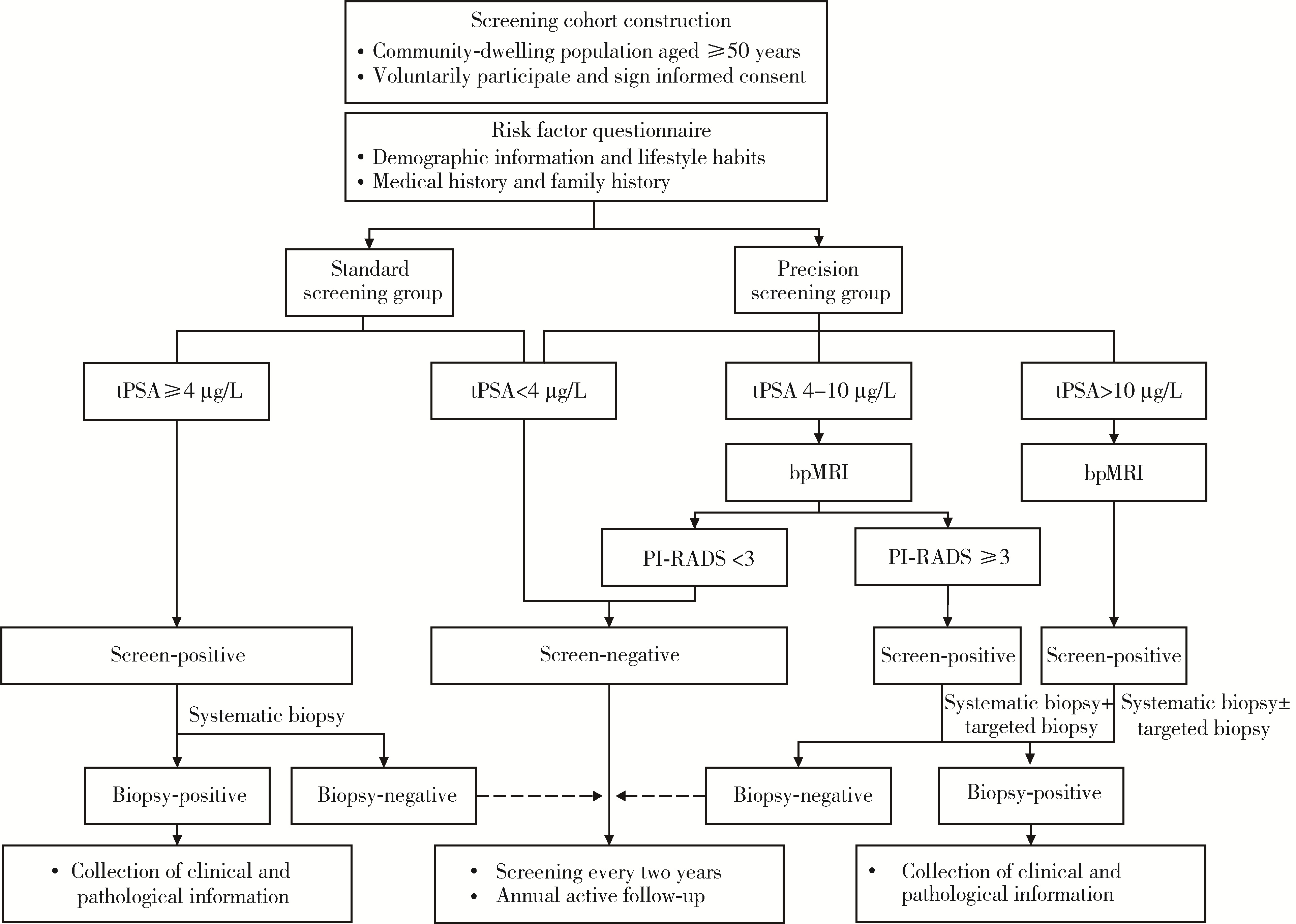
图1

前列腺癌筛查流程图"

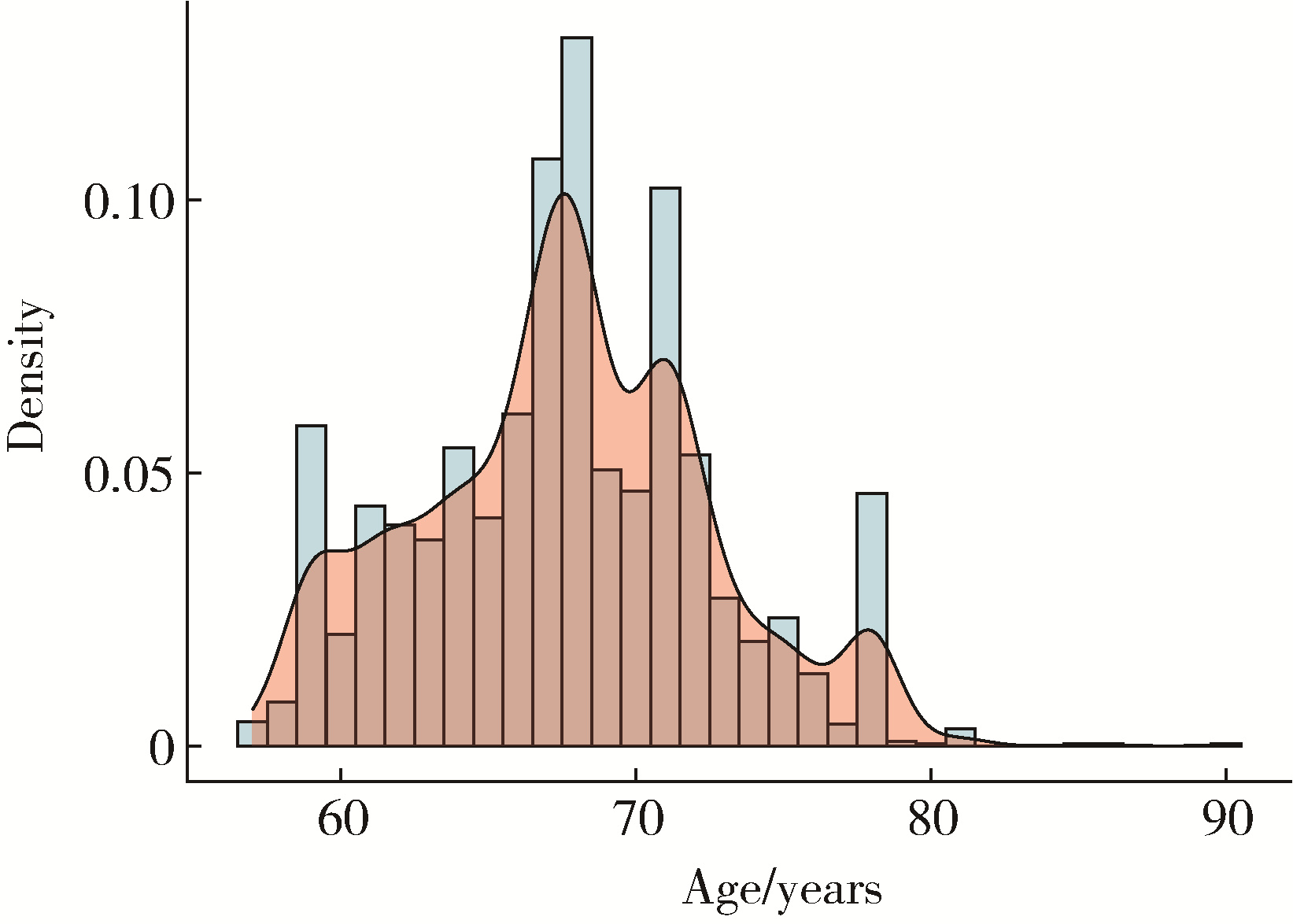
图2

筛查人群的年龄分布及密度曲线"

表1

筛查人群的基线数据"

Variable Total Precision screening group Standard screening group P value
Number of participants 2 251 985 1 266
Age/years,M (P25, P75) 68 (64, 71) 68 (64, 71) 68 (64, 71) 0.666
tPSA/(μg/L), M (P25, P75) 1.32 (0.78, 2.30) 1.34 (0.77, 2.42) 1.31 (0.79, 2.25) 0.814
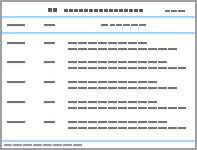
Recommended for biopsy, n(%) 140 (6.2) 29 (2.9) 111 (8.8)
Actual biopsy performed 46 20 26
PCa, n(%) 0.141
  Yes 29 (63.0) 15 (75.0) 14 (53.8)
  No 17 (37.0) 5 (25.0) 12 (46.2)
csPCa, n(%) 0.004
  Yes 21 (45.7) 14 (70.0) 7 (26.9)
  No 25 (54.3) 6 (30.0) 19 (73.1)
PCa detection rate/% 1.29 1.52 1.11 0.384
csPCa detection rate/% 0.93 1.42 0.55 0.033

表2

前列腺癌患者的临床、病理分期和病理分级"

Variable Total Precision screening group Standard screening group P value
PCa, n 29 15 14
ISUP grade 0.012
  1 8 (27.6) 1 (6.7) 7 (50.0)
  2-3 10 (34.5) 5 (33.3) 5 (35.7)
  4-5 11 (37.9) 9 (60.0) 2 (14.3)
Clinical T stage
  T1-T2 17 (58.6) 8 (53.3) 9 (64.3) 0.550
  T3-T4 12 (41.4) 7 (46.7) 5 (35.7)
Clinical N stage
  N0 27 (93.1) 13 (86.7) 14 (100.0) 0.483
  N1 2 (6.9) 2 (13.3) 0 (0)
Clinical M stage
  M0-Mx 27 (93.1) 13 (86.7) 14 (100.0) 0.483
  M1 2 (6.9) 2 (13.3) 0 (0)
Treatment selection, n (%) 0.170
  Radical surgery 21 (72.4) 10 (66.7) 11 (78.6)
  Radiotherapy 1 (3.4) 1 (6.7) 0 (0)
  Active surveillance 4 (13.8) 1 (6.7) 3 (21.4)
  Systemic therapy 3 (10.3) 3 (2.0) 0 (0)
1
Bray F , Laversanne M , Sung H , et al. Global cancer statistics 2022:GLOBOCAN estimates of incidence and mortality worldwide for 36 cancers in 185 countries[J]. CA Cancer J Clin, 2024, 74 (3): 229- 263.
2
李星, 曾晓勇. 中国前列腺癌流行病学研究进展[J]. 肿瘤防治研究, 2021, 48 (1): 98- 102.
3
Zhu Y , Mo M , Wei Y , et al. Epidemiology and genomics of prostate cancer in Asian men[J]. Nat Rev Urol, 2021, 18 (5): 282- 301.

doi: 10.1038/s41585-021-00442-8
4
Liu J , Dong L , Zhu Y , et al. Prostate cancer treatment: China' s perspective[J]. Cancer Lett, 2022, 550, 215927.

doi: 10.1016/j.canlet.2022.215927
5
Chen R , Sjoberg DD , Huang Y , et al. Prostate specific antigen and prostate cancer in Chinese men undergoing initial prostate biopsies compared with western cohorts[J]. J Urol, 2017, 197 (1): 90- 96.

doi: 10.1016/j.juro.2016.08.103
6
Wong MCS , Goggins WB , Wang HHX , et al. Global incidence and mortality for prostate cancer: Analysis of temporal patterns and trends in 36 countries[J]. Eur Urol, 2016, 70 (5): 862- 874.

doi: 10.1016/j.eururo.2016.05.043
7
Stabile A , Giganti F , Rosenkrantz AB , et al. Multiparametric MRI for prostate cancer diagnosis: Current status and future directions[J]. Nat Rev Urol, 2020, 17 (1): 41- 61.

doi: 10.1038/s41585-019-0212-4
8
Robinson D , Abdulkareem R , Nasrollah D , et al. Frequency of biopsy and tumor grade before vs after introduction of prostate magnetic resonance imaging[J]. JAMA Netw Open, 2023, 6 (8): e2330233.

doi: 10.1001/jamanetworkopen.2023.30233
9
Nordstr m T , Discacciati A , Bergman M , et al. Prostate cancer screening using a combination of risk-prediction, MRI, and targeted prostate biopsies (STHLM3-MRI): A prospective, population-based, randomised, open-label, non-inferiority trial[J]. Lancet Oncol, 2021, 22 (9): 1240- 1249.

doi: 10.1016/S1470-2045(21)00348-X
10
梁静, 赵晓智, 时静妍, 等. 南京地区前列腺癌筛查PSA-mpMRI-靶向穿刺模式的初步探索[J]. 中华男科学杂志, 2019, 25 (9): 815- 822.
11
Merriel SWD , Hall R , Walter FM , et al. Systematic review and narrative synthesis of economic evaluations of prostate cancer diagnostic pathways incorporating prebiopsy magnetic resonance imaging[J]. Eur Urol Open Sci, 2023, 52, 123- 134.

doi: 10.1016/j.euros.2023.03.010
12
Ng ABCD , Asif A , Agarwal R , et al. Biparametric vs. multiparametric MRI for prostate cancer diagnosis: The PRIME diagnostic clinical trial[J]. JAMA, 2025, 334 (13): 1170- 1179.

doi: 10.1001/jama.2025.13722
13
Strieder de Oliveira G, Altmayer S, Torri GB, et al. Diagnostic performance of biparametric versus multiparametric magnetic resonance imaging for prostate cancer diagnosis: An updated systematic review and meta-analysis[J/OL]. Eur Urol, 2026[2026-03-01]. https://doi.org/10.1016/j.eururo.2026.01.030.
14
Turkbey B , Rosenkrantz AB , Haider MA , et al. Prostate imaging reporting and data system version 2.1:2019 update of prostate imaging reporting and data system version 2[J]. Eur Urol, 2019, 76 (3): 340- 351.

doi: 10.1016/j.eururo.2019.02.033
15
Epstein JI , Egevad L , Amin MB , et al. The 2014 international society of urological pathology (ISUP) consensus conference on gleason grading of prostatic carcinoma: Definition of grading patterns and proposal for a new grading system[J]. Am J Surg Pathol, 2016, 40 (2): 244- 252.

doi: 10.1097/PAS.0000000000000530
16
Kasivisvanathan V , Rannikko AS , Borghi M , et al. MRI-targeted or standard biopsy for prostate-cancer diagnosis[J]. N Engl J Med, 2018, 378 (19): 1767- 1777.

doi: 10.1056/NEJMoa1801993
17
卢启基, 陈征, 秦晓平, 等. 根治性前列腺切除术后Gleason评分升级的研究进展[J]. 中华泌尿外科杂志, 2020, 41 (12): 953- 956.
18
戴波, 叶定伟, 顾成元, 等. 我国部分省市前列腺癌精准筛查初步结果分析[J]. 中华医学杂志, 2019, 99 (42): 3292- 3297.
19
郑利伟, 宋灵敏, 王钢, 等. 基层医院基于医共体模式下前列腺癌筛查模式的初步探索[J]. 中华泌尿外科杂志, 2024, 45 (6): 416- 419.
20
Roobol MJ , de Vos II , Månsson M , et al. European study of prostate cancer screening; 23-year follow-up[J]. N Engl J Med, 2025, 393 (17): 1669- 1680.

doi: 10.1056/NEJMoa2503223
21
Martin RM , Donovan JL , Turner EL , et al. Effect of a low-intensity PSA-based screening intervention on prostate cancer mortality: The CAP randomized clinical trial[J]. JAMA, 2018, 319 (9): 883- 895.

doi: 10.1001/jama.2018.0154
22
Pinsky PF , Miller E , Prorok P , et al. Extended follow-up for prostate cancer incidence and mortality among participants in the prostate, lung, colorectal and ovarian randomized cancer screening trial[J]. BJU Int, 2019, 123 (5): 854- 860.

doi: 10.1111/bju.14580
23
Schoots IG , Ahmed HU , Albers P , et al. Magnetic resonance imaging-based biopsy strategies in prostate cancer screening: A systematic review[J]. Eur Urol, 2025, 88 (3): 247- 260.

doi: 10.1016/j.eururo.2025.05.038
[1] 谭仲宇, 杜依青, 秦彩朋, 徐涛. 雄激素剥夺治疗对前列腺癌免疫微环境影响的多层级研究[J]. 北京大学学报(医学版), 2026, 58(4): 770-778.
[2] 苏丹丹, 李百顺, 肖若陶, 张帆, 张树栋. 原发灶手术对比放射治疗在寡转移前列腺癌中的疗效:倾向评分匹配研究[J]. 北京大学学报(医学版), 2026, 58(4): 787-793.
[3] 杨明佳, 吴姜雪, 王静, 刘扬, 李忠民, 李静静, 李宏田, 周玉博, 刘建蒙. 2019—2024年以行政辖区小学生人群为基础的近视情况调查[J]. 北京大学学报(医学版), 2026, 58(3): 513-519.
[4] 杨小勇, 张帆, 马潞林, 刘承. 前列腺导管腺癌临床特征及腺外侵犯的影响因素[J]. 北京大学学报(医学版), 2025, 57(5): 956-960.
[5] 刘杰, 马茗微, 王庆安, 石明, 尹金鹏, 王占平, 申静涛, 高献书. 基于锥形束CT的前列腺癌放射治疗两种体位固定方式摆位误差比较[J]. 北京大学学报(医学版), 2025, 57(4): 692-697.
[6] 黄教悌,胡菁,韩博. 治疗相关神经内分泌前列腺癌机制研究与靶向治疗新进展[J]. 北京大学学报(医学版), 2024, 56(4): 557-561.
[7] 邢念增,王明帅,杨飞亚,尹路,韩苏军. 前列腺免活检创新理念的临床实践及其应用前景[J]. 北京大学学报(医学版), 2024, 56(4): 565-566.
[8] 颜野,李小龙,夏海缀,朱学华,张羽婷,张帆,刘可,刘承,马潞林. 前列腺癌根治术后远期膀胱过度活动症的危险因素[J]. 北京大学学报(医学版), 2024, 56(4): 589-593.
[9] 于书慧,韩佳凝,钟丽君,陈聪语,肖云翔,黄燕波,杨洋,车新艳. 术前盆底肌电生理参数对前列腺癌根治性切除术后早期尿失禁的预测价值[J]. 北京大学学报(医学版), 2024, 56(4): 594-599.
[10] 刘圣杰,侯惠民,吕政通,丁鑫,王璐,张磊,刘明. 双极雄激素序贯免疫检查点抑制剂治疗转移性去势抵抗性前列腺癌4例[J]. 北京大学学报(医学版), 2022, 54(4): 766-769.
[11] 王佳敏,刘秋萍,张明露,巩超,刘舒丹,陈暐烨,沈鹏,林鸿波,高培,唐迅. 基于马尔可夫模型的社区人群糖尿病筛查预防心血管病的效果评价[J]. 北京大学学报(医学版), 2022, 54(3): 450-457.
[12] 白杲琛,宋毅,金杰,虞巍,何志嵩. 多西他赛联合卡铂治疗转移性去势抵抗性前列腺癌的临床疗效[J]. 北京大学学报(医学版), 2021, 53(4): 686-691.
[13] 刘秋萍,陈汐瑾,王佳敏,刘晓非,司亚琴,梁靖媛,沈鹏,林鸿波,唐迅,高培. 基于马尔可夫模型的社区人群心血管病筛查策略的效果评价[J]. 北京大学学报(医学版), 2021, 53(3): 460-466.
[14] 徐涛,韩敬丽,姚伟娟. 雄激素剥夺治疗相关心血管疾病的机制与临床对策[J]. 北京大学学报(医学版), 2020, 52(4): 607-609.
[15] 李文卿,任思楣,龙星博,田雨青. 棕榈酰化蛋白质组学分析揭示前列腺癌细胞中雄激素促进代谢相关蛋白棕榈酰化修饰[J]. 北京大学学报(医学版), 2020, 52(2): 227-233.
Viewed
Full text


Abstract

Cited

  Shared   
  Discussed   
No Suggested Reading articles found!