北京大学学报(医学版) ›› 2026, Vol. 58 ›› Issue (4): 770-778. doi: 10.19723/j.issn.1671-167X.2026.04.013

• 论著 • 上一篇    下一篇

雄激素剥夺治疗对前列腺癌免疫微环境影响的多层级研究

谭仲宇, 杜依青, 秦彩朋*(), 徐涛*()   

  1. 北京大学人民医院泌尿外科,北京 100044
  • 收稿日期:2026-03-02 出版日期:2026-08-18 发布日期:2026-05-27
  • 通讯作者: 秦彩朋, 徐涛
  • 基金资助:
    国家自然科学基金(82371840); 北京市自然科学基金(7262134)

A multi-level study of androgen deprivation therapy on the immune microenvironment in prostate cancer

Zhongyu TAN, Yiqing DU, Caipeng QIN*(), Tao XU*()   

  1. Department of Urology, Peking University People' s Hospital, Beijing 100044, China
  • Received:2026-03-02 Online:2026-08-18 Published:2026-05-27
  • Contact: Caipeng QIN, Tao XU
  • Supported by:
    the National Natural Science Foundation of China(82371840); the Beijing Natural Science Foundation(7262134)

RICH HTML


摘要:

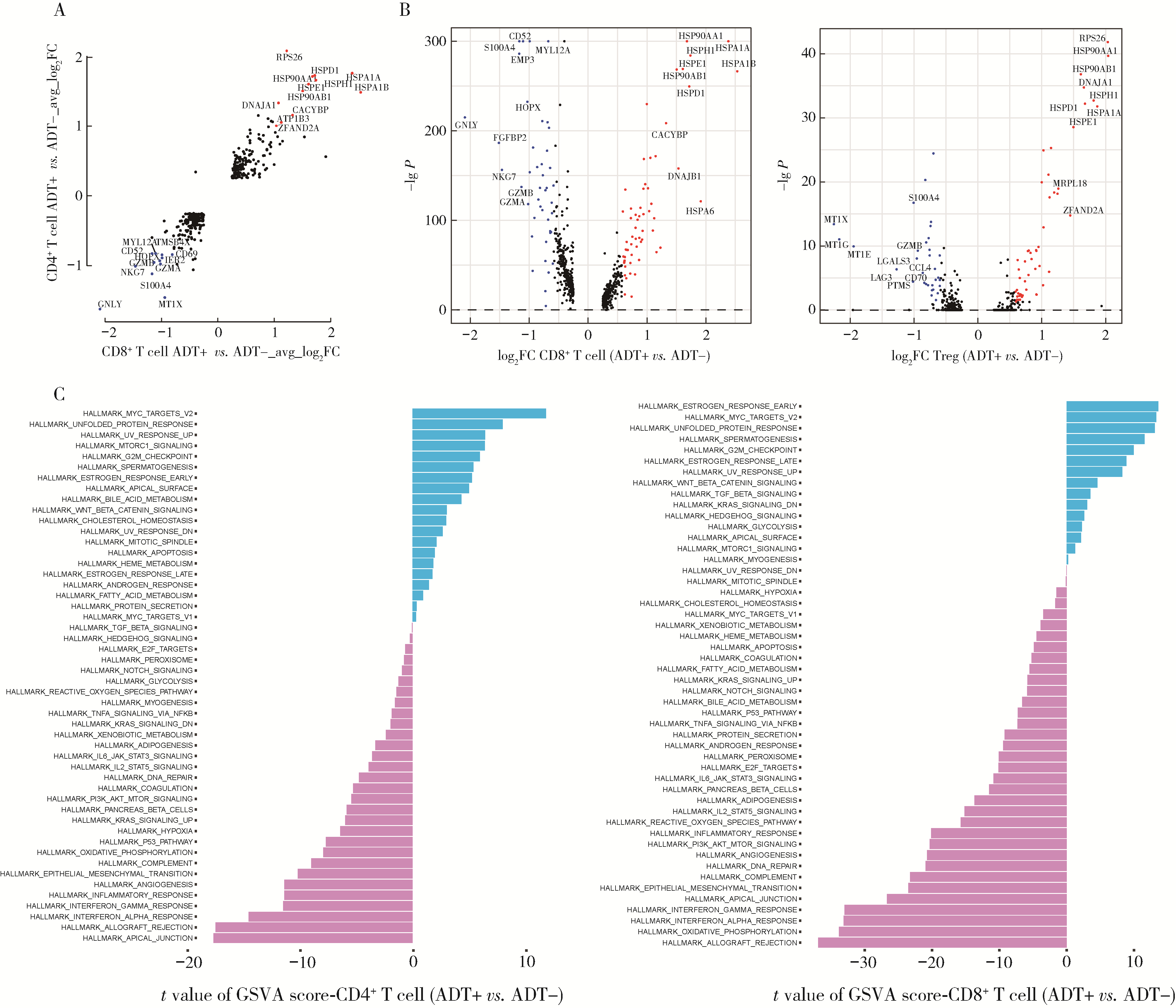
目的: 从免疫水平、动物模型转录组及单细胞组学层面系统评估雄激素剥夺治疗(androgen deprivation therapy,ADT)对前列腺癌免疫微环境的影响,阐明ADT介导的肿瘤免疫重塑特征。方法: 纳入北京大学人民医院接受ADT治疗的前列腺癌患者12例,动态检测血清前列腺特异性抗原(prostate specific antigen,PSA)、睾酮水平、外周血免疫细胞比例与细胞因子表达变化;从基因表达汇编(gene expression omnibus,GEO)数据库下载前列腺癌人源肿瘤异种移植(patient-derived tumor xenograft,PDX)模型去势前后转录组数据(GSE41193,共5例),进行相关生物信息学分析;另对4例前列腺癌组织(2例接受ADT新辅助治疗、2例未接受)行单细胞RNA测序(single-cell RNA sequencing,scRNA-seq),解析肿瘤微环境细胞组成及T细胞功能状态。结果: ADT显著降低患者血清PSA及睾酮水平,但外周血免疫细胞比例及大多数细胞因子无明显影响。PDX模型分析显示, 前列腺癌患者去势后差异表达基因富集于神经相关及免疫调控通路,多种免疫细胞浸润特征呈现趋势性改变。scRNA-seq结果表明, ADT治疗后肿瘤内效应性CD8+T细胞比例下降,GZMAGZMBGNLYNKG7等细胞毒相关基因表达下调,而调节性T细胞(Treg)相对富集。Hallmark通路分析显示干扰素信号通路受到抑制。结论: ADT可诱导前列腺癌肿瘤免疫微环境发生趋势性的改变,表现为T细胞杀伤功能减弱及免疫抑制性细胞富集,提示ADT可能促进抑制性肿瘤免疫微环境(tumor immune microenvironment,TIME)形成,为ADT联合免疫调节治疗策略提供了理论依据。

关键词: 前列腺癌, 雄激素剥夺治疗, 肿瘤免疫微环境

Abstract:

Objective: To systematically evaluate the impact of androgen deprivation therapy (ADT) on the immune microenvironment of prostate cancer at the levels of systemic immunity, animal model transcriptomics, and single-cell omics, and to elucidate the characteristics of ADT-mediated tumor immune remodeling. Methods: Twelve prostate cancer patients who received ADT at Peking University People' s Hospital were enrolled. Dynamic monitoring of serum prostate specific antigen (PSA), testosterone levels, peripheral blood immune cell proportions, and cytokine expression changes was performed. Transcriptomic data from patient-derived tumor xenograft (PDX) models before and after castration (GSE41193, 5 cases in total) were downloaded from the gene expression omnibus (GEO) database for relevant bioinformatics analyses. Single-cell RNA sequencing (scRNA-seq) was performed on 4 prostate cancer tissue samples (2 received neoadjuvant ADT, 2 untreated) to analyze tumor microenvironment cell composition and T-cell functional states. Results: ADT significantly reduced serum PSA and testosterone levels in the patients, but had no significant effect on peripheral blood immune cell proportions or most cytokines. PDX model analysis showed that differentially expressed genes after castration were enriched in neural-related and immune regulation pathways, with trending changes observed in the infiltration characteristics of various immune cells. scRNA-seq results indicated a decreased proportion of intratumoral effector CD8+ T cells after ADT treatment, with downregulated expression of cytotoxicity-related genes, such as GZMA, GZMB, GNLY, and NKG7, while regulatory T cells (Tregs) were relatively enriched. Hallmark pathway analysis revealed suppression of interferon signaling pathways. Conclusion: The preliminary results of this study suggest that ADT can induce a trend of change in the tumor immune microenvironment of prostate cancer, characterized by weakened T-cell killing function and enrichment of immunosuppressive cells. This suggests that ADT may promote the formation of an immunosuppressive tumor immune microenvironment (TIME), providing a theoretical basis for ADT combined with immune-modulating therapeutic strategies.

Key words: Prostate cancer, Androgen deprivation therapy, Tumor immune microenvironment

中图分类号: 

  • R737.25

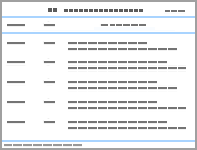
表1

接受ADT治疗患者临床信息"

Case Age/years Baseline PSA/(μg/L) f/t PSA Gleason score Clinical stage
1 79 23.21 0.09 3+4 T4N0M0
2 84 25.64 0.09 4+3 T2N0M0
3 77 68.44 0.05 4+5 T3bN0M0
4 81 18.63 0.07 3+4 T1cN0M0
5 81 9.06 0.14 3+4 T2N0M0
6 77 13.61 0.23 3+3 T1cN0M0
7 64 65.84 0.07 4+3 T2N0M1b
8 80 76.27 0.2 3+4 T2N0M1b
9 64 172.70 0.08 4+3 T4N1M1b
10 83 18.17 0.24 3+3 T2N0M0
11 83 17.86 0.11 4+4 T4N0M0
12 85 15.08 0.08 4+3 T4N0M0

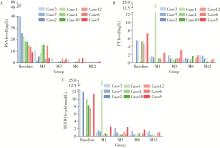
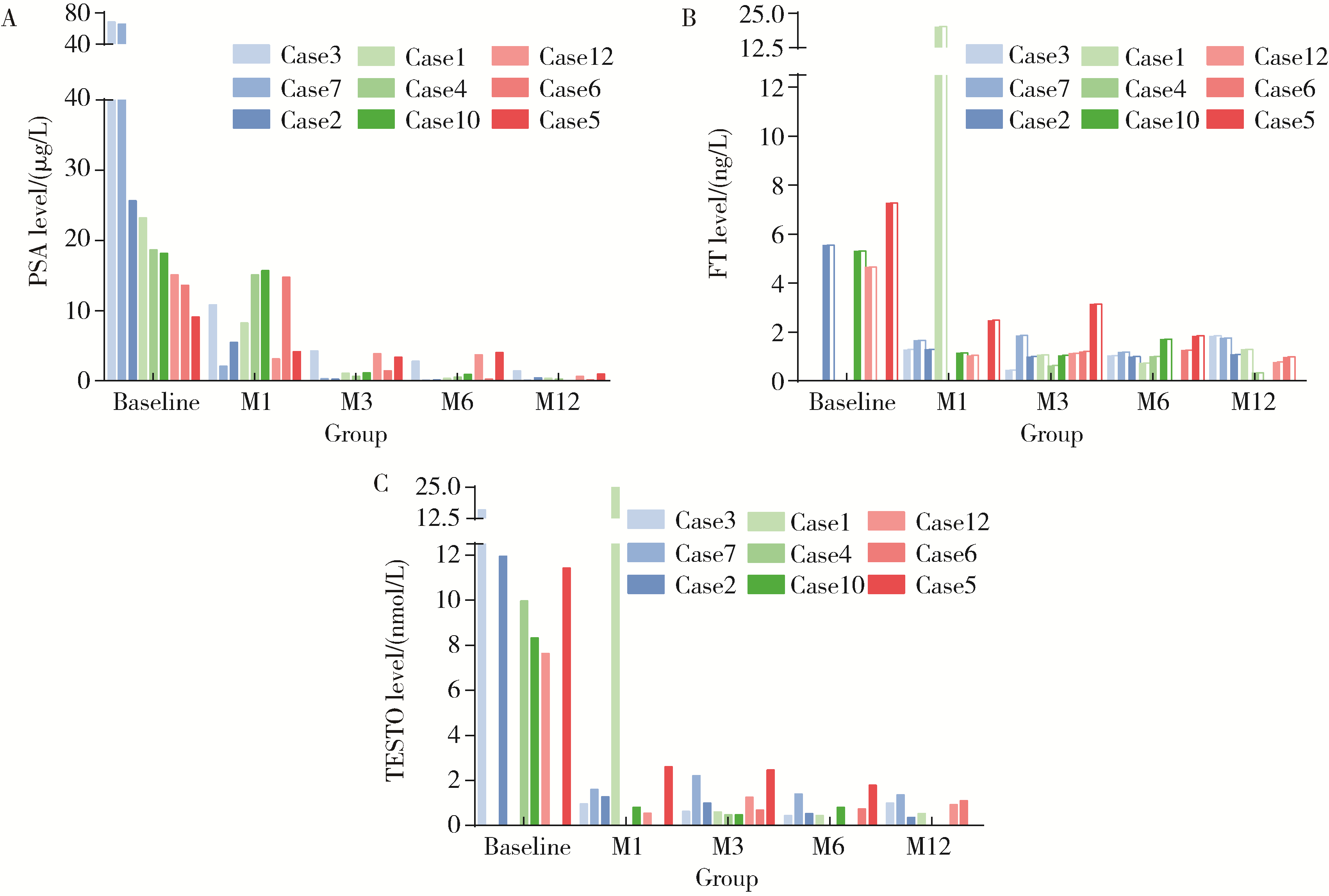
图1

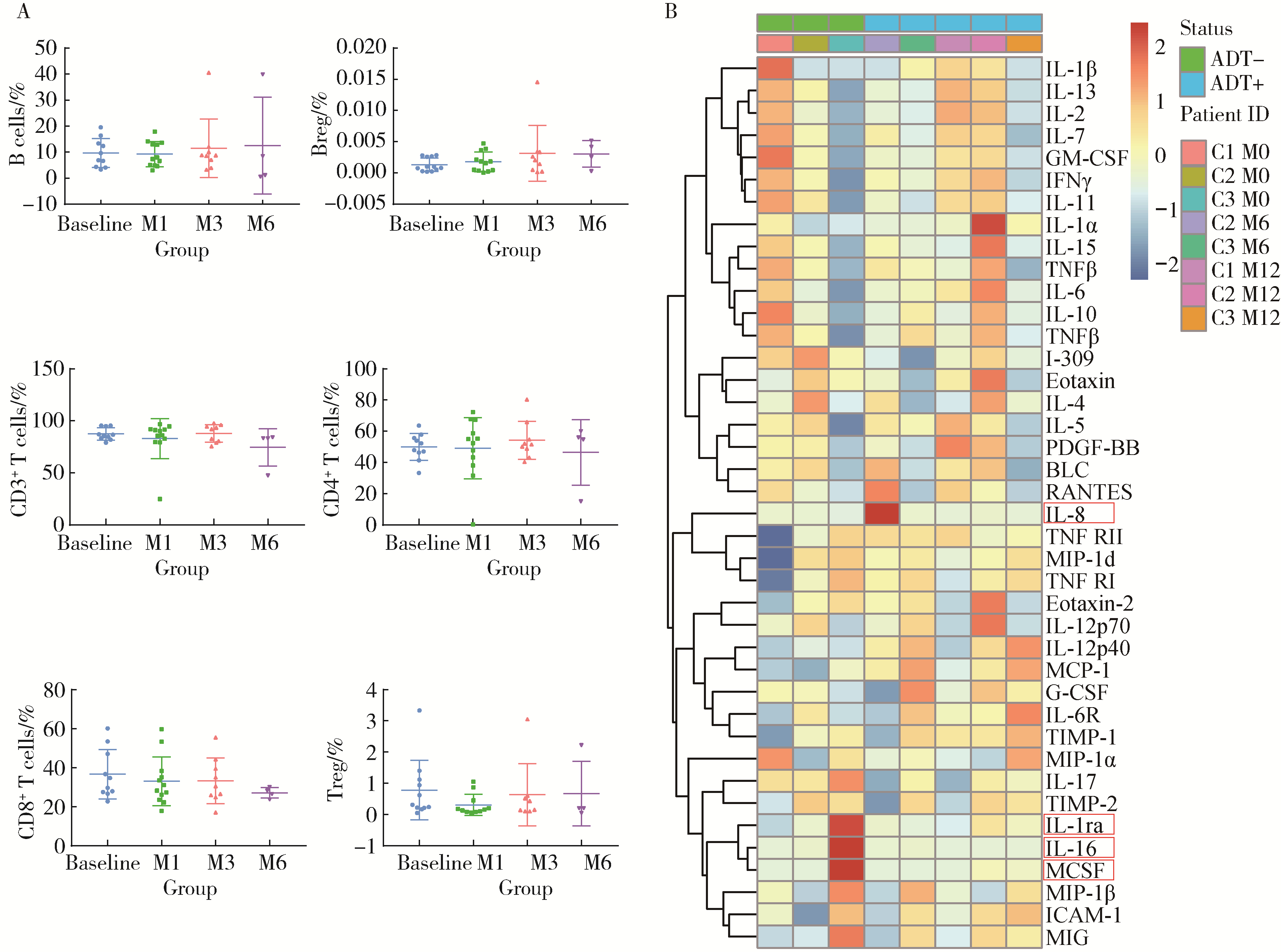
接受ADT治疗的前列腺癌患者血清PSA和雄激素变化趋势"

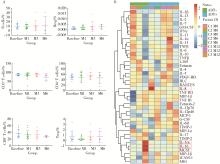
图2

接受ADT治疗的前列腺癌患者外周血免疫细胞及免疫相关因子动态变化"

图3

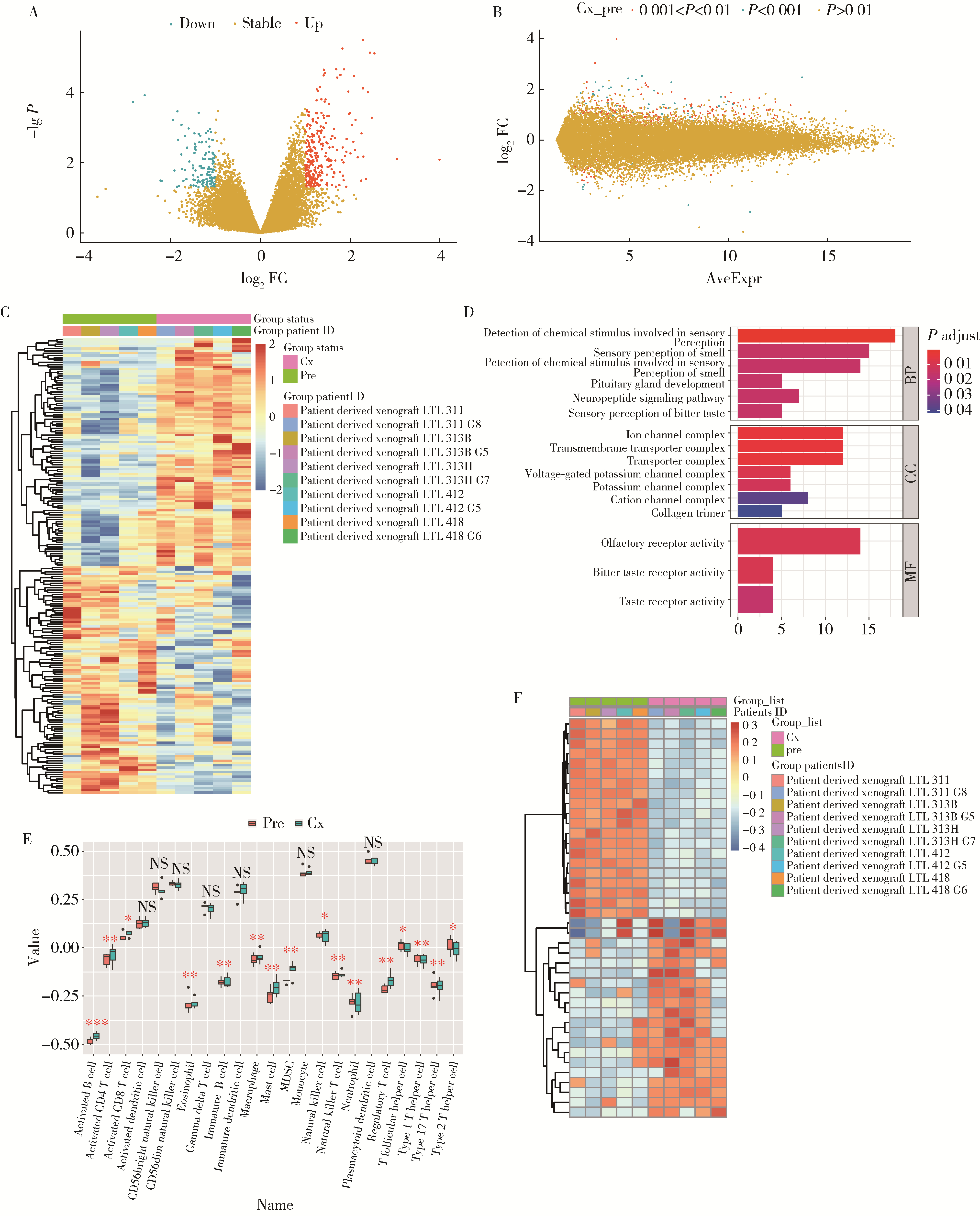
转录组学分析去势对前列腺癌PDX组织基因表达及肿瘤微环境的影响"

图4

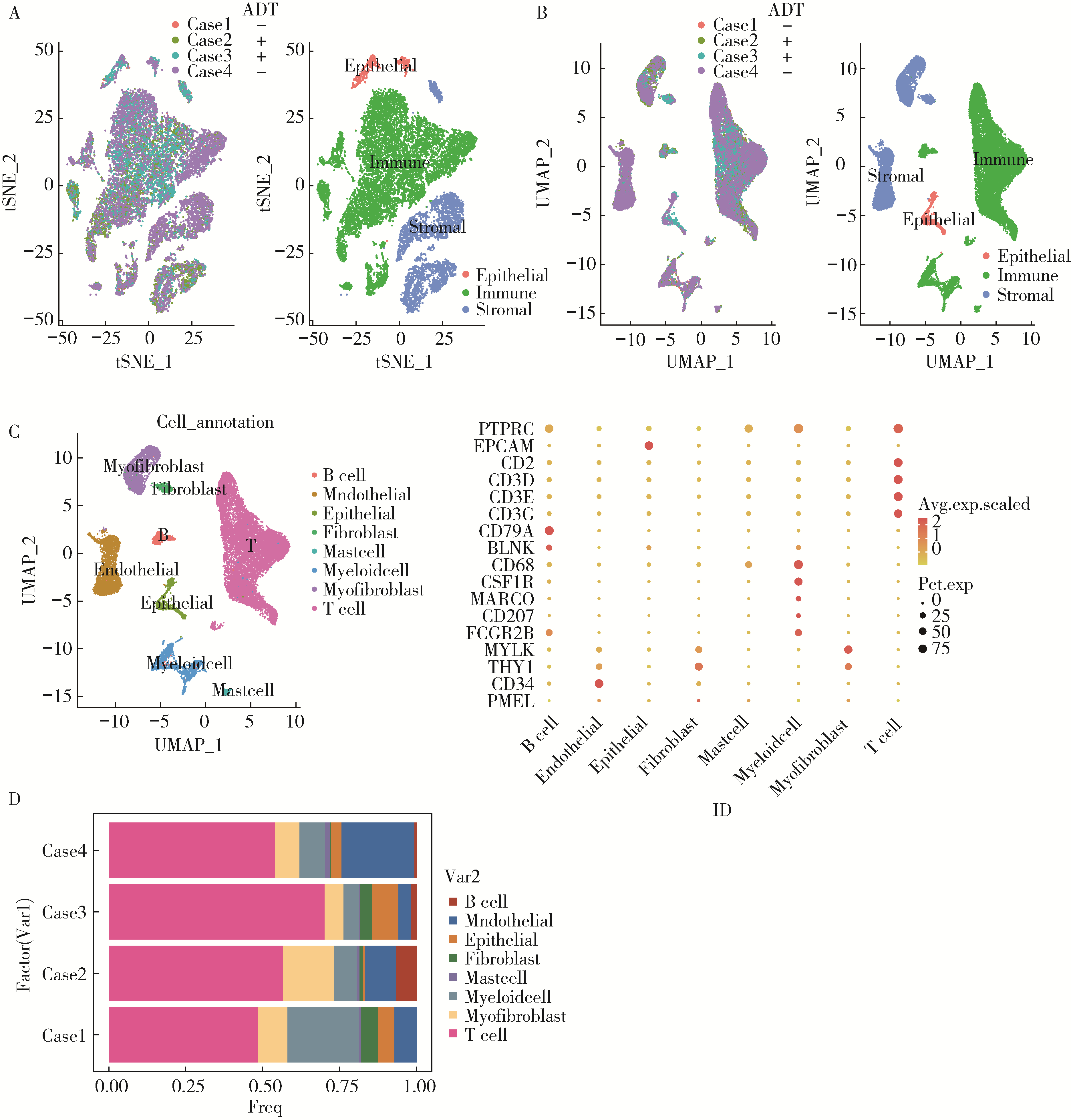
四例前列腺癌组织scRNAseq数据细胞初次分群(两例接受ADT治疗)"

图5

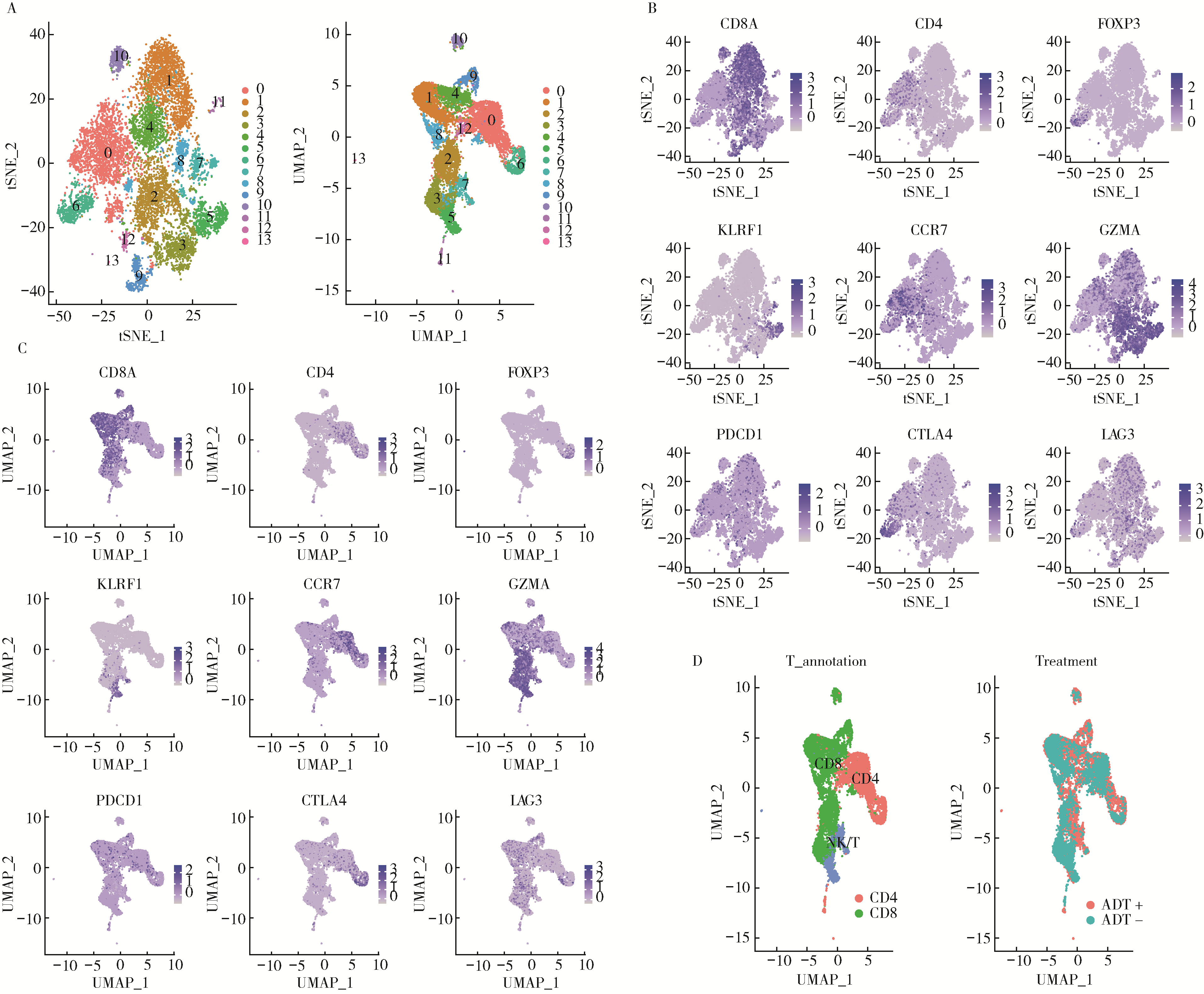
前列腺癌T细胞亚群分群注释"

图6

ADT治疗对T细胞功能的影响"

1
Li M , Bai G , Cen Y , et al. Silencing HOXC13 exerts anti-prostate cancer effects by inducing DNA damage and activating cGAS/STING/IRF3 pathway[J]. J Transl Med, 2023, 21(1): 884.

doi: 10.1186/s12967-023-04743-x
2
Kumar A , Reddy A , Sekar A . Enzalutamide induced non-ischemic cardiomyopathy. A case report and review of literature on anti-androgen therapy-related cardiovascular events[J]. Cardio Oncol, 2023, 9(1): 9.

doi: 10.1186/s40959-023-00160-7
3
Liu Y , Shi Y , Cao Y , et al. Development of a metabolism-associated prognostic risk model based on immune landscape stratification in prostate cancer[J]. Discov Oncol, 2025, 16(1): 1733.

doi: 10.1007/s12672-025-03269-6
4
Zhao D , Mo Z , Zhang T , et al. Lactate derived from cancer-associated fibroblasts promotes alternative splicing and castration resistance in prostate cancer[J]. Sci Adv, 2026, 12(3): eady5324.

doi: 10.1126/sciadv.ady5324
5
Liu L , Rascón IA , Lin D , et al. CXCR4-LASP1-G9a-SNAIL axis drives NEPC transdifferentiation via induction of EMT and downregulation of REST[J]. Cell Genom, 2025, 5(8): 100916.

doi: 10.1016/j.xgen.2025.100916
6
Dallos MC , Obradovic AZ , McCann P , et al. Androgen deprivation therapy drives a distinct immune phenotype in localized prostate cancer[J]. Clin Cancer Res, 2024, 30(22): 5218- 5230.

doi: 10.1158/1078-0432.CCR-24-0060
7
Cobos FA , Panah MJN , Epps J , et al. Effective methods for bulk RNA-seq deconvolution using scnRNA-seq transcriptomes[J]. Genome Biol, 2023, 24(1): 177.

doi: 10.1186/s13059-023-03016-6
8
Wang H , Huang H , Liu T , et al. Peripheral blood lymphocyte subsets predict the efficacy of TACE with or without PD-1 inhibitors in patients with hepatocellular carcinoma: A prospective clinical study[J]. Front Immunol, 2024, 15, 1325330.

doi: 10.3389/fimmu.2024.1325330
9
Venkadakrishnan VB , Presser AG , Singh R , et al. Lineage-specific canonical and non-canonical activity of EZH2 in advanced prostate cancer subtypes[J]. Nat Commun, 2024, 15, 6779.

doi: 10.1038/s41467-024-51156-5
10
Guan X , Polesso F , Wang C , et al. Androgen receptor activity in T cells limits checkpoint blockade efficacy[J]. Nature, 2022, 606(7915): 791- 796.

doi: 10.1038/s41586-022-04522-6
11
Izumi K , Mizokami A . Suppressive role of androgen/androgen receptor signaling via chemokines on prostate cancer cells[J]. J Clin Med, 2019, 8(3): 354.

doi: 10.3390/jcm8030354
12
Wen R , Huang X , Long J , et al. Advances in traditional Chinese herbal medicine and their pharmacodynamic mechanisms in cancer immunoregulation: A narrative review[J]. Transl Cancer Res, 2024, 13(2): 1166- 1187.

doi: 10.21037/tcr-23-1983
13
Lin Y , Jin H , She Y , et al. CBX2 suppresses interferon signaling to diminish tumor immunogenicity via a noncanonical corepressor complex[J]. Proc Natl Acad Sci USA, 2025, 122(5): e2417529122.

doi: 10.1073/pnas.2417529122
14
Klawon DEJ , Pagane N , Walker MT , et al. Regulatory T cells constrain T cells of shared specificity to enforce tolerance during infection[J]. Science, 2025, 387(6740): eadk3248.

doi: 10.1126/science.adk3248
[1] 阮明健, 曹煜东, 马金超, 林晨, 王硕, 杜鹏. 基于双参数磁共振成像联合前列腺特异性抗原的前列腺癌筛查模式在中国人群中的可行性与临床价值[J]. 北京大学学报(医学版), 2026, 58(4): 779-786.
[2] 苏丹丹, 李百顺, 肖若陶, 张帆, 张树栋. 原发灶手术对比放射治疗在寡转移前列腺癌中的疗效:倾向评分匹配研究[J]. 北京大学学报(医学版), 2026, 58(4): 787-793.
[3] 杨小勇, 张帆, 马潞林, 刘承. 前列腺导管腺癌临床特征及腺外侵犯的影响因素[J]. 北京大学学报(医学版), 2025, 57(5): 956-960.
[4] 刘杰, 马茗微, 王庆安, 石明, 尹金鹏, 王占平, 申静涛, 高献书. 基于锥形束CT的前列腺癌放射治疗两种体位固定方式摆位误差比较[J]. 北京大学学报(医学版), 2025, 57(4): 692-697.
[5] 于书慧,韩佳凝,钟丽君,陈聪语,肖云翔,黄燕波,杨洋,车新艳. 术前盆底肌电生理参数对前列腺癌根治性切除术后早期尿失禁的预测价值[J]. 北京大学学报(医学版), 2024, 56(4): 594-599.
[6] 颜野,李小龙,夏海缀,朱学华,张羽婷,张帆,刘可,刘承,马潞林. 前列腺癌根治术后远期膀胱过度活动症的危险因素[J]. 北京大学学报(医学版), 2024, 56(4): 589-593.
[7] 邢念增,王明帅,杨飞亚,尹路,韩苏军. 前列腺免活检创新理念的临床实践及其应用前景[J]. 北京大学学报(医学版), 2024, 56(4): 565-566.
[8] 黄教悌,胡菁,韩博. 治疗相关神经内分泌前列腺癌机制研究与靶向治疗新进展[J]. 北京大学学报(医学版), 2024, 56(4): 557-561.
[9] 刘圣杰,侯惠民,吕政通,丁鑫,王璐,张磊,刘明. 双极雄激素序贯免疫检查点抑制剂治疗转移性去势抵抗性前列腺癌4例[J]. 北京大学学报(医学版), 2022, 54(4): 766-769.
[10] 白杲琛,宋毅,金杰,虞巍,何志嵩. 多西他赛联合卡铂治疗转移性去势抵抗性前列腺癌的临床疗效[J]. 北京大学学报(医学版), 2021, 53(4): 686-691.
[11] 徐涛,韩敬丽,姚伟娟. 雄激素剥夺治疗相关心血管疾病的机制与临床对策[J]. 北京大学学报(医学版), 2020, 52(4): 607-609.
[12] 孙奎霞,闫存玲,李志艳,刘平,张伟,何群. 前列腺特异性抗原同源异构体2及其衍生指标在预测前列腺癌病理分级中的价值[J]. 北京大学学报(医学版), 2020, 52(2): 234-239.
[13] 李文卿,任思楣,龙星博,田雨青. 棕榈酰化蛋白质组学分析揭示前列腺癌细胞中雄激素促进代谢相关蛋白棕榈酰化修饰[J]. 北京大学学报(医学版), 2020, 52(2): 227-233.
[14] 张宽根,周雨禾,邵雅昆,梅放,由江峰,刘北英,裴斐. 肿瘤转移抑制基因LASS2/TMSG1 S248A突变体通过增加ATP6V0C表达促进前列腺癌的侵袭[J]. 北京大学学报(医学版), 2019, 51(2): 210-220.
[15] 唐旭,赵卫红,宋琴琴,殷华奇,杜依青,盛正祚,王强,张晓威,李清,刘士军,徐涛. SOX10对前列腺癌细胞增殖及侵袭的影响[J]. 北京大学学报(医学版), 2018, 50(4): 602-606.
Viewed
Full text


Abstract

Cited

  Shared   
  Discussed   
No Suggested Reading articles found!