北京大学学报(医学版) ›› 2024, Vol. 56 ›› Issue (4): 589-593. doi: 10.19723/j.issn.1671-167X.2024.04.007
前列腺癌根治术后远期膀胱过度活动症的危险因素
颜野,李小龙,夏海缀,朱学华,张羽婷,张帆,刘可,刘承*( ),马潞林*()
- 北京大学第三医院泌尿外科,北京 100191
Analysis of risk factors for long-term overactive bladder after radical prostatectomy
Ye YAN,Xiaolong LI,Haizhui XIA,Xuehua ZHU,Yuting ZHANG,Fan ZHANG,Ke LIU,Cheng LIU*(),Lulin MA*()
- Department of Urology, Peking University Third Hospital, Beijing 100191, China
摘要:
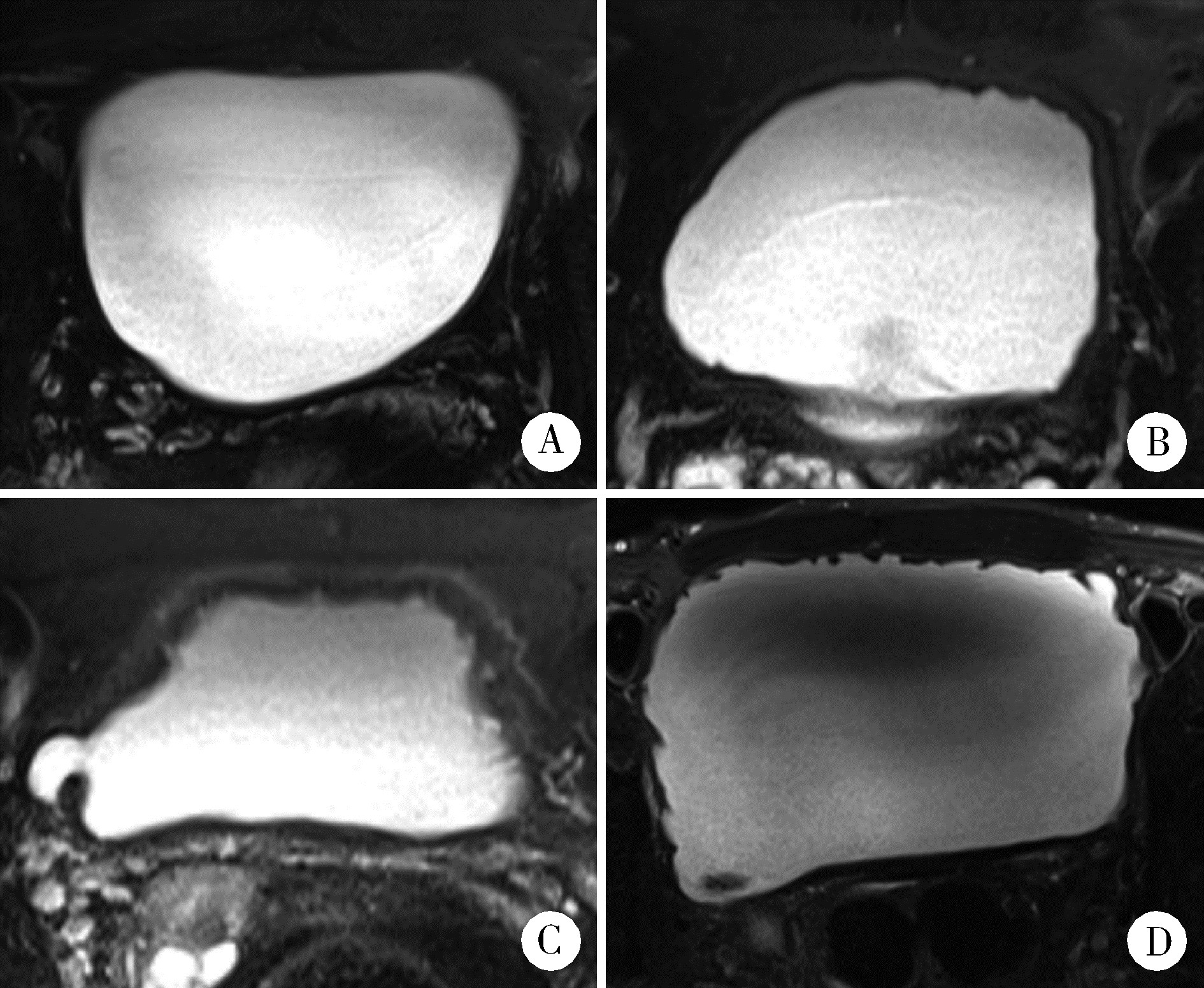
目的: 分析前列腺癌根治术后膀胱过度活动症(overactive bladder, OAB)的发生及转归情况,并探讨其相关危险因素。方法: 选择北京大学第三医院2013年1月至2017年5月住院接受根治性前列腺切除术的263例患者进行回顾性研究,分析并收集患者临床基线信息、计算影像特征、围术期参数、术前患者尿控情况、病理学诊断与术后1年内OAB发生情况的相关性。在影像特征中,定义膀胱壁厚度(bladder wall thickness, BWT)和膀胱黏膜光滑程度(bladder mucosal smoothness, BMS)两个参数,用于预测OAB的发生情况。结果: 263例前列腺癌根治术后患者中,术后1年存在OAB状态者共52例,占所有患者的19.8%。术前既往存在OAB症状者40例,术后缓解者17例(42.5%),症状持续者23例(57.5 %);术后新发OAB者29例,占术后所有OAB患者的55.77%。单因素分析显示膀胱壁厚度、膀胱黏膜光滑程度、膀胱过度活动症状评分和国际前列腺症状评分均与术后OAB的发生相关。进一步多因素分析发现,BMS是远期OAB的独立危险因素(P < 0.001)。结论: 根治性前列腺切除术后远期膀胱过度活动症是临床常见的并发症,通过术前磁共振成像测量充盈状态下膀胱壁厚度或膀胱黏膜光滑程度,可以预测根治术后OAB的发生风险。
中图分类号:
- R737.25
| 1 |
Abrams P , Cardozo L , Fall M , et al. The standardisation of terminology of lower urinary tract function: Report from the standardisation sub-committee of the international continence society[J]. Neurourol Urodyn, 2002, 21 (2): 167- 178.
doi: 10.1002/nau.10052 |
| 2 |
Porena M , Mearini E , Mearini L , et al. Voiding dysfunction after radical retropubic prostatectomy: More than external urethral sphincter deficiency[J]. Eur Urol, 2007, 52 (1): 38- 45.
doi: 10.1016/j.eururo.2007.03.051 |
| 3 |
Matsukawa Y , Yoshino Y , Ishida S , et al. De novo overactive bladder after robot-assisted laparoscopic radical prostatectomy[J]. Neurourol Urodyn, 2018, 37 (6): 2008- 2014.
doi: 10.1002/nau.23556 |
| 4 |
Hosier GW , Tennankore KK , Himmelman JG , et al. Overactive bladder and storage lower urinary tract symptoms following radical prostatectomy[J]. Urology, 2016, 94, 193- 197.
doi: 10.1016/j.urology.2016.05.007 |
| 5 |
Thiruchelvam N , Cruz F , Kirby M , et al. A review of detrusor overactivity and the overactive bladder after radical prostate cancer treatment[J]. BJU Int, 2015, 116 (6): 853- 861.
doi: 10.1111/bju.13078 |
| 6 |
Ventimiglia B , Sigona M , Di Dio A , et al. Urinary incontinence and neuropathy after radical prostatectomy: Diagnosis and treatment[J]. Urologia, 2015, 82 (1): 42- 45.
doi: 10.5301/uro.5000064 |
| 7 | Chung DE , Dillon B , Kurta J , et al. Detrusor underactivity is prevalent after radical prostatectomy: A urodynamic study including risk factors[J]. Can Urol Assoc J, 2013, 7 (1/2): E33- E37. |
| 8 |
Giannantoni A , Mearini E , Zucchi A , et al. Bladder and urethral sphincter function after radical retropubic prostatectomy: A prospective long-term study[J]. Eur Urol, 2008, 54 (3): 657- 664.
doi: 10.1016/j.eururo.2007.10.054 |
| 9 |
Leach GE , Trockman B , Wong A , et al. Post-prostatectomy incontinence: Urodynamic findings and treatment outcomes[J]. J Urol, 1996, 155 (4): 1256- 1259.
doi: 10.1016/S0022-5347(01)66235-9 |
| 10 |
Haga N , Ogawa S , Yabe M , et al. Association between postoperative pelvic anatomic features on magnetic resonance imaging and lower tract urinary symptoms after radical prostatectomy[J]. Urology, 2014, 84 (3): 642- 649.
doi: 10.1016/j.urology.2014.04.044 |
| 11 |
Dubbelman Y , Groen J , Wildhagen M , et al. Quantification of changes in detrusor function and pressure-flow parameters after radical prostatectomy: Relation to postoperative continence status and the impact of intensity of pelvic floor muscle exercises[J]. Neurourol Urodyn, 2012, 31 (5): 637- 641.
doi: 10.1002/nau.21199 |
| 12 |
Groutz A , Blaivas JG , Chaikin DC , et al. The pathophysiology of post-radical prostatectomy incontinence: A clinical and video urodynamic study[J]. J Urol, 2000, 163 (6): 1767- 1770.
doi: 10.1016/S0022-5347(05)67538-6 |
| [1] | 王楠楠, 袁大晋, 朱昱冰, 丁磊. 结直肠癌根治术后肝转移风险多中心列线图预测模型的构建与验证[J]. 北京大学学报(医学版), 2026, 58(2): 290-300. |
| [2] | 魏慧, 张警丰, 姚中强, 赵金霞. 类风湿关节炎合并慢性病贫血患者的临床特征及相关因素[J]. 北京大学学报(医学版), 2026, 58(2): 307-312. |
| [3] | 赵杰, 付春, 赵秀娟, 薛海岩, 李纾, 王振洲, 朱凤雪. 胸部创伤患者在重症监护病房内发生呼吸机相关性肺炎的危险因素[J]. 北京大学学报(医学版), 2026, 58(2): 351-358. |
| [4] | 郭芷均, 俎明, 马超, 张贺军, 张静, 丁士刚. 同时性多发早期胃癌漏诊病灶的临床病理特征[J]. 北京大学学报(医学版), 2026, 58(2): 410-415. |
| [5] | 李博闻, 张强, 孙益鑫. 儿童及青年漏斗胸患者Nuss术后发生脊柱侧弯的风险预测模型建立及验证[J]. 北京大学学报(医学版), 2025, 57(5): 941-946. |
| [6] | 杨小勇, 张帆, 马潞林, 刘承. 前列腺导管腺癌临床特征及腺外侵犯的影响因素[J]. 北京大学学报(医学版), 2025, 57(5): 956-960. |
| [7] | 刘杰, 马茗微, 王庆安, 石明, 尹金鹏, 王占平, 申静涛, 高献书. 基于锥形束CT的前列腺癌放射治疗两种体位固定方式摆位误差比较[J]. 北京大学学报(医学版), 2025, 57(4): 692-697. |
| [8] | 刘伟, 郭稳, 过哲, 李春艳, 李云龙, 刘思奇, 张亮, 宋慧. 痛风患者放射学阴性骨侵蚀的相关危险因素[J]. 北京大学学报(医学版), 2025, 57(4): 735-739. |
| [9] | 陆梦溪, 刘秋萍, 周恬静, 刘晓非, 孙烨祥, 沈鹏, 林鸿波, 唐迅, 高培. 基于社区人群队列的甘油三酯-葡萄糖指数与心血管病发病和死亡的关联[J]. 北京大学学报(医学版), 2025, 57(3): 430-435. |
| [10] | 杨龙傲, 金旭, 黄文初, 何丽华, 陈娟. 视屏作业人员视疲劳及干眼的流行病学调查[J]. 北京大学学报(医学版), 2025, 57(3): 554-561. |
| [11] | 王文琼, 侯玉珂, 李春, 张学武. 系统性红斑狼疮患者不良妊娠结局的预测因素[J]. 北京大学学报(医学版), 2025, 57(3): 599-603. |
| [12] | 郭华秋, 王哲, 杨雪, 白洁. 口腔急诊出血患者的临床特征与危险因素[J]. 北京大学学报(医学版), 2025, 57(1): 142-147. |
| [13] | 邓敏婷, 王楠, 夏斌, 赵玉鸣, 朱俊霞. 儿童及青少年挫入恒前牙自行再萌出的相关影响因素[J]. 北京大学学报(医学版), 2025, 57(1): 148-153. |
| [14] | 李钰锴, 王红彦, 罗靓, 李云, 李春. 抗磷脂抗体在白塞病合并血栓中的临床意义[J]. 北京大学学报(医学版), 2024, 56(6): 1036-1040. |
| [15] | 田杨, 韩永正, 李娇, 王明亚, 曲音音, 房景超, 金辉, 李民, 王军, 徐懋, 王圣林, 郭向阳. 颈椎前路手术后硬膜外血肿的发生率和危险因素[J]. 北京大学学报(医学版), 2024, 56(6): 1058-1064. |
|
||
