北京大学学报(医学版) ›› 2026, Vol. 58 ›› Issue (3): 503-512. doi: 10.19723/j.issn.1671-167X.2026.03.009

• 论著 • 上一篇    下一篇

中国育龄女性围孕期冷热暴露与先天性心脏病发病风险的关联

徐慧颖1, 何兴侯1, 黄薇1,*(), 张彬1, 李梦瑶1, 刘家辉1, 方言1, 赵二璐1, 魏相睿1, 马旭2, 杨英2,*()   

  1. 1. 北京大学公共卫生学院劳动卫生与环境卫生学系,北京 100191
    2. 国家卫生健康委科学技术研究所,北京 100081
  • 收稿日期:2026-01-22 出版日期:2026-06-18 发布日期:2026-04-24
  • 通讯作者: 黄薇, 杨英
  • 基金资助:
    国家自然科学基金(82273589); 国家重点研发计划(2016YFC1000307); 北京市自然科学基金(7222246)

Association between periconception maternal cold and heat exposure and the risk of congenital heart disease in offspring in China

Huiying XU1, Xinghou HE1, Wei HUANG1,*(), Bin ZHANG1, Mengyao LI1, Jiahui LIU1, Yan FANG1, Erlu ZHAO1, Xiangrui WEI1, Xu MA2, Ying YANG2,*()   

  1. 1. Department of Occupational and Environmental Health, Peking University School of Public Health, Beijing 100191, China
    2. Institute of Science and Technology, National Health Commission, Beijing 100081, China
  • Received:2026-01-22 Online:2026-06-18 Published:2026-04-24
  • Contact: Wei HUANG, Ying YANG
  • Supported by:
    the National Natural Science Foundation of China(82273589); National Key Research and Development Program of China(2016YFC1000307); Beijing Natural Science Foundation(7222246)

RICH HTML


摘要:

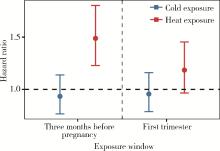
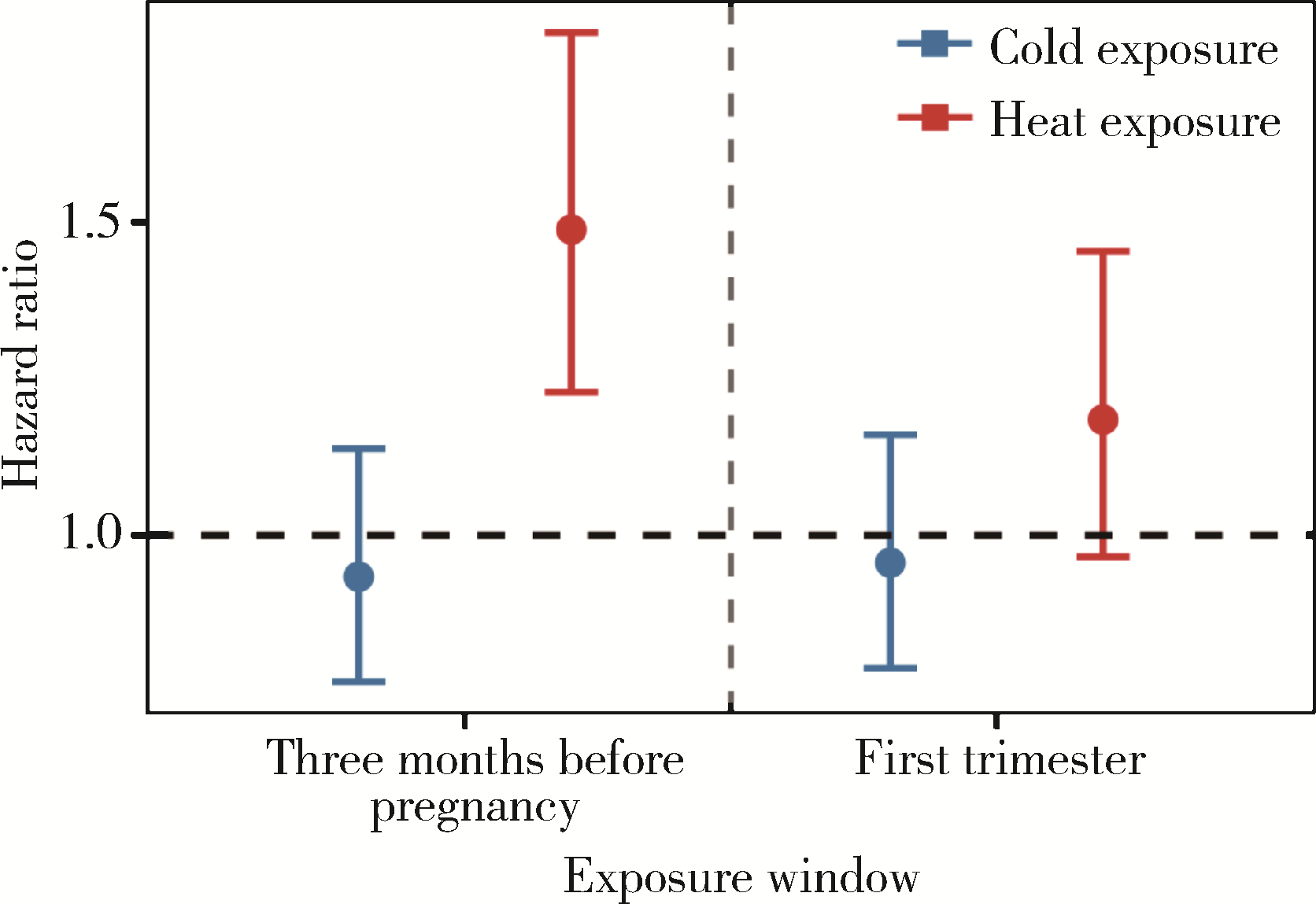
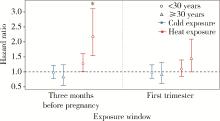
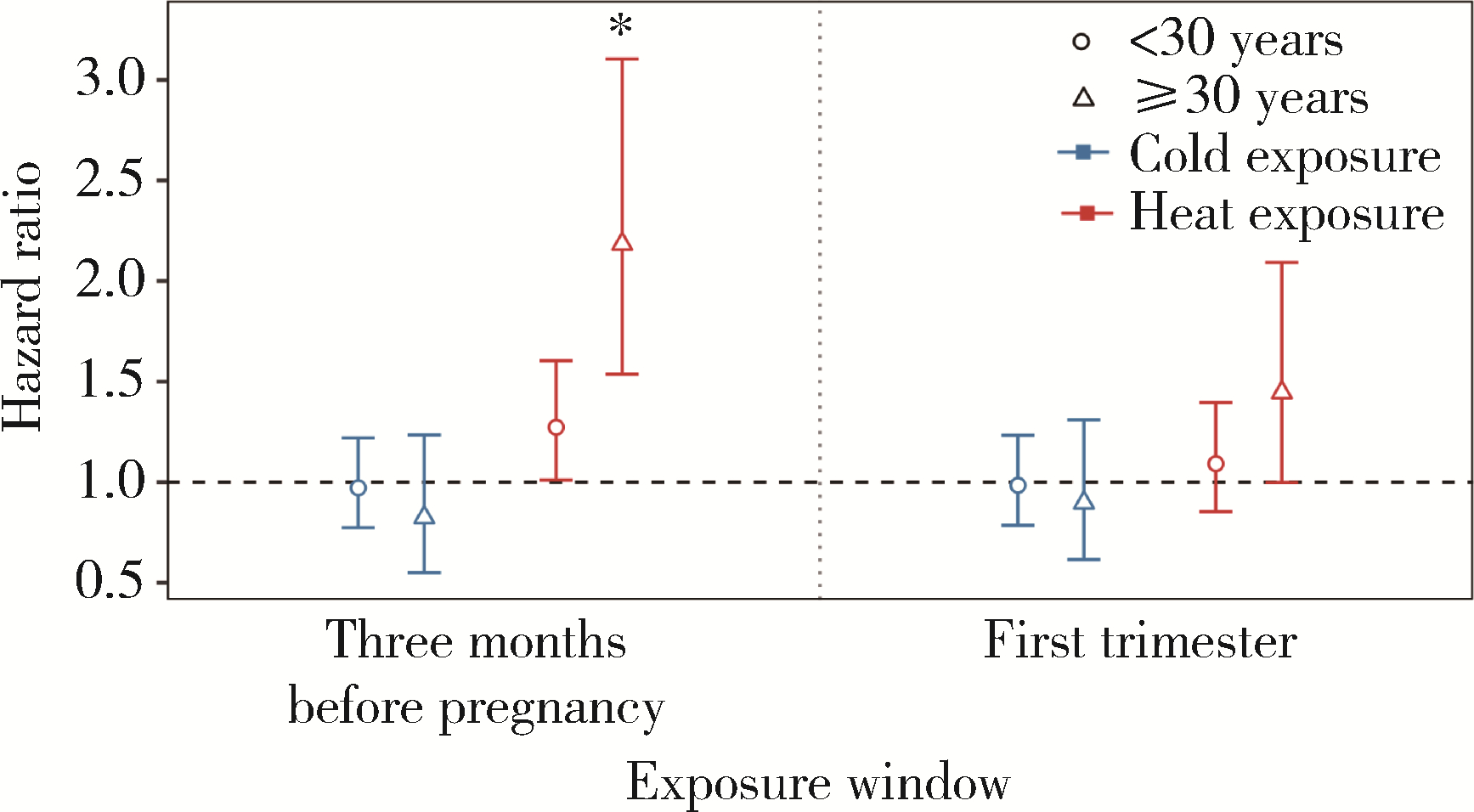
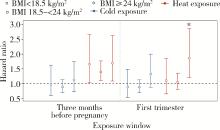
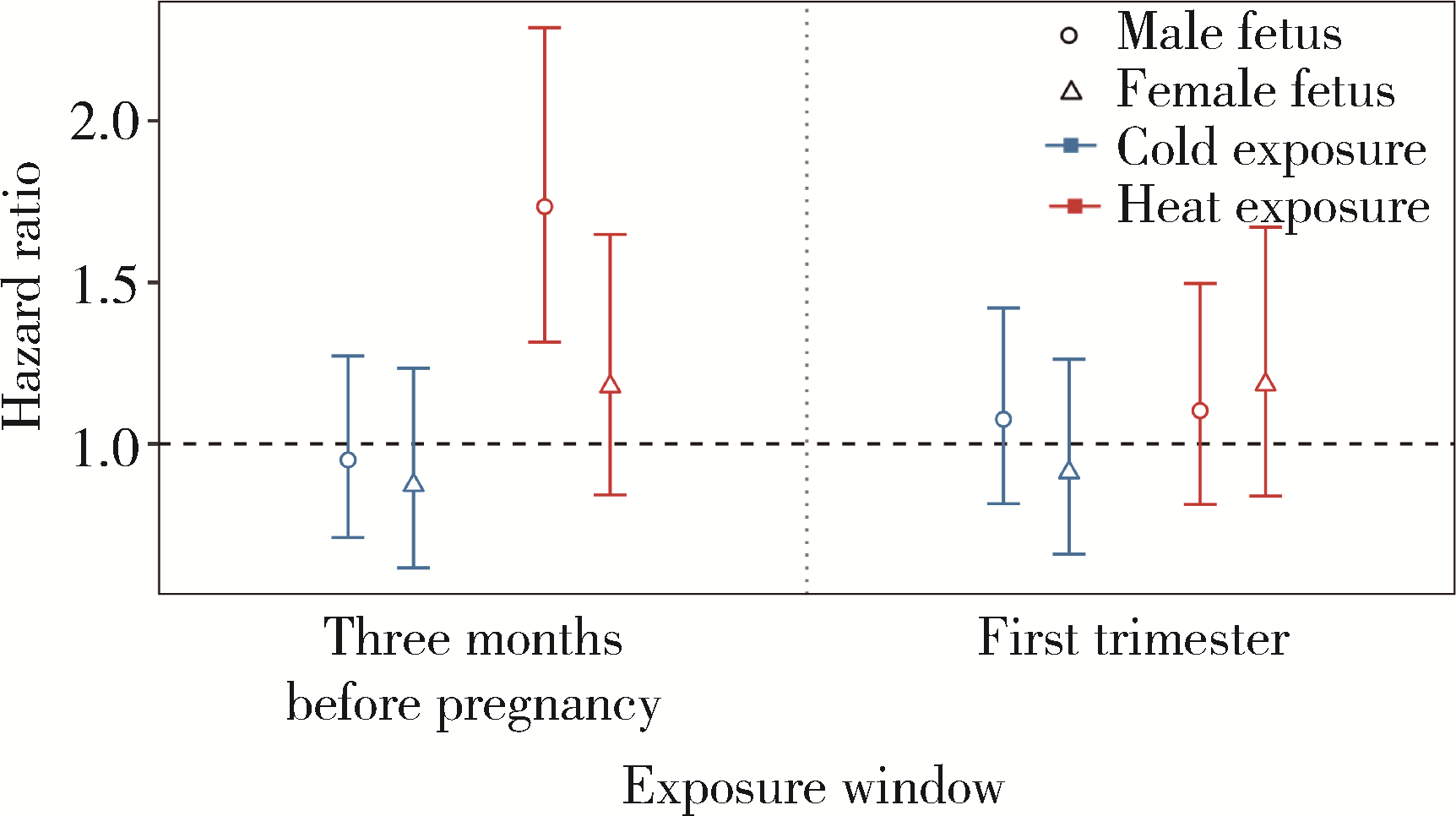
目的: 系统评估母亲在孕前3个月及孕早期冷热暴露对子代先天性心脏病发病风险的影响,并识别潜在的暴露敏感窗口及影响因素。方法: 研究对象为2014年1月1日至2020年4月21日纳入国家免费孕前优生健康检查项目队列中20~49岁有完整妊娠结局追踪的女性。气象数据来源于欧洲中期天气预报中心第五代再分析数据集,根据研究对象居住地匹配孕期温度。为反映区域热适应性,冷热暴露采用相对阈值法定义:依据气候带对研究人群进行分层,计算每位个体在特定暴露时间窗内的平均温度;热暴露定义为该温度高于其所在气候带所有个体温度分布的第90百分位数;冷暴露则定义为低于第10百分位数。采用Cox比例风险模型分析孕前3个月及孕早期冷热暴露与先天性心脏病发病风险的关联,校正母亲年龄、体重指数(body mass index, BMI)、教育水平、地理区域、受孕季节、相对湿度等混杂因素后计算风险比(hazard ratio, HR)及其95%置信区间(confidence interval, CI)。通过分层分析探讨年龄、体重指数、胎儿性别因素对冷热暴露与先天性心脏病发病风险关联的影响。结果: 共纳入6 322 635例20~49岁有完整妊娠结局追踪的女性,其子代共确诊先天性心脏病1 478例。分析显示,在孕前3个月,热暴露与子代先天性心脏病发病风险升高显著相关(HR=1.49,95%CI:1.23~1.80);而孕早期热暴露与子代先天性心脏病发病风险无显著关联。孕前3个月及孕早期的冷暴露均未发现与先天性心脏病发病风险存在显著关联(孕前3个月:HR=0.93,95%CI:0.77~1.14;孕早期:HR=0.95,95%CI:0.79~1.16)。分层分析显示,孕前3个月热暴露导致先天性心脏病发病风险在30岁及以上孕产妇(HR=2.18,95%CI:1.54~3.10)和男性胎儿(HR=1.73,95%CI:1.31~2.29)中更高;孕早期热暴露导致先天性心脏病发病风险在BMI≥24 kg/m2的孕产妇中显著升高(HR=1.86,95%CI:1.21~2.87)。结论: 孕前3个月热暴露可增加子代先天性心脏病的发病风险,该风险在30岁及以上孕产妇和男性胎儿中更高。此外,孕早期热暴露导致先天性心脏病发病风险在BMI≥24 kg/m2的孕产妇中显著升高。未发现冷暴露与先天性心脏病发病风险存在显著关联。

关键词: 冷暴露, 热暴露, 先天性心脏病, 队列研究, 发病风险

Abstract:

Objective: To investigate the associations between maternal exposure to cold and heat exposure during the three months before pregnancy and early pregnancy and the risk of congenital heart disease (CHD) in offspring, and to identify critical exposure windows and modifying factors. Methods: This nationwide cohort study included women aged 20-49 years with complete pregnancy outcome follow-up from the National Free Pre-pregnancy Check-ups Project (NFPCP) database between January 1, 2014 and April 21, 2020. Meteorological data from the European Centre for Medium-Range Weather Forecasts Reanalysis v5 (ERA5) dataset were linked to residential addresses. Cold and heat exposure were defined based on relative thresholds stratified by climate zone: heat and cold were defined as temperatures above the 90th percentile or below the 10th percentile, respectively, of the location-specific temperature distribution during each exposure window. Cox proportional hazards models were used to analyze the associations between cold and heat exposure during the three months before pregnancy and early pregnancy and the risk of CHD, and to calculate hazard ratios (HR) and 95% confidence intervals (CI) after adjusting for maternal age, body mass index (BMI), education level, geographical region, conception season, and relative humidity. Stratified analyses were performed to examine the effects of age, BMI, and fetal sex on the associations between cold and heat exposure and the risk of CHD. Results: A total of 6 322 635 women aged 20-49 years with complete pregnancy outcome follow-up were included, and 1 478 cases of CHD were diagnosed among their offspring. The analysis showed that heat exposure during the three months before pregnancy was significantly associated with an increased risk of CHD in offspring (HR=1.49, 95%CI: 1.23-1.80); while no significant association was found for heat exposure during early pregnancy. No significant association was observed for cold exposure during the three months before pregnancy and early pregnancy (three months before pregnancy: HR=0.93, 95%CI: 0.77-1.14; early pregnancy: HR=0.95, 95%CI: 0.79-1.16). Stratified analyses showed that the risk of CHD associated with heat exposure during the three months before pregnancy was increased in women aged ≥30 years (HR=2.18, 95%CI: 1.54-3.10) and in male fetuses (HR=1.73, 95%CI: 1.31-2.29); the risk of CHD associated with heat exposure during early pregnancy was significantly increased in women with BMI ≥24 kg/m2 (HR=1.86, 95%CI: 1.21-2.87). Conclusion: Heat exposure during the three months before pregnancy might increase the risk of congenital heart disease in offspring, and this risk was elevated in both women aged ≥30 years and male fetuses. Furthermore, heat exposure during early pregnancy significantly increased the risk of congenital heart disease in offspring among women with BMI ≥24 kg/m2. No significant association was observed between cold exposure and the risk of congenital heart disease.

Key words: Cold exposure, Heat exposure, Congenital heart disease, Cohort, Risk

中图分类号: 

  • R122.2

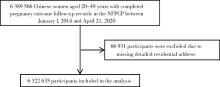
图1

研究对象筛选流程图"

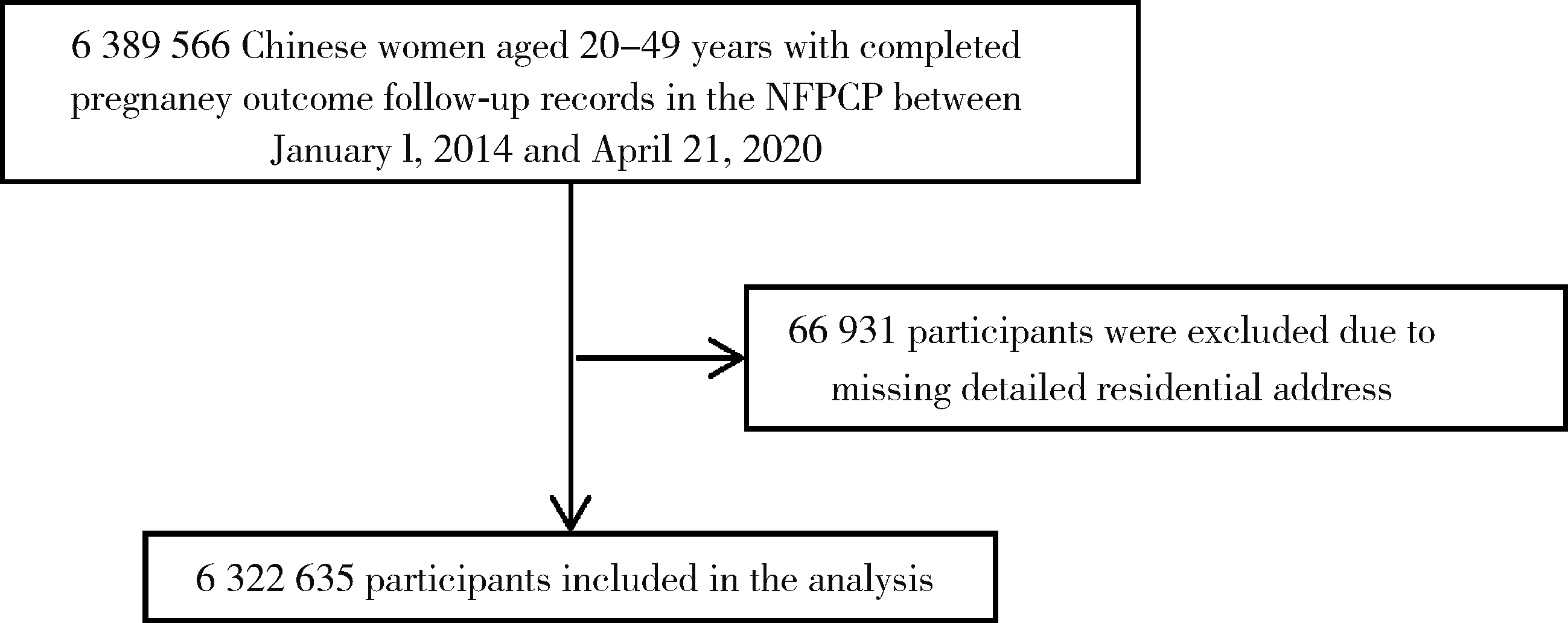
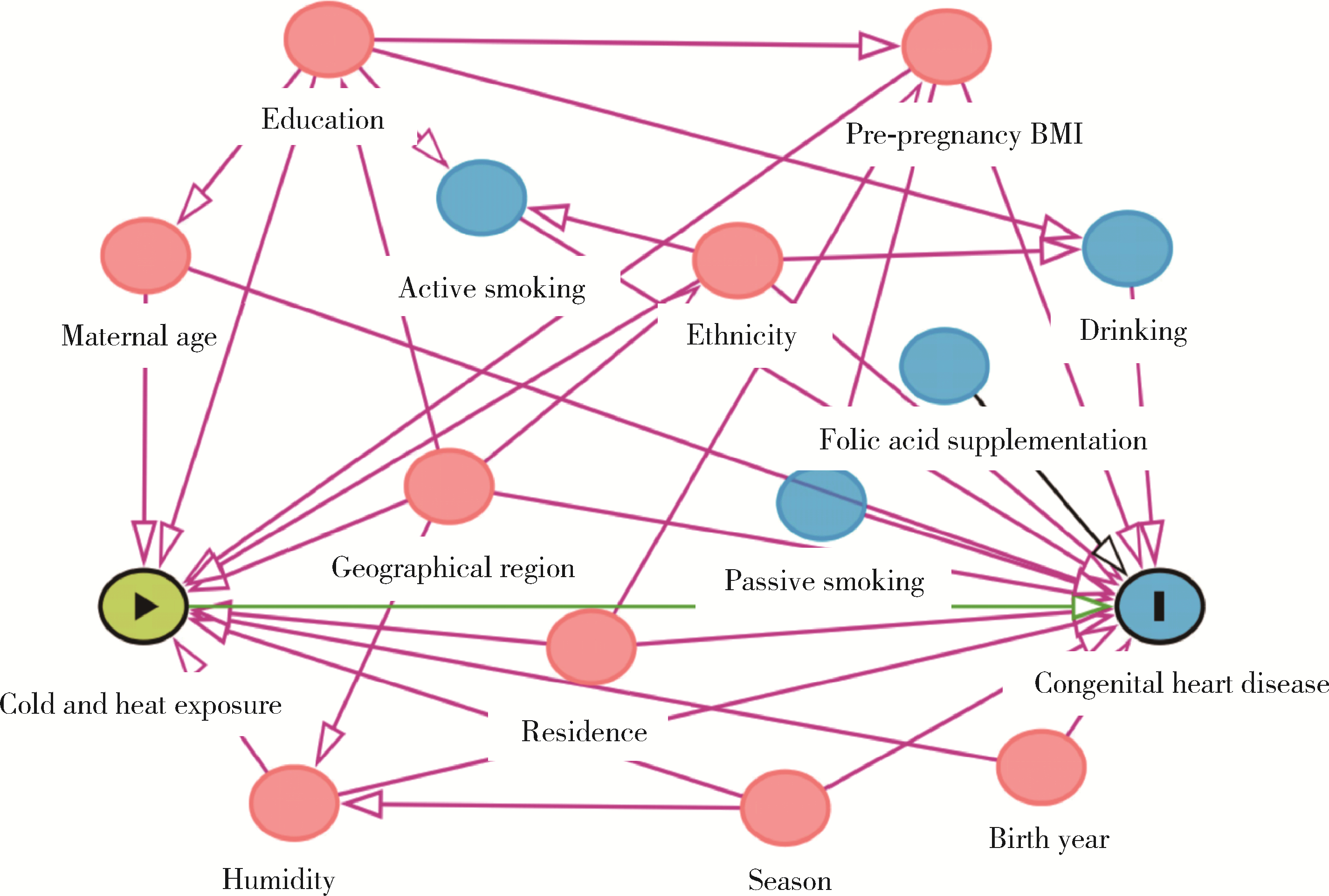
图2

选择潜在混杂因素的有向无环图"

表1

按孕前3个月及孕早期冷热暴露状态分组的研究对象基本特征"

Characteristic Total (n=6 322 635) Heat exposure group (n=632 260) Cold exposure group (n=632 264) Reference group (n=5 058 111) P value
Maternal age <0.001/<0.001
  ≤25 years 2 954 301 (46.73) 277 919 (43.96) 311 376 (49.25) 2 365 006 (46.76)
  26-30 years 2 340 674 (37.02) 245 876 (38.89) 223 325 (35.32) 1 871 473 (37.00)
  31-35 years 753 035 (11.91) 80 159 (12.68) 71 573 (11.32) 601 303 (11.89)
  36-40 years 237 627 (3.76) 24 609 (3.89) 22 264 (3.52) 190 754 (3.77)
  >40 years 36 998 (0.59) 3 697 (0.58) 3 726 (0.59) 29 575 (0.58)
Parity <0.001/<0.001
  0 3 187 438 (50.41) 310 842 (49.16) 321 770 (50.89) 2 554 826 (50.51)
  ≥1 2 710 740 (42.87) 278 429 (44.04) 273 172 (43.21) 2 159 139 (42.69)
  Missing 424 457 (6.71) 42 989 (6.80) 37 322 (5.90) 344 146 (6.80)
Ethnicity <0.001/<0.001
  Han Chinese 5 786 746 (91.52) 591 045 (93.48) 557 828 (88.23) 4 637 873 (91.69)
  Ethnic minority 368 979 (5.84) 21 064 (3.33) 60 055 (9.50) 287 860 (5.69)
  Missing 166 910 (2.64) 20 151 (3.19) 14 381 (2.27) 132 378 (2.62)
Pre-pregnancy BMI, kg/m2 <0.001/<0.001
  <18.5 836 772 (13.23) 86 856 (13.74) 78 230 (12.37) 671 686 (13.28)
  ≥18.5-<24 4 406 391 (69.69) 436 429 (69.03) 447 815 (70.83) 3 522 147 (69.63)
  ≥24-<28 835 383 (13.21) 83 607 (13.22) 82 809 (13.10) 668 967 (13.23)
  ≥28 206 453 (3.27) 20 878 (3.30) 20 345 (3.22) 165 230 (3.27)
  Missing 37 636 (0.60) 4 490 (0.71) 3 065 (0.48) 30 081 (0.59)
Education <0.001/<0.001
  Junior high school or below 3 381 720 (53.49) 311 218 (49.22) 381 363 (60.32) 2 689 139 (53.16)
  Senior high school 1 352 056 (21.38) 140 163 (22.17) 119 920 (18.97) 1 091 973 (21.59)
  College or above 1 262 756 (19.97) 138 245 (21.87) 108 629 (17.18) 1 015 882 (20.08)
  Missing 326 103 (5.16) 42 634 (6.74) 22 352 (3.54) 261 117 (5.16)
Residence <0.001/<0.001
  Rural 5 653 361 (89.41) 555 060 (87.79) 580 233 (91.77) 4 518 068 (89.32)
  Urban 667 753 (10.56) 76 839 (12.15) 51 989 (8.22) 538 925 (10.65)
  Missing 1 521 (0.02) 361 (0.06) 42 (0.01) 1 118 (0.02)
Occupation <0.001/<0.001
  Farmer 3 945 602 (62.40) 371 929 (58.83) 435 849 (68.93) 3 137 824 (62.04)
  Worker 726 121 (11.48) 73 792 (11.67) 64 321 (10.17) 588 008 (11.63)
  Other 1 273 756 (20.15) 139 527 (22.07) 104 656 (16.55) 1 029 573 (20.35)
  Missing 377 156 (5.97) 47 012 (7.44) 27 438 (4.34) 302 706 (5.98)
Smoking <0.001/<0.001
  No 6 266 975 (99.12) 625 940 (99.00) 627 715 (99.28) 5 013 320 (99.11)
  Yes 12 613 (0.20) 1 169 (0.18) 1 220 (0.19) 10 224 (0.20)
  Missing 43 047 (0.68) 5 151 (0.81) 3 329 (0.53) 34 567 (0.68)
Passive smoking <0.001/<0.001
  No 5 639 696 (89.20) 558 973 (88.41) 573 912 (90.77) 4 506 811 (89.10)
  Yes 639 714 (10.12) 68 164 (10.78) 55 031 (8.70) 516 519 (10.21)
  Missing 43 225 (0.68) 5 123 (0.81) 3 321 (0.53) 34 781 (0.69)
Drinking <0.001/<0.001
  No 6 111 037 (96.65) 608 280 (96.21) 616 308 (97.48) 4 886 449 (96.61)
  Yes 162 586 (2.57) 18 247 (2.89) 12 034 (1.90) 132 305 (2.62)
  Missing 49 012 (0.78) 5 733 (0.91) 3 922 (0.62) 39 357 (0.78)
Folic acid supplementation <0.001/<0.001
  No 1 132 478 (17.91) 114 881 (18.17) 97 806 (15.47) 919 791 (18.18)
  Regular 4 868 152 (77.00) 487 320 (77.08) 501 073 (79.25) 3 879 759 (76.70)
  Irregular 219 736 (3.48) 20 366 (3.22) 21 481 (3.40) 177 889 (3.52)
  Missing 102 269 (1.62) 9 693 (1.53) 11 904 (1.88) 80 672 (1.59)
Season of conception <0.001/<0.001
  Spring 1 834 270 (29.01) 25 875 (4.09) 60 516 (9.57) 1 747 879 (34.56)
  Summer 1 537 980 (24.32) 574 307 (90.83) 3 518 (0.56) 960 155 (18.98)
  Autumn 1 311 823 (20.75) 27 260 (4.31) 38 083 (6.02) 1 246 480 (24.64)
  Winter 1 638 562 (25.92) 4 818 (0.76) 530 147 (83.85) 1 103 597 (21.82)
Year of birth <0.001/<0.001
  2014 355 234 (5.62) 2 602 (0.41) 112 108 (17.73) 240 524 (4.76)
  2015 1 386 551 (21.93) 126 373 (19.99) 108 391 (17.14) 1 151 787 (22.77)
  2016 1 430 994 (22.63) 105 069 (16.62) 139 850 (22.12) 1 186 075 (23.45)
  2017 1 514 811 (23.96) 184 651 (29.20) 111 367 (17.61) 1 218 793 (24.10)
  2018 1 010 052 (15.98) 126 048 (19.94) 99 094 (15.67) 784 910 (15.52)
  2019 571 710 (9.04) 84 100 (13.30) 60 911 (9.63) 426 699 (8.44)
  2020 53 283 (0.84) 3 417 (0.54) 543 (0.09) 49 323 (0.98)
Neonate’s gender <0.001/<0.001
  Male 3 271 381 (51.74) 327 550 (51.81) 326 282 (51.61) 2 617 549 (51.75)
  Female 3 023 385 (47.82) 302 247 (47.80) 302 746 (47.88) 2 418 392 (47.81)
  Missing 27 869 (0.44) 2 463 (0.39) 3 236 (0.51) 22 170 (0.44)
Mode of delivery <0.001/<0.001
  Vaginal delivery 4 517 758 (71.45) 455 719 (72.08) 450 798 (71.30) 3 611 241 (71.40)
  Cesarean section 1 787 130 (28.27) 174 968 (27.67) 179 490 (28.39) 1 432 672 (28.32)
  Missing 17 747 (0.28) 1 573 (0.25) 1 976 (0.31) 14 198 (0.28)
Geographic region <0.001/<0.001
  Northern 380 976 (6.03) 29 319 (4.64) 73 873 (11.68) 277 784 (5.49)
  Northeast 73 447 (1.16) 6 514 (1.03) 8 741 (1.38) 58 192 (1.15)
  Eastern 1 563 946 (24.74) 137 595 (21.76) 186 272 (29.46) 1 240 079 (24.52)
  Central 2 335 185 (36.93) 295 028 (46.66) 133 708 (21.15) 1 906 449 (37.69)
  Southern 1 002 141 (15.85) 119 162 (18.85) 68 741 (10.87) 814 238 (16.10)
  Southwest 501 732 (7.94) 20 424 (3.23) 41 613 (6.58) 439 695 (8.69)
  Northwest 465 208 (7.36) 24 218 (3.83) 119 316 (18.87) 321 674 (6.36)
Climate zone 0.999/>0.999
  Tropic humid 1 056 022 (16.70) 105 603 (16.70) 105 603 (16.70) 844 816 (16.70)
  Subtropical humid 2 793 125 (44.18) 279 313 (44.18) 279 313 (44.18) 2 234 499 (44.18)
  Qinghai-Xizang Plateau 51 951 (0.82) 5 195 (0.82) 5 195 (0.82) 41 561 (0.82)
  Warmtemperate humid and subhumid 2 147 904 (33.97) 214 785 (33.97) 214 791 (33.97) 1 718 328 (33.97)
  Temperate humid and subhumid 129 444 (2.05) 12 945 (2.05) 12 945 (2.05) 103 554 (2.05)
  Temperate grassland 75 508 (1.19) 7 551 (1.19) 7 549 (1.19) 60 408 (1.19)
  Temperate and warmtemperate desert 68 681 (1.09) 6 868 (1.09) 6 868 (1.09) 54 945 (1.09)

表2

不同气候带中研究对象孕前3个月与孕早期环境温度暴露分布"

Climate zone Mean/℃ P5/℃ P10/℃ P15/℃ P85/℃ P90/℃ P95/℃
Subtropical humid 16.51 8.55 9.49 10.31 23.15 23.78 24.48
Warmtemperate humid and subhumid 14.31 4.10 5.78 6.88 22.55 23.29 23.93
Temperate and warmtemperate desert 6.09 -7.73 -6.11 -4.75 16.64 17.46 18.43
Temperate humid and subhumid 8.62 -3.41 -1.56 -0.31 18.03 19.32 21.56
Temperate grassland 8.73 -3.67 -1.57 0.15 18.22 19.19 20.20
Tropic humid 21.82 16.05 17.11 17.76 26.10 26.56 27.05
Qinghai-Xizang Plateau 3.34 -6.83 -4.89 -3.60 10.83 11.91 13.12

表3

不同气候带中研究对象孕前3个月与孕早期环境相对湿度暴露分布"

Climate zone Mean/% Minimum/% P25/% Median/% P75/% Maximum/%
Subtropical humid 75.90 37.21 72.85 76.51 79.44 92.22
Warm-temperate humid and sub-humid 62.25 32.49 57.78 63.15 67.54 83.02
Temperate and warm-temperate desert 61.92 31.21 56.46 62.94 68.21 82.37
Temperate humid and sub-humid 45.35 17.06 37.68 44.41 53.00 78.69
Temperate grassland 45.43 27.54 39.19 44.55 50.79 74.52
Tropic humid 79.77 44.98 76.90 80.37 83.21 92.83
Qinghai-Xizang Plateau 57.54 22.63 49.76 57.17 64.59 91.02

图3

母亲孕前3个月及孕早期冷热暴露与先天性心脏病发病风险的关联"

图4

按母亲年龄分层的冷热暴露与先天性心脏病发病风险的关联"

图5

按母亲孕前体重指数分层的冷热暴露与先天性心脏病发病风险的关联"

图6

按胎儿性别分层下冷热暴露与先天性心脏病发病风险的关联"

表4

基于不同相对阈值的母亲孕前3个月及孕早期冷热暴露与先天性心脏病发病风险的关联分析"

Exposure window Exposure threshold Exposure type HR (95%CI) P value
Three months before pregnancy P5 Cold exposure 0.91 (0.70-1.20) 0.513
Three months before pregnancy P15 Cold exposure 0.85 (0.72-1.02) 0.076
Three months before pregnancy P85 Heat exposure 1.29 (1.08-1.55) 0.006
Three months before pregnancy P95 Heat exposure 1.31 (1.03-1.69) 0.031
First trimester P5 Cold exposure 0.75 (0.56-0.99) 0.041
First trimester P15 Cold exposure 0.90 (0.75-1.07) 0.222
First trimester P85 Heat exposure 1.15 (0.96-1.38) 0.131
First trimester P95 Heat exposure 1.01 (0.76-1.34) 0.931
1
Climate change exacerbates almost two-thirds of pathogenic diseases affecting humans[J]. Nat Clim Chang, 2022, 12(9): 791-792.
2
Intergovernmental Panel on Climate Change. Climate change 2021: The physical science basis: Working group Ⅰ contribution to the IPCC sixth assessment report[R/OL]. (2021-08-09)[2025-12-06]. https://www.ipcc.ch/report/ar6/wg1.
3
丁一汇, 任国玉, 石广玉, 等. 气候变化国家评估报告(Ⅰ): 中国气候变化的历史和未来趋势[J]. 气候变化研究进展, 2006, 2 (1): 3- 8.
4
Fitzgerald EF , Pantea C , Lin S . Cold spells and the risk of hospitalization for asthma: New York, USA 1991-2006[J]. Lung, 2014, 192 (6): 947- 954.

doi: 10.1007/s00408-014-9645-y
5
Kenny GP , Yardley J , Brown C , et al. Heat stress in older individuals and patients with common chronic diseases[J]. CMAJ, 2010, 182 (10): 1053- 1060.

doi: 10.1503/cmaj.081050
6
Lakhoo DP , Brink N , Radebe L , et al. A systematic review and meta-analysis of heat exposure impacts on maternal, fetal and neonatal health[J]. Nat Med, 2025, 31 (2): 684- 694.

doi: 10.1038/s41591-024-03395-8
7
Lee W , Choi HM , Lee JY , et al. Temporal changes in mortality impacts of heat wave and cold spell in Korea and Japan[J]. Environ Int, 2018, 116, 136- 146.

doi: 10.1016/j.envint.2018.04.017
8
Kodo K , Uchida K , Yamagishi H . Genetic and cellular interaction during cardiovascular development implicated in congenital heart diseases[J]. Front Cardiovasc Med, 2021, 8, 653244.

doi: 10.3389/fcvm.2021.653244
9
Roth GA , Mensah GA , Johnson CO , et al. Global burden of cardiovascular diseases and risk factors, 1990-2019: Update from the GBD 2019 study[J]. J Am Coll Cardiol, 2020, 76 (25): 2982- 3021.

doi: 10.1016/j.jacc.2020.11.010
10
Auger N , Fraser WD , Sauve R , et al. Risk of congenital heart defects after ambient heat exposure early in pregnancy[J]. Environ Health Perspect, 2017, 125 (1): 8- 14.

doi: 10.1289/EHP171
11
欧向阳, 丁锦丽, 杨哲, 等. HSP70在早期胚胎发育中作用的研究进展[J]. 中华生殖与避孕杂志, 2024, 44 (11): 1196- 1199.
12
Agay-Shay K , Friger M , Linn S , et al. Ambient temperature and congenital heart defects[J]. Hum Reprod, 2013, 28 (8): 2289- 2297.
13
Judge CM , Chasan-Taber L , Gensburg L , et al. Physical exposures during pregnancy and congenital cardiovascular malformations[J]. Paediatr Perinat Epidemiol, 2004, 18 (5): 352- 360.

doi: 10.1111/j.1365-3016.2004.00586.x
14
Tikkanen J , Heinonen OP . Maternal hyperthermia during pregnancy and cardiovascular malformations in the offspring[J]. Eur J Epidemiol, 1991, 7 (6): 628- 635.
15
Yu X , Miao H , Zeng Q , et al. Associations between ambient heat exposure early in pregnancy and risk of congenital heart defects: A large population-based study[J]. Environ Sci Pollut Res Int, 2022, 29 (5): 7627- 7638.

doi: 10.1007/s11356-021-16237-8
16
Ding G , Chen B , McCarrey JR , et al. The epigenetic mechanisms underlying gamete origin of adult-onset diseases[J]. Sci Bull, 2022, 67 (17): 1724- 1727.

doi: 10.1016/j.scib.2022.07.030
17
Samuels L , Nakstad B , Roos N , et al. Physiological mechanisms of the impact of heat during pregnancy and the clinical implications: Review of the evidence from an expert group meeting[J]. Int J Biometeorol, 2022, 66 (8): 1505- 1513.
18
Meng X , Zhang P , Zhang L . Fetal hypoxia impacts on proliferation and differentiation of Sca-1+ cardiac progenitor cells and maturation of cardiomyocytes: A role of microRNA-210[J]. Genes (Basel), 2020, 11 (3): 328.
19
Guo J , Ruan Y , Wang Y , et al. Maternal exposure to extreme cold events and risk of congenital heart defects: A large multicenter study in China[J]. Environ Sci Technol, 2024, 58 (8): 3737- 3746.
20
Cimadomo D , Fabozzi G , Vaiarelli A , et al. Impact of maternal age on oocyte and embryo competence[J]. Front Endocrinol, 2018, 9, 327.

doi: 10.3389/fendo.2018.00327
21
Turunen R , Pulakka A , Metsälä J , et al. Maternal diabetes and overweight and congenital heart defects in offspring[J]. JAMA Netw Open, 2024, 7 (1): e2350579.
22
Conlon FL , Arnold AP . Sex chromosome mechanisms in cardiac development and disease[J]. Nat Cardiovasc Res, 2023, 2 (4): 340- 350.
23
Pugnaloni F , Felici A , Corno AF , et al. Gender differences in congenital heart defects: A narrative review[J]. Transl Pediatr, 2023, 12 (9): 1753- 1764.
[1] 陆梦溪, 王炳翰, 康佳丽, 刘秋萍, 周逸帆, 孙烨祥, 沈鹏, 林鸿波, 唐迅, 高培. 生物学年龄在社区人群队列中预测心血管病风险的应用[J]. 北京大学学报(医学版), 2026, 58(3): 543-550.
[2] 王玉霖, 郜鑫, 刘志科, 詹思延. 2018—2023年江苏省0~3岁婴幼儿肠套叠发病的流行病学特征[J]. 北京大学学报(医学版), 2026, 58(3): 490-495.
[3] 范梦, 王梦莹, 王斯悦, 彭和香, 王雪珩, 郭煌达, 侯天姣, 秦雪英, 陈大方, 胡永华, 李劲, 武轶群, 吴涛. 动脉硬化相关指标与死亡风险的前瞻性队列研究[J]. 北京大学学报(医学版), 2025, 57(6): 1153-1159.
[4] 陆梦溪, 刘秋萍, 周恬静, 刘晓非, 孙烨祥, 沈鹏, 林鸿波, 唐迅, 高培. 基于社区人群队列的甘油三酯-葡萄糖指数与心血管病发病和死亡的关联[J]. 北京大学学报(医学版), 2025, 57(3): 430-435.
[5] 刘晓强,周寅. 牙种植同期植骨术围术期高血压的相关危险因素[J]. 北京大学学报(医学版), 2024, 56(1): 93-98.
[6] 于欢,杨若彤,王斯悦,吴俊慧,王梦莹,秦雪英,吴涛,陈大方,武轶群,胡永华. 2型糖尿病患者使用二甲双胍与缺血性脑卒中发病风险的队列研究[J]. 北京大学学报(医学版), 2023, 55(3): 456-464.
[7] 马涛,李艳辉,陈曼曼,马莹,高迪,陈力,马奇,张奕,刘婕妤,王鑫鑫,董彦会,马军. 青春期启动提前与儿童肥胖类型的关联研究: 基于横断面调查和队列调查[J]. 北京大学学报(医学版), 2022, 54(5): 961-970.
[8] 刘晓强,杨洋,周建锋,刘建彰,谭建国. 640例单牙种植术对血压和心率影响的队列研究[J]. 北京大学学报(医学版), 2021, 53(2): 390-395.
[9] 刘欢,何映东,刘金波,黄薇,赵娜,赵红薇,周晓华,王宏宇. 血管健康指标对新发心脑血管事件的预测价值:北京血管健康分级标准的初步验证[J]. 北京大学学报(医学版), 2020, 52(3): 514-520.
[10] 孟文颖,黄琬桐,张杰,焦明远,金蕾,靳蕾. 孕早期血清维生素E水平与妊娠期高血压疾病发病风险的关系[J]. 北京大学学报(医学版), 2020, 52(3): 470-478.
[11] 唐迅,张杜丹,刘晓非,刘秋萍,曹洋,李娜,黄少平,窦会东,高培,胡永华. China-PAR脑卒中模型在北方农村人群中预测脑卒中发病风险的应用[J]. 北京大学学报(医学版), 2020, 52(3): 444-450.
[12] 林鸿波,陈奕,沈鹏,李小勇,司亚琴,张杜丹,唐迅,高培. 社区糖尿病患者慢性肾脏病的发病率及其危险因素[J]. 北京大学学报(医学版), 2018, 50(3): 416-421.
[13] 唐迅,张杜丹,何柳,曹洋,王晋伟,李娜,黄少平,窦会东,高培,胡永华. China-PAR模型在北方农村人群中预测动脉粥样硬化性心血管疾病发病风险的应用[J]. 北京大学学报(医学版), 2017, 49(3): 439-445.
[14] 杨志凯, 董捷, 左力. 腹膜透析总水清除量下降速率快是患者死亡的独立危险因素[J]. 北京大学学报(医学版), 2011, 43(6): 844-848.
[15] 何耀. 队列研究设计在临床研究中的应用和相关方法学问题[J]. 北京大学学报(医学版), 2010, 42(6): 713-715.
Viewed
Full text


Abstract

Cited

  Shared   
  Discussed   
No Suggested Reading articles found!