北京大学学报(医学版) ›› 2025, Vol. 57 ›› Issue (6): 1107-1112. doi: 10.19723/j.issn.1671-167X.2025.06.014

• 论著 • 上一篇    下一篇

抗磷脂综合征患者就医行为及治疗现状调查

李岩岩1,2,*, 刘香君1,*, 李公明1,3, 李春1,*(), 贾园1,*()   

  1. 1. 北京大学人民医院风湿免疫科, 北京 100044
    2. 郑州市第三人民医院肾病风湿免疫科, 郑州 450000
    3. 临沂市中医医院风湿病科, 山东临沂 276000
  • 收稿日期:2025-08-18 出版日期:2025-12-18 发布日期:2025-10-17
  • 通讯作者: 李春, 贾园
  • 作者简介:

    * These authors contributed equally to this work

  • 基金资助:
    北京市自然科学基金(7192211); 国家重点基础研究发展计划(2022YFC3602000)

Clinic behavior and therapeutic status of patients with antiphospholipid syndrome

Yanyan LI1,2, Xiangjun LIU1, Gongming LI1,3, Chun LI1,*(), Yuan JIA1,*()   

  1. 1. Department of Rheumatology & Immunology, Peking University People's Hospital, Beijing 100044, China
    2. Department of Rheumatology & Immunology, The Third People's Hospital of Zhengzhou, Zhengzhou 450000, China
    3. Rheumatology Department, Linyi Hospital of Traditional Chinese Medicine, Linyi 276000, Shandong, China
  • Received:2025-08-18 Online:2025-12-18 Published:2025-10-17
  • Contact: Chun LI, Yuan JIA
  • Supported by:
    the Beijing Natural Science Foundation(7192211); the National Basic Research Program of China(2022YFC3602000)

RICH HTML


摘要:

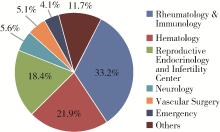
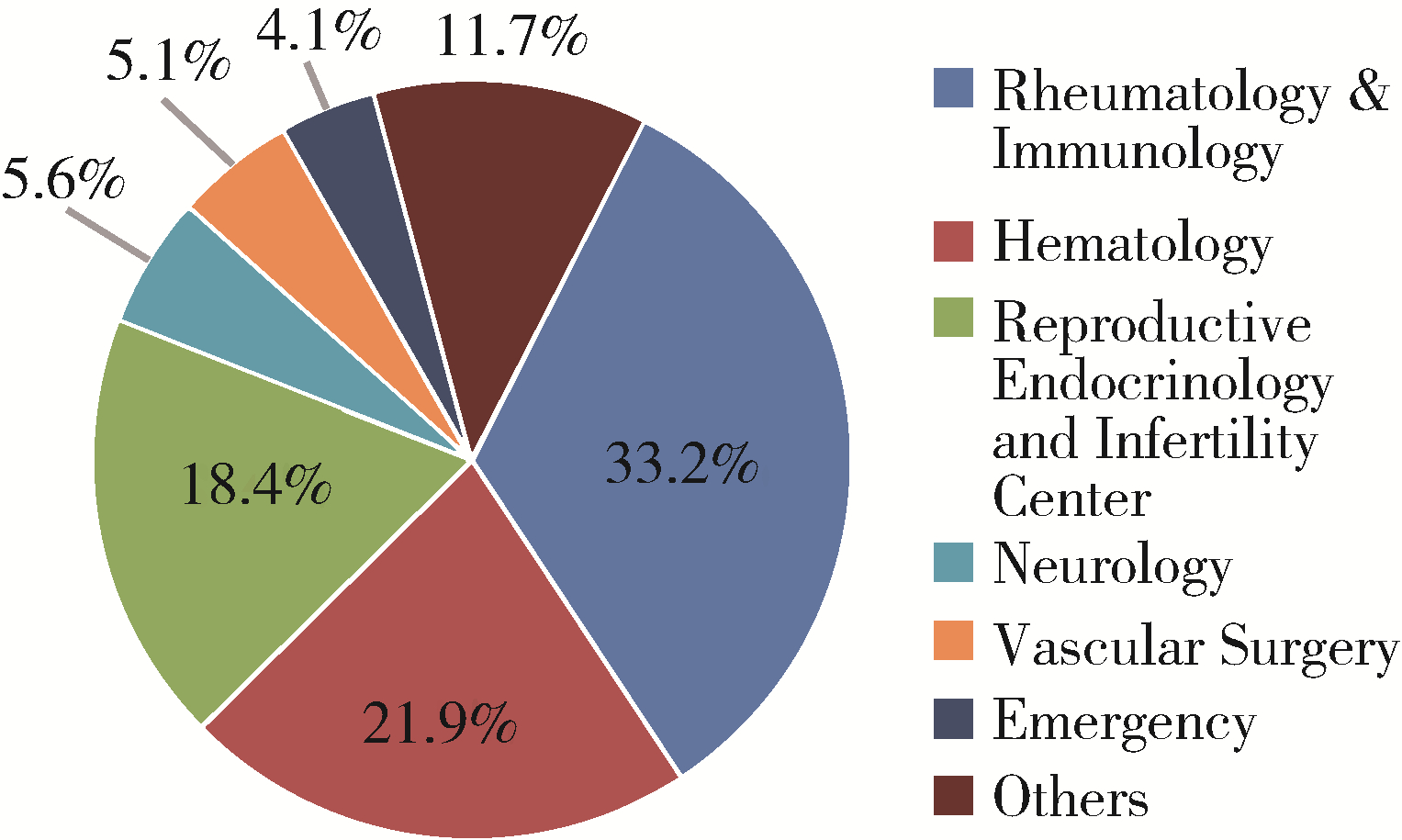
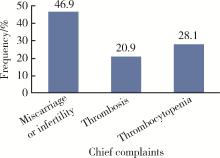
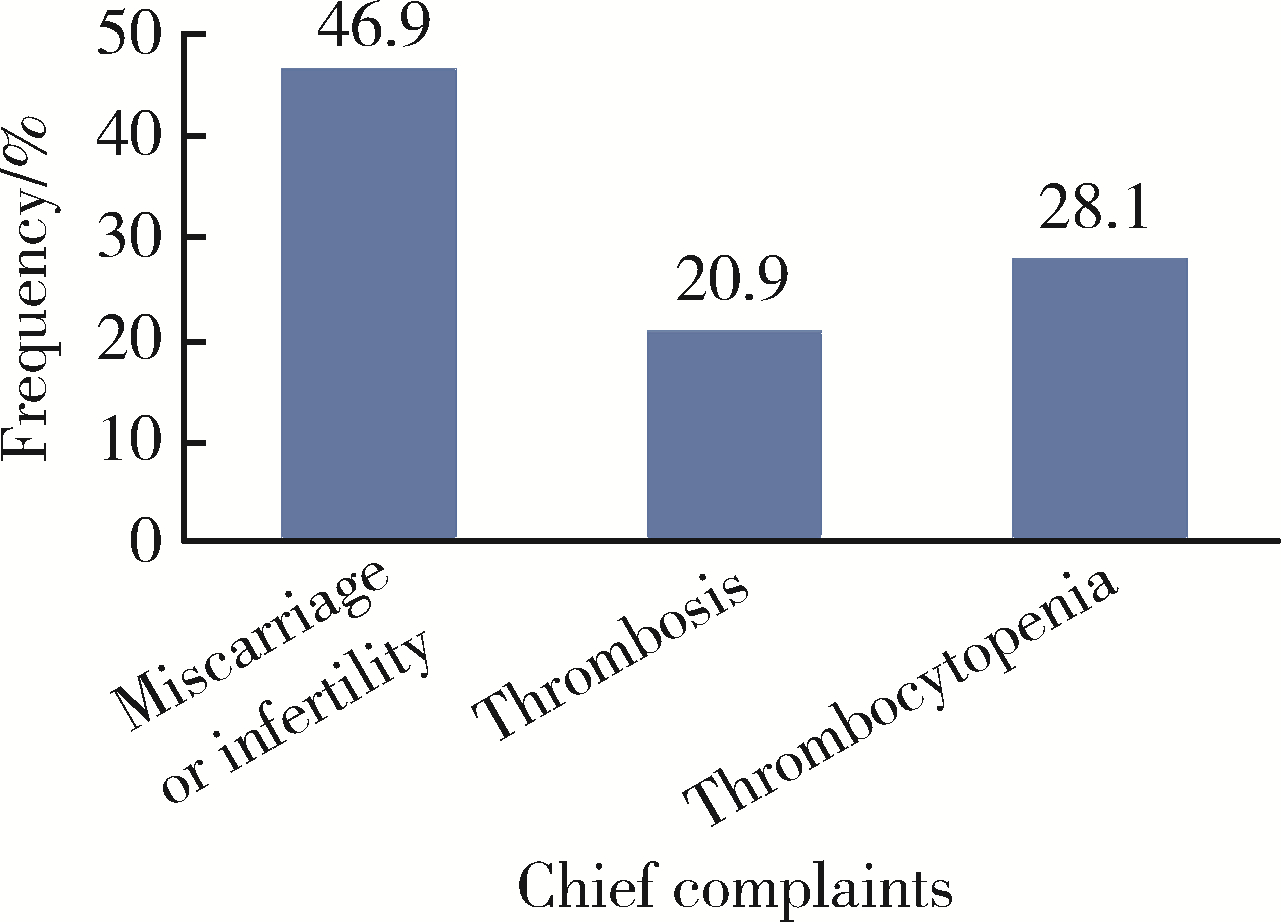
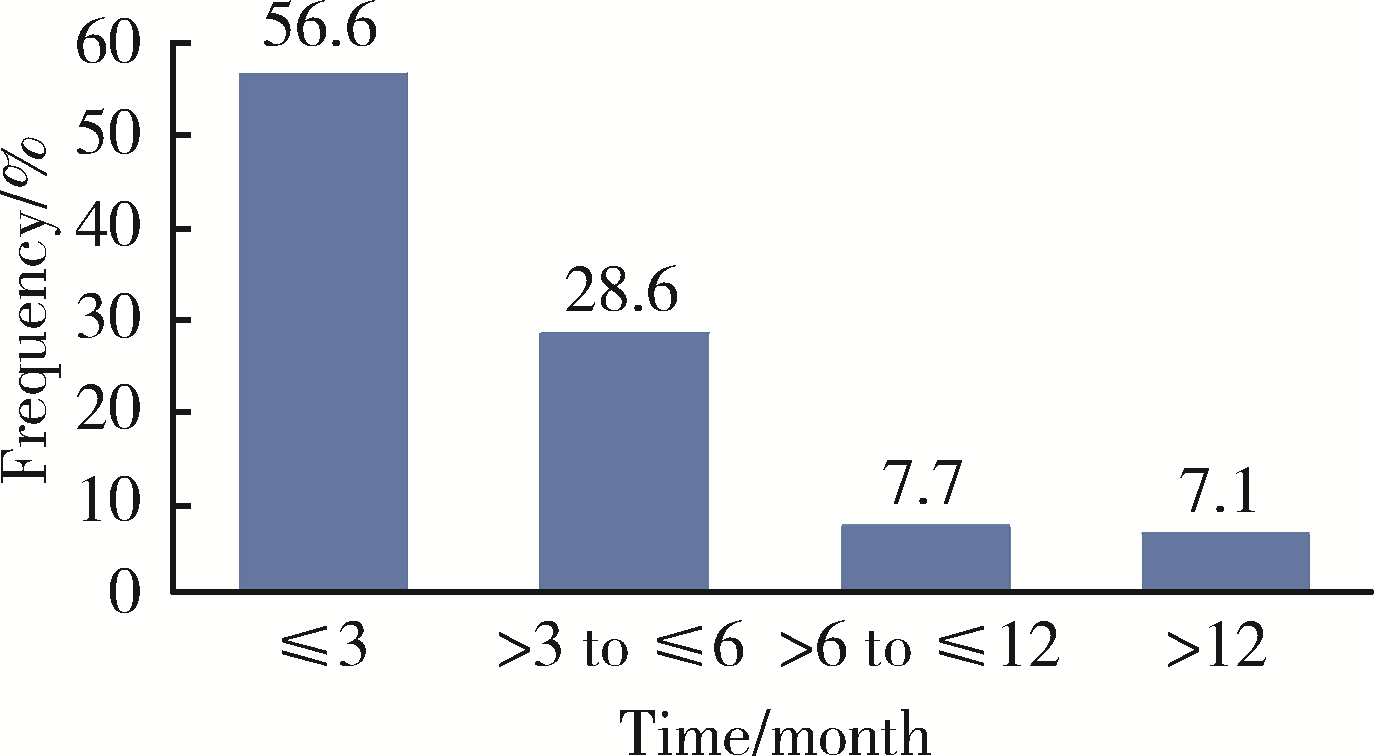
目的: 了解抗磷脂综合征(antiphospholipid syndrome, APS)患者就医行为的特点及治疗现状。方法: 对2021年9月至2025年10月就诊的APS患者进行问卷调查, 调查内容包括患者的一般资料、首诊主诉、首诊及确诊科室、确诊时间、随诊时间间隔、既往及目前用药情况, 以及健康状况调查量表(36-item short form health survey, SF-36)、医院焦虑抑郁量表、普适性药物依从性量表。选取年龄及性别相匹配的健康对照, 在同时期采用SF-36量表及医院焦虑抑郁量表进行测评。结果: 参与调查的APS患者共196例, 中位年龄36岁, 男女比例为1:6.8, 中位病程3.0年。患者首次就诊科室最多的为风湿免疫科(33.2%), 其次为血液科(21.9%)和生殖科(18.4%), 其他科室还包括神经内科(5.6%)、血管外科(5.1%)、急诊(4.1%)等。患者首次就诊主诉以流产或不孕(46.9%, 92/196)、血小板减少(28.1%, 55/196)及血栓(20.9%, 41/196)为主。患者主要于风湿免疫科确诊(83.2%), 其次为生殖科确诊(6.1%)。患者从出现初始症状到确诊APS所需的中位时间为6.0个月, 诊断延迟超过1年的占32.1%。在随访方面, 仅有56.6%的患者规律随访, 随访时间间隔≤3个月, 有7.1%的患者随访时间间隔>12个月。APS患者的用药以羟氯喹、华法林等抗凝药物以及抗血小板药物为主, 76.1%的患者用药依从性高或良好。APS患者的一般健康(general health, GH)评分较对照组显著减低(P < 0.05);APS患者中, 焦虑症状存在的比例较对照组显著增加(13.8% vs. 6.7%, P < 0.05)。结论: APS患者的首诊科室分布广泛, 确诊科室以风湿免疫科为首, 延迟诊断现象仍然普遍。与健康人群相比, APS患者的健康感知显著降低, 焦虑水平显著升高。APS患者的随诊须进一步规范, 还要重视对其疾病认知及心理功能方面的干预。

关键词: 抗磷脂综合征, 横断面研究, 诊室就医, 生活质量

Abstract:

Objective: To investigate and analyze the clinical behavior and therapeutic status of patients with antiphospholipid syndrome (APS). Methods: Patients diagnosed with APS between September 2021 and October 2025 were enrolled in this investigation. Data collection included: demographic characteristics, disease duration, initial presenting symptoms, departments of first visit and diagnosis, time of the first visit and definite diagnosis, the interval of follow-up, previous and current medications. Assessments using the 36-item short form health survey (SF-36), hospital anxiety and depression scale (HADS), and general medication adherence scale (GMAS) were also conducted. Age- and gender-matched healthy controls were selected and completed parallel SF-36 and HADS evaluations during the same period. Results: In the study, 196 patients with APS were investigated. The median age of onset was 36 years, the male to female ratio was 1:6.8, and median disease duration was 3.0 years. Rheumatology & Immunology was the most common department for the first hospital visit (33.2%, 65/196), followed by Hematology (21.9%) and Reproductive Endocrinology and Infertility Center (18.4%). Other departments included Neurology (5.6%), Vascular Surgery (5.1%), and Emergency (4.1%). The median time from symptom onset to APS diagnosis was 6.0 months, with 32.1%(63/196) of patients experiencing a diagnostic delay of over one year. Regarding follow-up adherence, 56.6% (111/196) of patients with APS maintained regular follow-ups at intervals of ≤3 months, while 7.1% (14/196) of the patients visited their doctor less than once a year. The primary pharmacological treatments for the APS patients included hydroxychloroquine, warfarin and other anticoagulants, and antiplatelet agents. According to the GMAS assessment, 76.1% of the patients demonstrated high or good medication adhe-rence. Among all SF-36 domains, the scores of general health (GH) in the APS patients were significantly lower compared with healthy controls (P < 0.05). According to the HADS, the proportion of anxiety symptoms was significantly higher in the APS patients compared with healthy controls (13.8% vs. 6.7%, P < 0.05). Conclusion: In this study, delayed diagnosis in APS remained prevalent. Compared with healthy controls, the APS patients exhibited significantly impaired physical function and elevated anxiety symptoms. Regular follow-up monitoring should be emphasized, and greater attention must be paid to psychoeducational interventions.

Key words: Antiphospholipid syndrome, Cross-sectional studies, Office visits, Quality of life

中图分类号: 

  • R593.2

图1

抗磷脂综合征患者首次就诊的科室分布"

图2

抗磷脂综合征患者首次就诊主诉"

图3

抗磷脂综合征患者随诊时间间隔分布"

表1

抗磷脂综合征患者的用药情况"

Drugs Previous, n (%) Current, n (%)
Hydroxychloroquine 177 (90.3) 152 (77.6)
Antiplatelets and anticoagulants 173 (88.3) 141 (71.9)
  Aspirin 143 (73.0) 94 (48.0)
  Low molecular weight heparin 91 (46.4) 40 (20.4)
  Rivaroxaban 22 (11.2) 6 (3.1)
  Warfarin 45 (23.0) 35 (17.9)
Glucocorticoids 117 (59.7) 76 (38.8)
Immunosuppressants 56 (28.6) 41 (20.9)
  Mycophenolate 32 (16.3) 19 (9.7)
  Cyclophosphamide 14 (7.1) 1 (0.5)
  Methotrexate 6 (3.1) 2 (1.0)
  Leflunomide 7 (3.6) 2 (1.0)
  Ciclosporin 9 (4.6) 8 (4.1)
  Tacrolimus 8 (4.1) 8 (4.1)
Immunoglobulin 21 (10.7) 1 (0.5)
Rituximab 13 (6.6) 4 (2.0)
Statins 17 (8.7) 13 (6.6)
Drug-free 0 (0) 11 (5.6)

表2

抗磷脂综合征患者及健康对照的SF-36生存质量评估"

Sub-domain SF-36 P
APS patients (n=196) Healthy controls (n=150)
Physical functioning 95 (85, 100) 95 (90, 100) 0.15
Role physical 100 (50, 100) 100 (75, 100) 0.07
Bodily pain 72 (62, 100) 72 (62, 100) 0.06
General health 57.0 (40.0, 77.0) 65.0 (52.0, 77.8) < 0.01*
Vitality 60 (50, 75) 65 (50, 75) 0.33
Social functioning 87.5 (62.5, 100.0) 87.5 (62.5, 100.0) 0.65
Role emotional 100.0 (33.3, 100.0) 100.0 (33.3, 100.0) 0.57
Mental health 68 (49, 80) 68 (55, 76) 0.28

表3

抗磷脂综合征患者及健康对照HADS评分情况"

HADS scores APS patients
(n=196)
Healthy controls
(n=150)
P
HADS-A, M (P25, P75) 5 (2, 8) 4 (2, 7) 0.20
HADS-A>10, n (%) 27 (13.8) 10 (6.7) 0.03*
HADS-D, M (P25, P75) 4 (1, 7) 3 (1, 7) 0.96
HADS-D>10, n (%) 19 (19.7) 14 (9.3) 0.91
1
赵久良, 沈海丽, 柴克霞, 等. 抗磷脂综合征诊疗规范[J]. 中华内科杂志, 2022, 61 (9): 1000- 1007.
2
Duarte-García A , Pham MM , Crowson CS , et al. The epidemiology of antiphospholipid syndrome: A population-based study[J]. Arthritis Rheumatol, 2019, 71 (9): 1545- 1552.

doi: 10.1002/art.40901
3
Chighizola CB , Crisafulli F , Hoxha A , et al. Psychosocial burden in young patients with primary anti-phospholipid syndrome: An Italian nationwide survey (The AQUEOUS study)[J]. Clin Exp Rheumatol, 2021, 39 (5): 938- 946.

doi: 10.55563/clinexprheumatol/2b73dn
4
Sadetski M , Tourinho Moretto ML , Correia de Araujo RP , et al. Frequency of psychological alterations in primary antiphospholipid syndrome: Preliminary study[J]. Lupus, 2018, 27 (5): 837- 840.

doi: 10.1177/0961203317751063
5
冯莹. 抗磷脂综合征的临床管理[J]. 临床血液学杂志, 2017, 30 (1): 8- 11.
6
Miyakis S , Lockshin MD , Atsumi T , et al. International consensus statement on an update of the classification criteria for definite antiphospholipid syndrome (APS)[J]. J Thromb Haemost, 2006, 4 (2): 295- 306.

doi: 10.1111/j.1538-7836.2006.01753.x
7
张警丰, 金银姬, 魏慧, 等. 类风湿关节炎患者生活质量与疾病活动度的横断面研究[J]. 北京大学学报(医学版), 2022, 54 (6): 1086- 1093.

doi: 10.19723/j.issn.1671-167X.2022.06.005
8
方积乾. 生存质量测定方法及应用[M]. 北京: 北京医科大学出版社, 2000.
9
Zigmond AS , Snaith RP . The hospital anxiety and depression scale[J]. Acta Psychiatr Scand, 1983, 67 (6): 361- 370.

doi: 10.1111/j.1600-0447.1983.tb09716.x
10
Wang Y , Wang X , Wang X , et al. Translation and validation of the Chinese version of the general medication adherence scale (GMAS) in patients with chronic illness[J]. Curr Med Res Opin, 2021, 37 (5): 829- 837.

doi: 10.1080/03007995.2021.1901680
11
Radin M , Foddai SG , Barinotti A , et al. Reducing the diagnostic delay in antiphospholipid syndrome over time: A real world observation[J]. Orphanet J Rare Dis, 2021, 16 (1): 280.

doi: 10.1186/s13023-021-01906-1
12
Rodríguez García JL , Khamashta MA . Clinical advances of interest in the diagnosis and treatment of patients with antiphospholipid syndrome[J]. Rev Clin Esp, 2013, 213 (2): 108- 113.

doi: 10.1016/j.rce.2012.04.003
13
Leal Rato M , Bandeira M , Romao VC , et al. Neurologic manifestations of the antiphospholipid syndrome: An update[J]. Curr Neurol Neurosci Rep, 2021, 21 (8): 41.

doi: 10.1007/s11910-021-01124-z
14
于若寒, 孙琳, 刘湘源. 产科抗磷脂综合征与复发性流产的研究进展[J]. 发育医学电子杂志, 2017, 5 (2): 122- 125.
15
Celia AI , Galli M , Mancuso S , et al. Antiphospholipid syndrome: Insights into molecular mechanisms and clinical manifestations[J]. J Clin Med, 2024, 13 (14): 4191.

doi: 10.3390/jcm13144191
16
胡燕, 方莉, 叶姗, 等. 系统性红斑狼疮、抗磷脂抗体综合征与围产期抑郁症[J]. 中国妇幼健康研究, 2022, 33 (2): 121- 125.
17
Knight JS , Branch DW , Ortel TL . Antiphospholipid syndrome: Advances in diagnosis, pathogenesis, and management[J]. BMJ, 2023, 380, e069717.
18
Ambati A , Knight JS , Zuo Y . Antiphospholipid syndrome management: A 2023 update and practical algorithm-based approach[J]. Curr Opin Rheumatol, 2023, 35 (3): 149- 160.

doi: 10.1097/BOR.0000000000000932
19
Tektonidou MG , Andreoli L , Limper M , et al. EULAR recommendations for the management of antiphospholipid syndrome in adults[J]. Ann Rheum Dis, 2019, 78 (10): 1296- 1304.

doi: 10.1136/annrheumdis-2019-215213
20
Fanouriakis A , Kostopoulou M , Andersen J , et al. EULAR recommendations for the management of systemic lupus erythematosus: 2023 update[J]. Ann Rheum Dis, 2024, 83 (1): 15- 29.

doi: 10.1136/ard-2023-224762
21
杨海涛, 陈玉兰, 胡秋, 等. 羟氯喹在抗磷脂综合征治疗中的研究进展[J]. 中华风湿病学杂志, 2021, 25 (10): 695- 700.
22
Kravvariti E , Koutsogianni A , Samoli E , et al. The effect of hydroxychloroquine on thrombosis prevention and antiphospholipid antibody levels in primary antiphospholipid syndrome: A pilot open label randomized prospective study[J]. Autoimmun Rev, 2020, 19 (4): 102491.

doi: 10.1016/j.autrev.2020.102491
23
Mekinian A , Lazzaroni MG , Kuzenko A , et al. The efficacy of hydroxychloroquine for obstetrical outcome in anti-phospholipid syndrome: Data from a European multicenter retrospective study[J]. Autoimmun Rev, 2015, 14 (6): 498- 502.

doi: 10.1016/j.autrev.2015.01.012
24
Erkan D . Expert perspective: Management of microvascular and catastrophic antiphospholipid syndrome[J]. Arthritis Rheumatol, 2021, 73 (10): 1780- 1790.

doi: 10.1002/art.41891
25
Turner-Bowker D , Derosa M , Ware J . SF-36 health survey: Manual and interpretation guide[M]. Boston: The Health Institute, New England Medical Center, 1990.
26
Borisova AB , Lisitsyna TA , Veltishchev DY , et al. Mental disorders and cognitive impairment in patients with antiphospholipid syndrome[J]. Ter Arkh, 2020, 92 (5): 92- 103.
27
Gris JC , Cyprien F , Bouvier S , et al. Antiphospholipid antibodies are associated with positive screening for common mental disorders in women with previous pregnancy loss. The NOHA-PSY observational study[J]. World J Biol Psychiatry, 2019, 20 (1): 51- 63.

doi: 10.1080/15622975.2017.1333146
28
Georgopoulou S , Efraimidou S , MacLennan SJ , et al. The relationship between social support and health-related quality of life in patients with antiphospholipid (Hughes) syndrome[J]. Mod Rheumatol, 2018, 28 (1): 147- 155.

doi: 10.1080/14397595.2017.1317319
[1] 刘慧丽, 闻蓓, 白雪, 陈明安, 李民. 体重校正腰围指数与疼痛的相关性:一项横断面研究[J]. 北京大学学报(医学版), 2025, 57(1): 178-184.
[2] 王明瑞, 赖金惠, 姬家祥, 唐鑫伟, 胡浩浦, 王起, 许克新, 徐涛, 胡浩. 使用中文版威斯康星结石生活质量问卷预测肾结石患者生活质量降低的危险因素[J]. 北京大学学报(医学版), 2024, 56(6): 1069-1074.
[3] 李春, 胡晓丹. 关注血栓性抗磷脂综合征的长期抗凝[J]. 北京大学学报(医学版), 2024, 56(6): 947-949.
[4] 周庆欣,杨晴晴,石舒原,李沛,孙凤. 健康体检人群血尿酸与气流阻塞的相关性[J]. 北京大学学报(医学版), 2024, 56(4): 693-699.
[5] 洪丽荣,陈雨佳,江庆来,贾汝琳,李春,冯亮华. 新型血栓四项联合常规凝血指标预测抗磷脂综合征患者血栓形成的价值[J]. 北京大学学报(医学版), 2023, 55(6): 1033-1038.
[6] 卢情怡,艾尼扎提·哈斯木,李宇菲,李春. 抗神经酰胺抗体在抗磷脂综合征中的分布及临床意义[J]. 北京大学学报(医学版), 2023, 55(6): 1139-1143.
[7] 赖金惠,王起,姬家祥,王明瑞,唐鑫伟,许克新,徐涛,胡浩. 新型冠状病毒肺炎疫情期间延迟拔除输尿管支架对泌尿系结石术后患者生活质量和心理状态的影响[J]. 北京大学学报(医学版), 2023, 55(5): 857-864.
[8] 祝春素,连至炜,崔一民. 中国中老年人抑郁和慢性病的关联[J]. 北京大学学报(医学版), 2023, 55(4): 606-611.
[9] 李志华,黄燕波,庞秋颖,于书慧,陈宇珂,李德润. 膀胱阴道瘘修补术后患者生存质量和心理状态调查[J]. 北京大学学报(医学版), 2023, 55(1): 190-193.
[10] 张警丰,金银姬,魏慧,姚中强,赵金霞. 类风湿关节炎患者生活质量与疾病活动度的横断面研究[J]. 北京大学学报(医学版), 2022, 54(6): 1086-1093.
[11] 侯玉珂,蔡青猛,刘香君,贠泽霖,李春,张学武. 氧化型低密度脂蛋白抗体在抗磷脂综合征中的临床意义[J]. 北京大学学报(医学版), 2022, 54(6): 1117-1122.
[12] 马涛,李艳辉,陈曼曼,马莹,高迪,陈力,马奇,张奕,刘婕妤,王鑫鑫,董彦会,马军. 青春期启动提前与儿童肥胖类型的关联研究: 基于横断面调查和队列调查[J]. 北京大学学报(医学版), 2022, 54(5): 961-970.
[13] 王佳文,刘敬超,孟令峰,张威,刘晓东,张耀光. 间质性膀胱炎/膀胱疼痛综合征患者生活质量及相关因素分析[J]. 北京大学学报(医学版), 2021, 53(4): 653-658.
[14] 樊理诗,高敏,Edwin B.FISHER,孙昕霙. 北京市通州区和顺义区747例2型糖尿病患者生存质量影响因素[J]. 北京大学学报(医学版), 2021, 53(3): 523-529.
[15] 张子一,夏斌,徐明明,李毅萍,唐瞻贵,陈泳清. 湖南韶山地区儿童口腔卫生干预效果评价[J]. 北京大学学报(医学版), 2020, 52(5): 913-918.
Viewed
Full text


Abstract

Cited

  Shared   
  Discussed   
No Suggested Reading articles found!