北京大学学报(医学版) ›› 2025, Vol. 57 ›› Issue (6): 1024-1031. doi: 10.19723/j.issn.1671-167X.2025.06.003

• 论著 • 上一篇    下一篇

血清蛋白质谱筛选及验证类风湿关节炎患者肌肉量减少的生物标志物

吴滔1, 林建子1, 朱亚锋2, 马剑达1, 贾霈雯1, 杨莉娟1, 潘婕1, 邹耀威1, 杨迎1, 卢烨1, 戴冽1,*()   

  1. 1. 中山大学孙逸仙纪念医院风湿免疫科,广州 510120
    2. 中山大学孙逸仙纪念医院基础与转化医学研究中心,广州 510120
  • 收稿日期:2025-08-14 出版日期:2025-12-18 发布日期:2025-10-24
  • 通讯作者: 戴冽
  • 基金资助:
    国家自然科学基金(82471832); 广州市科技市校(院)企联合资助专题(2024A03J0912); 广州市科技计划项目-逸仙优秀青年科学基金项目(2023A03J0709); 中山大学逸仙临床研究5010计划项目(SYS-5010-202407)

Serum inter-alpha-trypsin inhibitor heavy chain H3 is identified as a potential biomarker for myopenia in patients with rheumatoid arthritis using proteomic profiling

Tao WU1, Jianzi LIN1, Yafeng ZHU2, Jianda MA1, Peiwen JIA1, Lijuan YANG1, jie PAN1, Yaowei ZOU1, Ying YANG1, Ye LU1, Lie DAI1,*()   

  1. 1. Department of Rheumatology and Immunology, Sun Yat-Sen Memorial Hospital, Sun Yat-Sen University, Guangzhou, 510120, China
    2. Basic and Translational Medical Research Center, Sun Yat-Sen Memorial Hospital, Sun Yat-Sen University, Guangzhou, 510120, China
  • Received:2025-08-14 Online:2025-12-18 Published:2025-10-24
  • Contact: Lie DAI
  • Supported by:
    National Natural Science Foundation of China(82471832); Guangzhou Science and Technology Joint Funding Project for University-Enterprise Collaboration(2024A03J0912); Guangzhou Municipal Science and Technology Project and Yat-sen Excellent Yong Scientists Fund(2023A03J0709); Yixian Clinical Research 5010 Program Project(SYS-5010-202407)

RICH HTML


摘要:

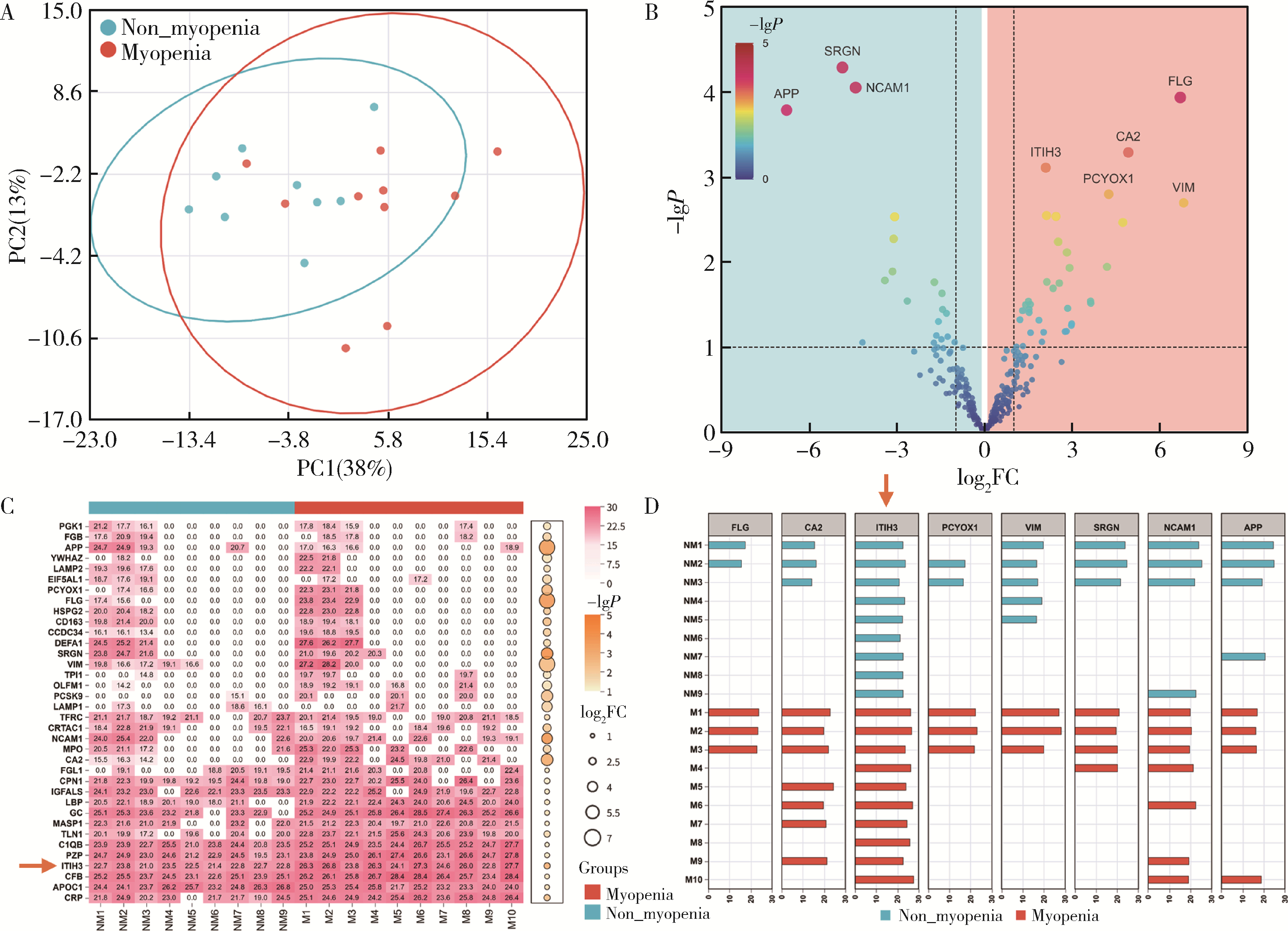
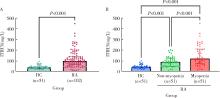
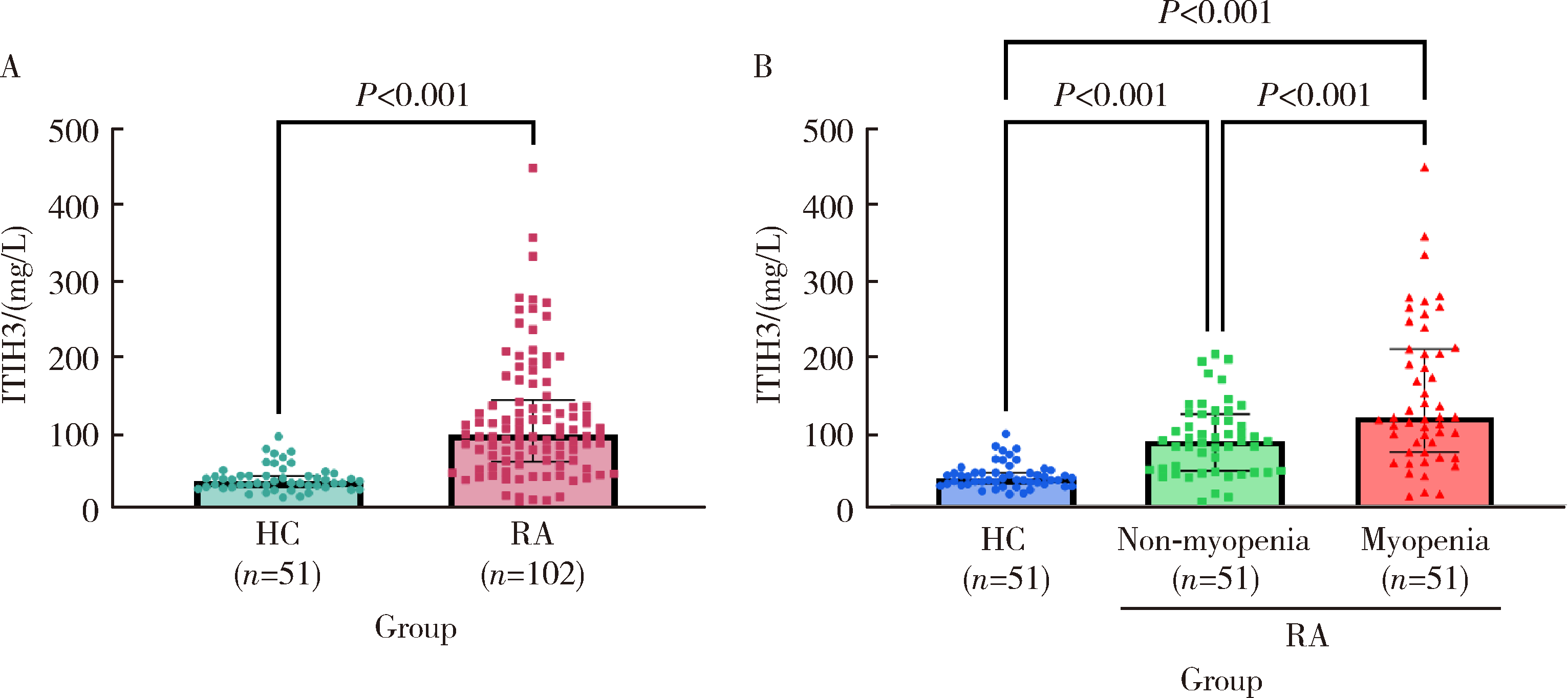
目的: 探索类风湿关节炎(rheumatoid arthritis,RA)患者肌肉量减少的生物标志物。方法: 本研究为横断面研究,采用非标记液相色谱-串联质谱技术检测基线病情活动且2年随访期间保持肌肉量正常或肌肉量减少的RA患者血清蛋白组学特征,并通过生物信息学分析两组患者血清中的差异蛋白;进一步纳入102例RA患者(肌肉量减少组和肌肉量正常组各51例)及招募志愿者51例作为健康对照组(healthy controls,HC)进行差异蛋白的ELISA验证,并采用Logistic回归分析RA患者基线肌肉量减少的相关因素。结果: 10例肌肉量减少组与9例肌肉量正常组RA患者通过基线血清蛋白组学分析筛选出38个差异蛋白,其中间-α-胰蛋白酶抑制蛋白重链3(inter-alpha-trypsin inhibitor heavy chain H3,ITIH3)表达差异显著(log2FC=2.09),并在所有血清样本中稳定表达。ELISA验证结果显示102例RA患者血清ITIH3水平显著高于HC组[(119.4±79.7) mg/L vs. (42.3±16.6) mg/L, P < 0.001],且肌肉量减少组RA患者血清ITIH3显著高于肌肉量正常组[(148.1±94.7) mg/L vs. (90.8±46.6) mg/L, P < 0.001]。多因素Logistic回归分析结果显示,校正混杂因素后,血清ITIH3水平仍是RA患者肌肉量减少的独立危险因素(OR=1.024,95%CI:1.013~1.038,P < 0.001)。结论: 血清ITIH3水平是RA患者肌肉量减少的独立危险因素,提示ITIH3可能是RA肌肉量减少的潜在生物标志物。

关键词: 类风湿关节炎, 肌肉量减少, 蛋白质组学, 生物标志物, 间-α-胰蛋白酶抑制蛋白重链3

Abstract:

Objective: To explore the serum biomarkers of myopenia in patients with rheumatoid arthritis (RA) via serum proteomic profiling. Methods: This cross-sectional study recruited active RA patients who either sustained non-myopenic or myopenia state over a 2-year follow-up period and unlabeled liquid chromatography-tandem mass spectrometry (LC-MS/MS) was used to analyze the serum proteomic profiles. Bioinformatics analyses were then applied to identify differentially expressed proteins between the two groups. Further validation cohort enrolled 102 RA patients (including 51 cases of non-myopenia group and 51 cases of myopenia group) and 51 healthy controls (HC) with age- and gender- matched propensity score at a 1 ∶ 1 ∶ 1 ratio. Enzyme-linked immunosorbent assay (ELISA) was used to verify the expression levels of the candidate protein. Multivariate logistic regression analysis was performed to identify baseline factors associated with myopenia in the RA patients. Results: Initial proteomic analysis of baseline serum samples from 9 non-myopenia RA patients and 10 myopenia RA patients identified 38 differentially expressed proteins. Among them, inter-alpha-trypsin inhibitor heavy chain H3 (ITIH3) showed a significant upregulation in the myopenia group (log2FC=2.09) and was consistently detected across all the samples. Subsequent ELISA validation confirmed that the serum ITIH3 level in 102 RA patients was significantly higher than that in 51 HC [(119.4±79.7) mg/L vs. (42.3±16.6) mg/L, P < 0.001], in which both myopenia group and non-myopenia group of the RA patients showed higher levels of serum ITIH3 than the HC group (both P < 0.001). Importantly, the serum ITIH3 level in the 51 patients with myopenia were significantly higher than that in the 51 patients without myopenia [(148.1±94.7) mg/L vs. (90.8±46.6) mg/L, P < 0.001]. After adjustment for confounding covariates including gender, age, disease duration, erythrocyte sedimentation rate (ESR), C-reactive protein (CRP), radiological joint destruction and previous treatment, the multivariate Logistic regression analysis showed that the baseline serum ITIH3 level was an independent risk factor for myopenia in the RA patients (OR=1.024, 95%CI: 1.013-1.038, P < 0.001). Conclusion: This study identifies serum ITIH3 as a significant and independent risk factor for myopenia in patients with RA, which imply that ITIH3 might be a potential biomarker of myopenia. Further longitudinal large-sample multicenter validation is warranted to elucidate the precise role of ITIH3 in the pathophysiology of RA-associated myopenia and the clinical utility in risk stratification and management.

Key words: Rheumatoid arthritis, Myopenia, Proteomics, Biomarker, Inter-alpha-trypsin inhibitor heavy chain H3 (ITIH3)

中图分类号: 

  • R593.22

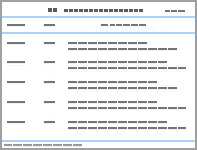
表1

19例进行血清LC-MS/MS检测的RA患者的基线临床特征比较"

Items Non-myopenia RA patients (n=9) Myopenia RA patients (n=10) Statistics P
Female, n (%) 7(77.8) 8(80.0) χ2=0.000 >0.999
Age/years, $\bar x \pm s$ 45.1±9.5 40.0±10.0 t=1.139 0.271
ASMI/(kg/m2), $\bar x \pm s$ 6.50±0.55 5.17±0.62 t=4.932 <0.001
Disease duration/month, M (Q1, Q3) 8.0(5.5, 10.0) 10.0(1.0, 12.5) Z=-0.369 0.712
Active smoking, n (%) 0(0.0) 1(10.0) - >0.999*
CDAI, M (Q1, Q3) 19.0(14.5, 29.0) 22.5(11.8, 27.0) Z=-0.286 0.775

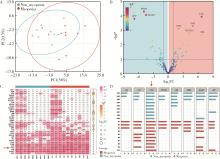
图1

肌肉量减少组和肌肉量正常组RA患者血清LC-MS/MS检测及生物信息学分析"

表2

健康对照组与RA患者组的基线临床特征比较"

Items HC(n=51) Non-myopenia RA patients (n=51) Myopenia RA patients (n=51) All RA patients(n=102) Statistics P
Female, n (%) 44 (86.3) 39(76.5) 42(82.4) 81 (79.4) χ2 =2.753a 0.252
Age/years, $\bar x \pm s$ 46.9±8.8 48.7±9.8 49.5±13.0 49.1±11.5 F=0.811a 0.446
ASMI/(kg/m2), $\bar x \pm s$ 6.31±0.73 6.81±0.67 5.23±0.63 6.0±1.0 F=72.335a < 0.001
Myopenia, n (%) 10 (19.6) 0(0.0) 51(100.0) 51 (50.0) - < 0.001b*
Disease duration/month, M(Q1, Q3) - 39 (6, 111) 65 (14, 133) 41 (10, 120) Z=-2.202c 0.028
Active smoking, n (%) - 7(13.7) 6(11.8) 13 (14.6) χ2=0.088c 0.767
Positive RF, n (%) - 38(74.5) 42(82.4) 80 (78.4) χ2=0.927c 0.336
Positive ACPA, n (%) - 37(72.5) 41(80.4) 78 (76.5) χ2=0.872c 0.350
28TJC, M (Q1, Q3) - 3 (1, 8) 4 (1, 7) 3 (1, 7) Z=-0.199c 0.842
28SJC, M (Q1, Q3) - 2 (1, 6) 2 (0, 5) 2 (1, 5) Z=-0.149c 0.882
PtGA/cm, M (Q1, Q3) - 4 (2, 7) 4 (3, 6) 4 (2, 6) Z=-0.236c 0.814
PrGA/cm, M (Q1, Q3) - 3 (2, 7) 4 (3, 6) 4 (2, 6) Z=-0.508c 0.611
Pain VAS/cm, M (Q1, Q3) - 3 (2, 7) 4 (2, 5) 4 (2, 5) Z=-0.784c 0.433
ESR/(mm/h), M (Q1, Q3) - 32 (19, 50) 49 (24, 77) 37 (21, 64) Z=-2.534c 0.011
CRP/(mg/L), M (Q1, Q3) - 5.9 (3.3, 10.6) 10.2 (3.3, 25.5) 6.8 (3.3, 17.9) Z=-1.581c 0.114
CDAI, M (Q1, Q3) - 13 (6, 28) 16 (9, 23) 14 (8, 24) Z=-0.378c 0.705
Active disease, n (%) 44 (86.3) 43(84.3) 87 (85.3) χ2=0.078c 0.780
HAQ-DI, M (Q1, Q3) - 0.25 (0.00, 1.00) 0.50 (0.13, 1.25) 0.38 (0.00, 1.06) Z=-0.892c 0.372
Physical dysfunction, n (%) 14 (27.5) 15(29.4) 29(28.4) χ2=0.048c 0.826
mTSS, M (Q1, Q3) - 5 (0, 32) 11 (3, 46) 8 (0, 36) Z=-1.564c 0.118
Radiological joint destruction, n (%) 19 (37.3) 27 (52.9) 46 (45.1) χ2=2.534c 0.111

图2

健康对照组与RA患者组基线血清ITIH3水平的比较"

表3

Logistic回归分析RA患者基线肌肉量减少的相关因素"

Items Univariate Multivariate1 Multivariate2
OR(95%CI) P OR(95%CI) P OR(95%CI) P
ITIH3 1.012 (1.005-1.019) < 0.001 1.018 (1.009-1.029) < 0.001 1.024 (1.013-1.038) < 0.001
Female 1.436 (0.548-3.875) 0.462 1.137 (0.215-6.436) 0.880
Age 1.006 (0.972-1.042) 0.721 1.002 (0.949-1.059) 0.939
Disease duration 1.004 (0.999-1.009) 0.112 1.000 (0.993-1.007) 0.977 1.000 (0.993-1.008) 0.960
Active smoking 0.813 (0.241-2.667) 0.731
Positive RF 1.596 (0.619-4.271) 0.335
Positive ACPA 1.551 (0.619-4.003) 0.350
28TJC 0.990 (0.918-1.065) 0.779
28SJC 0.961 (0.865-1.063) 0.442
PtGA 1.002 (0.874-1.150) 0.972
PrGA 1.010 (0.877-1.165) 0.886
Pain VAS 1.036 (0.885-1.215) 0.660
ESR 1.016 (1.003-1.031) 0.013 1.021 (1.000-1.045) 0.056 1.024 (0.999-1.052) 0.065
CRP 1.009 (0.995-1.026) 0.213 0.986 (0.959-1.015) 0.321 0.986 (0.954-1.022) 0.403
CDAI 0.995 (0.966-1.026) 0.761
HAQ-DI 1.039 (0.617-1.758) 0.884
Physical dysfunction 1.112 (0.449-2.771) 0.818
mTSS 1.005 (0.996-1.016) 0.289
Radiological joint destruction 1.945 (0.851-4.531) 0.115 1.435 (0.4595-4.463) 0.530 1.833 (0.521-6.576) 0.344
Previous treatment
Treatment naÏve 0.804 (0.316-2.013) 0.641 0.805 (0.052-16.06) 0.881
Glucocorticoids 1.314 (0.569-3.060) 0.522 3.126 (0.874-13.37) 0.097
csDMARDs 1.458 (0.545-4.013) 0.453 0.436 (0.040-5.478) 0.494
bDAMRDs/tsDMARDs 1.537 (0.243-12.12) 0.644 1.022 (0.099-10.94) 0.985
1
中华医学会老年医学分会, 国家老年疾病临床医学研究中心(湘雅医院). 中国肌肉减少症诊疗指南(2024版)[J]. 中华医学杂志, 2025, 105(3): 181- 203.
2
Jin H , Wang G , Lu Q , et al. Pathophysiology of myopenia in rheumatoid arthritis[J]. Bone Res, 2025, 13(1): 64.

doi: 10.1038/s41413-025-00438-9
3
Fearon K , Evans WJ , Anker SD . Myopenia: A new universal term for muscle wasting[J]. J Cachexia Sarcopenia Muscle, 2011, 2(1): 1- 3.

doi: 10.1007/s13539-011-0025-7
4
Lin JZ , Liang JJ , Ma JD , et al. Myopenia is associated with joint damage in rheumatoid arthritis: A cross-sectional study[J]. J Cachexia Sarcopenia Muscle, 2019, 10(2): 355- 367.

doi: 10.1002/jcsm.12381
5
Ma JD , Chen CT , Lin JZ , et al. Muscle wasting, a neglected complication associated with physical dysfunction in elderly patients with rheumatoid arthritis: A cross-sectional observational study[J]. Scand J Rheumatol, 2021, 50(4): 280- 289.

doi: 10.1080/03009742.2020.1842902
6
Bennett JL , Pratt AG , Dodds R , et al. Rheumatoid sarcopenia: Loss of skeletal muscle strength and mass in rheumatoid arthritis[J]. Nat Rev Rheumatol, 2023, 19(4): 239- 251.

doi: 10.1038/s41584-023-00921-9
7
Tosato M , Marzetti E , Cesari M , et al. Measurement of muscle mass in sarcopenia: From imaging to biochemical markers[J]. Aging Clin Exp Res, 2017, 29(1): 19- 27.

doi: 10.1007/s40520-016-0717-0
8
Jia PW , Lin JZ , Zou YW , et al. The characteristic of muscle function for sarcopenia in patients with rheumatoid arthritis: A large-scale real-world cross-sectional study[J]. Medicina, 2025, 61(4): 551.

doi: 10.3390/medicina61040551
9
Pan J , Zou YW , Zhu YY , et al. Muscle mass loss is associated with physical dysfunction in patients with early rheumatoid arthritis[J]. Front Nutr, 2022, 9, 1007184.

doi: 10.3389/fnut.2022.1007184
10
Lin JZ , Liu Y , Ma JD , et al. Reduced skeletal muscle inde-pendently predicts 1-year aggravated joint destruction in patients with rheumatoid arthritis[J]. Ther Adv Musculoskelet Dis, 2020, 12, 1759720X20946220.

doi: 10.1177/1759720X20946220
11
国家皮肤与免疫疾病临床医学研究中心(北京协和医院), 中国医师协会风湿免疫专科医师分会, 中国康复医学会风湿免疫病康复专业委员会, 等. 2024中国类风湿关节炎诊疗指南[J]. 中华内科杂志, 2024, 63(11): 1059- 1077.
12
贾霈雯, 杨迎, 邹耀威, 等. 类风湿关节炎患者低肌肉量综合征的临床特征及其对躯体功能的影响[J]. 北京大学学报(医学版), 2024, 56(6): 1009- 1016.
13
Adair JE , Stober V , Sobhany M , et al. Inter-α-trypsin inhibitor promotes bronchial epithelial repair after injury through vitronectin binding[J]. J Biol Chem, 2009, 284(25): 16922- 16930.

doi: 10.1074/jbc.M808560200
14
Okroj M , Holmquist E , Sjölander J , et al. Heavy chains of inter alpha inhibitor (IαI) inhibit the human complement system at early stages of the cascade[J]. J Biol Chem, 2012, 287(24): 20100- 20110.

doi: 10.1074/jbc.M111.324913
15
Karuna N , Tonry C , Ledwidge M , et al. Proteomic-based bio-marker discovery reveals panels of diagnostic biomarkers for early identification of heart failure subtypes[J]. J Transl Med, 2025, 23(1): 546.

doi: 10.1186/s12967-025-06563-7
16
de Almeida LGN , Young D , Chow L , et al. Proteomics and metabolomics profiling of platelets and plasma mediators of thrombo-inflammation in gestational hypertension and preeclampsia[J]. Cells, 2022, 11(8): 1256.

doi: 10.3390/cells11081256
17
Schroeter CB , Nelke C , Stascheit F , et al. Inter-alpha-trypsin inhibitor heavy chain H3 is a potential biomarker for disease activity in myasthenia gravis[J]. Acta Neuropathol, 2024, 147(1): 102.

doi: 10.1007/s00401-024-02754-6
[1] 丁艳, 王丽芳, 李超然, 卢哲敏, 石连杰. 利妥昔单抗成功治疗类风湿关节炎合并IgG4相关性疾病1例[J]. 北京大学学报(医学版), 2025, 57(6): 1203-1207.
[2] 杨丛艺, 郑小雯, 陈静宜, 徐俊, 陈峰, 陈扬, 陈宁. 溃疡性结肠炎患者唾液外泌体内蛋白标志物的筛选及功能分析[J]. 北京大学学报(医学版), 2025, 57(5): 895-902.
[3] 杨菊, 徐婧, 戴菊华, 石连杰. Lumican蛋白在类风湿关节炎患者血清中的表达及其与疾病和免疫活动的相关性[J]. 北京大学学报(医学版), 2025, 57(5): 911-918.
[4] 冯亮华, 洪丽荣, 陈雨佳, 蔡学明. 泛素特异性蛋白酶35对类风湿关节炎成纤维样滑膜细胞铁死亡的作用及机制[J]. 北京大学学报(医学版), 2025, 57(5): 919-925.
[5] 贾霈雯, 杨迎, 邹耀威, 欧阳志明, 林建子, 马剑达, 杨葵敏, 戴冽. 类风湿关节炎患者低肌肉量综合征的临床特征及其对躯体功能的影响[J]. 北京大学学报(医学版), 2024, 56(6): 1009-1016.
[6] 马豆豆, 卢哲敏, 郭倩, 朱莎, 古今, 丁艳, 石连杰. 小剂量利妥昔单抗成功治疗类风湿关节炎合并重症肌无力1例[J]. 北京大学学报(医学版), 2024, 56(6): 1110-1114.
[7] 闫蕊, 柯丹, 张妍, 李丽, 苏焕然, 陈伟, 孙明霞, 刘晓敏, 罗靓. 血清趋化因子CXCL-10和涎液化糖链抗原6水平在类风湿关节炎合并肺间质病变患者中的诊断和病情评估价值[J]. 北京大学学报(医学版), 2024, 56(6): 956-962.
[8] 赵亮, 史成龙, 马柯, 赵静, 王潇, 邢晓燕, 莫万星, 练益瑞, 高超, 李玉慧. 抗合成酶综合征重叠类风湿关节炎患者的免疫学特征[J]. 北京大学学报(医学版), 2024, 56(6): 972-979.
[9] 韩艺钧, 陈小莉, 李常虹, 赵金霞. 甲氨蝶呤在类风湿关节炎患者中的应用现状[J]. 北京大学学报(医学版), 2024, 56(6): 994-1000.
[10] 刘东武, 陈杰, 高明利, 于静. 类风湿关节炎伴发淋巴结Castleman样病理改变1例[J]. 北京大学学报(医学版), 2024, 56(5): 928-931.
[11] 黄会娜,赵静,赵祥格,白自然,李霞,王冠. 乳酸对类风湿关节炎患者外周血CD4+T细胞亚群的调控作用[J]. 北京大学学报(医学版), 2024, 56(3): 519-525.
[12] 汤晓菲,李永红,丁秋玲,孙卓,张阳,王育梅,田美伊,刘坚. 类风湿关节炎患者下肢深静脉血栓发病率及危险因素[J]. 北京大学学报(医学版), 2024, 56(2): 279-283.
[13] 邹雪,白小娟,张丽卿. 艾拉莫德联合托法替布治疗难治性中重度类风湿关节炎的疗效[J]. 北京大学学报(医学版), 2023, 55(6): 1013-1021.
[14] 吴琦,蔡月明,何娟,黄文蒂,王庆文. 血脂异常与类风湿关节炎肺间质病变的相关性分析[J]. 北京大学学报(医学版), 2023, 55(6): 982-992.
[15] 张警丰,金银姬,魏慧,姚中强,赵金霞. 体重指数与类风湿关节炎临床特征的相关性分析[J]. 北京大学学报(医学版), 2023, 55(6): 993-999.
Viewed
Full text


Abstract

Cited

  Shared   
  Discussed   
No Suggested Reading articles found!