北京大学学报(医学版) ›› 2026, Vol. 58 ›› Issue (4): 723-728. doi: 10.19723/j.issn.1671-167X.2026.04.007

• 论著 • 上一篇    下一篇

慢性肾脏病3期行肾部分切除术患者围术期急性肾损伤的危险因素

肖若陶1,*, 谢志飞1,2,*, 洪鹏1, 杨斌1, 刘磊1, 张树栋1,*()   

  1. 1. 北京大学第三医院泌尿外科,北京 100191
    2. 天津市武清区第二人民医院泌尿外科,天津 300170
  • 收稿日期:2026-02-25 出版日期:2026-08-18 发布日期:2026-04-30
  • 通讯作者: 张树栋
  • 作者简介:

    * These authors contributed equally to this work

  • 基金资助:
    北京大学第三医院临床重点项目(BYSYZD2023050)

Risk factors for perioperative acute kidney injury following partial nephrectomy in patients with stage 3 chronic kidney disease

Ruotao XIAO1, Zhifei XIE1,2, Peng HONG1, Bin YANG1, Lei LIU1, Shudong ZHANG1,*()   

  1. 1. Department of Urology, Peking University Third Hospital, Beijing 100191, China
    2. Department of Urology, The Second People's Hospital of Wuqing Tianjin, Tianjin 300170, China
  • Received:2026-02-25 Online:2026-08-18 Published:2026-04-30
  • Contact: Shudong ZHANG
  • Supported by:
    the Clinical Key Project of Peking University Third Hospital(BYSYZD2023050)

RICH HTML


摘要:

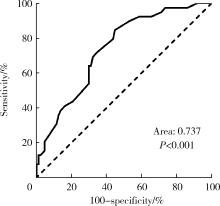
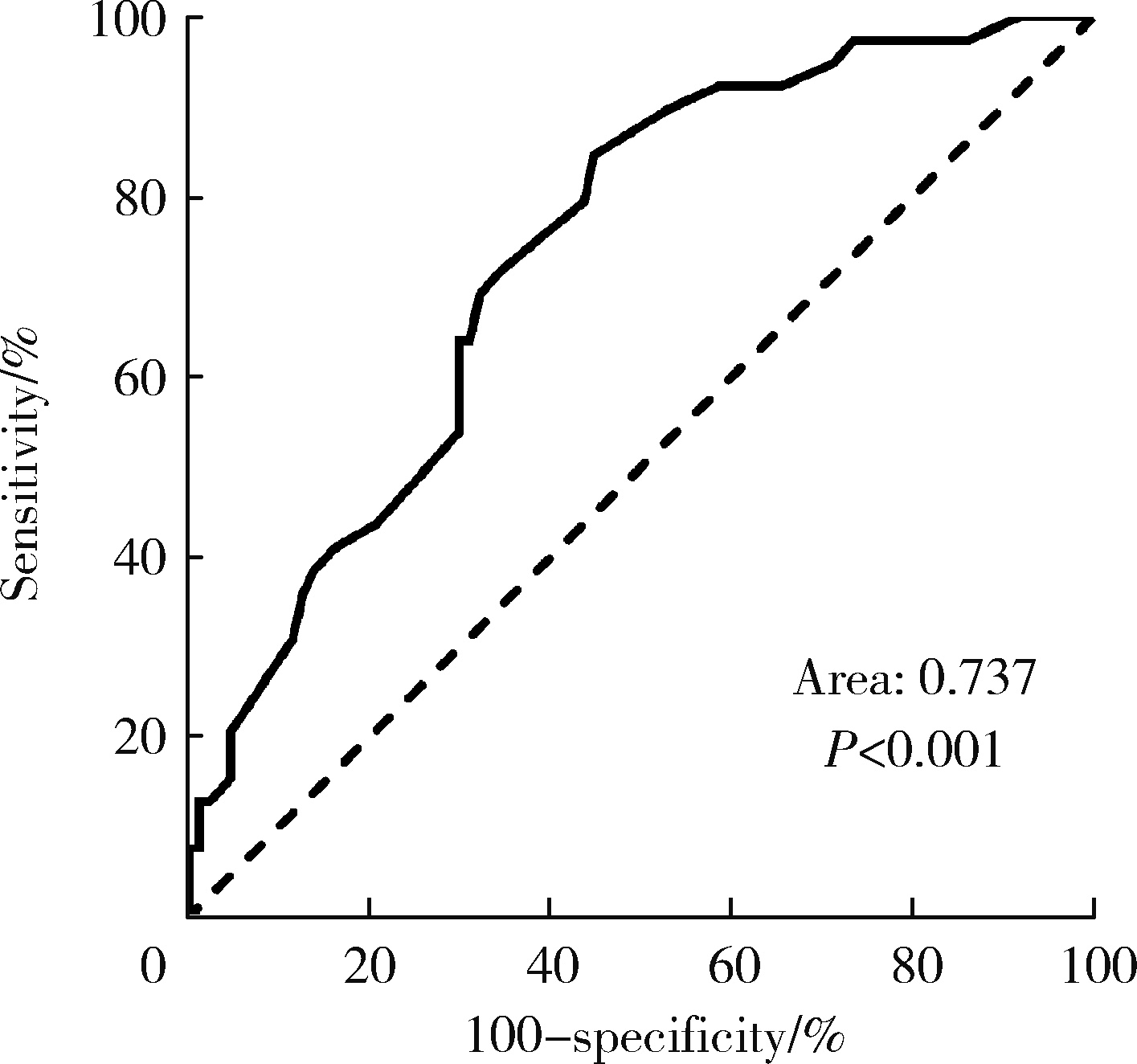
目的: 探讨慢性肾脏病(chronic kidney disease, CKD)3期患者行肾部分切除术后发生急性肾损伤(acute kidney injury, AKI)的危险因素。方法: 回顾性分析2013年1月至2025年12月于北京大学第三医院行肾部分切除术的CKD 3期患者的临床资料,收集患者人口学特征、合并症、手术相关指标及实验室数据。根据改善全球肾脏病预后组织(Kidney Disease: Improving Global Outcomes, KDIGO)的标准定义术后AKI。采用单因素和多因素回归分析筛选术后AKI的独立危险因素,并通过受试者工作特征(receiver operating characteristic, ROC)曲线确定相关因素的预测截断值。结果: 共纳入126例CKD 3期患者,术后AKI发生率为31.0%(39/126)。单因素分析显示,AKI组患者机器人手术比例更低(12.8% vs. 33.3%,P=0.018),肾动脉阻断时间更长(25 min vs. 18 min,P < 0.001),术中出血量更多(20 mL vs. 50 mL,P=0.028)。多因素Logistic回归分析显示,肾动脉阻断时间(OR=1.105,95%CI:1.041~1.173,P=0.001)和术中出血量(OR=1.004,95%CI:1.000~1.007,P=0.046)是术后发生AKI的独立危险因素。ROC曲线分析显示,肾动脉阻断时间预测AKI的曲线下面积为0.737,最佳截断值为18 min,阻断时间≥18 min的患者AKI发生率显著高于 < 18 min的患者(43.2% vs. 8.8%,P < 0.001)。结论: CKD 3期患者行肾部分切除术后AKI发生率较高,肾动脉阻断时间与术中出血量是术后发生AKI的独立危险因素,将肾动脉阻断时间控制在18 min以内并尽量减少术中出血,有助于降低该高危人群术后AKI的风险。

关键词: 慢性肾脏病3期, 肾部分切除术, 急性肾损伤, 危险因素, 肾动脉阻断时间

Abstract:

Objective: To explore the risk factors for acute kidney injury (AKI) in patients with stage 3 chronic kidney disease (CKD) after partial nephrectomy. Methods: The clinical data of 126 stage 3 CKD patients who underwent partial nephrectomy at Peking University Third Hospital from January 2013 to December 2025 were retrospectively analyzed. Demographic characteristics, comorbidities, surgical-related indicators, and laboratory data of the patients were collected. AKI was defined according to the Kidney Disease: Improving Global Outcomes (KDIGO) criteria. Univariate and multivariate regression analyses were used to identify the independent risk factors for postoperative AKI, and the predictive cutoff value of the receiver operating characteristic (ROC) curve was determined. Results: A total of 126 stage 3 CKD patients were included. The incidence of AKI after surgery was 31.0% (39/126). Univariate analysis showed that the proportion of robotic surgery was lower in the AKI group (12.8% vs. 33.3%, P=0.018), the duration of renal artery occlusion was longer (25 min vs. 18 min, P < 0.001), and the intraoperative blood loss was greater (20 mL vs. 50 mL, P=0.028). Multivariate Logistic regression analysis confirmed that the duration of renal artery occlusion (OR=1.105, 95%CI: 1.041-1.173, P=0.001) and intraoperative blood loss (OR=1.004, 95%CI: 1.000-1.007, P=0.046) were independent risk factors for postoperative AKI. ROC curve analysis showed that the area under the curve for predicting AKI by renal artery occlusion time was 0.737, and the optimal cutoff value was 18 min. The incidence of AKI was significantly higher in the patients with renal artery occlusion time ≥ 18 min than those with < 18 min (43.2% vs. 8.8%, P < 0.001). Conclusion: The incidence of AKI after partial nephrectomy in stage 3 CKD patients is relatively high. The duration of renal artery occlusion and intra-operative blood loss are independent risk factors for postoperative AKI. Controlling the renal artery occlusion time within 18 min and minimizing intraoperative blood loss can help reduce the risk of AKI in this high-risk population after surgery.

Key words: Chronic kidney disease stage 3, Partial nephrectomy, Acute kidney injury, Risk factors, Renal artery occlusion time

中图分类号: 

  • R699.2

表1

AKI组与非AKI组基线资料对比"

Variable Non-AKI group (n=87) AKI group (n=39) χ2/t/Z P
Gender, n (%) 0.220 0.652
    Male 68 (78.2) 29 (74.4)
    Female 19 (21.8) 10 (25.6)
Age/years, $\bar x \pm s$ 70.34±9.01 68.46±8.48 1.104 0.272
BMI/(kg/m2), $\bar x \pm s$ 24.06±2.82 23.72±3.98 0.542 0.589
Symptom, n (%) 0.712 0.512
    Asymptomatic 7 (8.0) 5 (12.8)
    Symptomatic 80 (92.0) 34 (87.2)
Comorbidity, n (%)
    Hypertension 61 (70.1) 29 (74.4) 0.238 0.675
    Diabetes 32 (36.8) 12 (30.8) 0.428 0.551
    Cardiovascular diseases 23 (26.4) 12 (30.8) 0.252 0.669
ASA grade, n (%) 2.048 0.359
    Ⅰ 4 (4.6) 0 (0)
    Ⅱ 63 (72.4) 31 (79.5)
    Ⅲ-Ⅳ 20 (23.0) 8 (20.5)
Surgical approach, n (%) 5.751 0.018
    Laparoscopic 58 (66.7) 34 (87.2)
    Robotic 29 (33.3) 5 (12.8)
Tumor side, n (%) 0.301 0.695
    Left 40 (46.0) 19 (51.4)
    Right 47 (54.0) 18 (48.6)
Tumor size/cm, $\bar x \pm s$ 3.11±1.97 3.47±1.13 -1.081 0.282
R.E.N.A.L. scores, n (%) 3.199 0.202
    Low risk 35 (40.2) 10 (25.6)
    Moderate risk 35 (40.2) 22 (56.4)
    High risk 17 (19.6) 7 (18.0)
Duration of the surgery/min, M (P25, P75) 136 (112, 169) 155 (120, 196) -1.887 0.059
Duration of renal artery occlusion/min, M (P25, P75) 18 (13, 25) 25 (20, 30) -4.257 < 0.001
Intraoperative bleeding/mL, M (P25, P75) 20 (10, 50) 50 (20, 200) -2.200 0.028
Complication, n (%) 5 (5.7) 4 (10.3) 0.826 0.457
Length of hospital stay/d, M (P25, P75) 6 (5, 7) 6 (4, 7) -0.379 0.705
Pathologic subtype, n (%) 0.177 0.916
    ccRCC 67 (77.0) 31 (79.5)
    Non-ccRCC 16 (18.4) 6 (15.4)
    Benign tumor 4 (4.6) 2 (5.1)
Baseline creatinine/(μmol/L), $\bar x \pm s$ 113.03±27.42 120.82±49.04 -1.139 0.257
CKD stage, n (%) 0.860 0.381
    CKD 3a 67 (77.0) 27 (69.2)
    CKD 3b 20 (23.0) 12 (30.8)
Postoperative creatinine/(μmol/L), $\bar x \pm s$ 114.33±27.42 185.56±102.11 -5.850 < 0.001
Absolute increase in creatinine/(μmol/L), $\bar x \pm s$ 1.30±27.21 64.74±84.25 -6.747 < 0.001
Creatinine elevation rate/%, $\bar x \pm s$ 0.98±15.72 57.43±92.16 -5.561 < 0.001

表2

肾部分切除术后发生AKI的多因素Logistic回归模型分析"

Variable OR 95%CI Wald Pa
Surgical approach
  Laparoscopic Reference Reference Reference
  Robotic 0.302 0.086-1.067 3.458 0.063
Duration of renal artery occlusion 1.105 1.041-1.173 10.758 0.001
Intraoperative bleeding 1.004 1.000-1.007 16.788 0.046

图1

肾动脉阻断时间对应AKI发生的ROC曲线"

1
Bex A , Abu Ghanem Y , Albiges L , et al. European association of urology guidelines on renal cell carcinoma: The 2025 update[J]. Eur Urol, 2025, 87 (6): 683- 696.

doi: 10.1016/j.eururo.2025.02.020
2
Saitta C , Afari JA , Autorino R , et al. Development of a novel score (RENSAFE) to determine probability of acute kidney injury and renal functional decline post surgery: A multicenter analysis[J]. Urol Oncol, 2023, 41 (12): 487.e15- 487.e23.

doi: 10.1016/j.urolonc.2023.09.015
3
Yang X , Zhang T , Zhou H , et al. Acute kidney injury as an independent predicting factor for stage 3 or higher chronic kidney disease after nephrectomy[J]. Urol Oncol, 2023, 41 (3): 149.e1- 149.e9.

doi: 10.1016/j.urolonc.2022.10.011
4
Kong H , Yin QL , Li M , et al. Effect of perioperative dexmedetomidine on acute kidney injury after partial nephrectomy: A single-centre, randomised, double-blind, placebo-controlled trial[J]. Br J Anaesth, 2025, 135 (5): 1212- 1222.

doi: 10.1016/j.bja.2025.08.010
5
Rajan S , Babazade R , Govindarajan SR , et al. Perioperative factors associated with acute kidney injury after partial nephrectomy[J]. Br J Anaesth, 2016, 116 (1): 70- 76.

doi: 10.1093/bja/aev416
6
Bravi CA , Vertosick E , Benfante N , et al. Impact of acute kidney injury and its duration on long-term renal function after partial nephrectomy[J]. Eur Urol, 2019, 76 (3): 398- 403.

doi: 10.1016/j.eururo.2019.04.040
7
Suer E , Akpinar C , Izol V , et al. Predicting factors of acute kidney injury after partial nephrectomy and its impact on long-term renal function: A multicentre study of the Turkish Urooncology Association[J]. Int J Clin Pract, 2021, 75 (11): e14751.
8
Obrecht F , Padevit C , Froelicher G , et al. The association of ischemia type and duration with acute kidney injury after robot-assisted partial nephrectomy[J]. Curr Oncol, 2023, 30 (11): 9634- 9646.

doi: 10.3390/curroncol30110698
9
程改平, 秦伟, 刘婧, 等. 《KDOQI慢性肾脏病营养临床实践指南2020更新版》解读[J]. 中国全科医学, 2021, 24 (11): 1325- 1332.
10
Shu F , Liu Z , Duan P , et al. A predictive model for surgical approach selection in robotic partial nephrectomy and its perioperative outcomes based on single-center retrospective data[J]. Cancer Med, 2025, 14 (3): e70625.

doi: 10.1002/cam4.70625
11
邱敏, 宗有龙, 王滨帅, 等. 腹腔镜肾部分切除术治疗中高复杂程度肾肿瘤的效果[J]. 北京大学学报(医学版), 2023, 55 (5): 833- 837.

doi: 10.19723/j.issn.1671-167X.2023.05.009
12
张中元, 唐琦, 李学松, 等. R.E.N.A.L.肾肿瘤评分系统用于保留肾单位手术的临床分析[J]. 北京大学学报(医学版), 2012, 44 (4): 539- 543.
13
付帅, 李晓宁. 肾小球滤过率计算公式研究进展: 从Cockcroft-Gault公式到FAS公式[J]. 临床肾脏病杂志, 2020, 20 (1): 73- 77.
14
郭锦洲. 改善全球肾脏病预后组织(KDIGO)临床实践指南: 急性肾损伤[J]. 肾脏病与透析肾移植杂志, 2013, 22 (1): 57- 60.
15
Bravi CA , Mari A , Larcher A , et al. Toward individualized approaches to partial nephrectomy: Assessing the correlation between ischemia time and patient health status (RECORD2 project)[J]. Eur Urol Oncol, 2021, 4 (4): 645- 650.

doi: 10.1016/j.euo.2020.05.009
16
Bonventre JV , Yang L . Cellular pathophysiology of ischemic acute kidney injury[J]. J Clin Invest, 2011, 121 (11): 4210- 4221.

doi: 10.1172/JCI45161
17
Holderied A , Kraft F , Marschner JA , et al. "Point of no return" in unilateral renal ischemia reperfusion injury in mice[J]. J Biomed Sci, 2020, 27 (1): 34.

doi: 10.1186/s12929-020-0623-9
18
Schmid M , Abd-El-Barr AER , Gandaglia G , et al. Predictors of 30-day acute kidney injury following radical and partial nephrectomy for renal cell carcinoma[J]. Urol Oncol, 2014, 32 (8): 1259- 1266.

doi: 10.1016/j.urolonc.2014.05.002
19
Li Q , Huang Y , Zhang L , et al. Perioperative anemia predicts kidney injury after partial nephrectomy[J]. Investig Clin Urol, 2022, 63 (5): 514- 522.

doi: 10.4111/icu.20220160
20
Gumbert SD , Kork F , Jackson ML , et al. Perioperative acute kidney injury[J]. Anesthesiology, 2020, 132 (1): 180- 204.

doi: 10.1097/ALN.0000000000002968
21
Goren O , Matot I . Update on perioperative acute kidney injury[J]. Curr Opin Crit Care, 2016, 22 (4): 370- 378.
22
Karkouti K . Transfusion and risk of acute kidney injury in cardiac surgery[J]. Br J Anaesth, 2012, 109 (Suppl 1): i29- i38.
23
Thomas AA , Demirjian S , Lane BR , et al. Acute kidney injury: Novel biomarkers and potential utility for patient care in urology[J]. Urology, 2011, 77 (1): 5- 11.

doi: 10.1016/j.urology.2010.05.004
24
李强, 李铁军, 刘亮程, 等. 机器人辅助腹腔镜下阻断与不阻断肾血管肾部分切除术比较的系统评价和Meta分析[J]. 临床泌尿外科杂志, 2020, 35 (9): 709- 715.
[1] 魏慧, 张警丰, 姚中强, 赵金霞. 类风湿关节炎合并慢性病贫血患者的临床特征及相关因素[J]. 北京大学学报(医学版), 2026, 58(2): 307-312.
[2] 赵杰, 付春, 赵秀娟, 薛海岩, 李纾, 王振洲, 朱凤雪. 胸部创伤患者在重症监护病房内发生呼吸机相关性肺炎的危险因素[J]. 北京大学学报(医学版), 2026, 58(2): 351-358.
[3] 郭芷均, 俎明, 马超, 张贺军, 张静, 丁士刚. 同时性多发早期胃癌漏诊病灶的临床病理特征[J]. 北京大学学报(医学版), 2026, 58(2): 410-415.
[4] 李博闻, 张强, 孙益鑫. 儿童及青年漏斗胸患者Nuss术后发生脊柱侧弯的风险预测模型建立及验证[J]. 北京大学学报(医学版), 2025, 57(5): 941-946.
[5] 杨小勇, 张帆, 马潞林, 刘承. 前列腺导管腺癌临床特征及腺外侵犯的影响因素[J]. 北京大学学报(医学版), 2025, 57(5): 956-960.
[6] 周泽臻, 葛力源, 张帆, 邓绍晖, 颜野, 张洪宪, 王国良, 刘磊, 黄毅, 张树栋. 病理T3a期肾细胞癌肾部分切除与根治性肾切除的回顾性匹配研究[J]. 北京大学学报(医学版), 2025, 57(4): 704-710.
[7] 刘伟, 郭稳, 过哲, 李春艳, 李云龙, 刘思奇, 张亮, 宋慧. 痛风患者放射学阴性骨侵蚀的相关危险因素[J]. 北京大学学报(医学版), 2025, 57(4): 735-739.
[8] 陆梦溪, 刘秋萍, 周恬静, 刘晓非, 孙烨祥, 沈鹏, 林鸿波, 唐迅, 高培. 基于社区人群队列的甘油三酯-葡萄糖指数与心血管病发病和死亡的关联[J]. 北京大学学报(医学版), 2025, 57(3): 430-435.
[9] 杨龙傲, 金旭, 黄文初, 何丽华, 陈娟. 视屏作业人员视疲劳及干眼的流行病学调查[J]. 北京大学学报(医学版), 2025, 57(3): 554-561.
[10] 郭华秋, 王哲, 杨雪, 白洁. 口腔急诊出血患者的临床特征与危险因素[J]. 北京大学学报(医学版), 2025, 57(1): 142-147.
[11] 邓敏婷, 王楠, 夏斌, 赵玉鸣, 朱俊霞. 儿童及青少年挫入恒前牙自行再萌出的相关影响因素[J]. 北京大学学报(医学版), 2025, 57(1): 148-153.
[12] 李钰锴, 王红彦, 罗靓, 李云, 李春. 抗磷脂抗体在白塞病合并血栓中的临床意义[J]. 北京大学学报(医学版), 2024, 56(6): 1036-1040.
[13] 田杨, 韩永正, 李娇, 王明亚, 曲音音, 房景超, 金辉, 李民, 王军, 徐懋, 王圣林, 郭向阳. 颈椎前路手术后硬膜外血肿的发生率和危险因素[J]. 北京大学学报(医学版), 2024, 56(6): 1058-1064.
[14] 王明瑞, 赖金惠, 姬家祥, 唐鑫伟, 胡浩浦, 王起, 许克新, 徐涛, 胡浩. 使用中文版威斯康星结石生活质量问卷预测肾结石患者生活质量降低的危险因素[J]. 北京大学学报(医学版), 2024, 56(6): 1069-1074.
[15] 李志存, 吴天俣, 梁磊, 范宇, 孟一森, 张骞. 穿刺活检单针阳性前列腺癌术后病理升级的危险因素分析及列线图模型构建[J]. 北京大学学报(医学版), 2024, 56(5): 896-901.
Viewed
Full text


Abstract

Cited

  Shared   
  Discussed   
No Suggested Reading articles found!