北京大学学报(医学版) ›› 2026, Vol. 58 ›› Issue (2): 290-300. doi: 10.19723/j.issn.1671-167X.2026.02.011

• 论著 • 上一篇    下一篇

结直肠癌根治术后肝转移风险多中心列线图预测模型的构建与验证

王楠楠1,2,*, 袁大晋1,*, 朱昱冰1, 丁磊1,*()   

  1. 1. 首都医科大学附属北京世纪坛医院胃肠外科,北京 100038
    2. 江苏省肿瘤医院(南京医科大学附属肿瘤医院,江苏省癌症中心)结直肠外科,南京 210009
  • 收稿日期:2025-11-25 出版日期:2026-04-18 发布日期:2026-02-25
  • 通讯作者: 丁磊
  • 作者简介:

    * These authors contributed equally to this work

  • 基金资助:
    北京世纪坛医院院青年基金(2023-q19)

Development and validation of a multicenter nomogram predicting the risk of liver metastasis after curative resection of colorectal cancer

Nannan WANG1,2, Dajin YUAN1, Yubing ZHU1, Lei DING1,*()   

  1. 1. Department of Gastrointestinal Surgery, Beijing Shijitan Hospital, Capital Medical University, Beijing 100038, China
    2. Department of Colorectal Surgery, The Affiliated Cancer Hospital of Nanjing Medical University & Jiangsu Cancer Hospital & Jiangsu Institute of Cancer Research, Nanjing 210009, China
  • Received:2025-11-25 Online:2026-04-18 Published:2026-02-25
  • Contact: Lei DING
  • Supported by:
    the Youth Research Fund of Beijing Shijitan Hospital(2023-q19)

RICH HTML


摘要:

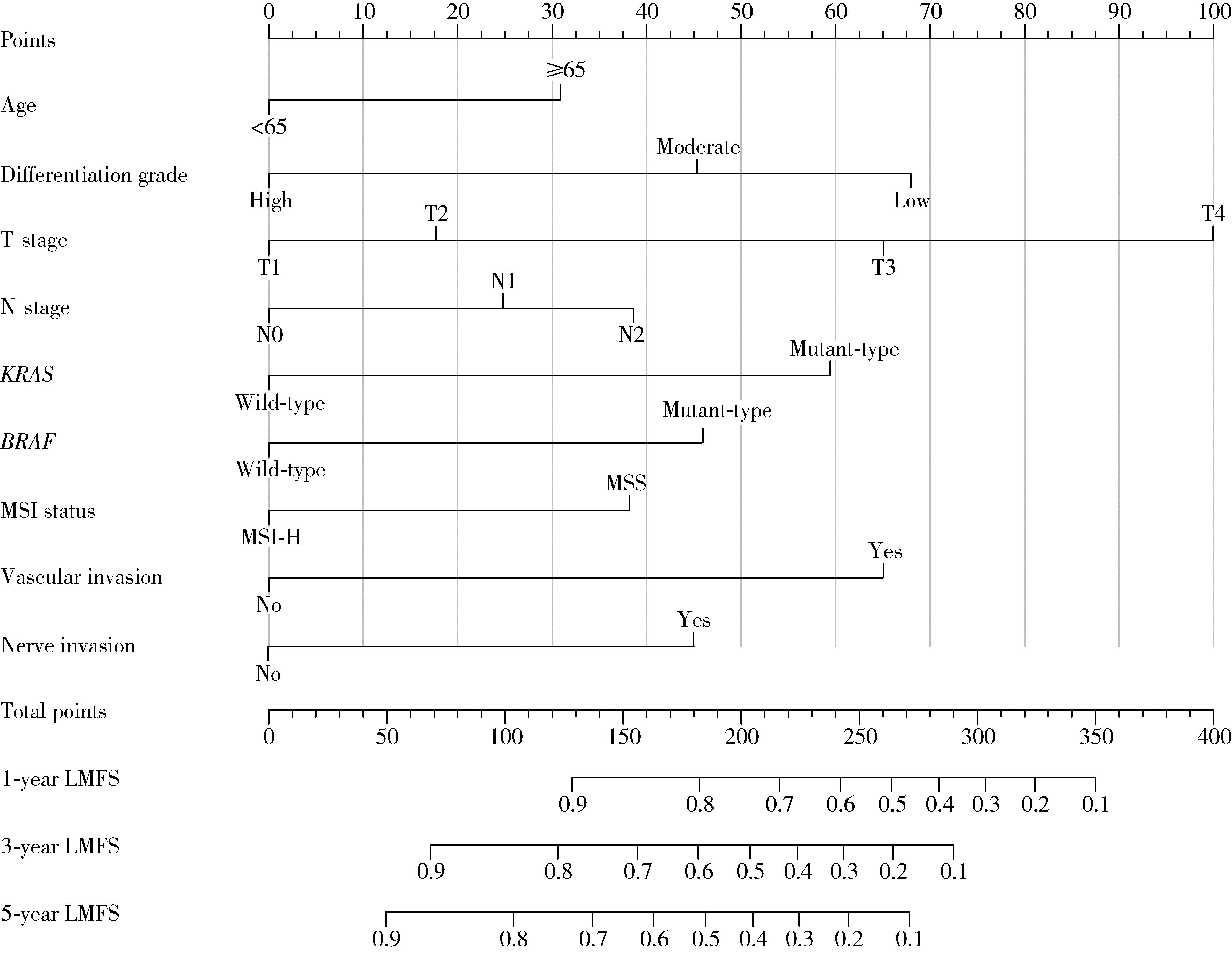
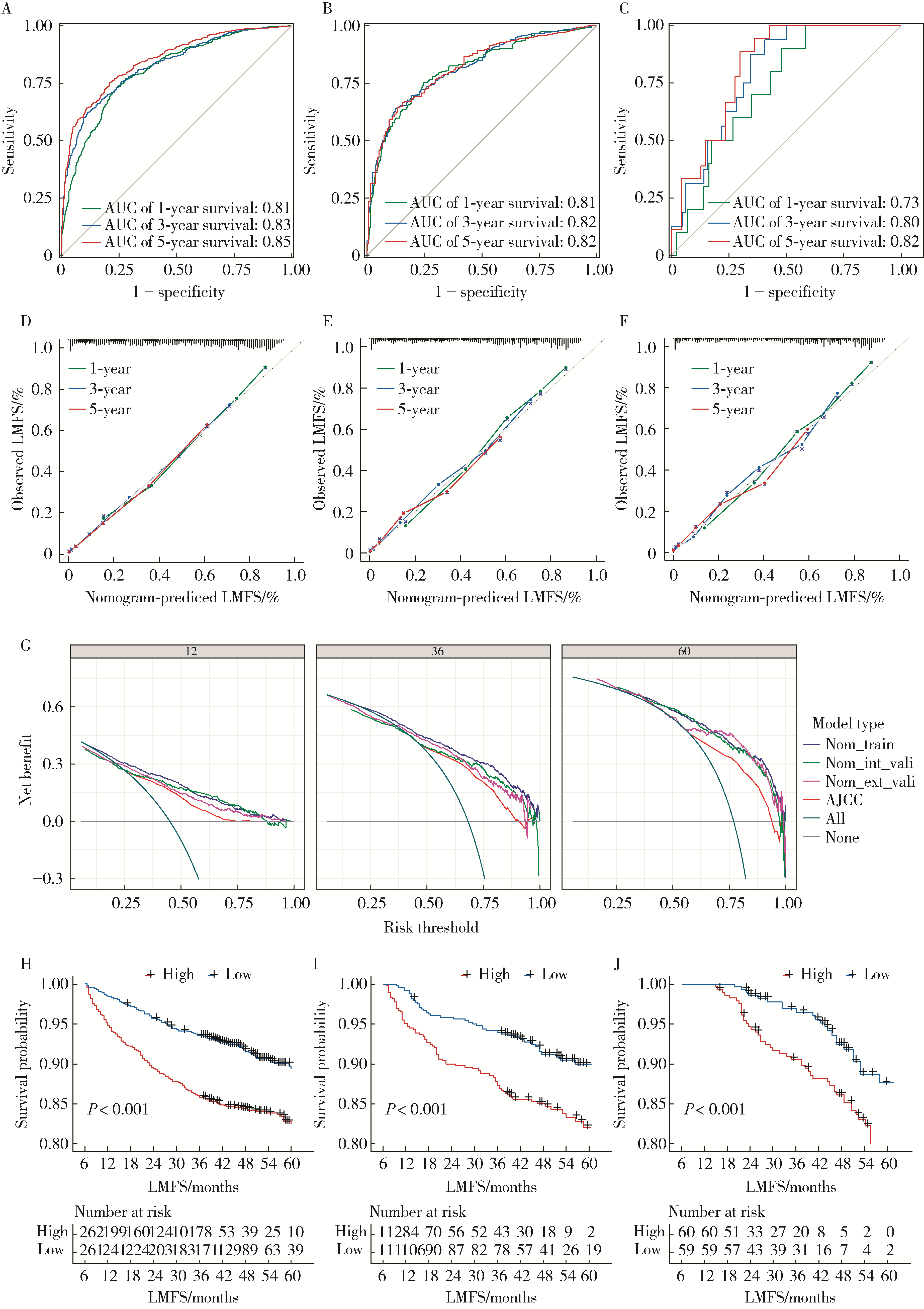
目的: 分析Ⅰ~Ⅲ期结直肠癌(colorectal cancer, CRC)根治性切除术后患者发生异时性肝转移的危险因素, 并构建用于预测患者术后1年、3年及5年无肝转移生存期(liver metastasis-free survival, LMFS)的列线图模型。方法: 采用多中心回顾性队列研究设计, 连续收集2020年1月至2024年12月于首都医科大学附属北京世纪坛医院行根治性切除术的746例CRC患者的病例资料, 按7 ∶3比例随机划分为训练集(523例)与内部验证集(223例); 连续选择同期江苏省肿瘤医院的119例患者作为独立外部验证集。纳入指标包括患者的临床病理特征及微卫星不稳定性(microsatellite instability, MSI)、KRAS/BRAF基因状态等分子标志物。采用单因素及多因素Cox比例风险回归分析筛选独立预测因子, 并据此构建LMFS列线图模型。通过一致性(concordance, C)指数、时间依赖性受试者工作特征(receiver operating characteristic, ROC)曲线的曲线下面积(area under the curve, AUC)、校准曲线及决策曲线分析(decision curve analysis, DCA)综合评估模型的区分度、校准度与临床实用性。结果: 研究的多中心队列基线资料均衡(P>0.05)。多因素分析显示, 高龄(≥65岁)、低分化、T分期进展、N分期进展、脉管侵犯、神经侵犯及分子标志物状态均为异时性肝转移的独立预后因素, 其中, KRAS突变(HR=1.42, 95%CI: 1.27~1.63)与BRAF突变(HR=1.53, 95%CI: 1.29~1.84)为异时性肝转移的独立危险因素, 而微卫星高度不稳定(microsatellite instability-high, MSI-H)状态(HR=0.71, 95%CI: 0.54~0.92)为异时性肝转移的独立保护因素。列线图模型在训练集、内部验证集和外部验证集中的C指数分别为0.85(95%CI: 0.82~0.89)、0.81(95%CI: 0.77~0.83)和0.75(95%CI: 0.71~0.79);训练集预测1年、3年、5年LMFS的AUC分别为0.81(95%CI: 0.77~0.86)、0.83(95%CI: 0.80~0.89)和0.85(95%CI: 0.78~0.92)。校准曲线显示预测值与实测值高度一致; DCA表明该预测模型相较于AJCC(American Joint Committee on Cancer)的TNM分期系统具有更高的临床净收益; 各队列中高风险组与低风险组的LMFS差异均具有统计学意义(P < 0.001)。结论: 本研究整合临床病理特征与KRASBRAF、MSI分子标志物构建的列线图模型, 在预测Ⅰ~Ⅲ期CRC患者术后异时性肝转移风险方面具有良好的区分度、校准度及临床实用性, 且优于传统TNM分期系统, 有助于指导术后个性化随访监测与治疗决策。

关键词: 结直肠肿瘤, 根治性切除, 异时性肝转移, 无肝转移生存期, 预测模型, 列线图

Abstract:

Objective: To identify independent clinicopathological and molecular risk factors for metachronous liver metastasis and to construct a novel multicenter nomogram for predicting 1-, 3-, and 5-year liver metastasis-free survival (LMFS). Methods: In this multicenter retrospective cohort study, we analyzed clinical data from 865 patients with stages Ⅰ-Ⅲ CRC who underwent curative resection between January 2020 and December 2024. The population was derived from two institutions: Beijing Shijitan Hospital (n=746) and Jiangsu Cancer Hospital (n=119). Patients from the primary center were randomly assigned to a training cohort (n=523) and an internal validation cohort (n=223) at a 7 ∶3 ratio, while patients from the second center served as an independent external validation cohort (n=119). Candidate variables included demographics, tumor markers, pathological features, and molecular biomarkers [KRAS/BRAF mutation and microsatellite instability (MSI)]. Multivariable Cox proportional hazards regression analyses were utilized to identify independent predictors. Model performance was evaluated using the concordance index (C-index), time-dependent area under the receiver operating characteristic curve (AUC), calibration curves, and decision curve analysis (DCA). Results: Baseline characteristics were balanced across cohorts (P>0.05). Multivariable analysis identified nine independent prognostic factors: age, differentiation, T stage, N stage, vascular invasion, perineural invasion, and molecular markers. Notably, KRAS mutation (HR=1.42, 95%CI: 1.27-1.63) and BRAF mutation (HR=1.53, 95%CI: 1.29-1.84) were associated with significantly increased risk, whereas micro-satellite instability-high (MSI-H) status (HR=0.71, 95%CI: 0.54-0.92) served as a protective factor. The nomogram demonstrated robust discrimination with C-indices of 0.85 (95%CI: 0.82-0.89) in the training cohort, 0.81 (95%CI: 0.77-0.83) in the internal validation cohort, and 0.75 (95%CI: 0.71-0.79) in the external validation cohort. In the training set, AUCs for predicting 1-, 3-, and 5-year LMFS were 0.81 (95%CI: 0.77-0.86), 0.83 (95%CI: 0.80-0.89), and 0.85 (95%CI: 0.78-0.92), respectively. Calibration curves showed excellent agreement, and DCA indicated higher net clinical benefit than the American Joint Committee on Cancer (AJCC) tumor node metastasis (TNM) staging system. Conclusion: We established and externally validated a nomogram integrating clinicopathological features with KRAS, BRAF, and MSI status. This model exhibited enhanced predictive accuracy and generalizability compared with conventional staging systems. It serves as a valuable tool for identifying high-risk patients and guiding individualized postoperative surveillance strategies to improve long-term survival outcomes.

Key words: Colorectal cancer, Curative resection, Metachronous liver metastasis, Liver metastasis-free survival, Predictive model, Nomogram

中图分类号: 

  • R735.34

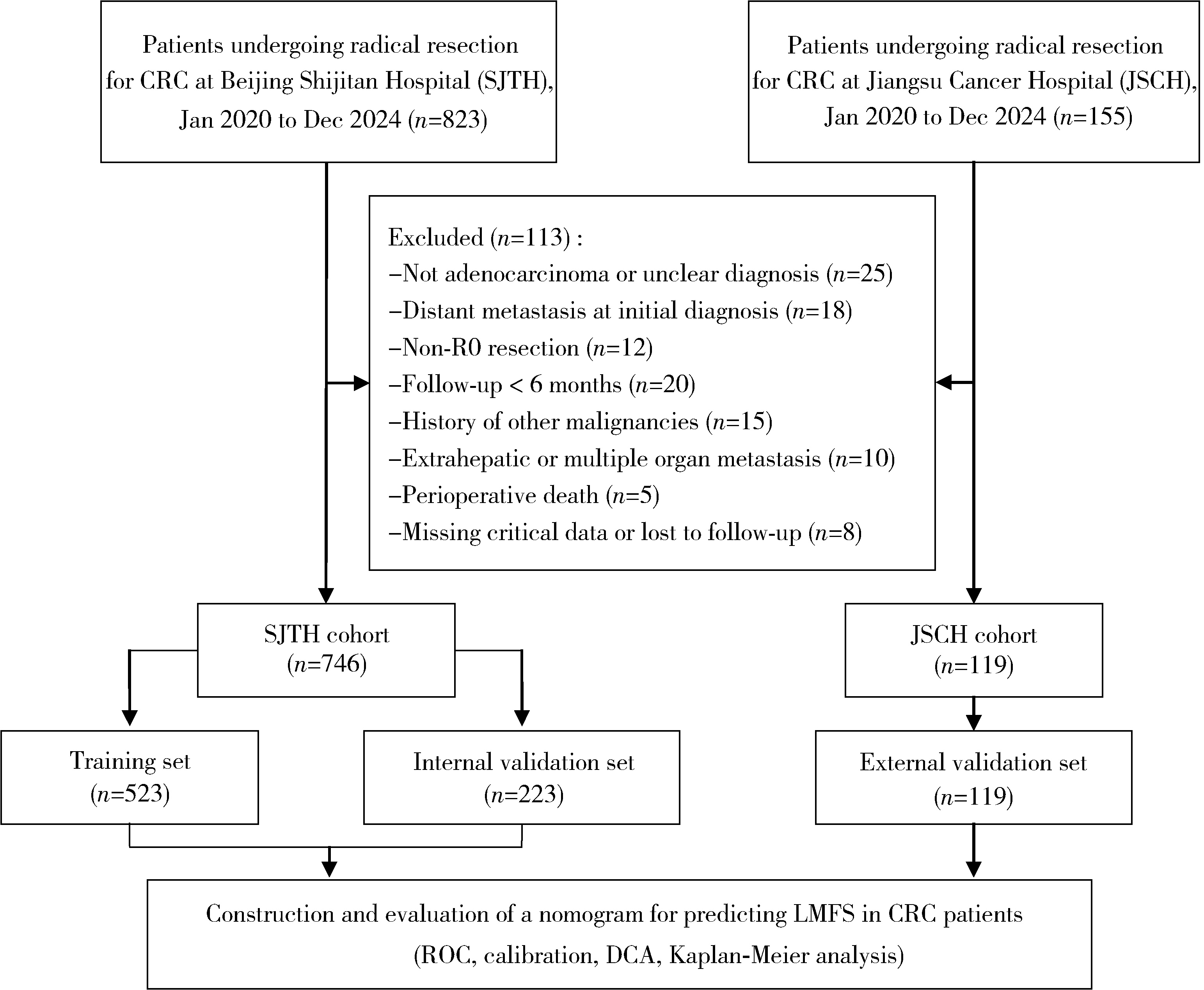
图1

患者筛选与研究设计的CONSORT流程图 CRC, colorectal cancer; LMFS, liver metastasis-free survival; ROC, receiver operating characteristic; DCA, decision curve analysis."

表1

多中心CRC患者的基线临床病理特征比较"

Variables SJTH cohort JSCH cohort P
Training set (n=523) Internal validation set (n=223) External validation set (n=119)
Age/years, n (%) 0.246
   < 65 298 (57.0) 138 (61.9) 77 (64.7)
  ≥65 225 (43.0) 85 (38.1) 42 (35.3)
Gender, n (%) 0.867
  Male 325 (62.1) 136 (61.0) 71 (59.7)
  Female 198 (37.9) 87 (39.0) 48 (40.3)
BMI/(kg/m2), n (%) 0.115
   < 18.5 43 (8.2) 17 (7.6) 15 (12.6)
  18.5 - < 24 251 (48.0) 109 (48.9) 55 (46.2)
  24 - < 28 206 (39.4) 87 (39.0) 44 (37.0)
  ≥28 23 (4.4) 10 (4.5) 5 (4.2)
CEA/(μg/L), n (%) 0.372
   < 5.0 240 (45.9) 95 (42.6) 53 (44.5)
  ≥5.0 283 (54.1) 128 (57.4) 66 (55.5)
CA199/(U/mL), n (%) 0.391
   < 37 245 (46.8) 97 (43.5) 47 (39.5)
  ≥37 278 (53.2) 126 (56.5) 72 (60.5)
Tumor site, n (%) 0.092
  Ascending colon 103 (19.7) 38 (17.0) 31 (26.1)
  Transverse colon 13 (2.5) 13 (5.8) 4 (3.4)
  Descending colon 29 (5.5) 14 (6.3) 12 (10.1)
  Sigmoid colon 155 (29.6) 61 (27.4) 28 (23.5)
  Rectum 223 (42.6) 97 (43.5) 44 (37.0)
Differentiation grade, n (%) 0.238
  High 78 (14.9) 26 (11.7) 21 (17.6)
  Moderate 333 (63.7) 151 (67.7) 66 (55.5)
  Low 112 (21.4) 46 (20.6) 32 (26.9)
Tumor size/cm, n (%) 0.155
   < 5 352 (67.3) 148 (66.3) 82 (68.9)
  ≥5 171 (32.7) 75 (33.6) 37 (31.1)
T stage, n (%) 0.054
  T1 47 (9.0) 18 (8.1) 6 (5.0)
  T2 93 (17.8) 31 (13.9) 15 (12.6)
  T3 348 (66.5) 166 (74.4) 85 (71.4)
  T4 35 (6.7) 8 (3.6) 13 (10.9)
N stage, n (%) 0.875
  N0 321 (61.4) 133 (59.6) 74 (62.2)
  N1 128 (24.5) 58 (26.0) 32 (26.9)
  N2 74 (14.1) 32 (14.3) 13 (10.9)
KRAS, n (%) 0.779
  Mutant type 256 (48.9) 112 (50.2) 55 (46.2)
  Wild type 267 (51.1) 111 (49.8) 64 (53.8)
NRAS, n (%) 0.425
  Mutant type 85 (16.3) 45 (20.2) 20 (16.8)
  Wild type 438 (83.7) 178 (79.8) 99 (83.2)
BRAF, n (%) 0.309
  Mutant type 79 (15.1) 40 (17.9) 14 (11.8)
  Wild type 444 (84.9) 183 (82.1) 105 (88.2)
MSI status, n (%) 0.287
  MSI-H 110 (21.0) 49 (22.0) 18 (15.1)
  MSS 413 (79.0) 174 (78.0) 101 (84.9)
Vascular invasion, n (%) 0.296
  Yes 170 (32.5) 71 (31.8) 30 (25.2)
  No 353 (67.5) 152 (68.2) 89 (74.8)
Nerve invasion, n (%) 0.313
  Yes 174 (33.3) 71 (31.8) 31 (26.1)
  No 349 (66.7) 152 (68.2) 88 (73.9)
Chemotherapy, n (%) 0.197
  Yes 258 (49.3) 120 (53.8) 52 (43.7)
  No 265 (50.7) 103 (46.2) 67 (56.3)
Targeted therapy, n (%) 0.112
  Yes 46 (8.8) 21 (9.4) 4 (3.4)
  No 477 (91.2) 202 (90.6) 115 (96.6)

表2

CRC患者术后无肝转移生存期的Cox回归分析"

Variables Univariate analysis Multivariate analysis
P HR (95%CI) P HR (95%CI)
Age/years
   < 65 Reference Reference
  ≥65 0.039 1.55 (1.12-1.95) 0.041 1.52 (1.22-1.74)
Gender
  Female Reference
  Male 0.610 1.12 (0.72-1.73)
BMI/(kg/m2)
   < 18.5 Reference
  18.5 - < 24 0.571 1.00 (0.94-1.05)
  24 - < 28 0.173 1.23 (0.94-1.45)
  ≥28 0.119 1.35 (0.95-1.59)
CEA/(μg/L)
   < 5.0 Reference
  ≥5.0 0.422 1.19 (0.78-1.82)
CA199/(U/mL)
   < 37 Reference
  ≥37 0.237 1.35 (0.82-2.27)
Tumor site
  Ascending colon Reference
  Transverse colon 0.352 0.38 (0.05-2.90)
  Descending colon 0.751 0.84 (0.27-2.54)
  Sigmoid colon 0.420 1.30 (0.69-2.47)
  Rectum 0.652 1.15 (0.63-2.11)
Differentiation grade
  High Reference Reference
  Moderate 0.019 1.85 (1.68-2.11) 0.005 1.19 (1.04-1.28)
  Low 0.001 2.41 (2.24-2.70) 0.005 2.54 (2.30-2.97)
Tumor size/cm
   < 5 Reference
  ≥5 0.119 1.26 (0.95-1.54)
T stage
  T1 Reference Reference
  T2 0.005 2.89 (1.97-3.42) 0.038 1.59 (1.03-2.38)
  T3 0.001 4.75 (3.55-5.97) 0.021 3.55(2.20-4.68)
  T4 < 0.001 8.22 (7.41-10.24) < 0.001 5.21(3.58-6.04)
N stage
  N0 Reference Reference
  N1 0.001 2.17 (1.69-2.8) 0.003 1.62 (1.18-2.02)
  N2 < 0.001 3.96 (2.55-4.80) < 0.001 2.88 (1.96-3.14)
KRAS
  Wild type Reference Reference
  Mutant type 0.012 1.56 (1.35-1.88) 0.005 1.42 (1.27-1.63)
NRAS
  Wild type Reference Reference
  Mutant type 0.105 1.24 (0.89-1.45) 0.275 1.27 (0.93- 1.43)
BRAF
  Wild type Reference Reference
  Mutant type 0.031 1.43 (1.20-1.93) 0.029 1.53 (1.29-1.84)
MSI status
  MSS Reference Reference
  MSI-H 0.024 0.60 (0.47-0.81) 0.035 0.71 (0.54-0.92)
Vascular invasion
  No Reference Reference
  Yes < 0.001 2.78 (1.82-4.25) 0.017 1.90 (1.67-2.28)
Nerve invasion
  No Reference Reference
  Yes < 0.001 2.80 (1.83-4.28) 0.046 1.12 (1.08-1.38)
Chemotherapy
  No Reference Reference
  Yes < 0.001 4.29 (2.55-7.21) < 0.001 2.65 (1.49-4.72)
Targeted therapy
  No Reference Reference
  Yes < 0.001 9.26 (5.16-15.43) < 0.001 8.35 (4.91-14.20)

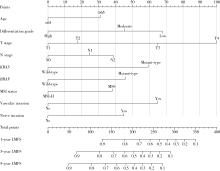
图2

预测CRC患者1年、3年和5年LMFS的列线图模型 Abbreviations as in Table 1."

图3

预测CRC患者LMFS列线图模型的综合评估 A,B,C,ROC analysis of the nomogram for the LMFS in the training, internal validation, and external validation cohorts;D,E,F,calibration curves of the nomogram for predicting 1-, 3-, and 5-year LMFS in the training, internal validation, and external validation cohorts;G,decision curves of the nomogram for predicting 1-, 3-, and 5-year LMFS;H,I,J,Kaplan-Meier curves of LMFS for patients in the low-and high-risk groups in the training set, internal validation set, and external validation set, respectively. AJCC, American Joint Committee on Cancer."

表3

2015—2025年发表的代表性结直肠癌肝转移预测模型特征对比"

Study Data source Sample size Prediction endpoint Methodology Variables Model performance Validation strategy
Yan, et al. (2019)[10] SEER database 32 819 LM & LNM Logistic regression Age, CEA, tumor size, grade, N stage AUC: 0.74-0.81 Internal random split
Li, et al. (2020)[12] SEER database 9 958 OS & CSS Cox regression Age, marital status, race, tumor location, pathological grade, histological type, T stage, N stage, colectomy, hepatic surgery, CEA C-index: 0.749 Internal validation
Hao, et al. (2022)[14] Single left 623 Metachronous LM Lasso regression Age, CEA, vascular invasion, T stage, N stage, family history of cancer, KRAS mutation C-index: 0.787 Internal validation
Xiao, et al. (2022)[15] Single left 611 Metachronous LM Deep learning (ResNet-50)+Cox HE image risk score, VELIPI, pT, pN C-index: 0.807 Internal validation split (7 ∶3)
Shao, et al. (2024)[16] SEER database 4 981 OS & CSS Cox & competing risk models Age, race, grade, T stage, N stage, surgery, chemotherapy, CEA, tumor deposits, lung metastasis, tumor size C-index: 0.74- 0.79 Internal random split (7 ∶3)
Jing, et al. (2025)[17] Single left 212 Postoperative liver metastasis Random forest (fusion model) CT radiomics features + Clinical data AUC: 0.751 Internal random split
1
Siegel RL , Miller KD , Wagle NS , et al. Cancer statistics, 2023[J]. CA Cancer J Clin, 2023, 73 (1): 17- 48.
2
Zheng R , Zhang S , Zeng H , et al. Cancer incidence and mortality in China, 2016[J]. J Natl Cancer Cent, 2022, 2 (1): 1- 9.
3
Morris VK , Kennedy EB , Baxter NN , et al. Treatment of metastatic colorectal cancer: ASCO guideline[J]. J Clin Oncol, 2023, 41 (3): 678- 700.

doi: 10.1200/JCO.22.01690
4
Reboux N , Jooste V , Goungounga J , et al. Incidence and survival in synchronous and metachronous liver metastases from colorectal cancer[J]. JAMA Netw Open, 2022, 5 (10): e2236666.

doi: 10.1001/jamanetworkopen.2022.36666
5
Carconi C , Cerreti M , Roberto M , et al. The management of oligometastatic disease in colorectal cancer: Present strategies and future perspectives[J]. Crit Rev Oncol, 2023, 186, 103990.

doi: 10.1016/j.critrevonc.2023.103990
6
Benson AB , Venook AP , Al-Hawary MM , et al. Colon cancer, version 2. 2021, NCCN clinical practice guidelines in oncology[J]. J Natl Compr Cancer Netw, 2021, 19 (3): 329- 359.

doi: 10.6004/jnccn.2021.0012
7
Tan EK , Ooi LL . Colorectal cancer liver metastases-understanding the differences in the management of synchronous and metachronous disease[J]. Ann Acad Med Singap, 2010, 39 (9): 715- 719.
8
Horie T , Kanemitsu Y , Takamizawa Y , et al. Prognostic differences between oligometastatic and polymetastatic disease after resection in patients with colorectal cancer and hepatic or lung metastases: Retrospective analysis of a large cohort at a single institution[J]. Surgery, 2023, 173 (2): 328- 334.

doi: 10.1016/j.surg.2022.10.014
9
Balachandran VP , Gonen M , Smith JJ , et al. Nomograms in oncology: More than meets the eye[J]. Lancet Oncol, 2015, 16 (4): e173- e180.

doi: 10.1016/S1470-2045(14)71116-7
10
Yan Y , Liu H , Mao K , et al. Novel nomograms to predict lymph node metastasis and liver metastasis in patients with early colon carcinoma[J]. J Transl Med, 2019, 17 (1): 193.

doi: 10.1186/s12967-019-1940-1
11
Li G , Li S , Cao L , et al. Nomogram development and validation for predicting minimally invasive step-up approach failure in infected necrotizing pancreatitis patients: A retrospective cohort study[J]. Int J Surg, 2023, 109 (6): 1677- 1687.

doi: 10.1097/JS9.0000000000000415
12
Li Y , Liu W , Zhao L , et al. Nomograms predicting overall survival and cancer-specific survival for synchronous colorectal liver-limited metastasis[J]. J Cancer, 2020, 11 (21): 6213.

doi: 10.7150/jca.46155
13
Collins GS , Reitsma JB , Altman DG , et al. Transparent reporting of a multivariable prediction model for individual prognosis or diagnosis (TRIPOD): The TRIPOD statement[J]. BMJ, 2014, 350, g7594.
14
Hao M , Li H , Wang K , et al. Predicting metachronous liver metastasis in patients with colorectal cancer: Development and assessment of a new nomogram[J]. World J Surg Oncol, 2022, 20 (1): 80.

doi: 10.1186/s12957-022-02558-6
15
Xiao C , Zhou M , Yang X , et al. Accurate prediction of metachronous liver metastasis in stage Ⅰ-Ⅲ colorectal cancer patients using deep learning with digital pathological images[J]. Front Oncol, 2022, 12, 844067.

doi: 10.3389/fonc.2022.844067
16
Shao S, Tian D, Li M, et al. Survival prediction in sigmoid-colon-cancer patients with liver metastasis: A prospective cohort study[J/OL]. JNCI Cancer Spectr, 2024, 8(5): pkae080[2025-11-01]. https://doi.org/10.1093/jncics/pkae080.
17
Jing HH , Hao D , Liu XJ , et al. Development and validation of a radiopathomics model for predicting liver metastases of colorectal cancer[J]. Eur Radiol, 2025, 35 (6): 3409- 3417.
18
Zhang Q , Zhou X , Cheng S , et al. Prognostic nomogram for colorectal cancer liver metastasis treated with tumor resection and chemotherapy based on SEER database[J]. J Gastrointest Oncol, 2025, 16 (5): 2067- 2083.

doi: 10.21037/jgo-2025-415
19
Pitroda SP , Khodarev NN , Huang L , et al. Integrated molecular subtyping defines a curable oligometastatic state in colorectal liver metastasis[J]. Nat Commun, 2018, 9, 1793.

doi: 10.1038/s41467-018-04278-6
20
Bi F , Dong J , Jin C , et al. Iparomlimab (QL1604) in patients with microsatellite instability-high (MSI-H) or mismatch repair-deficient (dMMR) unresectable or metastatic solid tumors: A pivotal, single-arm, multicenter, phase Ⅱ trial[J]. J Hematol Oncol, 2024, 17 (1): 109.

doi: 10.1186/s13045-024-01627-5
21
Margonis GA , Buettner S , Andreatos N , et al. Association of BRAF mutations with survival and recurrence in surgically treated patients with metastatic colorectal liver cancer[J]. JAMA Surg, 2018, 153 (7): e180996.

doi: 10.1001/jamasurg.2018.0996
22
Li Y , Solis-Ruiz J , Yang F , et al. NGS-defined measurable residual disease (MRD) after initial chemotherapy as a prognostic biomarker for acute myeloid leukemia[J]. Blood Cancer J, 2023, 13, 59.

doi: 10.1038/s41408-023-00833-7
23
Hamfjord J , Guren TK , Dajani O , et al. Total circulating cell-free DNA as a prognostic biomarker in metastatic colorectal cancer before first-line oxaliplatin-based chemotherapy[J]. Ann Oncol, 2019, 30 (7): 1088- 1095.

doi: 10.1093/annonc/mdz139
24
Luo X , Deng H , Xie F , et al. Prognostication of colorectal cancer liver metastasis by CE-based radiomics and machine learning[J]. Transl Oncol, 2024, 47, 101997.

doi: 10.1016/j.tranon.2024.101997
25
Lee HS , Kwon HW , Lim SB , et al. FDG metabolic parameter-based models for predicting recurrence after upfront surgery in synchronous colorectal cancer liver metastasis[J]. Eur Radiol, 2023, 33 (3): 1746- 1756.
26
Okimoto S , Kobayashi T , Tashiro H , et al. Significance of the Glasgow Prognostic Score for patients with colorectal liver metastasis[J]. Int J Surg, 2017, 42, 209- 214.

doi: 10.1016/j.ijsu.2017.04.068
[1] 李博闻, 张强, 孙益鑫. 儿童及青年漏斗胸患者Nuss术后发生脊柱侧弯的风险预测模型建立及验证[J]. 北京大学学报(医学版), 2025, 57(5): 941-946.
[2] 韩丹, 次仁央金, 李秋红, 李军. 高海拔地区结直肠良恶性肿瘤患者肠道菌群差异及其与低海拔地区正常人群的比较[J]. 北京大学学报(医学版), 2025, 57(3): 578-583.
[3] 刘园梅, 傅义程, 郝靖欣, 张福春, 刘慧琳. 老年髋部骨折患者住院期间发生术后心力衰竭的列线图预测模型的构建及验证[J]. 北京大学学报(医学版), 2024, 56(5): 874-883.
[4] 李志存, 吴天俣, 梁磊, 范宇, 孟一森, 张骞. 穿刺活检单针阳性前列腺癌术后病理升级的危险因素分析及列线图模型构建[J]. 北京大学学报(医学版), 2024, 56(5): 896-901.
[5] 于书慧,韩佳凝,钟丽君,陈聪语,肖云翔,黄燕波,杨洋,车新艳. 术前盆底肌电生理参数对前列腺癌根治性切除术后早期尿失禁的预测价值[J]. 北京大学学报(医学版), 2024, 56(4): 594-599.
[6] 何海龙,李清,徐涛,张晓威. 构建显微精索手术治疗精索疼痛的术后疼痛缓解预测模型[J]. 北京大学学报(医学版), 2024, 56(4): 646-655.
[7] 周泽臻,邓绍晖,颜野,张帆,郝一昌,葛力源,张洪宪,王国良,张树栋. 非转移性T3a肾细胞癌患者3年肿瘤特异性生存期预测[J]. 北京大学学报(医学版), 2024, 56(4): 673-679.
[8] 苏俊琪,王晓颖,孙志强. 舌鳞状细胞癌根治性切除术后患者预后预测列线图的构建与验证[J]. 北京大学学报(医学版), 2024, 56(1): 120-130.
[9] 毛海,张帆,张展奕,颜野,郝一昌,黄毅,马潞林,褚红玲,张树栋. 基于MRI前列腺腺体相关参数构建腹腔镜前列腺癌术后尿失禁的预测模型[J]. 北京大学学报(医学版), 2023, 55(5): 818-824.
[10] 张云静,乔丽颖,祁萌,严颖,亢伟伟,刘国臻,王明远,席云峰,王胜锋. 乳腺癌患者新发心血管疾病预测模型的建立与验证:基于内蒙古区域医疗数据[J]. 北京大学学报(医学版), 2023, 55(3): 471-479.
[11] 梁丽,李鑫,农琳,董颖,张继新,李东,李挺. 子宫内膜癌微卫星不稳定性分析: 微小微卫星变换的意义[J]. 北京大学学报(医学版), 2023, 55(2): 254-261.
[12] 丁婷婷,曾楚雄,胡丽娜,余明华. 基于癌症基因组图谱数据库结直肠癌免疫细胞浸润预测模型的建立[J]. 北京大学学报(医学版), 2022, 54(2): 203-208.
[13] 刘承,马潞林. 前入路机器人辅助前列腺根治性切除术中改善排尿控制的经验[J]. 北京大学学报(医学版), 2021, 53(4): 635-639.
[14] 王文鹏,王捷夫,胡均,王俊锋,刘嘉,孔大陆,李健. 结直肠间质瘤临床病理特征及预后分析[J]. 北京大学学报(医学版), 2020, 52(2): 353-361.
[15] 张旭初,张建华,王荣福,范岩,付占立,闫平,赵光宇,白艳霞. 18F-FDG PET/CT联合多种肿瘤标志物在结直肠中分化腺癌术后复发及转移中的应用价值[J]. 北京大学学报(医学版), 2019, 51(6): 1071-1077.
Viewed
Full text


Abstract

Cited

  Shared   
  Discussed   
No Suggested Reading articles found!