北京大学学报(医学版) ›› 2022, Vol. 54 ›› Issue (1): 187-192. doi: 10.19723/j.issn.1671-167X.2022.01.030
预成刚性连接杆用于无牙颌种植即刻印模制取的应用评价
王鹃1,尉华杰1,孙井德2,邱立新1,△( )
)
- 1.北京大学口腔医学院·口腔医院第四门诊部,国家口腔医学中心,国家口腔疾病临床医学研究中心,口腔数字化医疗技术和材料国家工程实验室,北京 100025
2.北京迪艺医学技术有限公司·口腔数字化美学工作室,北京 100176
Application evaluation of prefabricated rigid connecting bar in implants immediate impression preparation of edentulous jaw
WANG Juan1,YU Hua-jie1,SUN Jing-de2,QIU Li-xin1,△()
- 1. Fourth Clinical Division, Peking University School and Hospital of Stomatology & National Center of Stomatology & National Clinical Research Center for Oral Diseases & National Engineering Laboratory for Digital and Material Technology of Stomatology, Beijing 100081, China
2. Beijing D&E Medical Limited Company, Dental Digital & Esthetics Laboratory, Beijing 100176, China
摘要:
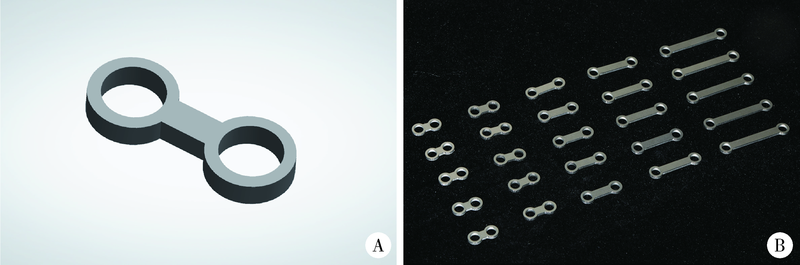
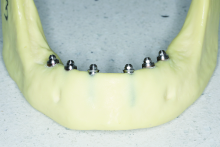
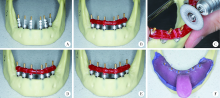
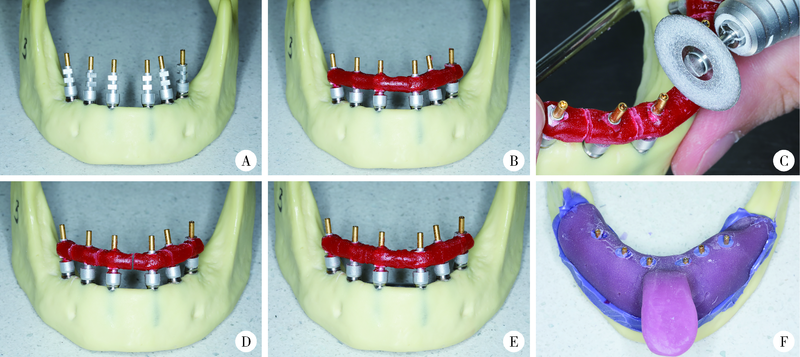
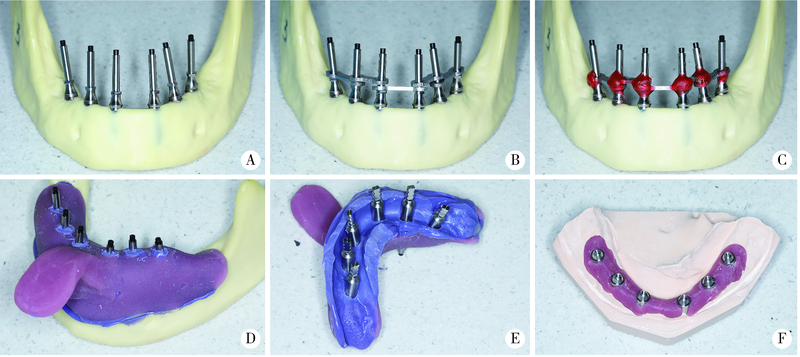
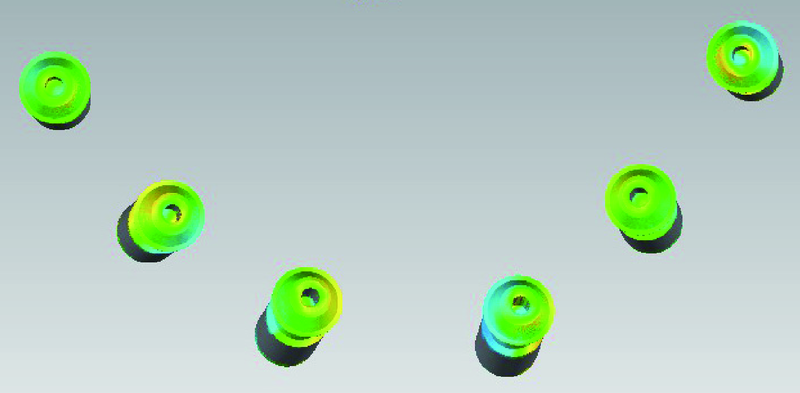
目的: 比较传统夹板式印模和利用预成刚性连接杆系统进行无牙颌种植固定修复印模制取的操作复杂程度及精度差异。方法: 制备带有6颗种植体替代体的下颌无牙颌标准模型,种植体植入位置平齐骨面,在种植体替代体上连接多牙修复基台。对照组采用传统开窗夹板式印模技术制取印模,在多牙修复基台上连接转移杆,使用聚甲基丙烯酸甲酯材料制作夹板,并制取开窗印模。试验组采用刚性连接杆系统制取开窗印模,在多牙修复基台上连接临时修复套筒,根据种植体间距,选择合适长度的预成刚性连接杆,使用少量聚甲基丙烯酸甲酯材料将套筒和预成刚性连接杆固定,制取开窗印模。实验组和对照组各重复6次印模制取,比较试验组和对照组的印模制取耗时差异。在制取的印模上连接基台替代体,灌制石膏模型,并使用模型扫描仪将石膏模型和标准模型转化为三角网格数据文件。将试验组和对照组模型分别与标准模型进行精度差异测量,比较两种印模方法获得模型的精度差异。结果: 在标准模型上进行印模制取,试验组用时显著低于对照组,两者差异有统计学意义[(984.5±63.3) s vs. (1 478.3±156.2) s, P<0.05]。与标准模型相比,在种植体基台处,试验组制取印模灌制模型均方根误差(root mean aquare,RMS)与对照组模型基本相同,两者差异无统计学意义[(16.9±5.5) μm vs. (20.2±8.0) μm, P>0.05]。结论: 预成刚性连接杆可以简化无牙颌种植即刻固定修复的印模流程,节约椅旁操作时间,获取的印模精度与传统印模技术无显著差异,值得在临床推广使用。
中图分类号:
- R783.6


| [1] |
Malo P, de Araujo Nobre M, Lopes A, et al. “All-on-4” imme-diate-function concept for completely edentulous maxillae: A clinical report on the medium (3 years) and long-term (5 years) outcomes[J]. Clin Implant Dent Relat Res, 2012, 14(Suppl 1):e139-e150.
doi: 10.1111/j.1708-8208.2011.00395.x |
| [2] | Malo P, Lopes A, de Araujo Nobre M, et al. Immediate function dental implants inserted with less than 30N·cm of torque in full-arch maxillary rehabilitations using the all-on-4 concept: Retrospective study[J]. Int J Oral Maxillofac Surg, 2018, 47(8):1079-1085. |
| [3] |
Sahin S, Cehreli MC. The significance of passive framework fit in implant prosthodontics: Current status[J]. Implant Dent, 2001, 10(2):85-92.
pmid: 11450418 |
| [4] | 周立伟. 种植多单位修复中螺丝固位与粘接固位联合运用中机械并发症发生情况的回顾性研究[J]. 口腔医学研究, 2021, 37(1):63-66. |
| [5] |
Liu X, Li M, Liu J, et al. Passively fitting implant-supported complete-arch interim restoration[J]. J Prosthet Dent, 2019, 121(5):733-736.
doi: 10.1016/j.prosdent.2018.09.018 |
| [6] |
Revilla-Leon M, Sanchez-Rubio JL, Oteo-Calatayud J, et al. Impression technique for a complete-arch prosjournal with multiple implants using additive manufacturing technologies[J]. J Prosthet Dent, 2017, 117(6):714-720.
doi: S0022-3913(16)30511-X pmid: 27889076 |
| [7] |
Ma J, Rubenstein JE. Complete arch implant impression technique[J]. J Prosthet Dent, 2012, 107(6):405-410.
doi: 10.1016/S0022-3913(12)60100-0 |
| [8] |
Mizumoto RM, Yilmaz B, McGlumphy EA, et al. Accuracy of different digital scanning techniques and scan bodies for complete-arch implant-supported prostheses[J]. J Prosthet Dent, 2020, 123(1):96-104.
doi: S0022-3913(19)30076-9 pmid: 31040026 |
| [9] |
Papaspyridakos P, Hirayama H, Chen CJ, et al. Full-arch implant fixed prostheses: A comparative study on the effect of connection type and impression technique on accuracy of fit[J]. Clin Oral Implants Res, 2016, 27(9):1099-1105.
doi: 10.1111/clr.2016.27.issue-9 |
| [10] |
Vigolo P, Majzoub Z, Cordioli G. Evaluation of the accuracy of three techniques used for multiple implant abutment impressions[J]. J Prosthet Dent, 2003, 89(2):186-192.
pmid: 12616240 |
| [11] |
Liu Y, Di P, Zhao Y, et al. Accuracy of multi-implant impressions using 3D-printing custom trays and splinting versus conventional techniques for complete arches[J]. Int J Oral Maxillofac Implants, 2019, 34(4):1007-1014.
doi: 10.11607/jomi.7049 |
| [12] |
Revilla-Leon M, Att W, Ozcan M, et al. Comparison of conventional, photogrammetry, and intraoral scanning accuracy of complete-arch implant impression procedures evaluated with a coordinate measuring machine[J]. J Prosthet Dent, 2021, 125(3):470-478.
doi: 10.1016/j.prosdent.2020.03.005 pmid: 32386912 |
| [13] | 陈江, 张思慧. 无牙颌种植修复的数字化临床诊疗流程[J]. 口腔医学研究, 2020, 36(3):193-198. |
| [14] |
Ruttermann S, Alberts I, Raab WH, et al. Physical properties of self-, dual-, and light-cured direct core materials[J]. Clinical Oral Investigations, 2011, 15(4):597-603.
doi: 10.1007/s00784-010-0405-y |
| [15] |
Albiero AM, Benato R, Momic S, et al. Guided-welded approach planning using a computer-aided designed prosthetic shell for immediately loaded complete-arch rehabilitations supported by conometric abutments[J]. J Prosthet Dent, 2019, 122(6):510-515.
doi: 10.1016/j.prosdent.2018.12.002 |
| [16] |
Stimmelmayr M, Beuer F, Edelhoff D, et al. Implant impression techniques for the edentulous jaw: A summary of three studies[J]. J Prosthodont, 2016, 25(2):146-150.
doi: 10.1111/jopr.12305 pmid: 26032581 |
| [17] |
Gherlone EF, Sannino G, Rapanelli A, et al. Prefabricated bar system for immediate loading in edentulous patients: A 5-year follow-up prospective longitudinal study[J]. Biomed Res Int, 2018, 2018:7352125.
doi: 10.1155/2018/7352125 pmid: 29682552 |
| [18] |
Hashemzadeh S, Yilmaz B, Zugaro F, et al. An alternative conversion technique for fabricating an interim fixed implant-supported complete arch prosjournal[J]. J Prosthet Dent, 2016, 116(5):647-651.
doi: S0022-3913(16)30147-0 pmid: 27460316 |
| [1] | 杨静, 许晓韵, 郑丹妮, 凌晓彤, 屈留洋, 柳登高. 544例慢性唾液腺炎的临床与影像学特点及病因分析[J]. 北京大学学报(医学版), 2026, 58(3): 650-657. |
| [2] | 李峥, 吕珑薇, 张晓, 夏丹丹, 张萍, 刘云松, 周永胜. 基于干细胞和生物材料调控的口腔颅颌面骨再生的研究进展[J]. 北京大学学报(医学版), 2026, 58(2): 272-277. |
| [3] | 杜文, 章文博, 于尧, 刘硕, 苏惠裕, 胡耒豪, 唐祖南, 吴彬彰, 陈震, 李家琦, 王昊, 彭歆. 口腔颌面部肿瘤"数智化外科"诊疗流程探索与临床应用[J]. 北京大学学报(医学版), 2026, 58(2): 278-284. |
| [4] | 刘嘉昱, 祝宁, 张育祯, 高贤明, 张宇. 动态导航辅助环钻取骨的准确性[J]. 北京大学学报(医学版), 2026, 58(2): 365-371. |
| [5] | 王昕莹, 程雪原, 张孟钧, 李菲, 段晋瑜, 乔静. 浓缩生长因子联合引导性组织再生术治疗下颌磨牙根分叉病变的疗效[J]. 北京大学学报(医学版), 2026, 58(2): 372-379. |
| [6] | FarinEbrahimi, 冯志强, FarazEbrahimi, 韩玮华, 于子杨, 贾宽宽, 安金刚. 上颌药物相关性颌骨坏死的不同分期手术治疗效果[J]. 北京大学学报(医学版), 2026, 58(1): 107-114. |
| [7] | 单珅瑶, 杨咏涛, 李文博, 温奥楠, 高梓翔, 商相宜, 王勇, 赵一姣. 基于下颌运动轨迹的𬌗架关键参数计算方法[J]. 北京大学学报(医学版), 2026, 58(1): 115-125. |
| [8] | 杨咏涛, 田淯文, 单珅瑶, 李文博, 商相宜, 王艺蓁, 郭殊玮, 高梓翔, 温奥楠, 赵一姣, 王勇. 基于多视图立体视觉的无牙颌种植固定修复软组织数字印模的方法[J]. 北京大学学报(医学版), 2026, 58(1): 126-132. |
| [9] | 于录, 吴灵, 刘筱菁, 李自力. 基于数据库相似性检索的正颌外科手术规划技术流程可行性研究: 随机对照试验[J]. 北京大学学报(医学版), 2026, 58(1): 145-152. |
| [10] | 杨雨婷, 屈留洋, 郑丹妮, 凌晓彤, 许晓韵, 柳登高. 1 812例唾液腺结石患者的人口学特征和临床特点[J]. 北京大学学报(医学版), 2026, 58(1): 153-159. |
| [11] | 王月, 梁宇红. 繁茂型牙骨质-骨结构不良1例[J]. 北京大学学报(医学版), 2026, 58(1): 220-224. |
| [12] | 李文博, 沈玉凤, 杨咏涛, 单珅瑶, 高梓翔, 温奥楠, 商相宜, 田淯文, 郭殊玮, 王艺蓁, 王勇, 赵一姣. 单侧磨牙咬合干扰的口颌肌表面肌电指标体系构建与判别模型验证[J]. 北京大学学报(医学版), 2026, 58(1): 89-98. |
| [13] | 王宇蓝, 曾浩, 张玉峰. 口腔种植中血浆基质的临床转化现状与前沿探索[J]. 北京大学学报(医学版), 2025, 57(5): 836-840. |
| [14] | 于子杨, 郭厚佐, 蒋析, 韩玮华, 林野. 穿颧种植体上颌窦段成骨的影像学研究[J]. 北京大学学报(医学版), 2025, 57(5): 967-974. |
| [15] | 宋凤岐, 徐心雨, 刘筱菁, 李自力. 上颌骨前部和整体顺时针旋转改善骨性Ⅲ类牙颌面畸形患者鼻旁凹陷的对比[J]. 北京大学学报(医学版), 2025, 57(5): 980-988. |
|
||
