北京大学学报(医学版) ›› 2025, Vol. 57 ›› Issue (2): 376-383. doi: 10.19723/j.issn.1671-167X.2025.02.024
乳牙缺失数字化丝圈间隙保持器的三维有限元分析
马丽娟1,2, 腾雍辉3, 王勇1, 赵一姣1,4,△( ), 张馨月1, 秦庆钊1, 尹东2
- 1. 北京大学口腔医学院·口腔医院口腔医学数字化研究中心,国家口腔医学中心,国家口腔疾病临床医学研究中心,口腔生物材料和数字诊疗装备国家工程研究中心,口腔数字医学北京市重点实验室,国家卫生健康委员会口腔医学计算机应用工程技术研究中心,北京 100081
2. 宁夏回族自治区人民医院(宁夏医科大学附属自治区人民医院)口腔科,银川 750002
3. 银川市口腔医院正畸科,银川 750002
4. 北京大学医学部医学技术研究院,北京 100191
Three-dimensional finite element analysis of digital wire loop space maintainers for missing deciduous teeth
Lijuan MA1,2, Yonghui TENG3, Yong WANG1, Yijiao ZHAO1,4,△(), Xinyue ZHANG1, Qingzhao QIN1, Dong YIN2
- 1. Center for Digital Dentistry, Peking University School and Hospital of Stomatology & National Center for Stomatology & National Clinical Research Center for Oral Diseases & National Engineering Research Center of Oral Biomaterials and Digi-tal Medical Devices & Beijing Key Laboratory of Digital Stomatology & NHC Research Center of Engineering and Technology for Computerized Dentistry, Beijing 100081, China
2. Department of Stomatology, People's Hospital of Ningxia Hui Autonomous Region(Ningxia Medical University), Yinchuan 750002, China
3. Department of Orthodontic, Yinchuan Stomatological Hospital, Yinchuan 750002, China
4. Institute of Medical Technology, Peking University Health Science Center, Beijing 100191, China
摘要:
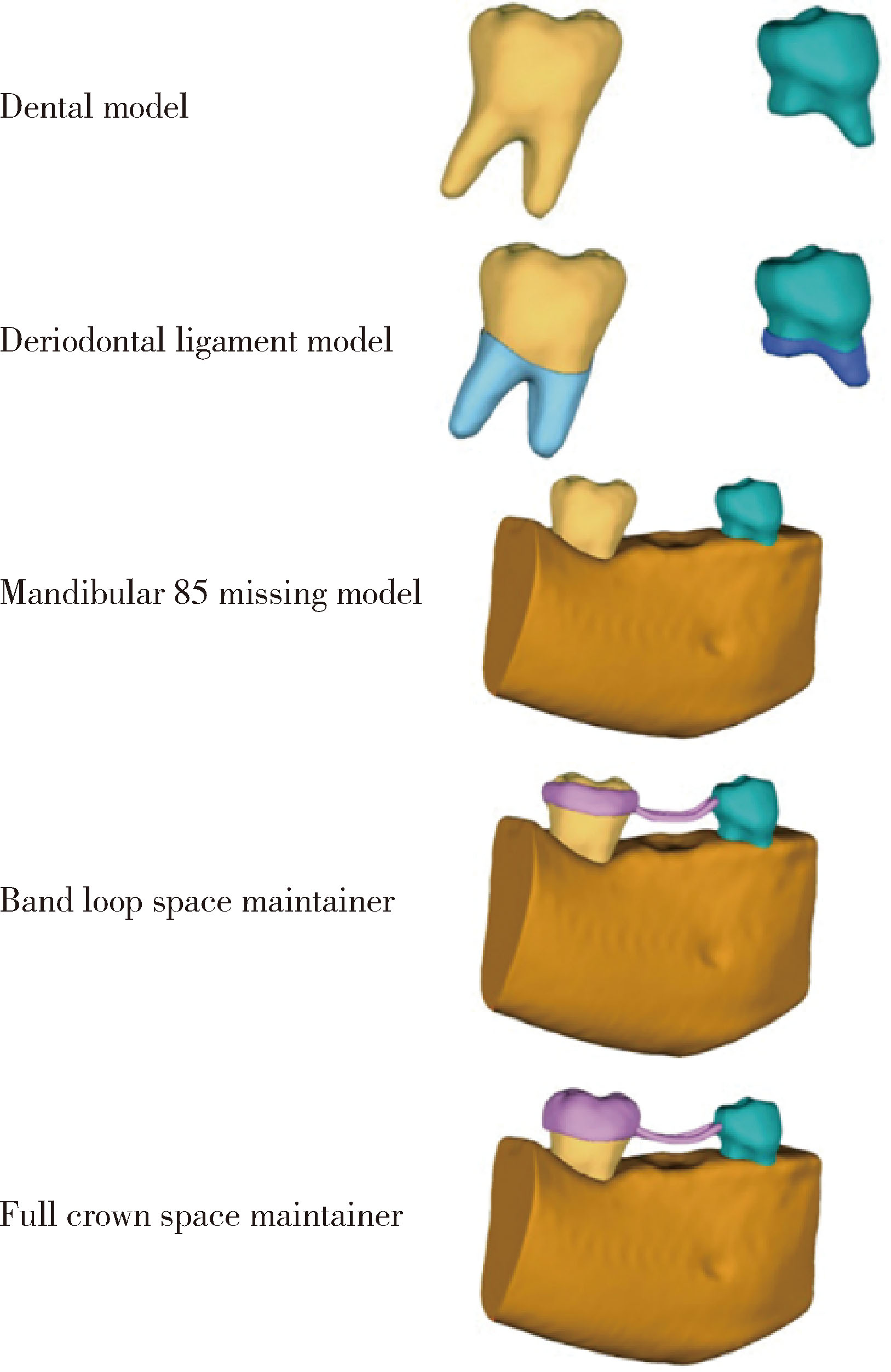
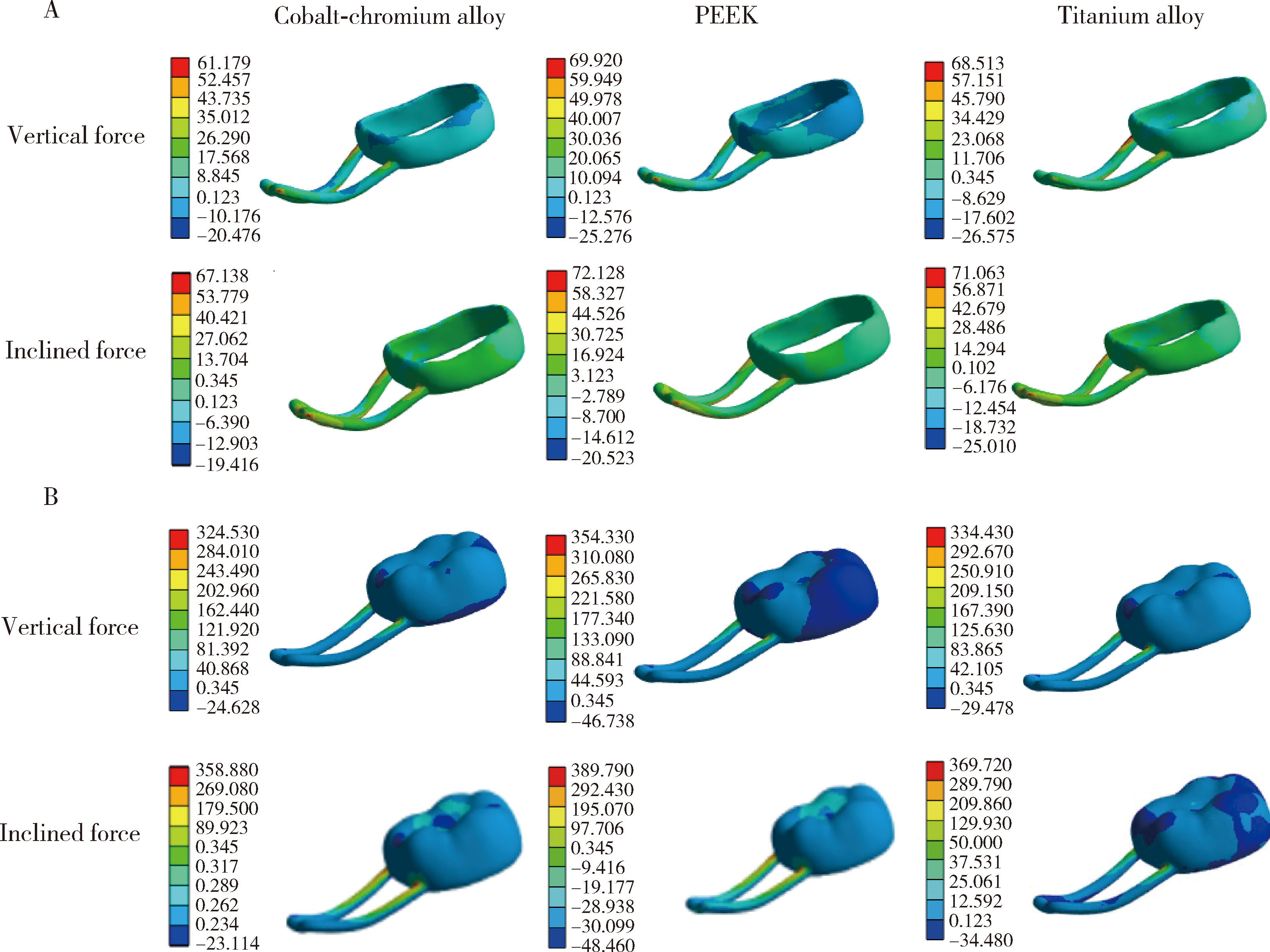
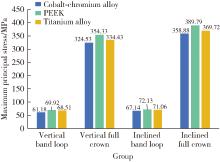
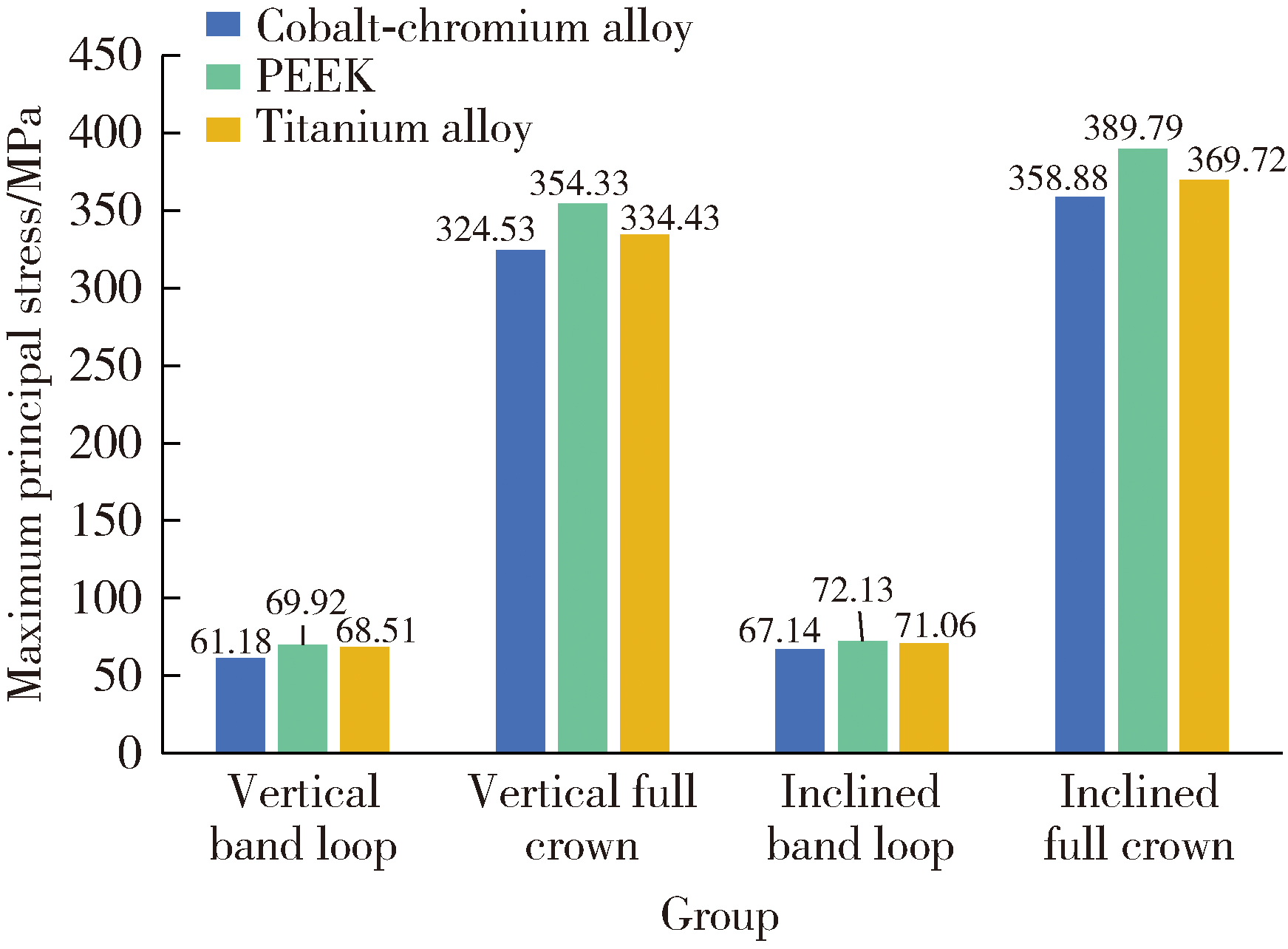
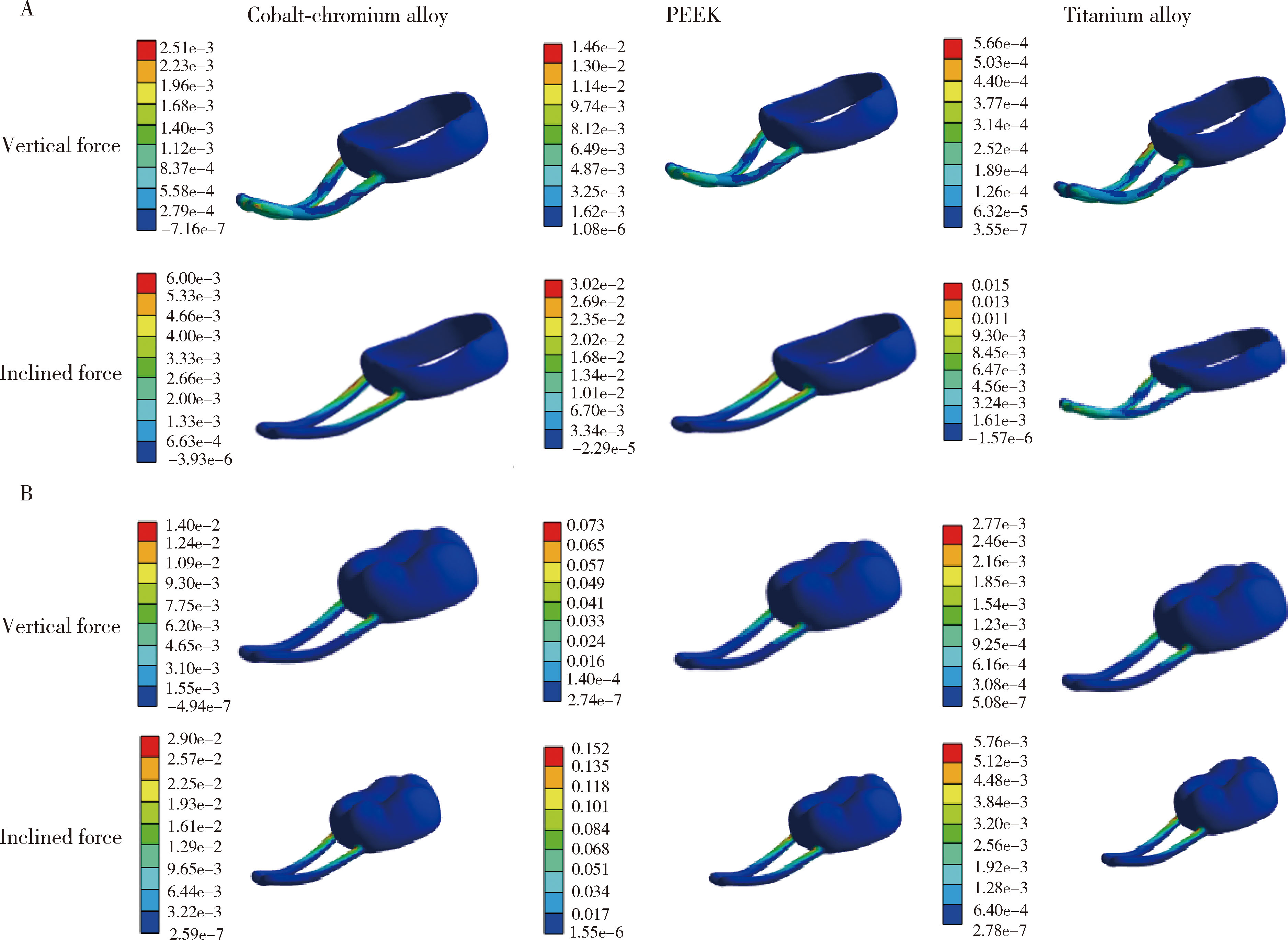
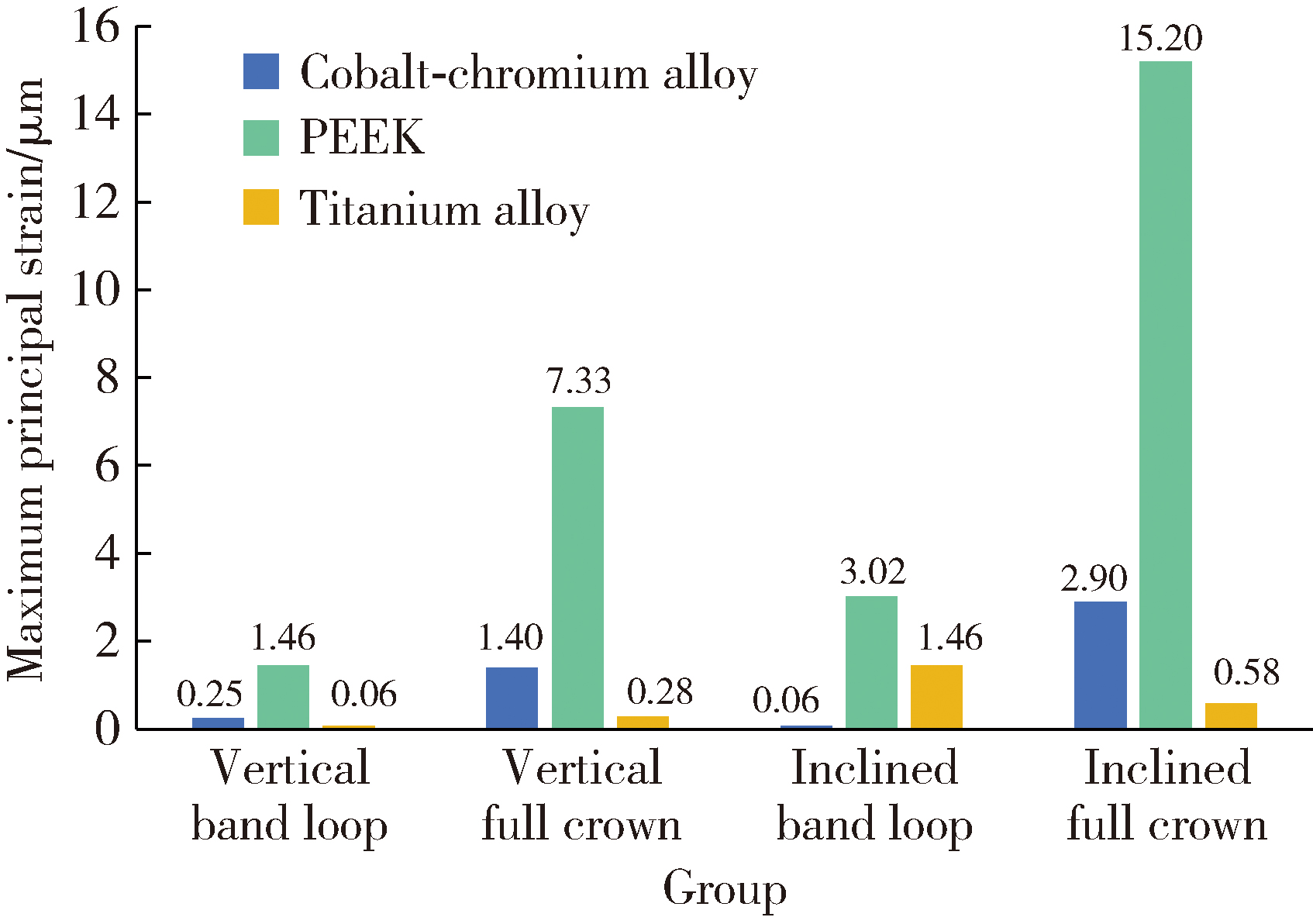
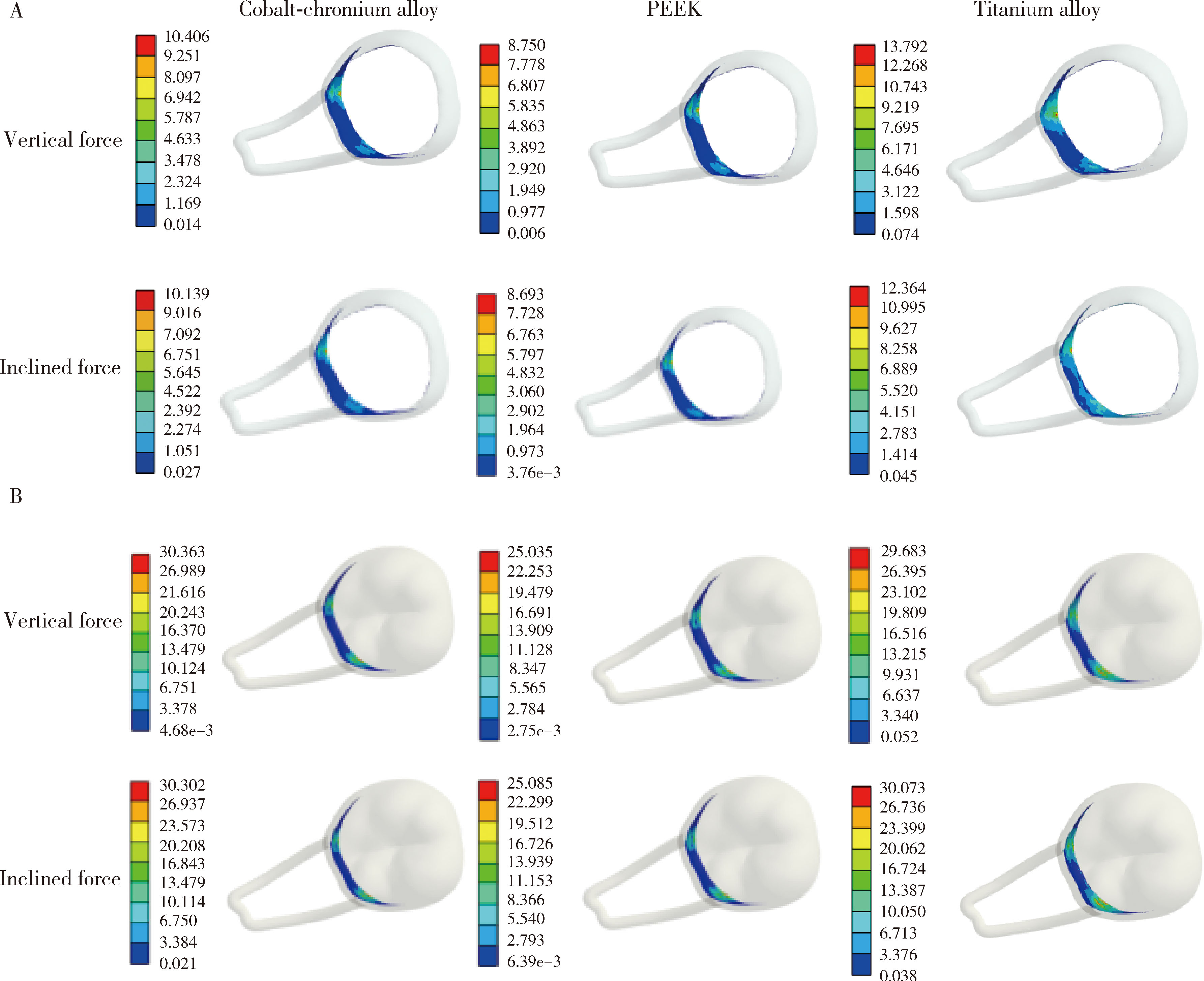
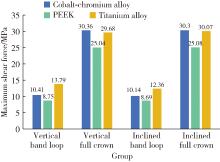
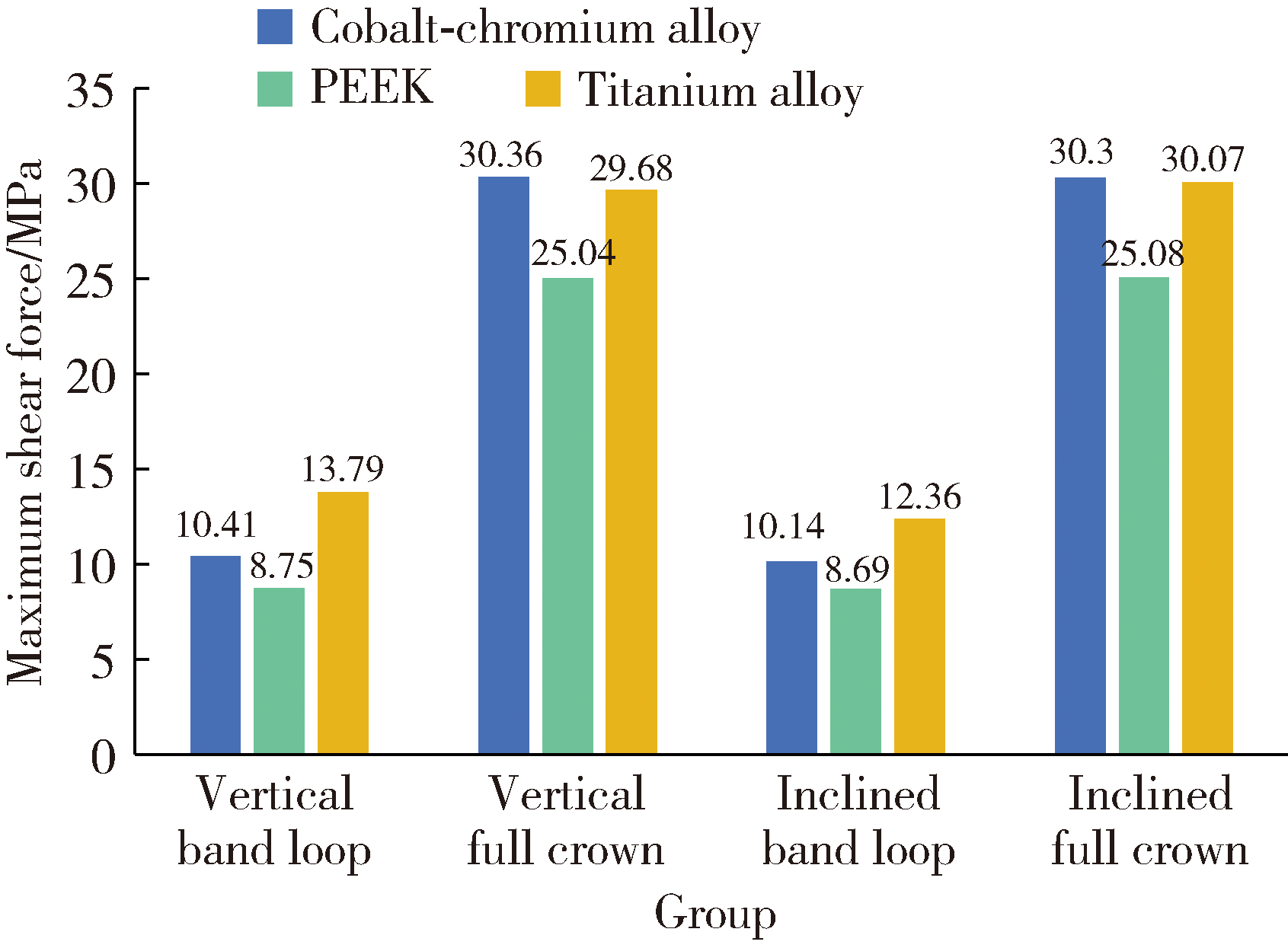
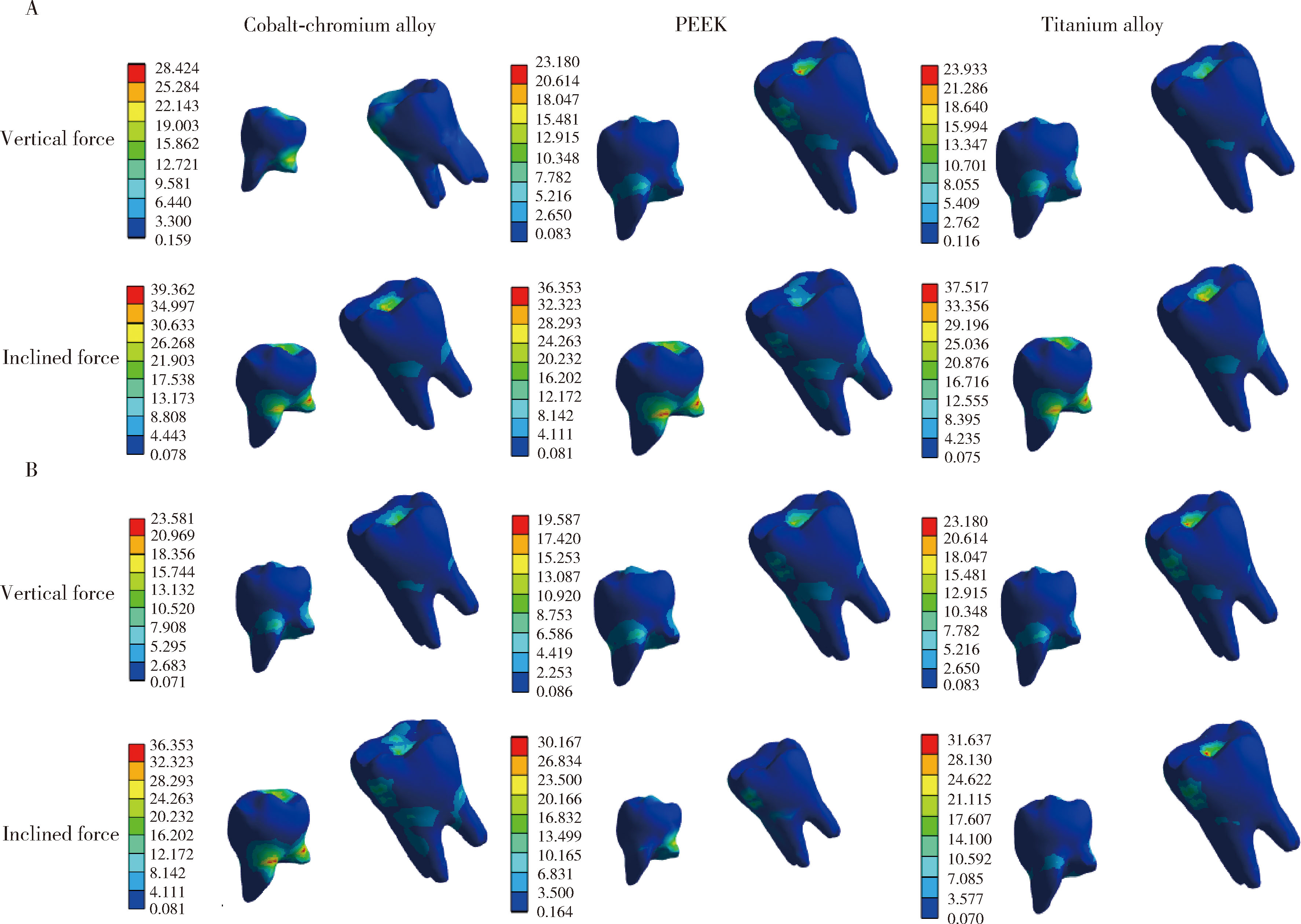
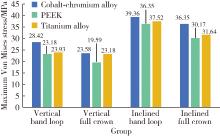
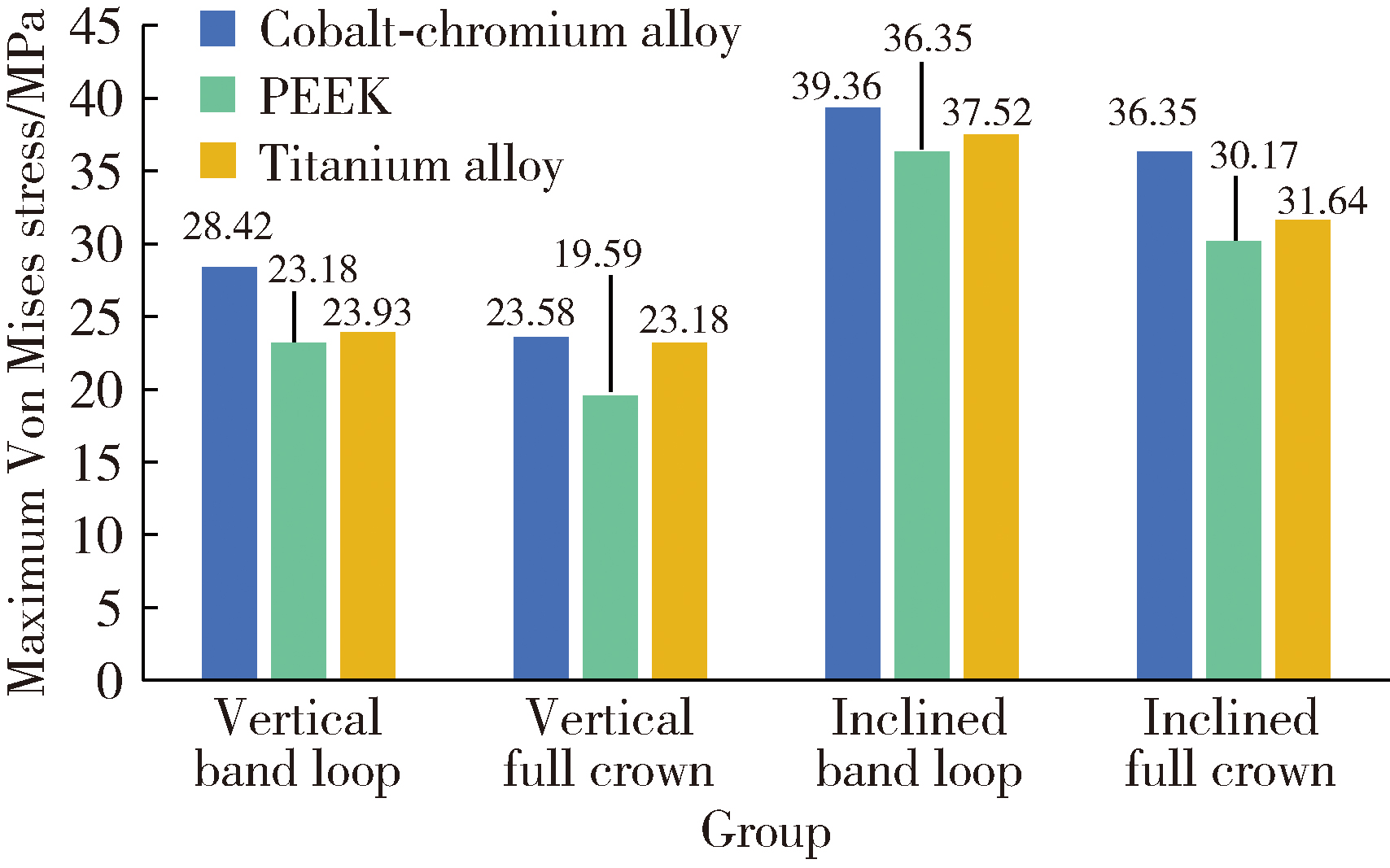
目的: 建立下颌骨及乳牙缺失数字化丝圈间隙保持器的三维有限元模型,以探讨下颌第二乳磨牙缺失患者佩戴丝圈间隙保持器时的应力、变形及剪切力情况。方法: 通过对患儿进行锥形束CT(cone beam computed tomography,CBCT)扫描,使用Mimics 21.0软件建立下颌第二乳磨牙缺失的数字模型。利用儿童丝圈间隙保持器设计软件构建冠部固位与丝圈结构一体化的全冠及带环丝圈间隙保持器的数字模型,并分别采用钴铬合金、聚醚醚酮(polyether ether ketone,PEEK)及钛合金三种材料进行构建。在ANSYS Work Beach 2023 R2软件中,对模型46和84的咬合面施加垂直和沿牙体长轴倾斜45°的70 N载荷,以及丝圈上表面10 N载荷,模拟患儿佩戴丝圈间隙保持器时的正中咬合与侧方咬合,分析丝圈间隙保持器及基牙的受力情况。结果: 在不同的加载条件下,带环丝圈间隙保持器的最大主应力明显低于全冠丝圈间隙保持器。应力云图显示,最大主应力峰值出现在丝圈末端与冠部结构连接处,表明这一部位更容易发生断裂;使用PEEK材料制作的带环丝圈间隙保持器内部组织面的最大剪切应力最小;46和84牙齿的等效应力(Von Mises应力)最小,分别为23.18 MPa和36.35 MPa,且最大等效应力分别位于46牙齿近中、84牙齿远中靠近牙根部与丝圈间隙保持器接触的区域。结论: 在第二乳磨牙缺失的情况下,佩戴数字化带环丝圈间隙保持器能够有效分散应力,且PEEK材料的带环丝圈间隙保持器在一定程度上降低了基牙的受力,其在临床应用中显示出一定的优越性。
中图分类号:
- R783.2
| 1 | Slabkovskaya A , Abramova M , Morozova N , et al. Biomechanics of changing the position of permanent teeth with early loss of the first temporary molars[J]. Georgian Med News, 2021 (316/317): 89- 96. |
| 2 |
Jayachandar D , Gurunathan D , Jeevanandan G . Prevalence of early loss of primary molars among children aged 5-10 years in Chennai: A cross-sectional study[J]. J Indian Soc Pedod Prev Dent, 2019, 37 (2): 115- 119.
doi: 10.4103/1319-2442.261340 |
| 3 |
Sabeti AK , Karimizadeh Z , Rafatjou R . Maximum equivalent stress induced and the displacement of the developing permanent first molars after the premature loss of primary second molars: A finite element analysis[J]. Dent Med Probl, 2020, 57 (4): 401- 409.
doi: 10.17219/dmp/122041 |
| 4 | 秦庆钊, 胡嘉, 陈小贤, 等. 儿童带环丝圈式间隙保持器的椅旁数字化设计与制作方法初探[J]. 华西口腔医学杂志, 2024, 42 (2): 234- 241. |
| 5 |
冀堃, 朱顶贵, 陆伟, 等. 聚醚酮酮数字化乳牙早失间隙保持器的临床应用观察[J]. 中华口腔医学研究杂志(电子版), 2019, 13 (6): 368- 372.
doi: 10.3877/cma.j.issn.1674-1366.2019.06.008 |
| 6 |
张静兰, 莫伟兰, 刘芳, 等. 三种间隙保持器的临床效果评价[J]. 新医学, 2021, 52 (10): 768- 771.
doi: 10.3969/j.issn.0253-9802.2021.10.009 |
| 7 |
Tokuc M , Yilmaz H . Comparison of fit accuracy between conventional and CAD/CAM-fabricated band-loop space maintainers[J]. Int J Paediatr Dent, 2022, 32 (5): 764- 771.
doi: 10.1111/ipd.12955 |
| 8 |
Trivedi G , Singh PP , Oinam AS , et al. Cone-beam computed tomography (CBCT) dose optimization technique and image quality assessment scoring[J]. J Cancer Res Ther, 2024, 20 (1): 71- 78.
doi: 10.4103/jcrt.jcrt_1130_22 |
| 9 |
Rees JS , Jacobsen PH . Elastic modulus of the periodontal ligament[J]. Biomaterials, 1997, 18 (14): 995- 999.
doi: 10.1016/S0142-9612(97)00021-5 |
| 10 |
Hart RT , Hennebel VV , Thongpreda N , et al. Modeling the biomechanics of the mandible: A three-dimensional finite element study[J]. J Biomech, 1992, 25 (3): 261- 286.
doi: 10.1016/0021-9290(92)90025-V |
| 11 |
Nishigawa G , Matsunaga T , Maruo Y , et al. Finite element analysis of the effect of the bucco-lingual position of artificial posterior teeth under occlusal force on the denture supporting bone of the edentulous patient[J]. J Oral Rehabil, 2003, 30 (6): 646- 652.
doi: 10.1046/j.1365-2842.2003.01110.x |
| 12 |
Eskitascioglu G , Usumez A , Sevimay M , et al. The influence of occlusal loading location on stresses transferred to implant-supported prostheses and supporting bone: A three-dimensional finite element study[J]. J Prosthet Dent, 2004, 91 (2): 144- 150.
doi: 10.1016/j.prosdent.2003.10.018 |
| 13 | W.A. 纳什. 材料力学[M]. 4版. 赵志岗, 译. 北京: 科学出版社, 2002: 20. |
| 14 |
Heravi F , Salari S , Tanbakuchi B , et al. Effects of crown-root angle on stress distribution in the maxillary central incisors' PDL during application of intrusive and retraction forces: A three-dimensional finite element analysis[J]. Prog Orthod, 2013, 14, 26.
doi: 10.1186/2196-1042-14-26 |
| 15 |
Hedayati Z , Shomali M . Maxillary anterior en masse retraction using different antero-posterior position of mini screw: A 3D finite element study[J]. Prog Orthod, 2016, 17 (1): 31.
doi: 10.1186/s40510-016-0143-z |
| 16 |
Yi Q , Feng X , Zhang C , et al. Comparison of dynamic mechanical properties of dentin between deciduous and permanent teeth[J]. Connect Tissue Res, 2021, 62 (4): 402- 410.
doi: 10.1080/03008207.2020.1758684 |
| 17 |
Saillard E , Gardegaront M , Levillain A , et al. Finite element models with automatic computed tomography bone segmentation for failure load computation[J]. Sci Rep, 2024, 14 (1): 16576.
doi: 10.1038/s41598-024-66934-w |
| 18 | Braun S , Hnat WP , Freudenthaler JW , et al. A study of maximum bite force during growth and development[J]. Angle Or-thod, 1996, 66 (4): 261- 264. |
| 19 |
Owais AI , Shaweesh M , Abu Alhaija ES . Maximum occusal bite force for children in different dentition stages[J]. Eur J Orthod, 2013, 35 (4): 427- 433.
doi: 10.1093/ejo/cjs021 |
| 20 |
Christensen J , Matzen LH , Hedegaard M , et al. Scout images acquired prior to cone beam CT acquisitions: Reproducibility of findings and added diagnostic information[J]. Dentomaxillofac Ra-diol, 2024, 53 (8): 527- 534.
doi: 10.1093/dmfr/twae039 |
| 21 | Abdin M , Ahmed E , Hamad R , et al. Success rates and failures of fixed and removable space maintainers after the premature loss of primary molars[J]. Quintessence Int, 2024, 55 (4): 304- 312. |
| 22 |
Gomes MC , Perazzo MF , Neves ÉTB , et al. Premature primary tooth loss and oral health-related quality of life in preschool children[J]. Int J Environ Res Public Health, 2022, 19 (19): 12163.
doi: 10.3390/ijerph191912163 |
| 23 | 刘磊, 马方方, 夏彬, 等. 聚醚醚酮/碳化硅复合材料的结构及性能[J]. 高分子材料科学与工程, 2023, 39 (11): 75- 81. |
| 24 |
李思媛, 薛雅娟. 聚醚醚酮材料的性能及在儿童口腔中的应用[J]. 医疗装备, 2023, 36 (21): 162- 164.
doi: 10.3969/j.issn.1002-2376.2023.21.052 |
| 25 | 戴丽, 冀堃, 廖莹, 等. 聚醚酮酮数字化乳牙早失间隙保持器的临床效果及满意度[J]. 中国临床研究, 2021, 34 (12): 1670- 1672. |
| [1] | 任爽, 时会娟, 梁子轩, 张思, 胡晓青, 黄红拾, 敖英芳. 前交叉韧带重建术后侧切动作的生物力学特征[J]. 北京大学学报(医学版), 2024, 56(5): 868-873. |
| [2] | 赵菡,卫彦,张学慧,杨小平,蔡晴,宁成云,徐明明,刘雯雯,黄颖,何颖,郭亚茹,江圣杰,白云洋,吴宇佳,郭雨思,郑晓娜,李文静,邓旭亮. 口腔硬组织修复材料仿生设计制备和临床转化[J]. 北京大学学报(医学版), 2024, 56(1): 4-8. |
| [3] | 徐心雨,吴灵,宋凤岐,李自力,张益,刘筱菁. 基于下颌运动轨迹的正颌外科术中下颌骨髁突定位方法及初步精度验证[J]. 北京大学学报(医学版), 2024, 56(1): 57-65. |
| [4] | 李穗,马雯洁,王时敏,丁茜,孙瑶,张磊. 上前牙种植单冠修复体切导的数字化设计正确度[J]. 北京大学学报(医学版), 2024, 56(1): 81-87. |
| [5] | 欧蒙恩,丁云,唐卫峰,周永胜. 基台边缘-牙冠的平台转移结构中粘接剂流动的三维有限元分析[J]. 北京大学学报(医学版), 2023, 55(3): 548-552. |
| [6] | 罗昊,田福聪,王晓燕. 不同椅旁可切削修复材料序列抛光时间及表面粗糙度与光泽度的比较[J]. 北京大学学报(医学版), 2022, 54(3): 565-571. |
| [7] | 冯莎蔚,国慧,王勇,赵一姣,刘鹤. 乳牙数字化参考牙冠模型的初步构建[J]. 北京大学学报(医学版), 2022, 54(2): 327-334. |
| [8] | 田靖,秦满,陈洁,夏斌. 失活剂烧伤致乳磨牙早失及恒牙胚丧失2例[J]. 北京大学学报(医学版), 2022, 54(2): 381-385. |
| [9] | 李怡,王丽瑜,刘晓强,周倜,吕季喆,谭建国. 不同材料及厚度椅旁CAD/CAM瓷贴面的边缘特征[J]. 北京大学学报(医学版), 2022, 54(1): 140-145. |
| [10] | 邱淑婷,朱玉佳,王时敏,王飞龙,叶红强,赵一姣,刘云松,王勇,周永胜. 姿势微笑位口唇对称参考平面的数字化构建及初步应用验证[J]. 北京大学学报(医学版), 2022, 54(1): 193-199. |
| [11] | 骆池怡,彭楚芳,杨媛,秦满,王媛媛. 3种自酸蚀粘接系统和轻度唾液污染对乳牙釉质及牙本质粘接耐久性的影响[J]. 北京大学学报(医学版), 2021, 53(1): 46-53. |
| [12] | 徐啸翔,曹烨,赵一姣,贾璐,谢秋菲. 数字化个齿托盘制取下颌全牙列全冠预备体印模的体外评价[J]. 北京大学学报(医学版), 2021, 53(1): 54-61. |
| [13] | 岳兆国,张海东,杨静文,侯建霞. 数字化评估CAD/CAM个性化基台与成品基台影响粘接剂残留的体外研究[J]. 北京大学学报(医学版), 2021, 53(1): 69-75. |
| [14] | 李峥,柳玉树,王时敏,张瑞,贾璐,叶红强,胡文杰,赵文艳,刘云松,周永胜. 数字化方法复制暂时修复体牙合面形态在重度磨耗病例中的应用[J]. 北京大学学报(医学版), 2021, 53(1): 62-68. |
| [15] | 房硕博,杨广聚,康艳凤,孙玉春,谢秋菲. 数字化辅助确定再定位牙合垫颌位方法的探索和精度评价[J]. 北京大学学报(医学版), 2021, 53(1): 76-82. |
|
||
