北京大学学报(医学版) ›› 2026, Vol. 58 ›› Issue (1): 115-125. doi: 10.19723/j.issn.1671-167X.2026.01.015

• 论著 • 上一篇    下一篇

基于下颌运动轨迹的𬌗架关键参数计算方法

单珅瑶1,2, 杨咏涛2, 李文博2, 温奥楠1, 高梓翔1, 商相宜2, 王勇1,2,*(), 赵一姣1,2,*()   

  1. 1. 北京大学口腔医学院·口腔医院口腔医学数字化研究中心, 国家口腔医学中心, 国家口腔疾病临床医学研究中心, 口腔生物材料和数字诊疗装备国家工程研究中心, 口腔数字医学北京市重点实验室, 国家卫生健康委员会口腔医学计算机应用工程技术研究中心, 北京 100081
    2. 北京大学医学部医学技术研究院, 北京 100191
  • 收稿日期:2025-10-11 出版日期:2026-02-18 发布日期:2025-12-10
  • 通讯作者: 王勇, 赵一姣
  • 基金资助:
    国家自然科学基金(82271039); 北京市自然科学基金(L232100); 北京市自然科学基金(L242132); 国家重点研发计划(2022YFC2405401)

Calculation method of key articulator parameters based on mandibular movement trajectory

Shenyao SHAN1,2, Yongtao YANG2, Wenbo LI2, Aonan WEN1, Zixiang GAO1, Xiangyi SHANG2, Yong WANG1,2,*(), Yijiao ZHAO1,2,*()   

  1. 1. Center for Digital Dentistry, Peking University School and Hospital of Stomatology & National Center for Stomatology & National Clinical Research Center for Oral Diseases & National Engineering Research Center of Oral Biomaterials and Digital Medical Devices & Beijing Key Laboratory of Digital Stomatology & NHC Research Center of Engineering and Technology for Computerized Dentistry, Beijing 100081, China
    2. Institute of Medical Technology, Peking University Health Science Center, Beijing 100191, China
  • Received:2025-10-11 Online:2026-02-18 Published:2025-12-10
  • Contact: Yong WANG, Yijiao ZHAO
  • Supported by:
    the National Natural Science Foundation of China(82271039); Beijing Natural Science Foundation(L232100); Beijing Natural Science Foundation(L242132); National Key Research and Development Plan of China(2022YFC2405401)

RICH HTML


摘要:

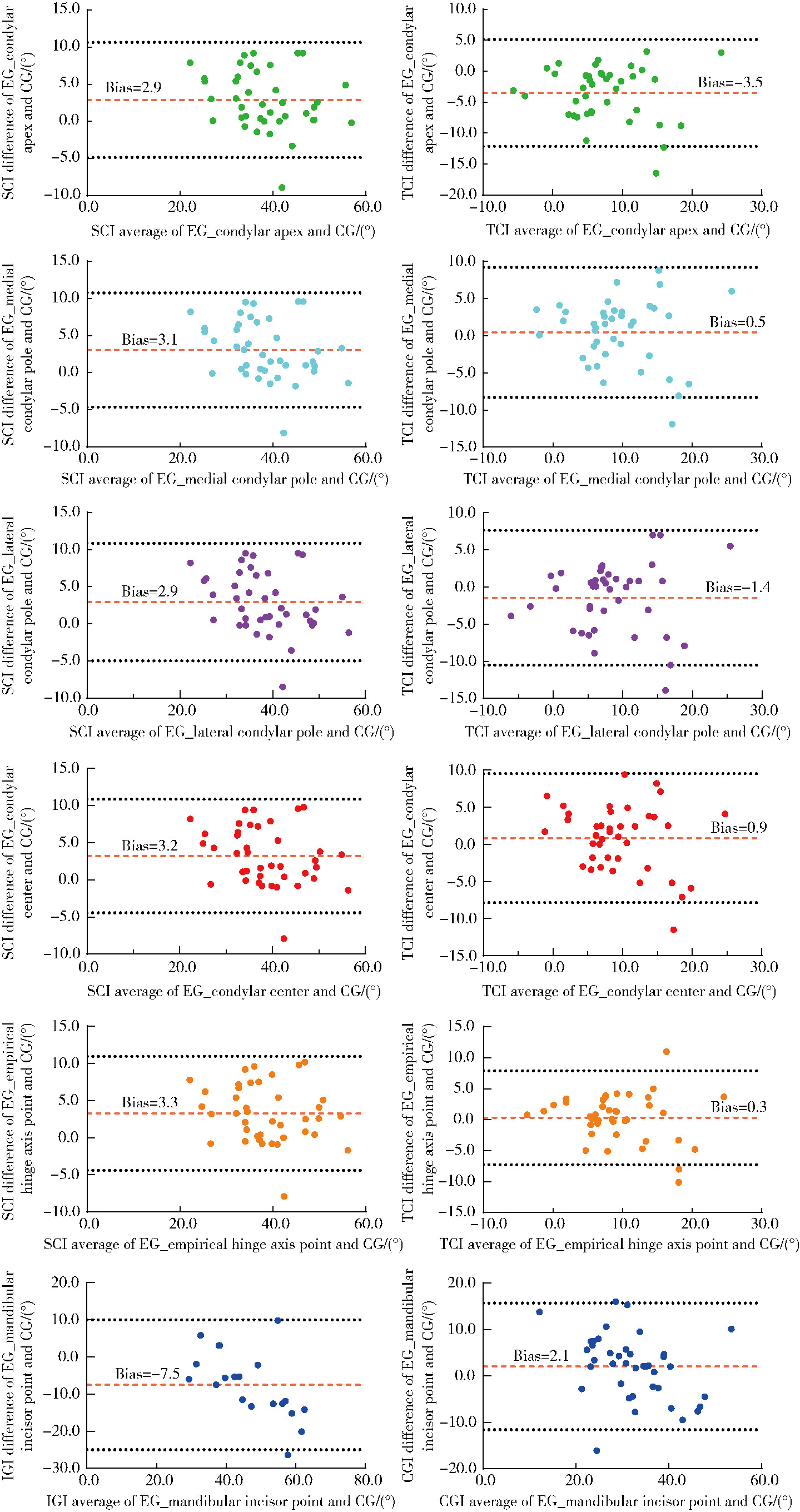
目的: 探索一套基于下颌运动轨迹数据计算𬌗架关键参数的数学方法, 并将该方法计算结果与现有国外下颌运动记录系统提供的参考值进行比较, 为国产化下颌运动轨迹记录系统的研发奠定相关算法基础。方法: 招募符合纳入标准的20例健康志愿者(男性7例, 女性13例), 平均年龄(31±8)岁。使用JMA Optic下颌运动记录系统采集受试者前伸及左右侧方运动数据。使用逆向工程软件建立参考平面坐标系, 完成受试者颌面部多源数据整合, 再统一坐标系。选取髁突顶点、髁突内极、髁突外极、髁突中心、经验铰链轴点及下颌切点作为下颌运动轨迹参考点, 并生成各参考点的三维运动轨迹, 进而计算前伸髁导斜度(sagittal condylar inclination, SCI)、侧方髁导斜度(transversal condylar inclination, TCI)、迅即侧移(immediate side shift, ISS)、切导斜度和尖导斜度, 以不同参考点的计算结果作为不同实验组。以JMA Optic系统提供的参考值作为对照组进行比较分析。结果: 各实验组的SCI均显著高于对照组(P < 0.001), 且存在约3.1°的系统性正偏差, 但一致性界限较窄。TCI结果因参考点而异, 仅髁突顶点组(5.7°±6.1°)显著低于对照组(9.2°±6.6°)(t=5.023, P < 0.001), 其余组与对照组间差异无统计学意义, 经验铰链轴点组与对照组间表现出最小的平均偏差与最窄的一致性界限, 该组与对照组TCI的一致性最佳。所有组别的ISS均为0.0(0.0) mm。下颌切点组的切导斜度(43.1°±8.6°)显著低于对照组(50.6°±13.7°)(t=3.749, P=0.001), 且一致性欠佳, 而下颌切点组的尖导斜度与对照组间差异无统计学意义(t=-1.873, P=0.069), 且一致性尚可。结论: 提出了一套基于下颌运动轨迹数据计算𬌗架关键参数的数学方法, 其计算路径明确、可追溯。本方法与JMA Optic系统算法在计算TCI、ISS、尖导斜度上一致性尚可, 而在计算SCI和切导斜度上一致性欠佳, 参考点的选择对参数计算结果具有直接影响。该数学方法为实现精准化、个性化的𬌗架参数设置提供了可靠的理论基础。

关键词: 下颌运动轨迹, ??架参数, 前伸髁导斜度, 侧方髁导斜度, 切导斜度

Abstract:

Objective: To explore a mathematical method for calculating key articulator parameters based on mandibular movement trajectory data, and to compare the results of this method with reference values provided by existing foreign mandibular movement recording system, thereby establishing an algorithmic basis for developing a domestic mandibular movement recording system. Methods: Twenty healthy volunteers (7 males, 13 females) meeting inclusion criteria were recruited, with a mean age of (31±8) years. Mandibular movement data during protrusive and left/right lateral movements were recorded using the JMA Optic foreign mandibular movement recording system. A reference plane coordinate system was established using reverse engineering software, the multi-source maxillofacial data were integrated, and the coordinate systems were then unified. The condylar apex, medial condylar pole, lateral condylar pole, condylar center, empirical hinge axis point, and mandibular incisor point were selected as reference points for mandibular movement trajectories. Three-dimensional movement trajectories were generated for each reference point to calculate the sagittal condylar inclination (SCI), transverse condylar inclination (TCI), immediate side shift (ISS), incisal guidance inclination and canine guidance inclination. The calculation results from different reference points served as distinct experimental groups. Reference values provided by the JMA Optic system were used as the control group for comparative analysis. Results: The SCI values of all the experimental groups were significantly higher than that of the control group (P < 0.001), with a systematic positive bias of approximately 3.1°, though the limits of agreement were relatively narrow. The TCI results varied depending on the reference point: Only the condylar apex group (5.7°±6.1°) was significantly lower than the control group (9.2°±6.6°) (t=5.023, P < 0.001). Differences between the remaining groups and the control group were not statistically significant. The empirical hinge axis point group showed the smallest mean bias and the narrowest limits of agreement, indicating optimal consistency with the control group's TCI. The ISS values were 0.0 (0.0) mm in all the groups. The incisal guidance inclination of the mandibular incisor point group (43.1°±8.6°) was significantly lower than that of the control group (50.6°±13.7°) (t=3.749, P=0.001) with poor consistency. However, the canine guidance inclination of the mandibular incisor point group showed no statistically significant difference compared with the control group (t=-1.873, P=0.069), with acceptable consistency. Conclusion: This study proposed a mathematical method for calculating key articulator parameters based on mandibular movement trajectory data, with a clear and traceable computational pathway. The proposed method showed acceptable consistency with the JMA Optic system algorithm in calculating TCI, ISS, and canine guidance inclination, but poor consistency in calculating SCI and incisal guidance inclination. The selection of reference points directly influenced the results of parameter calculation. This mathematical method provided a reliable theoretical foundation for achieving precise, personalized articulator parameter settings.

Key words: Mandibular movement trajectory, Articulator parameters, Sagittal condylar inclination, Transversal condylar inclination, Incisal guidance inclination

中图分类号: 

  • R783.3

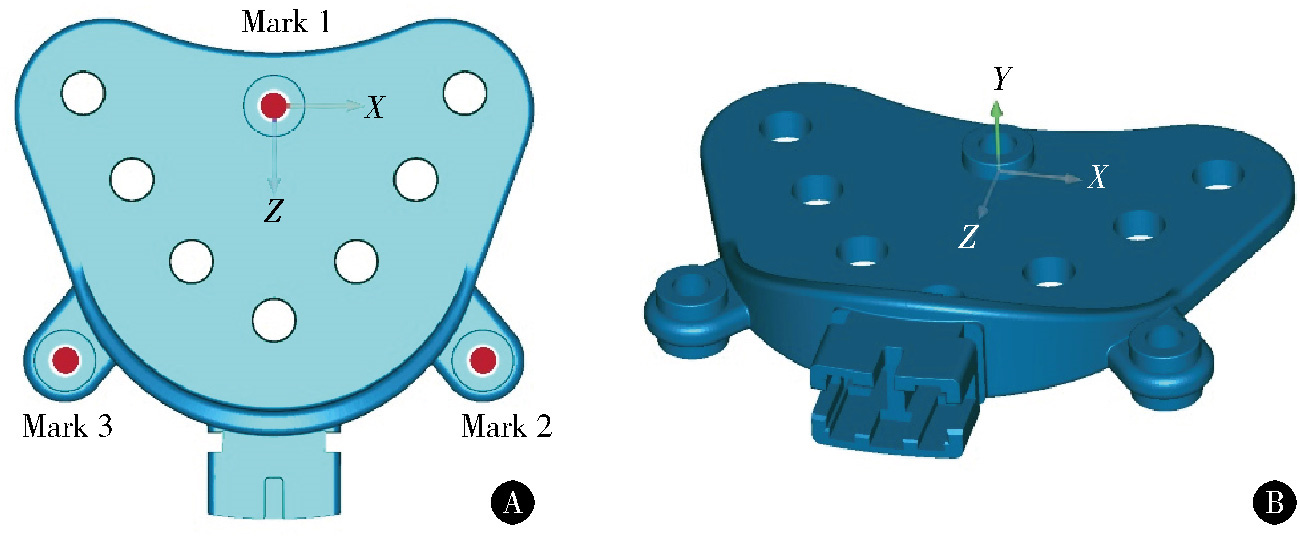
图1

标准上颌叉三维模型"

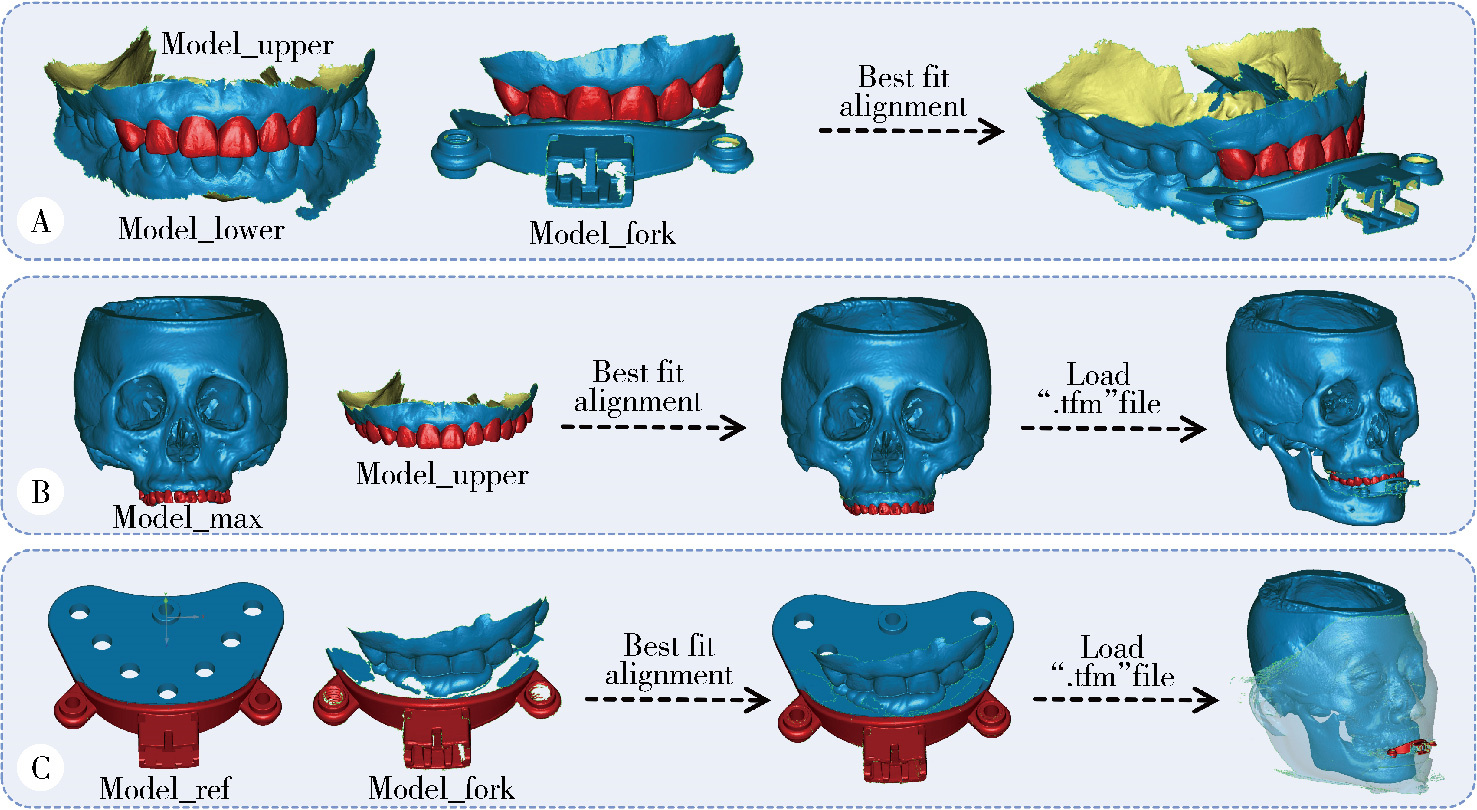
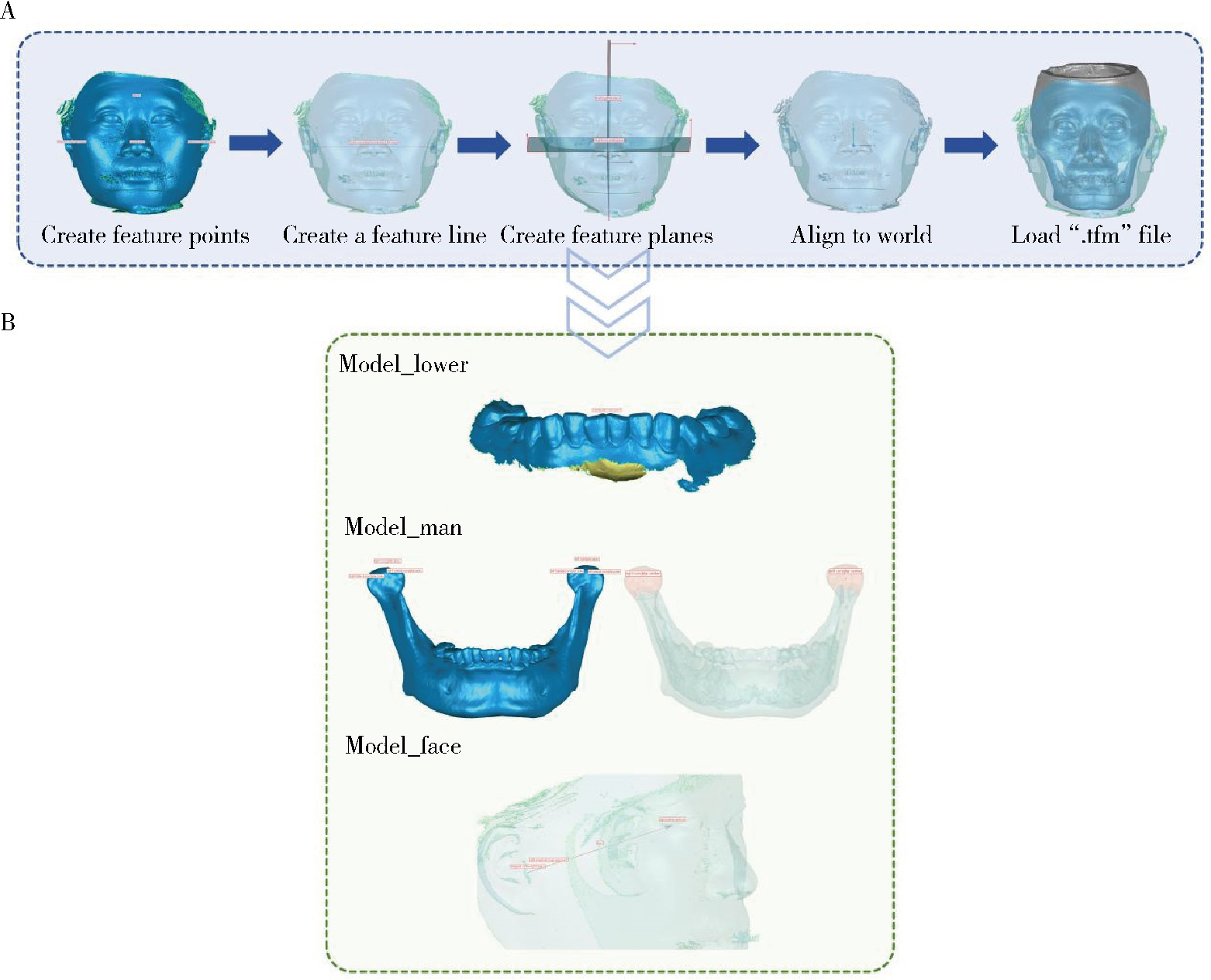
图2

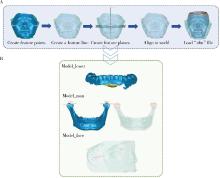
颌面部三维多源数据整合流程"

图3

参考平面坐标系建立及参考点选取"

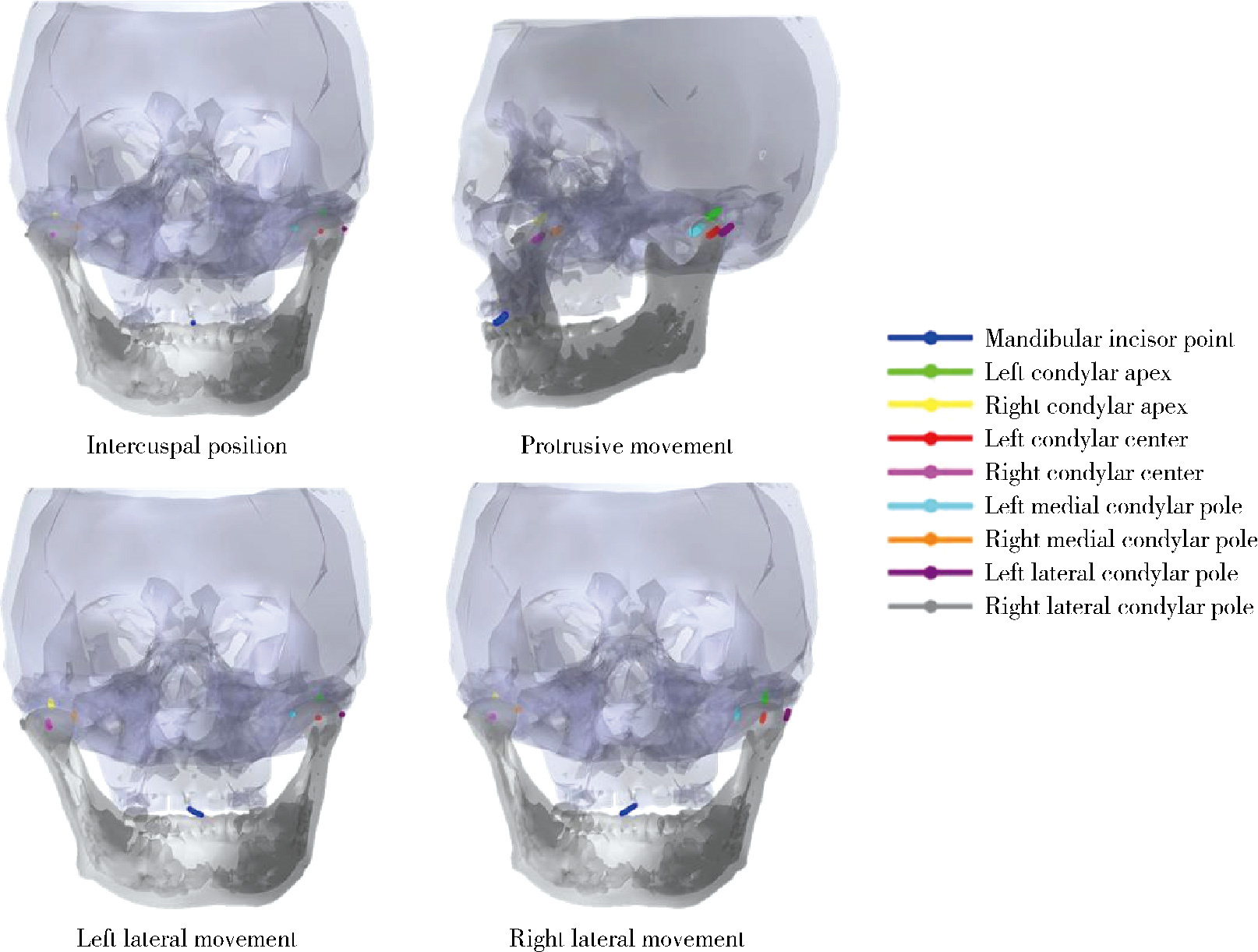
图4

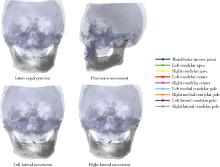
基于参考点的下颌运动轨迹"

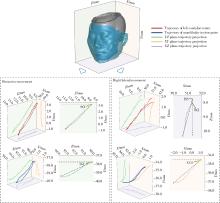
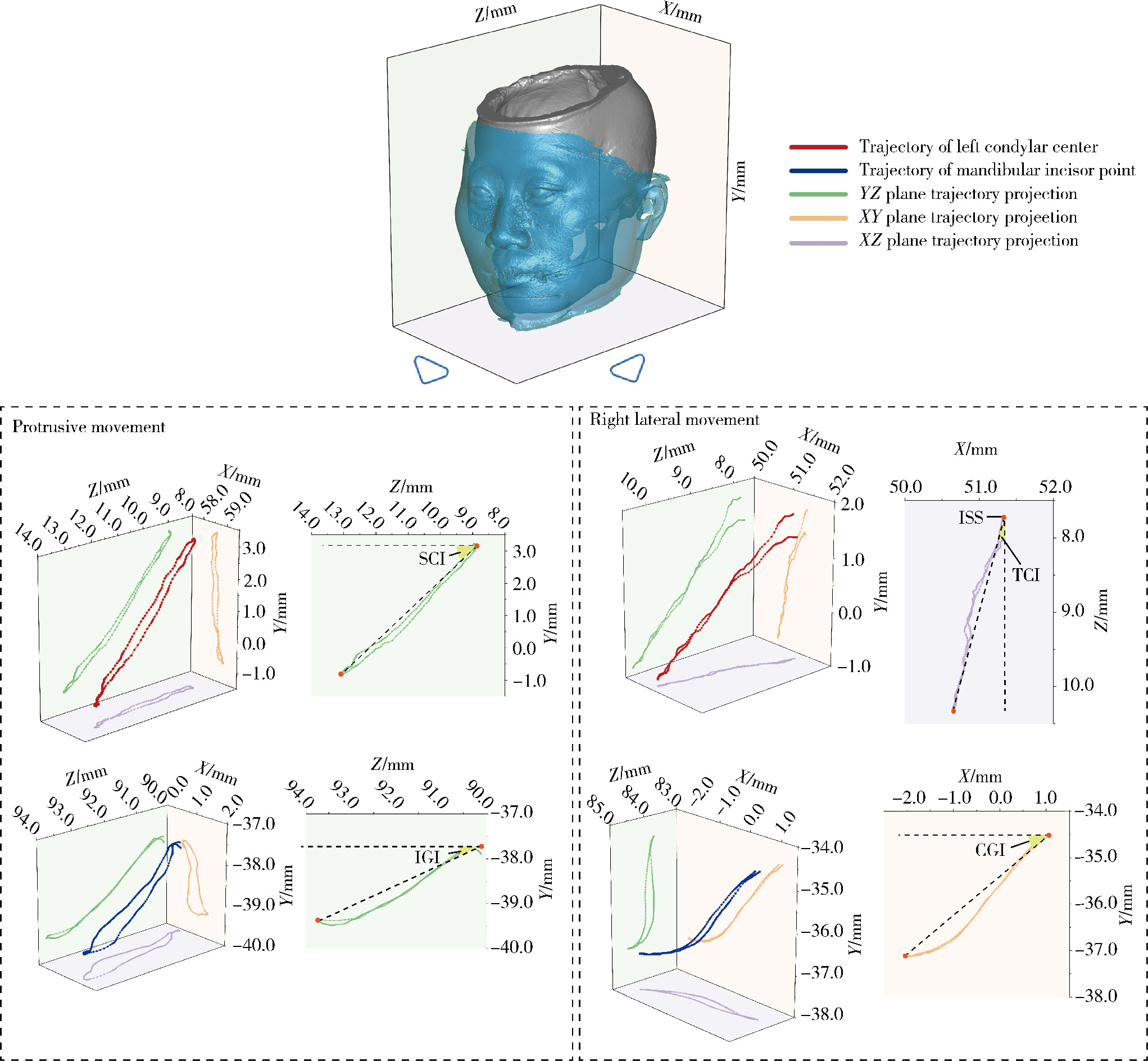
图5

基于参考点轨迹计算𬌗架关键参数"

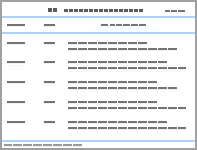
表1

各实验组及对照组SCI、TCI、ISS左右侧比较"

Group n SCI/(°),${\bar x}$±s TCI/(°),${\bar x}$±s ISS/mm, M (IQR)
Left Right t P Left Right t P Left Right Z P
EG_condylar apex 20 39.7±7.3 40.0±8.5 -0.270 0.790 6.6±5.1 4.8±7.1 1.129 0.273 0.0(0.0) 0.0(0.0) 0.000 >0.999
EG_medial condylar pole 20 39.8±7.1 39.9±8.0 -0.191 0.851 9.0±5.6 6.6±7.5 1.453 0.162 0.0(0.0) 0.0(0.0) 0.000 >0.999
EG_lateral condylar pole 20 40.0±7.2 40.3±8.4 -0.214 0.833 11.0±5.3 9.1±5.8 1.374 0.185 0.0(0.0) 0.0(0.0) 0.000 >0.999
EG_condylar center 20 39.9±7.1 40.1±8.2 -0.240 0.813 10.7±5.5 8.6±6.5 1.367 0.188 0.0(0.0) 0.0(0.0) 0.000 >0.999
EG_empirical hinge axis point 20 39.9±7.4 40.5±8.9 -0.346 0.733 10.2±5.6 8.9±6.3 1.068 0.299 0.0(0.0) 0.0(0.0) 0.000 >0.999
CG 20 37.3±8.6 36.5±9.1 0.639 0.531 9.8±6.5 8.6±6.8 1.019 0.321 0.0(0.0) 0.0(0.0) -0.272 0.785

表2

实验组_下颌切点及对照组尖导斜度左右侧比较"

Group n Canine guidance inclination/(°),${\bar x}$±s
Left Right t P
EG_mandibular incisor point 20 33.9±9.3 32.7±6.5 0.900 0.379
CG 20 29.7±11.5 32.8±8.7 -1.611 0.124

表3

各实验组与对照组SCI、TCI、ISS成对比较"

Group SCI/(°),${\bar x}$±s t P TCI/(°),${\bar x}$±s t P ISS/mm, M (IQR) Z P
EG_condylar apex 39.8±7.8 -4.635 < 0.001 5.7±6.1 5.023 < 0.001 0.0(0.0) -1.633 0.102
EG_medial condylar pole 39.8±7.5 -4.586 < 0.001 7.8±6.7 1.971 0.056 0.0(0.0) -1.633 0.102
EG_lateral condylar pole 40.1±7.7 -5.206 < 0.001 10.1±5.6 -1.213 0.233 0.0(0.0) -1.633 0.102
EG_condylar center 40.0±7.6 -4.963 < 0.001 9.7±6.0 -0.655 0.517 0.0(0.0) -1.633 0.102
EG_empirical hinge axis point 40.2±8.1 -5.318 < 0.001 9.5±5.9 -0.539 0.593 0.0(0.0) -1.633 0.102
CG 36.9±8.8 9.2±6.6 0.0(0.0)

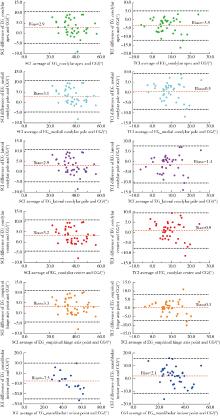
图6

各实验组与对照组𬌗架关键参数一致性的Bland-Altman图"

1
吴国锋. 𬌗架的发展简史[J]. 实用口腔医学杂志, 2016, 32 (3): 445- 448.
2
Lepidi L , Galli M , Mastrangelo F , et al. Virtual articulators and virtual mounting procedures: Where do we stand?[J]. J Pros-thodont, 2021, 30 (1): 24- 35.
3
Lee VC , Tan MY , Yee SHX , et al. Three-dimensional analysis of the interchangeability of a semiadjustable articulator system in service over time[J]. J Prosthet Dent, 2024, 132 (5): 1028- 1037.

doi: 10.1016/j.prosdent.2023.04.009
4
Lam WYH , Hsung RTC , Choi WWS , et al. A clinical technique for virtual articulator mounting with natural head position by using calibrated stereophotogrammetry[J]. J Prosthet Dent, 2018, 119 (6): 902- 908.

doi: 10.1016/j.prosdent.2017.07.026
5
张良荣. 咬合记录硅橡胶O-BITE在咬合确定中的临床评价[J]. 中外医学研究, 2016, 14 (32): 135- 136.
6
单珅瑶, 朱玉佳, 王俊杰, 等. 基于100名个别正常𬌗成人下颌运动轨迹的平均值𬌗架关键参数初探[J]. 中华口腔医学杂志, 2024, 59 (12): 1228- 1233.
7
徐心雨, 吴灵, 宋凤岐, 等. 基于下颌运动轨迹的正颌外科术中下颌骨髁突定位方法及初步精度验证[J]. 北京大学学报(医学版), 2024, 56 (1): 57- 65.

doi: 10.19723/j.issn.1671-167X.2024.01.010
8
徐欣蕊, 余润平, 袁芸, 等. 基于下颌运动轨迹数据指导的数字化全冠咬合面精度评价[J]. 上海口腔医学, 2023, 32 (1): 58- 62.
9
Li L , Chen H , Li W , et al. Design of wear facets of mandibular first molar crowns by using patient-specific motion with an intraoral scanner: A clinical study[J]. J Prosthet Dent, 2023, 129 (5): 710- 717.

doi: 10.1016/j.prosdent.2021.06.048
10
马丽娅, 巢家瑞, 刘飞, 等. 基于下颌运动轨迹与虚拟𬌗架运动参数模拟调𬌗的对比研究[J]. 华西口腔医学杂志, 2023, 41 (3): 254- 259.
11
Valenti M , Schmitz JH . A reverse digital workflow by using an interim restoration scan and patient-specific motion with an intraoral scanner[J]. J Prosthet Dent, 2021, 126 (1): 19- 23.

doi: 10.1016/j.prosdent.2020.05.011
12
周永胜. 口腔修复学[M]. 3版 北京: 北京大学医学出版社, 2020: 312- 315.
13
王美青. 𬌗学[M]. 4版 北京: 人民卫生出版社, 2020: 93.
14
周哲青, 王思谕, 袁泉, 等. 一种全数字化前伸髁导斜度测量方法的准确性研究[J]. 华西口腔医学杂志, 2024, 42 (1): 67- 74.
15
胡婷姿, 杨海萍, 肖沛, 等. Zebris下颌运动分析系统的应用与研究现状[J]. 口腔医学, 2021, 41 (12): 1129- 1133.
16
Lepidi L , Grande F , Baldassarre G , et al. Preliminary clinical study of the accuracy of a digital axiographic recording system for the assessment of sagittal condylar inclination[J]. J Dent, 2023, 135, 104583.

doi: 10.1016/j.jdent.2023.104583
17
朱家奕, 王俊杰, 王宇轩, 等. 轻咬合和重咬合状态对下颌运动轨迹及虚拟预调𬌗的影响[J]. 中华口腔医学杂志, 2023, 58 (1): 50- 56.
18
Revilla-León M , Zeitler JM , Kois JC . An overview of the different digital facebow methods for transferring the maxillary cast into the virtual articulator[J]. J Esthet Restor Dent, 2024, 36 (12): 1675- 1686.

doi: 10.1111/jerd.13264
19
Lewandowska A , Mańka-Malara K , Kostrzewa-Janicka J . Sagittal condylar inclination and transversal condylar inclination in different skeletal classes[J]. J Clin Med, 2022, 11 (9): 2664.

doi: 10.3390/jcm11092664
20
Tang W , Wu Y , Ma J , et al. 3-Dimensional quantitative analysis of mandibular motion in TMD and healthy subjects: Comparison with clinical observations[J]. J Dent, 2025, 153, 105534.

doi: 10.1016/j.jdent.2024.105534
[1] 钱锟, 刘亦洪. 基于直接法和间接法数字印模制作的高嵌体适合性评价的体外研究[J]. 北京大学学报(医学版), 2025, 57(3): 604-609.
[2] 李梦迪, 雷蕾, 刘中宁, 李健, 姜婷. siRNA沉默NLK基因促进神经化组织工程骨再生[J]. 北京大学学报(医学版), 2025, 57(2): 227-236.
[3] 朱灵丽, 唐琳, 李博文, 王梅, 刘玉华. 两种玷污层去除方法对牙本质表面性能的影响[J]. 北京大学学报(医学版), 2025, 57(2): 340-346.
[4] 程雅雯, 李德利, 赵彦, 夏斌, 刘云松. 青少年恒牙牙体缺损的修复难点及过渡修复的方式选择[J]. 北京大学学报(医学版), 2025, 57(1): 208-213.
[5] 刘思民,赵一姣,王晓燕,王祖华. 动态导航下不同深度环钻定位精确度的体外评价[J]. 北京大学学报(医学版), 2022, 54(1): 146-152.
[6] 陈小贤,钟洁,闫文娟,张红梅,姜霞,黄芊,薛世华,刘星纲. 树脂冠修复乳前牙的临床效果评价[J]. 北京大学学报(医学版), 2020, 52(5): 907-912.
[7] 王梅, 李博文, 王思雯, 刘玉华. 猪小肠黏膜下层海绵的制备及促成骨作用[J]. 北京大学学报(医学版), 2020, 52(5): 952-958.
[8] 张众,孟焕新,韩劼,张立,释栋. 软组织垂直厚度对牙周炎患者种植修复临床效果的影响[J]. 北京大学学报(医学版), 2020, 52(2): 332-338.
[9] 李维婷,李蓬,朴牧子,张芳,邸杰. 不同备洞方法收集自体骨骨量[J]. 北京大学学报(医学版), 2020, 52(1): 103-106.
[10] 罗强,丁茜,张磊,谢秋菲. 后牙种植冠桥修复后局部咬合变化的定量分析[J]. 北京大学学报(医学版), 2019, 51(6): 1119-1123.
[11] 郑苗,詹凌璐,刘志强,李和平,谭建国. 不同等离子体处理氧化锆对人牙龈成纤维细胞黏附能力的影响[J]. 北京大学学报(医学版), 2019, 51(2): 315-320.
[12] 李欣欣,柳玉树,孙玉春,陈虎,叶红强,周永胜. 计算机辅助设计与制作一体化聚醚醚酮可摘局部义齿不同形态组件的适合性评价[J]. 北京大学学报(医学版), 2019, 51(2): 335-339.
[13] 王睿捷,刘敏,宋丹阳,杨随,王乔,王磊,冯海兰. 不同加工方法及材料制作部分贴面的边缘形貌分析[J]. 北京大学学报(医学版), 2019, 51(1): 93-99.
[14] 周团锋,王新知. 计算机辅助设计与制作的一体化氧化锆全瓷桩核5年临床观察[J]. 北京大学学报(医学版), 2018, 50(4): 680-684.
[15] 朱曚曚, 王国敏, 孙科, 李应龙, 潘洁. 低温等离子体用于牙齿外漂白后对牙釉质粘接强度的影响[J]. 北京大学学报(医学版), 2016, 48(1): 116-120.
Viewed
Full text


Abstract

Cited

  Shared   
  Discussed   
No Suggested Reading articles found!