北京大学学报(医学版) ›› 2020, Vol. 52 ›› Issue (3): 514-520. doi: 10.19723/j.issn.1671-167X.2020.03.018
血管健康指标对新发心脑血管事件的预测价值:北京血管健康分级标准的初步验证
刘欢1,2,何映东3,刘金波1,2,黄薇1,赵娜1,赵红薇1,周晓华2,3,△( ),王宏宇1,2,△()
- 1. 北京大学首钢医院血管医学科,北京 100144
2. 北京大学医学部血管健康研究中心,北京 100191
3. 北京大学生物统计系,北京国际数学研究中心,北京 100871
Predictive value of vascular health indicators on newly cardiovascular events: Preliminary validation of Beijing vascular health stratification system
Huan LIU1,2,Ying-dong HE3,Jin-bo LIU1,2,Wei HUANG1,Na ZHAO1,Hong-wei ZHAO1,Xiao-hua ZHOU2,3,△(),Hong-yu WANG1,2,△()
- 1. Vascular Medicine Center, Peking University Shougang Hospital, Beijing 100144, China
2. Vascular Health Research Center of Peking University Health Science Center, Beijing 100191, China
3. Department of Biostatistics, Peking University, Beijing International Center for Mathematical Research, Beijing 100871, China
摘要:
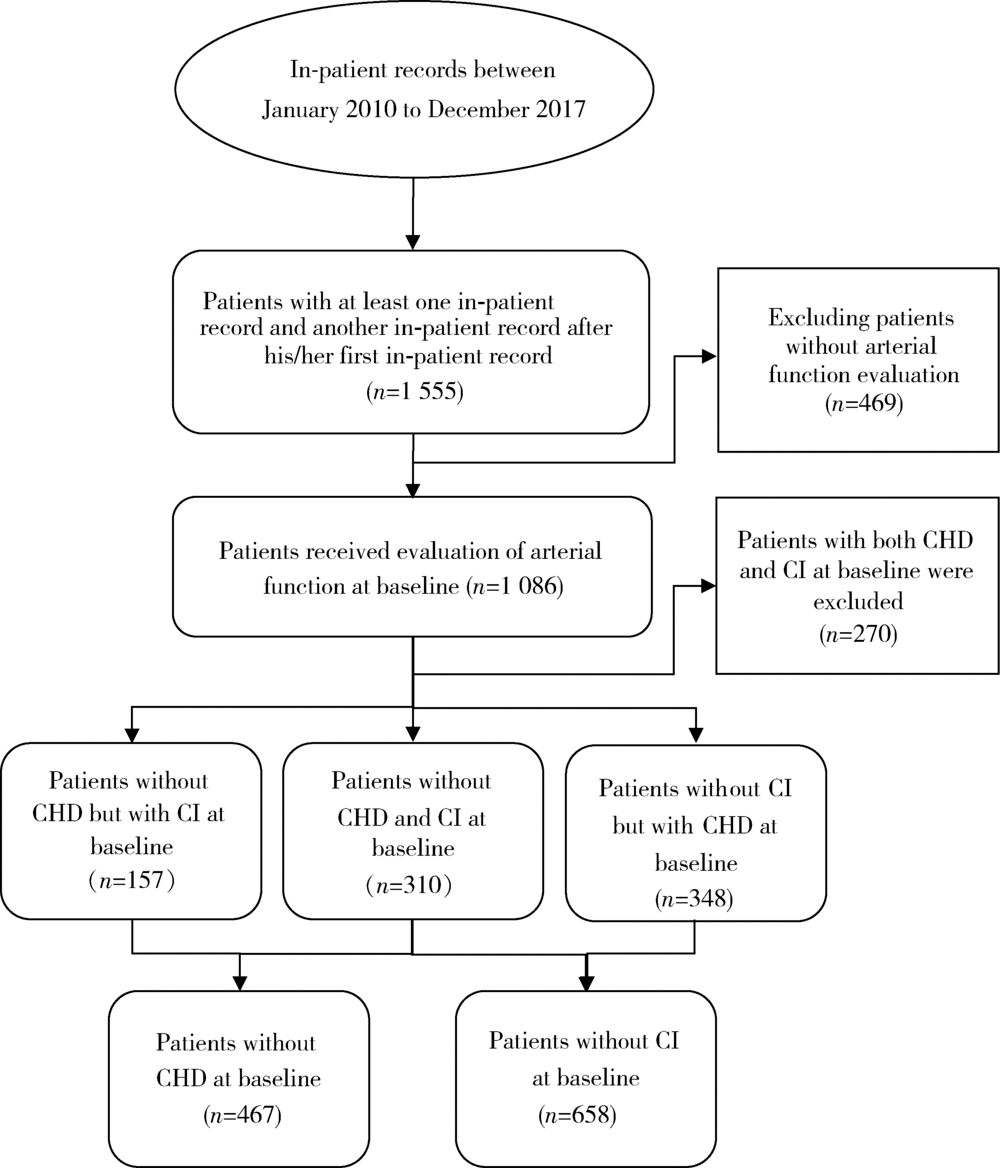
目的 探索血管健康指标(包括颈-股动脉脉搏波传导速度、颈-桡动脉脉搏波传导速度、心踝血管指数和踝臂指数)与冠状动脉粥样硬化性心脏病(简称冠心病)和脑梗塞的关系,初步评估北京血管健康分级的预测价值。方法 研究纳入2010—2017年首钢医院血管医学科至少有2次住院记录的受试者,排除基线时血管指标数据缺失且患有冠心病或脑梗塞的患者。建立两个队列,队列1(冠心病)入组467例受试者[平均年龄(63.4±12.3)岁,女性42.2%],队列2(脑梗塞)入组658例受试者[平均年龄(64.3±12.2)岁,女性48.7%],分别应用Cox比例风险回归建立冠心病或脑梗塞的预测模型。结果 队列1和队列2的中位随访时间分别为1.9年和2.1年,随访期间,队列1中有164例首发冠心病事件发生,队列2中有117例首发脑梗塞事件发生。将4种血管健康指标同时作为连续变量进行多变量调整分析,队列1中,4种指标均有统计学意义(P均<0.05);队列2中,仅心踝血管指数有统计学意义(P<0.05)。未调整模型中,北京血管健康分级对于冠心病和脑梗塞的预测价值均有统计学意义(P均<0.05),而在多变量调整模型中,北京血管健康分级仅对冠心病具有预测价值(P<0.05)。结论 不同的血管健康指标对于冠心病和脑梗塞的预测价值不同,其中心踝血管指数可能是一种较为稳定的指标。北京血管健康分级对于冠心病具有预测价值,而对于脑梗塞的预测价值还需进一步研究。
中图分类号:
- R541.4

| [1] | Winsor T. Influence of arterial disease on the systolic blood pressure gradients of the extremity[J]. Am J Med Sci, 1950,220(2):117-126. |
| [2] |
Ohkuma T, Ninomiya T, Tomiyama H, et al. Ankle-brachial index measured by oscillometry is predictive for cardiovascular disease and premature death in the Japanese population: An individual participant data meta-analysis[J]. Atherosclerosis, 2018,275:141-148.
pmid: 29902702 |
| [3] | Heald CL, Fowkes FG, Murray GD, et al. Risk of mortality and cardiovascular disease associated with the ankle-brachial index: Systematic review[J]. Atherosclerosis, 2006,189(1):61-69. |
| [4] | Zhong Q, Hu MJ, Cui YJ, et al. Carotid-femoral pulse wave velocity in the prediction of cardiovascular events and mortality: an updated systematic review and meta-analysis[J]. Angiology, 2018,69(7):617-629. |
| [5] | Willum-Hansen T, Staessen JA, Torp-Pedersen C, et al. Prognostic value of aortic pulse wave velocity as index of arterial stiffness in the general population[J]. Circulation, 2006,113(5):664-670. |
| [6] |
Niiranen TJ, Kalesan B, Larson MG, et al. Aortic-brachial arte-rial stiffness gradient and cardiovascular risk in the community: the Framingham Heart Study[J]. Hypertension, 2017,69(6):1022-1028.
pmid: 28396534 |
| [7] | Mitchell GF, Hwang SJ, Vasan RS, et al. Arterial stiffness and cardiovascular events: the Framingham Heart Study[J]. Circulation, 2010,121(4):505-511. |
| [8] |
Tillin T, Chambers J, Malik I, et al. Measurement of pulse wave velocity: site matters[J]. J Hypertens, 2007,25(2):383-389.
pmid: 17211245 |
| [9] | Shirai K, Utino J, Otsuka K, et al. A novel blood pressure-independent arterial wall stiffness parameter; cardio-ankle vascular index (CAVI)[J]. J Atheroscler Thromb, 2006,13(2):101-107. |
| [10] | Laucevišius A, Ryliškytè L, Balsytè J, et al. Association of cardio-ankle vascular index with cardiovascular risk factors and cardiovascular events in metabolic syndrome patients[J]. Medicina (Kaunas), 2015,51(3):152-158. |
| [11] | Matsushita K, Ding N, Kim ED, et al. Cardio-ankle vascular index and cardiovascular disease: Systematic review and meta-analysis of prospective and cross-sectional studies[J]. J Clin Hypertens (Greenwich), 2019,21(1):16-24. |
| [12] | Sato Y, Nagayama D, Saiki A, et al. Cardio-ankle vascular index is independently associated with future cardiovascular events in outpatients with metabolic disorders[J]. J Atheroscler Thromb, 2016,23(5):596-605. |
| [13] | Satoh-Asahara N, Kotani K, Yamakage H, et al. Cardio-ankle vascular index predicts for the incidence of cardiovascular events in obese patients: a multicenter prospective cohort study (Japan Obesity and Metabolic Syndrome Study: JOMS)[J]. Atherosclerosis, 2015,242(2):461-468. |
| [14] |
Vallée A, Petruescu L, Kretz S, et al. Added value of aortic pulse wave velocity index in a predictive diagnosis decision tree of coronary heart disease[J]. Am J Hypertens, 2019,32(4):375-383.
pmid: 30624553 |
| [15] |
Velescu A, Clara A, Peñafiel J, et al. Adding low ankle brachial index to classical risk factors improves the prediction of major cardiovascular events. The REGICOR study[J]. Atherosclerosis, 2015,241(2):357-363.
pmid: 26071658 |
| [16] |
Gronewold J, Hermann DM, Lehmann N, et al. Ankle-brachial index predicts stroke in the general population in addition to classical risk factors[J]. Atherosclerosis, 2014,233(2):545-550.
pmid: 24530962 |
| [17] | 中国医药教育协会血管医学专业委员会, 中华医学会北京心血管病学分会血管专业学组, 北京大学医学部血管疾病社区防治中心. 中国血管健康评估系统应用指南[J]. 中华医学杂志, 2018,98(37):2955-2967. |
| [18] | 王宏宇, 刘欢. 新的血管健康分级标准与血管医学[J]. 心血管病学进展, 2015,36(4):365-368. |
| [19] | Liu H, Liu J, Zhao H, et al. The design and rationale of the Beijing Vascular Disease Patients Evaluation Study (BEST study)[J]. Contemp Clin Trials Commun, 2017,7:18-22. |
| [20] |
Hong JB, Leonards CO, Endres M, et al. Ankle-brachial index and recurrent stroke risk: meta-analysis[J]. Stroke, 2016,47(2):317-322.
doi: 10.1161/STROKEAHA.115.011321 pmid: 26658450 |
| [1] | 王玉霖, 郜鑫, 刘志科, 詹思延. 2018—2023年江苏省0~3岁婴幼儿肠套叠发病的流行病学特征[J]. 北京大学学报(医学版), 2026, 58(3): 490-495. |
| [2] | 徐慧颖, 何兴侯, 黄薇, 张彬, 李梦瑶, 刘家辉, 方言, 赵二璐, 魏相睿, 马旭, 杨英. 中国育龄女性围孕期冷热暴露与先天性心脏病发病风险的关联[J]. 北京大学学报(医学版), 2026, 58(3): 503-512. |
| [3] | 陆梦溪, 王炳翰, 康佳丽, 刘秋萍, 周逸帆, 孙烨祥, 沈鹏, 林鸿波, 唐迅, 高培. 生物学年龄在社区人群队列中预测心血管病风险的应用[J]. 北京大学学报(医学版), 2026, 58(3): 543-550. |
| [4] | 魏慧, 张警丰, 姚中强, 赵金霞. 类风湿关节炎合并慢性病贫血患者的临床特征及相关因素[J]. 北京大学学报(医学版), 2026, 58(2): 307-312. |
| [5] | 赵杰, 付春, 赵秀娟, 薛海岩, 李纾, 王振洲, 朱凤雪. 胸部创伤患者在重症监护病房内发生呼吸机相关性肺炎的危险因素[J]. 北京大学学报(医学版), 2026, 58(2): 351-358. |
| [6] | 郭芷均, 俎明, 马超, 张贺军, 张静, 丁士刚. 同时性多发早期胃癌漏诊病灶的临床病理特征[J]. 北京大学学报(医学版), 2026, 58(2): 410-415. |
| [7] | 范梦, 王梦莹, 王斯悦, 彭和香, 王雪珩, 郭煌达, 侯天姣, 秦雪英, 陈大方, 胡永华, 李劲, 武轶群, 吴涛. 动脉硬化相关指标与死亡风险的前瞻性队列研究[J]. 北京大学学报(医学版), 2025, 57(6): 1153-1159. |
| [8] | 曹沛, 栾庆先. 牙周炎与全身系统性疾病的思考与探索[J]. 北京大学学报(医学版), 2025, 57(5): 852-858. |
| [9] | 李博闻, 张强, 孙益鑫. 儿童及青年漏斗胸患者Nuss术后发生脊柱侧弯的风险预测模型建立及验证[J]. 北京大学学报(医学版), 2025, 57(5): 941-946. |
| [10] | 杨小勇, 张帆, 马潞林, 刘承. 前列腺导管腺癌临床特征及腺外侵犯的影响因素[J]. 北京大学学报(医学版), 2025, 57(5): 956-960. |
| [11] | 刘伟, 郭稳, 过哲, 李春艳, 李云龙, 刘思奇, 张亮, 宋慧. 痛风患者放射学阴性骨侵蚀的相关危险因素[J]. 北京大学学报(医学版), 2025, 57(4): 735-739. |
| [12] | 陆梦溪, 刘秋萍, 周恬静, 刘晓非, 孙烨祥, 沈鹏, 林鸿波, 唐迅, 高培. 基于社区人群队列的甘油三酯-葡萄糖指数与心血管病发病和死亡的关联[J]. 北京大学学报(医学版), 2025, 57(3): 430-435. |
| [13] | 杨龙傲, 金旭, 黄文初, 何丽华, 陈娟. 视屏作业人员视疲劳及干眼的流行病学调查[J]. 北京大学学报(医学版), 2025, 57(3): 554-561. |
| [14] | 郭华秋, 王哲, 杨雪, 白洁. 口腔急诊出血患者的临床特征与危险因素[J]. 北京大学学报(医学版), 2025, 57(1): 142-147. |
| [15] | 邓敏婷, 王楠, 夏斌, 赵玉鸣, 朱俊霞. 儿童及青少年挫入恒前牙自行再萌出的相关影响因素[J]. 北京大学学报(医学版), 2025, 57(1): 148-153. |
|
||
