北京大学学报(医学版) ›› 2021, Vol. 53 ›› Issue (2): 348-354. doi: 10.19723/j.issn.1671-167X.2021.02.020
熔融沉积成型3D打印盐酸维拉帕米胃漂浮制剂的制备与体外评价
陈迪1,徐翔宇2,汪明睿1,李芮1,臧根奥2,张悦1,钱浩楠1,闫光荣2,Δ( ),范田园1,Δ()
- 1.北京大学药学院药剂学系,北京大学药学院分子药剂学与新释药系统北京市重点实验室, 北京 100191
2.北京航空航天大学机械工程及自动化学院, 北京 100191
Preparation and in vitro evaluation of fused deposition modeling 3D printed verapa-mil hydrochloride gastric floating formulations
CHEN Di1,XU Xiang-yu2,WANG Ming-rui1,LI Rui1,ZANG Gen-ao2,ZHANG Yue1,QIAN Hao-nan1,YAN Guang-rong2,Δ(),FAN Tian-yuan1,Δ()
- 1. Department of Pharmaceutics, Beijing Key Laboratory of Molecular Pharmaceutics and New Drug Delivery Systems, Peking University School of Pharmaceutical Sciences, Beijing 100191, China
2. School of Mechanical Engineering and Automation, Beihang University, Beijing 100191, China
摘要:
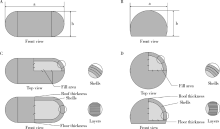
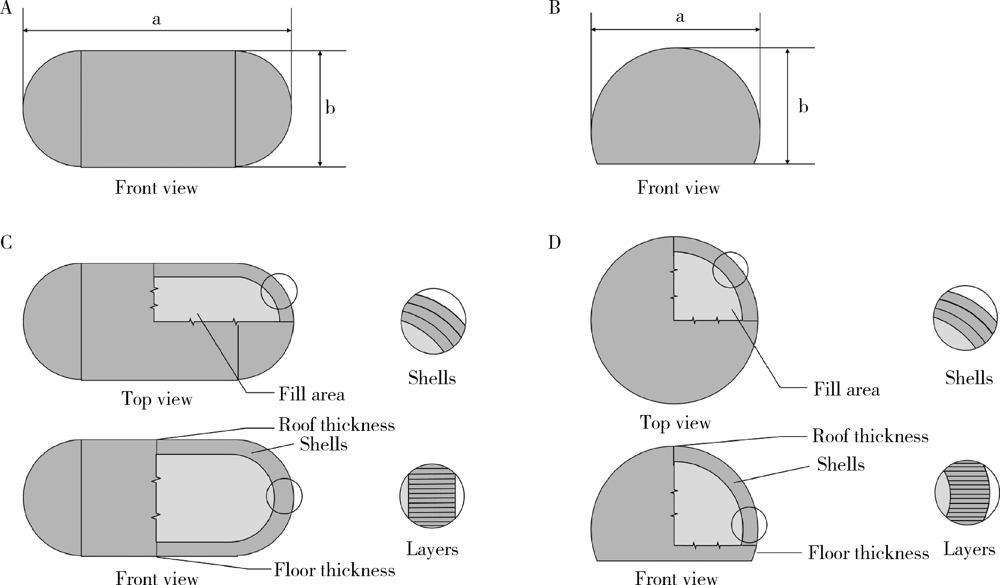
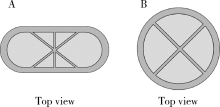
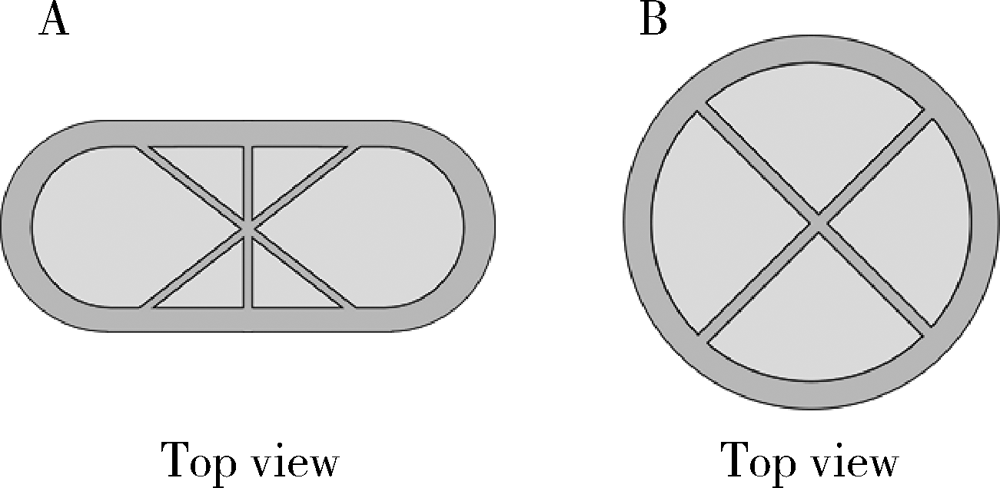
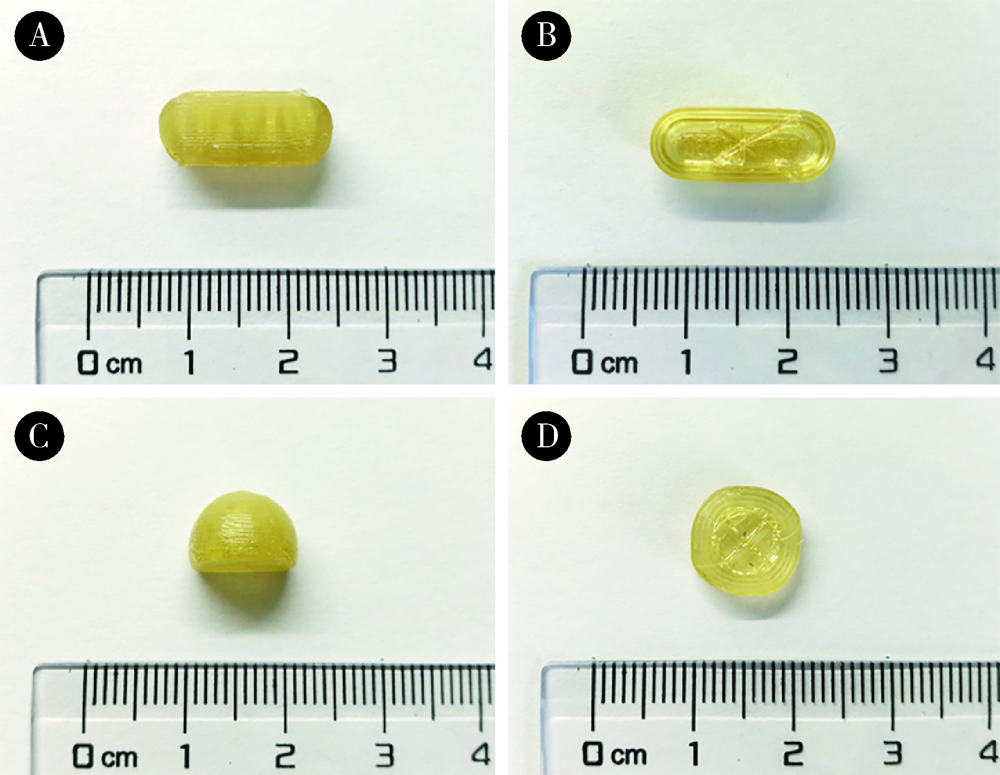
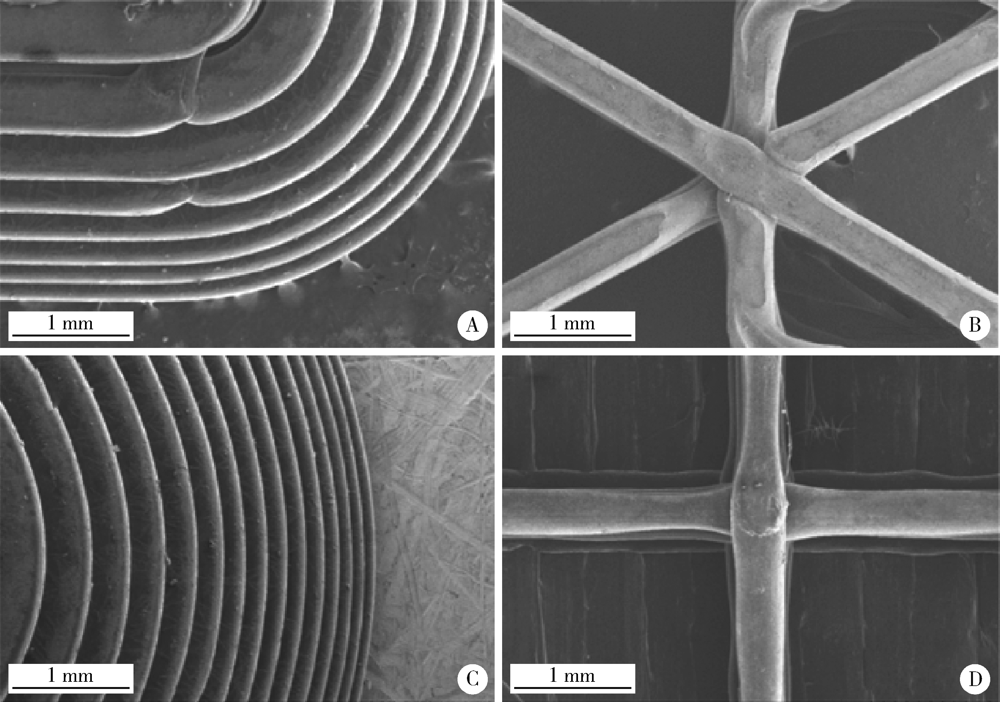
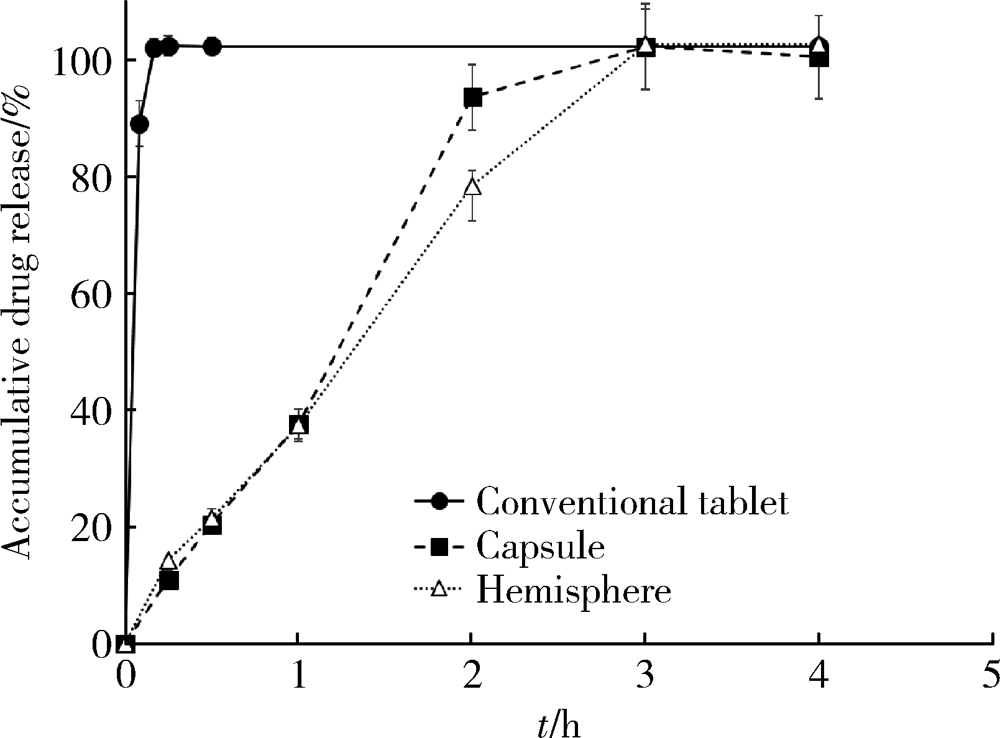
目的: 探究以熔融沉积成型(fused deposition modeling,FDM)3D打印技术研制胃漂浮制剂的可行性,并对所研制的FDM 3D打印胃漂浮制剂进行相关的体外质量评价。方法: 以盐酸维拉帕米为模型药物,聚乙烯醇(polyvinyl alcohol,PVA)为辅料,利用FDM 3D打印技术制备胶囊型和半球型的两种胃漂浮制剂,其填充率均为15%,层高均为0.2 mm,顶底厚均为0.8 mm,壳数分别为3和4。以扫描电镜观察制剂的形态,以称重法考察制剂的平均质量,采用物性测定仪测定制剂互相垂直的两个方向的硬度,高效液相色谱法测定制剂中的药物含量,并对制剂的体外漂浮和释药行为进行表征。结果: 所制备的FDM 3D打印胶囊型和半球型制剂均形态良好,无打印缺陷;胶囊型和半球型制剂的平均质量分别为(584±13) mg和(550±12) mg;胶囊型和半球型制剂的硬度均大于800.0 N;胶囊型和半球型制剂均实现了体外漂浮且无漂浮滞后时间,体外漂浮时间分别为(3.97±0.41) h和(4.48±0.21) h;胶囊型和半球型制剂在体外释药完全的时间均为3 h。结论: 采用FDM 3D打印技术成功制备了胶囊型和半球型的盐酸维拉帕米胃漂浮制剂。
中图分类号:
- R944.9



| [1] | Kaushik AY, Tiwari AK, Gaur A. Role of excipients and polyme-ric advancements in preparation of floating drug delivery systems[J]. Int J Pharm Investig, 2015,5(1):1-12. |
| [2] |
Pawar VK, Kansal S, Garg G, et al. Gastroretentive dosage forms: A review with special emphasis on floating drug delivery systems[J]. Drug Deliv, 2011,18(2):97-110.
pmid: 20958237 |
| [3] | Kotreka UK, Adeyeye MC. Gastroretentive floating drug-delivery systems: A critical review[J]. Crit Rev Ther Drug Carrier Syst, 2011,28(1):47-99. |
| [4] | Sauzet C, Claeys-Bruno M, Nicolas M, et al. An innovative floating gastro retentive dosage system: formulation and in vitro evaluation[J]. Int J Pharm, 2009,378(1/2):23-29. |
| [5] | Sungthongjeen S, Paeratakul O, Limmatvapirat S, et al. Preparation and in vitro evaluation of a multiple-unit floating drug delivery system based on gas formation technique[J]. Int J Pharm, 2006,324(2):136-143. |
| [6] |
Alexander S, Juergen S, Roland B. Gastroretentive drug delivery systems[J]. Expert Opinion on Drug Delivery, 2006,3(2):217-233.
pmid: 16506949 |
| [7] | Konta AA, Garcia-Pina M, Serrano DR. Personalised 3D printed medicines: Which techniques and polymers are more successful?[J]. Bioengineering (Basel), 2017,4(4):79-96. |
| [8] | Long J, Gholizadeh H, Lu J, et al. Application of fused deposition modelling (FDM) method of 3D printing in drug delivery[J]. Curr Pharm Des, 2017,23(3):433-439. |
| [9] | Palo M, Hollander J, Suominen J, et al. 3D printed drug delivery devices: Perspectives and technical challenges[J]. Expert Rev Med Devices, 2017,14(9):685-696. |
| [10] |
Alhnan MA, Okwuosa TC, Sadia M, et al. Emergence of 3D printed dosage forms: Opportunities and challenges[J]. Pharm Res, 2016,33(8):1817-1832.
pmid: 27194002 |
| [11] | Sawicki W, Glod J. Preparation of floating pellets with verapamil hydrochloride[J]. Acta Pol Pharm, 2004,61(3):185-190. |
| [12] | Patel A, Modasiya M, Shah D, et al. Development and in vivo floating behavior of verapamil HCl intragastric floating tablets[J]. AAPS PharmSciTech, 2009,10(1):310-315. |
| [13] | 范田园, 张悦. 一种3D打印胃漂浮制剂及其制备方法: 中国,CN106692091A[P]. 2017-05-24. |
| [14] | Srikanth MV, Rao NS, Sunil SA, et al. Statistical design and evaluation of a propranolol HCl gastric floating tablet[J]. Acta Pharmaceutica Sinica B, 2012,2(1):60-69. |
| [15] | Fu J, Yin H, Yu X, et al. Combination of 3D printing technologies and compressed tablets for preparation of riboflavin floating tablet-in-device (TiD) systems[J]. Int J Pharm, 2018,549(1/2):370-379. |
| [16] |
Goyanes A, Buanz AB, Hatton GB, et al. 3D printing of modified-release aminosalicylate (4-ASA and 5-ASA) tablets[J]. Eur J Pharm Biopharm, 2015,89:157-162.
pmid: 25497178 |
| [17] |
Fuenmayor E, Forde M, Healy AV, et al. Comparison of fused-filament fabrication to direct compression and injection molding in the manufacture of oral tablets[J]. Int J Pharm, 2019,558:328-340.
pmid: 30659922 |
| [18] | Yang Y, Wang H, Li H, et al. 3D printed tablets with internal scaffold structure using ethyl cellulose to achieve sustained ibuprofen release[J]. Eur J Pharm Sci, 2018,115:11-18. |
| [19] | Tagami T, Nagata N, Hayashi N, et al. Defined drug release from 3D-printed composite tablets consisting of drug-loaded polyvinylalcohol and a water-soluble or water-insoluble polymer filler[J]. Int J Pharm, 2018,543(1/2):361-367. |
| [20] | Solanki NG, Tahsin M, Shah AV, et al. Formulation of 3D printed tablet for rapid drug release by fused deposition modeling: Screening polymers for drug release, drug-polymer miscibility and printability[J]. J Pharm Sci, 2018,107(1):390-401. |
| [21] |
Arafat B, Wojsz M, Isreb A, et al. Tablet fragmentation without a disintegrant: A novel design approach for accelerating disintegration and drug release from 3D printed cellulosic tablets[J]. Eur J Pharm Sci, 2018,118:191-199.
pmid: 29559404 |
| [22] |
Kadry H, Al-Hilal TA, Keshavarz A, et al. Multi-purposable filaments of HPMC for 3D printing of medications with tailored drug release and timed-absorption[J]. Int J Pharm, 2018,544(1):285-296.
doi: 10.1016/j.ijpharm.2018.04.010 pmid: 29680281 |
| [23] |
Sadia M, Arafat B, Ahmed W, et al. Channelled tablets: An innovative approach to accelerating drug release from 3D printed tablets[J]. J Control Release, 2018,269:355-363.
pmid: 29146240 |
| [24] | Tagami T, Fukushige K, Ogawa E, et al. 3D Printing factors important for the fabrication of polyvinylalcohol filament-based tablets[J]. Biol Pharm Bull, 2017,40(3):357-364. |
| [25] |
Goyanes A, Robles Martinez P, Buanz A, et al. Effect of geometry on drug release from 3D printed tablets[J]. Int J Pharm, 2015,494(2):657-663.
pmid: 25934428 |
| [26] |
Zhang J, Yang W, Vo AQ, et al. Hydroxypropyl methylcellulose-based controlled release dosage by melt extrusion and 3D printing: Structure and drug release correlation[J]. Carbohydr Polym, 2017,177:49-57.
pmid: 28962795 |
| [27] |
Goyanes A, Wang J, Buanz A, et al. 3D printing of medicines: Engineering novel oral devices with unique design and drug delease characteristics[J]. Mol Pharm, 2015,12(11):4077-4084.
pmid: 26473653 |
| [28] |
Lunio R, Sawicki W. Influence of the components of Kollicoat SR film on mechanical properties of floating pellets from the point of view of tableting[J]. Pharmazie, 2008,63(10):731-735.
pmid: 18972835 |
| [29] |
Yoshida MI, Gomes EC, Soares CD, et al. Thermal analysis applied to verapamil hydrochloride characterization in pharmaceutical formulations[J]. Molecules, 2010,15(4):2439-2452.
pmid: 20428054 |
| [30] |
Soppimath KS, Kulkarni AR, Aminabhavi TM. Development of hollow microspheres as floating controlled-release systems for car-diovascular drugs: Preparation and release characteristics[J]. Drug Dev Ind Pharm, 2001,27(6):507-515.
pmid: 11548857 |
| [31] |
Durig T, Fassihi R. Evaluation of floating and sticking extended release delivery systems: An unconventional dissolution test[J]. J Control Release, 2000,67(1):37-44.
pmid: 10773327 |
| [32] |
Sawicki W, Lunio R, Walentynowicz O, et al. Influence of the type of cellulose on properties of multi-unit target releasing in sto-mach dosage form with verapamil hydrochloride[J]. Acta Pol Pharm, 2007,64(1):81-88.
pmid: 17665855 |
| [1] | 白晓强, 袁芷若, 周永胜, 吕珑薇. 动态牵张促进人骨髓间充质干细胞三维培养的成骨分化[J]. 北京大学学报(医学版), 2026, 58(3): 641-649. |
| [2] | 温奥楠, 张晓会, 杨咏涛, 高梓翔, 李文博, 单珅瑶, 商相宜, 田淯文, 郭殊玮, 王艺蓁, 王勇, 赵一姣. 基于非刚性配准构建三维颜面微笑仿真序列数据的方法[J]. 北京大学学报(医学版), 2026, 58(1): 139-144. |
| [3] | 邵梁, 马雯洁, 陈莹, 丁茜, 张磊. 上颌切牙前伸和正中咬合接触解剖特征的数字化测量与分析[J]. 北京大学学报(医学版), 2026, 58(1): 99-106. |
| [4] | 赵健霄, 丁茜, 李文锦, 马全诠, 兰一笑, 张磊, 韩建民. 多孔表面结构对立体光固化成型氧化锆疲劳强度的影响[J]. 北京大学学报(医学版), 2025, 57(6): 1165-1173. |
| [5] | 宋凤岐, 徐心雨, 刘筱菁, 李自力. 上颌骨前部和整体顺时针旋转改善骨性Ⅲ类牙颌面畸形患者鼻旁凹陷的对比[J]. 北京大学学报(医学版), 2025, 57(5): 980-988. |
| [6] | 肖宇嘉, 毛渤淳, 周彦恒. 姿势性微笑的三维形态学研究[J]. 北京大学学报(医学版), 2025, 57(5): 989-995. |
| [7] | 闵树元, 田耘. 3D打印生物可降解WE43镁合金支架的生物相容性及对骨缺损的治疗[J]. 北京大学学报(医学版), 2025, 57(2): 309-316. |
| [8] | 仇师禹, 练洋, 康一帆, 张雷, 蔡义望, 单小峰, 蔡志刚. 基于下颌骨数据库和全连接神经网络的三维检索模型辅助下的下颌骨个性化重建[J]. 北京大学学报(医学版), 2025, 57(2): 360-368. |
| [9] | 马丽娟, 腾雍辉, 王勇, 赵一姣, 张馨月, 秦庆钊, 尹东. 乳牙缺失数字化丝圈间隙保持器的三维有限元分析[J]. 北京大学学报(医学版), 2025, 57(2): 376-383. |
| [10] | 朱玉佳, 沈华, 温奥楠, 高梓翔, 秦庆钊, 单珅瑶, 李文博, 傅湘玲, 赵一姣, 王勇. 三维颌面对称参考平面智能构建的深度学习算法[J]. 北京大学学报(医学版), 2025, 57(1): 113-120. |
| [11] | 徐昕恺, 赵建江, 田素坤, 刘中宁, 赵晓一, 赵晓波, 江腾飞, 陈晓军, 马超, 孙玉春. 集成压缩气流系统扫描头辅助获取液体干扰表面三维数据精度评价[J]. 北京大学学报(医学版), 2025, 57(1): 121-127. |
| [12] | 吴灵, 方嘉琨, 刘筱菁, 李自力, 李阳, 王晓霞. 基于牙颌面畸形患者三维颅面特征相似性度量模型的建立及评估[J]. 北京大学学报(医学版), 2025, 57(1): 128-135. |
| [13] | 唐祖南,胡耒豪,陈震,于尧,章文博,彭歆. 增强现实技术在口腔颌面颈部解剖识别中的应用评价[J]. 北京大学学报(医学版), 2024, 56(3): 541-545. |
| [14] | 展新新,曹露露,项东,汤皓,夏丹丹,林红. 成型方向对3D打印口腔义齿基托树脂材料物理性能及力学性能的影响[J]. 北京大学学报(医学版), 2024, 56(2): 345-351. |
| [15] | 吕梁,张铭津,温奧楠,赵一姣,王勇,李晶,杨庚辰,柳大为. 应用三维软组织空间线角模板法评价颏部对称性[J]. 北京大学学报(医学版), 2024, 56(1): 106-110. |
|
||
